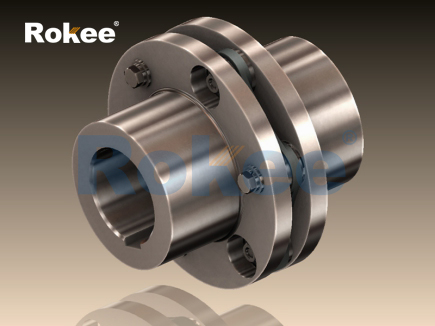
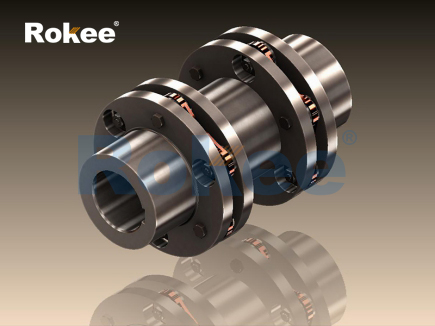
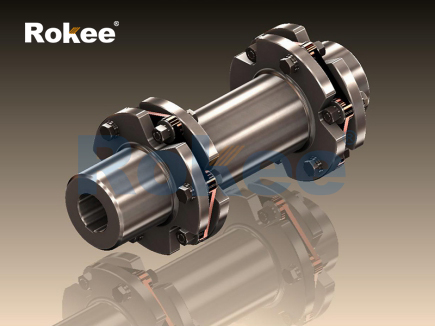
In the modern mechanical transmission system, the connection components between rotating shafts determine the stability, transmission accuracy and service life of the entire mechanical equipment. As a high-performance transmission connecting part, flexible membrane coupling relies on the elastic deformation of thin membrane components to complete torque transmission and shaft displacement compensation. It has gradually become an indispensable core component in high-speed, high-precision and harsh working condition mechanical systems. Different from traditional flexible couplings that rely on rubber or spring elastic elements, flexible membrane coupling mostly uses metal thin plates as the deformation carrier, which realizes flexible connection while maintaining high torsional rigidity, and balances the contradictory performance requirements of transmission efficiency and displacement compensation in mechanical operation. This paper comprehensively analyzes the structural composition, performance mechanism, main classification types and diverse application scenarios of flexible membrane coupling, and explores the inherent correlation between its structural design characteristics and engineering application value, so as to provide theoretical reference for the reasonable selection and optimized application of such couplings in industrial mechanical design.
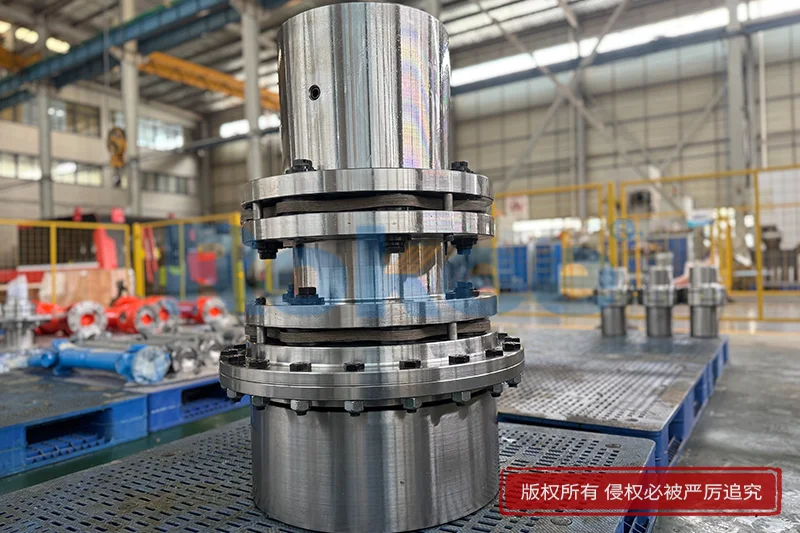
The basic structure of flexible membrane coupling is composed of three core parts: metal connecting flanges, flexible membrane components and fastening connecting parts. The flanges on both sides are connected with the driving shaft and driven shaft respectively, and the middle membrane pieces are fixed between the two groups of flanges through bolts or rivets. The membrane pieces are usually made of high-strength alloy metal materials with excellent fatigue resistance and tensile properties. The smooth and thin plate structure can produce tiny elastic deformation under external force. In the working process, the torque is transmitted from the driving flange to the membrane assembly, and then stably transmitted to the driven flange through the elastic deformation of the membrane pieces, so as to realize the synchronous rotation of the two shafts. The rationality of the structural design is reflected in the integrated optimization of mechanical stress distribution and deformation space. The symmetrical layout of the membrane pieces can evenly disperse the torque load, avoid local stress concentration, and effectively reduce the structural fatigue loss caused by long-term cyclic operation. Meanwhile, the gap-free matching design between the connecting parts eliminates the rotation backlash in the torque transmission process, which ensures the high-precision transmission state of the coupling during operation.
According to the structural combination form and membrane layout mode, flexible membrane couplings can be divided into two mainstream types: single membrane structure and multi-layer composite membrane structure, and each type has unique structural characteristics and applicable working conditions. The single membrane coupling adopts an integrated single thin plate as the elastic deformation element, with a simple and compact overall structure, light weight and low rotational inertia. The single membrane has good angular displacement compensation ability, which can adapt to the tiny angular deflection generated by the installation deviation of the two connecting shafts. Due to the limitation of single-layer structural strength, this type of coupling is more suitable for mechanical systems with medium and low torque, stable operation load and low vibration amplitude. It is easy to process and assemble, and occupies a small installation space, which is convenient for the integrated layout of compact mechanical equipment. The multi-layer composite membrane coupling is composed of multiple stacked thin membrane pieces, and the membrane layers are fixed at intervals by fasteners. The superimposed structure significantly improves the overall torsional strength and torque bearing capacity of the coupling. The gaps between the membrane layers can provide larger elastic deformation space, which enhances the comprehensive compensation ability for axial, radial and angular composite displacements. In addition, the multi-layer structure can disperse the vibration impact generated by sudden load changes, reduce the vibration amplitude transmitted between the shafts, and maintain the stable operation of the transmission system. Compared with the single membrane type, the multi-layer composite membrane coupling has higher structural rigidity and fatigue resistance, and can adapt to high-load and high-strength continuous working environments.
In addition to the two basic classification forms, flexible membrane couplings can also be distinguished according to the connection mode of intermediate components, including rigid bolt connection and flexible rivet connection. The bolt-connected membrane coupling has high positioning accuracy, and the fastening strength of the bolts ensures that there is no relative sliding between the membrane pieces and the flanges during high-speed rotation. It is suitable for high-speed rotating equipment that requires strict dynamic balance. The rivet-connected structure has better stress buffering performance. The flexible contact between rivets and membrane pieces can reduce the shear stress at the connection nodes, slow down the fatigue aging speed of membrane materials, and extend the service life of components. This classified form based on connection details further enriches the product system of flexible membrane couplings, making it adaptable to differentiated working condition requirements in various industrial fields.
The excellent comprehensive mechanical properties are the core reason why flexible membrane couplings are widely used in modern industry, and its performance advantages are prominently reflected in displacement compensation, transmission stability, environmental adaptability and maintenance cost control. Firstly, the multi-directional displacement compensation capability is one of the most typical performances of this coupling. Affected by installation errors, equipment vibration and thermal expansion and contraction during operation, the driving shaft and driven shaft are prone to produce tiny deviations in axial, radial and angular directions. The flexible membrane pieces can absorb and offset these deviations through elastic deformation, avoid additional mechanical stress on the shaft body, bearings and other components, and reduce the wear loss of the transmission system. Secondly, the metal membrane structure has high torsional rigidity and zero rotation backlash characteristics. There is no clearance in the torque transmission process, which can accurately transmit rotational speed and torque, and meet the high-precision positioning and transmission requirements of sophisticated mechanical equipment. Different from elastic couplings using polymer materials, metal membrane components will not produce plastic deformation or aging failure due to long-term torque action, maintaining stable transmission accuracy for a long time.
In terms of environmental adaptability, flexible membrane couplings have outstanding tolerance to extreme working environments. The metal raw materials with stable chemical properties can resist oxidation and corrosion, and can maintain stable structural performance in high-temperature, low-temperature and humid corrosive environments. There is no need to add lubricating media such as grease during operation, which avoids the performance degradation caused by lubricant deterioration and contamination, and also makes it applicable to clean industrial production environments that prohibit oil pollution. Meanwhile, the overall structure has good vibration damping and noise reduction performance. The elastic deformation of the membrane can absorb the torsional vibration generated by load fluctuation, suppress the resonance phenomenon of the transmission system, reduce the mechanical operation noise, and improve the working comfort of the equipment. In terms of later maintenance, the integrated structural design reduces the number of vulnerable parts. The metal membrane has excellent fatigue resistance, and the long-term continuous operation will not produce wear debris. The maintenance cycle is long, and the daily inspection and maintenance procedures are simple, which effectively reduces the comprehensive operation cost of mechanical equipment.
Despite the numerous performance advantages, flexible membrane couplings also have certain structural limitations, which need to be reasonably considered in engineering selection. The membrane pieces are thin and sensitive to excessive radial displacement. When the radial deviation of the two shafts is too large, the membrane will bear excessive shear stress, which is easy to cause fatigue fracture. Therefore, the installation alignment accuracy of the equipment is required to be high. In addition, although the multi-layer membrane structure has improved the torque bearing capacity, its overall damping performance for severe impact loads is weaker than that of elastic couplings using rubber materials. It is not suitable for mechanical equipment with frequent sudden impact and strong vibration. Understanding these limitations can help avoid application mistakes and give full play to the structural advantages of flexible membrane couplings in applicable scenarios.
Flexible membrane couplings cover a wide range of industrial application scenarios, involving high-precision manufacturing, energy power, petrochemical industry, marine engineering and other fields, and realize differentiated application according to different structural types and performance parameters. In the field of precision manufacturing and processing, this coupling is widely used in numerical control machine tools, industrial automated manipulators and semiconductor processing equipment. The zero-backlash transmission characteristic ensures the precise positioning of the processing components. The tiny displacement compensation function offsets the assembly errors of precision parts, avoids the processing deviation caused by shaft vibration, and improves the processing accuracy and product qualification rate of high-precision workpieces. The compact structural design also meets the space layout requirements of integrated precision equipment, realizing efficient transmission in a limited installation space.
In the energy and power industry, flexible membrane couplings are mainly applied to power generation equipment and energy transmission devices. In wind power generation systems, they are used to connect gearboxes and power generators. The multi-layer membrane structure bears the unstable torque generated by wind speed fluctuation, absorbs the irregular vibration of the transmission shaft, and ensures the stable power generation operation of the unit under complex wind conditions. In thermal power plants, the couplings are installed between steam turbines and generators to adapt to the axial displacement caused by thermal expansion of high-temperature equipment, reduce the vibration interference of high-speed rotating units, and improve the operational safety and stability of power generation equipment. In addition, this coupling is also applicable to various power pump sets in energy stations, realizing efficient and stable power transmission of fluid conveying equipment.
The petrochemical industry has high requirements for the corrosion resistance and continuous operation performance of mechanical components, and flexible membrane couplings fully meet the harsh working condition needs of this industry. They are applied to high-speed compressors, chemical delivery pumps and reaction kettle transmission devices in chemical production. The corrosion-resistant metal membrane can resist the erosion of chemical volatile gases and humid media, and the non-lubrication design avoids the contamination of chemical raw materials by lubricants. The long-life and low-failure characteristics enable the chemical production equipment to operate continuously for a long time, reducing the downtime loss caused by component replacement and maintenance, and improving the continuous production capacity of chemical production lines.
In the field of marine engineering and heavy machinery, high-torque multi-layer flexible membrane couplings are used in ship propulsion systems and heavy-duty transmission equipment. Inside the ship, the couplings connect diesel engines and propeller shafts, compensating for structural deformation and assembly deviation of the hull during navigation. The high torsional strength can bear the large torque generated by the power unit, and the excellent seawater corrosion resistance adapts to the humid and salt-spray marine working environment. In heavy industrial machinery such as mining and building materials production, the couplings are matched with large transmission equipment to stabilize the torque transmission under heavy load conditions, reduce the structural wear of the transmission system, and extend the service life of heavy machinery.
With the continuous progress of industrial manufacturing technology, the structural optimization and performance upgrading of flexible membrane couplings are also advancing steadily. At the material level, high-strength alloy composite materials and surface anti-fatigue treatment processes are gradually applied to membrane production, which further improves the tensile strength and fatigue resistance of thin plates, and expands the bearing range of torque and displacement. In terms of structural design, the optimized membrane shape and layered combination mode can balance the lightweight and high-strength performance of the coupling, reduce rotational inertia while ensuring bearing capacity, and adapt to the higher speed operation requirements of modern machinery. In the intelligent manufacturing environment, the integrated design of couplings and monitoring components has become a development trend. By sensing the stress and deformation state of the membrane, the real-time operating data of the transmission system can be fed back, which is convenient for personnel to carry out predictive maintenance and improve the intelligent management level of mechanical equipment.
In conclusion, flexible membrane coupling forms a unique flexible transmission mechanism relying on metal elastic membrane components. Its diversified structural types meet the differentiated working condition requirements of various industries, and excellent mechanical properties such as zero-backlash transmission, multi-directional displacement compensation and environmental adaptability make it occupy an important position in the modern mechanical transmission industry. From precision sophisticated equipment to heavy industrial machinery, from conventional production environments to extreme harsh working conditions, flexible membrane couplings provide stable and reliable connection guarantees for mechanical shaft transmission. Although restricted by structural characteristics, it has certain application limitations, reasonable type selection and installation debugging can effectively avoid performance defects. In the future, with the continuous innovation of material technology and structural design concept, flexible membrane couplings will develop towards higher strength, lighter weight and intelligent monitoring, and further expand the application boundary in emerging industrial fields, providing more reliable basic component support for the upgrading and iteration of modern mechanical engineering technology.
pu sandwich panel line,pu sandwich panel machine,sandwich panel machine
« Flexible Membrane Couplings » Latest Update Date: May 8, 2026
https://www.rokeecoupling.net/tags/flexible-membrane-couplings.html