In the landscape of mechanical power transmission, the need for reliable, efficient, and durable coupling solutions has become increasingly critical, especially in high-demand industrial environments where precision and stability are non-negotiable. Among the diverse range of coupling technologies, the metal disc coupling stands out as a high-performance option, renowned for its ability to transmit torque efficiently while accommodating shaft misalignments and withstanding harsh operating conditions. Unlike flexible couplings that depend on elastomeric components—prone to aging, temperature sensitivity, and fatigue—the metal disc coupling leverages the elastic deformation of metal discs to achieve torque transfer and misalignment compensation. This all-metal construction endows it with superior durability, environmental resistance, and long service life, making it a preferred choice in numerous high-end and heavy-duty applications. This article provides a comprehensive overview of the metal disc coupling, exploring its structural design, working principle, key performance advantages, typical application scenarios, scientific selection criteria, and practical maintenance strategies. The objective is to equip engineering professionals with a systematic understanding of this robust transmission component.
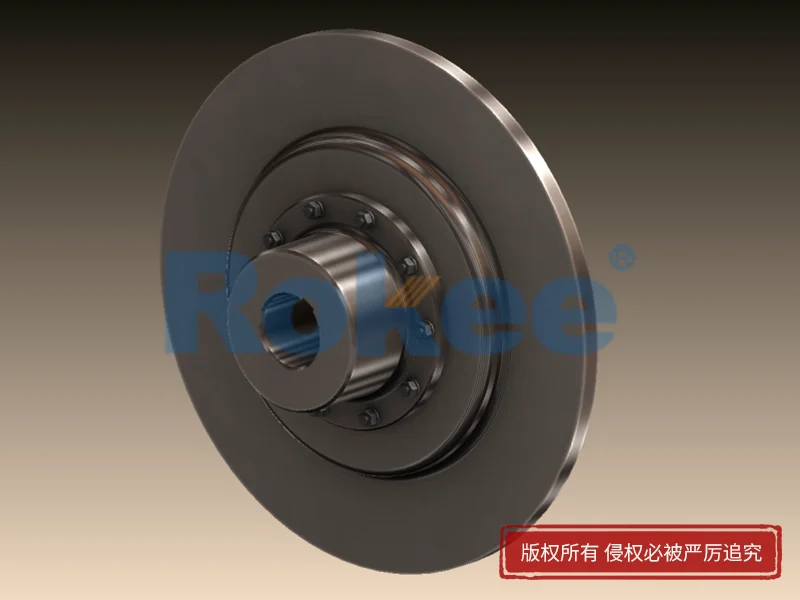
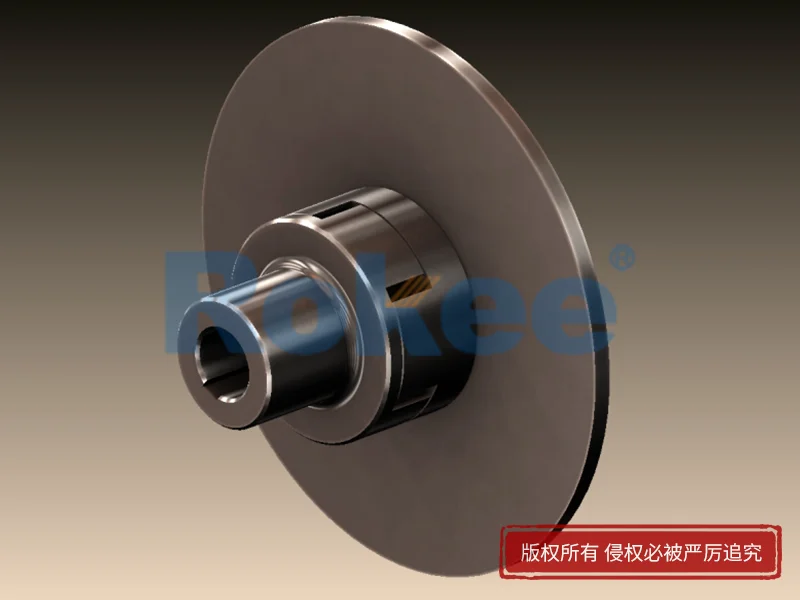
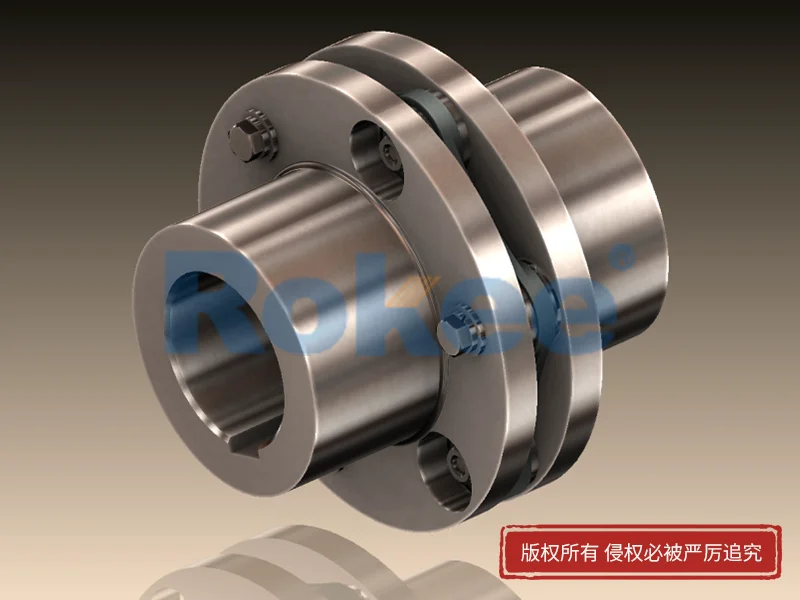
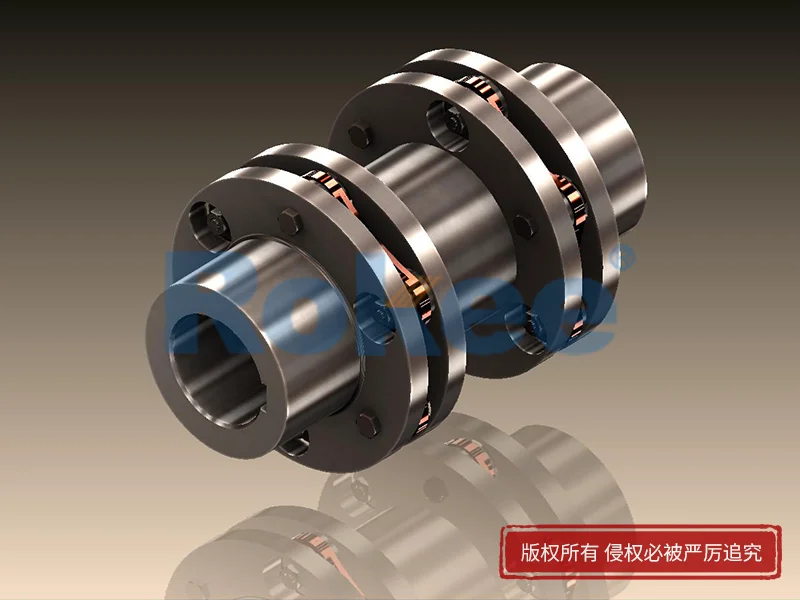
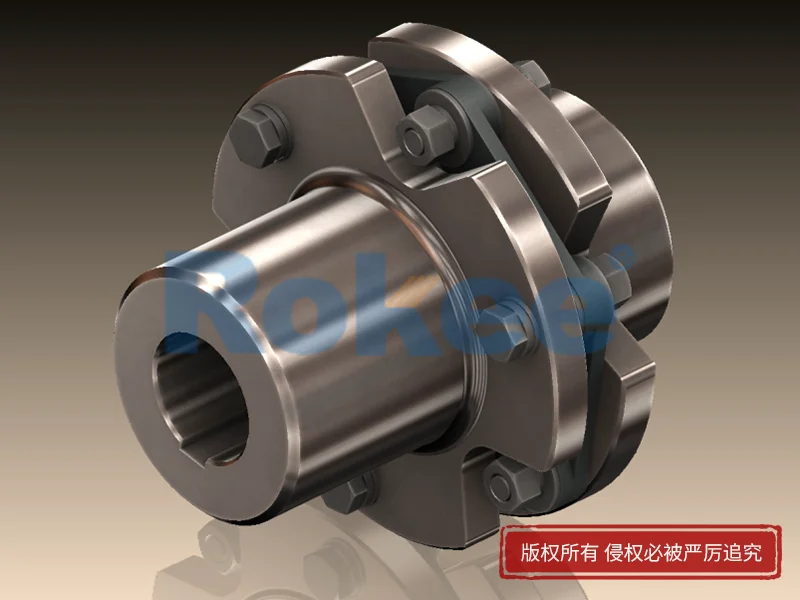
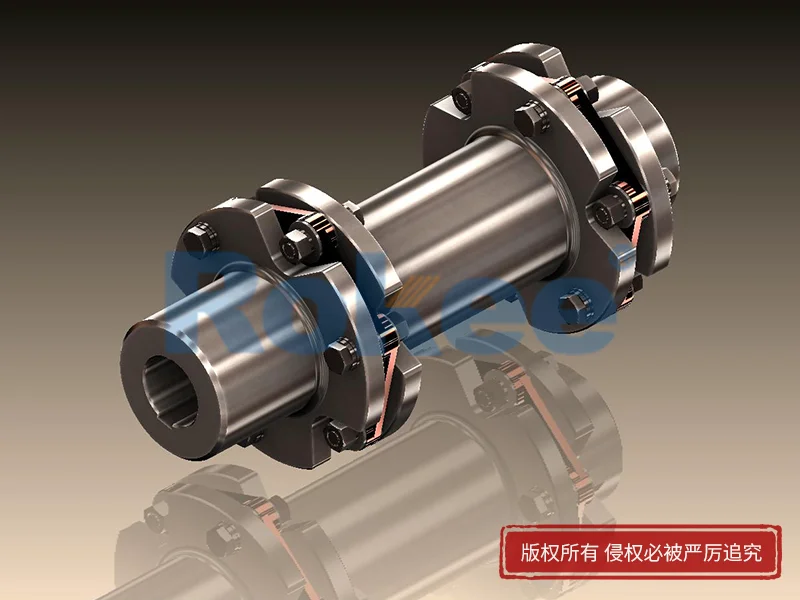
The structural design of the metal disc coupling is characterized by robustness, precision, and modularity, primarily consisting of four core components: two shaft hubs, a metal disc pack, high-strength connecting bolts, and positioning elements (such as spacers or sleeves). The shaft hubs serve as the interface between the coupling and the driving/driven shafts, typically manufactured from high-strength alloy steels (e.g., 40Cr, 42CrMo) or stainless steels. These materials are selected for their excellent mechanical properties, including high tensile strength, wear resistance, and toughness, ensuring the hubs can withstand the stresses generated during torque transmission. The inner bore of the hubs is precision-machined to achieve a tight fit with the shafts, with common connection methods including keyway fit, interference fit, and expansion sleeve connection. Keyway fits are widely used for general industrial applications, while interference fits and expansion sleeve connections are preferred for high-speed and high-precision scenarios, as they minimize concentricity errors and enhance transmission stability.
The metal disc pack is the functional core of the coupling, responsible for torque transmission and misalignment compensation. Composed of one or more thin, circular metal discs, the pack is fabricated from high-quality elastic alloys such as 304 stainless steel, 1Cr18Ni9Ti, or Inconel. These materials possess exceptional elastic deformation capabilities, fatigue resistance, and corrosion resistance, enabling the discs to undergo repeated elastic deformation without permanent damage during long-term operation. The design of the metal discs varies according to application requirements, with common configurations including solid discs, slotted discs, and perforated discs. Solid discs feature a simple structure and high torque-bearing capacity, making them suitable for low-speed, heavy-load applications. Slotted discs, with multiple evenly distributed radial slots, offer enhanced flexibility and improved misalignment compensation, ideal for high-speed and medium-load scenarios. Perforated discs, with a pattern of holes drilled across the disc surface, balance torque capacity and flexibility, often used in applications requiring moderate misalignment compensation.
The metal disc pack is securely connected to the shaft hubs via high-strength connecting bolts. These bolts are typically made of alloy steel and undergo rigorous heat treatment (e.g., quenching and tempering) to achieve high tensile strength and fatigue resistance, ensuring the reliability of the connection under dynamic loads. Positioning elements such as spacers or sleeves are used to maintain the coaxiality of the disc pack and the hubs, preventing lateral movement and ensuring uniform force distribution across the discs. The bolts are evenly spaced along the circumference of the discs to ensure that the torque is transmitted uniformly, minimizing stress concentrations and extending the service life of the disc pack.
The working principle of the metal disc coupling is based on the elastic deformation of the metal disc pack. When the driving shaft rotates, it imparts rotational motion to the driving hub, which transmits torque to the metal disc pack via the connecting bolts. Under the action of torque, the metal discs undergo elastic deformation—specifically, bending, stretching, or compressing—depending on the type of shaft misalignment. This deformation enables the coupling to compensate for three primary types of misalignment: axial displacement, radial displacement, and angular displacement. Axial displacement, caused by thermal expansion and contraction of shafts or installation errors, is absorbed by the axial stretching or compression of the discs. Radial displacement, resulting from shaft deflection under load or equipment base deformation, is accommodated by the radial bending of the discs, which bridge the gap between the misaligned shafts. Angular displacement, often due to improper installation or equipment inclination, is compensated for by the asymmetric bending of the discs, allowing the hubs to rotate at an angle relative to each other without generating excessive bending moments on the shafts or bearings.
A key advantage of this working principle is the absence of relative sliding between components. Unlike gear couplings or universal joints, which rely on sliding or rolling contact, the metal disc coupling transmits torque through rigid connections and elastic deformation, eliminating wear caused by friction. This not only ensures high transmission accuracy but also reduces maintenance requirements, as there is no need for lubrication to mitigate wear. Additionally, the metal disc pack exhibits inherent vibration damping properties. While not as effective as elastomeric components, the elastic deformation of the discs can absorb high-frequency vibrations generated by the driving motor or driven equipment, reducing vibration transmission and improving the stability of the entire transmission system.
Compared to other types of couplings, the metal disc coupling offers a multitude of performance advantages that make it indispensable in high-demand applications. Firstly, it delivers exceptional transmission accuracy and efficiency. The rigid connection between the disc pack and the hubs ensures minimal backlash (typically less than 0.02 mm) and no relative sliding, resulting in transmission accuracy of 0.01-0.05 mm and efficiency exceeding 99.8%. This level of precision is critical for high-precision equipment such as CNC machine tools, precision robots, and aerospace components. Secondly, it provides excellent misalignment compensation capability. Depending on the disc design and size, the coupling can accommodate radial displacements of 0.1-0.5 mm, axial displacements of 1-5 mm, and angular displacements of 0.5-3 degrees. This reduces the requirement for ultra-precise shaft alignment during installation, lowering labor costs and simplifying the installation process.
Thirdly, the metal disc coupling exhibits superior environmental adaptability. The all-metal construction, particularly when using stainless steel or high-temperature alloys, ensures resistance to high temperatures (up to 500°C), low temperatures (down to -50°C), corrosion, humidity, and chemical exposure. Unlike elastomeric couplings, which degrade under extreme temperatures or harsh chemicals, metal disc couplings can operate reliably in environments such as petrochemical plants, power stations, and marine applications. Fourthly, it features a compact structure and lightweight design. The modular design and thin metal discs result in a small footprint and low weight, making it suitable for applications with limited installation space, such as automotive transmissions, aerospace engines, and precision machinery.
Fifthly, the coupling offers a long service life and low maintenance costs. The metal disc pack, made from fatigue-resistant alloys, can last 5-10 years under normal operating conditions. Unlike elastomeric couplings that require regular replacement of elastic elements, metal disc couplings only need periodic inspection, eliminating the need for lubrication and reducing maintenance downtime and costs. Finally, it has a high torque-bearing capacity. The combination of high-strength materials and optimized disc design enables the coupling to transmit torques ranging from a few N·m to several thousand N·m, meeting the requirements of both light-duty precision equipment and heavy-duty industrial machinery such as large compressors, pumps, and turbines.
Due to its excellent performance characteristics, the metal disc coupling is widely used across a range of high-end and demanding industrial sectors. One of the most prominent application fields is the aerospace industry. In aircraft engines, auxiliary power units (APUs), and flight control systems, the coupling is used to connect rotating components such as turbines, compressors, and generators. The high-temperature resistance, light weight, and high transmission accuracy of the metal disc coupling align with the strict requirements of aerospace equipment, ensuring reliable operation in extreme conditions (e.g., high temperatures above 300°C and high vibration). For example, in the connection between an aircraft engine's high-pressure turbine and the generator, the coupling efficiently transmits torque while compensating for minor misalignments caused by thermal expansion.
The precision machinery industry is another major application area, encompassing CNC machine tools, machining centers, precision robots, and electronic component processing equipment. These applications demand ultra-high transmission accuracy to ensure machining precision and motion control. The metal disc coupling's minimal backlash and high precision make it ideal for connecting servo motors to ball screws or linear guides, ensuring that the torque is transmitted without loss and maintaining the positioning accuracy of machine tool workbenches or robot arms. In the energy and power industry, metal disc couplings are used in thermal power plants, nuclear power plants, and wind power generation systems to connect generators, steam turbines, water turbines, and wind turbine main shafts. The coupling's high torque-bearing capacity and reliable operation ensure the stable performance of power generation equipment, even under fluctuating loads and harsh environmental conditions.
The petrochemical industry also relies heavily on metal disc couplings, particularly in large compressors, pumps, and reaction vessels. These equipment operate in high-temperature, high-pressure, and corrosive environments (e.g., exposure to hydrocarbons, acids, and alkalis). The corrosion resistance and high-temperature resistance of stainless steel or Inconel disc packs ensure long-term reliable operation, avoiding the premature failure common with elastomeric couplings. Other notable application fields include the automotive industry (high-performance engines, hybrid vehicle drive systems), the marine industry (marine diesel engines, propeller shafts), and the medical equipment industry (precision imaging devices, surgical robots). In each of these sectors, the metal disc coupling's unique combination of performance and durability makes it an indispensable component of the transmission system.
Selecting the appropriate metal disc coupling is critical to ensuring the reliable operation of the transmission system, optimizing equipment performance, and minimizing maintenance costs. When making a selection, several key factors must be considered. Firstly, torque requirements. The rated torque of the coupling must be greater than or equal to the maximum operating torque of the system, including startup torque and shock loads. A safety margin of 1.2-2.5 is recommended, with higher margins (2.0-2.5) for heavy-duty applications with significant shock loads (e.g., crushers, compressors). Accurate torque calculation is essential to avoid overloading the disc pack, which can lead to fatigue failure.
Secondly, misalignment compensation needs. It is crucial to measure or calculate the actual misalignment (axial, radial, angular) of the shafts in the system and select a coupling with maximum allowable misalignment exceeding the actual value. Exceeding the allowable misalignment will impose excessive stress on the metal discs, accelerating fatigue damage and reducing service life. Thirdly, operating speed. The maximum allowable speed of the coupling must be greater than the operating speed of the shafts. High-speed operation generates centrifugal forces that can deform or damage the discs and hubs. For high-speed applications (e.g., precision spindles, high-speed motors), a coupling with a high maximum allowable speed should be selected, and dynamic balance testing should be performed to ensure stable operation.
Fourthly, operating environment. Environmental conditions such as temperature, humidity, corrosion, and chemical exposure dictate the selection of materials for the disc pack and hubs. For high-temperature environments (above 300°C), Inconel or other high-temperature alloys are recommended. For corrosive environments (e.g., marine, petrochemical), 316L stainless steel or titanium alloy is preferred. For normal temperature and dry environments, common alloy steels can be used to reduce costs. Fifthly, installation space and connection type. The coupling's size and structure must fit within the available installation space. For applications with limited axial space, a compact single-disc design is suitable; for larger radial space, a multi-disc pack can be selected. The connection method (keyway, interference, expansion sleeve) should align with the shaft design and precision requirements.
Finally, transmission accuracy requirements. High-precision equipment (e.g., CNC machine tools, robots) requires couplings with backlash less than 0.02 mm, while general industrial equipment can use couplings with standard accuracy to reduce costs. Considering these factors ensures that the selected metal disc coupling is perfectly matched to the application, maximizing performance and reliability.
Proper maintenance of the metal disc coupling is essential to extend its service life and ensure reliable operation. Maintenance activities primarily include regular inspection, cleaning, and timely replacement of worn components. Firstly, regular inspection. For high-speed and heavy-duty applications, inspections should be conducted every 1-3 months; for general applications, every 3-6 months. Key inspection items include checking the metal discs for cracks, deformation, or fatigue wear; verifying the tightness and integrity of connecting bolts; and assessing the coaxiality of the hubs and wear of positioning elements. Any defects detected should be addressed immediately to prevent sudden failure.
Secondly, cleaning. Regular cleaning of the coupling surface is necessary to remove dust, oil stains, and corrosive residues, especially in dusty or corrosive environments. A neutral cleaning agent compatible with the coupling material should be used to avoid corrosion of the metal components. After cleaning, the coupling should be thoroughly dried to prevent moisture buildup. Thirdly, avoiding overload operation. The transmission system should be operated within the coupling's rated torque range. Overload operation causes excessive deformation of the metal discs, leading to fatigue damage and shortened service life. Installing a torque monitoring device to provide real-time alerts for overload conditions is recommended.
Fourthly, proper installation and alignment. During installation, professional alignment tools (e.g., laser alignment instruments) should be used to ensure the coaxiality of the driving and driven shafts meets the coupling's requirements. Improper alignment is a leading cause of premature coupling failure. Fifthly, proper storage and handling. Uninstalled couplings should be stored in a dry, ventilated, and clean environment to avoid moisture, corrosion, and dust contamination. The metal disc pack is a precision component, so care should be taken during handling to avoid collision, bending, or scratching. Couplings should be stored horizontally to prevent deformation of the discs due to long-term vertical placement.
As industrial technology advances, the performance requirements for metal disc couplings continue to evolve. Future development trends will focus on four key areas. Firstly, the development of high-performance materials. The adoption of advanced materials such as carbon fiber composites and shape memory alloys will further enhance the coupling's performance. Carbon fiber composites offer lightweight, high-strength, and corrosion-resistant properties, reducing the coupling's weight while improving torque capacity. Shape memory alloys enable the discs to automatically recover their original shape after deformation, significantly extending fatigue life.
Secondly, structural optimization and lightweight design. Advanced simulation tools such as finite element analysis (FEA) and dynamic simulation will be used to optimize the design of the metal discs and hubs, reducing weight while maintaining strength and flexibility. Additive manufacturing (3D printing) technology will enable the production of complex-shaped discs that are difficult to process using traditional methods, improving performance and customization capabilities. Thirdly, the integration of intelligent monitoring. Sensors (e.g., strain sensors, temperature sensors, vibration sensors) will be embedded in the coupling to enable real-time monitoring of operating parameters such as disc deformation, temperature, and vibration. This data will be analyzed to predict potential faults, enabling predictive maintenance and improving the reliability and safety of the transmission system.
Fourthly, the development of specialized products for extreme environments. As industries such as deep-sea exploration, space exploration, and nuclear energy expand, there will be a growing demand for metal disc couplings that can operate in ultra-high temperatures, ultra-low temperatures, ultra-high pressures, and high-radiation environments. Manufacturers will develop specialized couplings through material innovation and structural design to meet these challenging requirements, expanding the application range of metal disc couplings.
In conclusion, the metal disc coupling is a high-performance mechanical transmission component that combines precision, durability, and versatility. Its key advantages—including high transmission accuracy, excellent misalignment compensation, superior environmental adaptability, compact design, and low maintenance requirements—make it suitable for a wide range of high-demand applications across aerospace, precision machinery, energy, petrochemical, and automotive industries. The correct selection and proper maintenance of metal disc couplings are critical to ensuring the reliable operation of transmission systems and optimizing equipment performance. Looking ahead, advancements in materials, structural design, and intelligent technology will further enhance the capabilities of metal disc couplings, enabling them to meet the evolving needs of modern industry and play an increasingly important role in high-precision and heavy-duty power transmission applications. For engineering professionals, a thorough understanding of the metal disc coupling's characteristics, selection criteria, and maintenance requirements is essential for leveraging this component effectively in practical engineering, driving industrial progress and innovation.
pu sandwich panel line,pu sandwich panel machine,sandwich panel machine
« Metal Disc Couplings » Latest Update Date: May 8, 2026
https://www.rokeecoupling.net/tags/metal-disc-couplings.html