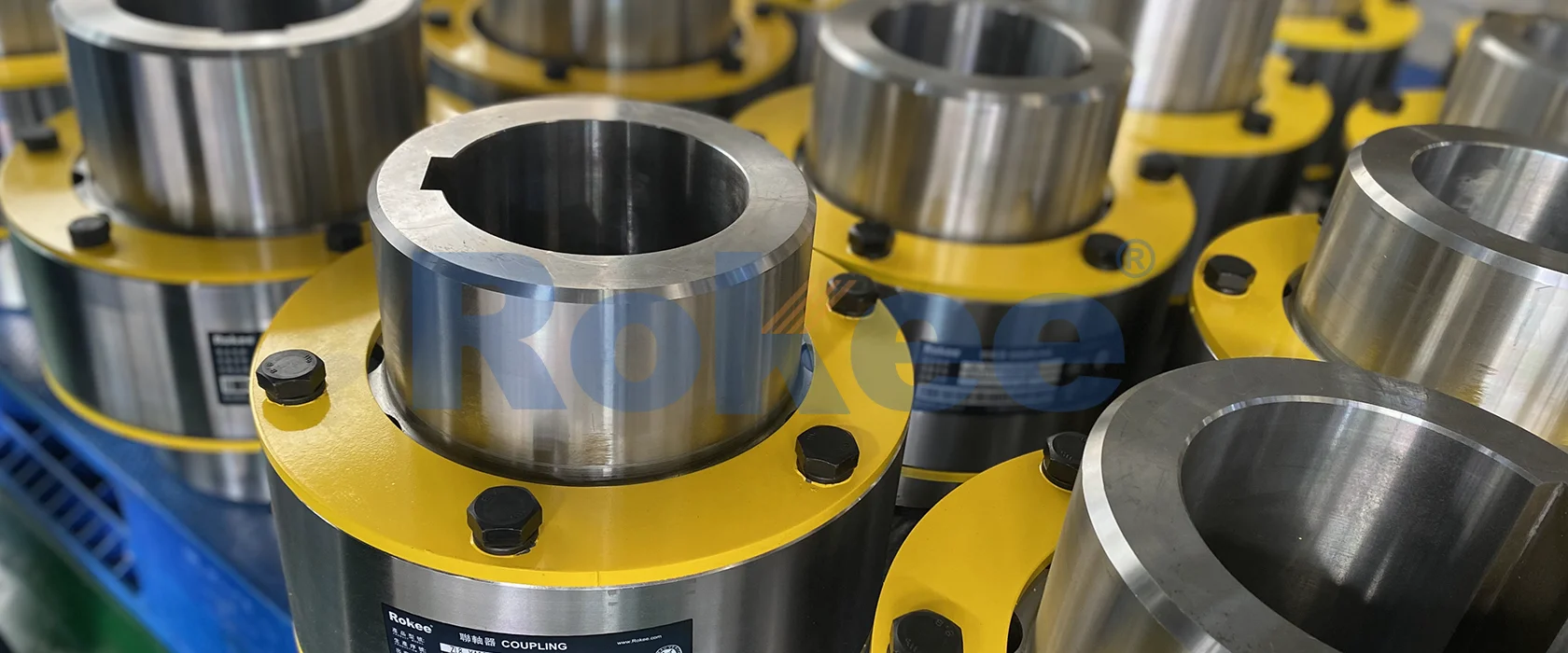
Rokee is a well-known high-quality supplier of Pin And Bush Type Couplings and technical services in China, customize pin and bush type couplings according to user drawings, alternatively, if the user provides pin and bush type couplings parameters, we can select the model and design drawings for you, support wholesale and export.

In the intricate network of mechanical power transmission systems, couplings act as the vital link between rotating shafts, facilitating torque transfer while accommodating inevitable misalignments and absorbing operational shocks. Among the myriad coupling variants available, the pin and bush type coupling has established itself as a versatile and cost-effective solution, widely adopted across industrial, automotive, and agricultural sectors. Characterized by its simple yet robust design, this coupling type relies on the interaction between cylindrical pins and bushings to transmit motion and torque, while offering inherent flexibility to handle minor to moderate misalignments. This article comprehensively explores the design principles, working mechanisms, material considerations, application landscapes, evolutionary advancements, and maintenance practices of pin and bush type couplings, highlighting their enduring relevance in modern mechanical engineering.
At its essence, a pin and bush type coupling is a flexible mechanical device engineered to connect two coaxial shafts—typically a driving shaft (e.g., from a motor) and a driven shaft (e.g., from a pump or gearbox)—enabling the seamless transfer of rotational motion and torque. Unlike rigid couplings, which demand precise coaxial alignment and offer no flexibility, pin and bush couplings incorporate a flexible element (the bushing) that allows for limited angular, axial, and radial misalignments. This flexibility is crucial in real-world applications, where factors such as thermal expansion, manufacturing tolerances, installation errors, and operational vibrations often lead to shaft misalignment. The core advantage of this coupling type lies in its ability to balance torque transmission efficiency with misalignment accommodation, all while maintaining structural simplicity and low production costs.
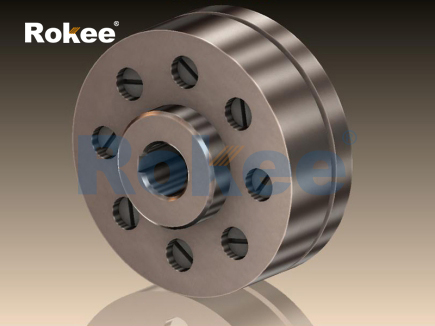
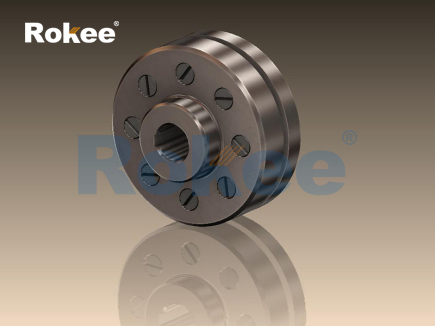
To grasp the functionality of pin and bush type couplings, a detailed examination of their structural components is essential. While design variations exist to suit specific application requirements, the standard configuration comprises five key elements: two flanges, a set of cylindrical pins, corresponding bushings, and retaining elements (such as nuts, cotter pins, or circlips). The two flanges—one attached to the driving shaft and the other to the driven shaft—serve as the primary mounting interfaces. These flanges are typically fabricated as solid discs or with reinforcing ribs to enhance structural rigidity while minimizing weight. On one of the flanges (referred to as the pin flange), cylindrical pins are rigidly fastened at regular intervals along the circumference. These pins are usually press-fitted or bolted into the flange to ensure secure torque transmission.
The bushings, which are the flexible components of the coupling, are inserted onto each pin. Manufactured from elastic or semi-elastic materials, the bushings act as the interface between the pins and the second flange (the bush flange). The bush flange features circular holes (bushing seats) that are slightly larger than the outer diameter of the bushings, allowing the bushings to fit snugly while permitting limited movement. This clearance between the bushing and the bushing seat is what enables the coupling to accommodate misalignments. Retaining elements are used to secure the pins in place, preventing axial displacement during operation. In some designs, additional components such as rubber or elastomeric sleeves may be added around the bushings to enhance shock absorption and reduce noise, further improving the coupling’s performance in dynamic environments.
The working principle of a pin and bush type coupling revolves around the transfer of torque through the interaction between the pins and bushings, while leveraging the flexibility of the bushings to accommodate misalignments. When the driving shaft rotates, it imparts rotational motion to the pin flange. The pins attached to this flange then exert a tangential force on the bushings, which in turn transmit the torque to the bush flange and ultimately to the driven shaft. During operation, if the shafts experience angular misalignment (where the shafts are inclined relative to each other), radial misalignment (lateral offset between shaft centers), or axial misalignment (axial movement along the shaft axis), the bushings deform slightly or slide within the bushing seats, absorbing the misalignment without disrupting torque transmission.
A key aspect of this working mechanism is the role of the bushing material in determining the coupling’s flexibility, torque capacity, and durability. The bushing must be rigid enough to transmit torque efficiently but flexible enough to accommodate misalignments and absorb shocks. Additionally, the material must exhibit high wear resistance to withstand the frictional forces generated between the pin and bushing during operation. The balance between rigidity and flexibility in the bushing is what distinguishes pin and bush couplings from other flexible coupling types, such as jaw couplings or disc couplings, making them particularly suitable for applications requiring moderate misalignment accommodation and high torque capacity at a low cost.
Material selection is a critical factor in the design and performance of pin and bush type couplings, as it directly influences torque capacity, wear resistance, temperature tolerance, and suitability for specific environmental conditions. The choice of materials for each component—flanges, pins, bushings, and retaining elements—is guided by the application’s operational parameters, including torque requirements, operating speed, temperature range, and exposure to corrosive or abrasive substances.
For the flanges and pins, which are responsible for transmitting torque and maintaining structural integrity, high-strength metallic materials are the preferred choice. Common materials include carbon steel, alloy steel, and cast iron. Carbon steel is widely used for general-purpose applications due to its excellent strength-to-cost ratio and ease of machining. Alloy steel, which contains additional elements such as chromium, nickel, or molybdenum, is selected for high-torque or high-speed applications, as it offers superior mechanical strength, wear resistance, and fatigue resistance. Cast iron is used in applications where cost is a primary concern and torque requirements are moderate, such as in small-scale industrial machinery.
The bushings, being the flexible and wear-resistant component, are typically manufactured from non-metallic materials or composite materials. Rubber, neoprene, polyurethane, and nylon are among the most commonly used bushing materials. Rubber and neoprene bushings are favored for their excellent flexibility, shock absorption, and noise reduction properties, making them ideal for applications with high vibration levels, such as in automotive engines or industrial pumps. Polyurethane bushings offer a balance of flexibility and rigidity, with superior wear resistance compared to rubber, making them suitable for heavy-duty applications with moderate misalignments. Nylon bushings are valued for their low friction coefficient, high wear resistance, and resistance to chemicals, making them suitable for applications in corrosive environments, such as in chemical processing plants.
In addition to base materials, surface treatments and coatings are often applied to enhance the performance and durability of pin and bush type couplings. For metallic components such as flanges and pins, surface treatments such as galvanization, nickel plating, or powder coating are used to improve corrosion resistance. Hardening treatments, such as induction hardening or case hardening, are applied to the pins to increase their surface hardness, reducing wear caused by friction with the bushings. For non-metallic bushings, additives may be incorporated into the material to improve thermal stability, UV resistance, or lubricity, extending their service life in harsh operating conditions.
The inherent simplicity, cost-effectiveness, and versatility of pin and bush type couplings make them suitable for a wide range of applications across diverse industries. Their ability to handle moderate misalignments, absorb shocks, and transmit high torque has made them a staple in industrial machinery, automotive systems, agricultural equipment, and marine applications.
In industrial machinery, pin and bush type couplings are extensively used in pumps, compressors, fans, conveyors, and machine tools. Pumps and compressors, which operate at varying speeds and are prone to misalignment due to thermal expansion, rely on these couplings to connect the motor shaft to the pump/compressor shaft. The flexible bushings absorb misalignments and shocks, reducing stress on the bearings and other components, thereby improving the efficiency and lifespan of the equipment. Conveyors, which are used to transport materials in manufacturing and mining facilities, use pin and bush couplings to connect the drive motor to the conveyor belt system. The couplings accommodate misalignments caused by the long length of the conveyor and the dynamic loads imposed by the transported materials. In machine tools such as milling machines and lathes, pin and bush couplings ensure precise torque transmission, even with minor misalignments, contributing to the accuracy of machined components.
The automotive industry is another major user of pin and bush type couplings, where they are employed in drive shafts, transmission systems, and suspension components. In rear-wheel-drive and four-wheel-drive vehicles, the drive shaft connects the transmission to the differential, and pin and bush couplings are used to accommodate the angular misalignment that occurs as the suspension moves. The flexible bushings in these couplings absorb shocks and vibrations from the road, improving ride comfort and reducing noise. In transmission systems, pin and bush couplings are used to connect the gearbox to the engine, ensuring smooth torque transmission while accommodating minor misalignments caused by engine vibration. Additionally, these couplings are used in suspension components such as control arms, where they allow for limited movement while maintaining structural integrity.
Agricultural equipment, such as tractors, harvesters, and irrigation pumps, also relies heavily on pin and bush type couplings. Agricultural machinery operates in harsh outdoor environments, exposed to dust, dirt, and varying loads, making the robust and flexible design of pin and bush couplings ideal. Tractors use these couplings to connect the engine to various implements, such as plows, harvesters, and sprayers, enabling the transfer of high torque while accommodating misalignments caused by the uneven terrain. Irrigation pumps, which are essential for agricultural operations, use pin and bush couplings to connect the motor to the pump shaft, ensuring reliable operation even in dusty and humid environments.
Marine applications, such as ship propulsion systems and auxiliary machinery, also utilize pin and bush type couplings. Ship propulsion systems require couplings that can transmit high torque while accommodating misalignments caused by the movement of the ship in the water. Pin and bush couplings, with their high torque capacity and flexibility, are well-suited for this application. Auxiliary machinery on ships, such as generators, pumps, and compressors, also use these couplings to ensure reliable operation in the corrosive marine environment, where the use of corrosion-resistant materials (such as stainless steel for flanges and pins) is essential.
Over the years, pin and bush type coupling design has undergone significant advancements, driven by technological innovations in materials science, manufacturing processes, and the evolving demands of modern applications. These advancements have focused on improving torque capacity, enhancing durability, reducing maintenance requirements, and expanding the coupling’s suitability for specialized applications.
One of the key advancements in pin and bush type coupling design is the development of high-performance bushing materials. Traditional rubber and neoprene bushings have been replaced by advanced composite materials, such as reinforced polyurethane and thermoplastic elastomers. These composite materials offer superior wear resistance, higher temperature tolerance, and improved mechanical strength compared to traditional materials. For example, reinforced polyurethane bushings can withstand higher torques and operate at temperatures ranging from -40°C to 120°C, making them suitable for extreme operating conditions. Thermoplastic elastomers, on the other hand, combine the flexibility of rubber with the durability of plastic, offering excellent resistance to chemicals and UV radiation.
Another significant advancement is the integration of self-lubricating bushings into pin and bush type couplings. Traditional couplings require regular lubrication to reduce friction between the pins and bushings, which can be time-consuming and costly in applications where access is limited. Self-lubricating bushings, which are impregnated with solid lubricants such as graphite or molybdenum disulfide, eliminate the need for regular lubrication. These bushings provide continuous lubrication throughout their service life, reducing friction, wear, and maintenance requirements. Self-lubricating pin and bush couplings are particularly valuable in remote or hard-to-reach applications, such as in wind turbines or offshore marine equipment.
Advancements in manufacturing technology have also contributed to the evolution of pin and bush type couplings. The adoption of computer-aided design (CAD) and finite element analysis (FEA) has enabled engineers to optimize the coupling’s design, improving load distribution and reducing stress concentrations. FEA allows for the simulation of the coupling’s performance under various operating conditions, such as high torque, misalignment, and temperature fluctuations, enabling the design of more efficient and durable couplings. Additionally, the use of precision machining techniques, such as CNC turning and milling, has improved the dimensional accuracy of the coupling components, ensuring a tighter fit between the pins and bushings and reducing backlash.
The development of specialized pin and bush type couplings for niche applications is another notable trend. For example, in the renewable energy sector, couplings designed specifically for wind turbines have been developed. These couplings are engineered to handle the high torque and dynamic loads generated by wind turbines, while accommodating the misalignments caused by the movement of the turbine blades. They are manufactured from corrosion-resistant materials to withstand the harsh outdoor environment and feature self-lubricating bushings to reduce maintenance requirements. Similarly, in the medical equipment sector, pin and bush couplings made from non-magnetic materials have been developed for use in MRI machines, where magnetic interference can disrupt equipment operation.
Despite their many advantages, pin and bush type couplings have certain limitations that must be considered when selecting them for specific applications. One of the primary limitations is their limited misalignment capacity. While they can accommodate minor to moderate misalignments, they are not suitable for applications with large angular or radial misalignments, where flexible couplings such as universal joints or spherical couplings would be more appropriate. Another limitation is the potential for bushing wear over time. The continuous friction between the pins and bushings can cause the bushings to degrade, leading to increased backlash and reduced coupling performance. This wear is accelerated in high-speed or high-torque applications, requiring regular inspection and replacement of the bushings.
Backlash, which is the amount of free rotational movement between the driving and driven shafts, is another limitation of pin and bush type couplings. Backlash is caused by the clearance between the pins and bushings, and while it is necessary to accommodate misalignments, excessive backlash can affect the precision of motion control. This makes pin and bush couplings less suitable for applications requiring precise positioning, such as in robotic systems or precision machine tools. However, advancements in bushing design, such as the use of interference fits and precision-manufactured components, have helped to minimize backlash in modern pin and bush couplings.
Proper maintenance is essential to ensure the optimal performance and long service life of pin and bush type couplings. The maintenance requirements primarily focus on inspecting and replacing worn bushings, checking for misalignment, and ensuring proper lubrication (for non-self-lubricating couplings). Regular inspection of the coupling components—flanges, pins, bushings, and retaining elements—should be conducted to identify signs of wear, damage, or corrosion. Worn bushings, which are the most commonly replaced component, should be replaced as soon as signs of cracking, deformation, or excessive wear are detected. Failure to replace worn bushings can lead to increased backlash, reduced torque transmission efficiency, and potential damage to the flanges or shafts.
For non-self-lubricating couplings, regular lubrication of the pins and bushings is crucial to reduce friction and wear. The type of lubricant used should be compatible with the bushing material and the operating conditions. For example, in high-temperature applications, high-temperature grease or oil should be used, while in corrosive environments, anti-corrosive lubricants are recommended. It is also important to ensure that the lubricant is applied in the correct quantity—too little lubricant will not provide adequate protection, while too much can lead to the accumulation of dirt and debris, which can accelerate wear.
Checking for shaft misalignment is another important maintenance practice. Excessive misalignment can put additional stress on the coupling components, leading to premature wear and failure. Misalignment can be detected using tools such as dial indicators or laser alignment systems. If misalignment is detected, the shafts should be realigned to within the coupling’s specified limits. Proper installation of the coupling is also critical for minimizing misalignment and ensuring optimal performance. The flanges should be securely fastened to the shafts, and the pins and bushings should be correctly installed and secured with the appropriate retaining elements.
Looking to the future, the evolution of pin and bush type couplings is expected to continue, driven by the growing demand for more efficient, durable, and low-maintenance mechanical components. Advancements in materials science will likely lead to the development of even more advanced bushing materials, with improved wear resistance, temperature tolerance, and environmental compatibility. For example, the use of nanocomposite materials, which incorporate nanoparticles into the base material, could further enhance the mechanical properties of bushings, making them suitable for even more demanding applications.
The integration of smart technologies into pin and bush type couplings is another emerging trend. Smart couplings equipped with sensors can monitor key performance parameters such as torque, temperature, vibration, and misalignment in real time. This data can be transmitted to a central monitoring system, allowing for predictive maintenance and early detection of potential failures. For example, sensors embedded in the bushings can detect changes in temperature or vibration that indicate excessive wear, alerting maintenance personnel to replace the bushings before they fail. Smart pin and bush couplings are particularly well-suited for critical applications such as power generation, aerospace, and industrial automation, where downtime can have significant economic consequences.
The growing focus on sustainability and environmental responsibility is also expected to influence the design and manufacturing of pin and bush type couplings. Manufacturers are likely to adopt more eco-friendly materials and manufacturing processes, such as the use of recycled metals for flanges and pins, and biodegradable materials for bushings. Additionally, the development of longer-lasting couplings with reduced maintenance requirements will help to minimize waste and reduce the environmental impact of mechanical systems.
In conclusion, pin and bush type couplings are indispensable components in modern mechanical power transmission systems, offering a unique combination of simplicity, cost-effectiveness, flexibility, and high torque capacity. Their diverse range of applications across industrial, automotive, agricultural, and marine sectors underscores their versatility and importance. The evolution of these couplings, driven by advancements in materials science, manufacturing technology, and the demands of modern applications, has led to improved performance, durability, and reduced maintenance requirements. While they have certain limitations, such as limited misalignment capacity and potential for bushing wear, proper selection, installation, and maintenance can mitigate these issues, ensuring optimal performance.
As industries continue to evolve and demand more efficient and reliable mechanical systems, pin and bush type couplings will remain a key component, with future advancements focusing on advanced materials, smart monitoring technologies, and sustainability. Understanding the design principles, working mechanisms, applications, and maintenance practices of pin and bush type couplings is essential for engineers, designers, and maintenance professionals, enabling them to select and utilize the right coupling for their specific needs, ensuring the efficient and reliable operation of their mechanical systems.
« Pin And Bush Type Couplings » Post Date: 2024/4/25 , https://www.rokeecoupling.net/tags/pin-and-bush-type-couplings.html