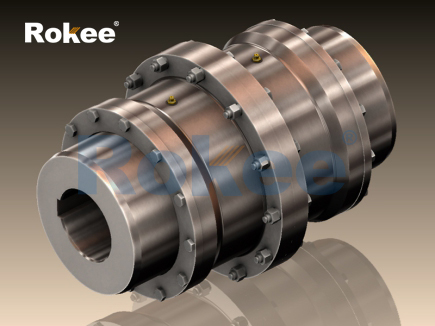
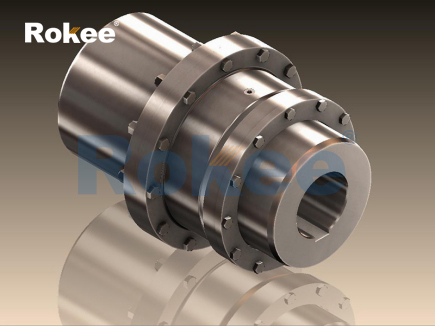
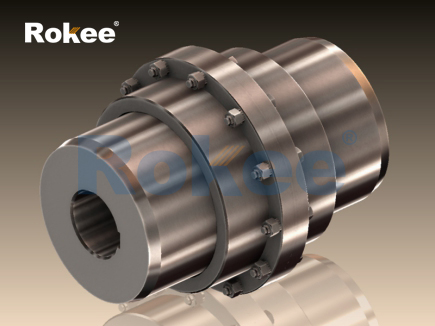
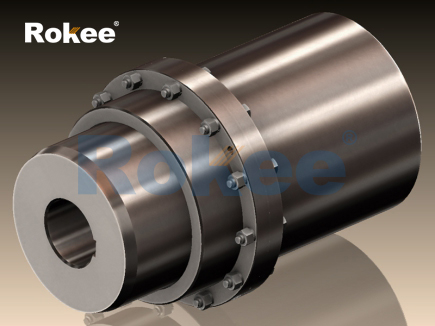
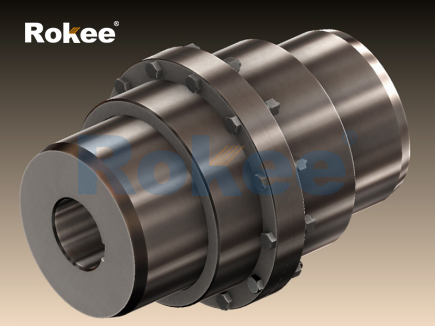
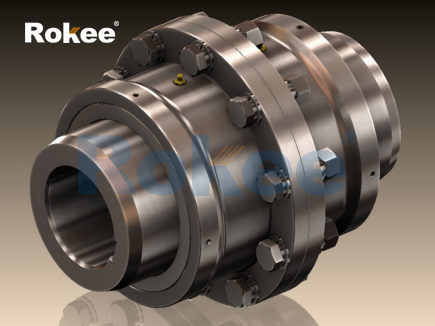
In the field of mechanical transmission systems, the rational connection between rotating shafts is essential to ensure stable power transmission and long-term operational reliability of mechanical equipment. Full gear coupling stands out among numerous shaft connection components by virtue of its robust structural design, excellent torque transmission capacity and reliable displacement compensation performance. As a rigid flexible coupling with meshing gear pairs as the core transmission structure, it has become an indispensable key component in heavy-duty mechanical equipment, high-speed transmission systems and industrial production lines with complex operating conditions.

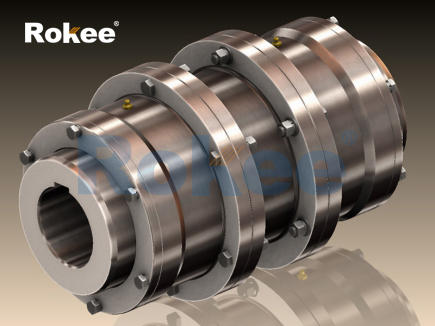
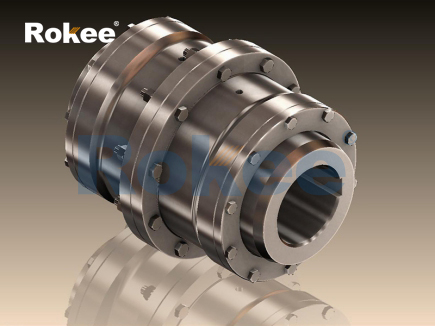
The basic structural composition of full gear coupling follows a mature and optimized mechanical design logic, and the overall structure is compact with high integration strength. The main components of a standard full gear coupling include two half-couplings with external teeth, an intermediate gear sleeve with internal teeth, fastening connecting parts and sealing and lubrication auxiliary components. The external teeth processed on the outer circular surface of the half-coupling are the core force-bearing parts for torque output, and the tooth profile is usually designed into a drum-shaped curved structure through precision machining. This special curved tooth profile effectively optimizes the stress distribution state of the tooth surface during meshing, avoids local stress concentration caused by rigid contact between flat straight teeth, and improves the overall pressure resistance and friction resistance of the tooth structure. The intermediate gear sleeve is sleeved outside the two half-couplings, and the internal teeth processed on its inner wall mesh with the external teeth of the half-couplings in a matching manner. The gap between the meshing tooth pairs is accurately calculated and reserved in the design process, which provides a movable space for relative displacement between the connected shafts. The fastening parts composed of high-strength bolts and positioning gaskets firmly fix the gear sleeve and half-couplings to prevent axial displacement and rotational deviation during high-speed operation. In addition, the closed sealing structure installed at both ends of the gear sleeve can isolate external dust, moisture and corrosive impurities, and simultaneously lock the internal lubricating grease to ensure that the meshing tooth pairs are always in a good lubrication state.
The internal material selection and processing technology of full gear coupling further consolidate its structural stability. Most of the key load-bearing components such as half-couplings and gear sleeves are made of high-quality alloy steel with stable mechanical properties. After carburizing, quenching and precision grinding processes, the tooth surface obtains high hardness and good toughness, which can resist extrusion wear and impact damage under long-term heavy load conditions. The overall structural symmetry design enables the coupling to maintain dynamic balance during high-speed rotation, effectively reducing rotational vibration and axial runout. Different from ordinary flexible couplings with simple elastic deformation compensation, the displacement compensation of full gear coupling relies on the sliding fit between meshing gear teeth. This mechanical compensation method not only has larger compensation range but also higher structural rigidity, which can balance the deformation stress generated by misalignment of the transmission shaft without causing excessive elastic deformation and power transmission loss.
The excellent comprehensive mechanical performance is the core reason why full gear coupling is widely used in industrial transmission systems. First of all, it has outstanding torque transmission capacity. The multi-tooth meshing structure enables the load to be evenly distributed on each meshing tooth pair. Under the condition of stable operation, it can continuously transmit large torque, and maintain stable transmission efficiency even under instantaneous impact load and alternating load. Compared with elastic couplings limited by elastic material strength, its bearing capacity is significantly improved, and it is suitable for heavy-load transmission working conditions that require long-term continuous operation. Secondly, the coupling has reliable multi-directional displacement compensation performance. The reserved tooth side clearance and drum-shaped tooth profile allow relative angular displacement, radial displacement and axial displacement between the driving shaft and the driven shaft. This compensation function can effectively offset the installation deviation during equipment assembly, the structural deformation of the frame caused by long-term operation, and the position offset of the shaft body caused by mechanical vibration, so as to avoid additional bending stress and shear stress on the shaft body, bearings and other components, and reduce the failure rate of transmission parts.
In terms of operational stability, full gear coupling exhibits low vibration and low noise characteristics under rated working conditions. The precisely polished tooth surface ensures smooth meshing operation, reduces friction resistance and meshing impact during rotation, and controls mechanical noise within a low range. Its working temperature adaptability is also prominent. The metal structure will not produce aging, deformation and performance attenuation due to temperature changes, and it can maintain stable working performance in both high-temperature industrial production environments and low-temperature outdoor operation scenarios. However, restricted by the structural characteristics, the damping and buffering capacity of full gear coupling is relatively weak, and it cannot absorb high-frequency vibration and strong impact load like elastic couplings. In addition, the closed lubrication system requires regular maintenance and grease replacement to avoid tooth surface abrasion caused by lubricant failure, which puts forward certain requirements for daily equipment management.
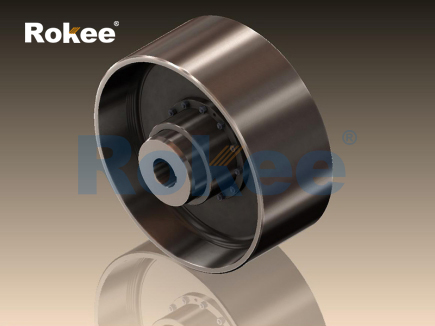
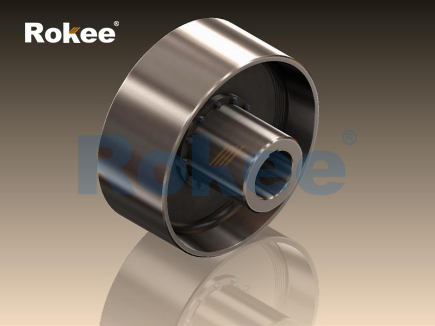
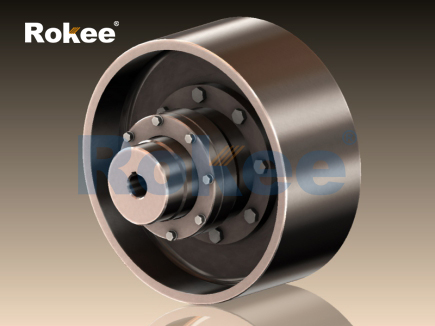
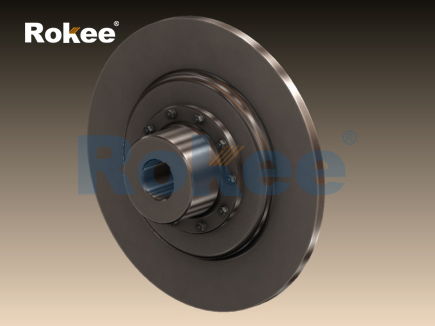
According to structural differences, connection forms and functional characteristics, full gear couplings can be divided into multiple classification types to adapt to differentiated working condition requirements. The most common classification is based on the overall structural form, including basic compact type, intermediate shaft type and brake wheel integrated type. The basic compact type full gear coupling has a simple and compact structure with small axial size. It is suitable for transmission occasions with limited installation space and small distance between two connected shafts, and is mostly used in conventional industrial mechanical transmission equipment. The intermediate shaft type full gear coupling adds an intermediate transmission shaft between two groups of meshing gear pairs. This extended structure not only increases the overall axial spacing, but also enhances the compensation ability for large-amplitude displacement and installation deviation. It is widely used in long-distance shafting transmission systems such as mining conveyor equipment and large-scale metallurgical production lines.
The brake wheel integrated full gear coupling integrates the brake wheel structure on the basis of the basic gear coupling. The integrated design simplifies the overall structure of the transmission system, omits additional braking component installation space, and can realize rapid braking and static positioning of the rotating shaft while completing power transmission. This type of coupling is mostly applied to hoisting machinery and transportation equipment that require frequent start-stop and accurate positioning. In addition, according to the tooth profile processing form, it can be divided into straight tooth gear coupling and drum-shaped tooth gear coupling. The drum-shaped tooth structure optimized by curved surface has better stress resistance and displacement compensation ability, and has gradually become the mainstream structural type in industrial applications, while the straight tooth gear coupling is only used in low-speed, light-load and low-precision transmission occasions due to the limitations of stress concentration and small compensation range.
Different types of full gear couplings have clear application boundaries in functional scenarios, and their structural differences correspond to differentiated industrial demands. Compact gear couplings are favored in small and medium-sized mechanical equipment such as fluid delivery pumps and general processing machinery due to their convenient installation and low space occupation. Intermediate shaft gear couplings solve the transmission pain points of long-distance and multi-support shafting, and maintain the stability of power transmission in complex vibration environments. Brake wheel type gear couplings combine transmission and braking functions to improve the operational safety of mobile heavy machinery. In addition, some specially optimized full gear couplings adopt reinforced sealing structures, which can adapt to harsh working environments with dust, humidity and corrosive media, and are suitable for outdoor mining equipment and chemical production machinery.
Relying on diverse structural types and stable comprehensive performance, full gear couplings are applied in a wide range of industrial fields, covering heavy industry production, logistics and transportation, energy development and other core industrial sectors. In the metallurgical industry, this coupling is applied to rolling mills, continuous casting machines and hot rolling production lines. The equipment often bears high-temperature radiation and alternating impact load during operation, and the high torque resistance and structural stability of full gear couplings can ensure the continuous operation of the rolling transmission system and avoid production interruption caused by transmission component failure. In the mining industry, mining hoists, jaw crushers and ball mills have harsh working conditions with strong vibration and heavy load. The displacement compensation performance of full gear couplings can offset the shaft offset generated by equipment vibration, and the high wear resistance of metal tooth structure adapts to long-term uninterrupted mining operation.
In the field of hoisting and transportation machinery, portal cranes, tower cranes and port handling equipment have high requirements for transmission safety and positioning accuracy. Full gear couplings can maintain rigid transmission accuracy during frequent start-stop and rotation conversion, and prevent power transmission lag and positioning deviation. At the same time, the reliable structural strength avoids component fracture failure under heavy hoisting load. In petrochemical industry, various centrifugal pumps, compressors and reaction stirring equipment need stable high-speed transmission. The good dynamic balance performance of full gear couplings reduces the vibration of fluid transmission equipment, protects internal sealing components, and extends the service life of mechanical seals and bearings. In addition, it also has mature application cases in building material processing machinery, power generation equipment and large-scale industrial automated production lines.
In the actual equipment selection and application process, the matching of full gear coupling and working conditions needs to be strictly considered. Under high-speed and stable load conditions, priority should be given to drum-shaped tooth couplings with high dynamic balance precision; for heavy-load and frequent impact working conditions, couplings made of high-strength alloy materials with thickened tooth structure should be selected; for equipment with large installation deviation and long transmission distance, intermediate shaft type products with enhanced compensation performance are more suitable. Meanwhile, standardized daily maintenance is essential for full gear couplings. Regular inspection of sealing integrity, timely replacement of deteriorated lubricating grease, and periodic tightening of fastening bolts can effectively reduce tooth surface wear and structural looseness failure, and maximize the service life of the coupling.
With the continuous upgrading of modern industrial machinery towards high power, high precision and high durability, the technical optimization of full gear coupling is also advancing steadily. The application of new alloy materials further improves the strength and corrosion resistance of the coupling; the popularization of precision intelligent processing technology optimizes the tooth surface meshing accuracy and dynamic balance performance; the improved sealing and lubrication structures reduce maintenance frequency and use cost. As a classic mechanical transmission component, full gear coupling will still rely on its unique structural advantages to occupy an important position in heavy-duty transmission systems. In the future industrial development process, it will continue to iterate and upgrade in combination with intelligent manufacturing technology, and provide more reliable basic component support for the efficient and stable operation of various mechanical equipment.
pu sandwich panel line,pu sandwich panel machine,sandwich panel machine
« Full Gear Couplings » Latest Update Date: May 9, 2026
https://www.rokeecoupling.net/tags/full-gear-couplings.html