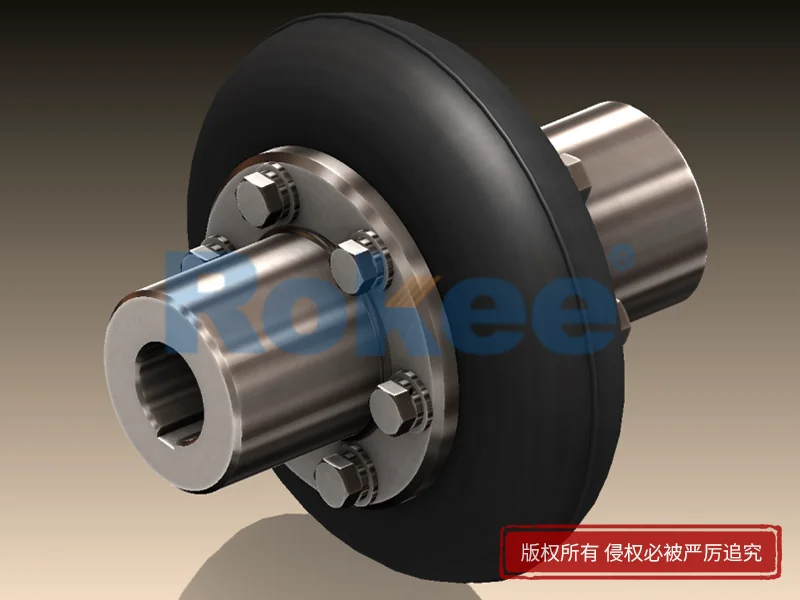
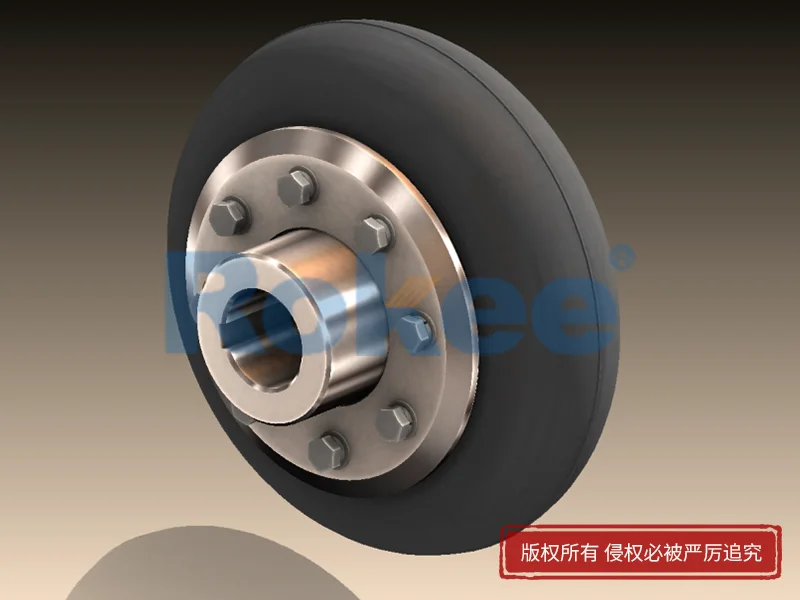
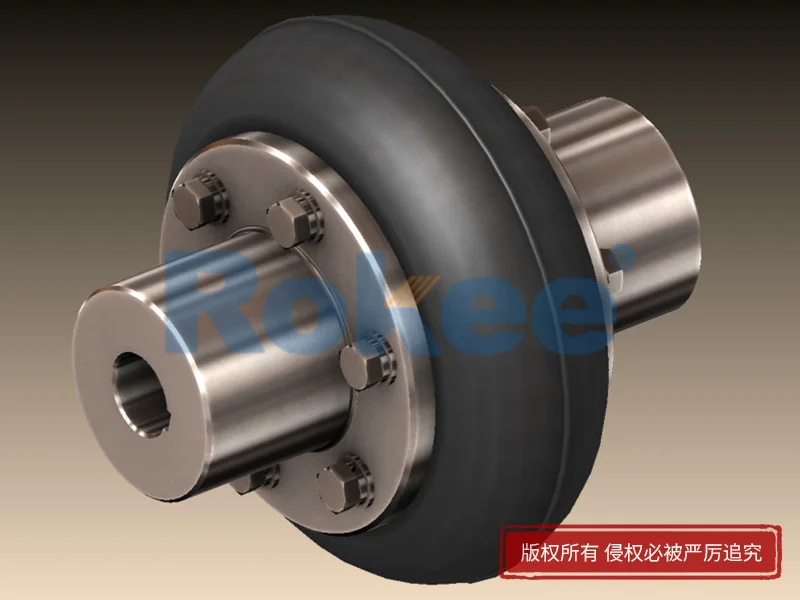
Rubber flexible shaft couplings are essential mechanical components designed to connect two rotating shafts while transmitting torque efficiently across diverse mechanical systems. Unlike rigid coupling structures that prioritize absolute shaft alignment and rigid power transmission, these elastomeric coupling units rely on the unique elastic deformation properties of rubber materials to balance stable power transfer with adaptive mechanical buffering, making them a foundational element for protecting rotating machinery in general industrial and precision mechanical scenarios. The core functional logic of these couplings lies in utilizing the shear and compression deformation characteristics of rubber materials to resolve the inherent defects of rigid transmission, including unavoidable shaft misalignment, operational vibration, and instantaneous impact loads that occur during equipment start-up, operation, and shutdown processes.
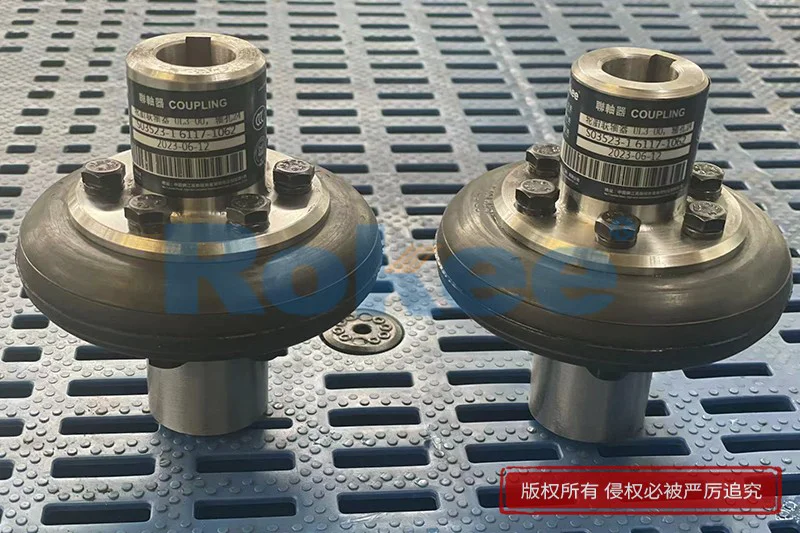
In practical mechanical assembly, achieving perfect coaxial alignment between two connected shafts is almost impossible due to manufacturing tolerances, assembly errors, structural deformation of equipment frames, and thermal expansion and contraction during long-term operation. Tiny deviations in axial, parallel, and angular directions between driving and driven shafts will generate continuous additional mechanical stress on shafts, bearings, and transmission components if not compensated. Rubber flexible shaft couplings effectively absorb and offset these minor misalignments through the elastic flexibility of rubber media, eliminating the concentrated stress caused by shaft offset and ensuring continuous and uniform power transmission. This adaptive compensation capability fundamentally reduces the wear and fatigue loss of core mechanical parts, greatly extending the overall service life of transmission systems and supporting equipment.
The material properties of rubber constitute the core performance foundation of flexible shaft couplings. Common rubber materials applied in such couplings feature excellent elasticity, high toughness, and stable damping characteristics, with good adaptability to conventional industrial operating environments. Different rubber formulations endow couplings with differentiated mechanical properties, including varying torsional stiffness, compression resistance, and aging resistance. Soft rubber materials provide superior vibration damping and misalignment compensation effects, suitable for low-load, high-precision, and low-noise operating scenarios, while relatively hard rubber structures offer higher torque bearing capacity and structural stability, adapting to medium and heavy-load industrial transmission conditions. Regardless of material hardness, rubber media can effectively isolate high-frequency vibration generated by motor operation, mechanical friction, and load fluctuation, preventing vibration conduction between driving and driven shafts and avoiding resonance problems that may cause equipment looseness or structural damage.
One of the most prominent advantages of rubber flexible shaft couplings is their outstanding shock absorption performance. Mechanical equipment often faces instantaneous impact loads during start-up, sudden load changes, or emergency stop processes. Rigid transmission structures will directly transfer these impact forces to various parts of the equipment, leading to instantaneous peak stress, accelerated component wear, and even structural cracking in severe cases. The rubber elastic medium of flexible couplings can buffer and decompose instantaneous impact energy through reversible compression and shear deformation, converting rigid impact force into gentle elastic deformation energy, which is gradually released in the subsequent operation process. This buffering mechanism effectively protects motors, reducers, bearings, and other precision components from impact damage, ensuring the stability and safety of equipment operation under variable load conditions.
In terms of power transmission efficiency, well-designed rubber flexible shaft couplings can maintain high torque transmission accuracy while retaining flexibility. Although the elastic deformation of rubber will produce tiny torsional displacement under load, the deformation range is controllable and uniform within the rated working range, which will not affect the overall transmission precision of conventional mechanical systems. For most industrial transmission scenarios requiring stable rotation and synchronous operation, this slight elastic deformation is negligible compared with the protective benefits it brings. Moreover, the integrated structural design of most rubber flexible couplings reduces mechanical gaps and friction resistance in the transmission process, ensuring smooth and efficient power output and avoiding power loss caused by structural jitter and misalignment friction.
Rubber flexible shaft couplings cover a wide range of application scenarios, spanning light-duty precision machinery to heavy-duty industrial production equipment. In precision automation equipment such as small transmission devices, conveying equipment, and precision testing instruments, these couplings rely on their low vibration, low noise, and high-precision misalignment compensation characteristics to ensure the stable operation of precision transmission structures and avoid operational errors caused by mechanical vibration. In general industrial equipment including water pumps, fans, and ordinary motor transmission systems, they effectively reduce the vibration and noise of equipment operation, improve the working environment, and reduce the failure rate of vulnerable parts. In medium-load mechanical equipment such as metallurgical auxiliary equipment, packaging machinery, and printing equipment, their excellent shock resistance and fatigue resistance can adapt to frequent start-stop and variable load working conditions, maintaining long-term stable operation of the transmission system.
Compared with metal flexible couplings such as gear couplings and diaphragm couplings, rubber flexible shaft couplings have unique structural and functional advantages. Metal flexible couplings usually realize misalignment compensation through structural deformation of metal parts, which have high hardness and torque resistance but poor vibration and shock absorption effects, and are prone to generate metal friction noise and fatigue wear during long-term operation. In contrast, rubber flexible couplings rely entirely on the elastic properties of non-metallic materials for flexible transmission, with natural noise reduction and vibration reduction effects. The overall structure is simpler, with fewer matching parts, which greatly reduces the probability of mechanical failure caused by part wear, loosening, and fatigue. In addition, rubber materials have good insulation performance, which can isolate current conduction between shafts in electromechanical equipment, avoiding electromagnetic interference and stray current corrosion of precision components, providing additional protection for electromechanical integrated equipment.
The structural diversity of rubber flexible shaft couplings enables them to adapt to different installation spaces and transmission requirements. Common structural forms include integral rubber couplings, claw-type rubber couplings, tire-type rubber couplings, and sleeve-type rubber couplings. Integral rubber couplings feature an integrated structure with no assembly gaps, compact size, and convenient installation, suitable for narrow installation spaces and small-power transmission occasions. Claw-type structures combine metal hubs and rubber elastic bodies, with strong torque bearing capacity and good deformation flexibility, balancing structural strength and flexible compensation performance. Tire-type rubber couplings have ultra-high elastic deformation capacity, allowing for larger shaft misalignment deviation, and are widely used in equipment with severe vibration and frequent load changes. Different structural designs expand the application boundary of rubber flexible couplings, enabling them to meet the personalized transmission needs of various mechanical equipment.
In terms of installation and maintenance, rubber flexible shaft couplings have obvious practical advantages. The overall structure is simple and lightweight, with low requirements for installation precision. Workers can complete assembly and debugging through conventional installation tools, without complex calibration processes. Although certain shaft alignment standards still need to be followed during installation, the excellent misalignment tolerance of rubber materials allows for reasonable assembly errors, greatly reducing the difficulty and time cost of on-site installation. In daily maintenance, rubber flexible couplings have no need for regular lubrication and anti-rust maintenance like metal transmission parts. The main daily inspection work is to check the aging, cracking, and deformation of rubber materials, with low maintenance cost and simple operation. When local aging or damage occurs, the rubber elastic body can be replaced independently in most structures, without replacing the entire coupling, which improves maintenance efficiency and reduces equipment operation and maintenance costs.
The service life of rubber flexible shaft couplings is mainly affected by working environment, load conditions, and material characteristics. In conventional room temperature, dry, and low-dust working environments, rubber materials can maintain stable elastic performance for a long time, with slow aging speed and long service cycle. In high-temperature, high-humidity, dusty, or corrosive working environments, rubber materials are prone to accelerated aging, hardening, cracking, and performance degradation, which will reduce the damping effect and misalignment compensation capacity of the coupling. Long-term overload operation and frequent strong impact loads will also cause permanent fatigue deformation of rubber materials, losing elastic buffering performance. Therefore, in practical application, selecting matching rubber materials according to the actual working environment and load characteristics is the key to ensuring the long-term stable operation of the coupling.
Reasonable model selection is crucial to give full play to the performance advantages of rubber flexible shaft couplings. The core selection factors include equipment transmission power, rated speed, shaft misalignment range, working load characteristics, and operating environment. For continuous stable load equipment with small vibration and low impact, conventional general-purpose rubber couplings can meet the operational needs. For equipment with frequent start-stop, alternating load, and strong vibration, it is necessary to select rubber couplings with high elasticity, strong fatigue resistance, and excellent shock absorption performance. For high-temperature or corrosive environment scenarios, special modified rubber materials with high temperature resistance and corrosion resistance should be prioritized to avoid rapid performance failure of the coupling. At the same time, the installation size, shaft diameter matching range, and torsional stiffness of the coupling need to match the equipment transmission system to ensure coordinated and efficient operation of the entire mechanical structure.
In modern mechanical system design, rubber flexible shaft couplings have become an indispensable basic component for optimizing transmission performance and improving equipment reliability. With the continuous upgrading of mechanical manufacturing technology, the formula and structural design of rubber flexible couplings are also constantly optimized. New modified rubber materials have better temperature adaptability, aging resistance, and fatigue resistance, expanding the application range of couplings in extreme working conditions. Optimized structural designs further improve torque transmission efficiency and misalignment compensation capacity, while reducing structural volume and weight, adapting to the development trend of modern mechanical equipment towards miniaturization, high precision, and high efficiency.
In actual industrial operation, the value of rubber flexible shaft couplings is reflected in long-term equipment operation stability and cost control. By reducing vibration and impact wear, they effectively reduce the failure rate of mechanical transmission systems, decrease equipment downtime and maintenance frequency, and improve the continuous operation efficiency of production lines. The low noise operation characteristic also optimizes the on-site working environment, meeting the environmental protection and comfort requirements of modern industrial production. For various mechanical transmission systems, rubber flexible shaft couplings are not only a simple power connection component, but also a key protective structure for stabilizing equipment operation, reducing loss, and extending equipment service life.
In summary, rubber flexible shaft couplings rely on their unique elastic transmission mechanism, excellent misalignment compensation, vibration damping and shock absorption performance, simple structure, and convenient maintenance advantages, occupying an important position in the field of mechanical transmission. They make up for the functional defects of rigid couplings and metal flexible couplings, providing a reliable, economical, and efficient flexible transmission solution for various mechanical equipment. With the continuous development of industrial machinery towards high precision, high stability, and low energy consumption, rubber flexible shaft couplings will continue to be optimized and upgraded, and their application scope and functional value will be further improved, becoming an important basic guarantee for the stable operation of various mechanical transmission systems.
pu sandwich panel line,pu sandwich panel machine,sandwich panel machine
« Rubber Flexible Shaft Couplings » Latest Update Date: Jun 18, 2026
https://www.rokeecoupling.net/tags/rubber-flexible-shaft-couplings.html