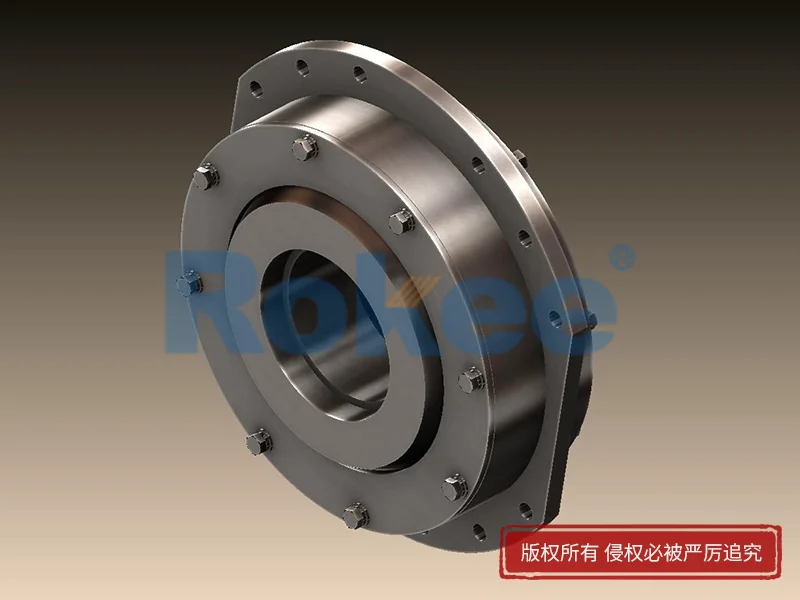
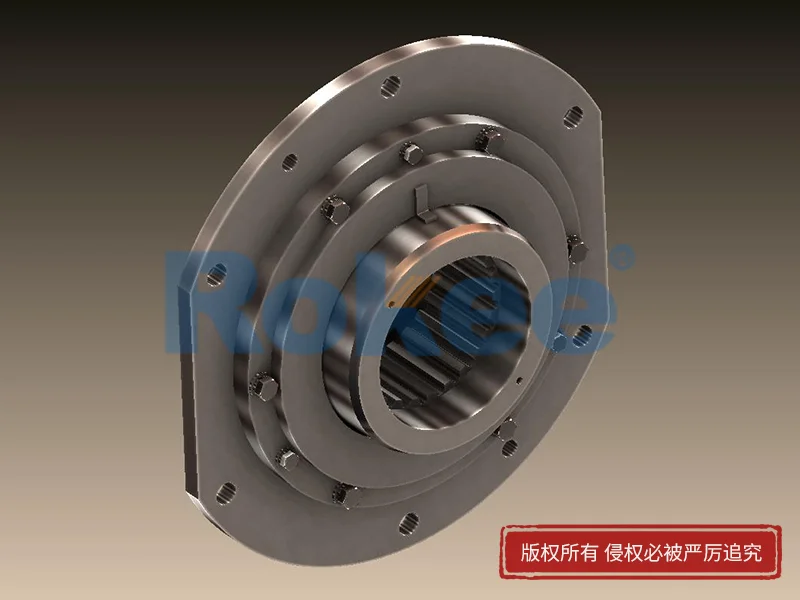
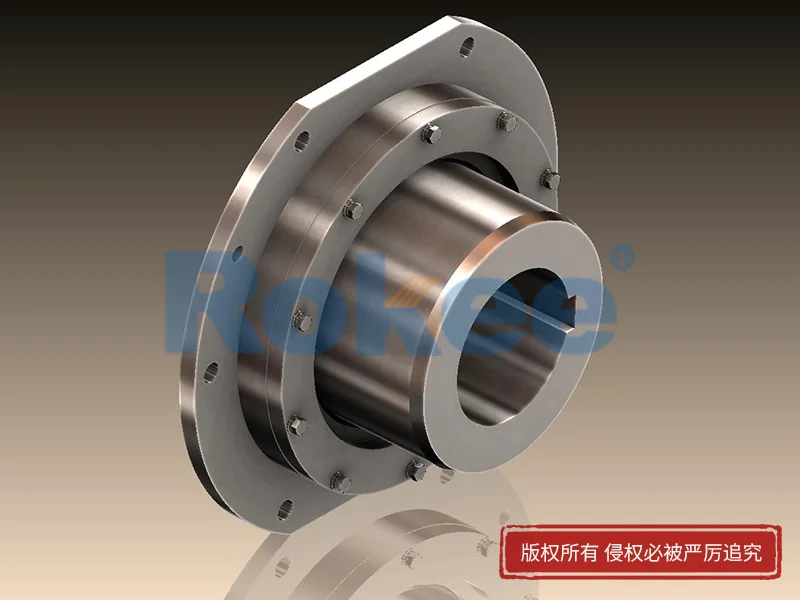
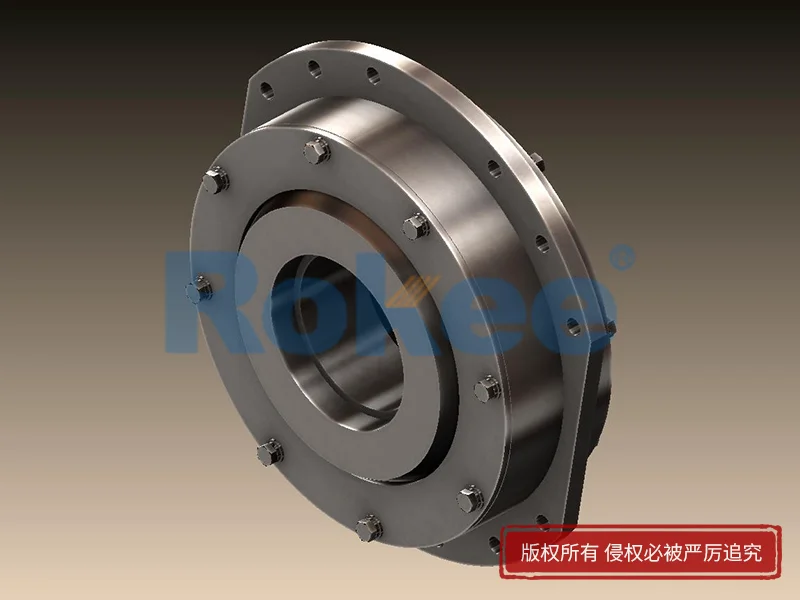
In modern mechanical transmission systems, the stability and efficiency of power delivery depend heavily on the connecting components that link rotating shafts and mechanical actuators. Among various transmission connection parts, spherical couplings stand out as a highly adaptable and reliable mechanical component, uniquely designed to resolve common operational challenges in shaft transmission, including shaft misalignment, mechanical vibration, and positional deviation during equipment operation. Unlike rigid coupling structures that pursue absolute fixation and zero displacement, spherical couplings adopt a flexible spherical contact structure, which enables multi-dimensional adaptive adjustment while maintaining stable torque transmission. This distinctive mechanical property makes them indispensable core components in a wide range of industrial machinery, precision equipment, and mobile mechanical systems, delivering consistent and durable transmission performance under complex and variable working conditions.
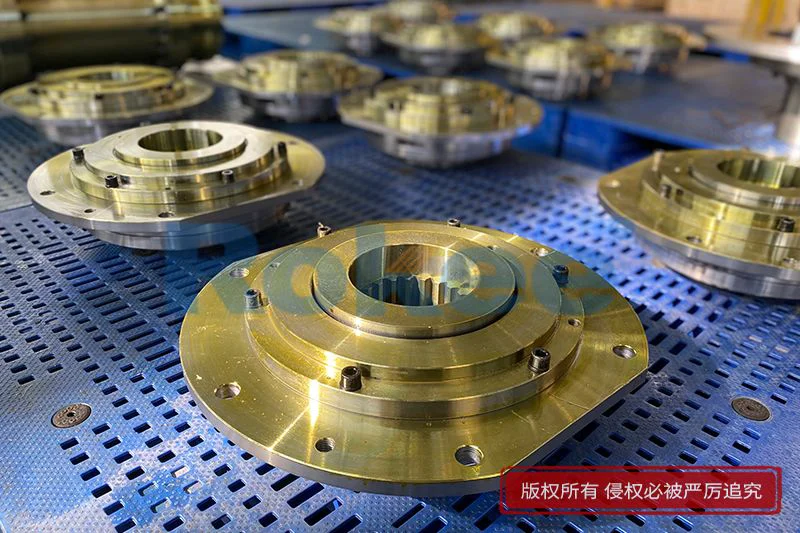
The fundamental structural design of spherical couplings revolves around the geometric characteristics of spherical surfaces, which endows the component with three-dimensional rotational freedom and displacement compensation capability. The overall structure mainly consists of inner spherical fitting parts, outer spherical sleeve components, torque transmission key structures, and sealing and limit assemblies. All parts adopt a modular matching design with precise dimensional tolerance control, enabling tight fitting and coordinated movement between components without redundant connecting structures. The core matching part adopts a curved spherical surface structure, which allows the inner and outer components to produce small-angle angular deflection, radial offset, and axial displacement relative to each other during operation. This multi-directional adaptive movement is the core mechanism that distinguishes spherical couplings from ordinary rigid and flexible couplings. Traditional rigid couplings can only work normally under the condition of complete coaxiality of the connected shafts, and any slight misalignment will cause additional mechanical stress, leading to shaft body deformation, bearing wear, and increased transmission noise. In contrast, the spherical contact structure of spherical couplings can effectively absorb and compensate for various deviations generated during equipment assembly and operation, fundamentally reducing the concentrated stress of the transmission system.
The working principle of spherical couplings is based on the flexible coordination of spherical kinematic pairs and mechanical torque transmission logic. When the power source drives the driving shaft to rotate, the torque is stably transmitted to the driven shaft through the meshing and fitting of the internal and outer spherical structures and the auxiliary transmission key components. During the torque transmission process, if the relative position of the two connected shafts changes due to equipment operation vibration, thermal expansion and contraction, or mechanical load fluctuation, the spherical matching surface will produce smooth sliding and rotating adjustment. This adjustment process does not interrupt torque transmission nor generate additional resistance, ensuring continuous and stable power output. The spherical kinematic pair can adapt to pitch, yaw and roll multi-axis rotation deviations, covering almost all small-range spatial displacement errors that may occur in mechanical transmission. Moreover, the uniform contact of the spherical surface enables the stress generated during torque transmission to be evenly distributed on the entire matching surface, avoiding local stress concentration and excessive friction loss, which greatly improves the smoothness of high-speed operation and the durability of long-term load operation.
One of the most prominent functional advantages of spherical couplings is their excellent misalignment compensation ability. In actual industrial production and mechanical operation, it is almost impossible to achieve absolute coaxial installation of rotating shafts. Assembly errors, equipment foundation settlement, thermal deformation of metal components after long-term operation, and elastic deformation of shafts under load will all lead to different degrees of angular, radial and axial misalignment between connected shafts. Ordinary coupling products have extremely limited compensation capacity for these deviations, and long-term operation under misalignment conditions will accelerate the aging and damage of transmission components, increase equipment failure rates and maintenance costs. Spherical couplings, benefiting from their three-dimensional spherical design, can efficiently adapt to a certain range of angular deflection and radial offset, fully offsetting the adverse effects of shaft misalignment on the transmission system. This powerful compensation performance not only reduces the assembly accuracy requirements of mechanical equipment, lowering the difficulty and time cost of equipment installation and debugging, but also maintains stable transmission performance during the full service cycle of the equipment.
In addition to misalignment compensation, spherical couplings also possess outstanding vibration damping and impact resistance properties. Mechanical equipment will inevitably generate periodic vibration and instantaneous impact load during start-up, shutdown, load switching and high-speed operation. These dynamic loads will be directly transmitted along the transmission shaft system, causing vibration resonance of the whole equipment, loosening of connecting parts, and fatigue damage of key components. The spherical flexible matching structure of spherical couplings can form a buffer zone in the transmission process. The tiny sliding and fitting deformation of the spherical surface can absorb most of the vibration energy and instantaneous impact force, effectively isolating the vibration transmission between the driving end and the driven end. This vibration damping effect can significantly reduce the operating noise of the equipment, improve the running stability of the whole machine, and effectively protect precision components such as bearings, reducers and motors in the transmission system. For mechanical equipment that runs continuously for a long time and bears frequent load changes, this protection function can greatly extend the service life of the whole transmission system and reduce unplanned downtime caused by component damage.
The structural characteristics of spherical couplings also endow them with strong adaptability to high-speed operation and heavy-load working conditions. The spherical surface matching mode has the advantages of large contact area and uniform stress distribution, which can bear large torque load without local pressure overload. Under high-speed rotating conditions, the smooth spherical sliding friction can avoid the jitter and stuck phenomenon that are easy to occur in traditional key-type and flange-type couplings, ensuring high-precision and high-stability power transmission. Meanwhile, the optimized modular structure design makes the overall structure of the coupling compact, with small space occupation and high structural rigidity, which can maintain stable working performance in narrow installation spaces and harsh working environments. Many mechanical systems with compact structural layout and strict space constraints rely on this characteristic of spherical couplings to realize effective shaft connection and power transmission, which cannot be achieved by many traditional coupling products with bulky structures and single functions.
Spherical couplings have a wide range of industrial application scenarios, covering traditional industrial manufacturing, agricultural machinery processing, intelligent equipment manufacturing, engineering machinery and many other fields. In agricultural machinery equipment, many field operation machines need to work in complex and variable terrain environments, and the fuselage will produce continuous vibration and attitude changes during operation, resulting in frequent relative position changes of internal transmission shafts. Spherical couplings are applied to the power transmission parts of forage harvesters, round balers and other equipment, which can adapt to the dynamic displacement of the shaft system during field operation, ensuring continuous and stable power output of the equipment and avoiding transmission failure caused by terrain jitter and fuselage deformation. In milling, textile and papermaking production lines, the continuous operating equipment will generate thermal deformation after long-term high-load operation, and the spherical coupling can compensate for the shaft displacement caused by thermal expansion and contraction, maintaining the synchronization accuracy of the production line transmission and ensuring the consistency of product processing quality.
In precision mechanical processing and automated equipment systems, the high stability and low vibration transmission performance of spherical couplings are fully utilized. CNC machine tools, robotic end actuators and precision transmission mechanisms require extremely high transmission accuracy and operational stability, and tiny shaft deviation and vibration will affect the processing accuracy and motion control effect. The spherical coupling can eliminate the transmission error caused by shaft misalignment, realize ultra-smooth power and motion transmission, and provide reliable guarantee for the precise operation of precision equipment. In engineering machinery and mining equipment, the equipment often bears heavy load and severe impact, and the harsh working environment puts forward high requirements on the wear resistance and structural stability of connecting components. The sturdy spherical matching structure can resist severe mechanical impact and friction wear, adapt to dusty, high-load and high-intensity working conditions, and maintain long-term stable operation of the equipment.
In terms of material application and structural optimization, spherical couplings usually adopt high-strength metal materials with good wear resistance and fatigue resistance. After fine machining and surface treatment, the spherical matching surface has high surface smoothness and hardness, which can reduce friction coefficient and improve wear resistance, ensuring long-term stable fitting movement without excessive wear and failure. The built-in sealing structure can effectively isolate external dust, moisture and particulate impurities, preventing foreign matter from entering the spherical matching gap to cause abrasion and jamming. This excellent environmental adaptability enables spherical couplings to work stably in various harsh working environments, whether it is high-temperature thermal environment of industrial production, low-temperature cold environment of outdoor operation, or dusty and humid working conditions, and can maintain stable mechanical performance without premature aging and failure.
The later maintenance and operation cost advantages of spherical couplings are also important reasons for their wide promotion and application. Due to the uniform stress distribution and good vibration damping protection performance, the wear speed of each component is slow, and the failure rate in the service cycle is extremely low. The modular assembly structure makes the installation, disassembly and replacement of the coupling extremely convenient, without complex professional operation and special tools. When local parts are worn and aged, only individual components need to be replaced instead of the whole set, which greatly reduces the daily maintenance cost and equipment maintenance time. Compared with other types of couplings that are prone to local wear, easy loosening and frequent maintenance, spherical couplings can effectively reduce the daily operation and maintenance workload of enterprises, improve the overall operation efficiency of mechanical equipment, and create higher economic benefits for industrial production.
With the continuous upgrading of modern industrial manufacturing towards high precision, high efficiency and high intelligence, the performance requirements for mechanical transmission components are constantly improving. Traditional coupling products with single function and poor adaptability can no longer meet the working needs of new intelligent equipment and high-precision production lines. As a high-performance flexible transmission component, spherical couplings are constantly optimized in structural design and manufacturing process. The continuous improvement of spherical surface machining accuracy and structural matching technology further improves the misalignment compensation accuracy and transmission stability of the product, and expands its application scope in high-end precision manufacturing fields. In the future, with the continuous development of industrial automation and intelligent machinery, spherical couplings will play a more important role in more emerging mechanical systems, providing more reliable basic support for the stable operation of modern mechanical equipment.
In summary, spherical couplings rely on their unique spherical flexible matching structure, excellent multi-dimensional displacement compensation capability, superior vibration damping and impact resistance, and strong environmental adaptability, forming irreplaceable core advantages in the field of mechanical transmission. They solve many common pain points in traditional shaft transmission, such as strict installation requirements, poor fault tolerance, easy wear and high maintenance cost, and provide efficient and stable connection solutions for various complex mechanical transmission systems. Whether it is traditional heavy industrial equipment, agricultural mobile machinery, or modern precision intelligent equipment, spherical couplings can adapt to diverse working conditions, maintain long-term stable and efficient operation, and become an indispensable basic component for the healthy and reliable operation of modern mechanical systems. With the continuous progress of industrial technology, the technical performance of spherical couplings will continue to be upgraded, and their application value in the industrial field will be further highlighted, escorting the high-quality development of modern manufacturing industry.
pu sandwich panel line,pu sandwich panel machine,sandwich panel machine
« Spherical Couplings » Latest Update Date: Jun 18, 2026
https://www.rokeecoupling.net/tags/spherical-couplings.html