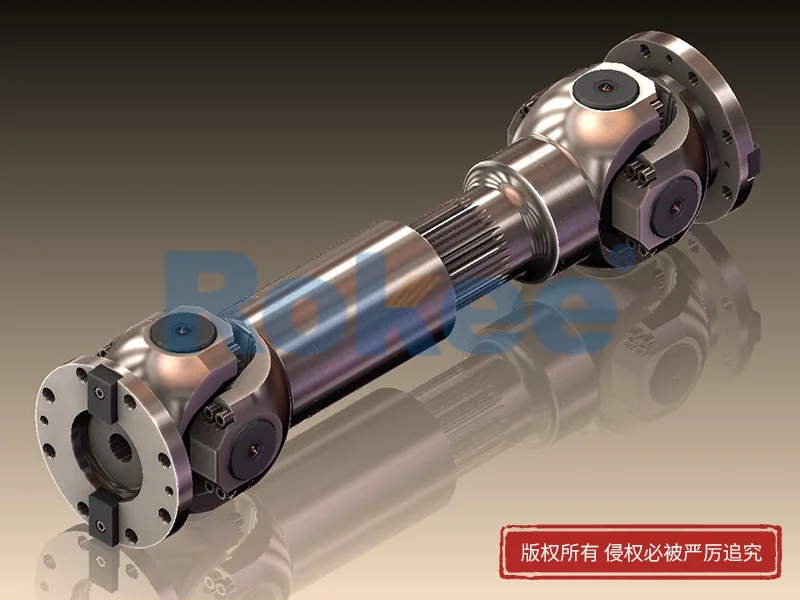
Telescopic universal joints stand as essential mechanical transmission components widely integrated into modern industrial and mobile mechanical systems, serving as a specialized evolution of traditional universal joint structures. Unlike rigid transmission connectors that only support fixed-axis power transmission and ordinary universal joints that merely adapt to angular misalignment, these innovative mechanical parts integrate angular deflection adaptation and axial length compensation functions into a single integrated structure, enabling stable torque transmission between two shafts with dynamic position changes during equipment operation. Their unique dual adaptive capability makes them irreplaceable in mechanical scenarios where shaft alignment conditions constantly fluctuate due to mechanical vibration, structural deformation, thermal expansion and contraction, and dynamic working strokes, effectively solving the transmission failure problems caused by multi-dimensional shaft displacement in complex operating environments.
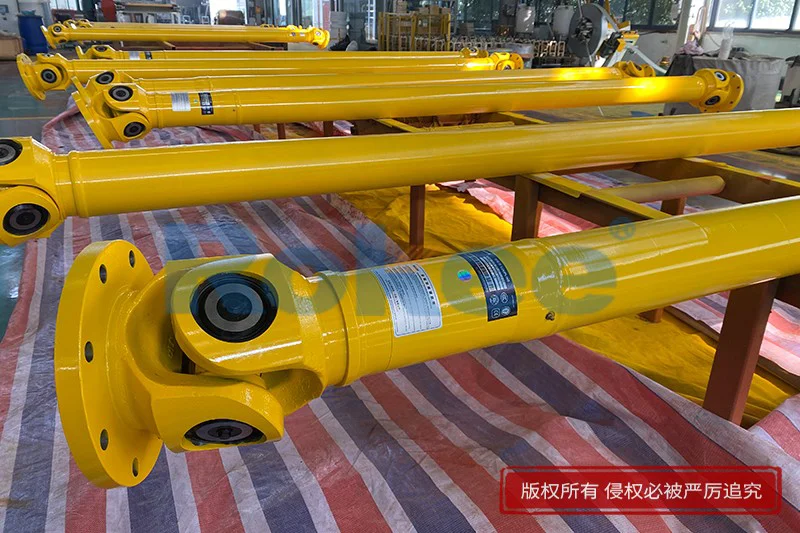
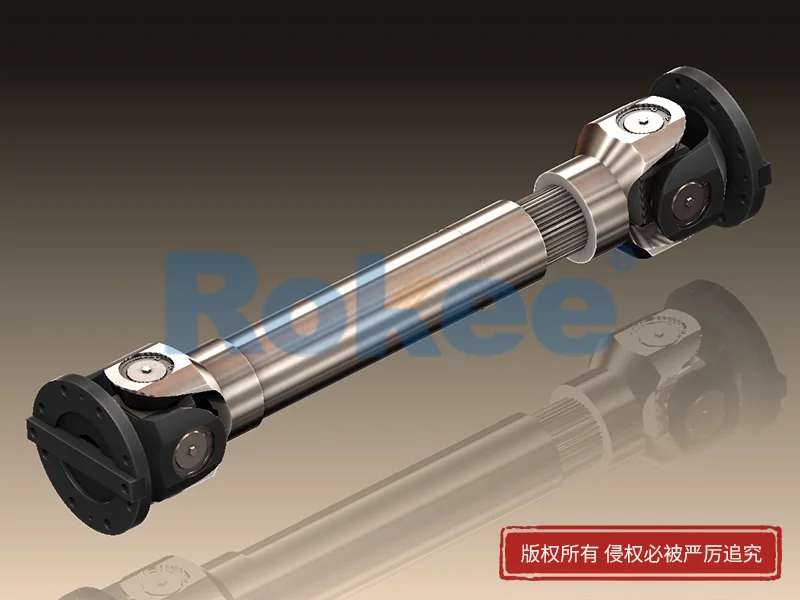
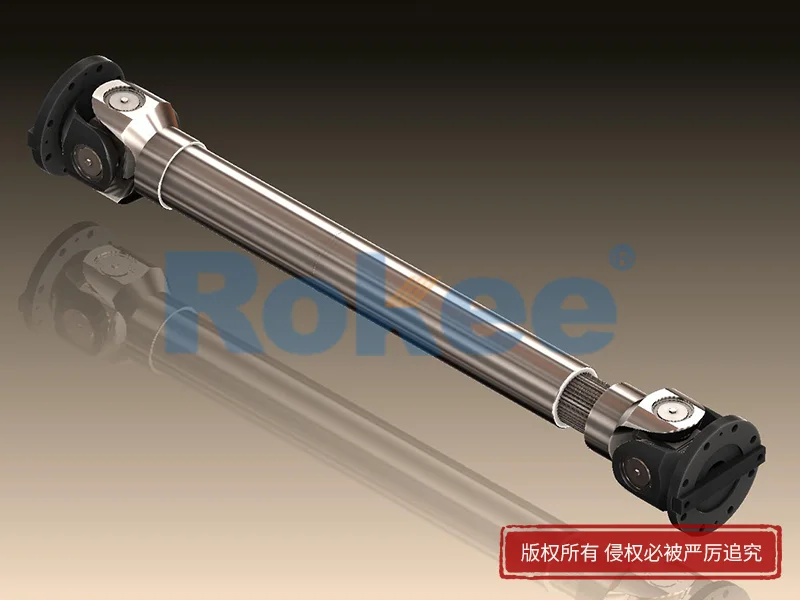
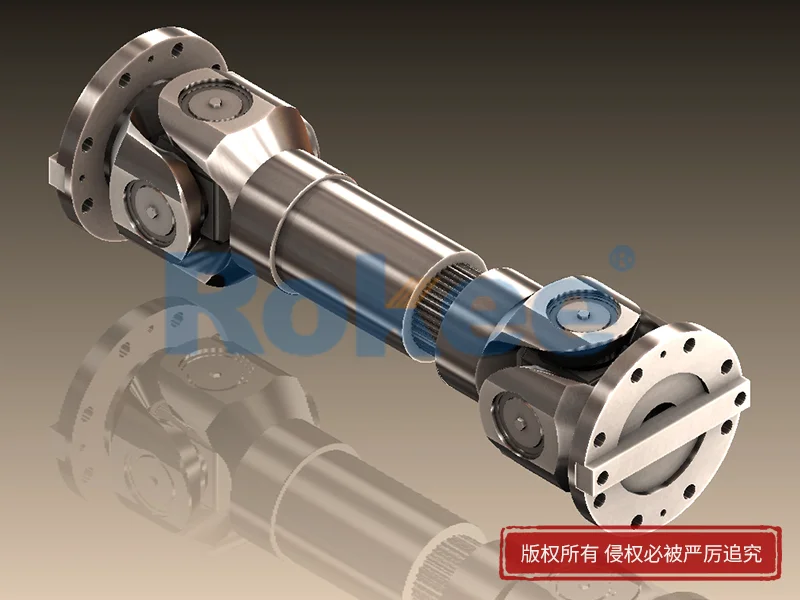
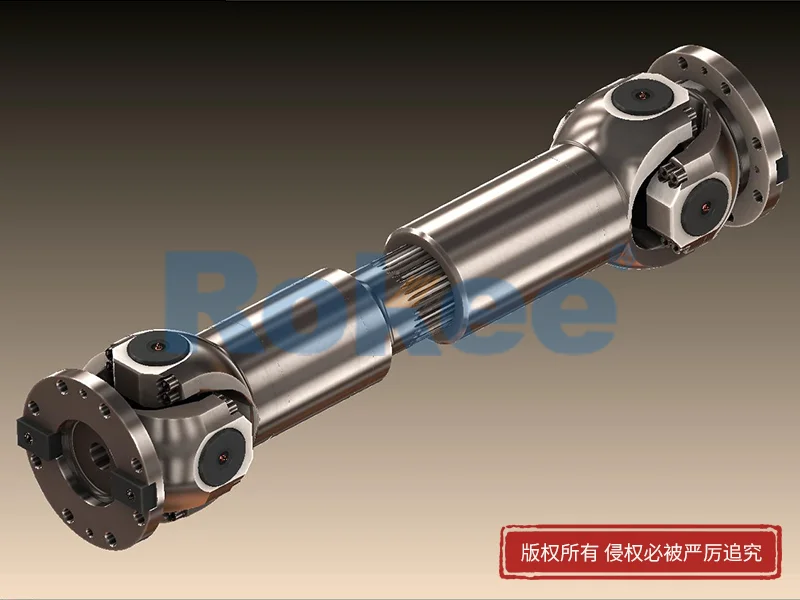
The basic structural composition of telescopic universal joints follows mature mechanical design logic, consisting mainly of symmetric universal joint assemblies at both ends and a telescopic spline transmission section in the middle. The universal joint part adopts a classic cross hinge structure with precision machined yokes and cross spider components, paired with high-precision rolling bearing structures. This structural design allows the connected shafts to form a certain angular deviation within a reasonable range while maintaining continuous and stable rotational power output, eliminating the transmission dead angle and speed fluctuation defects of single fixed connectors. The core telescopic function is realized through the precise matching of internal and external spline pairs. The internal spline shaft and external spline sleeve are processed with high-precision tooth profiles, which can not only stably transmit high torque without slipping or tooth jumping during rotation but also slide freely along the axial direction in real time, realizing automatic adjustment of the overall length of the joint according to the changing distance between the driving shaft and driven shaft.
To ensure long-term stable operation of the telescopic structure, the spline matching area is equipped with professional lubrication and sealing structures in conventional designs. The built-in lubrication system can store and release lubricating grease evenly during mechanical movement, forming a continuous oil film on the spline contact surface. This oil film effectively reduces dry friction and mechanical wear between tooth profiles, lowers transmission resistance, and suppresses heat generation caused by high-speed operation. Meanwhile, the multi-layer sealing structure can isolate external dust, metal debris, moisture and other pollutants from entering the spline matching gap, avoiding abrasive wear, corrosion and tooth profile jamming failures caused by impurity accumulation. The cooperative work of lubrication and sealing systems greatly improves the operational stability and service life of the telescopic transmission section, enabling the joint to maintain consistent transmission performance under long-cycle and high-intensity working conditions.
The working mechanism of telescopic universal joints can be divided into two synchronous and non-interfering core processes: constant torque transmission and dynamic axial length compensation. In the torque transmission process, the rotational power output by the power source is transmitted to the driving end yoke of the universal joint, and the cross spider converts the rotational motion of the driving shaft into flexible rotational motion adapted to angular deviation, and then transmits the power to the telescopic spline section. The spline pair relies on the meshing friction and structural engagement between tooth profiles to drive the entire shaft body to rotate synchronously, and finally transmits the power to the driven shaft to complete the power transmission cycle. In the length compensation process, when the distance between the two connected shafts changes due to equipment operation, structural vibration or mechanical displacement, the internal and external splines slide relatively along the axial direction, automatically stretching or shortening the overall length of the joint. This real-time length adjustment completely eliminates additional axial tension and compression stress on the shaft system, avoiding structural deformation, bearing damage or transmission interruption caused by rigid extrusion and stretching of mechanical parts.
Compared with traditional rigid couplings, ordinary universal joints and other transmission components, telescopic universal joints exhibit outstanding comprehensive performance advantages in complex working conditions. Rigid couplings can only work normally under absolute shaft alignment conditions, and any slight angular or axial displacement will cause excessive stress concentration, leading to rapid wear of parts and even mechanical failure. Ordinary double universal joints can adapt to angular misalignment but lack axial compensation capability, so they cannot cope with dynamic changes in shaft spacing during equipment operation. In contrast, telescopic universal joints perfectly cover angular deviation adaptation and axial displacement compensation, and can also tolerate a certain degree of parallel misalignment of the shaft system, achieving multi-dimensional adaptive transmission. In addition, the integrated structural design simplifies the overall layout of the mechanical transmission system, reduces the number of connecting parts, lowers the difficulty of equipment assembly and later maintenance, and improves the compactness and structural stability of the entire mechanical system.
Another key performance advantage of telescopic universal joints lies in their excellent load resistance and vibration damping performance. In heavy-duty industrial scenarios, mechanical equipment often bears impact loads and periodic vibration during operation, which puts forward high requirements on the toughness and fatigue resistance of transmission parts. The cross hinge structure and spline telescopic structure of telescopic universal joints have good mechanical flexibility, which can absorb and buffer part of the impact vibration generated during equipment operation, reduce the vibration transmission efficiency between the power source and the executing mechanism, and protect key components such as motors, reducers and bearings from impact damage. At the same time, the overall structural rigidity is fully guaranteed through precision machining and reasonable structural design, enabling the joints to stably transmit high torque under continuous heavy load conditions without torsion deformation or power loss, balancing flexibility and rigidity perfectly.
Telescopic universal joints have extremely wide application scenarios, covering heavy industry, mobile engineering equipment, transportation machinery and general industrial mechanical fields. In heavy industrial production such as metallurgy, mining and building materials, production equipment usually operates continuously under harsh environments with heavy loads, severe vibration and high dust. The transmission shaft systems of large rolling mills, mining conveyors and crushing machinery will produce continuous axial displacement and angular deviation due to long-term heavy load operation and mechanical vibration. Telescopic universal joints can adapt to these complex displacement changes, ensure uninterrupted power transmission of production equipment, reduce equipment downtime caused by transmission failure, and improve the continuous operation efficiency of industrial production lines.
In engineering machinery and special mobile equipment, the application value of telescopic universal joints is more prominent. Off-road engineering vehicles, lifting machinery and transportation equipment will produce continuous body jitter and structural deformation during walking and operation due to uneven road surfaces and dynamic load changes. The suspension system and walking mechanism of the equipment will have real-time stroke changes, leading to frequent changes in the distance and angle between the transmission shafts. The telescopic and angular adaptive functions of telescopic universal joints can perfectly adapt to the dynamic changes of the shaft system during equipment movement, avoid transmission jamming and power interruption caused by structural changes, and ensure the flexibility and stability of equipment operation. Whether it is low-speed heavy-load operation or medium and high-speed stable transmission, these joints can maintain reliable working performance.
In general industrial mechanical fields such as automated production lines, packaging machinery and textile equipment, telescopic universal joints are mainly used to solve the transmission problems caused by assembly errors, thermal deformation and small-range dynamic displacement of equipment. In precision automated mechanical systems, even tiny shaft displacement and angle deviation will affect the transmission accuracy of the equipment, leading to reduced product processing accuracy and unstable equipment operation. The precise adaptive capability of telescopic universal joints can compensate for assembly errors and thermal expansion and contraction displacement generated during equipment operation, maintain the high-precision transmission state of the mechanical system, and ensure the stable operation of precision automated production equipment for a long time.
Although telescopic universal joints have high structural stability and reliable working performance, their long-term service life and operating efficiency are closely related to daily maintenance and working condition adaptation. The spline matching part and universal joint bearing assembly are the core wearing parts. Long-term operation will cause slight wear of the tooth profile and bearing rollers, and insufficient lubrication will accelerate the wear process, resulting in increased transmission resistance, reduced torque transmission efficiency and even abnormal noise and vibration. Therefore, regular maintenance of the lubrication system is required in daily use to ensure that the matching parts are always in a good lubrication state. At the same time, the sealing structure should be inspected regularly to replace aging and damaged sealing parts in time, so as to prevent external pollutants from entering the internal structure and causing abrasive wear and corrosion.
In addition, reasonable installation and working condition matching are important prerequisites for giving full play to the performance of telescopic universal joints. During installation, the coaxiality and installation angle of the two connecting ends need to be calibrated strictly in accordance with mechanical design requirements to avoid excessive angular deviation beyond the adaptive range of the joint, which will cause accelerated fatigue wear of parts. In terms of working condition adaptation, different structural specifications and material selection of telescopic universal joints should be matched according to actual working parameters such as equipment operating speed, load size and environmental characteristics. For high-temperature, high-humidity and corrosive working environments, joints with special surface treatment and corrosion-resistant materials should be selected to improve environmental adaptability and extend service life; for high-speed rotating equipment, structural optimization and dynamic balance treatment are required to reduce vibration and noise during high-speed operation.
With the continuous upgrading of modern mechanical equipment towards high efficiency, high precision and high stability, the technical iteration of telescopic universal joints is also advancing continuously. In recent years, with the development of precision machining technology, new metal materials and surface strengthening technology, the overall performance of telescopic universal joints has been significantly improved. The application of high-strength alloy materials improves the structural rigidity and fatigue resistance of the joints, enabling them to adapt to higher load working conditions; the precision grinding process of spline tooth profiles reduces the matching gap, improves transmission accuracy and stability, and reduces power loss during transmission; the new composite sealing materials and lubricating materials further enhance the sealing performance and lubrication durability, adapting to longer cycle maintenance-free operation requirements.
At the same time, the structural design of telescopic universal joints is also constantly optimized towards miniaturization, integration and lightweight. The optimized spatial structure design reduces the overall volume and weight of the joints on the premise of ensuring load performance, which is more conducive to the lightweight design of modern mechanical equipment, reduces the overall energy consumption of equipment operation, and improves mechanical operation efficiency. The integrated modular design simplifies the assembly and disassembly process of the joints, reduces the difficulty of equipment maintenance and replacement, and improves the convenience of later equipment operation and maintenance.
In the entire mechanical transmission system, telescopic universal joints undertake the key task of connecting power components and executing components, and their operating state directly determines the overall operating stability and working efficiency of mechanical equipment. As a flexible transmission component with dual adaptive functions of angle and axial displacement, it makes up for the performance defects of traditional transmission parts in complex dynamic working conditions, provides a reliable transmission solution for various mechanical equipment with unstable shaft alignment and dynamic structural changes. With the continuous development of industrial modernization and the continuous improvement of mechanical equipment performance requirements, telescopic universal joints will be applied in more emerging mechanical fields, and their technical performance and structural design will continue to be optimized and upgraded, providing more solid technical support for the stable and efficient operation of modern mechanical systems.
pu sandwich panel line,pu sandwich panel machine,sandwich panel machine
« Telescopic Universal Joints » Latest Update Date: Jun 18, 2026
https://www.rokeecoupling.net/tags/telescopic-universal-joints.html