
Rokee is a well-known high-quality supplier of Tyre Type Couplings and technical services in China, customize tyre type couplings according to user drawings, alternatively, if the user provides tyre type couplings parameters, we can select the model and design drawings for you, support wholesale and export.
In the realm of mechanical power transmission, couplings serve as indispensable components that connect two shafts to transmit torque while accommodating various misalignments and absorbing shocks. Among the diverse range of couplings available, the tyre type coupling stands out for its unique combination of flexibility, damping capacity, and ease of installation. This article delves into the fundamental aspects of tyre type couplings, including their design characteristics, working principles, material selection, applications across different industries, advantages over other coupling types, maintenance requirements, and future development trends. By exploring these elements, we aim to provide a comprehensive understanding of this critical mechanical component and its role in ensuring efficient and reliable operation of rotating machinery.
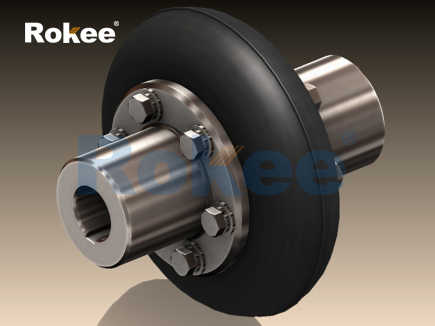
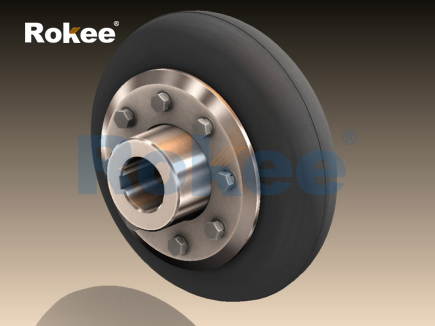
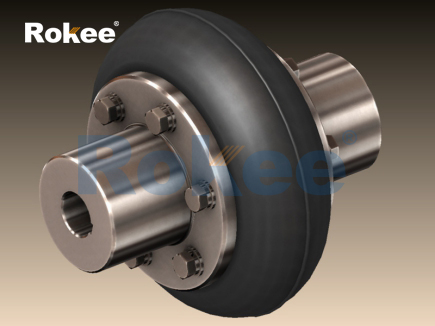
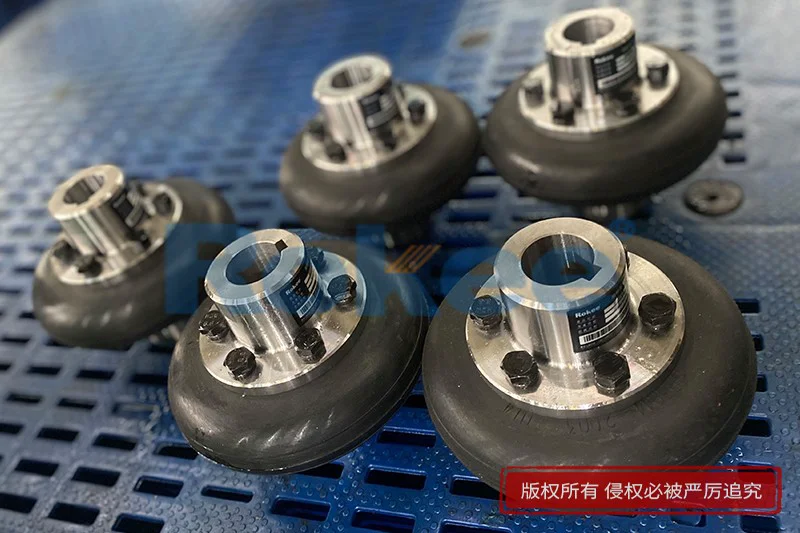
A tyre type coupling, also known as a rubber tyre coupling, is a flexible coupling that utilizes an elastic tyre element to connect the input and output shafts. Unlike rigid couplings that require precise alignment and offer no flexibility, tyre type couplings are designed to accommodate axial, radial, and angular misalignments, which are common in real-world operating conditions due to factors such as thermal expansion, shaft deflection, and installation errors. The core component of a tyre type coupling is the tyre, which is typically made of high-quality elastic materials such as natural rubber, synthetic rubber, or a combination of rubber and reinforcing fibers. This tyre element is attached to two metal flanges or hubs, which are then connected to the respective shafts of the driving and driven machinery. The metal components are usually manufactured from steel or cast iron, ensuring high strength and durability to withstand the transmitted torque.
The design of tyre type couplings varies slightly depending on the specific application requirements, but the basic structure remains consistent. One common design is the split tyre type coupling, where the tyre is split into two halves, allowing for easy installation and replacement without the need to move the connected machinery. This split design is particularly advantageous in applications where space is limited or where disassembling the entire shaft system would be time-consuming and costly. Another design variant is the solid tyre type coupling, which features a one-piece tyre element. While this design offers higher torque capacity and better integrity, it requires the shafts to be disconnected for installation or replacement. Additionally, some tyre type couplings are equipped with additional features such as bolted or clamped connections for securing the tyre to the flanges, as well as ventilation holes to prevent overheating during prolonged operation.
The working principle of a tyre type coupling revolves around the elastic deformation of the tyre element. When torque is transmitted from the driving shaft to the coupling, the tyre undergoes torsional deformation, which allows the torque to be transferred to the driven shaft. Simultaneously, the elastic nature of the tyre enables it to absorb shocks and vibrations generated by the machinery. This damping effect is crucial for reducing noise levels and minimizing wear and tear on the connected components, thereby extending the service life of the entire system. In terms of misalignment compensation, the tyre element can stretch or compress to accommodate axial misalignment (movement along the shaft axis), bend to accommodate radial misalignment (offset between the shaft centers), and twist to accommodate angular misalignment (tilt between the shafts). The degree of misalignment that a tyre type coupling can handle depends on factors such as the material properties of the tyre, the size of the coupling, and the design of the tyre element.
Material selection is a critical factor in determining the performance and durability of tyre type couplings. The tyre element, being the primary elastic component, must be made of materials that exhibit excellent elasticity, wear resistance, oil resistance, and temperature resistance. Natural rubber is often used for general-purpose applications due to its good elasticity and low cost, but it may not be suitable for environments with high temperatures or exposure to oils and chemicals. Synthetic rubbers such as nitrile rubber (NBR), ethylene propylene diene monomer (EPDM), and silicone rubber are preferred for specialized applications. NBR offers excellent oil resistance, making it ideal for use in hydraulic systems or machinery that uses lubricating oils. EPDM exhibits superior resistance to high temperatures, ozone, and weathering, making it suitable for outdoor or high-temperature applications. Silicone rubber, on the other hand, can withstand extremely high temperatures and is often used in applications such as industrial ovens and turbines. The metal components of the coupling are typically made of carbon steel or alloy steel, which are heat-treated to enhance their strength and hardness. Cast iron is sometimes used for lower torque applications due to its lower cost and ease of casting.
Tyre type couplings find widespread applications across a diverse range of industries, thanks to their versatility and ability to adapt to various operating conditions. One of the most common applications is in the industrial machinery sector, where they are used to connect motors to pumps, compressors, fans, and conveyors. In these applications, the coupling's ability to absorb shocks and vibrations helps to protect the motor and the driven equipment from damage, ensuring smooth and efficient operation. For example, in a centrifugal pump system, the tyre type coupling compensates for any misalignment between the motor and the pump shaft, reducing the risk of bearing failure and improving the overall reliability of the system.
Another major application area is the automotive industry, where tyre type couplings are used in various components such as drive shafts, transmissions, and differential systems. In automotive applications, the coupling must be able to withstand high torque levels and rapid changes in speed, while also absorbing the vibrations generated by the engine. The flexibility of the tyre element helps to reduce noise and vibration in the vehicle cabin, improving the driving experience. Additionally, the coupling's ability to accommodate misalignment is crucial in automotive systems, where thermal expansion and contraction of components can lead to changes in shaft alignment.
The agricultural industry also relies heavily on tyre type couplings for various farming equipment such as tractors, harvesters, and irrigation pumps. In agricultural applications, the equipment is often subjected to harsh operating conditions such as dust, dirt, and uneven terrain, which can cause misalignment and shock loads. The tyre type coupling's robust design and ability to absorb shocks make it well-suited for these environments. For example, in a tractor-driven irrigation pump, the coupling compensates for the misalignment caused by the uneven ground, ensuring that the pump operates efficiently and reliably.
Other application areas include the marine industry, where tyre type couplings are used in ship propulsion systems and auxiliary machinery; the mining industry, where they are used in crushers, conveyors, and excavators; and the renewable energy sector, where they are used in wind turbines and solar tracking systems. In each of these applications, the tyre type coupling plays a vital role in ensuring the reliable transmission of power and protecting the machinery from damage.
Tyre type couplings offer several distinct advantages over other types of couplings, making them a preferred choice for many applications. One of the key advantages is their excellent flexibility and misalignment compensation capability. Unlike rigid couplings, which require precise alignment and can cause excessive stress on shafts and bearings if misaligned, tyre type couplings can accommodate significant axial, radial, and angular misalignments, reducing the need for precise installation and minimizing stress on the connected components. This flexibility also helps to absorb shocks and vibrations, which reduces noise levels and extends the service life of the machinery.
Another advantage of tyre type couplings is their ease of installation and maintenance. The split tyre design, in particular, allows for quick and easy replacement of the tyre element without the need to disconnect the shafts or move the machinery. This reduces downtime and maintenance costs, making the coupling ideal for applications where reliability and uptime are critical. Additionally, the simple design of tyre type couplings means that they have fewer components, reducing the risk of failure and simplifying maintenance procedures.
Tyre type couplings also exhibit good torque transmission capacity. Despite their flexible nature, the combination of the elastic tyre element and the rigid metal flanges allows them to transmit high levels of torque efficiently. The torque capacity of a tyre type coupling depends on factors such as the size of the coupling, the material of the tyre, and the design of the metal components. This makes them suitable for a wide range of applications, from low-torque household appliances to high-torque industrial machinery.
Furthermore, tyre type couplings are resistant to corrosion and wear, especially when the metal components are coated or galvanized. The rubber tyre element is also resistant to most common chemicals and oils (depending on the material selected), making the coupling suitable for use in harsh environments. This durability ensures that the coupling can operate reliably for extended periods without the need for frequent replacement.
Despite their many advantages, tyre type couplings require proper maintenance to ensure optimal performance and longevity. Regular inspection is one of the most important maintenance tasks. Operators should inspect the coupling regularly for signs of wear, damage, or deterioration of the tyre element. Common signs of wear include cracks, tears, or hardening of the rubber, which can reduce the coupling's flexibility and damping capacity. Additionally, the metal flanges and fasteners should be inspected for signs of corrosion, deformation, or loose bolts, which can affect the coupling's ability to transmit torque safely.
Lubrication is another important maintenance requirement for tyre type couplings. While the tyre element itself does not require lubrication, the bearings and other moving parts of the connected machinery should be properly lubricated to reduce friction and wear. It is also important to ensure that the lubricant does not come into contact with the rubber tyre element, as some lubricants can degrade the rubber and reduce its service life. If lubricant contamination occurs, the tyre element should be replaced immediately.
The replacement of the tyre element is a relatively simple process, especially for split tyre type couplings. To replace the tyre, the operator first removes the fasteners that secure the tyre to the flanges. For split tyre couplings, the old tyre halves are then removed and replaced with new ones. For solid tyre couplings, the shafts must be disconnected to allow the old tyre to be removed and the new one to be installed. After replacing the tyre, the fasteners are tightened to the recommended torque to ensure a secure connection. It is important to use the correct type and size of tyre element for the coupling, as using an incompatible tyre can affect the coupling's performance and safety.
In addition to regular inspection and replacement of the tyre element, operators should also monitor the operating conditions of the coupling. Excessive vibration, noise, or temperature rise can indicate a problem with the coupling, such as misalignment, worn tyre element, or loose fasteners. If any of these signs are observed, the machinery should be shut down immediately to prevent further damage, and the coupling should be inspected and repaired as necessary.
Looking ahead, the development of tyre type couplings is likely to focus on several key areas, driven by the increasing demand for more efficient, reliable, and environmentally friendly mechanical systems. One of the main trends is the development of high-performance tyre materials. Researchers and manufacturers are constantly exploring new rubber compounds and reinforcing materials to improve the elasticity, wear resistance, temperature resistance, and torque capacity of the tyre element. For example, the use of carbon fiber-reinforced rubber is being investigated to enhance the strength and durability of the tyre, while also reducing its weight. This can help to improve the overall efficiency of the coupling and reduce energy consumption.
Another trend is the integration of smart technologies into tyre type couplings. The development of smart couplings equipped with sensors that monitor torque, temperature, vibration, and misalignment is gaining traction. These sensors can provide real-time data on the operating conditions of the coupling, allowing operators to detect potential problems before they lead to failure. This predictive maintenance approach can help to reduce downtime, improve reliability, and lower maintenance costs. Additionally, the data collected by the sensors can be used to optimize the operation of the machinery, further improving efficiency.
The miniaturization of tyre type couplings is also a growing trend, driven by the increasing demand for compact machinery in industries such as automotive, aerospace, and consumer electronics. Manufacturers are developing smaller, lighter tyre type couplings that can transmit high levels of torque while occupying less space. This requires the use of advanced materials and precision manufacturing techniques to ensure that the small-sized couplings maintain the same level of performance and reliability as their larger counterparts.
Environmental sustainability is another important factor influencing the development of tyre type couplings. Manufacturers are focusing on reducing the environmental impact of their products by using eco-friendly materials, improving energy efficiency, and implementing sustainable manufacturing processes. For example, the use of recycled rubber for the tyre element is being explored to reduce waste and conserve natural resources. Additionally, the development of couplings that require less maintenance and have a longer service life can help to reduce the environmental impact associated with the production and disposal of replacement parts.
In conclusion, tyre type couplings are essential components in mechanical power transmission systems, offering a unique combination of flexibility, damping capacity, and ease of maintenance. Their ability to accommodate misalignments, absorb shocks and vibrations, and transmit torque efficiently makes them suitable for a wide range of applications across various industries, including industrial machinery, automotive, agriculture, marine, mining, and renewable energy. Proper material selection, installation, and maintenance are crucial for ensuring the optimal performance and longevity of tyre type couplings. Looking ahead, the development of high-performance materials, smart technologies, miniaturization, and sustainable design will continue to drive the evolution of tyre type couplings, making them even more efficient, reliable, and environmentally friendly. As mechanical systems become increasingly complex and demanding, tyre type couplings will remain a vital component in ensuring the smooth and reliable operation of rotating machinery.
« Tyre Type Couplings » Post Date: 2024/4/25 , https://www.rokeecoupling.net/tags/tyre-type-couplings.html