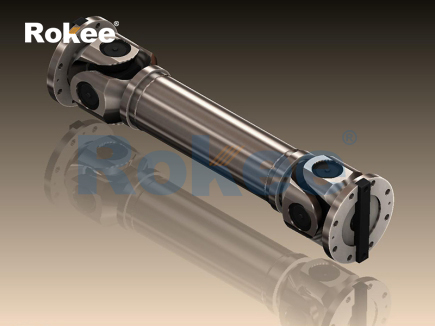
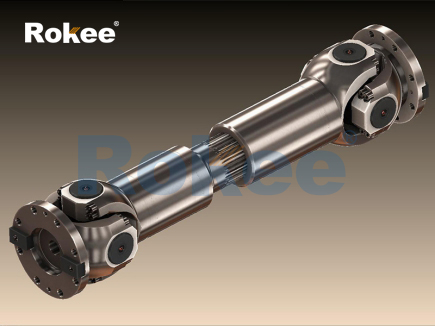
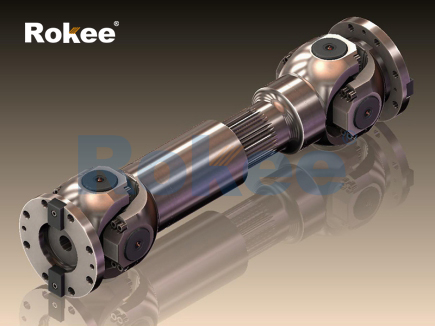
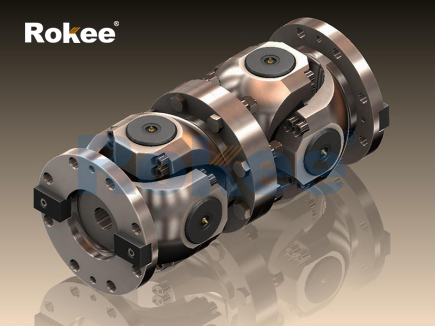
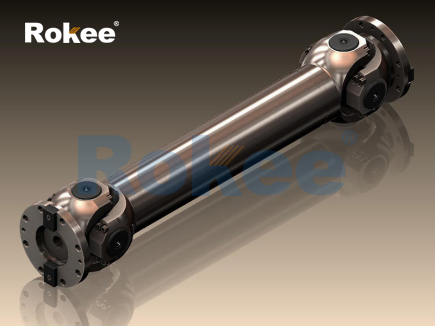
In the complex and interconnected mechanical transmission systems that underpin modern industrial production and mobile mechanical equipment, the universal joint shaft coupling stands out as an indispensable mechanical component with unique transmission adaptability. As a core connecting part between rotating shafts, it undertakes the critical task of transmitting torque and rotational motion while accommodating various positional deviations between connected shafts. Unlike rigid connecting components that require precise coaxial alignment, this type of coupling can maintain stable power transmission under angular deflection, axial displacement and radial misalignment conditions, making it widely applicable in diverse working scenarios with harsh operating conditions and complex shaft arrangement layouts. Its inherent mechanical flexibility and structural durability have secured its irreplaceable position in the field of mechanical transmission, continuously supporting the stable operation of various mechanical equipment.
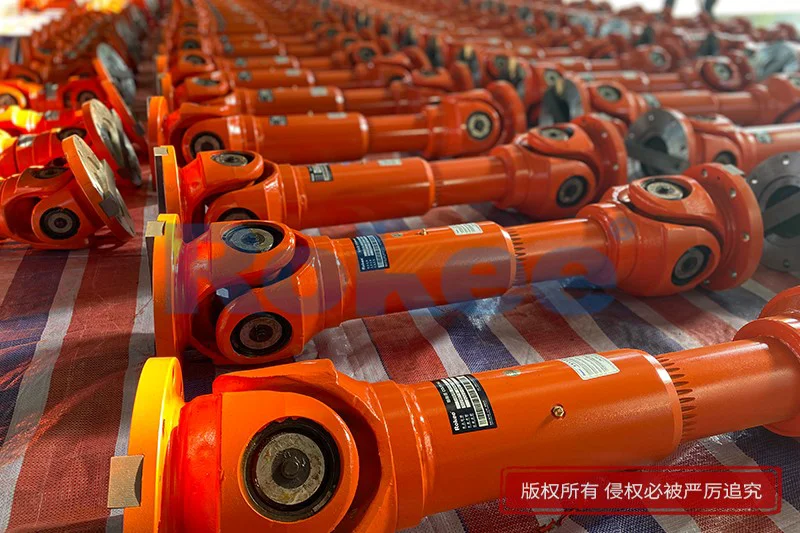
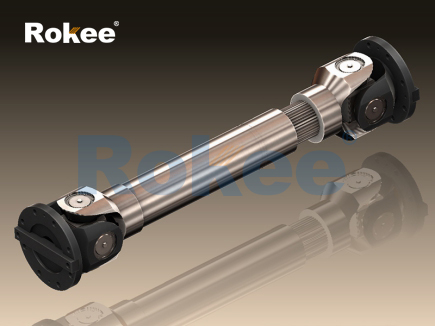
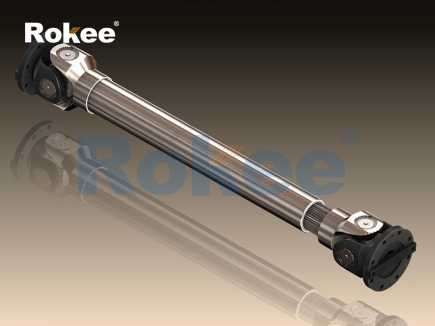
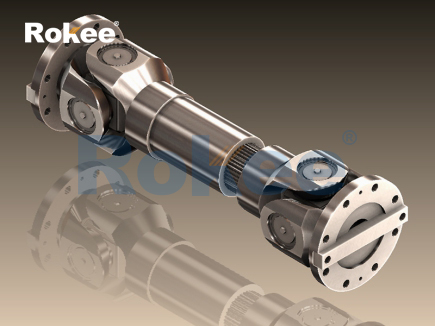
The basic structural composition of universal joint shaft coupling follows a concise and efficient mechanical design logic, and the mainstream structural configuration consists of multiple precision-machined metal components that cooperate closely with one another. The fundamental unit of the conventional coupling includes joint yokes, central connecting shafts, rolling bearing assemblies and fastening connecting structures. The joint yokes are symmetrically distributed at both ends of the coupling, serving as the connecting base for linking the driving shaft and driven shaft. The central connecting component adopts a cross-shaped shaft structure in most traditional designs, which connects two sets of yoke structures through mutually perpendicular hinge points. This special hinged connection mode enables the adjacent yokes to generate a certain angular deflection in multiple spatial directions, laying the structural foundation for the coupling to adapt to shaft angle displacement. The internal rolling bearing assemblies are installed at the hinge joints to reduce sliding friction between metal components during rotation, convert dry friction into rolling friction, and effectively lower mechanical wear and energy consumption during equipment operation. Some optimized structural designs are equipped with elastic sealing components on the outer side of the hinge parts, which can isolate external dust, moisture and corrosive substances, maintaining the internal lubrication state and prolonging the service life of moving parts.
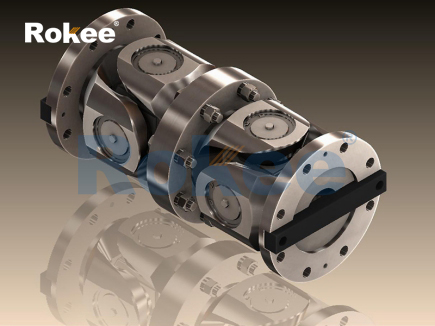
The transmission principle of universal joint shaft coupling originates from the spatial motion characteristics of hinged structures, and its power transmission process relies on the mechanical linkage between internal components to realize continuous rotation output. When the driving shaft starts to rotate, the torque is first transmitted to the connected yoke, and the cross-shaped central shaft drives the opposite yoke to rotate synchronously through the constraint force of the hinge points. In this process, even if an included angle exists between the driving shaft and the driven shaft, the mutually perpendicular hinge axes can offset the angular deviation, ensuring that the rotational motion can be smoothly transmitted between the two shafts. Nevertheless, a single-section universal joint has an inherent mechanical characteristic of non-uniform speed transmission. When the shaft has a fixed deflection angle, the instantaneous rotational speed of the driven shaft will fluctuate periodically with the rotation cycle, which may cause vibration and torque instability in high-speed operating conditions. To eliminate this defect, the combined structure of double-section universal joints has become a mature optimization solution. By arranging two single-section joints in series and controlling the deflection angle of the intermediate shaft to be equal at both ends, the speed fluctuation generated by the front joint can be completely offset by the rear joint, finally achieving constant-speed synchronous transmission between the driving and driven shafts.
According to different structural forms and transmission characteristics, universal joint shaft couplings can be divided into two mainstream types in industrial application scenarios, namely cross-shaft universal couplings and ball-cage universal couplings. The cross-shaft type is the most classic structural form with simple processing technology and strong structural rigidity. It can bear large torque load and is suitable for low-to-medium speed and heavy-load transmission environments such as engineering machinery and industrial transmission equipment. Its structural advantage lies in high mechanical strength and strong impact resistance, enabling stable operation even in harsh working conditions with frequent load changes. The ball-cage type adopts an innovative internal structure composed of an outer cage, star sleeve, steel balls and retaining frames. The smooth curved raceway design allows multiple steel balls to bear the load together, realizing larger-angle deflection transmission while maintaining constant-speed rotation. This type of coupling has excellent dynamic balance performance, low operating noise and slight vibration, and is more suitable for high-speed operation scenarios with high requirements for transmission stability.
Compared with other common connecting components in the transmission field, universal joint shaft couplings possess prominent comprehensive performance advantages that distinguish them from rigid couplings and ordinary elastic couplings. Rigid couplings require extremely high coaxial accuracy of the connected shafts, and slight positional deviation will cause additional mechanical stress, leading to component deformation and accelerated wear. Ordinary elastic couplings rely on elastic deformation of non-metallic materials to absorb vibration, but their angular compensation capability is limited, and elastic parts are prone to aging and deformation after long-term use. In contrast, universal joint shaft couplings have outstanding multi-directional displacement compensation capabilities, which can adapt to angular deviation, axial displacement and radial misalignment generated by equipment installation errors, thermal expansion and mechanical vibration. The all-metal main structure gives them excellent temperature resistance and aging resistance, and they can maintain stable mechanical performance in high-temperature, low-temperature and dusty working environments. In addition, the reasonable internal friction structure effectively reduces mechanical energy loss during transmission, ensuring high transmission efficiency for a long time.
The application scope of universal joint shaft couplings covers numerous industrial fields and mobile mechanical equipment, showing strong environmental adaptability and functional universality. In the transportation machinery industry, this component is applied to the power transmission structure of vehicles, realizing power connection between the engine, transmission and driving axle. It can adapt to the relative displacement generated by the jolt of the vehicle body during driving and the up-and-down movement of the suspension system, ensuring continuous and stable power output. In engineering machinery such as excavators and loaders, the coupling undertakes the transmission task of heavy torque, adapting to the violent vibration and complex stress changes during equipment operation, and providing reliable power support for mechanical actions such as excavation and handling. In agricultural machinery, it is installed on tillage and harvesting equipment to cope with the uneven ground and harsh field operating environment, resisting the erosion of mud and sundries to ensure the continuous operation of agricultural production. In addition, it also plays an important role in industrial production lines, metallurgical equipment and mining machinery, serving as a key connecting component between motors, reducers and working machinery to maintain the continuous operation of production equipment.
In the actual operation process of universal joint shaft couplings, there are multiple factors that affect their service life and operating stability, among which working load, operating speed, deflection angle and lubrication state are the core influencing elements. Long-term overload operation will cause irreversible plastic deformation of internal hinge components, resulting in increased transmission gaps and reduced motion accuracy. Excessively high rotating speed will amplify the slight vibration generated by structural clearance, forming resonance phenomenon in severe cases and damaging the overall structure of the coupling. The magnitude of the shaft deflection angle is positively correlated with the internal friction resistance. The larger the included angle between shafts, the higher the friction torque between components, and the faster the wear rate of rolling bearings and hinge contact surfaces. Lubrication condition is a key factor restricting component wear. Insufficient lubricant or deteriorated lubrication performance will directly increase metal friction, produce high temperature during operation, and accelerate the aging and damage of sealing structures.
Scientific daily maintenance and standardized operation methods are essential to maintain the working performance of universal joint shaft couplings and extend their service cycle. In the equipment daily inspection work, staff need to regularly check the tightness of fastening structures to prevent component loosening caused by long-term mechanical vibration, which would lead to transmission deviation. It is necessary to regularly supplement and replace lubricating grease for the internal hinge parts to ensure that the friction contact surface is always covered with high-performance lubricant, reducing abrasive wear between metals. The integrity of external sealing components should be inspected regularly, and damaged sealing parts need to be replaced in a timely manner to avoid external impurities from entering the internal moving gap. During equipment startup and operation, sudden heavy load impact should be avoided as much as possible, and the equipment should be started smoothly to reduce instantaneous torque impact on the coupling. For the couplings that have been used for a long time, regular disassembly and inspection are required to check for fatigue cracks and excessive wear on the surface of metal components, so as to replace damaged parts in time and prevent equipment failure caused by component aging.
With the continuous progress of mechanical manufacturing technology and the upgrading of industrial production requirements, the optimization and innovation of universal joint shaft couplings are constantly advancing in terms of material selection, structural design and processing technology. In terms of materials, high-strength alloy steel with excellent toughness and fatigue resistance has gradually replaced ordinary carbon steel. Through precise heat treatment processes such as quenching and tempering, the hardness and wear resistance of component surfaces are improved, while the internal toughness is maintained to resist impact load. In structural optimization, the streamlined design of internal raceways and the integrated processing of yoke structures effectively reduce structural gaps and improve dynamic balance performance during high-speed operation. The improved sealing structure adopts multi-layer protective designs to enhance dust-proof and waterproof capabilities, adapting to more extreme working environments. In terms of processing technology, modern precision machining equipment such as CNC machine tools is used to realize micron-level processing accuracy of key components, ensuring the fitting tightness between parts and further reducing transmission vibration and noise.
Looking into the future development trend, universal joint shaft couplings will develop towards miniaturization, high precision, high load resistance and intelligent monitoring. With the miniaturization and integration of mechanical equipment, the compact structural design of couplings will become an important development direction to meet the power transmission requirements of limited installation space. High-precision processing and assembly technology will further reduce motion clearance, realizing low-vibration and low-noise high-efficiency transmission. In view of the heavy-load operating demand of large industrial equipment, the optimized force-bearing structure and new composite metal materials will continuously improve the torque bearing capacity of couplings. At the same time, with the integration of intelligent sensing technology, some coupling products will be embedded with miniature monitoring components to collect real-time data such as operating temperature, vibration amplitude and torque load, realizing real-time monitoring of operating status and early warning of potential faults, which greatly improves the safety and intelligence level of equipment operation.
Throughout the entire mechanical transmission industry, the universal joint shaft coupling, as a basic yet crucial mechanical component, carries the core demand of power connection between rotating shafts. Its unique angular compensation performance, excellent environmental adaptability and reliable structural stability make it an indispensable part of modern mechanical systems. From mobile transportation equipment to fixed industrial production devices, it silently completes torque transmission and motion connection, providing basic guarantee for the normal operation of various mechanical equipment. With the continuous innovation of material technology, processing technology and intelligent monitoring means, the comprehensive performance of universal joint shaft couplings will be further optimized, and their application fields will continue to expand. It will keep pace with the development of modern machinery industry, continuously break through performance limitations, and provide more efficient and stable transmission solutions for complex mechanical systems in various industries.
pu sandwich panel line,pu sandwich panel machine,sandwich panel machine
« Universal Joint Shaft Couplings » Latest Update Date: May 9, 2026
https://www.rokeecoupling.net/tags/universal-joint-shaft-couplings.html