Stainless Steel Laminated Coupling
Rokee is a well-known Stainless Steel Laminated Coupling supplier from china, the page show cases of Stainless Steel Laminated Coupling, provide customized services based on user's drawings, and supporting exports.
In the intricate and interconnected operating system of modern industrial machinery, transmission components serve as the fundamental guarantee for the coordinated operation of various mechanical equipment, and couplings stand out as indispensable core connecting parts in mechanical transmission systems. A stainless steel laminated coupling is a sophisticated mechanical transmission component designed to connect two rotating shafts, achieving stable torque transmission while adapting to various complex operating conditions. Composed of multiple thin stainless steel metal laminates combined with metal shaft sleeves and fasteners, this type of coupling relies on the elastic deformation of stainless steel laminates to realize mechanical buffering and displacement compensation. Compared with traditional coupling structures made of cast iron, ordinary carbon steel and non-metallic materials, it boasts unique structural advantages and material performance characteristics, gradually becoming a mainstream transmission component in high-precision, high-speed and high-corrosion industrial scenarios. With the continuous upgrading of industrial manufacturing technology and the increasingly stringent operating requirements of mechanical equipment, the application value of stainless steel laminated couplings in modern industrial production is constantly highlighted, and their structural design and production processes are also continuously optimized and upgraded to adapt to diverse and harsh working environments.
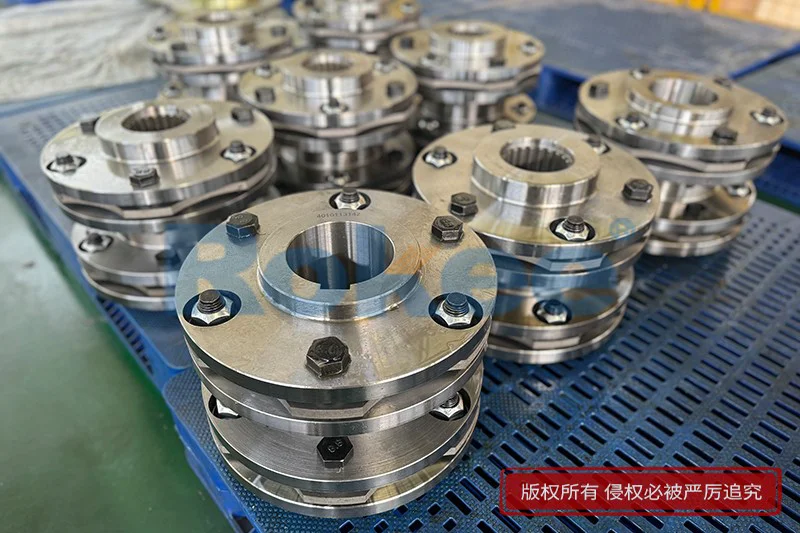
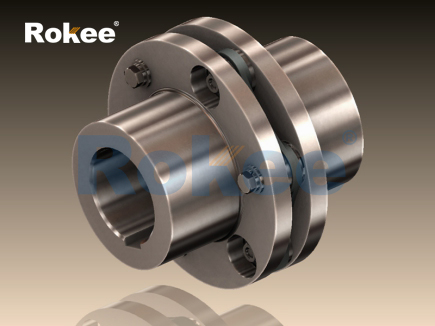
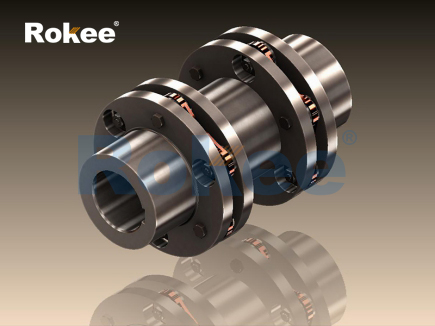
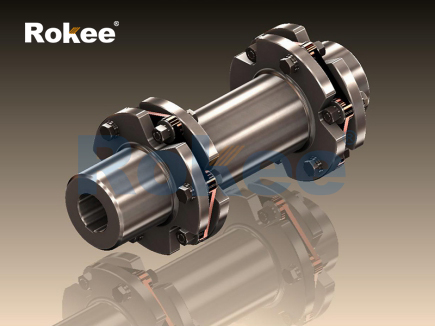
The basic structural composition of stainless steel laminated couplings follows the design logic of simplicity, compactness and high efficiency, and each component has clear functional division and mutual coordination to ensure the overall operating stability of the equipment. The core functional component of the coupling is the stainless steel laminate group, which is stacked by multiple ultra-thin stainless steel sheets according to specific spacing and arrangement rules. These laminates are processed into regular geometric shapes through precision cutting and polishing, with smooth and flat surfaces and uniform thickness, laying a foundation for consistent elastic deformation during operation. The two ends of the laminate group are connected with metal shaft sleeves respectively, and the inner holes of the shaft sleeves are precisely processed to match the outer diameter of the transmission shaft, ensuring high-precision assembly and coaxiality during installation. In addition, high-strength metal fasteners are used to penetrate the reserved holes of laminates and shaft sleeves for fixed assembly. The fasteners adopt symmetric distribution design, which can evenly disperse the torque and pressure generated during transmission, effectively avoiding local stress concentration caused by uneven force. There is no need for additional auxiliary transmission structures such as elastic gaskets and lubricating accessories inside the whole coupling. The integrated structural design not only reduces the overall space occupation, but also simplifies the assembly structure, lowering the failure probability of parts in long-term operation.
The excellent comprehensive performance of stainless steel laminated couplings is fundamentally derived from the superior physical and chemical properties of stainless steel materials. The stainless steel used for manufacturing laminates contains specific chromium and nickel alloy elements, which can form a dense and stable passive film on the metal surface. This film can effectively isolate corrosive media such as humid air, acid and alkali liquids, and industrial dust, preventing chemical corrosion and oxidation of the coupling structure in long-term service. Different from ordinary carbon steel materials that are prone to rust and deformation in humid environments, stainless steel maintains stable surface activity and structural integrity under extreme environmental conditions, avoiding performance degradation caused by material corrosion. In terms of mechanical properties, stainless steel has high tensile strength and surface hardness, which can resist impact load and friction loss in high-frequency rotation. Even under long-term high-speed operation, the laminates are not easy to produce plastic deformation and fatigue cracks. Meanwhile, the material has good low-temperature toughness and high-temperature stability, without brittle fracture in low-temperature cold environments or structural softening in continuous high-temperature working conditions, adapting to the temperature fluctuation changes of industrial production sites.
The working principle of stainless steel laminated couplings is based on the elastic deformation characteristics of metal laminates, realizing flexible transmission and displacement compensation in mechanical operation. When the power equipment drives the driving shaft to rotate, the torque is transmitted to the driven shaft through the tightly connected laminates. In the transmission process, due to processing errors, installation deviations and mechanical vibration, there are inevitable tiny axial, radial and angular displacements between the two connected shafts. The stacked stainless steel laminates can produce reversible elastic deformation under the action of displacement deviation. This subtle deformation can absorb the dislocation error between the shafts, effectively offsetting the mechanical stress caused by misalignment. When the equipment is subjected to instantaneous impact load and torque fluctuation, the elastic deformation of laminates can also play a buffering role, dispersing instantaneous pressure and avoiding rigid collision between shaft parts. This flexible transmission mode eliminates the rigid friction and mechanical vibration generated in the operation of traditional rigid couplings, reduces the vibration amplitude and noise value during equipment operation, and ensures the smoothness and stability of the transmission process.
In actual industrial application scenarios, stainless steel laminated couplings show multiple prominent performance advantages, which are the key reasons for their wide promotion and application. Firstly, they have high torsional rigidity and low rotational inertia. The compact stacked structure of stainless steel laminates enables the coupling to maintain stable torque transmission efficiency under high-speed rotation. The lightweight thin-sheet structure reduces the overall mass of the coupling, lowers the energy consumption required for equipment start-stop and rotation, and improves the dynamic response speed of the transmission system. Secondly, the coupling has excellent vibration resistance and fatigue resistance. The internal laminate structure can continuously absorb and attenuate mechanical vibration generated by equipment operation, prevent vibration from being transmitted along the transmission shaft to other mechanical components, and reduce the loosening and wear of connecting parts. After tens of thousands of high-frequency rotation cycles, the laminates can still maintain stable elastic performance without fatigue damage, meeting the long-term continuous operation needs of industrial equipment. In addition, this type of coupling does not need lubrication maintenance in the whole service cycle. There is no relative sliding friction between internal components, avoiding the use of lubricating oil and grease, which not only saves daily maintenance costs, but also prevents environmental pollution caused by lubricant leakage.
The manufacturing process of stainless steel laminated couplings is rigorous and standardized, and every processing link is strictly controlled to ensure product accuracy and service life. The production starts with the selection of high-quality stainless steel raw materials. The raw materials need to undergo component detection and performance screening to ensure uniform material texture and stable mechanical properties. After blanking, the stainless steel sheet is subjected to precision stamping and laser cutting to form standard laminate outlines. The cutting edge is polished and deburred to eliminate tiny scratches and sharp corners, preventing stress concentration at the edge during deformation. Then, the laminates are subjected to heat treatment processes such as solid solution aging to optimize the internal metal microstructure, enhance the elastic fatigue resistance and structural stability of the material. After the processing of single laminates is completed, the laminates are stacked at equal intervals according to design parameters, and matched with precision-machined shaft sleeves and high-strength fasteners for assembly. The assembled coupling will undergo dynamic balance calibration and torsion testing to adjust the assembly coaxiality, eliminate unbalanced mass, and ensure no obvious vibration and shaking during high-speed rotation. Finally, the surface is cleaned and passivated to enhance the surface corrosion resistance and extend the overall service life.
Stainless steel laminated couplings are widely used in many industrial fields with harsh working conditions and high transmission precision requirements. In the petrochemical industry, the equipment often operates in closed pipelines with corrosive media, and the humid and corrosive working environment puts forward high requirements on the corrosion resistance of connecting parts. This coupling can maintain stable connection performance in such environments, avoiding equipment shutdown caused by component corrosion and damage. In the field of precision manufacturing and processing, such as numerical control machine tools and automated production lines, high coaxiality and low vibration transmission are required to ensure processing accuracy. The low vibration and high-precision positioning characteristics of stainless steel laminated couplings can effectively reduce the processing error of mechanical equipment and improve the product qualification rate. In energy power equipment including centrifugal compressors and turbo generator sets, the equipment runs continuously at high speed for a long time, and the coupling needs to bear continuous torque and vibration load. Its high fatigue resistance and stable transmission performance can meet the long-term operation needs of power equipment. In addition, it also plays an important role in marine propulsion systems and papermaking machinery. The salt spray humid environment at sea and the dust polluted environment in papermaking production will not affect the structural stability of the coupling, realizing reliable connection of mechanical shafts.
Scientific installation and standardized daily maintenance are crucial to give full play to the performance advantages of stainless steel laminated couplings and extend their service life. During the installation process, the coaxiality of the driving shaft and the driven shaft must be strictly calibrated to minimize the initial installation deviation. Excessive offset will cause the laminates to bear excessive deformation pressure in the early stage of operation, accelerating fatigue loss. The fastening force of fasteners should be kept uniform and moderate. Excessively tight fastening will lead to excessive extrusion deformation of laminates, while loose fastening will cause relative sliding between components and affect transmission efficiency. After installation, it is necessary to conduct no-load trial operation to observe the vibration and noise state of the coupling, and eliminate abnormal problems in time. In daily maintenance, regular visual inspection is mainly adopted to check whether there are cracks, deformation and corrosion marks on the laminate surface, and whether the fasteners are loose. It is necessary to regularly clean the dust and impurities attached to the coupling surface to prevent particulate matter from accumulating and causing friction wear. For equipment running in high-temperature and high-corrosion environments, the inspection frequency should be appropriately increased to monitor the structural changes of components in real time. Once abnormal vibration and torque attenuation are found during operation, the equipment should be shut down for inspection in time to replace damaged parts and avoid major mechanical failures.
Compared with other common types of couplings in the market, stainless steel laminated couplings have obvious comprehensive competitive advantages. Rubber elastic couplings rely on rubber parts for buffering and shock absorption, but rubber materials are prone to aging, hardening and deformation under high temperature and long-term friction, with a short service life, and are not suitable for high-precision transmission scenarios. Gear couplings have strong bearing capacity, but their internal gear meshing structure requires long-term lubrication, with large operation noise and high maintenance cost, and they are easy to wear in dusty environments. Spring couplings have simple structure, but their elastic compensation ability is limited, and they cannot adapt to multi-directional shaft displacement deviation. In contrast, stainless steel laminated couplings integrate corrosion resistance, high precision, low noise and maintenance-free characteristics. Although the manufacturing cost is slightly higher than that of ordinary couplings, their long service life and stable operating performance can effectively reduce the overall replacement and maintenance cost of mechanical equipment, bringing higher economic benefits to industrial production.
With the continuous progress of industrial intelligent manufacturing technology, the development trend of stainless steel laminated couplings is gradually moving towards miniaturization, high precision and customization. In the future, through the optimization of material ratio and processing technology, the tensile strength and elastic fatigue resistance of stainless steel raw materials will be further improved, so that the couplings can adapt to more extreme high-temperature, low-temperature and strong corrosion working environments. The structural design will be more refined. By adjusting the number, thickness and arrangement of laminates, customized products with different torque bearing capacities and displacement compensation ranges will be developed to meet the differentiated needs of various professional equipment. At the same time, combined with intelligent detection technology, some coupling products will be equipped with tiny sensing components to monitor operating parameters such as vibration amplitude and torque change in real time, providing data support for equipment intelligent maintenance. In addition, the production and processing process will realize intelligent automatic production, improve product processing accuracy and production efficiency, and reduce manufacturing errors caused by manual operation.
As an important connecting component in modern mechanical transmission systems, stainless steel laminated couplings rely on excellent stainless steel material performance, reasonable laminated structure design and mature manufacturing technology to solve many connection problems in industrial mechanical operation. It effectively overcomes the defects of easy corrosion, large vibration, low precision and frequent maintenance of traditional couplings, and provides stable and reliable connection guarantee for various high-precision and harsh working condition equipment. From basic structural composition and working principle to actual industrial application and later maintenance management, every link reflects the mechanical design concept of combining efficiency, stability and durability. In the context of continuous industrial upgrading and increasingly strict mechanical operation standards, stainless steel laminated couplings will continue to rely on technological innovation to optimize product performance, expand application fields, and make more important contributions to the stable operation and efficient development of modern industrial machinery. With the continuous breakthrough of material science and processing technology, this type of coupling will surely achieve more optimized performance indicators and occupy a more important position in the industrial component market.
With excellent quality, we have been continuously providing many coupling products of various categories and uses complying with multiple standards and a full range of services, from the product selection to final installation and operation, for the industry fields of ferrous metallurgy, nuclear power, gas turbine, wind power, ropeway construction, lifting transportation, general equipment, etc.
pu sandwich panel line,pu sandwich panel machine,sandwich panel machine
« Stainless Steel Laminated Coupling » Latest Update Date: May 9, 2026
https://www.rokeecoupling.net/cases/stainless-steel-laminated-coupling.html