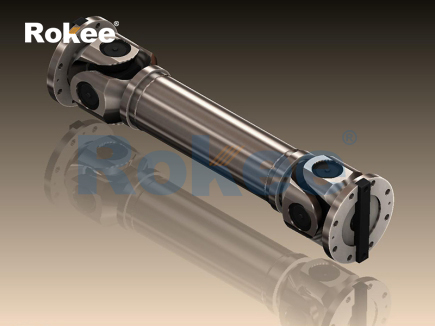
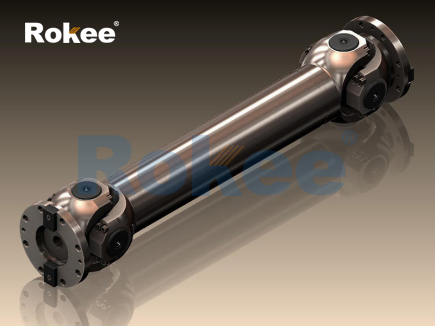
Telescopic Universal Joint Drive Shaft
Rokee is a well-known Telescopic Universal Joint Drive Shaft supplier from china, the page show cases of Telescopic Universal Joint Drive Shaft, provide customized services based on user's drawings, and supporting exports.
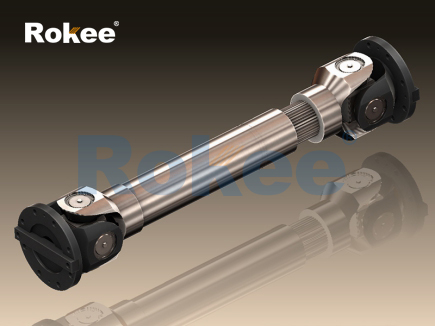
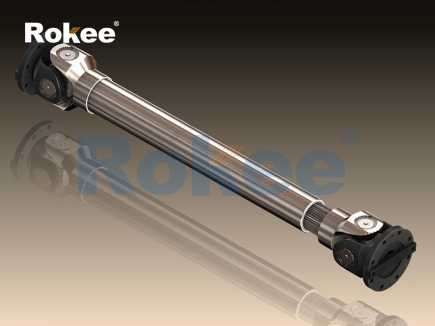
The telescopic universal joint drive shaft stands as a cornerstone component in modern mechanical power transmission systems, engineered to bridge the gap between driving and driven shafts that are not aligned on a single straight axis, while also accommodating dynamic changes in axial distance during operation. Unlike rigid drive shafts that fail to compensate for misalignment or positional shifts, this specialized assembly integrates two core functional modules: universal joint mechanisms for angular deflection compensation and telescopic spline structures for axial length adjustment, creating a versatile transmission solution that operates reliably under complex mechanical conditions. Its design philosophy revolves around balancing power transmission efficiency, mechanical flexibility, and structural durability, making it indispensable across automotive, industrial machinery, marine, aerospace, and heavy engineering sectors. Every aspect of its construction, from material selection to component assembly, is optimized to withstand cyclic loads, torsional stress, and environmental wear, ensuring consistent performance in both low-speed heavy-duty scenarios and high-speed rotational applications.
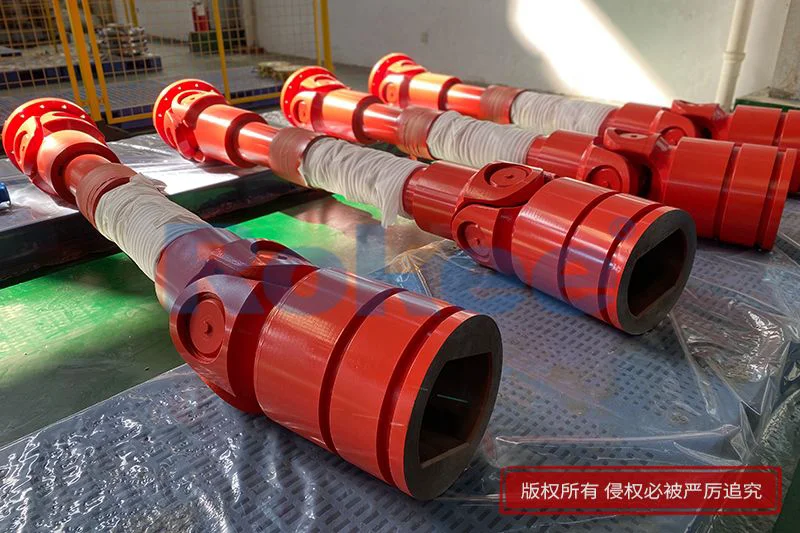
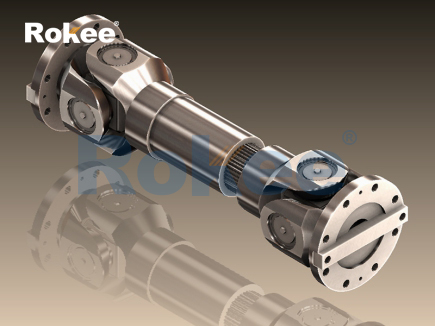
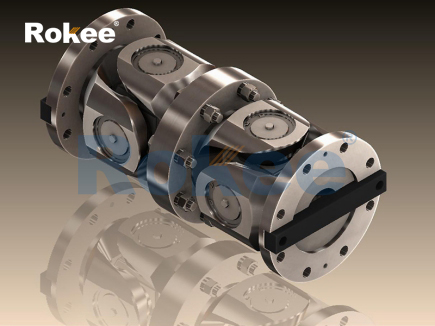
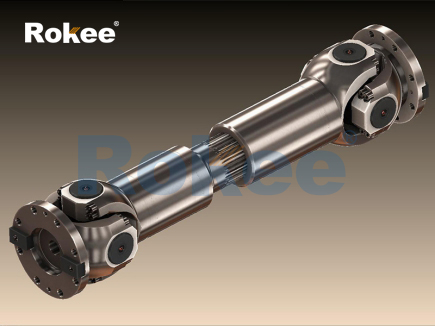
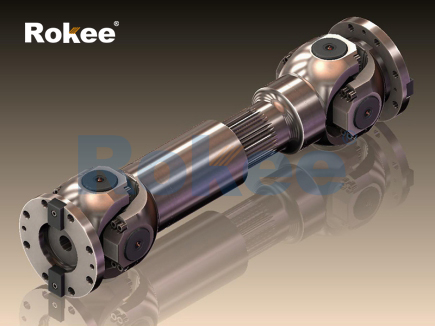
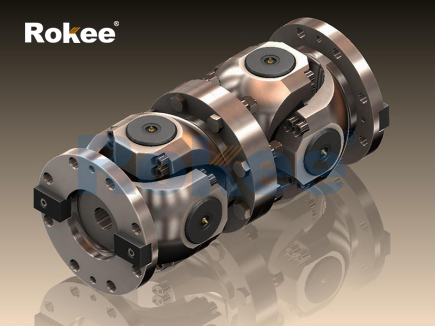
At its core, the telescopic universal joint drive shaft is composed of several precision-engineered sub-components that work in tandem to deliver seamless power transfer. The most critical element is the universal joint assembly, typically a cross-type (Cardan) joint, which consists of a central cross shaft, four needle roller bearings, bearing caps, and sealing washers. The cross shaft serves as the pivotal connection between two yokes, one attached to the driving end and the other to the driven end, enabling the shaft to transmit torque at varying angles—usually ranging from 15 degrees to 45 degrees for single joints, and up to 90 degrees for dual joint configurations—without disrupting rotational flow. The needle roller bearings within the joint minimize friction between the cross shaft and yokes, reducing energy loss and extending service life by distributing contact stress evenly across the bearing surfaces. Complementing the universal joint is the telescopic spline module, which features an internal spline shaft and an external spline sleeve that slide longitudinally relative to one another. This spline pair is precision-machined to maintain tight dimensional tolerances, ensuring that torque is transmitted efficiently even during axial movement, while preventing radial play that could cause vibration or imbalance. The spline section is often treated with surface hardening processes to enhance wear resistance, as repeated sliding motion can accelerate material degradation over time. Additional structural components include end connectors, such as flanged yokes, clamping hubs, or welded fittings, which secure the drive shaft to adjacent transmission components like gearboxes, differentials, pumps, or motor output shafts. A robust sealing system is also integrated into both the universal joints and spline module, consisting of rubber or polyurethane dust boots and lip seals that block contaminants like dust, moisture, and debris from entering internal moving parts, while retaining lubricating grease to maintain smooth operation. Some heavy-duty variants also include a center support bearing for extended-length shafts, which reduces bending stress and rotational vibration by providing intermediate structural support, particularly useful in applications where the drive span is long and requires enhanced stability.
The performance characteristics of telescopic universal joint drive shafts are defined by a set of core mechanical and operational properties that determine their suitability for specific applications. Foremost among these is torque transmission capacity, which refers to the maximum torsional load the shaft can handle continuously without deformation or failure. This capacity is dictated by material strength, cross-sectional dimensions of the shaft body, and the design of the universal joint and spline components; heavy-duty models are built to handle extremely high torque loads for industrial machinery, while lighter variants are optimized for moderate torque in automotive and small equipment use. Angular misalignment compensation is another defining performance trait, allowing the shaft to accommodate parallel, angular, and combined misalignments between driving and driven shafts that arise from manufacturing tolerances, installation errors, or dynamic movement during operation. This flexibility eliminates the need for perfect shaft alignment during setup, reducing installation complexity and minimizing stress on connected equipment. Axial telescopic range is equally vital, with standard models offering adjustment spans ranging from 50mm to 300mm, depending on the intended application; this range compensates for thermal expansion and contraction of mechanical components, suspension travel in vehicles, and minor positional shifts in fixed industrial machinery, ensuring the drive shaft remains engaged and functional without binding or disconnecting. Transmission efficiency is a key performance metric as well, with well-designed telescopic universal joint drive shafts achieving efficiency rates of over 98% under optimal operating conditions, thanks to low-friction bearing designs and precision-machined splines that minimize power loss through friction or slippage. Dynamic balance is critical for high-speed applications, as unbalanced rotation can cause severe vibration, noise, and premature wear; manufacturers perform precision balancing during production to ensure smooth operation at rotational speeds ranging from low RPM for heavy machinery to high RPM for automotive and aerospace systems. Durability and fatigue resistance round out the core performance features, with components constructed from high-strength alloy steel, carbon steel, or in some lightweight applications, aluminum alloys, all subjected to heat treatment and surface finishing processes to boost resistance to torsional fatigue, impact loads, and abrasive wear. Environmental resilience is also a notable performance aspect, with sealed designs enabling operation in extreme temperatures, humid conditions, dusty industrial environments, and even marine settings with moderate salt exposure, provided proper maintenance is performed.
Telescopic universal joint drive shafts are classified into distinct categories based on multiple criteria, including structural configuration, telescopic design, joint type, load capacity, and intended application, each tailored to meet specific operational demands. The most fundamental classification is based on the number of universal joint assemblies, distinguishing between single-joint and double-joint (dual Cardan) models. Single-joint telescopic drive shafts feature one universal joint at one end and the telescopic spline at the other, offering a compact design suitable for small to medium torque loads and moderate angular misalignment compensation; they are commonly used in light-duty vehicles, small industrial pumps, and portable machinery where space is limited. Double-joint models incorporate universal joints at both ends, with the telescopic spline positioned in the middle section, providing significantly greater angular misalignment compensation and longer telescopic range, making them ideal for heavy-duty, high-load applications where substantial shaft offset or movement is expected. Another key classification is based on the telescopic mechanism design, separating short-telescopic and long-telescopic variants. Short-telescopic drive shafts have a limited axial adjustment range, typically under 100mm, and are designed for applications with minimal thermal expansion or positional movement, such as passenger vehicles and stationary industrial equipment. Long-telescopic models feature extended spline lengths with adjustment ranges exceeding 150mm, engineered for heavy machinery, commercial vehicles, and marine systems where large axial shifts are common. Classification by load capacity divides shafts into light-duty, medium-duty, and heavy-duty categories. Light-duty units are constructed with thinner wall tubing and smaller universal joints, optimized for low torque and high-speed operation in passenger cars, lawn care equipment, and small industrial tools. Medium-duty shafts strike a balance between strength and weight, suitable for light commercial vehicles, agricultural machinery, and medium-scale industrial equipment like conveyor systems and mixers. Heavy-duty telescopic drive shafts are built with thick-walled alloy steel shafts, oversized cross joints, and reinforced splines, engineered to withstand extreme torque loads, shock loads, and continuous operation in mining machinery, construction equipment, marine propulsion systems, and steel rolling mills. They can also be classified by connection type, including flanged connection, welded connection, and clamping connection models, each offering different installation flexibility and load-bearing capabilities; flanged connections provide secure, rigid mounting for heavy loads, while clamping connections allow for quick installation and removal without welding.
The unique combination of angular flexibility, axial adjustability, and high torque transmission capability makes telescopic universal joint drive shafts applicable across an extensive range of industries and mechanical systems, with each sector leveraging its specific performance advantages to solve unique transmission challenges. In the automotive industry, these drive shafts are integral components of rear-wheel drive, four-wheel drive, and all-wheel drive vehicles, connecting the transmission or transfer case to the rear differential. The telescopic spline compensates for vertical movement of the rear suspension during vehicle operation, while the universal joints accommodate angular changes between the transmission and differential, ensuring smooth power delivery to the wheels even over uneven terrain. They are also used in steering systems and auxiliary drive components for commercial trucks, buses, and off-road vehicles, where durability and flexibility are critical for handling heavy loads and rough driving conditions. In industrial machinery, telescopic universal joint drive shafts are widely deployed in manufacturing equipment, conveyor systems, mixing units, and pumping stations, where they transmit power between motors and driven components that are not perfectly aligned or experience thermal expansion. Heavy industrial applications such as steel rolling mills, continuous casting machines, and metal forming equipment rely on heavy-duty telescopic drive shafts to handle extreme torque loads and maintain consistent power transmission despite significant mechanical vibration and misalignment. Agricultural machinery, including tractors, harvesters, and tillers, uses these drive shafts to connect power take-off (PTO) units to attached implements, accommodating the movement and offset of farm equipment during field operation. The marine industry utilizes waterproof, corrosion-resistant telescopic universal joint drive shafts for propulsion systems, stern drives, and deck machinery, where they compensate for hull deformation, engine movement, and shaft misalignment in saltwater environments, with sealed designs preventing water intrusion and ensuring reliable operation. In aerospace and aviation support equipment, lightweight, high-precision telescopic drive shafts are used in ground support machinery, aircraft landing gear test systems, and auxiliary power unit transmissions, where compact size, low weight, and high efficiency are paramount. Additionally, they find application in construction machinery such as excavators, loaders, cranes, and concrete mixers, enabling power transmission between hydraulic motors and working components while accommodating the constant movement and vibration of heavy construction equipment. Even in specialized fields like renewable energy, telescopic universal joint drive shafts are used in wind turbine yaw and pitch systems, transmitting power to adjust turbine blades and rotor position while compensating for the dynamic movement and misalignment caused by wind forces and tower deformation.
Beyond their core functional applications, the design and performance of telescopic universal joint drive shafts are continuously evolving to meet the demands of modern engineering, with advancements focusing on enhanced durability, reduced maintenance requirements, and improved operational efficiency. Modern manufacturing techniques, such as precision forging, CNC machining, and advanced heat treatment, have refined component tolerances and material properties, reducing friction and extending service life while minimizing the need for frequent lubrication and repairs. Surface coating technologies, including galvanization, black oxide treatment, and specialized anti-corrosion coatings, further boost environmental resistance, allowing the shafts to operate in harsher conditions with less degradation. The integration of low-friction, self-lubricating bearing materials has also eliminated the need for regular greasing in some light to medium-duty models, reducing maintenance overhead and increasing operational uptime. Despite their structural complexity, telescopic universal joint drive shafts remain a cost-effective and reliable transmission solution, as their ability to compensate for misalignment and movement reduces wear on connected components, lowering overall system maintenance and replacement costs over time. Proper selection of the appropriate drive shaft type based on torque requirements, misalignment range, operating speed, and environmental conditions is crucial to maximizing performance and service life; factors such as installation space, rotational direction, and load variability must also be considered to ensure optimal compatibility with the entire transmission system. Routine maintenance practices, including regular inspection of seals for damage, monitoring of joint and spline wear, and replenishment of lubricant as needed, further preserve the shaft’s performance and prevent premature failure, ensuring consistent operation throughout its service life.
In summary, the telescopic universal joint drive shaft is a highly versatile and essential mechanical component that addresses the fundamental challenge of transmitting rotational power between misaligned or dynamically shifting shafts. Its integrated design of universal joints for angular compensation and telescopic splines for axial adjustment delivers a unique combination of flexibility, efficiency, and durability that cannot be matched by rigid drive shafts or basic coupling mechanisms. The diverse range of classifications, from light-duty single-joint models to heavy-duty double-joint variants, ensures that a suitable configuration exists for nearly every power transmission application, spanning automotive, industrial, agricultural, marine, and aerospace sectors. As mechanical engineering continues to advance toward more efficient, durable, and adaptable systems, the telescopic universal joint drive shaft will remain a critical component, evolving alongside material science and manufacturing technology to meet the increasing demands of modern machinery. Its enduring relevance stems from its ability to solve practical mechanical problems, reduce system complexity, and enhance overall operational reliability, making it an indispensable part of global industrial and transportation infrastructure. By understanding its structural design, performance capabilities, classification nuances, and wide-ranging applications, engineers and technicians can make informed decisions when selecting and implementing these drive shafts, ensuring optimal performance and longevity in any mechanical system.
With excellent quality, we have been continuously providing many coupling products of various categories and uses complying with multiple standards and a full range of services, from the product selection to final installation and operation, for the industry fields of ferrous metallurgy, nuclear power, gas turbine, wind power, ropeway construction, lifting transportation, general equipment, etc.
pu sandwich panel line,pu sandwich panel machine,sandwich panel machine
« Telescopic Universal Joint Drive Shaft » Update Date: 2026/5/9
https://www.rokeecoupling.net/cases/telescopic-universal-joint-drive-shaft.html