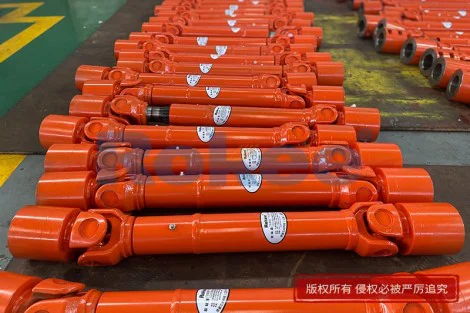
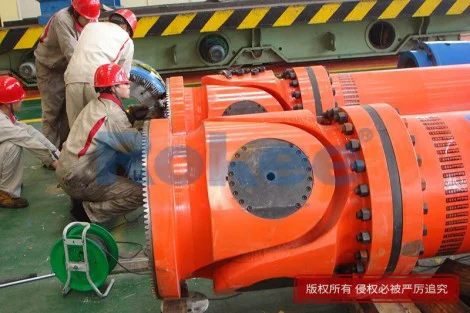
Large Universal Joint Coupling
Rokee is a well-known Large Universal Joint Coupling supplier from china, the page show cases of Large Universal Joint Coupling, provide customized services based on user's drawings, and supporting exports.
In the complex operational logic of modern heavy industrial transmission systems, large universal joint couplings stand out as indispensable mechanical components that ensure stable torque transmission between disjointed and misaligned rotating shafts. Unlike ordinary connecting parts that only adapt to ideal coaxial working conditions, these heavy-duty coupling structures are engineered to withstand extreme mechanical loads while accommodating significant angular, axial, and radial displacements between interconnected shafts. Their unique mechanical properties make them widely deployed in heavy machinery, metallurgical equipment, mining facilities, and large transportation systems, forming a critical guarantee for the continuous and efficient operation of bulk industrial production lines. As industrial upgrading continues to raise standards for mechanical stability and load resistance, the structural optimization and application expansion of large universal joint couplings have gradually become a key research direction in the field of mechanical transmission engineering.
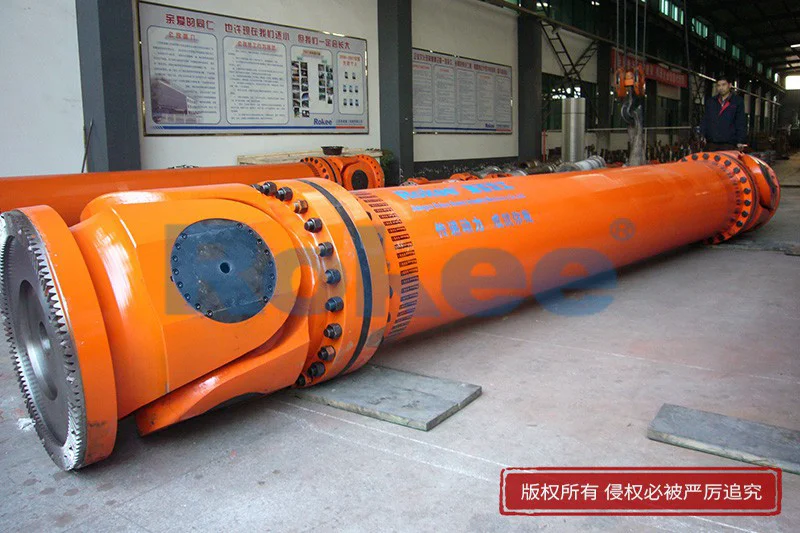
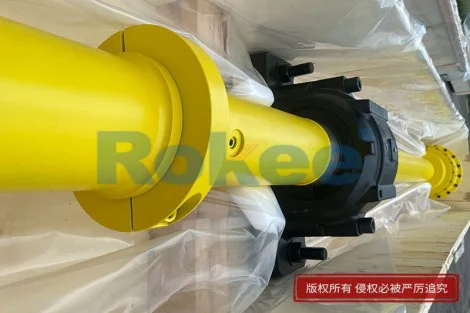
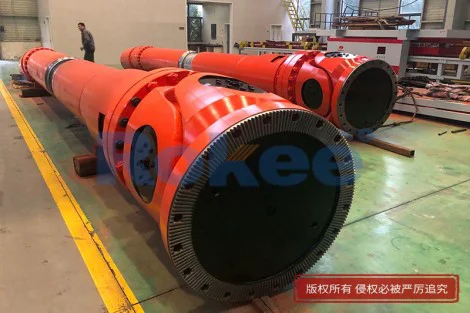
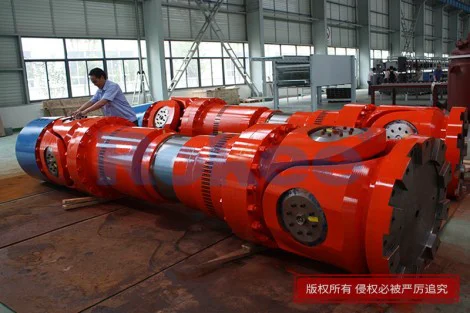
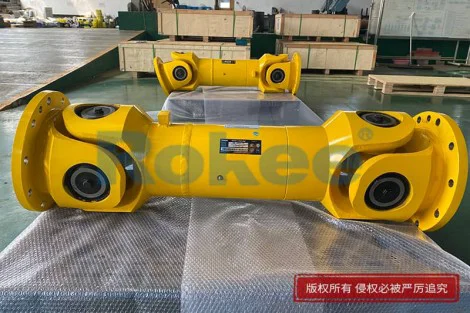
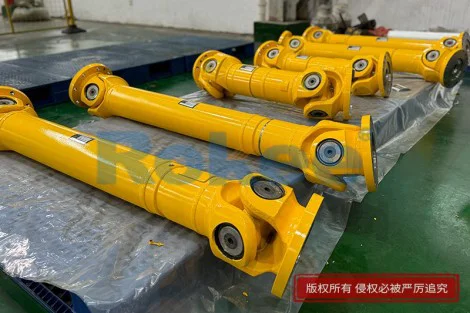
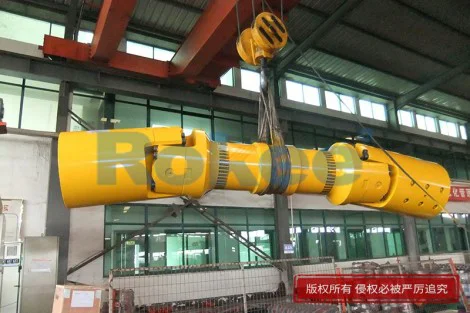
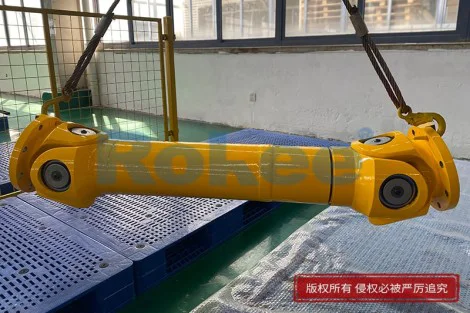
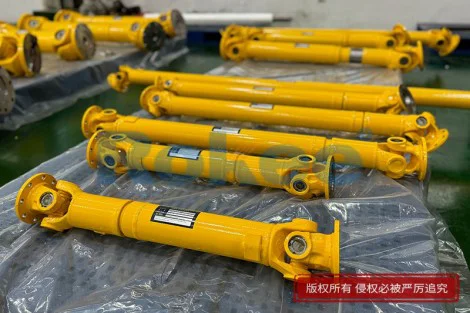
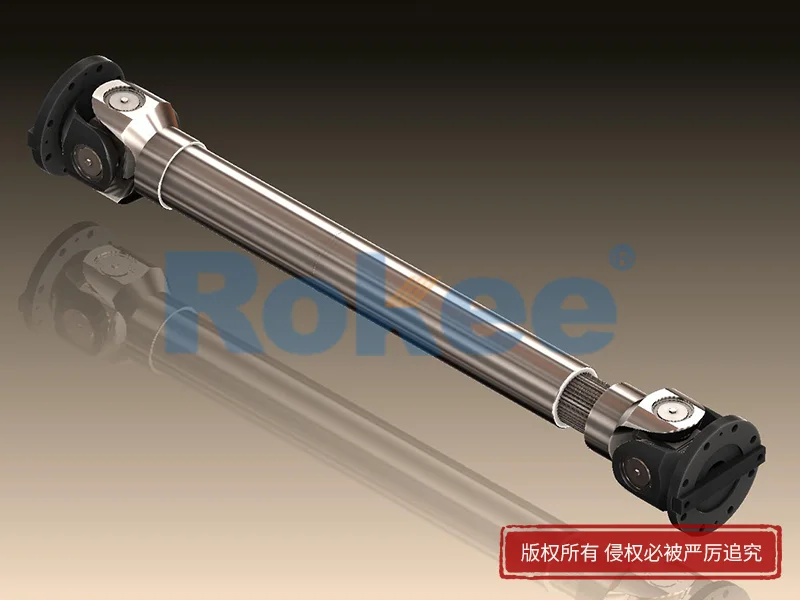
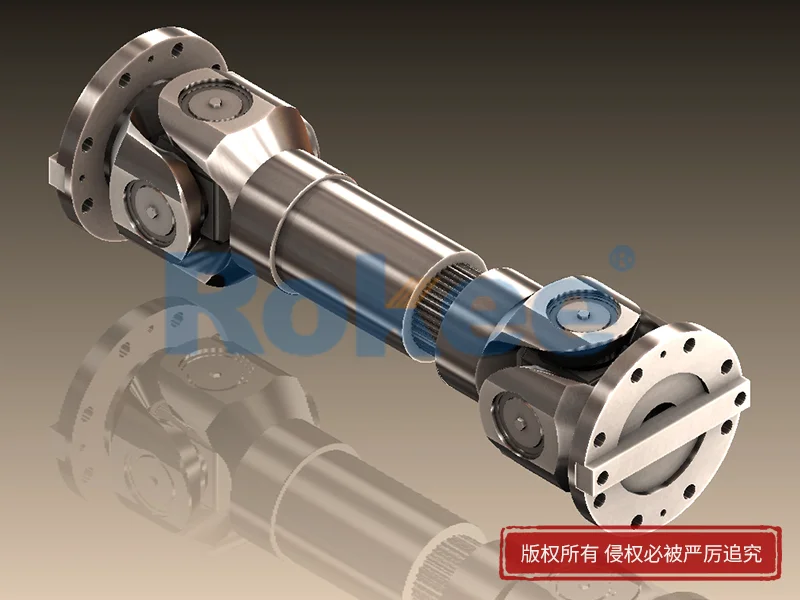
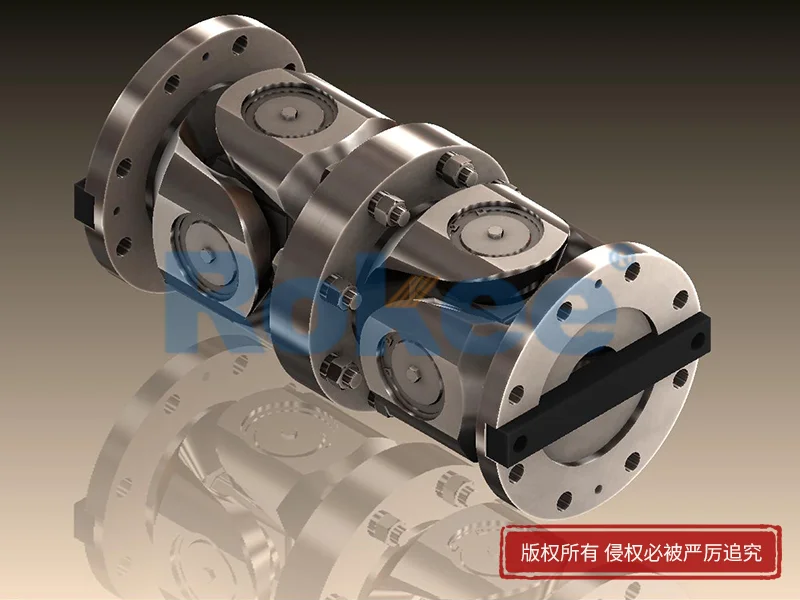
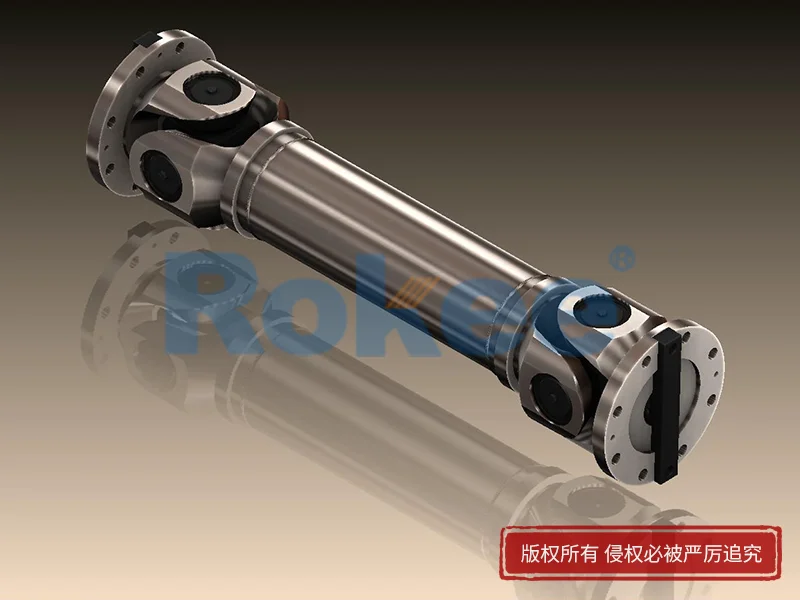
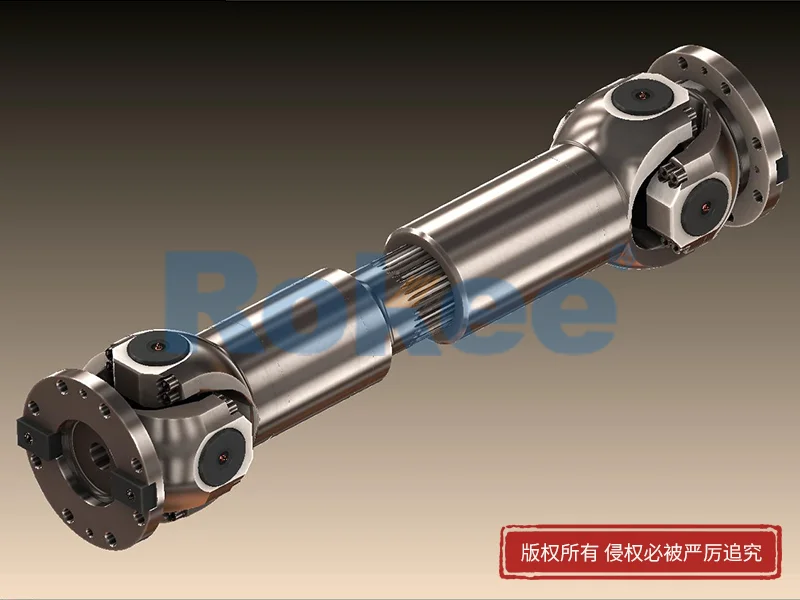
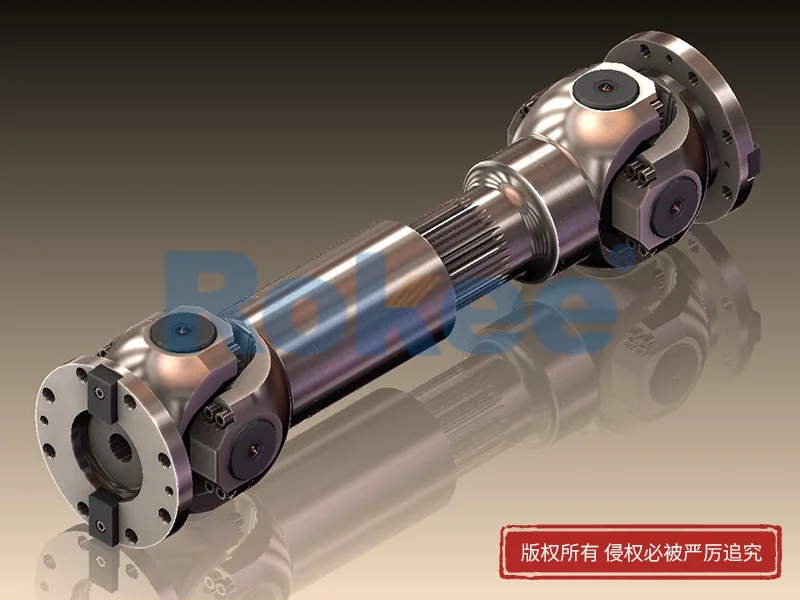
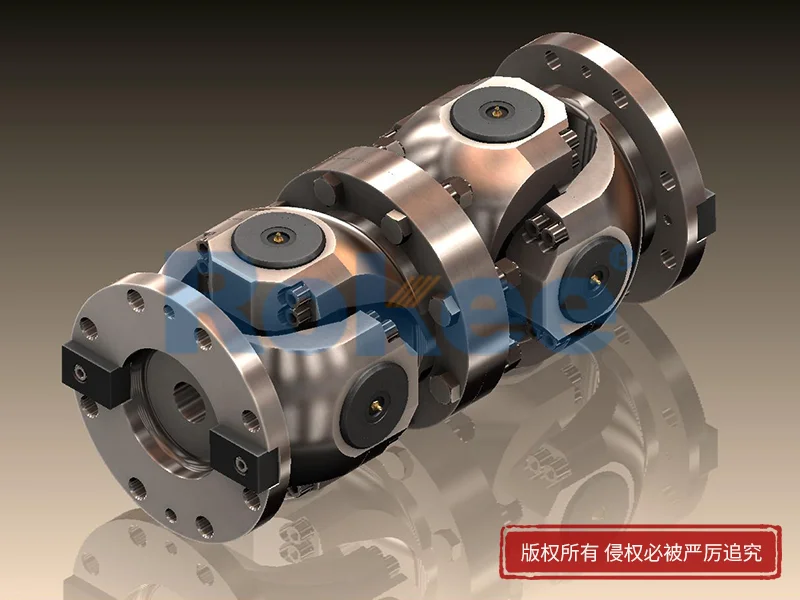
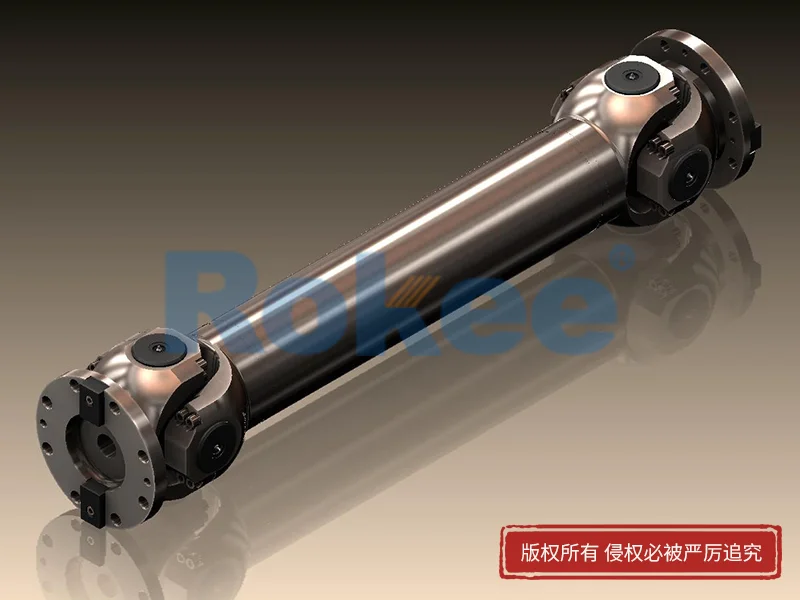
The basic structural composition of large universal joint couplings follows mature mechanical design logic, with core components including joint yokes, cross shafts, rolling bearing assemblies, and intermediate connecting shafts. Each component bears distinct mechanical functions and cooperates closely to complete power transmission under complex spatial postures. The joint yokes are distributed at both ends of the coupling, fixedly connected with the driving shaft and driven shaft respectively, and their robust integral forging structure can disperse concentrated torque pressure to avoid local structural deformation under heavy loads. The cross shaft serves as the central rotating connection unit, linking two sets of joint yokes to realize flexible angular rotation between shafts. Equipped with high-precision rolling bearings at the contact positions between the cross shaft and yokes, the coupling effectively reduces friction resistance during rotation, lowers mechanical wear, and maintains transmission smoothness during long-term continuous operation. The intermediate shaft, customized with thickened pipe structures for large-scale models, enhances the overall structural rigidity to resist torsional deformation caused by instantaneous impact loads in heavy-duty working scenarios.
The working principle of large universal joint couplings is derived from spatial kinematics, enabling stable torque transmission even when two connected shafts have obvious axis deflection. When the driving shaft rotates, torque is transmitted to the cross shaft through the driving-end yoke, and the cross shaft drives the driven-end yoke to complete synchronous rotation. Due to the flexible rotating angle of the cross shaft structure, the coupling can adapt to axis inclination within a certain range, eliminating the transmission obstacles caused by non-coaxial shaft arrangement. A notable mechanical characteristic of a single universal joint is the periodic slight fluctuation of rotational speed during operation. To solve this problem, most large universal joint couplings adopt a double-section combined structure with two universal joints connected by an intermediate shaft. By keeping the deflection angles of the two joints consistent, the speed fluctuation generated by a single joint can be mutually offset, achieving constant-speed torque transmission and effectively avoiding vibration and mechanical fatigue caused by unstable rotational speed in heavy-load equipment.
One of the most prominent advantages of large universal joint couplings is their excellent displacement compensation capability, which distinguishes them from other types of transmission coupling parts. In actual industrial production, mechanical equipment is affected by multiple uncontrollable factors: thermal expansion of metal components during long-term operation causes tiny shaft position deviations, foundation settlement leads to overall equipment displacement, and mechanical vibration generates instantaneous radial deflection between shafts. These subtle changes are enough to cause rigid connection structures to bear additional shear stress, triggering component wear or even fracture. Large universal joint couplings can adapt to angular displacement within a wide range, along with moderate axial and radial displacement compensation. This flexible adaptation greatly reduces the sensitivity of transmission systems to installation errors and environmental deformations, lowering the failure probability of transmission components in complex working conditions.
In terms of mechanical performance, large universal joint couplings possess outstanding load-bearing capacity and transmission efficiency, fully meeting the harsh operating requirements of heavy industrial equipment. The overall structure adopts high-strength alloy materials with precise forging and heat treatment processes, which optimize the internal metal texture of components, improve structural toughness and compressive resistance, and enable the couplings to sustain huge instantaneous torque and impact loads. Compared with flexible couplings that rely on elastic parts for buffering, the all-metal rigid transmission structure of large universal joint couplings avoids elastic deformation energy loss, maintaining high transmission efficiency during long-term continuous operation. Moreover, their compact structural layout saves installation space in mechanical equipment, facilitating reasonable spatial arrangement of internal transmission components for large-scale integrated machinery.
The application scope of large universal joint couplings covers multiple core heavy industrial fields, showing strong environmental adaptability and industrial practicality. In the metallurgical industry, rolling mill equipment needs to maintain stable power output during metal rolling, and the vibration and thermal deformation of rolling rolls will cause continuous shaft displacement. Large universal joint couplings connect the power motor and rolling roll transmission shafts, ensuring uninterrupted torque transmission in high-temperature and high-vibration environments to support continuous rolling production. In the mining industry, crushing equipment and lifting machinery often face uneven material loads, resulting in frequent torque fluctuations. The couplings buffer instantaneous impact pressure through structural flexibility, protecting transmission shafts and power components from fatigue damage and extending the service life of mining equipment.
In engineering machinery and transportation equipment, large universal joint couplings also play an irreplaceable role. Heavy-duty engineering vehicles operate on complex road surfaces, and the chassis frame deforms under uneven loads, causing relative displacement between the engine power output shaft and the walking transmission shaft. The couplings adapt to dynamic axis changes to ensure stable power output and improve the off-road driving capacity of engineering vehicles. In marine transmission systems, large mechanical equipment such as ship propulsion devices is affected by hull shaking and seawater temperature changes. The corrosion-resistant optimized structure of universal joint couplings enables them to operate stably in humid and salt-containing marine environments, providing reliable power connection for ship mechanical systems. In addition, large-scale agricultural machinery, thermal power generation equipment, and heavy conveyor systems all rely on such couplings to complete efficient power transmission between misaligned shafts.
The manufacturing process of large universal joint couplings focuses on precision control and durability optimization, with every production link strictly conforming to mechanical design standards. The raw materials are selected from high-strength alloy steel with stable mechanical properties, which undergoes smelting purification to reduce internal impurities and avoid structural defects such as sand holes. The blank forming process adopts integral forging technology; compared with welded splicing structures, integral forging improves the overall structural density, eliminates stress concentration at connection gaps, and enhances the torsional resistance of components. After forming, key components such as cross shafts and bearing sleeves undergo quenching and tempering heat treatment to improve surface hardness and internal toughness, effectively resisting friction wear and impact damage in long-term operation. The final finishing process uses high-precision machining equipment to control component assembly tolerances, ensuring the flexibility and stability of meshing rotation between parts.
Reasonable daily maintenance and scientific fault diagnosis are essential to extend the service life of large universal joint couplings and maintain stable mechanical performance. Lubrication management is the core of daily maintenance; high-performance lubricating grease should be regularly injected into bearing friction pairs and rotating contact parts to form a uniform lubricating oil film, reducing dry friction loss between metal components. In high-dust and high-temperature working environments, the sealing structure of the couplings needs regular inspection to prevent external impurities from entering the internal movement gap and causing abrasive wear. During equipment operation, staff should monitor abnormal vibration and noise of the transmission system. Excessive vibration usually indicates insufficient lubrication or loose assembly gaps, while abnormal noise may signal bearing wear and cross shaft deformation.
Common structural faults of large universal joint couplings include bearing aging, sealing failure, and surface fatigue wear of rotating parts. After long-term load operation, bearing rolling elements will suffer from metal fatigue, resulting in reduced rotation flexibility and increased transmission resistance. Damaged sealing rings cause lubricant leakage and external dust infiltration, accelerating internal component wear. Surface scratches and oxidation corrosion on joint yokes and cross shafts will expand under cyclic torque, gradually reducing transmission accuracy. For these potential faults, regular disassembly inspection and component replacement are required. Worn parts with reduced mechanical performance should be updated in a timely manner to avoid secondary damage to the entire transmission system caused by local component failure.
With the continuous progress of industrial manufacturing technology, the optimization direction of large universal joint couplings is gradually leaning toward lightweight, high durability, and intelligent adaptation. On the premise of ensuring load-bearing performance, modern optimized designs adopt hollow intermediate shaft structures and streamlined yoke shapes to reduce self-weight and rotational inertia, lowering equipment energy consumption during operation. New high-strength corrosion-resistant alloy materials are continuously applied to production, enhancing the environmental adaptability of couplings in extreme working conditions such as high temperature, low temperature, and chemical corrosion. In terms of structural design, the integrated sealing and dustproof structure is further upgraded to improve the anti-pollution capacity of internal components and reduce maintenance frequency.
In the future industrial development trend, large universal joint couplings will be deeply integrated with intelligent monitoring technology. By embedding miniature sensing components inside the structure, real-time collection of operating data such as torque, vibration frequency, and component temperature can be realized. The data is transmitted to the industrial control terminal for intelligent analysis, realizing early warning of potential faults and predictive maintenance, which greatly improves the operational safety and management efficiency of heavy machinery. Meanwhile, with the popularization of energy-saving and emission-reduction concepts in the industrial field, the structural friction resistance of couplings will be further optimized to reduce mechanical energy loss during transmission, contributing to the efficient and green operation of industrial production lines.
As a basic core component of heavy industrial transmission systems, large universal joint couplings rely on their unique displacement compensation performance, excellent load-bearing capacity, and simple and reliable structural logic to occupy an important position in modern mechanical engineering. From basic structural transmission to complex extreme working condition adaptation, from manual regular maintenance to intelligent real-time monitoring, the technical evolution of large universal joint couplings always revolves around the core demands of industrial production for stability, efficiency, and durability. In the context of continuous expansion of heavy industrial scale and continuous improvement of mechanical performance standards, large universal joint couplings will keep pace with technological innovation, continuously optimize structural design and material application, provide more reliable transmission guarantees for various heavy mechanical equipment, and lay a solid foundation for the stable development of the global industrial manufacturing industry.
With excellent quality, we have been continuously providing many coupling products of various categories and uses complying with multiple standards and a full range of services, from the product selection to final installation and operation, for the industry fields of ferrous metallurgy, nuclear power, gas turbine, wind power, ropeway construction, lifting transportation, general equipment, etc.
pu sandwich panel line,pu sandwich panel machine,sandwich panel machine
« Large Universal Joint Coupling » Latest Update Date: May 21, 2026
https://www.rokeecoupling.net/cases/large-universal-joint-coupling.html
Products
![SWC-BH Cardan Shaft]() SWC-BH Cardan Shaft
SWC-BH Cardan Shaft![SWC-CH Cardan Shaft]() SWC-CH Cardan Shaft
SWC-CH Cardan Shaft![SWC-DH Cardan Shaft]() SWC-DH Cardan Shaft
SWC-DH Cardan Shaft![SWC-WD Cardan Shaft]() SWC-WD Cardan Shaft
SWC-WD Cardan Shaft![SWC-WH Cardan Shaft]() SWC-WH Cardan Shaft
SWC-WH Cardan Shaft![SWP-A Cardan Shaft]() SWP-A Cardan Shaft
SWP-A Cardan Shaft![SWP-B Cardan Shaft]() SWP-B Cardan Shaft
SWP-B Cardan Shaft![SWP-C Cardan Shaft]() SWP-C Cardan Shaft
SWP-C Cardan Shaft![SWP-D Cardan Shaft]() SWP-D Cardan Shaft
SWP-D Cardan Shaft
Other Cases
![Long Type Universal Drive Shaft]() Long Type Universal Drive Shaft
Long Type Universal Drive Shaft![Cardan Shaft of 4000mm Plate Main Mill]() Cardan Shaft of 4000mm Plate Main Mill
Cardan Shaft of 4000mm Plate Main Mill![Metallurgical Steel Rolling Cardan Shaft]() Metallurgical Steel Rolling Cardan Shaft
Metallurgical Steel Rolling Cardan Shaft![SWC Cardan Shaft Coupling]() SWC Cardan Shaft Coupling
SWC Cardan Shaft Coupling![SWC Drive Shafts]() SWC Drive Shafts
SWC Drive Shafts![Bearing Seat Type 650 Cardan Shaft]() Bearing Seat Type 650 Cardan Shaft
Bearing Seat Type 650 Cardan Shaft![SWC Transmission Shaft]() SWC Transmission Shaft
SWC Transmission Shaft![Double Universal Joint Coupling]() Double Universal Joint Coupling
Double Universal Joint Coupling![SWC Cardan Shaft]() SWC Cardan Shaft
SWC Cardan Shaft![Hot-rolling H-beam Main Drive Cardan Shaft]() Hot-rolling H-beam Main Drive Cardan Shaft
Hot-rolling H-beam Main Drive Cardan Shaft