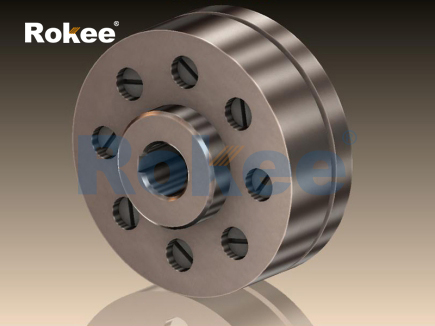
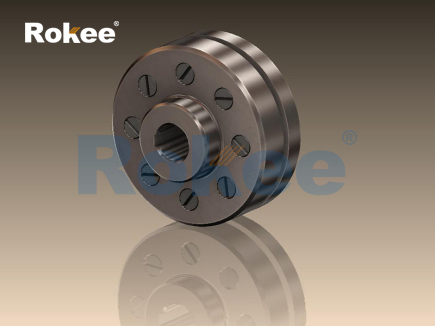
A bushed coupling is a fundamental mechanical component widely utilized in power transmission systems to connect two rotating shafts and ensure smooth torque transmission during mechanical operation. Featuring a simple and compact structural design, this coupling mainly consists of basic mechanical fittings and flexible bushing parts, which endow it with unique functional advantages in daily industrial operation. The embedded bushing serves as a flexible buffer medium, effectively absorbing mechanical vibration and mitigating instantaneous impact generated during equipment rotation. It can also moderately compensate for minor axial, radial and angular misalignment between connected shafts, avoiding extra friction and abrasion on shaft components caused by installation deviations. Made of durable raw materials, the bushing maintains stable elasticity and mechanical toughness under continuous rotation, resisting mild temperature changes and conventional mechanical friction in working environments. This coupling requires minimal maintenance due to its uncomplicated structure, with no intricate assembly procedures or tedious upkeep steps, making it suitable for long-term continuous operation of general mechanical equipment. It adapts well to medium and low-load working conditions, commonly applied in conventional transmission facilities of manufacturing, transportation and mechanical processing industries. During operation, it delivers steady power output and reduces operating noise generated by mechanical friction. By easing the rigid collision between shaft parts, it lowers wear of core mechanical components and extends the overall service life of mechanical systems. With reliable practical performance and convenient installation attributes, the bushed coupling remains an indispensable basic part in common industrial transmission mechanisms.

In the intricate ecosystem of mechanical transmission systems, auxiliary connecting components serve as the fundamental guarantee for stable energy conversion and power transmission, and bushed coupling stands out as one of the most indispensable basic mechanical parts in general industrial machinery. As a common flexible connecting component designed for shaft connection, it integrates simple structural logic and excellent adaptive performance, effectively bridging two independent rotating shafts in mechanical equipment to complete the continuous transmission of torque. Unlike rigid connecting structures that pursue absolute fixation and high rigidity, this type of coupling relies on the buffering and deformation characteristics of internal bushing components to adapt to complex operating conditions, balancing transmission efficiency and operational flexibility. It has been widely applied in various mechanical scenarios involving rotating shaft transmission, gradually becoming a core component to ensure the long-term stable operation of medium and low-speed transmission equipment. Its unique structural design and mechanical properties make it irreplaceable in many conventional industrial production links, and in-depth exploration of its structural composition, working mechanism and application characteristics can provide clear reference for the rational selection and scientific application of transmission components in mechanical design.
The overall structure of bushed coupling follows a concise and practical design concept, without redundant complex mechanical structures, and the whole is composed of three core parts: metal coupling body, built-in bushing and fastening connecting pieces. The metal coupling body is usually processed into an integrated or split sleeve structure, with smooth and precise shaft holes reserved at both ends for docking with the rotating shafts of driving and driven equipment. The exterior of the coupling body is designed with fastening structures such as bolt holes or clamping grooves, which are used to lock the coupling on the surface of the rotating shaft to avoid relative sliding during operation. The most critical core component is the embedded bushing, which is usually made of elastic polymer materials or composite flexible materials. It is tightly fitted inside the coupling body through interference assembly, forming a flexible buffer layer between the rigid metal shell and the internal rotating shaft. This embedded assembly method enables the bushing to be firmly fixed without additional auxiliary fixing parts, and the tight fit generated by reasonable interference ensures that no relative displacement occurs between the bushing and the coupling body during high-speed rotation. The fastening connecting pieces are mostly standard hardware parts, which cooperate with the reserved holes of the coupling body to complete the locking assembly of the overall structure. All parts are closely matched to form a complete transmission unit, and the simple structural combination not only reduces the difficulty of processing and manufacturing, but also lowers the technical threshold for later assembly and disassembly.
The inherent material characteristics of each component determine the excellent mechanical performance of bushed coupling. The metal matrix of the coupling body is generally made of high-strength alloy steel or cast iron with good rigidity and toughness. After precision casting and surface finishing, it has strong compression resistance and torsional resistance, and can maintain stable structural morphology under long-term torque load. Meanwhile, the metal surface is treated with anti-corrosion and wear-resistant processes to adapt to humid, dusty and other harsh industrial environments, slowing down the aging rate of the metal structure. The embedded bushing is the key functional component that distinguishes bushed coupling from ordinary rigid couplings. Different from hard metal materials, the bushing material has moderate elastic deformation capacity, good damping performance and excellent friction resistance. Under the action of external pressure and torsion, the bushing can produce tiny elastic deformation without permanent structural damage, and can quickly return to its original state after the load disappears. In addition, the selected bushing materials have good temperature adaptability, which can maintain stable physical properties within a conventional industrial temperature range, avoiding performance degradation caused by temperature changes. The diversified material collocation combines the rigidity of metal and the flexibility of polymer materials, realizing the complementary advantages of different materials and laying a solid material foundation for the stable operation of the coupling.
The working principle of bushed coupling is based on elastic deformation and friction transmission, realizing efficient and stable torque transmission between rotating shafts. In the initial assembly stage, workers adjust the docking position of the two rotating shafts to keep them in a roughly coaxial state, and then sleeve the coupling on the shaft ends of the driving device and the driven device respectively. After tightening the fastening parts, the coupling body squeezes the internal bushing, making the bushing closely fit the outer wall of the rotating shaft. When the mechanical equipment starts to operate, the driving shaft generates rotational torque, and the torque is transmitted to the coupling body through the static friction between the shaft wall and the bushing. Driven by the coupling body, the driven shaft synchronously rotates to complete the power transmission process. During the operation of the equipment, various unavoidable deviations will inevitably occur between the two rotating shafts due to installation errors, equipment vibration and mechanical wear. At this time, the elastic bushing can absorb tiny displacement deviations through its own deformation, including radial deviation, angular deviation and axial deviation within a certain range. This flexible compensation effect avoids the rigid collision and hard friction between the two shafts, effectively reducing the additional mechanical load on the shaft body and bearings. At the same time, the bushing can absorb the vibration and impact generated during the operation of the equipment, weaken the vibration transmission between adjacent equipment components, and reduce the noise generated by mechanical friction.
Compared with other types of connecting couplings, bushed coupling has prominent comprehensive advantages in structural design and application performance. First of all, its structural simplicity brings excellent assembly and maintenance convenience. The number of internal parts is small, the assembly logic is clear, and professional precision debugging equipment is not required in the installation process. Ordinary maintenance personnel can complete the docking and fixing of the rotating shaft through simple tools. In the daily maintenance stage, the worn bushing can be independently disassembled and replaced without dismantling the overall mechanical structure, which greatly shortens the maintenance cycle and reduces the operation difficulty of equipment maintenance. Secondly, the flexible buffering performance effectively prolongs the service life of mechanical components. The elastic bushing can isolate most of the vibration and impact load, avoid fatigue damage of the shaft body and bearing parts caused by long-term rigid impact, and reduce the wear rate of core transmission components. In addition, the operation stability of bushed coupling is outstanding. After interference assembly, the internal structure is compact without gaps, and it will not produce obvious mechanical looseness and abnormal noise during continuous rotation. Even in the state of long-term uninterrupted operation, it can maintain stable transmission efficiency without obvious power loss. Moreover, the strong environmental adaptability enables it to work normally in dusty, humid and lightly corrosive working environments, and the surface protection structure can effectively resist external environmental erosion.
Bushed coupling has clear application limitations while possessing multiple advantages, and its performance boundaries need to be clearly defined in mechanical design and equipment selection. Restricted by the material characteristics of the bushing, this type of coupling cannot withstand extreme high torque and high-strength impact load. When the instantaneous torque exceeds the bearing range of the bushing, the bushing will produce irreversible plastic deformation, resulting in structural loosening and transmission failure. At the same time, the elastic deformation capacity of the bushing determines that it is not suitable for ultra-high-speed rotating working conditions. Excessively high rotating speed will cause continuous alternating deformation of the bushing, accelerating material aging and fatigue damage, and shortening the service life of components. In addition, although the bushing has certain corrosion resistance, it is vulnerable to chemical erosion in the environment with strong acid, strong alkali and organic solvent, which will lead to material hardening, cracking and failure. Therefore, in the actual selection process, mechanical designers need to comprehensively judge according to the actual operating parameters of the equipment such as load size, rotating speed and working environment, and avoid applying it to extreme working conditions beyond its performance range.
In the industrial system, bushed coupling is widely used in medium and low-speed mechanical transmission scenarios with stable load and ordinary working environment. In light industrial processing equipment such as textile machinery and printing machinery, it is used to connect transmission rotating shafts, ensuring uniform and stable operating speed of equipment and avoiding processing errors caused by vibration deviation. In fluid transportation equipment such as conventional water pumps and fan equipment, the coupling connects the motor and the rotating wheel shaft, reducing the vibration generated during the operation of power components and lowering the running noise of the equipment. In food processing and daily chemical production machinery, its simple structure is convenient for daily cleaning and maintenance, and the stable transmission performance meets the continuous production demand of automated assembly lines. In addition, it also plays an important role in agricultural machinery and small transportation equipment, adapting to the complex and changeable ordinary working environment on the production site. In these application scenarios, the working load is stable, the rotating speed is moderate, and the requirement for transmission precision is reasonable, which perfectly matches the performance characteristics of bushed coupling, realizing the optimal balance between use effect and application cost.
The daily maintenance and scientific use of bushed coupling are crucial to extend its service life and maintain stable transmission performance. In the daily operation of the equipment, staff should regularly observe the operating state of the coupling, focusing on judging whether there is abnormal vibration, obvious noise and local temperature overheating. Abnormal vibration often indicates that the coaxiality of the two rotating shafts exceeds the compensation range, and the shaft body position needs to be readjusted in time to reduce the deformation pressure of the bushing. Excessive temperature is usually caused by long-term friction and poor heat dissipation, and it is necessary to check whether the fastening structure is too tight to avoid excessive compression deformation of the bushing. Regular disassembly and inspection shall be carried out according to the operating frequency of the equipment to check the wear degree and aging state of the internal bushing. When the bushing has obvious deformation, surface cracking or elasticity attenuation, it shall be replaced in time to prevent the aging parts from affecting the transmission stability. In addition, the surface of the coupling should be kept clean to avoid the accumulation of dust and impurities. Excessive impurity adhesion will increase the friction resistance between components and accelerate the wear of the bushing and the shaft wall. During the installation and disassembly process, violent knocking is prohibited to prevent structural deformation of the metal coupling body and damage to the elastic bushing.
With the continuous progress of industrial manufacturing technology, the production and optimization technology of bushed coupling is also constantly upgrading. In terms of material research and development, new composite elastic materials are gradually applied to the processing of bushings. These optimized materials have stronger wear resistance, higher temperature resistance and better elastic recovery capability, further expanding the applicable temperature range and load range of the coupling. In terms of processing technology, precision forging and seamless processing technology improve the structural compactness of the metal coupling body, reduce the internal stress generated during processing, and make the mechanical bearing performance more stable. In terms of structural optimization, designers appropriately adjust the thickness and embedded depth of the bushing according to different application scenarios, optimize the stress distribution of the internal structure, and enhance the deviation compensation capacity of the coupling. At the same time, the surface treatment process is continuously upgraded, and the new anti-corrosion coating can resist the erosion of more complex environmental media, further improving the environmental adaptability of the coupling. These technological optimizations not only retain the inherent advantages of simple structure and convenient use of bushed coupling, but also make up for the shortcomings of traditional products in load resistance and durability.
As a basic general mechanical component, bushed coupling undertakes the important task of power transmission in numerous industrial production links. Its simple structural logic, flexible buffering performance and convenient maintenance characteristics make it an essential connecting part in medium and low-speed transmission equipment. From the perspective of mechanical system operation, it not only realizes the efficient transmission of torque between rotating shafts, but also protects core components such as shafts and bearings through vibration damping and deviation compensation, reducing the failure rate of mechanical equipment. From the perspective of industrial application economy, its low manufacturing cost, simple assembly process and low maintenance difficulty effectively control the operation cost of mechanical equipment, bringing stable economic benefits for industrial production. In the future, with the continuous development of lightweight and refined mechanical equipment, bushed coupling will also evolve towards more compact structure, stronger adaptability and longer service life. Through continuous material innovation and structural optimization, it will adapt to more diversified industrial working conditions and continue to play an irreplaceable basic supporting role in the field of mechanical transmission. For mechanical practitioners, mastering the performance characteristics and application rules of bushed coupling is not only the basic requirement of component selection, but also an important basis for optimizing the overall operating performance of mechanical systems.
pu sandwich panel line,pu sandwich panel machine,sandwich panel machine
« Bushed Couplings » Latest Update Date: May 9, 2026
https://www.rokeecoupling.net/tags/bushed-couplings.html