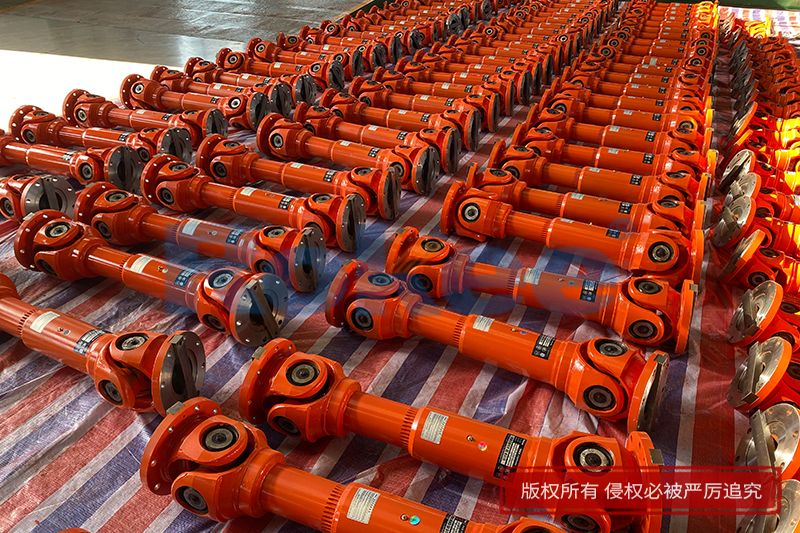
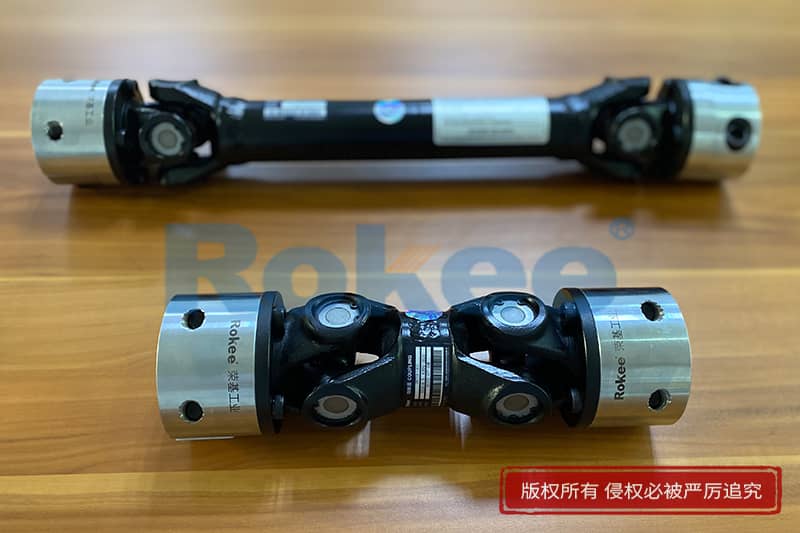
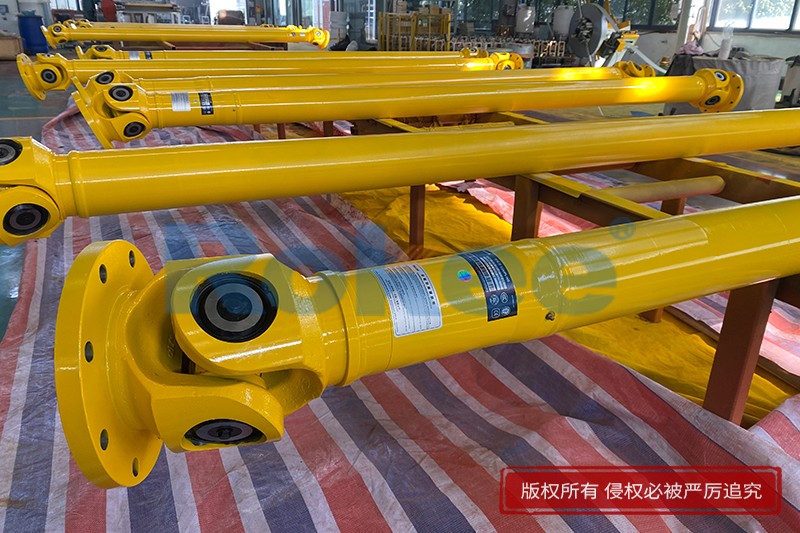
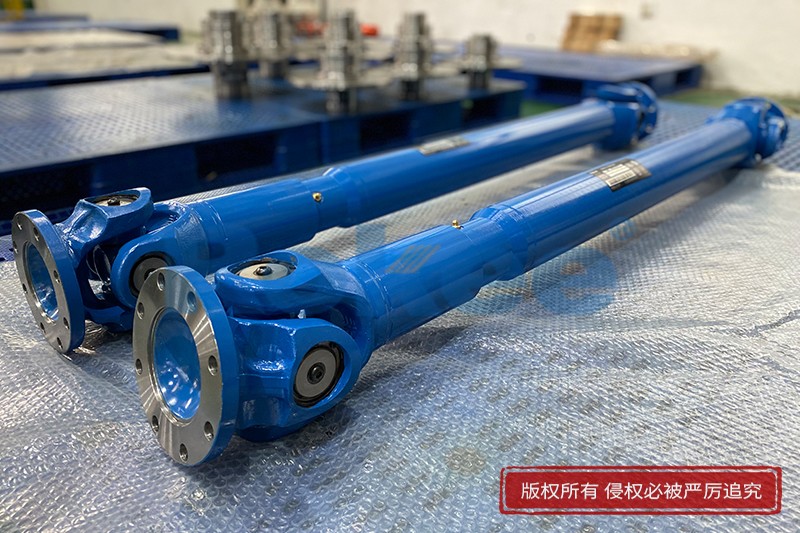
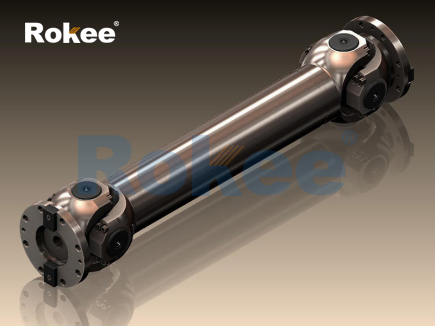
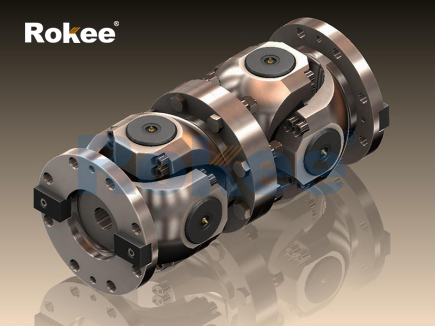
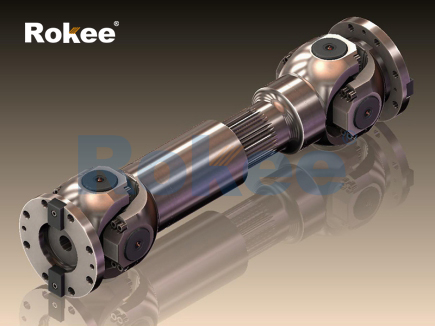
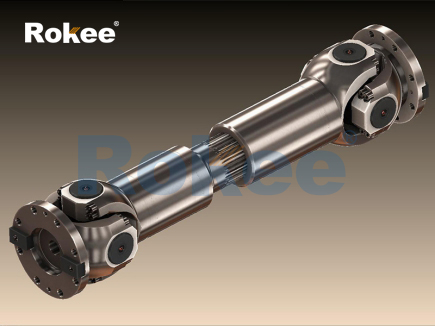
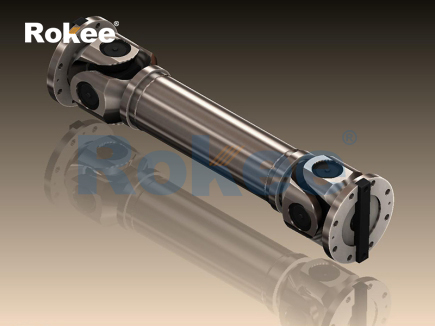
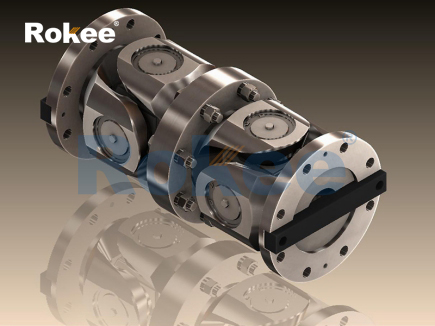
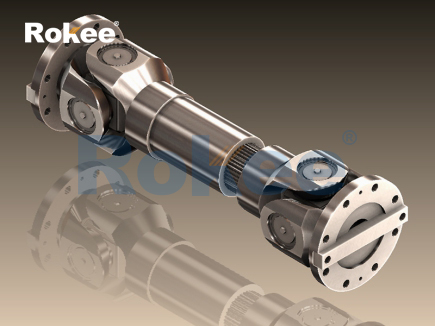
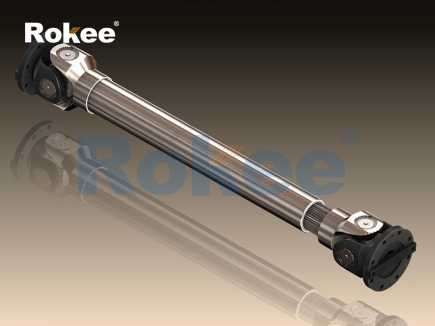
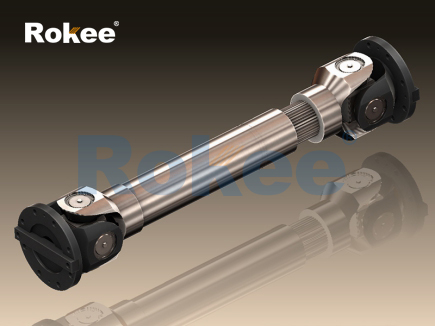
In the intricate framework of mechanical power transmission, cardan shaft couplings stand out as indispensable mechanical components designed to transmit torque between misaligned rotating shafts. Also commonly recognized as universal joints in mechanical engineering terminology, these mechanical structures excel at transferring rotational motion across intersecting, offset, or angularly displaced shafts, making them prevalent in diverse mechanical systems ranging from mobile engineering machinery to stationary industrial transmission equipment. The fundamental value of cardan shaft couplings lies in their unique structural adaptability, which enables continuous torque delivery even when the connected shafts maintain a persistent angular deviation, a functional advantage that distinguishes them from conventional rigid coupling structures. With the continuous advancement of mechanical manufacturing technology and the diversification of industrial operating conditions, multiple differentiated types of cardan shaft couplings have been derived through structural optimization and mechanical mechanism improvement. Each category possesses distinct structural compositions, motion characteristics, load-bearing capacities, and environmental adaptability, rendering them suitable for specific operating scenarios and mechanical transmission requirements. An in-depth comprehension of the classification and inherent characteristics of various cardan shaft coupling types serves as the foundational premise for rational type selection, mechanical system optimization, and prolonged equipment service life extension.

Based on inherent motion characteristics and rotational speed uniformity during operation, cardan shaft couplings can be broadly categorized into three core classifications: non-constant velocity cardan couplings, quasi-constant velocity cardan couplings, and constant velocity cardan couplings. This classification criterion focuses on the instantaneous transmission ratio variation during shaft rotation, which directly influences the operational stability, vibration amplitude, and mechanical fatigue degree of the entire transmission system. Non-constant velocity cardan couplings represent the most basic and original structural form among all categories, featuring a simple mechanical composition and mature manufacturing processes. The typical structural configuration of this type consists of two yoke-shaped joint forks, a central cross shaft, and auxiliary rolling bearing components. The cross shaft acts as the core connecting component, hinging the two joint forks to form a flexible rotating connection structure. During operational processes, when the driving shaft rotates at a constant speed, the driven shaft generates periodic instantaneous speed fluctuations due to the angular deflection between the two shafts. The magnitude of this speed fluctuation is positively correlated with the intersection angle of the connected shafts; the larger the angular deviation, the more prominent the non-uniform rotation phenomenon. Despite the inherent rotational speed instability, non-constant velocity cardan couplings retain irreplaceable application value by virtue of their prominent advantages including simple assembly procedures, robust structural rigidity, strong impact resistance, and outstanding angular displacement compensation capability. The maximum allowable shaft intersection angle of common single-section non-constant velocity cardan couplings ranges from fifteen to forty-five degrees, which far exceeds the displacement compensation limit of most conventional coupling structures. To mitigate the adverse effects of periodic speed fluctuations in practical engineering applications, two single-section non-constant velocity couplings are often deployed in tandem with an intermediate transitional shaft. By rationally adjusting the installation angle to ensure equal deflection angles at both ends of the intermediate shaft, the speed fluctuation generated by the front coupling can be counteracted by the rear one, thereby achieving approximate constant velocity transmission effect. This combined structural arrangement is widely applied in medium and low-speed heavy-load transmission scenarios such as agricultural machinery transmission structures, engineering machinery walking devices, and general industrial transmission pipelines.
Quasi-constant velocity cardan couplings are specially optimized transitional structures developed to balance the simple structure of non-constant velocity couplings and the stable transmission performance of constant velocity couplings. This type of coupling effectively weakens instantaneous speed fluctuations through reasonable mechanical structure improvement, achieving a nearly constant transmission ratio within a specific angular deflection range. Common structural forms of quasi-constant velocity couplings include duplex shaft structures and three-pin shaft structures, both of which abandon the single cross shaft connection mode and adopt multi-node hinged combinations to optimize motion trajectories. The duplex quasi-constant velocity cardan coupling integrates two cross shaft hinge structures inside a compact shell, eliminating the need for an external intermediate shaft. The internal linkage mechanism ensures that the motion phase difference generated during rotation can be mutually offset, significantly reducing rotational vibration and torque fluctuation compared with single-section non-constant velocity structures. This integrated design effectively saves installation space while retaining the large angular displacement compensation capability of traditional cardan couplings. The three-pin shaft structural form relies on three evenly distributed pin shafts to construct a flexible connection system. The special geometric arrangement of the pin shafts enables the coupling to maintain stable torque output under medium deflection angles, with smoother rotation operation and lower mechanical vibration. In terms of application scenarios, quasi-constant velocity cardan couplings are mostly used in mechanical equipment that requires moderate rotation speed, limited installation space, and medium precision transmission. Typical application cases include light-duty transportation machinery, small-scale industrial processing equipment, and auxiliary transmission components of construction machinery. Compared with non-constant velocity products, quasi-constant velocity couplings have higher manufacturing precision requirements and relatively complex assembly processes, resulting in slightly higher production and processing costs, yet they achieve a better balance between transmission stability and structural simplicity.
Constant velocity cardan couplings are high-precision transmission coupling structures capable of maintaining a completely consistent instantaneous transmission ratio regardless of shaft deflection angles, representing the advanced development direction of cardan shaft coupling technology. Different from the hinged connection mode of traditional cross shaft structures, constant velocity couplings mostly adopt curved surface contact transmission mechanisms such as ball cage structures and combined spherical hinge structures. The core working principle relies on the geometric symmetry of internal rolling components to ensure that the rotation center of the coupling always stays on the angular bisector of the two connected shafts. This structural design fundamentally eliminates the periodic speed fluctuation problem inherent in non-constant velocity structures. The ball cage constant velocity coupling consists of an outer spherical shell, an inner star frame, and evenly distributed steel balls. The arc-shaped raceways processed on the inner and outer components enable the steel balls to perform regular rolling motions during rotation, achieving smooth torque transmission under various deflection angles. This type of coupling features compact structure, low operating noise, and extremely high rotational stability, adapting to high-speed rotating working conditions. Combined constant velocity couplings integrate multiple sets of elastic hinge structures, which can simultaneously compensate for angular displacement, axial displacement, and radial displacement, with excellent comprehensive displacement adaptation capability. In practical industrial applications, constant velocity cardan couplings are widely utilized in high-precision transmission fields with strict requirements for rotational stability and vibration control, including high-end transportation equipment, precision automated production lines, and high-speed rotating mechanical transmission systems. It is worth noting that constant velocity couplings have stricter requirements for material selection and machining accuracy. High-strength alloy materials and precision grinding processes are usually adopted to ensure the surface finish and wear resistance of internal contact components, leading to higher manufacturing thresholds than other types of cardan couplings.
In addition to the classification based on motion characteristics, cardan shaft couplings can also be divided into rigid cardan couplings and flexible cardan couplings according to structural rigidity and vibration absorption performance. Rigid cardan couplings are composed entirely of metal rigid components without any elastic buffer materials. The internal connecting parts such as cross shafts, joint forks, and pin shafts are made of high-strength metal materials through integral forging or precision casting. This type of coupling boasts extremely high structural rigidity, strong torque bearing capacity, and excellent resistance to mechanical deformation. It can withstand severe working conditions such as heavy load, strong impact, and high torque fluctuation, making it suitable for heavy industrial machinery including metallurgical rolling equipment, large mining machinery, and heavy-duty transportation vehicles. Nevertheless, rigid cardan couplings lack vibration buffering capacity. During operation, mechanical vibration and impact load will be directly transmitted between connected shafts, which may cause fatigue loss of mechanical parts after long-term operation. Flexible cardan couplings add elastic buffer components such as rubber gaskets and elastic metal sheets on the basis of rigid structures. The elastic parts can absorb part of the vibration energy generated during transmission, weaken impact load conduction, and reduce friction and wear between rigid metal components. This structural improvement effectively optimizes the operating environment of the transmission system, lowers equipment operating noise, and prolongs the service life of vulnerable parts. Flexible cardan couplings are mostly applied in light and medium-load mechanical equipment with high requirements for vibration reduction and noise reduction, such as civil transportation equipment and daily industrial processing machinery. Although flexible structures have advantages in vibration buffering, the addition of elastic components reduces the overall structural rigidity, making them unable to adapt to extreme heavy-load working conditions.
Various types of cardan shaft couplings have distinct performance boundaries and application limitations, so scientific type selection must be carried out in combination with actual working conditions in mechanical design. For low-speed, heavy-load, and low-precision transmission scenarios with frequent load impact and large shaft deflection angles, non-constant velocity rigid cardan couplings are the most economical and reliable choice. For medium-speed mechanical equipment with limited installation space and moderate stability requirements, quasi-constant velocity couplings can effectively balance performance and space occupancy. When facing high-speed, high-precision, and low-vibration transmission requirements, constant velocity cardan couplings must be prioritized to ensure the uniformity of torque transmission. In terms of vibration control, flexible cardan couplings are suitable for equipment sensitive to vibration and noise, while rigid structures are more applicable to heavy-duty machinery pursuing ultimate load-bearing capacity. Moreover, the operating environment also serves as a key factor affecting type selection. In harsh working conditions such as high dust, high humidity, and chemical corrosion, sealed rigid cardan couplings with excellent environmental isolation performance should be selected to prevent internal precision structures from being eroded by external impurities. For indoor mild working environments, conventional open structural couplings can meet the usage demands.
In the long-term operation process of cardan shaft couplings, different structural types also display differentiated maintenance characteristics. Non-constant velocity rigid couplings with simple structures have fewer vulnerable parts, convenient disassembly and maintenance procedures, and low daily maintenance costs. Regular lubrication of rolling bearings and hinge joints can effectively reduce metal friction loss. Quasi-constant velocity and constant velocity couplings with complex internal structures require higher maintenance precision. It is necessary to regularly check the wear degree of internal rolling components and sealing structures, and replace aging accessories in a timely manner to avoid transmission accuracy degradation caused by component wear. Flexible cardan couplings need periodic inspection of elastic buffer parts. Once elastic fatigue or deformation occurs, the buffer components should be replaced promptly to prevent the decline of vibration reduction performance. With the continuous progress of modern mechanical engineering technology, cardan shaft couplings are evolving toward compact structure, lightweight material, intelligent wear monitoring, and extreme working condition adaptation. New composite materials and optimized mechanical structures are continuously applied to the production of cardan couplings, further narrowing the performance gaps among different types and expanding their adaptable application boundaries.
As core basic components in the mechanical transmission industry, the diversified type classification of cardan shaft couplings caters to the differentiated transmission demands of various mechanical equipment. Each coupling type forms unique structural advantages and performance characteristics through distinct mechanical designs, covering multiple application scenarios from low-speed heavy load to high-speed precision transmission, from harsh open working conditions to mild closed operating environments. In engineering practice, fully mastering the structural differences, motion principles, performance advantages, and application limitations of various cardan shaft coupling types is essential to improve the operating efficiency of mechanical transmission systems, reduce equipment failure rates, and extend the overall service life of machinery. In the future, with the continuous innovation of material science and mechanical processing technology, the structural design of cardan shaft couplings will be further optimized, and comprehensive performances such as wear resistance, corrosion resistance, and transmission efficiency will be continuously improved to provide more reliable basic component support for the upgrading and iteration of various mechanical equipment.
- Tags:
- Cardan Shaft Couplings ,
- sandwich panel line ,
- sandwich panel machine
- pu sandwich panel machine
« Cardan Shaft Coupling Types » Latest Update Date: May 21, 2026
https://www.rokeecoupling.net/blog/cardan-shaft-coupling-types.html