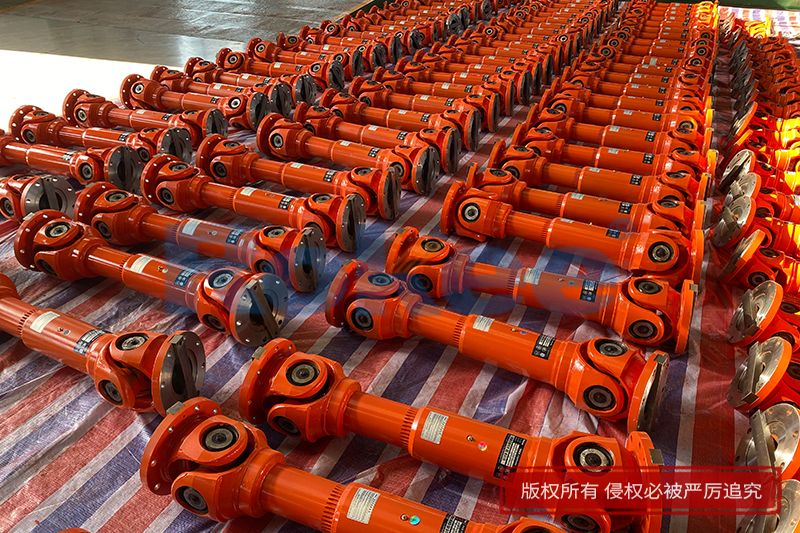
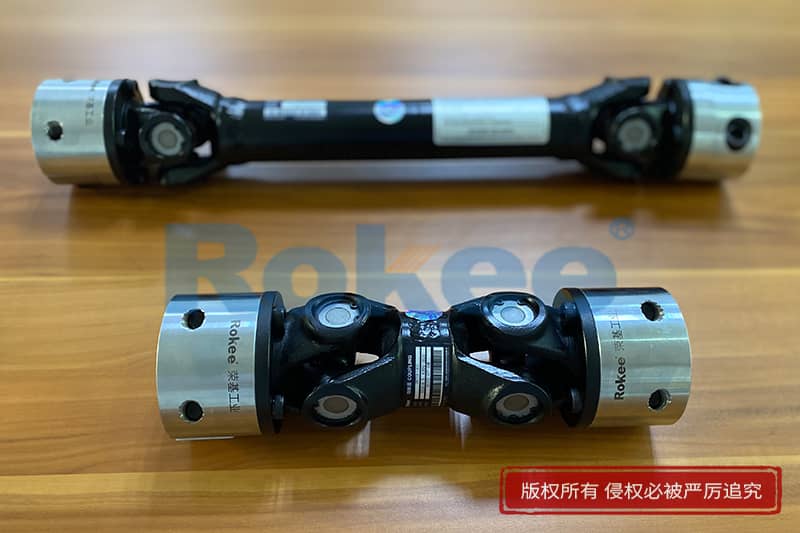
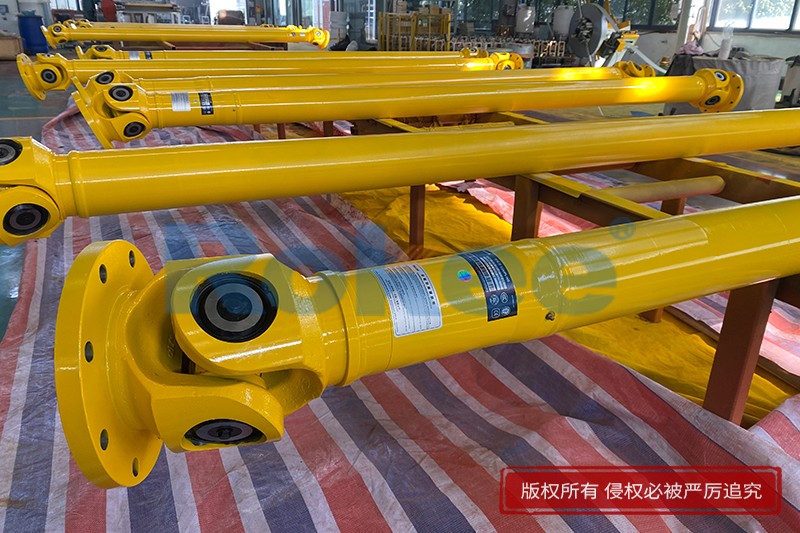
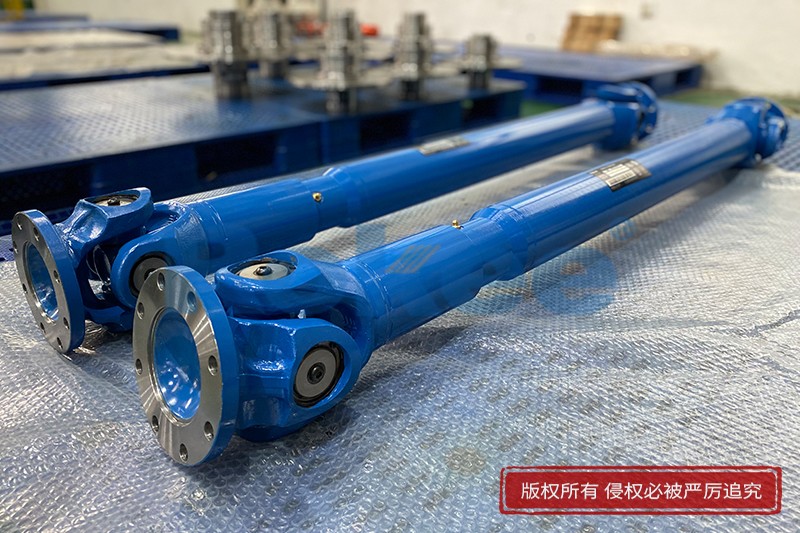
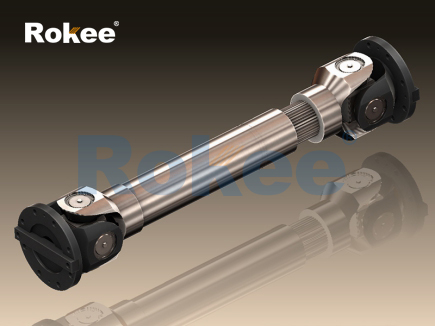
Cardan shaft couplings stand as one of the most versatile and functionally reliable mechanical transmission components in modern industrial machinery, serving as a critical bridge for power and torque transfer between disjointed or misaligned rotating shafts. Also widely recognized as universal joint couplings, these mechanical assemblies are engineered to address the core limitations of rigid transmission structures, delivering stable rotational power output even when connected shafts suffer from angular deviation, axial displacement, and radial offset. Their unique articulated structural design enables adaptive operation under complex dynamic working conditions, making them indispensable in heavy machinery, transportation systems, industrial processing equipment, and numerous mechanical scenarios that demand continuous and efficient power transmission. As industrial equipment continues to evolve toward high load, high speed, and high stability operation, the rational selection and reliable supply of cardan shaft couplings have become key factors in ensuring the long-term stable performance of mechanical systems.

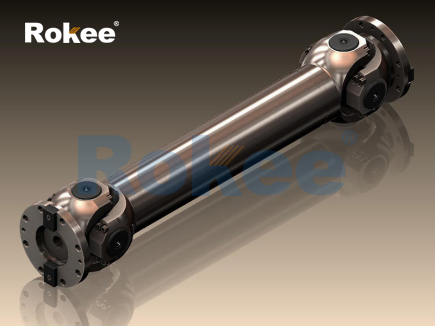
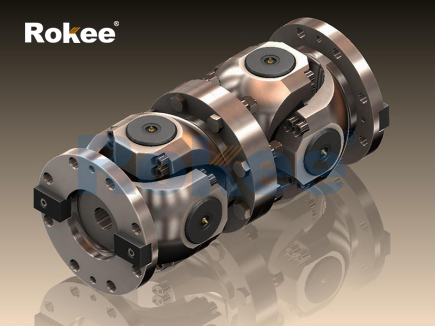
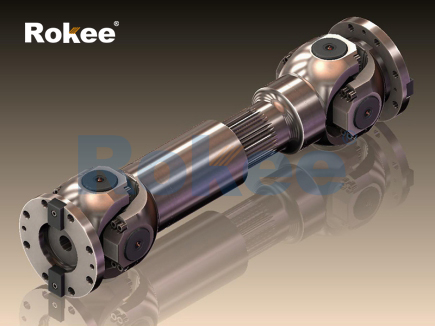
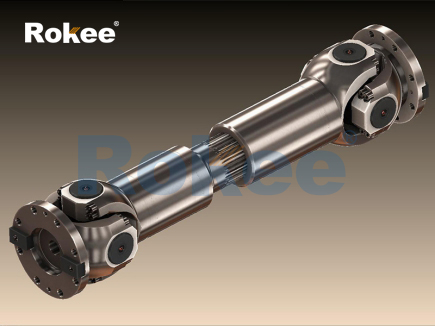
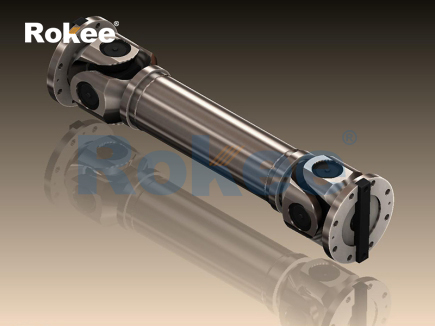
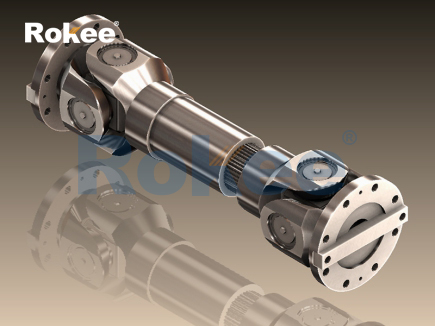
The basic structural composition of cardan shaft couplings is concise yet highly scientific, with every component optimized for flexible transmission and load resistance. A standard cardan shaft coupling assembly mainly consists of two symmetrical yoke joints, a central cross-shaped spider, and precision roller bearing components. The two yoke joints are separately fixed to the driving shaft and driven shaft of mechanical equipment, forming the connection terminals of the entire transmission structure. The four shaft necks of the central cross spider are precisely matched with the bearing holes of the two yoke joints through needle roller bearings, constructing a flexible articulated core structure. This structural layout allows the cross spider to perform multi-directional rotational deflection between the two yokes, fundamentally breaking the transmission constraints of coaxial alignment required by rigid couplings. The internal bearing components effectively reduce friction resistance during relative motion, ensuring smooth rotation while bearing large torque loads, which endows the coupling with excellent dynamic transmission performance.
The working principle of cardan shaft couplings centers on the flexible deflection and torque conversion of the cross spider structure. When the driving shaft rotates, the connected driving yoke drives the cross spider to perform synchronous rotational motion. Through the mutual restraint and rotation of the cross spider and the driven yoke, the rotational torque and power are stably transmitted to the driven shaft, realizing the synchronous operation of the two shafts. What distinguishes this coupling from ordinary transmission components is its outstanding misalignment compensation capability. In actual mechanical operation, equipment installation errors, thermal expansion and contraction of metal components, structural vibration, and long-term operational wear will inevitably cause positional deviation between the driving and driven shafts. Cardan shaft couplings can adapt to angular misalignment within a wide range, as well as subtle axial and radial displacements generated during equipment operation. This adaptive compensation ability avoids the additional mechanical stress, vibration, and noise caused by shaft misalignment, protecting the integrity and operational stability of the entire transmission system.
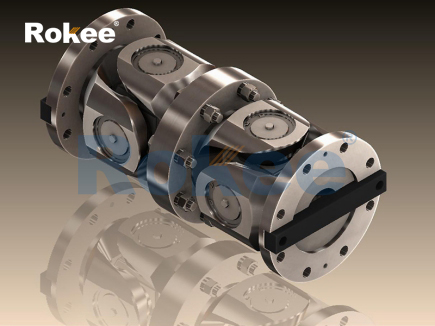
In practical transmission processes, single-section cardan joint structures have inherent geometric motion characteristics, where the output rotational speed produces slight periodic oscillation during each rotation when there is a certain operating angle between shafts. This subtle speed fluctuation is negligible under low-speed and medium-low load working conditions and will not affect the normal operation of equipment. For high-speed, high-precision, and heavy-load mechanical systems, double-section or multi-section cardan shaft coupling structures are usually adopted. By reasonably setting the installation angle and phase of the front and rear universal joints, the periodic speed deviation generated by a single joint can be mutually offset, achieving constant-speed and stable torque transmission. This structural optimization design greatly expands the application scope of cardan shaft couplings, enabling them to meet the stringent operational requirements of high-end industrial equipment.
Cardan shaft couplings possess multiple core performance advantages that make them superior to other types of flexible couplings in complex industrial scenarios. First and foremost is their exceptional high torque bearing capacity. The integrated cross-spider and yoke structure adopts thickened and reinforced mechanical design, which can withstand huge instantaneous impact loads and long-term continuous torque output, fully adapting to the heavy-duty operation requirements of engineering machinery, mining equipment, and metallurgical machinery. Secondly, their outstanding misalignment tolerance is unmatched by most transmission couplings. They can maintain stable power transmission under large angular deflection conditions, effectively adapting to installation deviations and dynamic structural displacements that cannot be eliminated in mechanical assembly.
In addition, cardan shaft couplings feature excellent shock absorption and anti-vibration performance. The flexible articulated structure can buffer and absorb the vibration and impact force generated during equipment startup, shutdown, and load mutation, reducing the vibration conduction between the driving and driven shafts. This not only optimizes the operational stability of the equipment but also effectively reduces the wear of mechanical components such as bearings and gears in the transmission system, extending the overall service life of the equipment. Meanwhile, the structural design of cardan shaft couplings is highly adaptable, with customizable shaft diameter matching, connection length, and structural strength, which can meet the personalized transmission needs of different mechanical equipment and working conditions. Their simple and compact overall structure also brings significant advantages in installation, disassembly, and maintenance, reducing the daily operation and maintenance costs of mechanical systems.
The application scenarios of cardan shaft couplings cover almost all industrial fields involving mechanical power transmission, showing extremely high industrial practicality and universality. In the field of engineering and construction machinery, they are widely applied in loaders, excavators, cranes, and rolling machinery, undertaking the power transmission task between engine power output ends and walking or working mechanisms. The complex working environments of construction machinery, such as uneven road surfaces and frequent load changes, easily cause structural deformation and shaft position deviation of equipment, and the adaptive performance of cardan shaft couplings can perfectly adapt to such harsh working conditions, ensuring continuous and reliable power output of construction equipment.
In the transportation industry, cardan shaft couplings serve as core transmission components in vehicle chassis power systems, realizing power transmission between vehicle engines, gearboxes, and rear axles. During vehicle driving, the jolt of the body and the elastic deformation of the suspension structure will cause real-time changes in the angle and distance between transmission shafts, and the flexible compensation capability of cardan shaft couplings can effectively eliminate transmission dead angles and power loss, improving the power transmission efficiency and driving stability of vehicles. In addition, they are also widely used in special transportation equipment such as agricultural machinery and port handling machinery, adapting to the diverse and complex operating environments of mobile machinery.
In the field of industrial manufacturing and processing, cardan shaft couplings are applied in production line transmission equipment, metallurgical rolling mills, chemical machinery, and mining conveyor equipment. Industrial production equipment usually operates continuously for a long time with stable and high load requirements, and the high torque resistance and stable transmission performance of cardan shaft couplings can ensure the long-term uninterrupted operation of production lines. For processing equipment that requires high operational stability, the shock absorption and noise reduction effects of the couplings can also optimize the production environment, reduce equipment failure rates caused by transmission vibration, and improve production efficiency and product processing accuracy.
Reasonable selection and standardized supply of cardan shaft couplings are crucial to give full play to their transmission performance and ensure the safe operation of mechanical equipment. In the selection process, multiple core factors need to be comprehensively considered to match the most suitable coupling model and structural parameters. First, it is necessary to clarify the actual working torque of the equipment, including the rated torque during stable operation and the instantaneous peak torque during startup and load mutation. The torque bearing capacity of the selected coupling must leave a sufficient safety margin to avoid structural deformation or damage caused by overload operation.
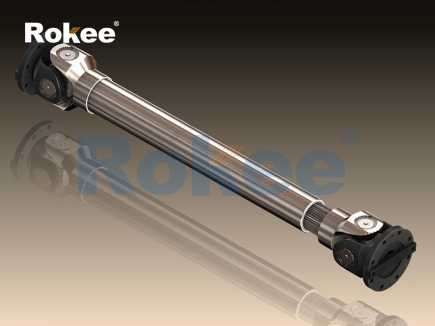
Secondly, the operating angle and displacement range of the equipment transmission shaft should be accurately measured. Different working scenarios correspond to different misalignment requirements, and it is necessary to select single-section or multi-section coupling structures according to the actual angular deviation and axial displacement. For long-distance power transmission scenarios, multi-section combined cardan shaft couplings are required to ensure the stability of long-span transmission. In addition, the operating speed of the equipment is also a key selection index. High-speed operating equipment needs couplings with higher dynamic balance performance and structural rigidity to avoid vibration and resonance problems caused by high-speed rotation, ensuring the smoothness of high-speed transmission.
Working environment factors cannot be ignored in the selection process either. Equipment operating in high-temperature, low-temperature, dusty, or humid industrial environments needs couplings with corresponding environmental adaptability. Optimizing the structural sealing performance and surface protection treatment of the coupling can effectively prevent dust, moisture, and corrosive media from entering the internal bearing and hinge structures, avoiding component wear, rust, and failure. For special working conditions such as frequent impact loads and alternating loads, it is necessary to enhance the structural strength and fatigue resistance of the coupling to adapt to long-term alternating operational loads.
Standardized supply and scientific maintenance of cardan shaft couplings are important guarantees for their long-term stable operation. In the industrial supply system, qualified cardan shaft couplings need to undergo strict structural design optimization, precision machining, and performance testing. The machining accuracy of core components such as cross spiders and yokes directly determines the transmission accuracy and service life of the coupling. High-precision machining can ensure the matching clearance between components is within a reasonable range, reducing friction and wear during operation and avoiding transmission jitter and power loss caused by excessive clearance.
Daily maintenance work focuses on lubrication inspection and structural condition monitoring. The internal bearing and hinge structures of cardan shaft couplings rely on high-quality lubricants to reduce friction. Regular lubricant replacement and filling can effectively reduce component wear and prevent dry friction damage. At the same time, it is necessary to regularly check the tightness of the coupling connection structure to avoid equipment failure caused by loose connection and shaft displacement. For couplings that have been used for a long time, regular inspection of component wear, structural deformation, and fatigue damage is required, and timely replacement and maintenance should be carried out for aging and damaged parts to ensure the continuous and stable transmission performance of the equipment.
With the continuous upgrading of industrial manufacturing technology, the production and application technology of cardan shaft couplings is also constantly innovating and optimizing. Modern production processes have realized the refinement of coupling component machining and the optimization of material performance. High-strength alloy materials are widely used in the production of core components, which effectively improve the structural rigidity, torque resistance, and fatigue resistance of couplings, and adapt to higher-standard industrial operation requirements. At the same time, the optimized structural design further reduces the weight of the coupling while ensuring load-bearing performance, reducing the rotational inertia during operation, and improving the dynamic response speed and transmission efficiency of the transmission system.
In the future industrial development trend, intelligent and high-efficiency mechanical transmission systems will put forward higher requirements for the performance of cardan shaft couplings. The continuous optimization of misalignment compensation capability, high-speed stability, and environmental adaptability will become the main development direction of coupling technology. As a basic and core transmission component, cardan shaft couplings will always occupy an irreplaceable position in the field of mechanical transmission, providing reliable basic support for the stable operation and technological upgrading of various industrial mechanical equipment through continuous technological innovation and performance optimization.
- Tags:
- Cardan Shaft Couplings ,
- sandwich panel line ,
- sandwich panel machine
- pu sandwich panel machine
« Cardan Shaft Couplings Supply » Latest Update Date: Jun 18, 2026
https://www.rokeecoupling.net/blog/cardan-shaft-couplings-supply.html