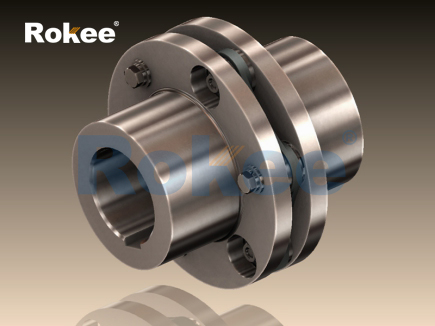
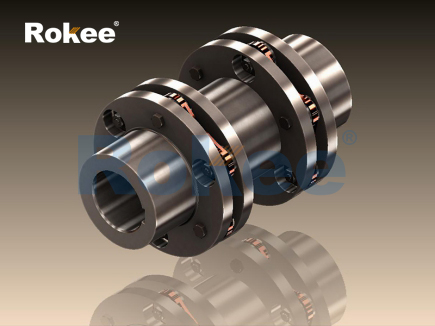
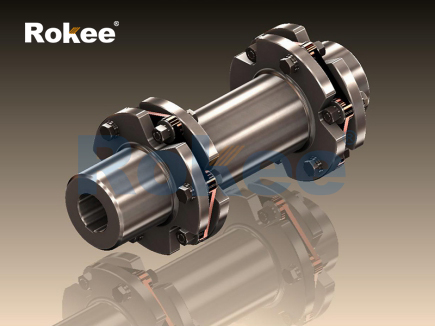
Diaphragm coupling is a high-performance mechanical transmission component designed to connect two rotating shafts and transmit torque steadily in various mechanical systems. It mainly consists of durable metal diaphragm assemblies and fastening connectors, adopting a compact and simplified structural layout without complex movable friction parts. Its working principle relies on the subtle elastic deformation of metal diaphragms to compensate for axial, radial and angular misalignments between connected shafts, which effectively offsets positional deviations generated during equipment operation. Featuring zero backlash and excellent torsional rigidity, this coupling maintains stable torque transmission even under high-speed operating conditions, ensuring precise power output and positioning accuracy for mechanical equipment. Different from flexible couplings with elastic polymer components, it boasts outstanding resistance to high temperature and corrosion, adapting to harsh working environments with fluctuating temperatures and corrosive media. Additionally, the integrated metal structure requires no lubrication or frequent maintenance, cutting down daily operation obstacles and extending its service life under cyclic mechanical stress. It also possesses reliable electrical insulation performance, which can isolate current between connected shafts and avoid electrical corrosion to internal mechanical parts. Widely applied in diverse industrial scenarios, it serves precision automated equipment, high-speed power machinery and heavy-duty transmission devices. Whether for high-precision positioning tasks or continuous high-load operation, the diaphragm coupling delivers consistent transmission efficiency and operational stability, making it an indispensable connecting part in modern mechanical transmission systems.

In the realm of mechanical power transmission, the need for reliable, high-precision shaft connection solutions has grown exponentially alongside advancements in high-speed rotating machinery, precision manufacturing, and heavy-duty industrial operations. Among the diverse range of flexible couplings available, the diaphragm coupling stands out as a superior choice, blending robust torque transmission capabilities with exceptional misalignment compensation, low maintenance requirements, and long-term operational stability. Unlike elastomeric couplings that rely on rubber or plastic components prone to wear and temperature degradation, or gear couplings that demand constant lubrication and suffer from backlash, the diaphragm coupling utilizes thin, flexible metal diaphragms as its core elastic elements, enabling it to bridge the gap between driving and driven shafts while accommodating multiple forms of shaft misalignment without compromising power transfer efficiency.
At its core, the diaphragm coupling is constructed around a set of precision-engineered metal diaphragms, paired with two rigid hubs and an optional intermediate spacer sleeve for longer shaft spans. The basic assembly consists of two hubs, each securely mounted onto the driving and driven shafts respectively, with one or more sets of thin, circular metal diaphragms clamped between the hubs. The diaphragms are typically manufactured from high-strength, corrosion-resistant alloy materials, chosen for their excellent fatigue resistance, elastic flexibility, and ability to withstand repeated bending and torsional stress without permanent deformation. These diaphragms are bolted to the hubs in a staggered pattern, creating a flexible yet rigid torque transmission path; the flexibility comes from the controlled elastic deformation of the thin metal sheets, while the rigidity ensures precise torque delivery with zero rotational backlash. In designs without an intermediate spacer, a single set of diaphragms connects the two hubs directly, while double-diaphragm configurations incorporate a central spacer between two separate diaphragm groups, enhancing misalignment compensation and allowing for greater axial separation between shafts. The shaft connection methods vary, with options including keyway coupling, keyless interference fit, and clamping hub designs, each tailored to different torque loads, shaft sizes, and installation requirements. The overall structure is compact, with no moving parts in contact except for the rigid bolted connections, eliminating friction, wear, and the need for lubrication that plagues many other coupling types. This simple yet durable construction is the foundation of the diaphragm coupling’s exceptional performance across diverse operating conditions.
The performance characteristics of diaphragm couplings set them apart from conventional flexible couplings, making them ideal for critical applications where precision, reliability, and longevity are non-negotiable. One of the most prominent advantages is their ability to compensate for three primary types of shaft misalignment: angular, radial, and axial displacement. Angular misalignment occurs when the two shaft centerlines intersect at a small angle, radial misalignment refers to parallel offset between shaft centerlines, and axial misalignment involves end movement of the shafts along their centerlines; the diaphragm coupling accommodates all three simultaneously through the elastic bending and stretching of the metal diaphragms, without generating excessive reaction forces on the shaft bearings. This reduces bearing wear, minimizes vibration, and extends the service life of the entire drive system. Unlike elastomeric couplings, diaphragm couplings maintain consistent torsional stiffness, ensuring precise speed and torque transmission with no wind-up or energy loss, making them perfect for high-precision motion control systems where positional accuracy is critical. They also exhibit exceptional high-speed performance, with the ability to operate reliably at extremely high rotational speeds, as the balanced design of the diaphragms minimizes centrifugal force and dynamic imbalance. Temperature resistance is another key performance trait; these couplings can function efficiently in extreme temperature environments, from sub-zero cold conditions to high-heat industrial settings, without losing their elastic properties or structural integrity. Additionally, they are highly resistant to corrosion, oil, and chemical exposure, making them suitable for harsh industrial environments where other coupling materials would degrade rapidly. A major operational benefit is their maintenance-free nature; since there are no wearing components and no lubrication requirements, they can operate continuously for extended periods with minimal inspection, reducing downtime and operational costs for industrial facilities. They also offer excellent shock load absorption capability, dampening sudden torque spikes and mechanical shocks to protect both the driving motor and driven equipment from damage, further enhancing system reliability.
Diaphragm couplings are classified into several distinct types based on structural design, diaphragm configuration, and application-specific requirements, each optimized for particular operating conditions and performance needs. The most fundamental classification is based on the number of diaphragm groups, distinguishing between single diaphragm couplings and double diaphragm couplings. Single diaphragm couplings feature a single set of metal diaphragms connecting the two hubs directly, resulting in a compact, short-length design ideal for applications with limited axial space and mild misalignment conditions. They are cost-effective and easy to install, suitable for low-to-medium torque loads and moderate rotational speeds, commonly used in small precision machinery and light industrial equipment. Double diaphragm couplings, by contrast, incorporate two separate diaphragm assemblies with a rigid intermediate spacer between them, which significantly enhances misalignment compensation capacity, particularly for angular and radial offset. This design reduces the reaction forces on the diaphragms and shaft bearings, allowing for greater misalignment tolerance and making them suitable for high-torque, high-speed applications, as well as systems with significant shaft separation distances. Another classification is based on diaphragm profile and construction, including flat diaphragm couplings, conical profile couplings, and curved profile couplings. Flat diaphragm designs are the most common, offering a balance of flexibility and torque capacity for general-purpose use; conical and curved profile diaphragms are engineered for more demanding applications, with uniform stress distribution across the diaphragm surface, improving fatigue life and allowing for higher misalignment compensation and greater torque transmission. Diaphragm couplings can also be categorized by size and load capacity, ranging from miniature couplings for small precision instruments and servo motors to heavy-duty, large-scale couplings for industrial machinery, power generation equipment, and marine propulsion systems. Miniature diaphragm couplings are ultra-compact, lightweight, and designed for low torque and high precision, while heavy-duty models feature thicker, multi-layer diaphragm stacks and reinforced hubs to handle extremely high torque loads and harsh operating conditions. Additionally, there are custom-designed diaphragm couplings for specialized applications, such as those with hollow intermediate shafts for weight reduction in aerospace and high-speed machinery, or corrosion-resistant coatings and materials for chemical and marine environments.
The versatility and superior performance of diaphragm couplings have led to their widespread adoption across nearly every major industrial sector, where they serve as critical components in power transmission systems for a vast array of equipment. In the energy and power generation industry, they are extensively used in gas turbines, steam turbines, generators, and compressors, where high speed, high precision, and reliable operation under high-temperature conditions are essential. The ability to compensate for thermal expansion-induced shaft misalignment makes them indispensable in turbine drive systems, ensuring smooth power transfer while withstanding the extreme heat and vibration of power generation operations. In the oil and gas, chemical, and petrochemical industries, diaphragm couplings are preferred for pumps, compressors, mixers, and agitators, as their corrosion resistance, maintenance-free design, and ability to operate in hazardous, chemically aggressive environments eliminate the risk of lubricant leaks and material degradation. Unlike elastomeric couplings that can break down in contact with chemicals, the metal construction of diaphragm couplings remains stable, ensuring continuous operation in critical processing equipment. The manufacturing and machining industry relies heavily on diaphragm couplings for high-precision machine tools, CNC machining centers, servo motors, and robotic systems, where zero backlash, precise positional control, and high-speed operation are required to maintain machining accuracy. Their ability to transmit torque without lost motion ensures that machine tool axes move with pinpoint accuracy, resulting in high-quality finished products and consistent production performance. In the aerospace and defense sector, lightweight, high-strength diaphragm couplings are used in aircraft propulsion systems, helicopter rotor drives, and ground support equipment, where weight reduction, reliability, and resistance to extreme environmental conditions are critical. The compact design and high power-to-weight ratio of these couplings make them ideal for aerospace applications where every gram of weight matters, and their long fatigue life ensures safe operation in mission-critical systems. The marine and shipbuilding industry utilizes heavy-duty diaphragm couplings for ship propulsion systems, pump drives, and auxiliary machinery, as they can withstand the harsh marine environment, including saltwater corrosion and constant vibration, while providing reliable torque transmission for large marine engines. They are also used in food and beverage processing and pharmaceutical manufacturing, where hygiene and cleanliness are paramount; the absence of lubrication prevents contamination of products, and the smooth, easy-to-clean metal surface complies with strict industry hygiene standards. Additionally, diaphragm couplings find applications in mining, metallurgy, and construction equipment, where heavy loads, dust, and vibration are common, providing durable, low-maintenance shaft connections for crushers, conveyors, and heavy machinery.
Beyond these core industries, diaphragm couplings are increasingly being integrated into emerging technologies and modern automated systems, as the demand for high-performance, maintenance-free mechanical components continues to grow. Their adaptability to custom specifications, combined with their exceptional performance and longevity, makes them a future-proof solution for evolving industrial needs. When selecting a diaphragm coupling for a specific application, engineers must consider factors such as torque requirements, rotational speed, shaft size, misalignment tolerance, operating temperature, and environmental conditions to ensure optimal performance and compatibility. Proper installation, including precise alignment of shafts and correct torque tightening of bolts, is also crucial to maximize the service life of the coupling and prevent premature failure. While initial material and manufacturing costs may be higher than some lower-performance coupling types, the long-term benefits of reduced maintenance, extended equipment life, and minimal downtime make diaphragm couplings a cost-effective investment for industrial operations of all scales. As mechanical engineering continues to advance toward higher speeds, greater precision, and more sustainable, low-maintenance equipment, the diaphragm coupling will remain a vital component in power transmission systems, bridging the gap between performance and reliability in critical industrial applications worldwide.
In summary, the diaphragm coupling represents a pinnacle of flexible coupling design, combining a straightforward, robust structure with outstanding performance metrics that address the limitations of traditional coupling technologies. Its core metal diaphragm design enables precise torque transmission, multi-directional misalignment compensation, and maintenance-free operation, while its diverse classifications cater to a wide spectrum of load, speed, and environmental requirements. From miniature precision instruments to heavy-duty industrial machinery and aerospace systems, diaphragm couplings deliver consistent, reliable performance across countless applications, solidifying their role as an essential component in modern mechanical power transmission. As industrial operations continue to prioritize efficiency, durability, and precision, the relevance and demand for diaphragm couplings are set to remain strong, with ongoing design refinements further enhancing their capabilities to meet the evolving needs of the global engineering and manufacturing sectors.
pu sandwich panel line,pu sandwich panel machine,sandwich panel machine
« Diaphram Couplings » Latest Update Date: May 9, 2026
https://www.rokeecoupling.net/tags/diaphram-couplings.html