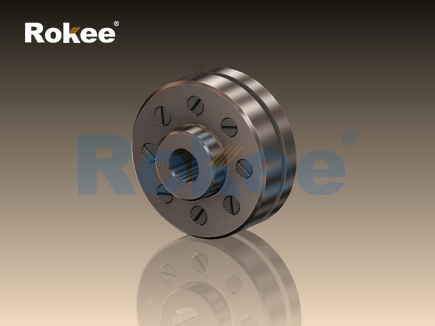
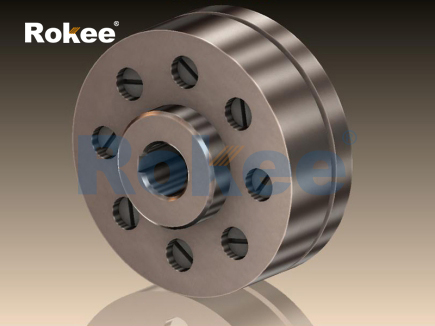
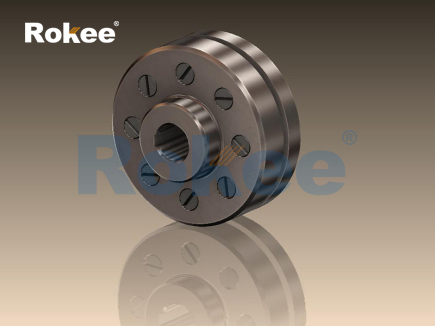
In the modern mechanical transmission industry, coupling components serve as indispensable connecting units that link two rotating shafts to realize the transmission of torque and rotational motion. Among various coupling types, elastic pin couplings stand out owing to their ingenious structural design, excellent comprehensive mechanical properties and strong environmental adaptability. These mechanical components rely on elastic pins as the core force-transmitting and buffering elements, combining the advantages of simple assembly logic and flexible deformation characteristics. They can effectively coordinate the operating deviation between connected shafts while ensuring stable power transmission, which makes them widely applied in general machinery manufacturing, industrial transmission systems and various mechanical automation equipment. Different from rigid couplings that lack deformation tolerance and flexible couplings with complex accessory structures, elastic pin couplings maintain a balanced relationship between structural simplicity and functional diversity, adapting to diverse working conditions with varying load intensities and motion frequencies. An in-depth exploration of the structural composition, intrinsic performance, classification standards and practical application scenarios of elastic pin couplings can provide clear theoretical references for mechanical selection, equipment optimization and daily maintenance of transmission systems.

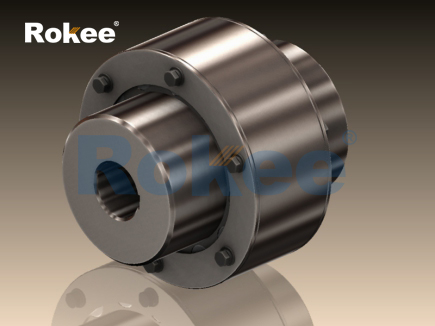
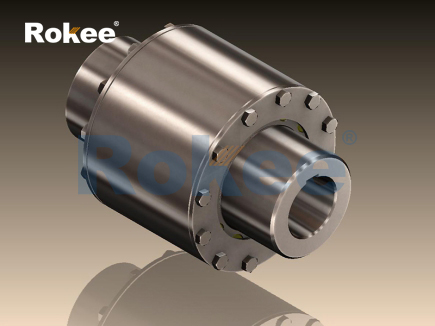
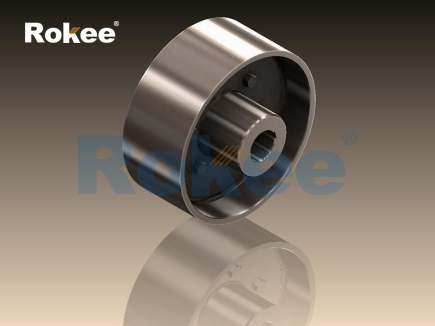
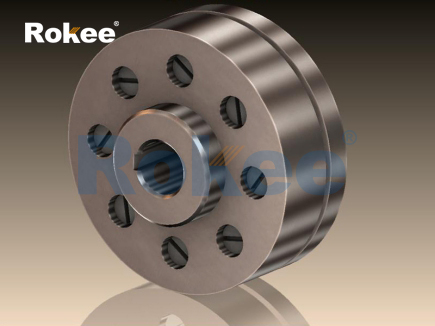
The basic structure of elastic pin couplings follows a compact and reasonable mechanical design logic, consisting of two symmetrical half coupling bodies, cylindrical elastic pins, fastening sleeves and auxiliary positioning parts. The two half coupling bodies are usually made of high-strength metal alloys with uniform internal density and good rigidity, which can bear continuous torque impact and external mechanical pressure during long-term operation. Each half coupling body is processed with evenly distributed pin holes at the matching end face, and the aperture size and spacing are designed based on mechanical calculation to ensure uniform stress distribution of each elastic pin in the working state. The elastic pins embedded in the pin holes are the key functional components of the entire coupling. These pins are mostly made of elastic metal materials or high-toughness polymer materials, featuring regular cylindrical structures with smooth surface finish to reduce friction loss during relative movement. The fastening sleeves are sleeved on the outer side of the matching part of the two half couplings, playing a role in limiting radial displacement and preventing the separation of the connecting structures during high-speed rotation. Auxiliary positioning parts such as flat keys and positioning grooves are arranged on the inner wall of the coupling shaft hole to enhance the connection tightness between the coupling and the transmission shaft, avoiding circumferential rotation deviation caused by shaft body sliding. In the overall assembly structure, there is no complex superimposed mechanical structure between the components, and the assembly sequence follows simple plug-in and fastening steps. This structural feature not only lowers the processing and manufacturing difficulty of the coupling but also simplifies the later disassembly, inspection and replacement operations, effectively reducing the time cost of equipment maintenance.
The unique structural endowment enables elastic pin couplings to possess superior and diversified mechanical performances, which are mainly reflected in deviation compensation, vibration damping, load adaptability and structural durability. In terms of deviation compensation, elastic pins can produce tiny elastic deformation under external force, which can effectively offset the radial deviation, axial deviation and angular deviation generated by installation errors and mechanical operation wear between the two connected shafts. Moderate deformation eliminates additional mechanical stress caused by shaft body misalignment, preventing local stress concentration from damaging the shaft body and related mechanical accessories. In terms of vibration damping and noise reduction, the elastic materials of the pins can absorb the vibration energy generated by torque fluctuation and mechanical collision during equipment operation. When the transmission system is subjected to sudden load changes, the elastic pins buffer instantaneous impact force through self-deformation, weaken vibration transmission between adjacent mechanical structures, and reduce mechanical noise generated by rigid friction. For load adaptability, elastic pin couplings can stably operate under both constant load and alternating load conditions. The rigid metal coupling bodies ensure basic torque transmission capacity, while the elastic pins undertake flexible adjustment tasks, so the couplings can adapt to low-speed heavy-load working conditions and maintain stable operation under high-speed light-load rotation states. In terms of durability, the surface of each component is treated with anti-wear and anti-corrosion processes. The elastic pins have excellent fatigue resistance and can withstand repeated deformation for a long time without permanent structural damage. The metal coupling bodies are not easy to wear and deform in conventional working environments, which extends the overall service life of the coupling and improves the long-term operation stability of mechanical equipment. In addition, this type of coupling has low rotation inertia, which can respond quickly in frequent start-stop and forward-reverse rotation working scenarios, meeting the motion control requirements of precision transmission equipment.
According to different classification standards, elastic pin couplings can be divided into multiple types with distinct characteristics, and each type has targeted structural improvements and applicable working conditions. Based on the difference of elastic pin materials, the couplings are mainly categorized into metal elastic pin couplings and non-metal elastic pin couplings. Metal elastic pin couplings adopt high-quality spring steel or alloy steel to manufacture pin components. The metal pins have high structural strength, strong temperature resistance and excellent pressure bearing capacity. They will not undergo performance attenuation in high-temperature working environments and can bear large instantaneous torque impact, making them suitable for heavy industrial mechanical transmission systems. Non-metal elastic pin couplings use polymer materials such as polyurethane and rubber to produce elastic pins. These non-metal pins have better flexibility, stronger vibration absorption capacity and quieter operation noise. Although their high-temperature resistance and pressure resistance are slightly inferior to metal pins, they have obvious advantages in cost control and anti-corrosion performance, being widely used in light industrial machinery and daily civilian mechanical equipment.
Based on the difference of structural layout, elastic pin couplings can be classified into single-row elastic pin couplings and double-row elastic pin couplings. Single-row elastic pin couplings are equipped with a single circle of evenly distributed pins on the matching end face. This structural design is simple in processing and low in manufacturing cost, with moderate torque transmission capacity. They are suitable for conventional transmission equipment with stable load and low operation precision requirements. Double-row elastic pin couplings are provided with two parallel rows of elastic pins, and the pins in different rows are arranged in a staggered manner. The staggered layout optimizes the stress distribution of the coupling, increases the effective force-bearing area, and significantly improves the overall torque transmission limit and impact resistance. Such couplings are commonly used in medium and large mechanical equipment with unstable load and high operation strength. In addition, according to the difference of connection fastening modes, they can be divided into key-connected elastic pin couplings and clamping-connected elastic pin couplings. Key-connected structures rely on flat keys to realize the fixed connection between the coupling and the shaft body, featuring high connection rigidity and good positioning effect, applicable to high-power transmission scenarios. Clamping-connected structures use annular clamping parts to extrude and fix the shaft body. This installation method does not require slotting on the shaft surface, which protects the integrity of the shaft body and facilitates quick disassembly and assembly, suiting equipment that needs frequent debugging and replacement of transmission parts.
Diversified types and stable comprehensive performances enable elastic pin couplings to cover a wide range of industrial application scenarios, realizing efficient power transmission in multiple mechanical fields. In the field of general machinery manufacturing, these couplings are applied to conventional transmission equipment such as belt conveyors, screw conveyors and mixing machinery. Most of these devices have continuous operation requirements and face minor installation deviations and vibration interference during operation. The deviation compensation and vibration damping performances of elastic pin couplings can ensure the smooth operation of conveying and mixing equipment, reducing component wear caused by mechanical jitter. In the heavy industry field including mining and metallurgy, metal elastic pin couplings are widely installed on large-scale machinery such as mining crushers and metallurgical rolling equipment. These heavy-duty machines often bear irregular impact loads and work in harsh environments with dust and humidity. The high strength and fatigue resistance of metal pins can cope with severe working conditions, maintaining the stability of power transmission between power components and execution components.
In the field of precision mechanical automation, clamping-connected elastic pin couplings are preferred for automated production lines, small processing robots and precision transmission instruments. These devices have strict requirements on motion accuracy and assembly convenience. The couplings can eliminate tiny assembly deviations, ensure synchronous rotation of the shaft body, and realize quick disassembly during equipment debugging, which improves the maintenance efficiency of automated production systems. In addition, in the civil machinery industry involving food processing and daily chemical production, non-metal elastic pin couplings are extensively used. The non-metal elastic pins have good corrosion resistance and will not produce metal wear debris during operation, avoiding pollution to production raw materials and meeting the hygienic and safety requirements of food and daily chemical processing. In the power transmission links of agricultural machinery such as tillers and harvesters, elastic pin couplings also play an important role. The complex and changeable working environment of agricultural machinery puts forward high requirements for the anti-impact and anti-vibration ability of transmission components, and the simple and durable structure of elastic pin couplings can adapt to muddy and dusty farmland operation conditions, reducing equipment failure rates.
In the actual application process of elastic pin couplings, reasonable selection and standardized installation are key factors to give full play to their structural advantages. Mechanical designers need to comprehensively evaluate multiple indicators such as equipment operating load, rotation speed, working temperature and installation space to select appropriate coupling types. For high-temperature and heavy-load working conditions, metal double-row elastic pin couplings should be prioritized; for low-load and low-noise requirements, non-metal single-row structures are more suitable. During installation, the coaxiality of the two connected shafts should be strictly controlled to avoid excessive installation deviation exceeding the compensation range of the elastic pins, which may cause accelerated wear of the pins. Daily maintenance work should include regular inspection of pin deformation, surface wear and fastening tightness of connecting parts. Worn and aged elastic pins need to be replaced in a timely manner to prevent the reduction of transmission efficiency caused by component aging. With the continuous progress of mechanical processing technology, the material formula of elastic pins and the structural optimization design of couplings are constantly upgraded. New high-toughness and anti-fatigue materials are gradually applied to the production of elastic pins, and the lightweight and compact structural design further expands the application boundary of such couplings.
To sum up, elastic pin couplings have become vital basic components in the mechanical transmission industry by virtue of their simple and compact structure, convenient assembly and maintenance, excellent deviation compensation and vibration damping performances. Multiple classification types meet the differentiated usage demands of diverse working conditions, covering heavy industrial equipment, precision automated machinery, civil processing equipment and agricultural machinery. In the future, with the continuous development of intelligent manufacturing and high-precision mechanical processing industries, the performance optimization of elastic pin couplings will be further promoted. Through material innovation and structural upgrading, these couplings will adapt to more extreme working environments and higher-precision transmission requirements, providing more reliable basic support for the stable operation of modern mechanical systems. The reasonable application and continuous technical iteration of elastic pin couplings will also continuously inject vitality into the upgrading and optimization of the entire mechanical transmission industry.
pu sandwich panel line,pu sandwich panel machine,sandwich panel machine
« Elastic Pin Couplings » Latest Update Date: May 8, 2026
https://www.rokeecoupling.net/tags/elastic-pin-couplings.html