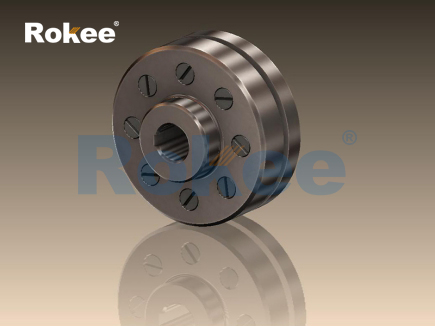
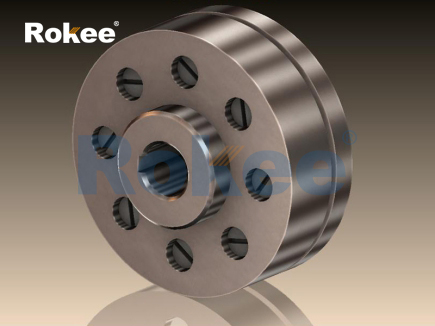
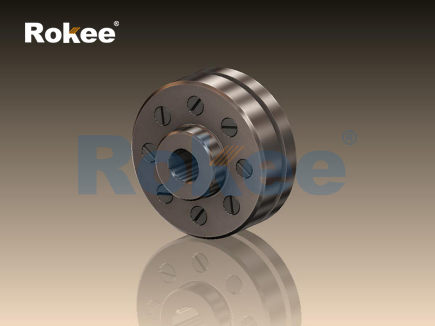
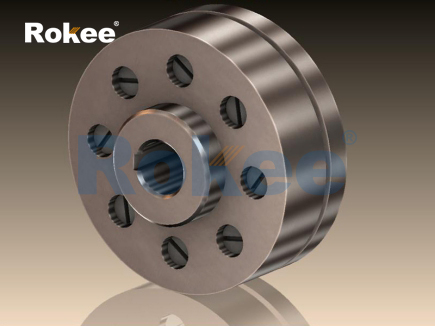
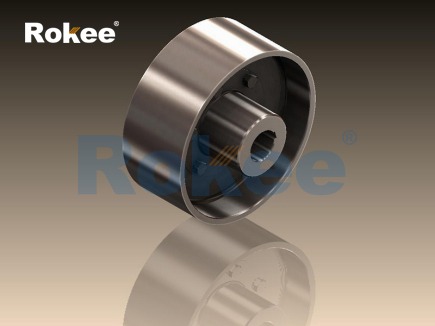
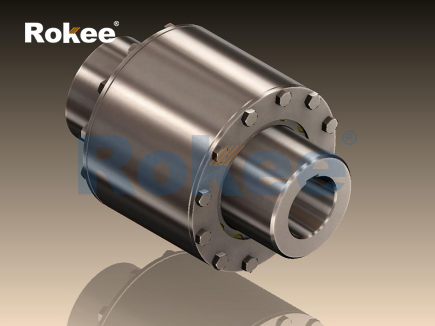
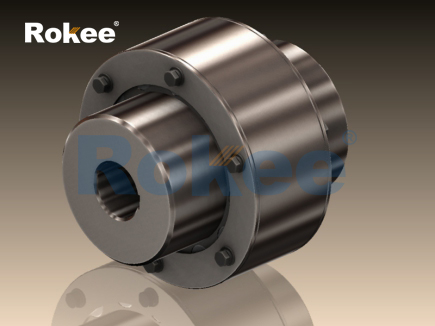
Elastic pin couplings represent a widely adopted mechanical connection component designed to transmit rotational torque between two separate shafts while accommodating minor misalignment and mitigating harmful vibration generated during equipment operation. At the core of its working principle lies the combination of rigid metallic pin carriers and flexible elastic sleeves fitted onto each pin. When the driving shaft begins to rotate, torque transfers from the driving hub to the elastic sleeves first, and then through these elastic components to the pins mounted on the driven hub. Unlike fully rigid couplings that directly lock two shafts together without any buffer, the elastic material surrounding each pin can deform slightly under load. This controlled elastic deformation serves multiple basic functions at the same time. It compensates for small radial, axial, and angular misalignment that inevitably arises from manufacturing tolerances, assembly errors, or thermal expansion during machine running. The elastic medium also absorbs impact loads produced by sudden startup, load fluctuation, or intermittent operation. Without such elastic elements, shock forces would pass directly between the two shafts, causing excessive stress on bearings, seals and other adjacent mechanical parts. The pins maintain the relative position of the two hubs and ensure stable torque transmission, while the elastic sleeves isolate vibration waves so that oscillation from one side of the shaft system cannot easily propagate to the other side. This separation of rigid positioning and flexible buffering defines the fundamental working logic of the elastic pin coupling and makes it suitable for general rotating machinery with moderate torque and speed requirements.

The transmission process of elastic pin couplings follows a continuous cycle of force application and elastic recovery during each rotation. As the driving hub turns, its inner surface presses against the outer wall of the elastic sleeves, and compressive stress builds up inside the elastic material. The elastic sleeves then transfer this compressive force to the cylindrical pins embedded in the driven hub, which pull the driven hub to rotate synchronously. When the direction of force changes with shaft rotation, the deformed elastic material rebounds to its original shape, releasing stored elastic energy. This repeated compression and recovery does not create permanent deformation under normal operating conditions, as long as the applied torque stays within the designed working range. Each pin shares part of the total torque load, so load distribution among all pins directly affects the service life of the coupling. If shaft misalignment becomes excessive, individual pins will bear uneven stress, and local deformation of the elastic sleeves will increase sharply. In a well-assembled system, the load distributes relatively evenly across all elastic pins, and the cyclic deformation remains stable. The rotation speed also influences this working state; higher rotational speeds generate centrifugal force on the pins and elastic sleeves, which adds extra stress on elastic parts. This means the elastic material must maintain stable mechanical properties under continuous cyclic deformation at operating speed, resisting fatigue cracking caused by millions of repeated compression and rebound cycles over long running hours.
One key advantage embedded within the working principle is the ability to reduce dynamic loads on connected equipment. Many rotating machines experience transient impact at startup or when working load changes abruptly. A rigid coupling transfers nearly all impact shock instantly to the driven equipment, creating sharp peak stress that accelerates wear of bearings and gear components. The elastic layer on pins acts as a mechanical damper to smooth these sudden force spikes. When impact torque appears, the elastic material deforms progressively rather than reacting instantly, extending the time period over which the shock energy releases. This extension of loading time lowers the magnitude of peak dynamic force transmitted to the downstream shaft. Meanwhile, the elastic structure shifts the natural vibration frequency of the entire shaft system away from common operating frequencies, avoiding resonance conditions that can produce destructive vibration amplification. Resonance occurs when the excitation frequency matches the natural frequency of the mechanical system, and excessive vibration can loosen fasteners or crack structural parts. By adjusting the stiffness of elastic sleeves, the coupling changes the overall torsional stiffness of the shaft assembly. This tuning effect helps engineers avoid dangerous resonant zones during machine design. Even with continuous low-level vibration during steady operation, the internal friction inside elastic materials dissipates vibration energy and converts it into small amounts of heat, which slowly dissipates into the surrounding air.
Elastic pin couplings can accommodate three primary types of shaft misalignment through elastic deformation, although the allowable misalignment range remains limited compared with some other flexible coupling types. Angular misalignment happens when the centerlines of the driving and driven shafts intersect at a slight angle instead of staying perfectly parallel. Under this condition, the elastic sleeves on different pins deform to varying degrees during rotation to compensate for the tilted shaft position. Radial misalignment refers to parallel offset between the two shaft centerlines. In this case, the elastic parts experience periodic compression changes as the hubs rotate, allowing the two hubs to keep rotating without binding. Axial misalignment arises when shafts move slightly along the common axis direction due to thermal expansion or axial movement of bearings. The elastic sleeves can tolerate limited axial displacement between hubs by slight stretching or compression. It is important to understand that the coupling does not eliminate misalignment itself; it only absorbs the displacement through elastic material deformation. Large misalignment will produce excessive cyclic stress on elastic sleeves and pins, leading to accelerated aging, tearing of elastic components and bending stress on pins. Exceeding the allowable misalignment range will shorten service life significantly and may even cause sudden failure of elastic parts, interrupting equipment operation. Therefore proper alignment during installation remains essential to keep the coupling working within its intended operating mechanism.
Material characteristics of elastic sleeves play a decisive role in how the coupling performs during torque transmission and vibration absorption. The elastic material needs a balanced combination of elasticity, compressive strength, wear resistance and damping capacity. Too soft a material will produce excessive deformation under load, leading to large torsional deflection and unstable rotation. Overly hard elastic material provides little vibration damping and loses the shock absorbing function. Under cyclic compression, the material must resist fatigue damage from repeated loading and unloading. Temperature changes also alter material performance; high working temperatures can soften the elastic medium and reduce its stiffness, while low temperatures may make it brittle and prone to cracking. The pins are usually made of materials with high tensile and bending strength, as they serve as the force transferring skeleton. The pins withstand shear and bending loads generated by torque and misalignment. The two hubs connecting to the shafts are rigid components that maintain structural integrity and evenly distribute load onto the set of pins and elastic sleeves. The cooperation between rigid pin-hub assemblies and polymer elastic sleeves forms the core mechanical system. When selecting this coupling type, material selection is matched to expected load cycles, operating temperature range and environmental conditions. Exposure to oil, moisture or chemical substances can degrade elastic materials over time, changing elasticity and damping performance and gradually weakening the coupling’s ability to buffer vibration and compensate misalignment.
Failure modes of elastic pin couplings are closely tied to their working principle, and most failures originate from overloading or fatigue of the elastic elements. The most common failure is wear, cracking or complete rupture of elastic sleeves. Continuous cyclic deformation creates tiny internal cracks that expand gradually under repeated torque load. Misaligned shafts speed up this fatigue process, because uneven stress concentrates on partial elastic sleeves during every rotation. Once elastic sleeves break, torque can no longer transmit smoothly through the buffer layer, and metal pins will directly contact the hub holes. Direct metal contact eliminates all vibration damping and misalignment compensation, generating loud noise, sharp vibration and rapid wear of pins and hub holes. In severe cases, pins may suffer shear fracture under sudden overload. Another failure form is permanent deformation of elastic sleeves, which happens when torque exceeds the elastic limit of the material. After permanent deformation, the elastic parts cannot return to original shape, and the clearance between pins and hubs becomes abnormal. This causes unstable torque transmission and increased vibration during operation. Monitoring the operating state of the coupling usually focuses on vibration level, noise and temperature rise. Rising vibration and abnormal noise often indicate degradation of elastic sleeves. Early detection of such signs allows replacement of elastic components before complete coupling breakdown, protecting the whole mechanical system from secondary damage caused by sudden loss of torque transmission.
Comparing elastic pin couplings with other flexible coupling structures helps clarify the unique features of their working mechanism. Some flexible couplings rely on metal membranes or gear teeth to accommodate misalignment, and those structures transmit torque through rigid metal contact with limited damping ability. Other types use whole rubber blocks or chains for flexibility, with different load distribution patterns. Elastic pin couplings separate force transmission and shock absorption by placing elastic sleeves around individual pins. This design makes replacement convenient, because worn elastic sleeves can be changed without removing the connected equipment hubs completely in many situations. Each elastic pin works as an independent flexible unit sharing the total torque load. This distributed load structure delivers stable performance under moderate cyclic loads. However, the torsional stiffness of elastic pin couplings is relatively higher compared with couplings using large rubber blocks, so their vibration isolation capacity is not the strongest among all flexible couplings. They also have limits on rotational speed and maximum torque capacity. This makes them more suitable for general industrial equipment where moderate torque, medium rotating speed and basic misalignment compensation are required. Understanding these differences helps match the coupling type to machine operating conditions and avoid applying it in scenarios beyond its working capability.
Proper maintenance preserves the designed working characteristics of elastic pin couplings and extends service life by keeping elastic components in good condition. Regular inspection focuses on checking the integrity of elastic sleeves for cracks, aging, deformation or surface wear. Operators also observe the running noise and vibration level during equipment operation, as these signals reflect changes in elastic performance. Fasteners that fix pins and hubs should stay tightened to prevent shifting of pins during rotation, which would disrupt uniform load sharing across all pins. Environmental cleaning is also necessary; accumulated dust, abrasive particles and chemical contaminants can erode elastic sleeves and accelerate material aging. When replacing elastic parts, components with matching material properties should be used to maintain the original torsional stiffness and damping features. Using substitute materials with different hardness will change the coupling’s dynamic behavior, affecting vibration control and misalignment compensation. Over the long service period, elastic materials naturally age even under ideal working conditions, and scheduled replacement prevents unexpected breakdown. Maintaining the original alignment state after maintenance work is critical, because reintroduced shaft misalignment will immediately increase stress on elastic sleeves. When operated and maintained correctly according to the inherent working principle, elastic pin couplings can reliably transmit torque, buffer dynamic loads and protect rotating machinery systems for long continuous operating cycles.
- Tags:
- Elastic Pin Couplings ,
- sandwich panel line ,
- sandwich panel machine
- pu sandwich panel machine
« Working Principle of Elastic Pin Couplings » Latest Update Date: Oct 20, 2026
https://www.rokeecoupling.net/blog/working-principle-of-elastic-pin-couplings.html