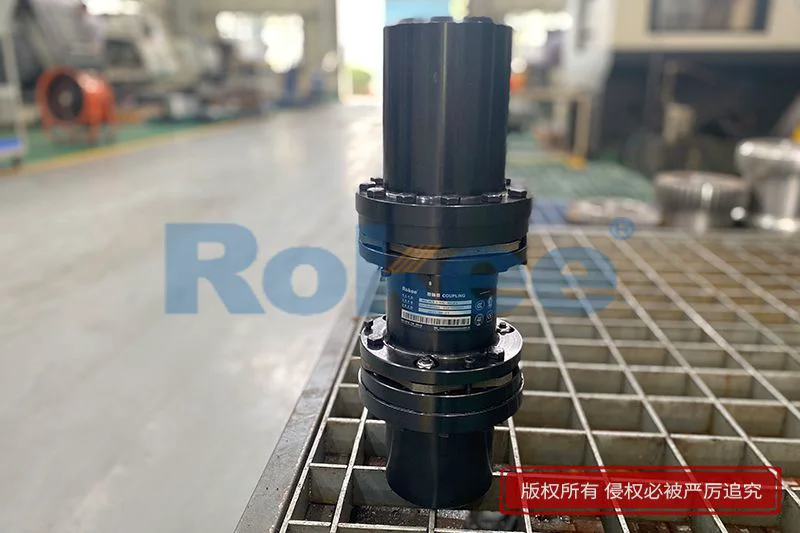
Diaphragm Coupling For Pumps
Rokee is a well-known Diaphragm Coupling supplier from china, the page show cases of Diaphragm Coupling For Pumps, provide customized services based on user's drawings, and supporting exports.
In modern industrial fluid transportation systems, the stable operation of pump equipment determines the overall efficiency and safety of the entire production process. As a core connecting component between pump bodies and driving motors, couplings undertake the critical task of transmitting torque while buffering various mechanical deviations generated during equipment operation. Among numerous coupling types, diaphragm couplings have gradually become the preferred connecting part for various pump devices by virtue of their unique elastic structure, stable transmission performance and excellent environmental adaptability. They are widely applied in centrifugal pumps, circulating pumps, chemical delivery pumps and other fluid transportation equipment, effectively solving common mechanical problems such as axis deviation, vibration impact and thermal deformation interference in pump operation, and providing reliable mechanical guarantee for the long-term continuous work of pump systems.
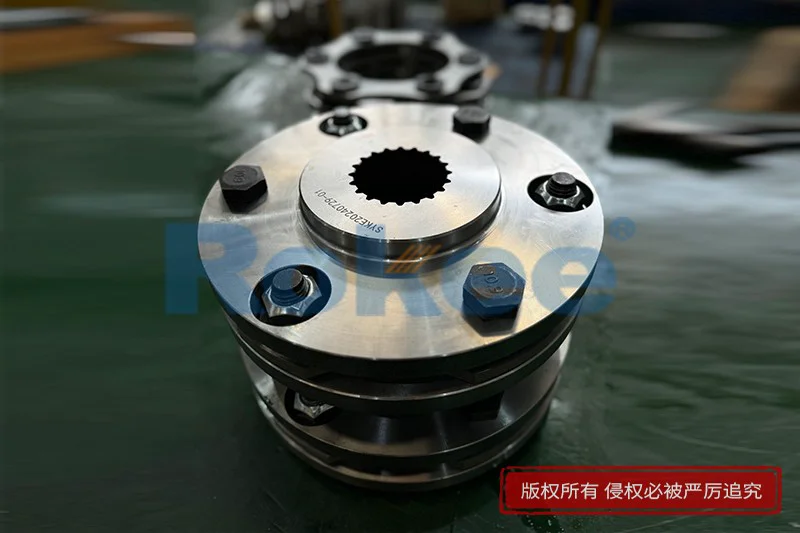
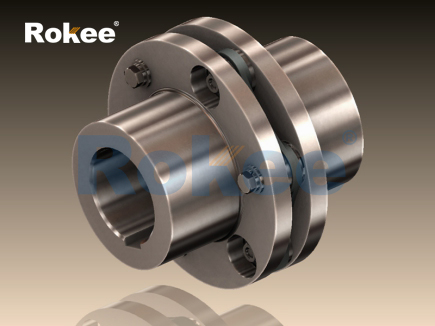
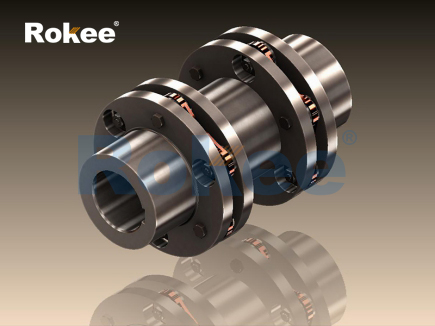
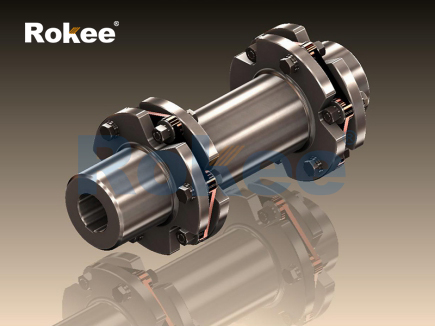
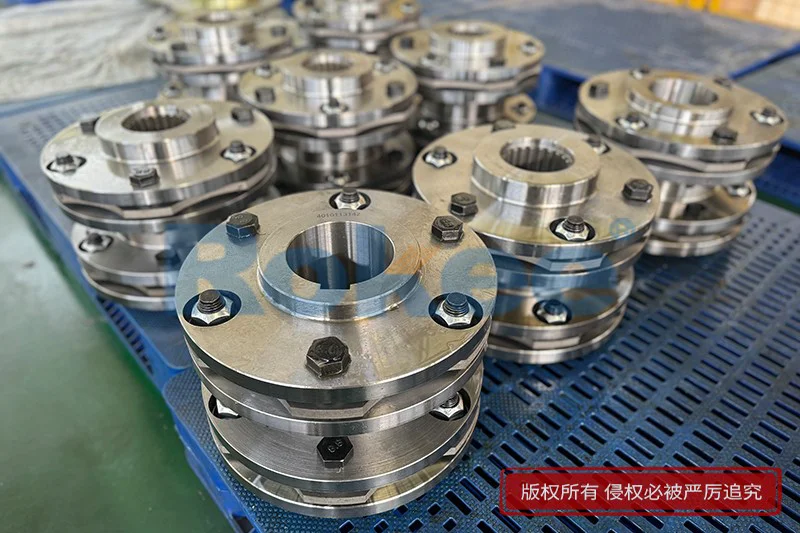
A diaphragm coupling for pumps is a flexible transmission component that relies on metal diaphragm elastic deformation to compensate for displacement between connected shafts. Its basic composition includes metal diaphragms, shaft sleeves, fastening bolts and intermediate connecting components. Different from traditional flexible couplings that rely on rubber or polymer elastic elements for buffering, the core force-bearing part of this coupling is made of high-strength metal sheets with thin and uniform thickness. These metal diaphragms are stacked in a specific combination form and fixed between the driving shaft and driven shaft of the pump equipment through precision bolts. When the equipment is running, the diaphragms can produce tiny elastic deformation to absorb and offset various displacements generated during the operation of the pump unit, realizing stable torque transmission without mechanical clearance. The overall structural design abandons complex contact transmission structures, avoiding the wear and aging problems of traditional flexible coupling elastic accessories, and laying a foundation for long-term low-maintenance operation of pump equipment.
The working principle of diaphragm couplings is based on the elastic mechanical characteristics of metal materials. During the start-up, operation and shutdown of pump equipment, there are inevitably different degrees of relative displacement between the motor shaft and the pump shaft. Such displacements are mainly divided into axial displacement, radial displacement and angular displacement. Axial displacement usually comes from thermal expansion and contraction of the shaft body after the equipment is heated during operation, as well as tiny axial movement caused by fluid pressure fluctuation inside the pump body. Radial displacement is mostly caused by installation errors and foundation settlement, which makes the two connected shafts unable to maintain absolute coaxiality. Angular displacement refers to the slight inclination angle between the axes of the two shafts due to equipment assembly deviation. When these three types of displacement exist simultaneously, rigid connecting structures will generate huge additional mechanical stress on the shaft body, bearings and pump shell, accelerating component fatigue damage. The metal diaphragm group of the diaphragm coupling can undergo reversible elastic deformation under the action of these displacements. The uniform stress distribution on the diaphragm surface effectively absorbs displacement stress, keeps the torque transmission path stable, and isolates the adverse effect of mechanical deviation on the pump unit.
In terms of structural characteristics, pump-specific diaphragm couplings adopt a compact and integrated design, which is highly compatible with the narrow installation space of most pump equipment. The metal diaphragm materials are mostly high-quality alloy steel with good fatigue resistance and corrosion resistance. After precise stamping, heat treatment and surface smoothing processes, the diaphragms have uniform thickness and stable elastic performance, and can maintain good deformation recovery ability after long-term repeated bending and stretching. The bolt connection structure adopts an asymmetric locking design, which can evenly distribute the tightening force on the contact surface of the diaphragm and the shaft sleeve, avoiding local stress concentration caused by uneven pressure. This structural optimization effectively prevents diaphragm cracking and deformation failure in high-speed operation. In addition, the internal structure of the coupling has no sliding friction parts, and there is no need to add lubricating oil or grease during the whole service cycle, which simplifies the daily maintenance process of the pump equipment and avoids equipment pollution caused by lubricant leakage.
Compared with other common coupling types applied to pumps, diaphragm couplings have obvious comprehensive performance advantages. Traditional rigid couplings have simple structures and low manufacturing costs, but they cannot compensate for any shaft displacement. Slight installation deviation or thermal deformation will lead to severe vibration of the pump unit, aggravating the wear of bearings and shaft seals, and greatly shortening the service life of the pump. Rubber flexible couplings rely on rubber elastic bodies for buffering and shock absorption, but rubber materials are susceptible to aging, hardening and deformation under the influence of high temperature, low temperature and chemical corrosive media. Their service life is limited, and they need frequent replacement in harsh working conditions. Gear couplings have strong torque transmission capacity, but their meshing structures are prone to friction and wear, requiring regular lubrication maintenance, and they will generate obvious vibration and noise during high-speed operation. In contrast, diaphragm couplings maintain stable mechanical properties in a wide temperature range, are not easily eroded by common industrial fluids, and have ultra-high transmission efficiency with no power loss caused by intermediate friction links. Meanwhile, the non-backlash transmission feature ensures that the pump will not produce instantaneous impact torque during start-up and shutdown, protecting the internal flow passage components of the pump from mechanical impact damage.
The excellent adaptability of diaphragm couplings enables them to operate stably in various complex working conditions of pump equipment. In the industrial water supply and drainage industry, circulating pumps and water supply pumps need to run continuously for a long time. The vibration isolation performance of diaphragm couplings can reduce the vibration transmission between the motor and the pump body, avoid pipeline resonance caused by mechanical vibration, and reduce the noise pollution of the pump room environment. In the chemical industry, many delivery pumps need to transport corrosive media such as acid and alkali liquids. The metal materials of diaphragm couplings can resist weak chemical corrosion, and the fully sealed assembly structure prevents corrosive liquids from penetrating into the connecting parts to damage the shaft body. In the petroleum and energy industry, oil delivery pumps usually work under high pressure and high load. The high torsional rigidity of diaphragm couplings ensures no distortion or deformation during high-power torque transmission, maintaining the stable operating accuracy of the pump unit. In the heating and refrigeration industry, hot water circulating pumps and cold water delivery pumps face frequent temperature changes. The low thermal expansion coefficient of metal diaphragms enables the couplings to adapt to thermal deformation of the shaft body, avoiding connection loosening caused by temperature fluctuation.
Reasonable installation and standardized maintenance are key factors to give full play to the performance of diaphragm couplings for pumps. In the installation stage, the coaxiality of the motor shaft and the pump shaft must be strictly calibrated. Excessive initial deviation will make the diaphragm bear excessive static stress, resulting in premature fatigue damage. The contact surface of the coupling components should be kept clean and flat to prevent hard impurities from being sandwiched between the diaphragm and the shaft sleeve, which may cause local stress concentration. The tightening torque of bolts needs to be controlled uniformly in accordance with mechanical assembly standards to avoid assembly failure caused by inconsistent fastening force. After the installation is completed, it is necessary to conduct no-load trial operation of the pump unit to observe whether there is abnormal vibration and noise, and fine-tune the alignment state of the shaft body to ensure that the coupling runs within the optimal stress range. In daily maintenance work, regular visual inspection of the diaphragm surface is required to check for tiny cracks, deformation and corrosion marks. The fastening state of bolts should be checked periodically to prevent bolt loosening caused by long-term vibration. For pumps working in high-temperature and corrosive environments, the inspection frequency should be appropriately increased to eliminate potential mechanical faults in advance. Since the coupling has no vulnerable wearing parts, regular cleaning of surface dust and impurities is sufficient to maintain its operating performance, and no complicated disassembly and maintenance procedures are required.
In the actual operation of pump systems, diaphragm couplings can effectively reduce the comprehensive operating cost of equipment. Although the initial manufacturing and installation cost is higher than that of ordinary couplings, their ultra-long service life and maintenance-free characteristics in the later stage greatly reduce the frequency of component replacement and manual maintenance costs. The precise displacement compensation function avoids abnormal wear of pump bearings, shaft seals and impellers, reducing the failure rate of core pump components. Stable torque transmission improves the operating efficiency of the pump unit, reducing energy consumption during long-term operation. In addition, the good vibration isolation effect protects the connecting pipelines and auxiliary equipment of the pump from vibration fatigue damage, extending the overall service life of the fluid transportation system. From the perspective of long-term industrial operation, diaphragm couplings have higher cost performance and more stable comprehensive benefits.
With the continuous upgrading of industrial fluid transportation technology, the performance requirements for pump equipment are becoming increasingly stringent, putting forward higher standards for the transmission stability, environmental adaptability and service life of supporting couplings. The future development direction of pump-specific diaphragm couplings is mainly reflected in material optimization and structural innovation. On the material side, new alloy composite materials with higher fatigue resistance and stronger corrosion resistance will be applied to diaphragm manufacturing to adapt to more extreme working conditions such as ultra-low temperature, high pressure and strong corrosion. On the structural side, the optimized diaphragm stacking mode and bolt layout design will further improve the displacement compensation ability while reducing the overall structural volume, making the couplings more suitable for miniaturized and integrated pump equipment. At the same time, combined with intelligent monitoring technology, some coupling structures will be embedded with stress sensing elements to monitor the stress state and operation deviation of the diaphragm in real time, providing data support for predictive maintenance of pump equipment.
In conclusion, diaphragm couplings have become an indispensable core connecting component in modern pump systems by virtue of their unique elastic deformation principle, excellent mechanical performance and wide working condition adaptability. They solve many common mechanical pain points in the operation of pump equipment, including shaft displacement interference, vibration impact, component wear and frequent maintenance. Whether in conventional water transportation systems or harsh chemical and petroleum fluid transportation scenarios, diaphragm couplings can maintain stable operating state, ensure the continuous and efficient operation of pump units, and create reliable mechanical guarantee for industrial production. With the continuous progress of material technology and mechanical processing technology, the structural performance of diaphragm couplings will be further optimized, and their application scope in the pump industry will continue to expand, becoming an important driving force for the high-efficiency and low-consumption upgrading of fluid transportation equipment.
With excellent quality, we have been continuously providing many coupling products of various categories and uses complying with multiple standards and a full range of services, from the product selection to final installation and operation, for the industry fields of ferrous metallurgy, nuclear power, gas turbine, wind power, ropeway construction, lifting transportation, general equipment, etc.
pu sandwich panel line,pu sandwich panel machine,sandwich panel machine
« Diaphragm Coupling For Pumps » Latest Update Date: May 9, 2026
https://www.rokeecoupling.net/cases/diaphragm-coupling-for-pumps.html