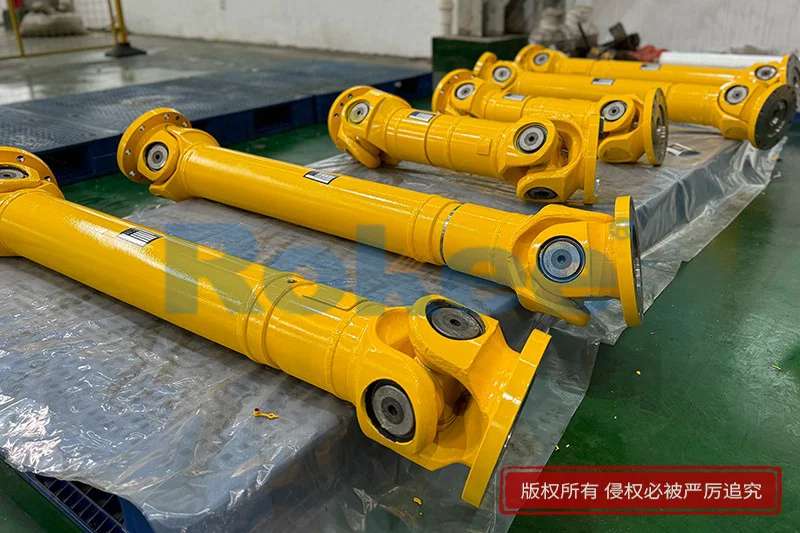
ROWH Heavy-duty Metallurgical Cardan Shaft
Rokee is a well-known ROWH Heavy-duty Metallurgical Cardan Shaft supplier from china, the page show cases of ROWH Heavy-duty Metallurgical Cardan Shaft, provide customized services based on user's drawings, and supporting exports.
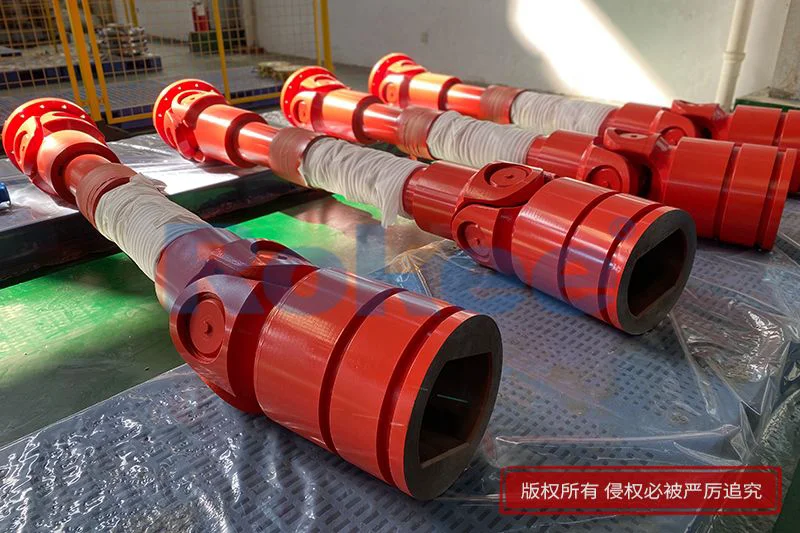
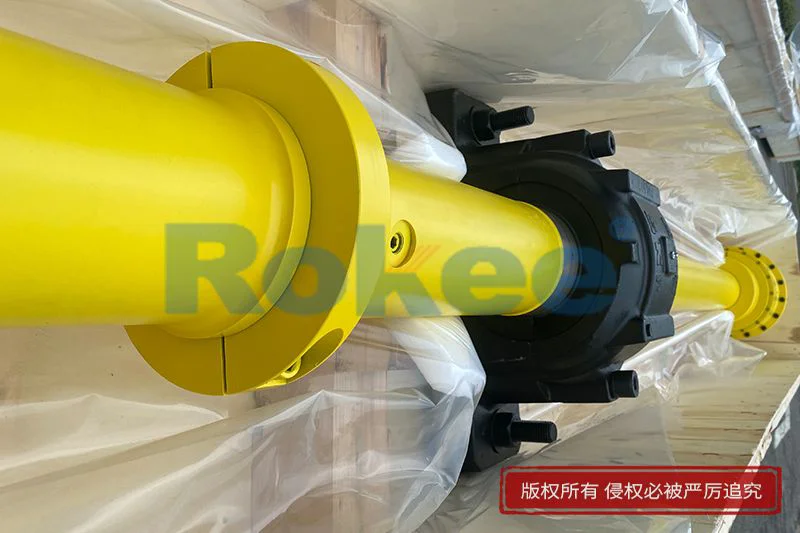
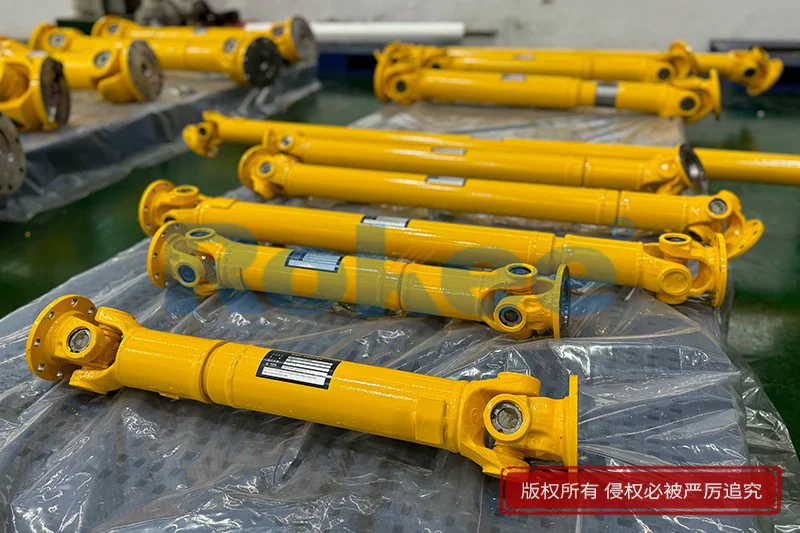
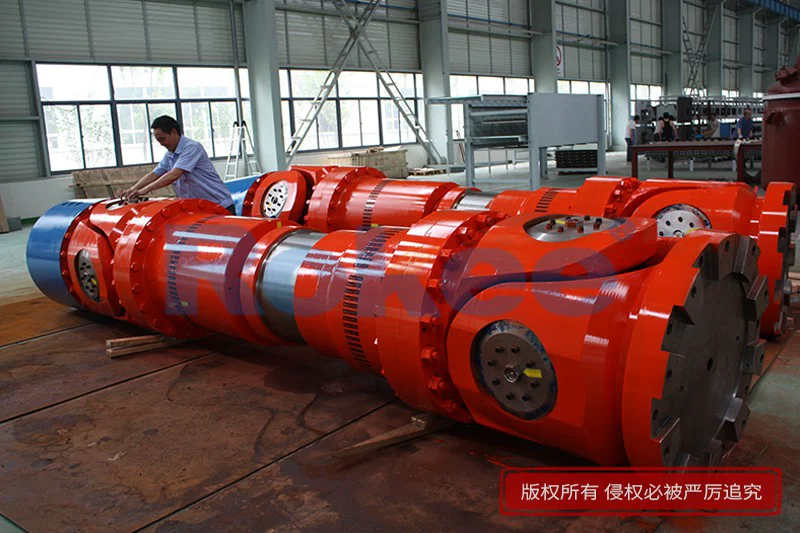
In the complex and rigorous operational environment of the metallurgical industry, mechanical transmission components serve as the fundamental guarantee for the continuous and stable operation of various production equipment. Among these core components, the heavy-duty metallurgical cardan shaft stands out as an indispensable transmission unit, undertaking the critical task of transmitting massive torque between interconnected mechanical parts under extreme working conditions. Metallurgical production processes, ranging from raw material rolling and continuous casting to metal forging and high-temperature shaping, are invariably characterized by heavy load impacts, fluctuating operating temperatures, and irregular axial and angular displacements between equipment components. Such harsh operational conditions impose stringent requirements on the structural stability, mechanical strength, and environmental adaptability of transmission parts, making the heavy-duty cardan shaft a key research and application focus in the field of metallurgical mechanical manufacturing. Unlike ordinary cardan shafts used in general mechanical scenarios, the metallurgical dedicated heavy-duty version is optimized and upgraded in terms of structural design, material selection, and processing technology to adapt to the unique harsh working conditions of the metallurgical industry, achieving efficient and reliable power transmission under high torque, strong vibration, and high-temperature environments.
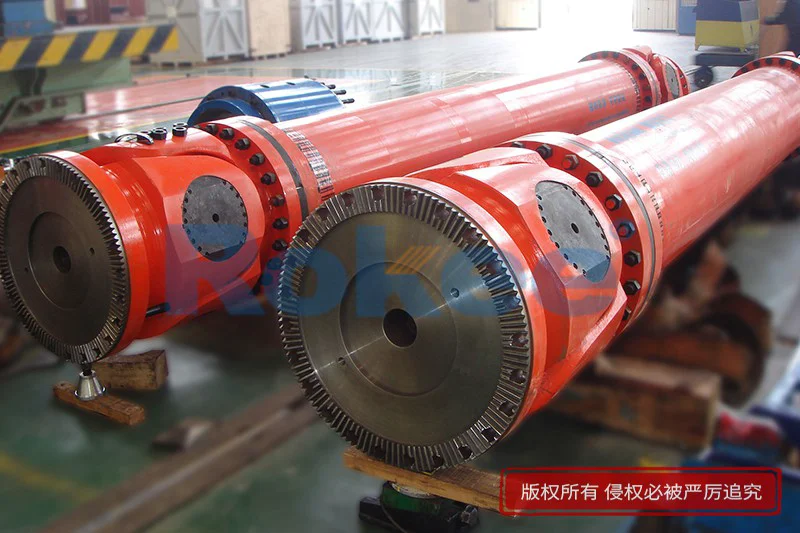
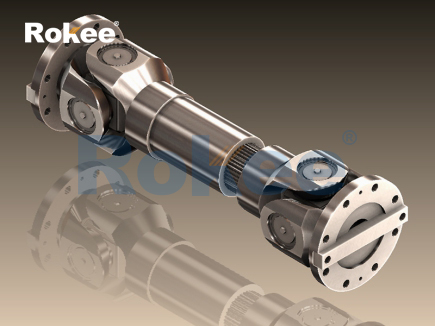
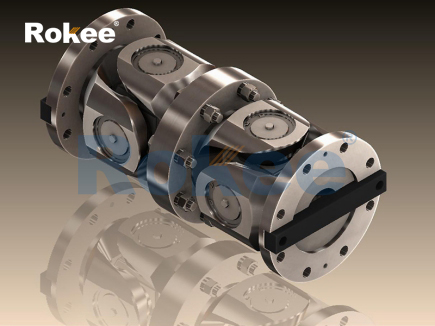
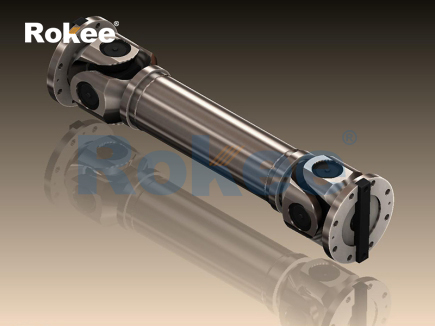
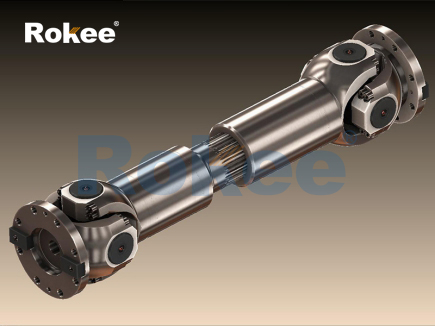
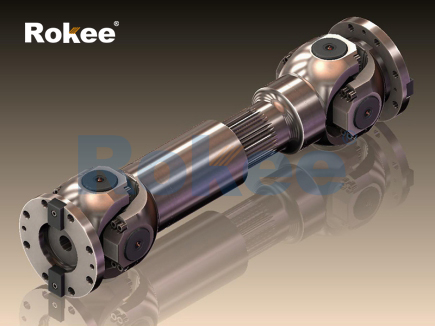
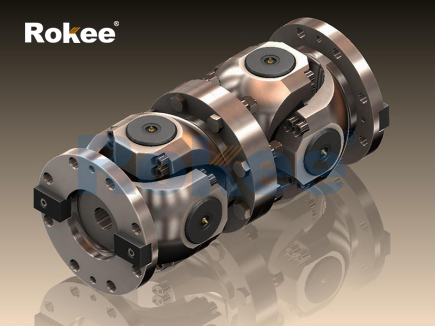
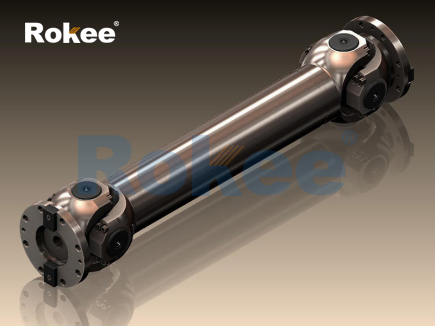
The basic structural composition of the heavy-duty metallurgical cardan shaft follows the mature mechanical logic of universal transmission, while carrying out targeted reinforcement for heavy-load working scenarios. The overall structure mainly includes universal joint assemblies, intermediate shaft bodies, connecting flanges, and movable telescopic structures. Each component has a clear division of labor and closely cooperates to complete the torque transmission function. The universal joint assembly, as the core force-bearing and movable part of the cardan shaft, mostly adopts a robust cross-shaft structure. This structure can effectively convert the offset angular displacement between the driving shaft and the driven shaft into smooth rotational motion, eliminating the transmission dead angle caused by axis misalignment in the operation of metallurgical equipment. In order to withstand the instantaneous impact load generated during metal rolling and equipment start-stop processes, the cross shaft is designed with an enlarged force-bearing cross-section, and the transition parts of each structure adopt arc smooth processing to avoid stress concentration that may lead to structural fatigue damage. The internal roller bearing components of the universal joint adopt a linear contact design between rolling elements and raceways, which expands the force-bearing area and significantly improves the radial load capacity, ensuring that the joint can maintain flexible rotation without jamming under long-term heavy pressure.
The intermediate shaft body is the main carrier for torque transmission, and its structural form and processing quality directly determine the overall torsional resistance and structural stability of the cardan shaft. Heavy-duty metallurgical cardan shafts usually use integral forged shaft bodies instead of welded assembled structures. The integral forging process eliminates the structural weak points of welding seams, enabling the shaft body to bear continuous high torsional shear force without deformation or fracture. Considering the frequent axial position changes of rollers in rolling mills and the thermal expansion and contraction of equipment under high-temperature working conditions, most shaft bodies are equipped with precise telescopic structures. The mutually matched spline structures are adopted inside the telescopic parts, which can freely stretch and shrink within a certain stroke range to compensate for the axial displacement between equipment components. Meanwhile, the spline clearance is strictly controlled through precision machining to avoid abnormal vibration and torque loss caused by excessive clearance during high-speed rotation. The outer part of the telescopic structure is equipped with a closed protective cover, which can effectively isolate high-temperature oxide scale, metal dust, and cooling water in the metallurgical production environment, preventing abrasive particles from entering the kinematic pairs and reducing component wear.
Material selection is the core foundation for the excellent performance of heavy-duty metallurgical cardan shafts, and all key load-bearing components are made of high-strength alloy steel with excellent comprehensive mechanical properties. This type of alloy steel has high tensile strength, yield strength, and good toughness, which can resist instantaneous impact loads and cyclic alternating loads in metallurgical production. After rough forging, each component needs to undergo multiple heat treatment processes including quenching and tempering. The heat treatment process optimizes the internal metal microstructure of the material, eliminating internal stress generated during forging and machining, and improving the structural uniformity and fatigue resistance of the components. For the cross shaft and bearing raceways that are frequently rubbed and stressed locally, surface strengthening treatments such as carburizing and nitriding are additionally carried out. These treatments increase the surface hardness of the parts while maintaining the toughness of the inner matrix, reducing surface friction and wear, and enhancing the resistance to pressure and impact of key friction pairs. Compared with ordinary carbon steel materials, high-strength alloy steel after special treatment has a service life several times longer in high-temperature and dusty metallurgical environments, reducing the frequency of component replacement and equipment downtime.
The operating principle of the heavy-duty metallurgical cardan shaft is based on the spatial motion characteristics of the universal joint mechanism. When the driving end equipment rotates, the torque is transmitted to the universal joint through the connecting flange, and the cross shaft in the universal joint realizes the rotational deflection between two intersecting shafts. Even if there is a certain angular deviation between the driving shaft and the driven shaft due to equipment installation errors, mechanical vibration, or thermal deformation, the cardan shaft can still maintain continuous and stable torque transmission. In order to solve the problem of uneven instantaneous angular velocity of a single universal joint during rotation, most heavy-duty cardan shafts adopt a double universal joint combined structure. By rationally arranging the installation angles of the two universal joints, the angular velocity fluctuation generated by a single joint is offset mutually, ensuring that the rotational speed and torque transmitted to the driven equipment remain stable. This stable transmission characteristic is particularly important for metallurgical rolling equipment. Uniform torque output can avoid uneven metal rolling thickness and surface quality defects caused by instantaneous speed changes, improving the processing precision of metal materials.
In actual metallurgical production scenarios, heavy-duty cardan shafts are widely applied in various core production equipment, covering the whole process from rough processing to fine forming of metals. In the rolling production line, it is used to connect the driving motor and the rolling mill roller set, transmitting huge power to drive the synchronous rotation of multiple groups of rollers. During the rolling process, metal blanks will generate strong extrusion and friction forces on the rollers, and the cardan shaft needs to bear continuous heavy load and frequent impact vibration. In the continuous casting equipment, the cardan shaft is responsible for driving the tensioning roller and the guiding roller to operate stably, ensuring the continuous and smooth conveying of high-temperature molten steel solidified billets. In addition, it also plays an irreplaceable role in heavy-duty forging machines, metal extruders, and large-scale stirring equipment in metallurgical smelting workshops. These working scenarios are accompanied by high temperature, dust, humidity, and corrosive gas erosion, which put forward higher requirements for the environmental adaptability of the cardan shaft. The surface of the cardan shaft is usually treated with anti-corrosion and high-temperature resistant coatings, which can slow down the oxidation and corrosion rate of the metal surface in harsh environments and maintain the structural integrity of the components for a long time.
Compared with ordinary transmission shafts, heavy-duty metallurgical cardan shafts have prominent performance advantages in terms of load resistance, displacement compensation capability, and operational stability. Firstly, it has an ultra-high torque bearing capacity. Through optimized structural design and high-strength material configuration, it can stably transmit large torque that ordinary transmission components cannot bear, meeting the power demand of heavy-load metallurgical equipment. Secondly, it has excellent multi-directional displacement compensation ability. It can simultaneously adapt to angular displacement, axial displacement, and a small amount of radial displacement between shafts, effectively solving the transmission obstacles caused by equipment installation deviation and thermal deformation. Thirdly, the overall structural rigidity is high. The integral forging shaft body and thickened universal joint parts are not easy to deform under long-term heavy load, ensuring the coaxiality of transmission motion and reducing mechanical vibration. In addition, the internal lubrication system of the cardan shaft is designed in a sealed manner. The built-in lubricating grease can circulate in the closed cavity for a long time, reducing the friction coefficient between kinematic pairs. This sealed lubrication structure not only avoids the deterioration and loss of lubricating oil caused by external dust and high temperature but also reduces the daily maintenance frequency of the equipment.
In the long-term high-intensity operation process, the fatigue failure of components is the main factor restricting the service life of heavy-duty metallurgical cardan shafts. The metallurgical production line usually operates continuously for 24 hours, and the cardan shaft is in a cyclic alternating stress state for a long time. Micro cracks are prone to appear at the stress concentration points of the components. With the accumulation of running time, the cracks gradually expand, eventually leading to fatigue fracture of the parts. Therefore, in the design and manufacturing stage, manufacturers need to carry out finite element stress analysis on key components to optimize the structural radian and wall thickness, disperse stress concentration points, and improve the fatigue resistance of the structure. At the same time, dynamic balance detection is carried out on the finished cardan shaft. The unbalanced mass generated during processing and assembly is eliminated to avoid abnormal vibration and additional load caused by unbalanced rotation, which further reduces the fatigue loss of components.
Scientific daily maintenance and regular inspection are essential to extend the service life of heavy-duty metallurgical cardan shafts and maintain stable transmission performance. In the daily production process, staff need to regularly check the sealing performance of the protective cover to prevent dust, oxide scale, and cooling water from entering the universal joint and telescopic structure. It is necessary to regularly replenish high-temperature resistant lubricating grease to ensure that the friction pairs such as cross shafts and bearings are always in a good lubrication state, reducing wear and heat generation. For the connecting flanges and fastening bolts, regular tightening inspection is required to prevent bolt loosening caused by long-term vibration, which may lead to unstable connection and abnormal noise during operation. During the equipment shutdown maintenance period, professional testing equipment should be used to detect the wear degree of splines, bearings, and cross shafts. Worn parts beyond the tolerance range should be replaced in a timely manner to avoid hidden dangers such as shaft breakage and transmission failure during high-load operation. In addition, the surface anti-corrosion coating should be repaired regularly to prevent local rust and corrosion from damaging the structural strength of the shaft body.
With the continuous upgrading of the modern metallurgical industry towards large-scale, intelligent, and high-efficiency production, the technical requirements for heavy-duty metallurgical cardan shafts are also constantly improving. The future development direction of such products focuses on lightweight optimization, intelligent monitoring, and extreme working condition adaptation. On the premise of ensuring mechanical strength, the structural layout is optimized to reduce the self-weight and rotational inertia of the cardan shaft, which can effectively reduce the energy consumption of equipment operation and improve transmission efficiency. The built-in sensing elements are used to monitor the operating parameters such as torque, vibration amplitude, and temperature of the cardan shaft in real time. The operating state data is transmitted to the central control system to realize early warning of abnormal faults, reduce unplanned downtime caused by component failure. Moreover, through the research and development of new alloy materials and composite surface treatment processes, the high-temperature resistance, corrosion resistance, and wear resistance of the cardan shaft are further improved, enabling it to adapt to more extreme metallurgical production working conditions.
As a key basic transmission component in the metallurgical industry, the heavy-duty metallurgical cardan shaft supports the stable operation of various heavy-duty metallurgical equipment with its unique structural design, excellent material performance, and reliable transmission capability. It not only undertakes the basic power transmission task but also guarantees the production continuity and product processing precision of the metallurgical production line. In the harsh working environment of high temperature, heavy load, and much dust, its structural stability and durability directly affect the production efficiency and operation cost of metallurgical enterprises. With the continuous progress of mechanical manufacturing technology and material engineering technology, the performance of heavy-duty metallurgical cardan shafts will be further optimized. It will continue to play an irreplaceable core role in the development of the metallurgical industry, providing solid technical support for the high-quality and efficient development of the global metal smelting and processing industry.
With excellent quality, we have been continuously providing many coupling products of various categories and uses complying with multiple standards and a full range of services, from the product selection to final installation and operation, for the industry fields of ferrous metallurgy, nuclear power, gas turbine, wind power, ropeway construction, lifting transportation, general equipment, etc.
pu sandwich panel line,pu sandwich panel machine,sandwich panel machine
« ROWH Heavy-duty Metallurgical Cardan Shaft » Latest Update Date: May 9, 2026
https://www.rokeecoupling.net/cases/rowh-heavy-duty-metallurgical-cardan-shaft.html
Products
![SWC-BH Cardan Shaft]() SWC-BH Cardan Shaft
SWC-BH Cardan Shaft![SWC-CH Cardan Shaft]() SWC-CH Cardan Shaft
SWC-CH Cardan Shaft![SWC-DH Cardan Shaft]() SWC-DH Cardan Shaft
SWC-DH Cardan Shaft![SWC-WD Cardan Shaft]() SWC-WD Cardan Shaft
SWC-WD Cardan Shaft![SWC-WH Cardan Shaft]() SWC-WH Cardan Shaft
SWC-WH Cardan Shaft![SWP-A Cardan Shaft]() SWP-A Cardan Shaft
SWP-A Cardan Shaft![SWP-B Cardan Shaft]() SWP-B Cardan Shaft
SWP-B Cardan Shaft![SWP-C Cardan Shaft]() SWP-C Cardan Shaft
SWP-C Cardan Shaft![SWP-D Cardan Shaft]() SWP-D Cardan Shaft
SWP-D Cardan Shaft
Other Cases
![Telescopic Universal Joint Drive Shaft]() Telescopic Universal Joint Drive Shaft
Telescopic Universal Joint Drive Shaft![Long Type Universal Drive Shaft]() Long Type Universal Drive Shaft
Long Type Universal Drive Shaft![SWC Cardan Shaft]() SWC Cardan Shaft
SWC Cardan Shaft![Double Universal Joint Coupling]() Double Universal Joint Coupling
Double Universal Joint Coupling![Metallurgical Steel Rolling Cardan Shaft]() Metallurgical Steel Rolling Cardan Shaft
Metallurgical Steel Rolling Cardan Shaft![SWC Cardan Shaft Coupling]() SWC Cardan Shaft Coupling
SWC Cardan Shaft Coupling![Bearing Seat Type 650 Cardan Shaft]() Bearing Seat Type 650 Cardan Shaft
Bearing Seat Type 650 Cardan Shaft![Cardan Shaft of 4000mm Plate Main Mill]() Cardan Shaft of 4000mm Plate Main Mill
Cardan Shaft of 4000mm Plate Main Mill![SWC Transmission Shaft]() SWC Transmission Shaft
SWC Transmission Shaft![SWC Drive Shafts]() SWC Drive Shafts
SWC Drive Shafts