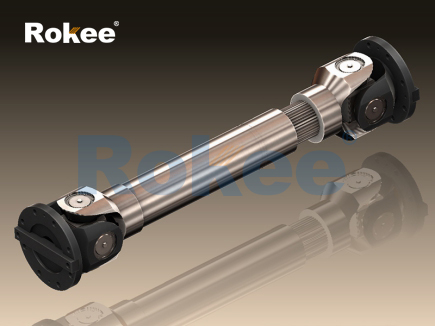
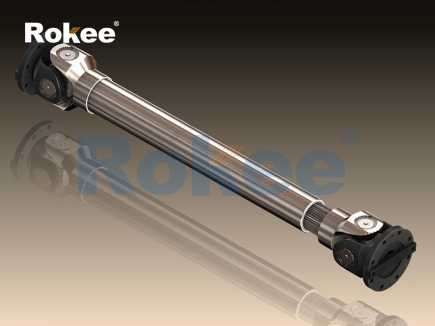
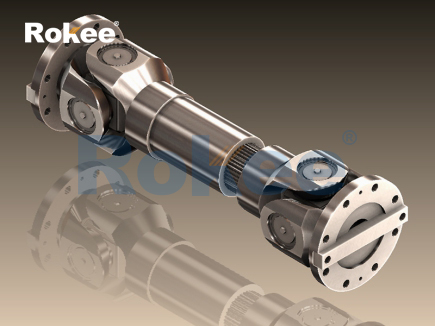
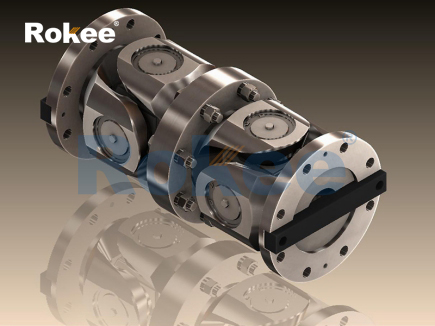
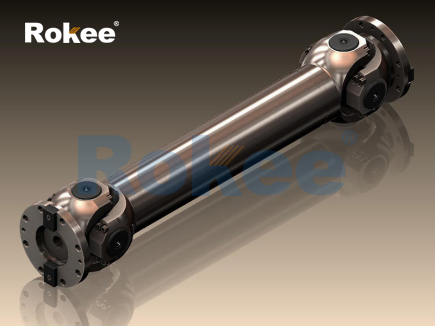
SWC Transmission Shaft
Rokee is a well-known SWC Transmission Shaft supplier from china, the page show cases of SWC Transmission Shaft, provide customized services based on user's drawings, and supporting exports.
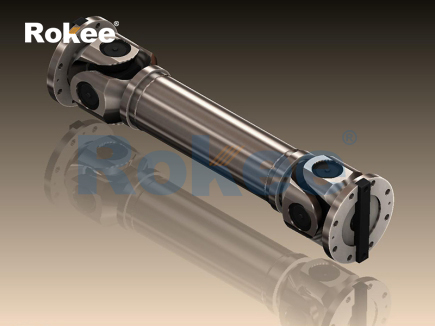
The SWC transmission shaft stands as a cornerstone component in modern mechanical power transmission systems, engineered to deliver reliable torque and rotational motion between non-coaxial shafts, addressing common challenges of angular misalignment, axial displacement, and mechanical shock that plague standard rigid drive shafts. Unlike basic straight transmission shafts that rely on perfect shaft alignment, the SWC design integrates a specialized universal joint mechanism paired with robust shaft body construction, making it a staple in heavy-duty industrial machinery, mobile equipment, and fixed mechanical systems where consistent power delivery under variable operating conditions is non-negotiable. This component is defined by its adaptive structural design, high load-bearing capacity, and broad operational flexibility, with every element of its construction tailored to withstand extreme mechanical stress, temperature fluctuations, and prolonged continuous operation without compromising performance. At its core, the SWC transmission shaft is built around a cross-shaped universal joint assembly, which serves as the pivotal connection between the input and output shaft segments, eliminating the need for precise coaxial alignment and enabling smooth power transfer even when connected shafts are offset at moderate angles. The main shaft body is typically forged from high-strength alloy steel, processed through precision heat treatment to enhance tensile strength, fatigue resistance, and impact toughness, ensuring it can handle both steady-state torque loads and sudden shock loads that occur during equipment startup, shutdown, or sudden load changes. The universal joint forks are integrated into the shaft ends using either welded or flanged connections, with no external fasteners in critical load-bearing areas to maintain structural rigidity and minimize the risk of component failure under heavy loads; this monolithic fork design eliminates the weak points associated with bolted connections, distributing stress evenly across the joint area and extending the overall service life of the shaft.

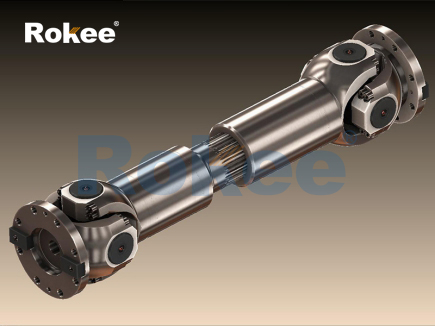
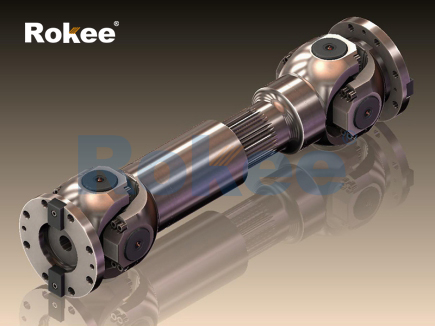
The structural integrity of the SWC transmission shaft is further reinforced by precision machining of all mating surfaces, including the cross journal bearings, shaft splines, and connection interfaces, which ensure tight tolerances and smooth rotational movement. The cross joint assembly features sealed bearing cavities that retain lubrication effectively, preventing contamination from dust, moisture, and debris in harsh industrial environments and reducing the frequency of routine maintenance. A key structural variation within the SWC family lies in the inclusion or exclusion of a telescopic spline section, which directly impacts the shaft’s ability to compensate for axial movement caused by thermal expansion, mechanical vibration, or installation inaccuracies. Shafts equipped with a telescopic spline feature a precision-machined internal and external spline pair that slides smoothly within a defined range, allowing for dynamic length adjustment during operation without disrupting torque transmission; this design is critical for systems where connected components experience slight positional shifts during use. Non-telescopic SWC shafts, by contrast, feature a solid, fixed-length shaft body with enhanced rigidity, prioritizing maximum torque density and minimal rotational backlash for applications where space is extremely limited and axial displacement is negligible. The overall structural profile of the SWC transmission shaft is compact relative to its load capacity, with a streamlined design that fits seamlessly into confined equipment spaces, a trait that has expanded its adoption across diverse industrial sectors where installation space is at a premium. Each structural element is optimized to balance strength and weight, avoiding unnecessary material bulk while ensuring the shaft can meet the torque and speed requirements of its intended application, from low-speed, high-torque heavy machinery to medium-speed industrial drive systems.
In terms of performance, the SWC transmission shaft excels in multiple key metrics that define its suitability for demanding industrial use, starting with exceptional torque transmission efficiency, typically reaching levels well above standard universal drive shafts, with minimal power loss during operation even at moderate deflection angles. This high efficiency translates to reduced energy consumption for the overall drive system, lower heat generation, and extended operational life for connected motors, gearboxes, and driven equipment. One of the most notable performance attributes is its ability to accommodate angular misalignment between input and output shafts, with standard designs capable of handling consistent angular offsets within a practical operational range, far exceeding the limits of rigid drive shafts. This angular compensation capability prevents excessive bending stress on connected shafts and bearings, a common cause of premature equipment failure in misaligned drive systems, and ensures smooth, vibration-free rotation across the entire speed range of the equipment. Fatigue resistance is another critical performance feature, as the SWC shaft is engineered to withstand millions of rotational cycles without developing cracks or structural degradation, even under cyclic loading and repeated shock events. The heat-treated alloy steel construction provides excellent resistance to bending, torsion, and shear stress, making the shaft capable of handling instantaneous overloads that exceed its nominal rated torque without permanent deformation or breakage. Additionally, the shaft exhibits strong environmental adaptability, performing reliably in extreme temperature conditions, high-dust environments, and areas with moderate moisture exposure, thanks to its sealed joint design and durable surface finish that resists corrosion and abrasion over time. Unlike fragile drive components that require controlled operating conditions, the SWC transmission shaft is built for rugged, real-world industrial use, maintaining consistent performance with minimal maintenance intervention over its service life. It also offers low rotational backlash, a vital performance trait for precision-driven applications where accurate motion transfer is required, as excessive backlash can lead to positioning errors, mechanical noise, and accelerated wear on interconnected components.
The SWC transmission shaft is categorized into distinct classifications based on two primary structural variables: telescopic functionality and connection type, with each variant engineered to target specific application requirements, installation constraints, and load profiles. The broadest classification divides shafts into telescopic and non-telescopic types, each with subcategories defined by welded or flanged end connections, creating a comprehensive product lineup that covers nearly all industrial power transmission needs. Telescopic SWC shafts are further split into standard telescopic, short telescopic, and long telescopic variants, each differentiated by the length of the spline travel and overall shaft dimensions. Standard telescopic welded models represent the most widely used configuration, offering a balanced combination of axial displacement compensation and structural stability, suitable for general industrial applications where moderate axial movement and angular misalignment are present. Short telescopic welded models feature a more compact overall length with a reduced spline travel range, designed specifically for tight installation spaces where full-size telescopic shafts cannot fit, while still providing basic axial compensation for small-scale positional shifts. Long telescopic welded models, on the other hand, are engineered with an extended spline section to accommodate significant axial movement, making them ideal for equipment that experiences large thermal expansion gaps or substantial mechanical displacement during operation. Telescopic flanged variants replace welded end connections with precision-machined flanges, allowing for tool-free or simplified assembly and disassembly, which is highly beneficial for equipment that requires regular maintenance, component replacement, or system reconfiguration. Flanged connections ensure precise alignment during installation and distribute load stress evenly across the connection interface, enhancing overall system stability in high-vibration environments.
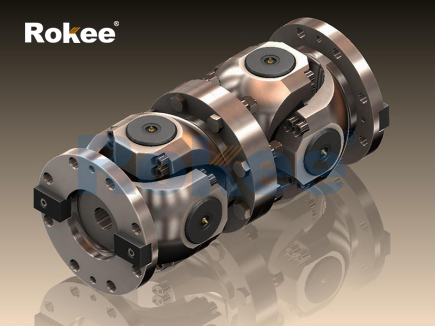
Non-telescopic SWC shafts, which lack the spline telescopic section, are designed for maximum rigidity and torque capacity, with welded and flanged subcategories as well. Non-telescopic welded models feature a solid, one-piece shaft construction with integrated fork ends, delivering the highest torque density and minimal rotational play, perfect for heavy-duty, fixed-installation equipment where axial displacement is not a factor and maximum load capacity is required. Non-telescopic flanged models offer the same rigid, fixed-length design with the added convenience of flanged mounting, streamlining installation in applications where quick setup and reliable, repeatable connections are prioritized. Additionally, there is a compact non-telescopic variant that features an ultra-short overall length, up to thirty percent shorter than standard non-telescopic models, engineered exclusively for extremely confined installation spaces where even standard non-telescopic shafts cannot be accommodated, without sacrificing torque-bearing capacity. Each classification maintains the core universal joint design of the SWC series but is fine-tuned to optimize specific performance parameters, ensuring engineers and equipment designers can select the exact shaft variant that matches their system’s unique requirements, including torque rating, speed range, installation space, misalignment compensation, and maintenance needs. This standardized classification system creates a versatile product ecosystem that eliminates the need for custom-designed drive shafts for most applications, reducing lead times and ensuring compatibility across different equipment models and manufacturers.
The versatility of the SWC transmission shaft, stemming from its robust structure and adaptable performance, has led to its widespread adoption across a vast array of industrial and commercial sectors, with each application leveraging its unique combination of load capacity, misalignment compensation, and durability. In the metallurgical industry, SWC shafts are integral components in rolling mills, continuous casting equipment, and metal processing machinery, where they transmit high torque at low speeds while accommodating the significant vibration and thermal expansion inherent in metal forming operations. These shafts withstand the extreme shock loads generated during metal rolling and forging, maintaining consistent power delivery and avoiding downtime in high-production metallurgical facilities. In mining and quarrying operations, SWC transmission shafts are used in crushers, conveyors, grinding mills, and material handling equipment, operating reliably in dusty, abrasive, and high-shock environments where standard drive shafts would fail prematurely. Their ability to handle severe angular misalignment and heavy shock loads makes them indispensable for open-pit mining and underground mining equipment, where equipment alignment is often imperfect and operating conditions are unforgiving. The shipbuilding and marine industry relies heavily on SWC shafts for propulsion systems, auxiliary drive mechanisms, and on-board machinery, where they compensate for hull deflection and slight shaft misalignment that occurs during vessel movement, ensuring smooth power transfer from engines to propellers and auxiliary equipment even in rough sea conditions.
In heavy engineering and construction machinery, including excavators, loaders, cranes, and pavement rollers, SWC transmission shafts play a vital role in transmitting power from engines to hydraulic pumps, drive trains, and working mechanisms, enduring constant vibration, sudden load changes, and exposure to outdoor elements. Their compact design fits perfectly within the confined chassis of construction equipment, while their high load capacity supports the heavy-duty operations required on construction sites. The paper and pulp industry utilizes SWC shafts in paper machines, pulp grinders, and conveyor systems, where they provide reliable power transmission in high-moisture, high-dust environments, with sealed joints preventing contamination from paper fibers and processing fluids. In the petroleum and chemical industry, these shafts are integrated into pumps, compressors, and drilling equipment, operating reliably in corrosive and high-temperature environments, with durable material construction resisting chemical degradation and maintaining performance under extreme operational stresses. Other key applications include lifting and hoisting equipment, rubber processing machinery, coal mining and processing equipment, and various industrial machine tools, where consistent torque transmission, durability, and low maintenance are critical. Beyond heavy industry, SWC shafts are also used in medium-duty commercial machinery and automated production lines, where their ability to reduce alignment-related wear and tear lowers long-term maintenance costs and improves overall system uptime.
As industrial machinery continues to evolve toward higher load capacities, greater operational efficiency, and more compact designs, the SWC transmission shaft remains a critical component due to its ongoing design optimizations that align with modern engineering demands. Manufacturers continuously refine material selection, heat treatment processes, and machining precision to enhance torque capacity, reduce weight, and extend service life, while maintaining the core structural principles that make SWC shafts so versatile. The ability to customize shaft length, joint size, and connection type within the standard classification framework allows for seamless integration into next-generation mechanical systems, from automated manufacturing lines to heavy-duty mobile equipment. Unlike specialized drive components that serve niche applications, the SWC transmission shaft’s universal design ensures it will remain a staple in power transmission systems for years to come, balancing performance, durability, and cost-effectiveness in a way that few alternative components can match. Its role in reducing equipment failure, minimizing maintenance needs, and improving overall system efficiency cannot be overstated, as it addresses one of the most common challenges in mechanical engineering: reliable power transfer between misaligned or dynamically shifting shafts. Whether in a large-scale industrial facility or a piece of mobile heavy equipment, the SWC transmission shaft operates silently and reliably, ensuring that mechanical power is delivered efficiently and consistently, keeping critical industrial processes running smoothly around the clock.
With excellent quality, we have been continuously providing many coupling products of various categories and uses complying with multiple standards and a full range of services, from the product selection to final installation and operation, for the industry fields of ferrous metallurgy, nuclear power, gas turbine, wind power, ropeway construction, lifting transportation, general equipment, etc.
pu sandwich panel line,pu sandwich panel machine,sandwich panel machine
« SWC Transmission Shaft » Update Date: 2026/5/9
https://www.rokeecoupling.net/cases/swc-transmission-shaft.html