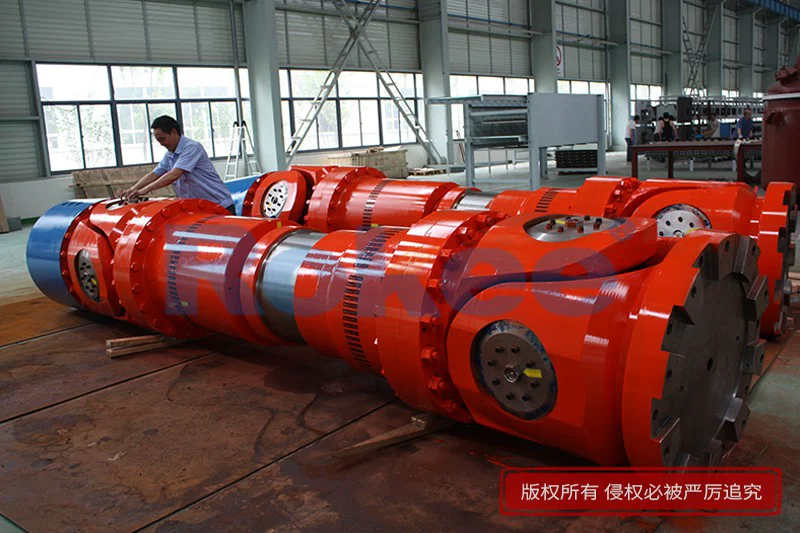
Special Cardan Shaft For Poma Ropeway
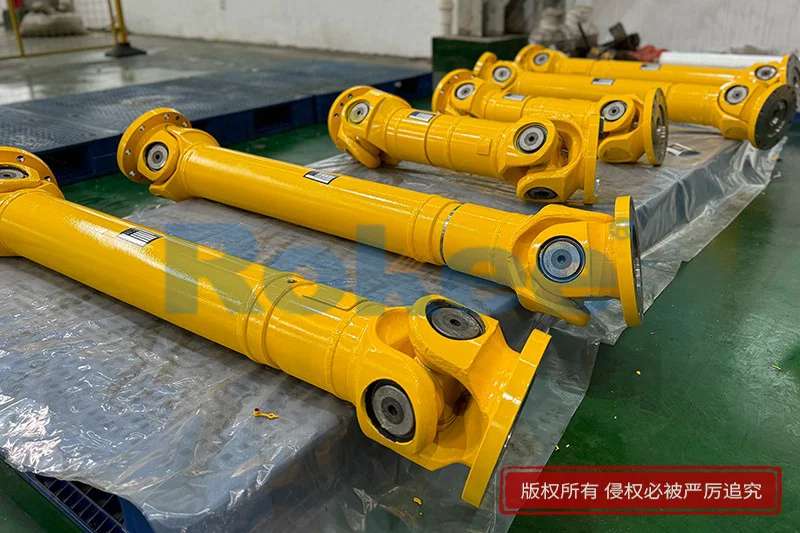
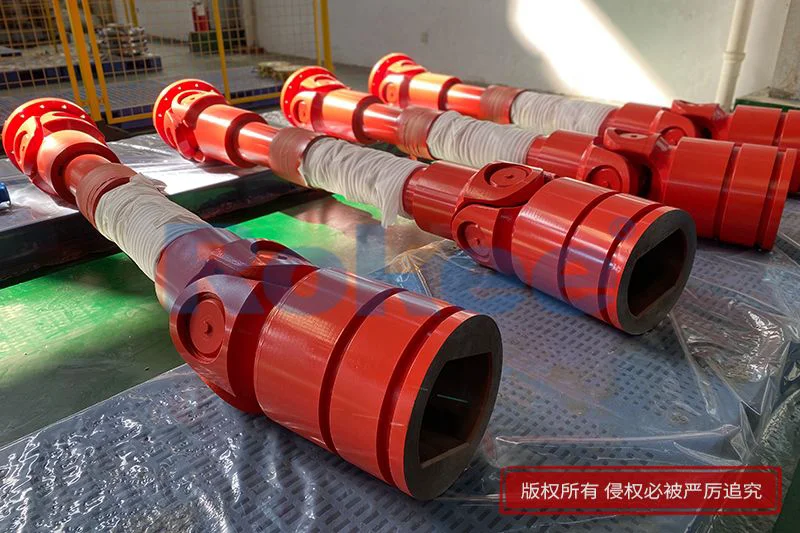
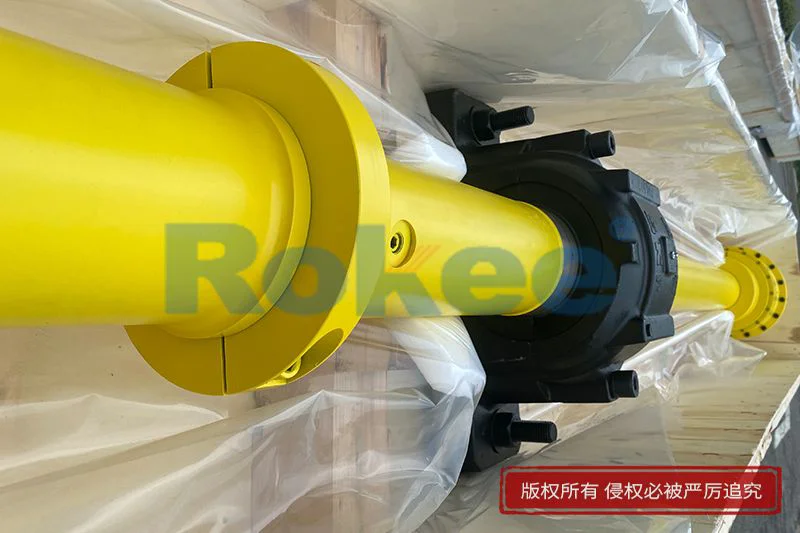
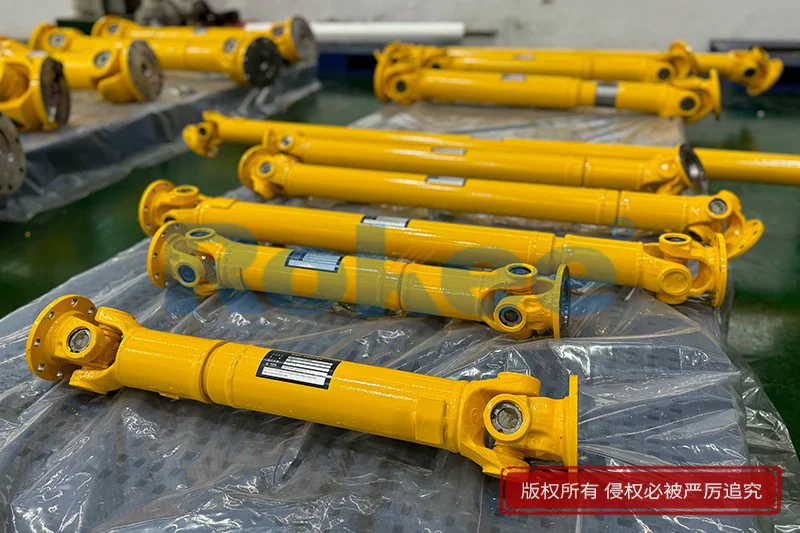
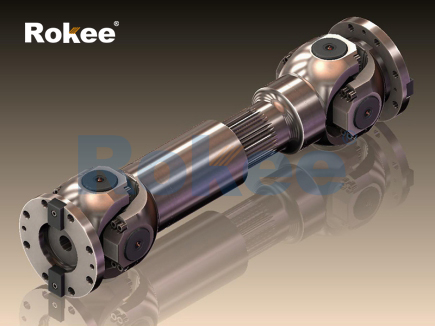
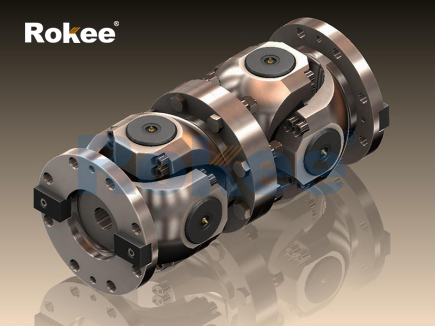
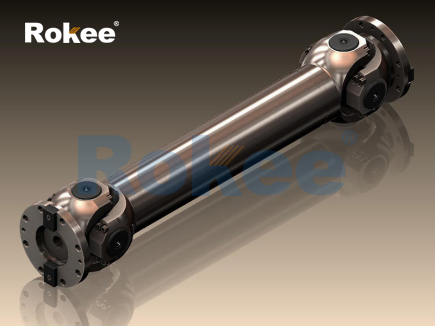
Rokee is a well-known Ropeway Cardan Shaft supplier from china, the page show cases of Special Cardan Shaft For Poma Ropeway, provide customized services based on user's drawings, and supporting exports.
Ropeway transportation has long stood as an indispensable transportation mode in modern infrastructure systems, serving mountainous scenic areas, mining industrial zones, and special terrain regions where conventional ground transportation tools struggle to operate. The stable and continuous operation of ropeway equipment relies heavily on the coordination of multiple mechanical transmission components, among which the special cardan shaft stands out as a core transmission part tailored exclusively for ropeway operating conditions. Unlike ordinary cardan shafts used in general mechanical equipment, this specialized component is optimized and upgraded in structural design, material selection, and mechanical performance to adapt to the unique operating environment and load characteristics of ropeways. It undertakes the critical task of transmitting torque between disjointed transmission shafts, ensuring efficient and stable power output throughout the ropeway operation cycle, and laying a solid mechanical foundation for the safety and smoothness of passenger and cargo transportation. In the complex operating scenarios of modern ropeways, the importance of special cardan shafts has become increasingly prominent, and their structural rationality and operational reliability directly determine the overall operating quality of ropeway systems.
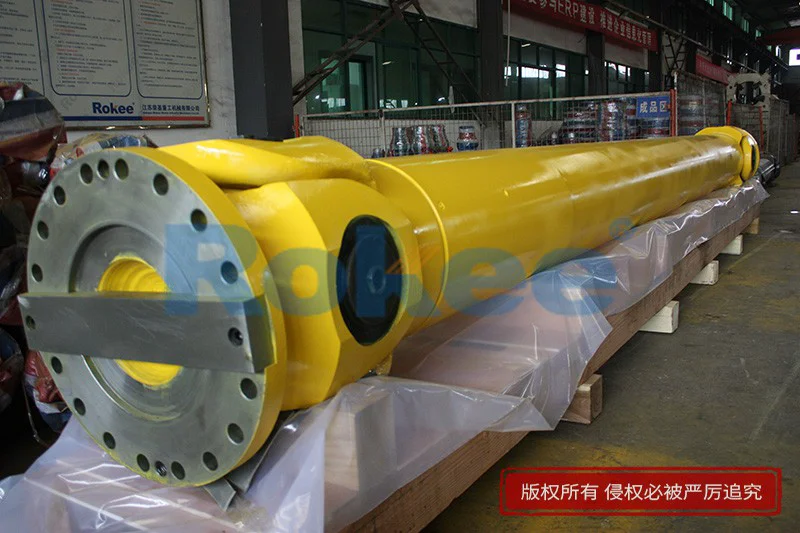
The fundamental operating principle of the special cardan shaft for ropeways is derived from the universal angular transmission characteristics of universal joint structures. During the daily operation of a ropeway, deviations inevitably occur in the spatial position of each transmission shaft due to terrain undulation, equipment installation errors, and subtle structural deformation caused by long-term load bearing. These deviations include angular deflection, axial displacement, and radial offset between shafts, which would cause rigid transmission failure if connected by ordinary fixed shaft parts. The special cardan shaft adopts a multi-section universal joint combination structure, which can flexibly adapt to various displacement deviations between the driving shaft and the driven shaft. When the ropeway power system outputs power, the universal joints at both ends of the cardan shaft can rotate freely within a certain angular range, converting non-coaxial power input into stable and continuous torque output. This flexible transmission mode effectively eliminates mechanical vibration and torque loss caused by shaft misalignment, ensuring that power can be accurately transmitted to traction wheels and rope traction structures. Moreover, the internal linkage structure of the cardan shaft can balance the rotational speed difference generated by angular deviation, maintaining synchronous rotation of the connected shafts and avoiding abnormal friction and mechanical impact inside the transmission system.
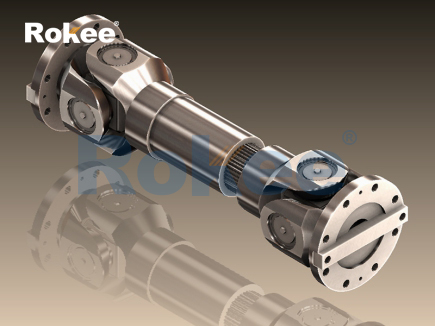
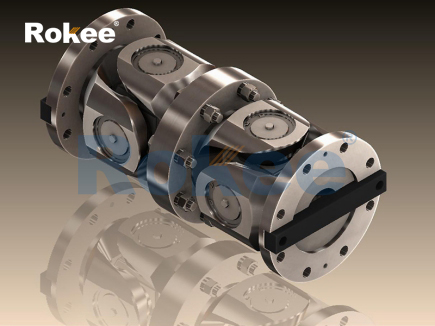
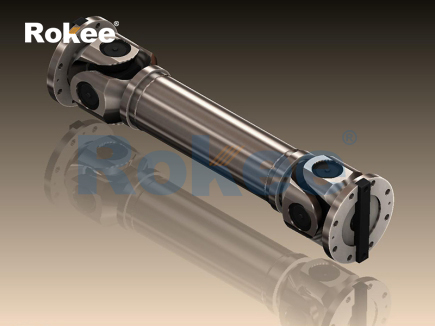
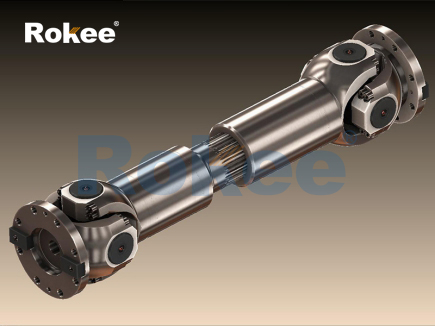
In terms of structural design, the special cardan shaft for ropeways abandons the simple and lightweight structure of ordinary cardan shafts and adopts an enhanced integrated design to meet the harsh operating requirements of ropeway equipment. The overall structure is mainly composed of universal joints, intermediate shaft body, telescopic connecting components, and reinforced sealing structures. Each universal joint is equipped with thickened fork arms and high-precision pin shaft structures, which improve the structural rigidity and bearing capacity of the joint parts. The intermediate shaft body is designed with an optimized hollow tubular structure; this design not only reduces the self-weight of the component to lower the extra load on the transmission system but also retains excellent torsional resistance to withstand periodic torque fluctuations during ropeway operation. The telescopic mechanism installed in the middle part of the shaft body can automatically adjust the axial length according to the thermal expansion and contraction of equipment components and subtle structural displacement, effectively avoiding structural jamming and stress accumulation caused by dimensional changes. In addition, all movable joints are fitted with multi-layer sealing components, which can isolate external dust, moisture, and corrosive substances, preventing abrasive particles from entering the friction gaps and reducing the wear rate of internal moving parts. Every structural detail is optimized around the core demands of long service life and high stability of ropeway equipment.
Material selection is one of the key factors that distinguish special ropeway cardan shafts from ordinary mechanical shafts, and all raw materials are selected based on the comprehensive consideration of complex working conditions. The main shaft body and joint framework are made of high-strength alloy steel with excellent mechanical properties. After forging and heat treatment processes, the material achieves balanced tensile strength, toughness, and fatigue resistance. It can withstand alternating loads generated by frequent start-stop operations of ropeways and resist structural fatigue damage caused by long-term cyclic vibration. The pin shafts and rolling contact parts inside the universal joints adopt wear-resistant alloy materials with high surface hardness; through precision grinding treatment, these parts have smooth friction surfaces to reduce kinetic friction resistance during operation. Meanwhile, the elastic buffer components built into the joints are made of high-quality polymer composite materials, which possess good compression resistance and aging resistance. These elastic components can absorb instantaneous impact force generated during equipment startup, shutdown, and load fluctuation, alleviating rigid mechanical impact on the transmission shaft and protecting the integrity of the overall transmission structure. The scientific material matching enables the special cardan shaft to maintain stable physical performance in low-temperature, high-humidity, and dusty environments.
Ropeway equipment operates in diverse and harsh external environments, and the special cardan shaft shows outstanding environmental adaptability in complex working scenarios. For mountain scenic ropeways, the equipment is exposed to natural environments such as strong wind, rain erosion, and temperature changes all year round. The surface of the cardan shaft is treated with anti-corrosion and oxidation resistance processes to form a dense protective film, which can effectively resist the corrosion of rainwater, dew, and atmospheric oxides and prevent structural rust and performance degradation. For industrial ropeways in mining areas, the operating space is narrow with dense dust and high-concentration corrosive gas. The fully enclosed sealing structure of the cardan shaft can block fine dust particles from entering the internal transmission gaps, avoiding abrasive wear of moving parts and ensuring flexible rotation of universal joints. In addition, many ropeways need to operate on terrains with large slopes and curved tracks, and the cardan shaft can adapt to continuous angular changes during equipment steering and climbing. It keeps the power transmission state stable without torque interruption or mechanical jitter, ensuring that the traction rope maintains uniform operating speed and improving the riding stability of passengers and the transportation safety of materials.
In the entire ropeway transmission system, the special cardan shaft undertakes multiple core functional responsibilities, and its operational status affects the collaborative work of various mechanical modules. Firstly, it realizes flexible connection between power motors and traction execution components. The power generated by the driving motor is transmitted to the traction wheel group through the cardan shaft, driving the circulating operation of the steel wire rope. The flexible connection characteristic buffers the vibration generated by motor operation, preventing vibration from being transmitted to the traction rope and passenger carrying cabins, which significantly improves the comfort of passengers. Secondly, the cardan shaft can balance the load difference of each transmission node. During the operation of the ropeway, the load of each cabin changes dynamically with the number of passengers or cargo weight, leading to unbalanced stress on different transmission parts. The universal joint structure of the cardan shaft can automatically distribute torque, making the stress of each transmission shaft tend to be balanced and avoiding local overload damage to a single component. Moreover, it plays a vital role in fault isolation. When individual transmission parts fail and generate abnormal resistance, the flexible structure of the cardan shaft can slow down the spread of abnormal torque, gain buffer time for equipment inspection and maintenance, and reduce the risk of large-scale equipment shutdown.
To ensure the long-term reliable operation of the special cardan shaft, standardized maintenance and scientific optimization measures are essential in daily application. In terms of daily maintenance, regular lubrication treatment must be carried out on the movable joints and friction parts of the cardan shaft. High-viscosity and anti-aging lubricating grease is selected to form a stable lubricating film between friction surfaces, reducing metal wear and lowering operating noise. Maintenance personnel need to regularly check the tightness of connecting fasteners and the integrity of sealing components to prevent grease leakage and external impurity infiltration. For cardan shafts that have been operated for a long time, regular disassembly and inspection of internal wear parts are required, and severely worn pin shafts and buffer parts should be replaced in a timely manner to avoid hidden mechanical dangers. In terms of performance optimization, combined with the actual operating data of different ropeways, the structural parameters of the cardan shaft can be adjusted pertinently. For heavy-load industrial ropeways, the thickness of the shaft body and the strength of the joint structure are appropriately increased; for high-altitude scenic ropeways with large temperature differences, low-temperature resistant modified materials are used to enhance the environmental adaptability of components. With the combination of daily maintenance and personalized optimization, the service life of the special cardan shaft can be effectively prolonged, and the failure rate can be reduced.
With the continuous development of the ropeway transportation industry, the technical upgrading of special cardan shafts is also advancing steadily. At present, the industry is gradually applying finite element analysis technology to simulate the stress state of the cardan shaft under extreme working conditions, optimizing the transition radian of the joint structure and the thickness distribution of the shaft body to eliminate stress concentration areas. Some improved products adopt integrated forging molding technology to reduce assembly gaps between components, further improving the overall structural rigidity and transmission accuracy. In addition, combined with intelligent monitoring technology, sensors can be installed on the surface of the cardan shaft to collect real-time data such as operating vibration amplitude, temperature change, and torque fluctuation. The monitoring system can judge the operating state of the component through data analysis, realize early warning of potential faults, and promote the maintenance mode to change from regular inspection to predictive maintenance. These technological innovations not only improve the comprehensive performance of special cardan shafts but also provide technical support for the intelligent and safe upgrading of modern ropeway equipment.
In conclusion, the special cardan shaft tailored for ropeways is a highly targeted mechanical transmission component integrating optimized structure, high-performance materials, and adaptive functions. It solves many mechanical pain points in ropeway operation, such as shaft position deviation, complex load changes, and harsh environmental interference, and provides stable power transmission guarantee for various types of ropeway equipment. Whether in mountain tourism transportation, industrial material transportation, or special terrain personnel transfer scenarios, the special cardan shaft shows irreplaceable application value. With the continuous progress of mechanical manufacturing technology and the expanding application scope of ropeway transportation, the research and development of special cardan shafts will move towards higher precision, stronger durability, and smarter monitoring. It will continuously empower the safe and efficient operation of ropeway systems, making important contributions to the improvement of modern three-dimensional transportation networks and the development of special terrain transportation industries.
With excellent quality, we have been continuously providing many coupling products of various categories and uses complying with multiple standards and a full range of services, from the product selection to final installation and operation, for the industry fields of ferrous metallurgy, nuclear power, gas turbine, wind power, ropeway construction, lifting transportation, general equipment, etc.
pu sandwich panel line,pu sandwich panel machine,sandwich panel machine
« Special Cardan Shaft For Poma Ropeway » Latest Update Date: May 9, 2026
https://www.rokeecoupling.net/cases/special-cardan-shaft-for-poma-ropeway.html
Products
![SWC-BH Cardan Shaft]() SWC-BH Cardan Shaft
SWC-BH Cardan Shaft![SWC-CH Cardan Shaft]() SWC-CH Cardan Shaft
SWC-CH Cardan Shaft![SWC-DH Cardan Shaft]() SWC-DH Cardan Shaft
SWC-DH Cardan Shaft![SWC-WD Cardan Shaft]() SWC-WD Cardan Shaft
SWC-WD Cardan Shaft![SWC-WH Cardan Shaft]() SWC-WH Cardan Shaft
SWC-WH Cardan Shaft![SWP-A Cardan Shaft]() SWP-A Cardan Shaft
SWP-A Cardan Shaft![SWP-B Cardan Shaft]() SWP-B Cardan Shaft
SWP-B Cardan Shaft![SWP-C Cardan Shaft]() SWP-C Cardan Shaft
SWP-C Cardan Shaft![SWP-D Cardan Shaft]() SWP-D Cardan Shaft
SWP-D Cardan Shaft
Other Cases
![Bearing Seat Type 650 Cardan Shaft]() Bearing Seat Type 650 Cardan Shaft
Bearing Seat Type 650 Cardan Shaft![SWC Drive Shafts]() SWC Drive Shafts
SWC Drive Shafts![Telescopic Universal Joint Drive Shaft]() Telescopic Universal Joint Drive Shaft
Telescopic Universal Joint Drive Shaft![Long Type Universal Drive Shaft]() Long Type Universal Drive Shaft
Long Type Universal Drive Shaft![SWC Cardan Shaft]() SWC Cardan Shaft
SWC Cardan Shaft![SWC Cardan Shaft Coupling]() SWC Cardan Shaft Coupling
SWC Cardan Shaft Coupling![Double Universal Joint Coupling]() Double Universal Joint Coupling
Double Universal Joint Coupling![SWC Transmission Shaft]() SWC Transmission Shaft
SWC Transmission Shaft![Cardan Shaft of 4000mm Plate Main Mill]() Cardan Shaft of 4000mm Plate Main Mill
Cardan Shaft of 4000mm Plate Main Mill![Metallurgical Steel Rolling Cardan Shaft]() Metallurgical Steel Rolling Cardan Shaft
Metallurgical Steel Rolling Cardan Shaft