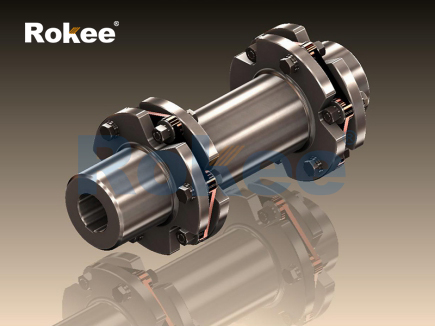
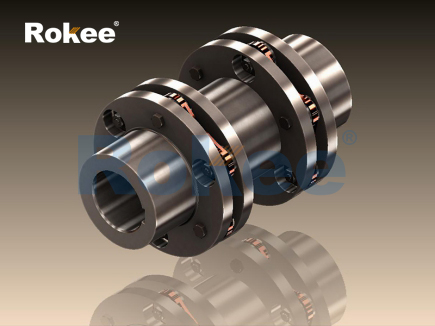
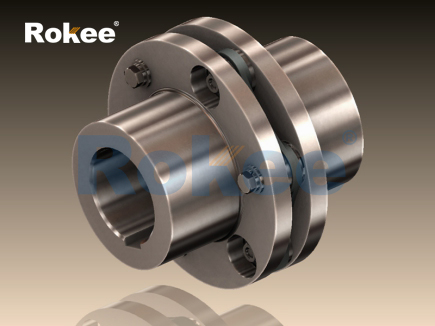
As an essential flexible transmission component in modern mechanical systems, metal membrane couplings have gradually become a core choice for high-precision and high-stability shaft connection scenarios in industrial manufacturing. Different from traditional rigid couplings and ordinary flexible couplings that rely on rubber or spring deformation for displacement compensation, this type of coupling adopts all-metal elastic structure design, relying on the controllable elastic deformation of metal thin plates to complete torque transmission and multi-dimensional displacement compensation, achieving an optimal balance between transmission rigidity and vibration damping performance. Its unique structural characteristics and mechanical properties enable it to adapt to complex and harsh industrial operating conditions, supporting stable operation of mechanical equipment in high-speed, high-load, high-temperature and variable working environments, and it has been widely applied in various fields of mechanical transmission worldwide.
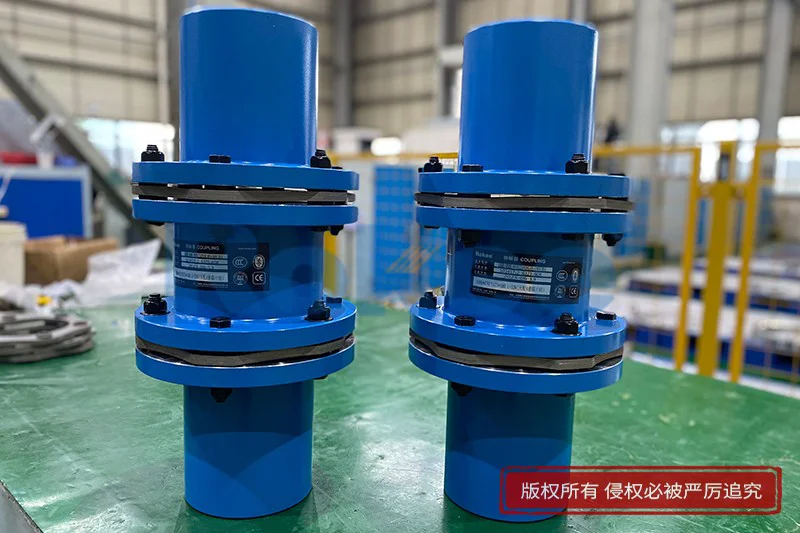
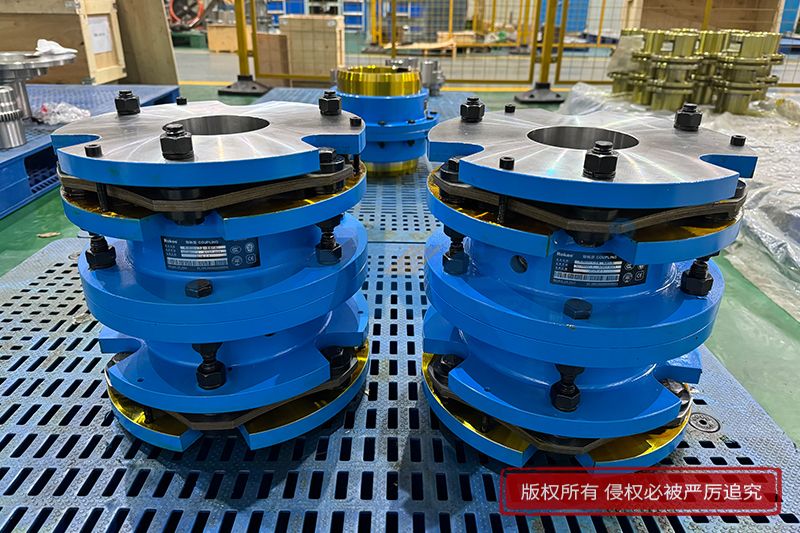
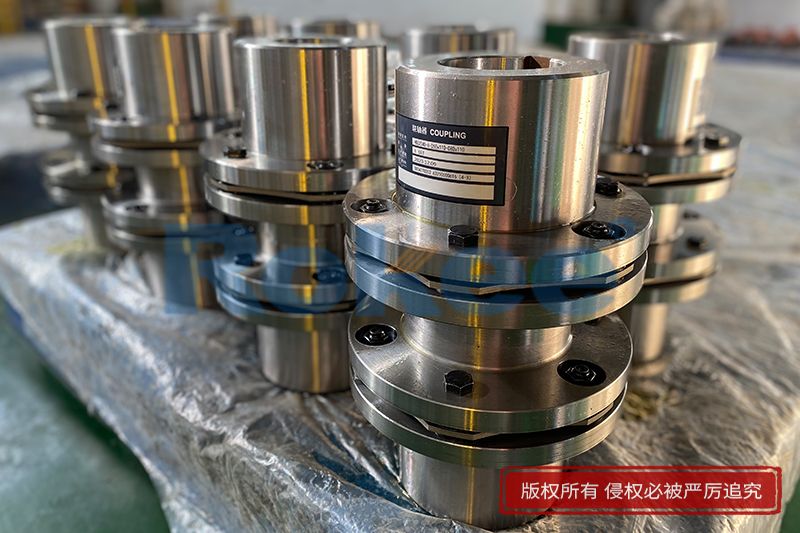
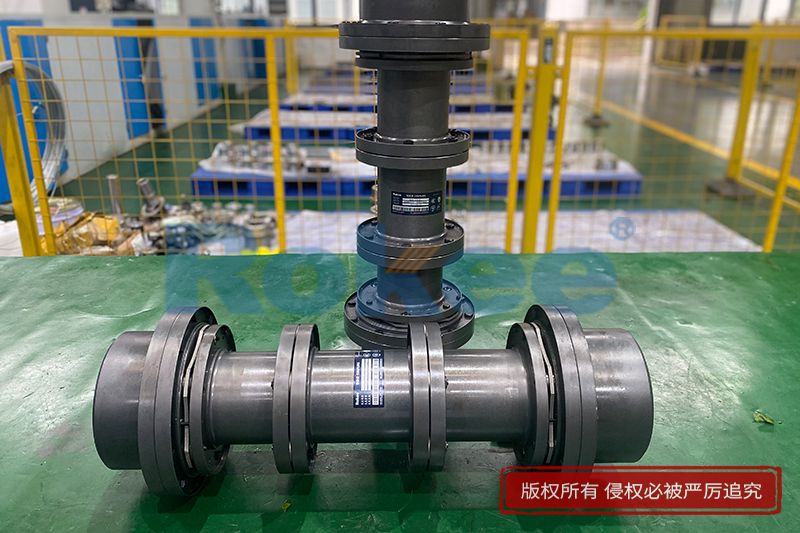
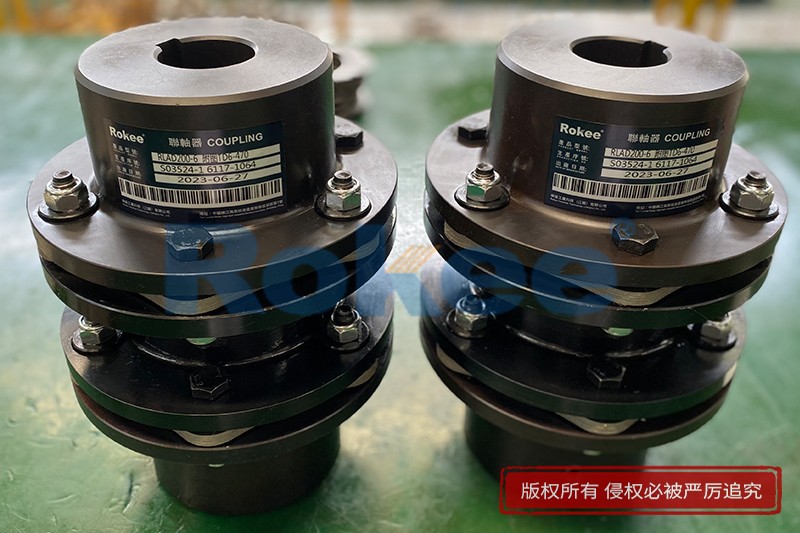
The basic structural composition of metal membrane couplings is concise and scientific, with no redundant movable parts or easily worn auxiliary components in the overall structure. The main body is composed of two symmetrical shaft connecting sleeves and one or multiple groups of stacked metal membrane sheets, which are fixedly connected by high-strength fasteners to form an integrated transmission structure. The metal membrane sheets are mostly made of high-toughness stainless steel materials with excellent fatigue resistance and elastic stability. After special processing and heat treatment, the material maintains stable elastic performance under long-term alternating stress, avoiding permanent deformation or structural fatigue damage. According to different structural forms, metal membrane couplings can be divided into single-group membrane structure and double-group membrane structure. The single-membrane structure features a compact overall size and lightweight design, which is suitable for simple working conditions with small shaft offset and stable load operation. The double-membrane structure relies on the coordinated elastic deformation of two sets of membrane components, possessing stronger multi-directional displacement compensation capability, and can cope with complex working conditions with simultaneous axial, radial and angular offset of the connected shafts, meeting the high-precision transmission requirements of sophisticated mechanical equipment.
The working mechanism of metal membrane couplings is based on the elastic deformation theory of metal materials, realizing organic integration of torque transmission and displacement compensation. In the operating state, the driving shaft drives the shaft sleeve to rotate, and the torque is evenly transmitted to the metal membrane group through fasteners. Driven by torsional force, the membrane sheets produce micro elastic stretching and bending deformation, and further transmit the rotational torque and power to the driven shaft sleeve and the connected driven equipment. In this continuous transmission process, various installation errors and operation-induced deviations between the driving and driven shafts can be effectively absorbed and offset by the elastic deformation of the membrane. Axial displacement caused by thermal expansion and contraction of equipment during operation is adapted by the stretching deformation of the membrane along the shaft direction, radial offset generated by equipment vibration and assembly errors is compensated by the transverse bending deformation of the membrane, and angular deflection formed by inconsistent shaft center angles is balanced by the coordinated torsional deformation of the membrane group. This passive and automatic compensation mode does not require manual intervention or auxiliary adjustment during operation, ensuring continuous and stable torque transmission while eliminating additional mechanical stress caused by shaft misalignment.
Compared with other types of flexible couplings, metal membrane couplings have prominent comprehensive performance advantages in industrial application. First of all, they have ultra-high transmission precision and torsional rigidity. The all-metal elastic structure will not produce elastic hysteresis or deformation aging like polymer materials, and can maintain consistent torque transmission accuracy under long-term operation, without phase deviation or power loss in high-speed rotation, which is crucial for precision mechanical transmission systems that require strict synchronization of shaft operation. Secondly, this coupling has excellent vibration damping and noise reduction capabilities. The micro elastic deformation of the metal membrane can effectively absorb high-frequency vibration and instantaneous impact load generated during equipment start-up, shutdown and variable-load operation, isolate vibration transmission between the driving and driven ends, and reduce mechanical friction and collision noise in the transmission system, optimizing the overall operating environment of the equipment.
In terms of environmental adaptability, metal membrane couplings break through the application limitations of traditional flexible couplings. Ordinary couplings using non-metal elastic components are prone to aging, deformation and failure in high-temperature, low-temperature, humid or corrosive environments, while metal membrane components maintain stable physical and mechanical properties in a wide temperature range. They will not soften and deform in high-temperature working conditions, nor will they become brittle and cracked in low-temperature environments, and have good resistance to atmospheric corrosion and medium erosion, adapting to harsh working scenarios such as chemical production, high-temperature power equipment and outdoor mechanical operation. In addition, the whole structure has no need for lubrication and maintenance during daily operation. There is no relative sliding friction between internal components, so there is no wear of vulnerable parts or loss of lubricating oil, realizing maintenance-free long-term operation, greatly reducing the daily operation and maintenance cost of mechanical equipment and improving the overall operating efficiency of the production system.
The fatigue resistance and service life of metal membrane couplings are also important core advantages. Industrial mechanical equipment often operates under alternating load and cyclic vibration conditions, and traditional couplings are prone to fatigue fracture and performance attenuation after long-term load cycling. The metal membrane of this coupling adopts optimized laminated structure and material processing technology, which can uniformly disperse the torsional stress, bending stress and centrifugal stress generated during operation, avoid local stress concentration, and greatly improve the structural fatigue resistance. Under standard working conditions, it can withstand millions of times of cyclic load impacts without performance degradation, and the service life is far longer than that of ordinary flexible couplings, effectively reducing the frequency of equipment shutdown and replacement of spare parts, and improving the continuous operation capacity of industrial production lines.
Metal membrane couplings are widely used in various industrial mechanical transmission scenarios due to their comprehensive and balanced performance. In the field of power equipment, they are applied to the shaft connection of turbines, generators and large fans, adapting to high-speed and high-power transmission working conditions, ensuring the stable output of power equipment and reducing vibration interference of unit operation. In fluid machinery such as industrial pumps and compressors, the coupling can compensate for shaft offset caused by equipment operation vibration and thermal deformation, avoid additional mechanical load on the pump body and compressor host, reduce equipment operation failure rate, and extend the service life of fluid conveying equipment.
In the field of precision manufacturing and processing machinery, including printing equipment, textile machinery and automated processing equipment, the high-precision and zero-clearance transmission characteristics of metal membrane couplings ensure the synchronization accuracy of each transmission shaft, avoid processing errors and product quality problems caused by transmission deviation, and meet the high-precision operation requirements of sophisticated processing equipment. In heavy industrial fields such as metallurgy, mining and engineering machinery, the coupling can withstand large torque and instantaneous impact load, adapt to heavy-load and variable-load operation conditions, and maintain stable transmission performance in complex and harsh working environments such as dust and vibration.
In marine, aerospace and high-end precision transmission fields, metal membrane couplings also play an irreplaceable role. The lightweight and high-strength structural design meets the lightweight manufacturing requirements of high-end equipment, while the excellent environmental adaptability can cope with special working conditions such as marine humid salt fog environment and aviation variable temperature environment, providing reliable transmission guarantee for high-end precision mechanical systems. With the continuous upgrading of industrial manufacturing technology, the application scope of metal membrane couplings is further expanding, gradually penetrating into new energy equipment, intelligent automation production lines and emerging mechanical equipment fields.
In terms of practical application and installation matching, metal membrane couplings have strong structural adaptability and can be optimized and designed according to different working condition parameters such as transmission torque, rotating speed, shaft diameter and offset demand. The compact structural form can adapt to equipment installation spaces with limited space, and the standardized structural design is convenient for equipment assembly and later disassembly and maintenance. In the actual installation process, although the coupling has a certain displacement compensation capacity, controlling the installation offset within a reasonable range is still the key to ensure its optimal operating state. Excessive long-term offset will increase the alternating stress of the membrane, affect the service life of the component, and reasonable installation accuracy can give full play to the transmission performance and compensation advantages of the coupling.
In the long-term operation process, the operating state of metal membrane couplings is closely related to the overall operating efficiency of mechanical equipment. Different from wearing parts that need regular replacement and maintenance, its stable all-metal structure realizes low-loss operation. Daily equipment operation only needs routine state inspection to check whether the membrane has micro deformation, fatigue cracks and fastener looseness, which can effectively avoid equipment failure caused by component abnormal changes. This low-maintenance operation feature not only saves human and material resources for enterprise equipment maintenance, but also ensures the long-term stable and efficient operation of mechanical transmission systems, creating stable production benefits for industrial production.
With the continuous development of industrial machinery towards high speed, high precision and high reliability, the performance requirements for transmission components are constantly improving. Traditional couplings are gradually unable to meet the stringent working condition requirements of modern industrial equipment due to their low precision, easy wear, poor environmental adaptability and short service life. Metal membrane couplings, with their high transmission accuracy, excellent displacement compensation performance, strong environmental adaptability, long fatigue life and maintenance-free advantages, have become the mainstream upgrading products of traditional transmission components. In the future, with the continuous innovation of material technology and structural optimization design, the performance of metal membrane couplings will be further improved, with stronger load resistance, higher precision stability and wider environmental adaptability, which can better adapt to the development needs of modern intelligent manufacturing and high-end mechanical equipment, and provide more reliable basic component support for the upgrading and iteration of industrial mechanical transmission systems.
- Tags:
- Metal Membrane Couplings ,
- sandwich panel line ,
- sandwich panel machine
- pu sandwich panel machine
« Catalogue of Metal Membrane Couplings » Latest Update Date: Jun 3, 2026
https://www.rokeecoupling.net/blog/catalogue-of-metal-membrane-couplings.html