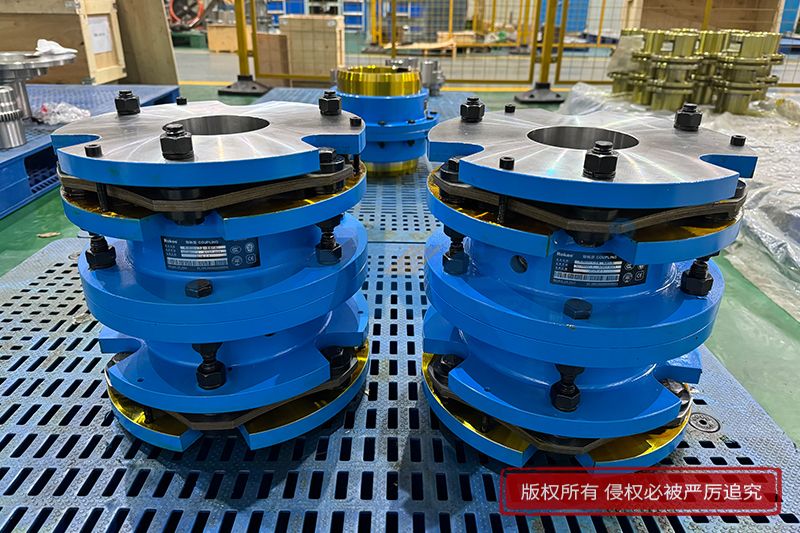
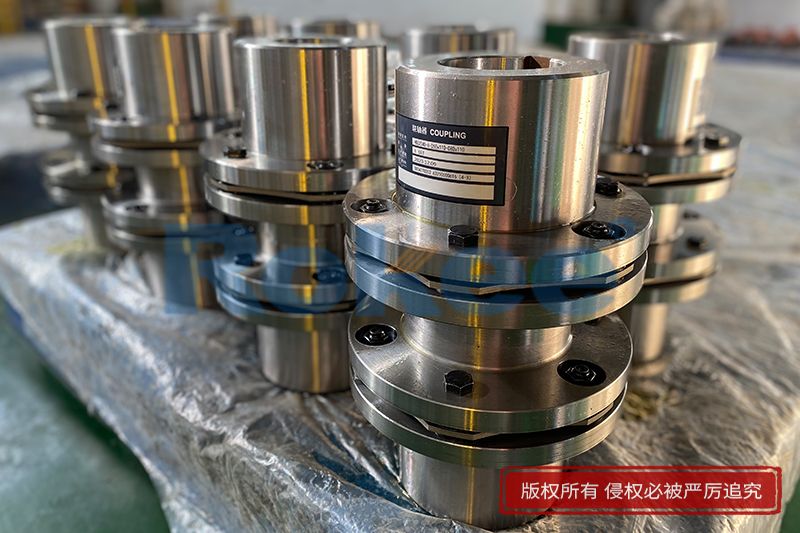
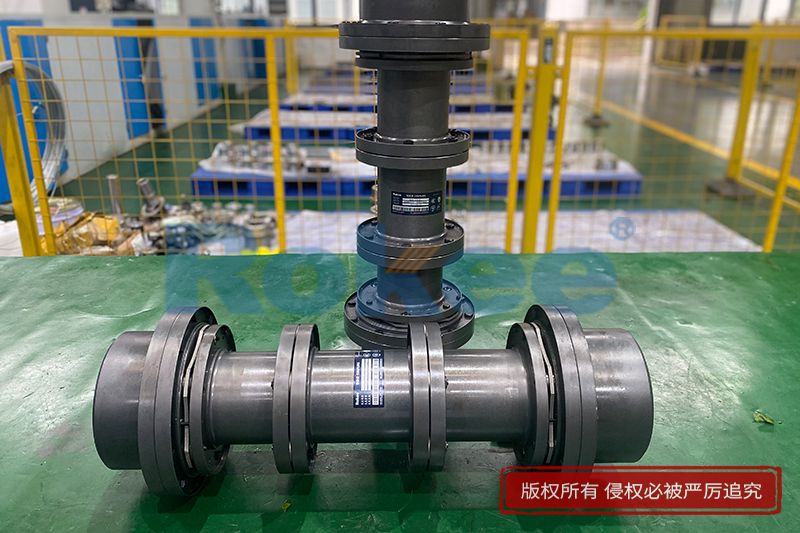
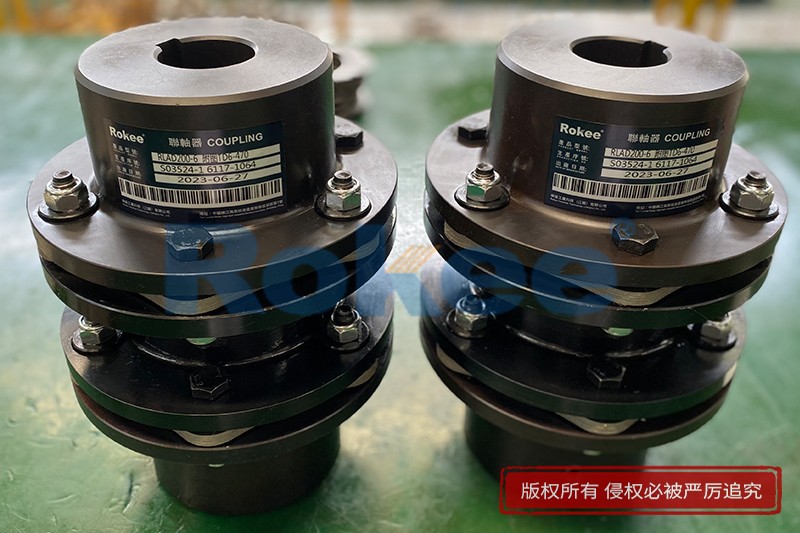
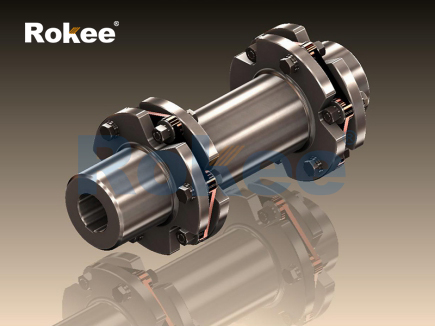
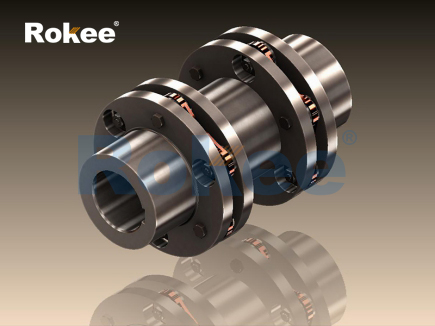
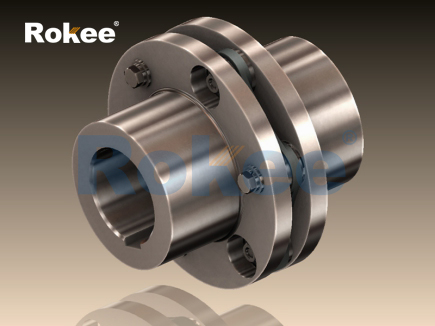
In the complex mechanical transmission industry, couplings serve as indispensable connecting components that link two rotating shafts to transmit torque, ensuring the coordinated operation of various mechanical equipment. Among numerous coupling types, diaphragm coupling has gradually become a preferred component in modern mechanical transmission systems due to its unique structural design and superior comprehensive performance. It adopts thin metal diaphragms as the flexible transmission element, relying on the elastic deformation of diaphragms to complete torque transmission and shaft displacement compensation. Compared with traditional coupling structures such as gear couplings and sleeve couplings, diaphragm coupling exhibits prominent advantages in transmission stability, environmental adaptability, service life and maintenance difficulty, which makes it widely applied in high-speed, high-precision and harsh working condition mechanical scenarios. Exploring the inherent advantages of diaphragm coupling can help mechanical practitioners deeply understand its application value and provide reasonable references for equipment component selection and mechanical system optimization.
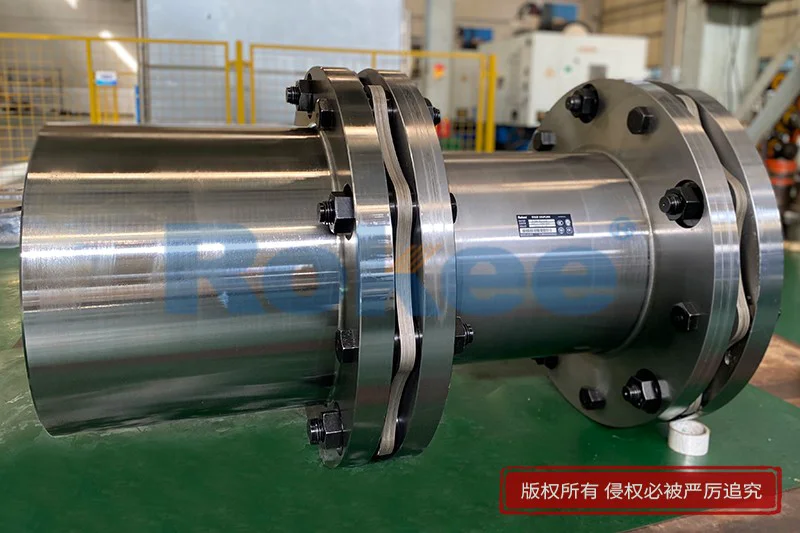
One of the most core advantages of diaphragm coupling lies in its excellent displacement compensation capability, which effectively solves the shaft misalignment problem commonly existing in mechanical assembly and operation. During the installation process of mechanical equipment, it is difficult to achieve absolute coaxiality between the driving shaft and the driven shaft due to manual assembly errors and processing deviations of mechanical parts. In addition, in the long-term operation of equipment, factors such as mechanical vibration, thermal expansion of metal components and slight foundation settlement will cause axial, radial and angular relative displacements between the two connected shafts. These subtle displacements will generate additional mechanical stress on the transmission system, leading to shaft deformation, component wear and even equipment failure in severe cases. The flexible metal diaphragm structure of diaphragm coupling can produce micro elastic deformation under external force, which can autonomously compensate for three-dimensional displacement deviations. Its angular displacement compensation range is significantly larger than that of conventional gear couplings, and the reaction force generated during radial displacement compensation is extremely small. This characteristic avoids excessive extrusion and friction between shafts caused by misalignment, reduces the mechanical load of bearings and other supporting parts, and maintains the stable operating state of the transmission system for a long time.
Diaphragm coupling possesses outstanding zero-backlash transmission performance, which is crucial for high-precision mechanical transmission scenarios. In many sophisticated mechanical systems such as automated processing equipment, precision testing instruments and servo transmission mechanisms, the synchronization accuracy of shaft rotation directly determines the working quality of the entire equipment. Traditional couplings often have gaps in the connecting parts, and these gaps will produce rotation hysteresis during forward and reverse rotation, resulting in transmission delay and position deviation. The internal connection structure of diaphragm coupling is compact and seamless. The metal diaphragm is firmly connected with the shaft sleeve through fasteners, and there is no movable gap in the torque transmission process. It can realize synchronous rotation of the driving end and the driven end, maintain a stable and accurate transmission ratio, and ensure that the torque and rotation angle are transmitted without loss. Whether it is low-speed precise positioning or high-speed continuous rotation, this zero-backlash characteristic can effectively avoid motion errors, meet the stringent precision requirements of modern intelligent manufacturing equipment, and greatly improve the processing and detection accuracy of mechanical equipment.
In terms of operating stability, diaphragm coupling has excellent vibration damping and noise reduction effects, optimizing the operating environment of mechanical equipment. Mechanical rotation will inevitably produce vibration energy, and high-frequency vibration will not only cause fatigue damage to internal components of equipment, but also generate continuous noise pollution. Different from rigid couplings that directly transfer vibration between shafts, the metal diaphragm of diaphragm coupling can absorb and dissipate part of the vibration energy through elastic deformation. When the equipment is impacted by external forces or generates self-excited vibration during operation, the diaphragm structure can buffer the vibration amplitude, inhibit the occurrence of system resonance, and weaken the vibration transmission between adjacent mechanical components. Meanwhile, there is no relative sliding and friction between the internal parts of diaphragm coupling during operation. The pure metal elastic deformation transmission mode will not produce friction noise, so the overall operating noise of the equipment is maintained at a low level. This stable and low-noise operating feature not only improves the working comfort of the production environment, but also avoids the accelerated aging of components caused by long-term high vibration, creating favorable conditions for the long-term stable operation of mechanical systems.
The strong environmental adaptability is another remarkable advantage of diaphragm coupling, enabling it to work normally in various extreme and harsh working conditions. Made of high-strength alloy steel and stainless steel materials, the metal diaphragm has stable physical and chemical properties. It can maintain good structural elasticity and mechanical strength in a wide temperature range, adapting to low-temperature environments close to minus eighty degrees Celsius and high-temperature environments up to three hundred degrees Celsius. In industrial scenarios with humid air, corrosive gas and liquid splashing, the smooth and dense metal surface can resist oxidation and chemical corrosion, avoiding structural damage caused by rust and corrosion. In addition, the all-metal structure does not contain rubber, plastic and other polymer vulnerable parts, so it will not suffer from aging, deformation and cracking problems caused by environmental changes. Whether it is outdoor industrial machinery exposed to natural weather changes, chemical production equipment in corrosive atmospheres, or refrigeration and high-temperature processing equipment in extreme temperature environments, diaphragm coupling can maintain reliable working performance and is not easily affected by external environmental interference.
Diaphragm coupling has obvious superiorities in structural design and space utilization, which is suitable for diversified installation space requirements of modern equipment. With the continuous miniaturization and integration of mechanical equipment, the internal installation space of machinery becomes increasingly compact, putting forward higher requirements on the volume and structure of connecting components. The overall structure of diaphragm coupling is compact and simple, with a flat and neat appearance. It does not occupy excessive axial and radial space, and can adapt to narrow assembly spaces that cannot be applied by large-sized couplings. Moreover, the structural flexibility of diaphragm coupling is strong. The number and thickness of diaphragms can be adjusted according to different torque transmission requirements. The single-diaphragm structure is suitable for small-torque precision transmission, while the multi-diaphragm superimposed structure can bear higher torque load and enhance displacement compensation capability. This diversified structural design enables diaphragm coupling to flexibly match equipment of different specifications from small precision instruments to heavy industrial machinery, realizing reasonable utilization of installation space and improving the integration degree of mechanical equipment.
From the perspective of long-term use cost and operation efficiency, diaphragm coupling has the characteristics of maintenance-free and long service life, bringing significant economic benefits to industrial production. Most traditional flexible couplings rely on lubricating grease to reduce internal friction, which requires regular oil injection and oil replacement maintenance. The repeated maintenance work not only consumes manpower and material resources, but also requires equipment shutdown, affecting the continuity of production work. The internal torque transmission of diaphragm coupling depends on the elastic deformation of metal diaphragms. There is no relative friction between parts, so no lubricating medium is needed in the whole service cycle. It fundamentally eliminates the daily lubrication maintenance link, reduces the manual maintenance cost and equipment shutdown loss. In terms of service life, high-strength metal materials have excellent fatigue resistance. After repeated torsion and deformation, the diaphragm structure is not easy to produce fatigue cracks and structural damage. Under standard working conditions, the effective service cycle can reach tens of millions of stress cycles. The long service life reduces the frequency of component replacement, lowers the consumption of spare parts, and effectively improves the continuous operation efficiency of mechanical equipment.
High transmission efficiency and stable torsional rigidity further consolidate the application value of diaphragm coupling in industrial transmission. In the process of torque transmission, the internal structure of diaphragm coupling is closely connected without energy loss caused by gaps and friction. Its transmission efficiency can remain above 99.5% under conventional working conditions. The high-efficiency transmission characteristic avoids energy waste, reduces the power consumption of equipment operation, and conforms to the energy-saving and consumption-reducing development concept of modern industry. In terms of rigidity performance, diaphragm coupling has high torsional rigidity. It will not produce excessive torsional deformation during torque transmission, ensuring the stable output of torque and rotation speed. Even under variable load and instantaneous impact load conditions, it can maintain stable transmission performance without rotation speed fluctuation and torque attenuation. This rigid and efficient transmission capability makes it applicable to power transmission systems with high requirements for load stability, ensuring the consistent and reliable power output of mechanical equipment.
Despite the numerous advantages of diaphragm coupling, it is necessary to clarify its applicable working conditions in practical application to give full play to its performance advantages. This coupling has high requirements on installation precision. Excessive installation deviation will cause the diaphragm to bear long-term overload deformation and accelerate fatigue damage. Meanwhile, it is not suitable for working scenarios with extremely large radial displacement. In such cases, a combined multi-section diaphragm structure is required to meet the compensation demand. However, under conventional industrial working conditions including high-speed rotation, precision positioning, temperature fluctuation and slight vibration, diaphragm coupling can far exceed other types of couplings in comprehensive performance. With the continuous upgrading of mechanical manufacturing technology, the processing technology of diaphragm coupling is constantly optimized. The structural stability and load-bearing capacity of products are further improved, and the application scope covers aerospace, medical equipment, electronic detection, chemical industry, energy power and many other industrial fields.
In conclusion, diaphragm coupling integrates multiple superior performances such as efficient displacement compensation, zero-backlash precision transmission, vibration and noise reduction, strong environmental adaptability, compact structure, maintenance-free use and high transmission efficiency. These inherent advantages make it an essential core component in modern mechanical transmission systems. It not only solves many common technical pain points in traditional coupling transmission, such as easy wear, frequent maintenance, low precision and poor environmental resistance, but also adapts to the development trend of modern machinery towards high precision, high speed, integration and energy conservation. In the future, with the continuous progress of material science and mechanical processing technology, the performance of diaphragm coupling will be further optimized, and its application prospect in the industrial field will be broader. Understanding and rationally utilizing the advantages of diaphragm coupling can help mechanical designers and enterprise managers optimize equipment configuration, reduce operating costs, and improve the overall operating level and economic benefits of mechanical systems.
- Tags:
- Single Diaphragm Couplings ,
- Double Diaphragm Couplings ,
- Metal Diaphragm Couplings ,
- Diaphragm Couplings ,
- Flexible Diaphragm Couplings ,
- sandwich panel line ,
- sandwich panel machine
- pu sandwich panel machine
« Advantages of Diaphragm Coupling » Latest Update Date: May 21, 2026
https://www.rokeecoupling.net/blog/advantages-of-diaphragm-coupling.html