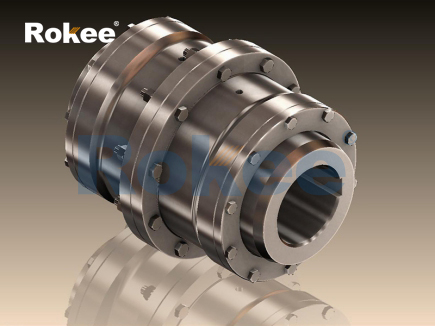
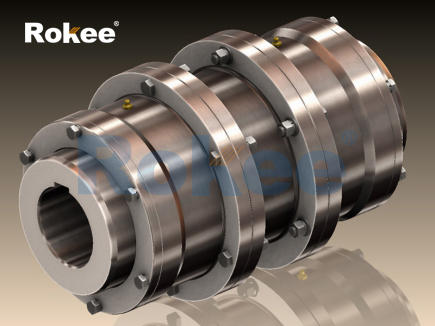
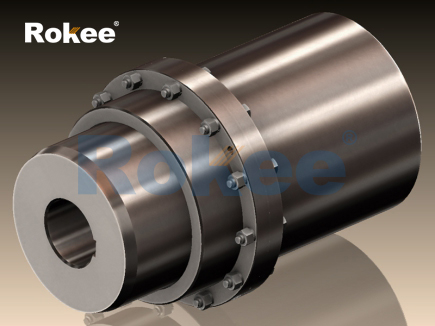
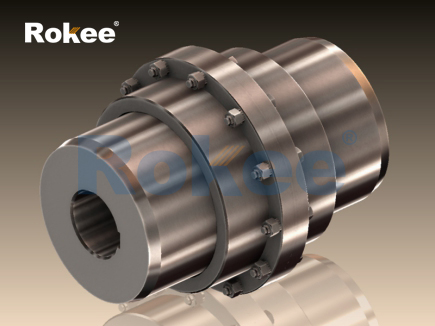
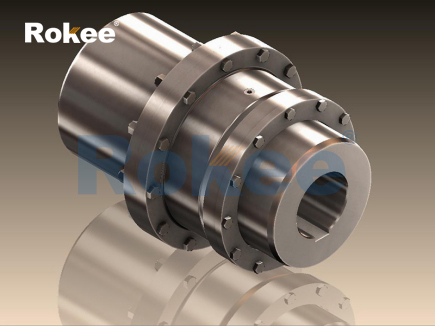
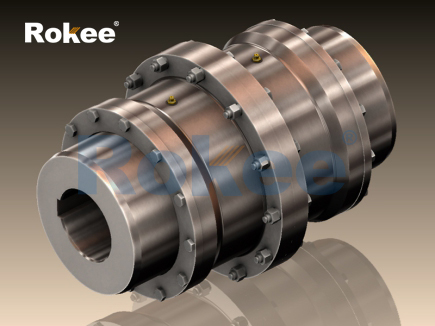
In the intricate ecosystem of modern mechanical transmission systems, the rational selection of connecting components directly determines the operational stability, service life, and comprehensive efficiency of mechanical equipment. As a vital type of flexible transmission component, crown gear couplings have emerged as an indispensable core part in heavy-duty and high-precision mechanical industries by virtue of their unique curved tooth profile design, excellent torque transmission capacity, and reliable misalignment compensation performance. Unlike traditional straight gear couplings and elastic couplings, crown gear couplings adopt an arc-shaped crown tooth structure on external gear sleeves, which enables the tooth surface to achieve uniform contact under complex operating conditions. This distinctive structural feature endows the component with unparalleled adaptability in harsh industrial environments, making it widely applied in numerous fields such as metallurgy, mining, chemical engineering, power generation, and heavy transportation. This paper comprehensively elaborates on the structural characteristics, working mechanisms, core performance advantages, diverse industrial applications, operational maintenance essentials, and future development potential of crown gear couplings, aiming to provide in-depth insights into the practical application value of this mechanical transmission component.
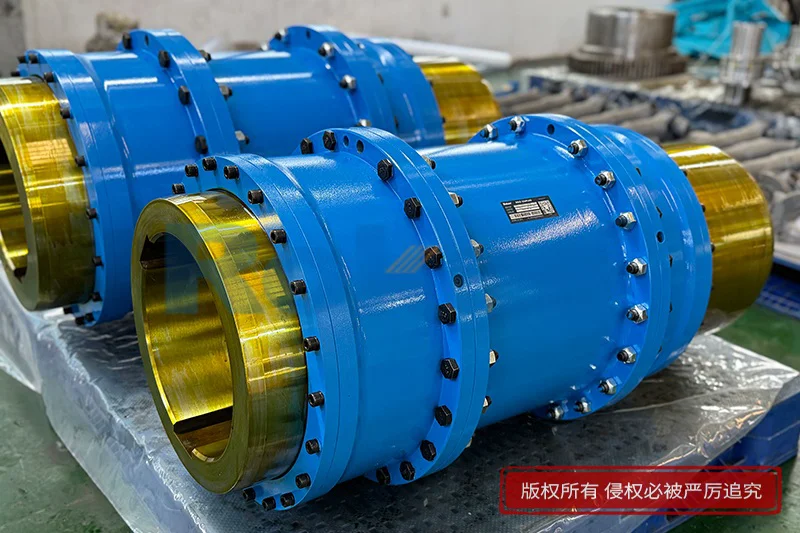
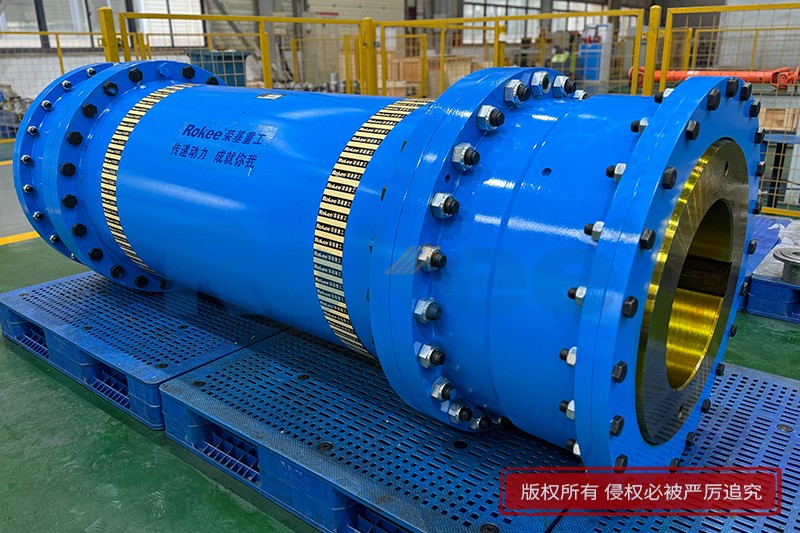
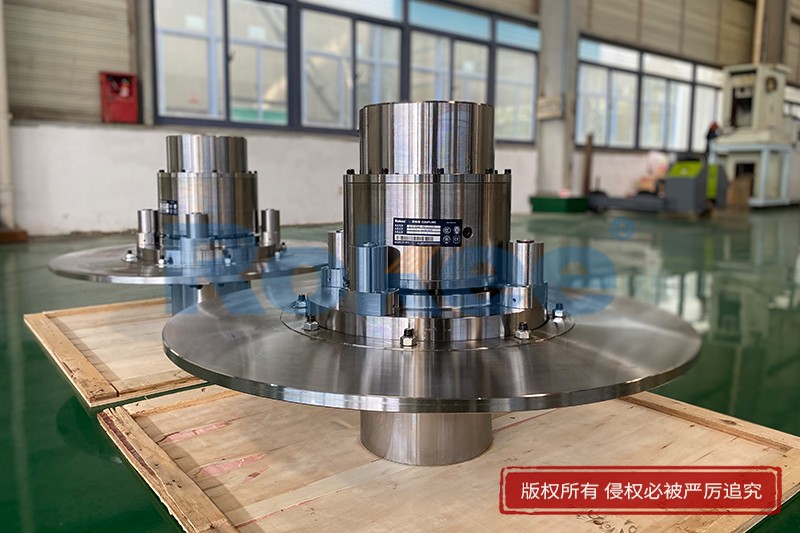
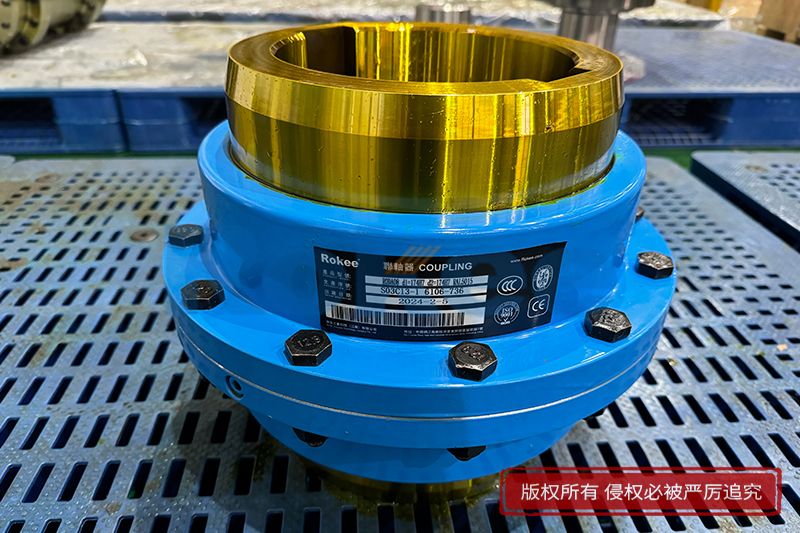
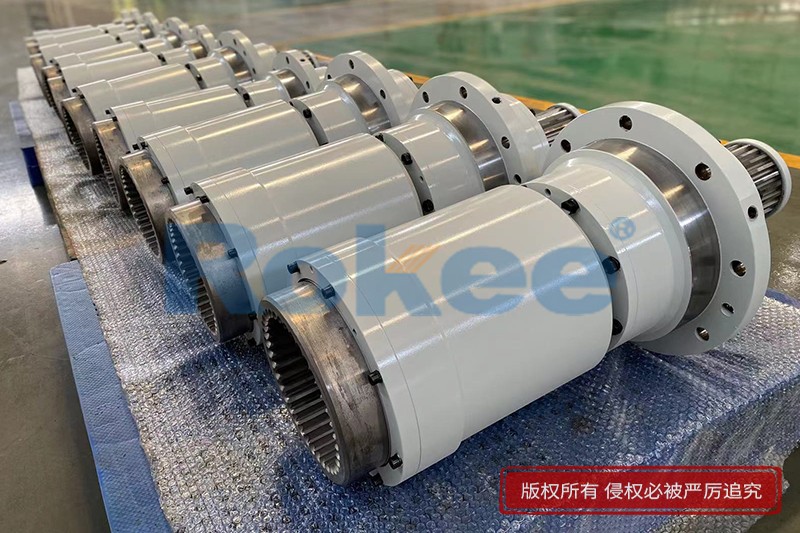
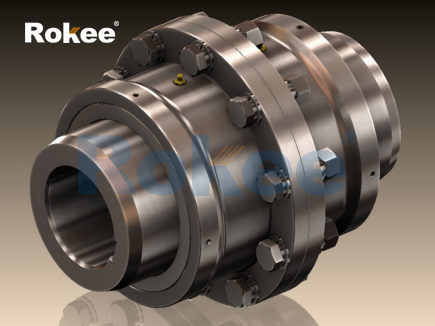
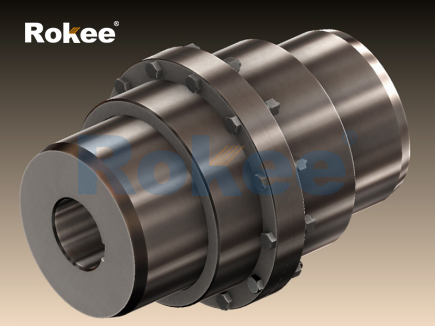
The basic structural composition of crown gear couplings is concise and sophisticated, mainly consisting of external gear sleeves with crown teeth, internal gear rings, connecting flanges, and sealing assemblies. The external gear teeth are processed into a smooth arc crown shape along the axial direction, while the internal gear rings retain standard straight tooth structures with relatively wider tooth widths. This asymmetric tooth matching design is the key to realizing the superior performance of crown gear couplings. In the assembly state, the crown-shaped external gears mesh tightly with the internal gears, and the reasonable tooth side clearance is reserved between meshing tooth pairs. When the transmission system operates, the driving shaft drives the external gear sleeve to rotate, and torque is stably transmitted to the driven shaft through the meshing friction between gear teeth. The arc profile of crown teeth allows the tooth surface to produce slight elastic deformation and relative sliding during operation, which effectively buffers the mechanical stress generated by shaft body misalignment. Meanwhile, the integrated flange structure simplifies the connection mode between the coupling and the shaft body, ensuring the structural firmness of the transmission connection and avoiding loosening during long-term high-load operation.
To further understand the application logic of crown gear couplings, it is essential to analyze their working mechanism of misalignment compensation. In actual industrial production, it is nearly impossible to achieve absolute coaxial alignment between two connected shafts due to manufacturing errors, assembly deviations, equipment vibration, and thermal deformation during operation. Tiny deviations in axial, radial, and angular directions will generate additional mechanical stress on the transmission system. If rigid connecting components are adopted, the stress will directly act on the shaft body, bearings, and related accessories, accelerating component wear and even causing structural fracture. The crown tooth structure perfectly solves this industrial pain point. The curved tooth surface can adapt to the deflection angle of the shaft body, realizing effective compensation for angular misalignment within a certain range. The reserved tooth side clearance provides a movable space for radial and axial displacement of the shaft body. During the rotation process, the contact position between meshing tooth pairs changes dynamically with shaft deviation, and the uniform stress distribution on the tooth surface avoids local stress concentration. This self-adaptive compensation mechanism ensures the continuous and stable operation of the transmission system under non-ideal alignment conditions, which is the core reason why crown gear couplings are superior to ordinary gear couplings.
Compared with other common types of couplings in the market, crown gear couplings possess prominent comprehensive performance advantages, laying a solid foundation for their wide industrial application. Firstly, they have extremely high torque transmission efficiency. The large-area surface contact between internal and external gears reduces transmission friction loss, and the power transmission efficiency can remain at an excellent level even under continuous heavy-load working conditions. Secondly, the load-bearing capacity is outstanding. The crown tooth structure optimizes the stress distribution of the tooth surface, enhances the fatigue resistance of gear teeth, and can withstand instantaneous impact loads and fluctuating loads that are common in industrial production. Thirdly, the environmental adaptability is strong. The integrated sealing structure can effectively isolate dust, moisture, and corrosive substances in the external environment, preventing gear tooth corrosion and lubricant leakage. This enables the couplings to work stably in high-dust, high-humidity, and corrosive working spaces for a long time. In addition, the structural rigidity of crown gear couplings is moderate. While ensuring flexible compensation of displacement deviation, they will not produce excessive torsional deformation, maintaining accurate and stable transmission ratio and meeting the precision operation requirements of most mechanical transmission systems. Although the operation will produce slight mechanical noise compared with elastic couplings, the advantages of load resistance and stability make it more suitable for heavy industrial scenarios.
Metallurgical industry is one of the earliest and most mature application fields of crown gear couplings. The production process of metallurgical equipment is characterized by heavy load, continuous operation, and frequent load fluctuation. Typical equipment such as rolling mills, continuous casting machines, and straightening machines put forward extremely strict requirements on transmission components. In the main transmission system of rolling mills, the frequent start-stop operation and rolling impact will generate huge instantaneous torque. Crown gear couplings can bear the impact load through the flexible meshing of gear teeth and buffer the vibration generated during rolling. For continuous casting machines that operate uninterrupted for a long time, the thermal deformation of the shaft body caused by long-term high-temperature operation will lead to coaxial deviation. The excellent misalignment compensation performance of crown gear couplings can eliminate additional stress caused by thermal deformation, ensuring the synchronization of each transmission shaft. Moreover, in the auxiliary transmission equipment of metallurgical workshops such as conveyor rollers and sorting devices, crown gear couplings also maintain stable operating states, reducing the failure rate of transmission components and extending the maintenance cycle of metallurgical production lines.
Mining machinery is another key application scenario for crown gear couplings, where complex working environments and harsh operating conditions test the performance of mechanical components. Mining equipment such as crushers, ball mills, and belt conveyors usually operates in open-air or underground mining areas, accompanied by a large amount of mineral dust, humid air, and severe equipment vibration. Crushers need to crush hard mineral raw materials, and the intermittent impact force generated during operation is easy to cause vibration and deviation of the transmission shaft. Crown gear couplings absorb vibration through the relative sliding of crown tooth surfaces and compensate for shaft body displacement, avoiding component damage caused by rigid collision. Ball mills run at a low speed with heavy load for a long time, and the internal grinding medium will continuously generate irregular impact on the equipment. The high fatigue resistance of crown gear teeth can adapt to this long-term fluctuating load, maintaining the stability of the transmission system. Belt conveyors responsible for mineral transportation often have long transmission distances and multiple transmission nodes. The good coaxial compensation ability of crown gear couplings simplifies the assembly difficulty of long-distance transmission shafts and reduces the installation accuracy requirements of equipment, which is convenient for daily layout and adjustment of mining production lines.
In the chemical and power industries, the operational stability of fluid transportation and power generation equipment is closely related to production safety, and crown gear couplings play an important supporting role in these fields. Chemical production involves a variety of corrosive raw materials, and equipment such as centrifugal pumps, compressors, and stirring tanks need to run continuously in closed corrosive spaces. The reliable sealing structure of crown gear couplings can prevent internal lubricants from leaking into chemical raw materials and avoid corrosive substances from eroding gear teeth, ensuring the safe operation of chemical transmission systems. Power generation equipment, including thermal power fans, water supply pumps, and power transmission turbines, has high requirements for transmission stability. Unplanned shutdowns caused by coupling failures will lead to huge economic losses. Crown gear couplings maintain high transmission efficiency under medium and high-speed operating conditions, reducing energy consumption during power transmission. At the same time, their excellent wear resistance prolongs the service life of components, lowers the frequency of equipment shutdown maintenance, and improves the continuous operation capacity of power generation systems.
The heavy transportation and lifting industry also relies heavily on the reliable performance of crown gear couplings. Port stackers, cranes, and heavy-duty handling vehicles need to complete frequent lifting and shifting operations, with constantly changing load quality and obvious instantaneous load fluctuation. The high-strength gear structure of crown gear couplings can bear the alternating load generated by heavy object lifting, and the flexible compensation performance ensures the stable transmission of power during equipment rotation and displacement. In the transmission system of large logistics transportation equipment, the deviation of the transmission shaft caused by frequent steering and movement can be automatically corrected by crown teeth, avoiding abnormal wear of bearings and shaft parts. Additionally, in marine transportation auxiliary equipment, crown gear couplings can resist the slight shaking deviation of the shaft body caused by water flow fluctuation, adapting to the unstable working state of marine equipment and improving the overall safety of transportation operations.
Although crown gear couplings have excellent comprehensive performance, standardized daily maintenance is essential to give full play to their application value and extend their service life. Lubrication management is the core of maintenance work. Good lubricating oil can reduce friction and wear between meshing gear teeth, dissipate the heat generated by operation, and buffer meshing impact. It is necessary to select suitable lubricants according to different operating temperatures and load conditions, and regularly check the lubricant capacity and cleanliness to avoid oil deterioration or leakage. Sealing inspection should not be ignored either. The sealing rings and gaskets of couplings are vulnerable to aging and deformation under long-term high-temperature and vibration conditions. Regular replacement of aging sealing parts can prevent external impurities from entering the meshing gap and avoid gear tooth corrosion. In addition, staff should regularly check the assembly tightness of flanges and the coaxiality of connected shafts, adjust deviation parameters in a timely manner, and avoid excessive misalignment exceeding the compensation range of couplings. For equipment that has been running for a long time, regular disassembly and inspection of gear tooth wear degree are required, and worn components should be replaced in time to prevent sudden failure during operation.
With the continuous upgrading of industrial manufacturing technology and the accelerating pace of intelligent production, the application prospect of crown gear couplings is becoming broader. At present, the industrial development trend is gradually moving towards high load, high precision, and intelligent monitoring, which puts forward higher requirements for the performance of transmission components. In terms of material optimization, high-strength alloy materials and advanced heat treatment processes are being applied to the production of crown gear couplings, further improving the surface hardness, fatigue resistance, and corrosion resistance of gear teeth. In terms of structural optimization, the tooth profile curve is digitally simulated and optimized to make the stress distribution of meshing tooth pairs more uniform and improve the compensation accuracy of tiny displacement deviation. In terms of intelligent application, combining sensing technology with couplings to monitor operating parameters such as gear tooth temperature, vibration frequency, and torque load in real time can realize early warning of potential faults and improve the intelligent maintenance level of equipment. In addition, with the popularization of energy-saving and environmental protection concepts, the optimized friction structure will further reduce energy consumption during transmission, meeting the green production requirements of modern industry.
In conclusion, crown gear couplings have become a key basic component in the field of mechanical transmission by virtue of their unique crown tooth structure, reliable misalignment compensation capacity, high-efficiency torque transmission performance, and strong environmental adaptability. They cover multiple core industrial fields such as metallurgy, mining, chemical engineering, electric power, and heavy transportation, providing stable and durable connection guarantees for various heavy-duty and continuous operating mechanical equipment. Reasonable structural design determines their excellent inherent performance, and standardized maintenance management ensures their long-term stable operation in complex working conditions. With the continuous progress of material technology, processing technology, and intelligent monitoring technology, the structural performance of crown gear couplings will be further optimized, and their application scope will continue to expand. In the future industrial system, crown gear couplings will continue to undertake the important task of mechanical power transmission, provide solid technical support for the stable operation and efficient production of industrial equipment, and realize greater application value in the continuous development and innovation of the mechanical manufacturing industry.
- Tags:
- Crown Gear Couplings ,
- sandwich panel line ,
- sandwich panel machine
- pu sandwich panel machine
« Application of Crown Gear Couplings » Latest Update Date: May 21, 2026
https://www.rokeecoupling.net/blog/application-of-crown-gear-couplings.html