Large Crown Gear Coupling
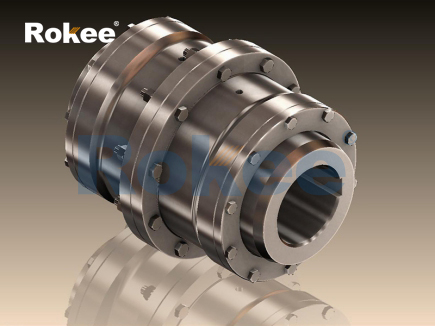
Rokee is a well-known Large Crown Gear Coupling supplier from china, the page show cases of Large Crown Gear Coupling, provide customized services based on user's drawings, and supporting exports.
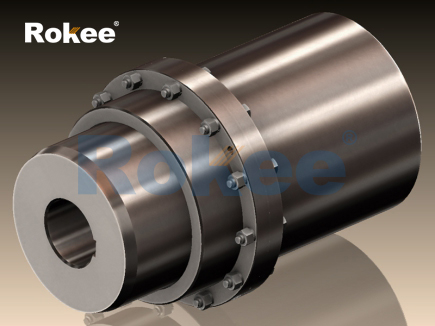
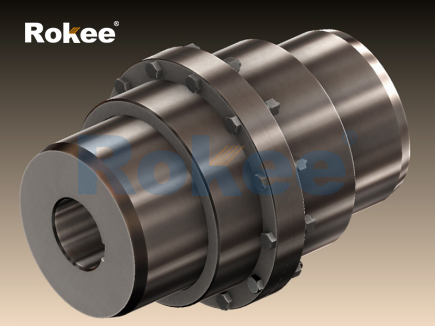
In the complex and interconnected system of modern heavy industrial machinery, the transmission components serve as the fundamental guarantee for stable mechanical operation, among which large crown gear coupling stands out as one of the most indispensable core parts in high-torque transmission scenarios. As a refined type of gear coupling optimized for heavy-duty working conditions, this mechanical component has gradually become a preferred connecting unit for large-scale mechanical equipment due to its unique crown tooth structure, excellent load-bearing capacity and reliable displacement compensation performance. It undertakes the critical task of connecting two independent rotating shafts in mechanical transmission systems, realizing the stable transmission of rotational torque and mechanical power between driving equipment and driven equipment. In harsh industrial environments characterized by heavy load, frequent vibration and complex temperature changes, large crown gear coupling can maintain continuous and efficient operation, effectively solving common connection problems such as shaft position deviation and unstable power transmission that plague large mechanical equipment.
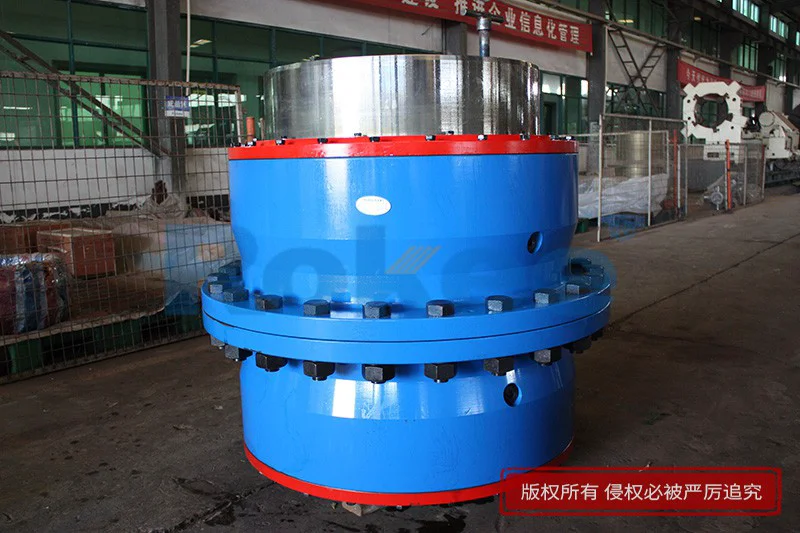
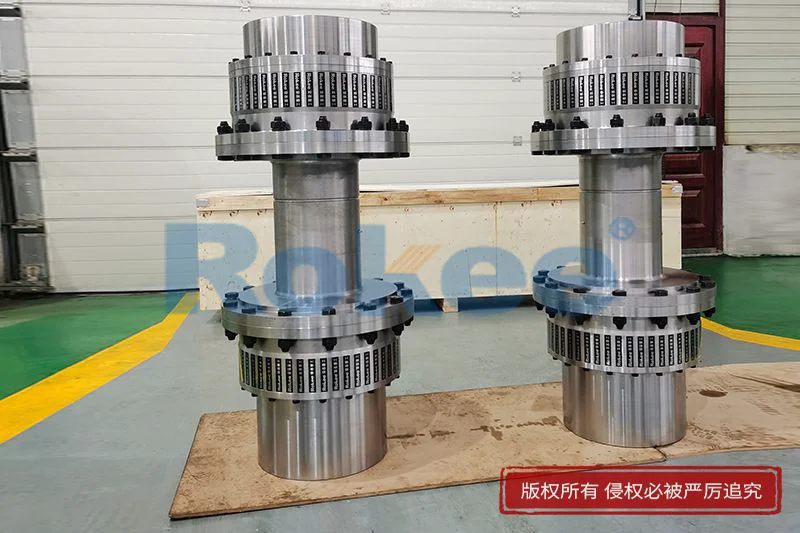
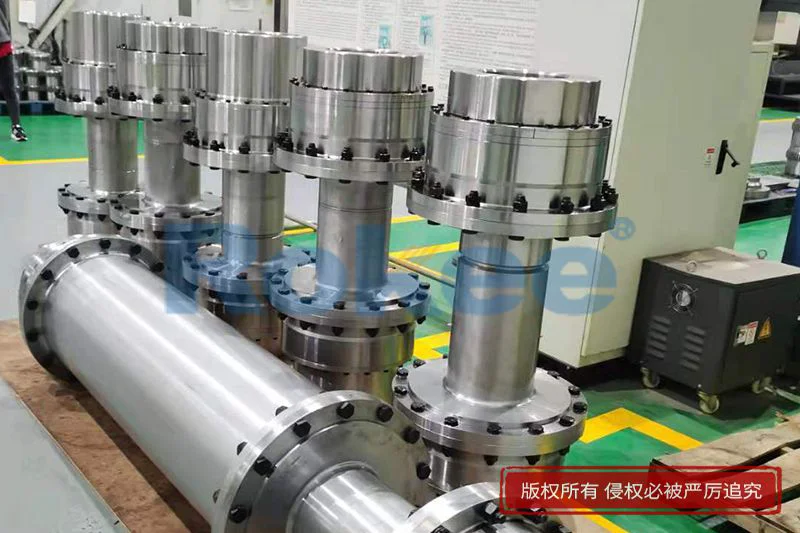
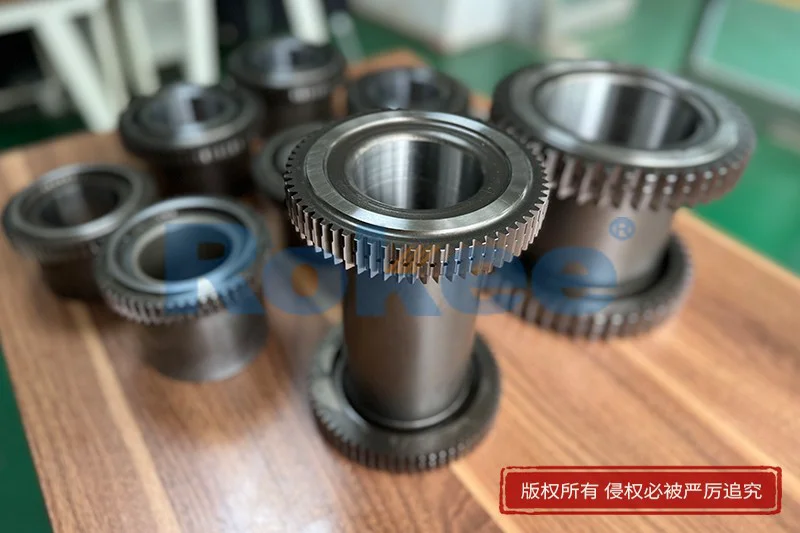
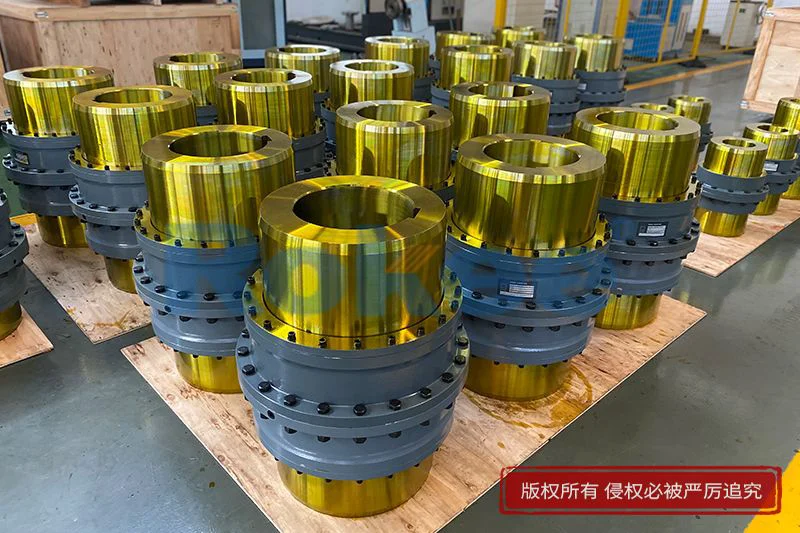
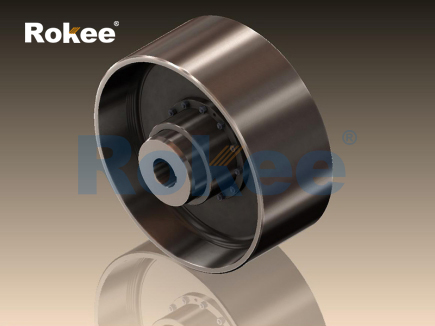
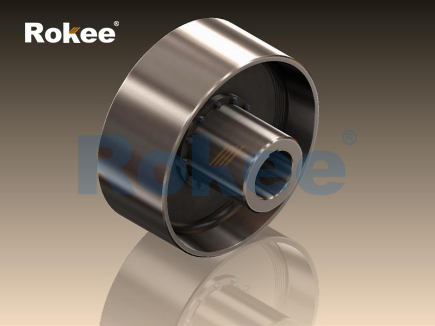
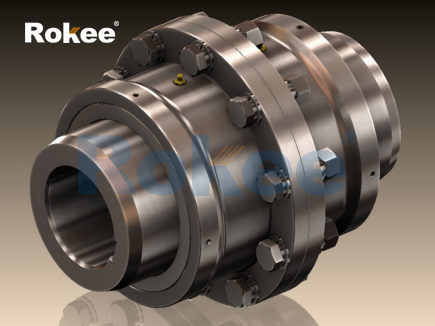
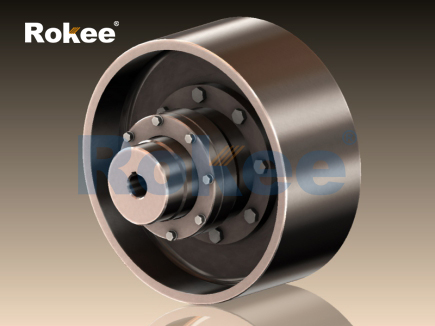
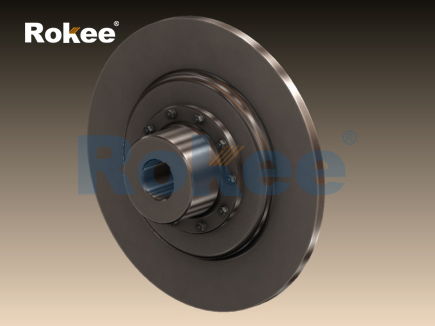
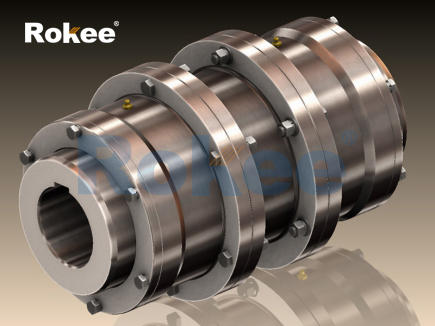
The overall structural design of large crown gear coupling follows the mechanical optimization principle of combining rigid strength with flexible compensation, and its basic composition is concise and scientific without redundant auxiliary structures. The main body of the coupling is composed of two symmetrical half-couplings with outer crown teeth, an inner gear ring and sealed lubrication components. Different from traditional straight gear couplings, the outer teeth of the half-coupling adopt a special spherical crown design, where the tooth surface presents a smooth curved transition with the spherical center coinciding with the central axis of the gear. This distinctive crown tooth structure is the core feature that distinguishes it from ordinary gear couplings and endows it with superior mechanical properties. The inner gear ring adopts an integrated forging structure, and the inner tooth profile is precisely matched with the outer crown teeth to form a stable meshing pair. In terms of assembly structure, the two half-couplings are respectively fixed on the driving shaft and driven shaft, and the inner gear ring sleeves the outer teeth parts of the two half-couplings to realize mutual meshing transmission. Meanwhile, detachable sealing covers are installed at both ends of the inner gear ring, which together with the internal sealing gaskets form a closed lubrication cavity. This enclosed structure not only stores lubricating media to reduce friction between meshing teeth but also isolates external impurities such as dust, moisture and particulate pollutants, avoiding adverse effects on the meshing surfaces. For some customized large crown gear couplings used in ultra-heavy load conditions, auxiliary connecting structures such as reinforced flanges will be added to further enhance the structural stability during high-torque operation.
The power transmission and displacement compensation mechanism of large crown gear coupling relies on the flexible meshing relationship between crown teeth and inner teeth. When the mechanical equipment starts to operate, the driving half-coupling rotates synchronously with the driving shaft, and the torque is transmitted to the inner gear ring through the meshing action of the outer crown teeth, and then the inner gear ring drives the driven half-coupling to rotate, thereby realizing the synchronous rotation of the two shafts and completing the efficient transmission of mechanical power. In this process, the curved tooth surface of the crown teeth can make the contact stress evenly distributed along the tooth width direction. Compared with straight gear structures, the concentrated stress phenomenon at the edge of the tooth surface is effectively eliminated, and the friction loss between meshing teeth is significantly reduced. More importantly, the structural characteristics of crown teeth enable the coupling to have multi-dimensional displacement compensation capability. During the installation and long-term operation of large mechanical equipment, it is difficult to achieve absolute coaxiality between the driving shaft and the driven shaft due to manual installation errors, equipment foundation settlement, mechanical vibration and thermal expansion of metal materials. Tiny deviations such as angular deflection, radial offset and axial displacement will inevitably occur between the two shafts. The crown gear coupling can flexibly adapt to these deviations through the small gap between meshing teeth and the deformation allowance of the curved tooth surface, avoiding additional mechanical stress on the shaft body caused by shaft misalignment. This inherent compensation function effectively reduces the vibration amplitude of the transmission system and prevents abnormal wear of shaft parts, bearings and other auxiliary components.
Large crown gear coupling has prominent comprehensive performance advantages compared with other common transmission connection components in the industrial market, which is the key reason for its wide application in heavy industry. Firstly, it has extremely high load-bearing capacity. The optimized crown tooth meshing structure increases the effective contact area between tooth surfaces, and the contact stress is greatly reduced. Under the same overall dimensional specifications, the torque bearing capacity is significantly higher than that of conventional straight gear couplings. This performance enables it to stably withstand instantaneous impact loads and cyclic alternating loads generated during the start-up, shutdown and variable-speed operation of large equipment. Secondly, the transmission efficiency remains at an excellent level. The smooth curved tooth surface minimizes sliding friction during meshing movement, and the internal closed lubrication system further reduces friction resistance. The power transmission efficiency can maintain an ultra-high standard for a long time, with almost no unnecessary power loss in the transmission process, which helps industrial enterprises reduce energy consumption in mechanical operation. Thirdly, the structural rigidity is strong and the operation stability is outstanding. The main components are made of high-strength alloy steel through integral forging and precision heat treatment, with high structural density and compressive resistance. It will not produce obvious plastic deformation under long-term heavy-load operation, ensuring the synchronization accuracy of shaft rotation. In addition, the noise suppression effect is remarkable. The smooth meshing of crown teeth avoids the rigid collision and tooth surface jitter of straight gears, effectively reducing mechanical operation noise and improving the on-site working environment of industrial production.
In the modern industrial system covering multiple heavy manufacturing fields, large crown gear coupling has become a standard matching component of key equipment, adapting to various harsh working conditions including high dust, high humidity, high temperature and strong vibration. In the metallurgical industry, it is widely applied to core equipment such as rolling mills and continuous casting machines. The rolling mill needs to continuously squeeze metal raw materials under high torque, and the equipment will generate continuous vibration and impact during operation. The crown gear coupling can stably transmit rolling torque and absorb mechanical vibration to prevent transmission failure caused by shaft deviation. In the mining industry, this type of coupling is installed on heavy equipment such as mine hoists, crushers and ball mills. Mining equipment usually operates in dusty and humid underground environments, and its operation process is accompanied by frequent start-stop movements and irregular impact loads. The good sealing performance and impact resistance of large crown gear coupling can resist the erosion of external pollutants and maintain stable transmission in complex working conditions. In the port and lifting industry, it serves large-scale lifting machinery such as gantry cranes and portal cranes. The lifting equipment needs to bear variable loads during the handling of heavy goods, and the coupling can compensate for the shaft displacement generated by load changes to ensure the safety and stability of the lifting process.
Besides the above industries, large crown gear coupling also plays an irreplaceable role in cement production, petrochemical and energy power fields. Cement rotary kilns and large fans in cement plants need long-term continuous rotating operation, and the stable torque transmission of the coupling ensures the uninterrupted production of the production line. In the petrochemical industry, it is matched with large compressors and pump sets to complete the long-distance power transmission of fluid transportation equipment, adapting to the temperature fluctuation environment generated by chemical production. In the energy industry, it is applied to large water pump units and power generation transmission equipment, relying on low energy consumption and high stability to meet the long-term operation requirements of power equipment. Regardless of the application scenario, the large crown gear coupling can always adapt to the personalized working condition requirements by adjusting the tooth surface hardness, sealing level and structural size, showing strong application compatibility.
Reasonable daily maintenance and scientific installation and disassembly methods are essential to extend the service life of large crown gear coupling and maintain stable mechanical performance. Lubrication management is the core link of maintenance work. The closed inner cavity of the coupling needs to be filled with high-performance lubricating medium, and the lubricating grease or lubricating oil with suitable viscosity and wear resistance should be selected according to the operating temperature and load level. In high-load and high-speed operation scenarios, a forced circulating lubrication system can be equipped to make the lubricating medium circulate continuously inside the cavity, take away the friction heat generated by meshing teeth, and control the tooth surface wear within a low range. It is necessary to regularly check the sealing performance of the coupling during operation. Once lubricant leakage or external dust intrusion is found, the sealing gaskets and protective covers should be replaced in a timely manner to avoid dry friction and corrosion of the meshing teeth. In terms of installation, the coaxiality of the driving shaft and driven shaft should be strictly calibrated to reduce the initial installation deviation, which can effectively lower the compensation pressure of the coupling in subsequent operation. During disassembly and maintenance, the integrated structural characteristics of the crown gear coupling should be utilized. The outer tooth end adopts a flared design, which does not require large-scale displacement of the main equipment, simplifying the disassembly process and reducing maintenance time cost.
With the continuous progress of industrial manufacturing technology and the upgrading of heavy machinery equipment, the technical iteration of large crown gear coupling is also accelerating, and the future development direction presents the characteristics of high durability, intelligent monitoring and lightweight optimization. In terms of material optimization, higher-strength alloy composite materials and advanced surface treatment processes will be adopted to further improve the corrosion resistance, wear resistance and high-temperature resistance of the tooth surface, so that the coupling can adapt to more extreme working environments such as strong corrosion and low temperature. In terms of structural optimization, the internal tooth profile and gap proportion will be accurately calculated through mechanical simulation software to balance the flexibility and rigidity of the structure, realize smaller vibration amplitude and higher transmission accuracy. In terms of intelligent upgrading, miniature sensing components can be embedded inside the coupling to monitor real-time operating data such as torque, temperature and vibration frequency. The operating state of the coupling can be remotely grasped through the data terminal, realizing predictive maintenance and avoiding sudden equipment failure caused by coupling aging and damage. In addition, on the premise of ensuring load-bearing performance, the overall structural weight will be reduced through hollow forging and thin-wall optimization design to lower the self-weight load of mechanical equipment and further improve energy-saving efficiency.
As a key basic transmission component in heavy industry, large crown gear coupling supports the stable operation of a large number of core industrial equipment with its unique crown tooth structure, excellent displacement compensation ability and reliable heavy-load transmission performance. Its simple and durable structural design, efficient power transmission efficiency and diverse environmental adaptability make it occupy an irreplaceable position in metallurgy, mining, port lifting, chemical industry and many other industrial fields. Although the product structure of large crown gear coupling has matured after years of technical precipitation, there is still huge room for improvement in material application, intelligent monitoring and energy-saving optimization. In the future, with the continuous development of high-end manufacturing industry and the increasing requirements for equipment stability and energy consumption, large crown gear coupling will continue to carry out technological innovation, optimize comprehensive performance, and provide more solid basic support for the efficient and safe operation of modern heavy industrial machinery. Reasonable selection, standardized installation and scientific maintenance will always be the key to maximize the service value of large crown gear coupling, helping various industrial production lines reduce operating costs and improve production efficiency in the long-term operation process.
With excellent quality, we have been continuously providing many coupling products of various categories and uses complying with multiple standards and a full range of services, from the product selection to final installation and operation, for the industry fields of ferrous metallurgy, nuclear power, gas turbine, wind power, ropeway construction, lifting transportation, general equipment, etc.
pu sandwich panel line,pu sandwich panel machine,sandwich panel machine
« Large Crown Gear Coupling » Latest Update Date: May 9, 2026
https://www.rokeecoupling.net/cases/large-crown-gear-coupling.html
Products
![GICL Crown Gear Coupling]() GICL Crown Gear Coupling
GICL Crown Gear Coupling![GICLZ Crown Gear Coupling]() GICLZ Crown Gear Coupling
GICLZ Crown Gear Coupling![GIICL Crown Gear Coupling]() GIICL Crown Gear Coupling
GIICL Crown Gear Coupling![GIICLZ Crown Gear Coupling]() GIICLZ Crown Gear Coupling
GIICLZ Crown Gear Coupling![GCLD Crown Gear Coupling]() GCLD Crown Gear Coupling
GCLD Crown Gear Coupling![NGCL Crown Gear Coupling]() NGCL Crown Gear Coupling
NGCL Crown Gear Coupling![NGCLZ Crown Gear Coupling]() NGCLZ Crown Gear Coupling
NGCLZ Crown Gear Coupling![WG Crown Gear Coupling]() WG Crown Gear Coupling
WG Crown Gear Coupling![WGZ Crown Gear Coupling]() WGZ Crown Gear Coupling
WGZ Crown Gear Coupling![WGP Crown Gear Coupling]() WGP Crown Gear Coupling
WGP Crown Gear Coupling![WGT Crown Gear Coupling]() WGT Crown Gear Coupling
WGT Crown Gear Coupling![WGC Crown Gear Coupling]() WGC Crown Gear Coupling
WGC Crown Gear Coupling![WGJ Crown Gear Coupling]() WGJ Crown Gear Coupling
WGJ Crown Gear Coupling

Other Cases
![Drum Gear Coupling With Intermediate Tube]() Drum Gear Coupling With Intermediate Tube
Drum Gear Coupling With Intermediate Tube![Tooth Coupling With Intermediate Shaft]() Tooth Coupling With Intermediate Shaft
Tooth Coupling With Intermediate Shaft![Crown Gear Coupling With Intermediate Shaft]() Crown Gear Coupling With Intermediate Shaft
Crown Gear Coupling With Intermediate Shaft![Drum Gear Coupling With Intermediate Shaft]() Drum Gear Coupling With Intermediate Shaft
Drum Gear Coupling With Intermediate Shaft![Elastic Block Toothed Coupling]() Elastic Block Toothed Coupling
Elastic Block Toothed Coupling![High Speed Drum Gear Coupling Exported To Europe]() High Speed Drum Gear Coupling Exported To Europe
High Speed Drum Gear Coupling Exported To Europe![Gear Type Coupling With Brake Disc]() Gear Type Coupling With Brake Disc
Gear Type Coupling With Brake Disc![GIICL Curved Tooth Gear Coupling]() GIICL Curved Tooth Gear Coupling
GIICL Curved Tooth Gear Coupling