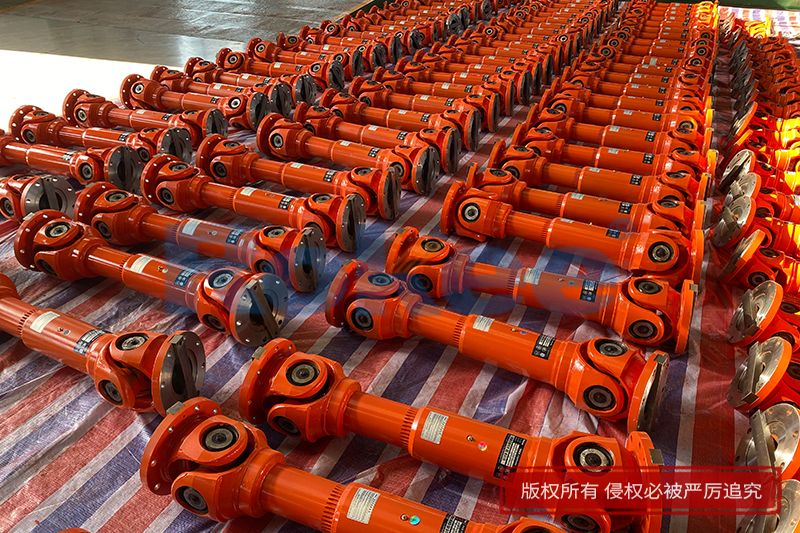
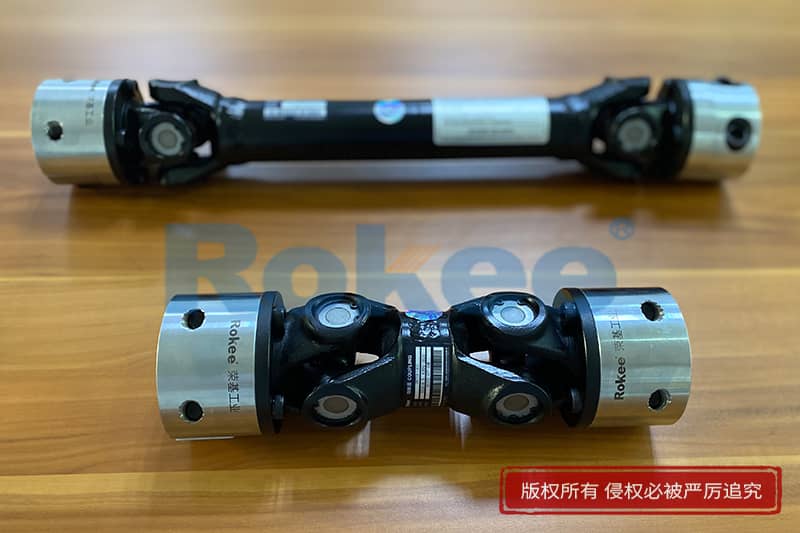
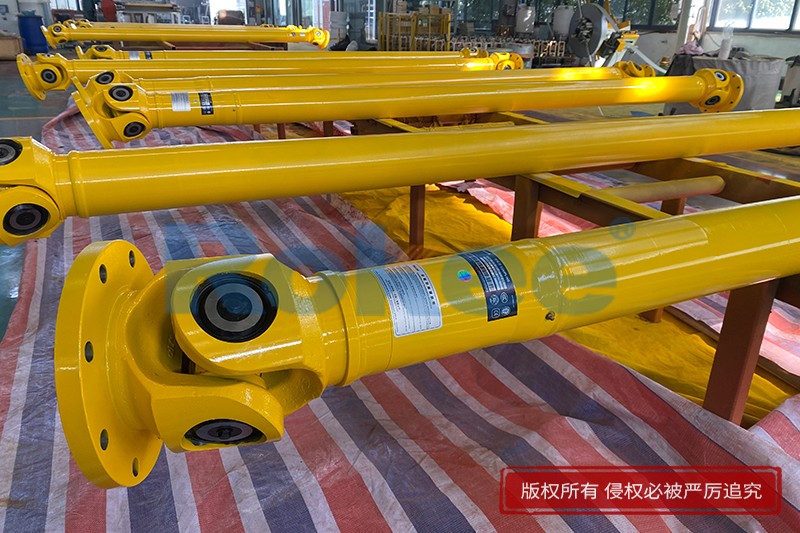
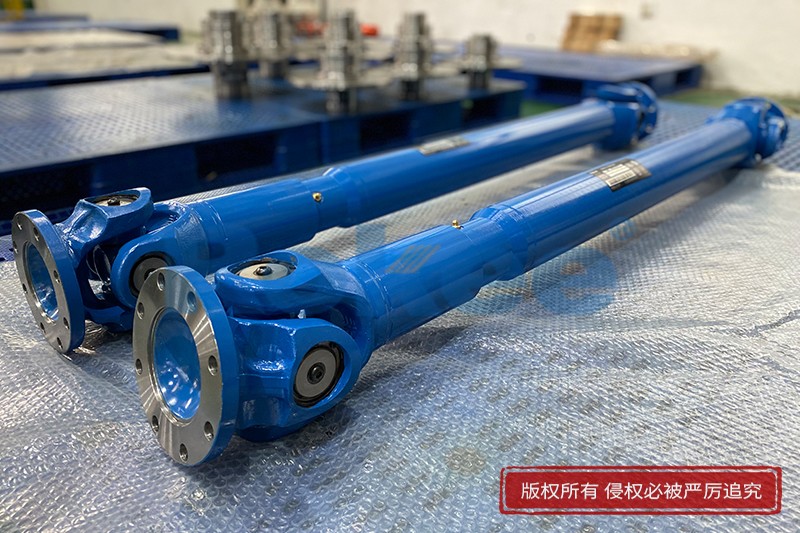
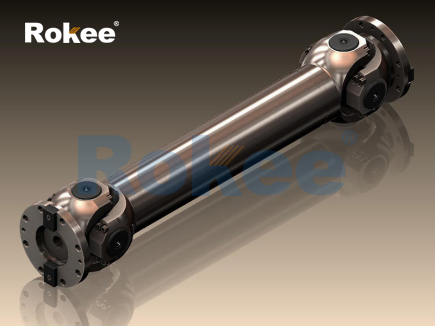
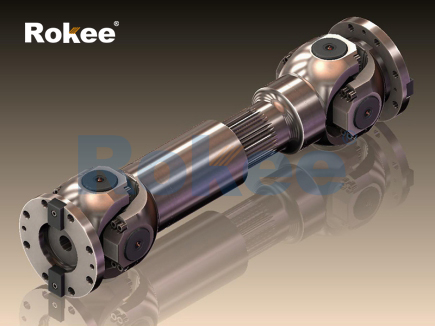
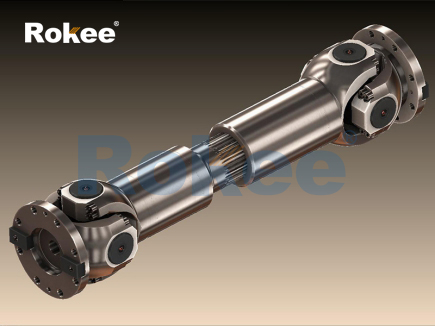
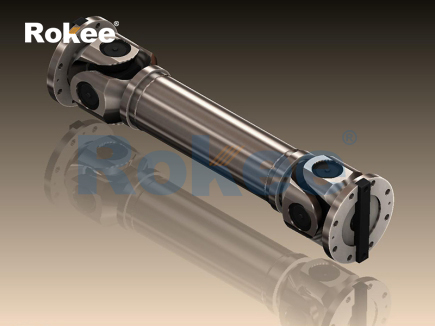
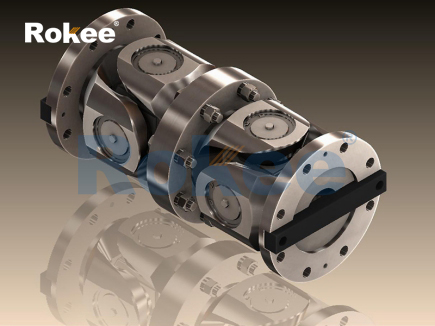
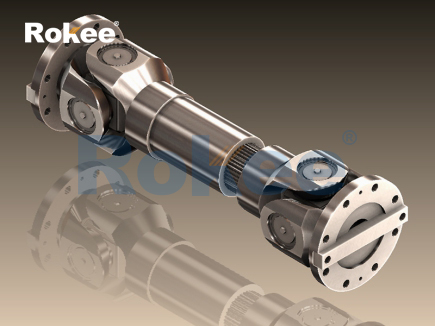
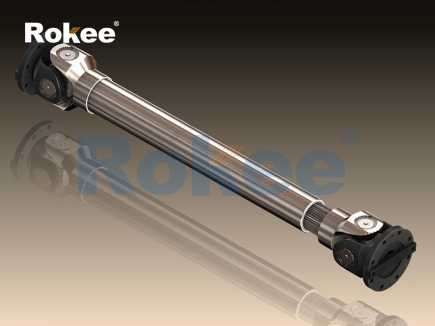
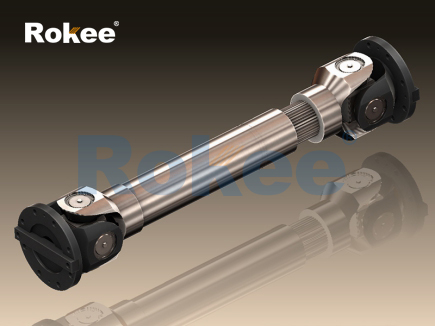
Universal shaft couplings stand as indispensable mechanical transmission components in modern industrial and mechanical systems, serving as pivotal connecting devices that bridge two separate rotating shafts to deliver continuous torque and rotational motion. Unlike rigid coupling structures that demand precise coaxial alignment of connected shafts, this type of flexible coupling boasts unique spatial displacement compensation capabilities, enabling stable power transmission even when there are angular deviations, axial offsets, or radial misalignments between the driving shaft and driven shaft. This core functional advantage makes it widely applicable in complex mechanical operating environments where shaft position deviation is inevitable due to installation errors, mechanical vibration, equipment deformation, or structural motion changes. As a key part of mechanical transmission systems, the operational stability, transmission efficiency, and service life of universal shaft couplings directly determine the overall operating performance and reliability of the entire mechanical equipment, laying a solid foundation for the normal operation of various rotating mechanical structures.
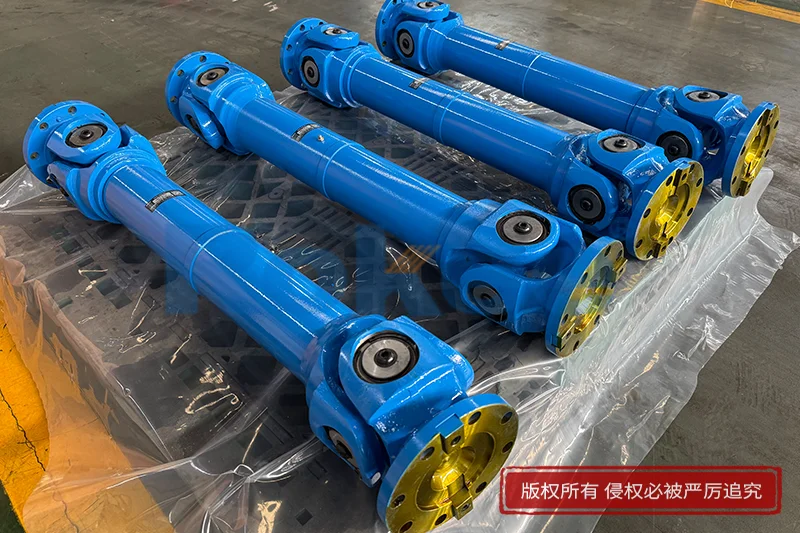
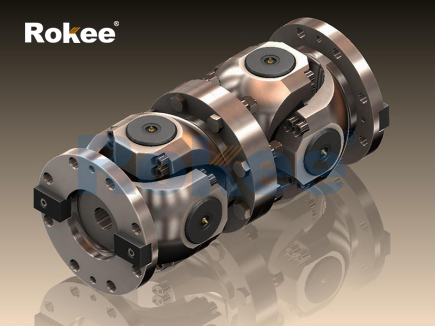
The basic working mechanism of universal shaft couplings originates from the spatial linkage motion principle, which realizes flexible transmission through the mutual coordination of internal movable components. The most conventional structural composition consists of two symmetric fork-shaped connecting frames and a central cross-shaped spindle component, also commonly referred to as a spider. The four perpendicular shaft ends of the cross spindle are installed inside the bearing structures of the two fork frames respectively, forming a mutually perpendicular rotating kinematic pair. When the driving shaft rotates, the fork frame connected to the driving shaft drives the cross spindle to perform spatial rotational motion, and the cross spindle further transmits the rotational power to the fork frame of the driven shaft, thus completing the torque transmission process between the two shafts. Benefiting from the rotational freedom of the cross spindle in multiple planes, the two connected shafts can maintain effective power transmission while forming a certain included angle, with the adaptable deflection angle ranging from small angles to a maximum of forty-five degrees in conventional models, fully meeting the displacement compensation needs of most mechanical scenarios.
In practical transmission processes, ordinary single-section universal shaft couplings have a inherent motion characteristic of periodic rotational speed fluctuation. When the two connected shafts form an angular deviation, the instantaneous rotational speed of the driven shaft will produce regular slight changes along with the rotation cycle of the driving shaft, instead of maintaining absolute constant speed. This non-constant speed transmission feature may cause minor vibration and impact in high-speed or high-precision mechanical systems. To optimize this transmission defect, double-section universal shaft coupling structures are widely adopted in industrial applications. By connecting two single universal joints through an intermediate connecting shaft and reasonably adjusting the installation angle and phase position of the two joints, the speed fluctuation generated by the front universal joint can be completely offset by the rear one, ultimately achieving constant-speed synchronous transmission between the driving and driven shafts. This optimized structural design greatly improves transmission stability and effectively reduces mechanical vibration, noise, and component wear during equipment operation.
Based on structural differences and functional characteristics, universal shaft couplings can be divided into multiple mainstream types to adapt to diverse working conditions. Cross-shaft universal couplings are the most classic and widely used type, featuring a simple and compact overall structure, strong bearing capacity, and excellent environmental adaptability. They are suitable for medium and low-speed transmission scenarios with large torque demand and allow relatively large angular displacement between shafts. Ball-cage universal couplings represent a high-precision constant-speed transmission structure, which relies on the rolling fit of internal steel balls and raceways to realize power transmission. This structure can maintain stable constant-speed transmission under large deflection angles and high-speed operating conditions, with smaller motion friction and higher transmission accuracy compared with cross-shaft structures. Ball-fork universal couplings integrate the structural advantages of ball transmission and fork positioning, with more flexible motion coordination, suitable for light-load and high-precision transmission scenarios that require smooth operation.
In addition to structural classification, universal shaft couplings can also be categorized by load-bearing capacity and application scenarios into heavy-duty, medium-duty, light-duty, and miniature types. Heavy-duty universal couplings adopt thickened structural components and high-strength material configurations, which can withstand huge torque impact and continuous heavy-load operation, and are mostly applied in large engineering machinery, metallurgical equipment, and heavy industrial transmission systems. Medium-duty products balance structural strength and flexibility, adapting to the conventional operating conditions of most industrial mechanical equipment, and are the most versatile type in industrial production. Light-duty and miniature universal couplings are designed for small mechanical equipment and precision transmission mechanisms, with compact size, light weight, and sensitive motion response, meeting the precise transmission needs of small torque and high-frequency operation scenarios.
The superior performance of universal shaft couplings is reflected in multiple core dimensions of mechanical transmission. First of all, they have outstanding multi-dimensional displacement compensation ability, which can simultaneously adapt to angular displacement, axial displacement, and radial displacement between shafts, solving the transmission failure problem caused by shaft misalignment in mechanical installation and operation. Secondly, the transmission efficiency of qualified universal shaft couplings is extremely high, with minimal energy loss during the power transmission process, ensuring the efficient output of mechanical power. In terms of operational performance, the flexible movable structure can effectively buffer the vibration and impact generated during equipment startup, shutdown, and load mutation, reducing the rigid impact between mechanical components and protecting the driving and driven equipment structures from damage. Moreover, the overall structural design is compact and reasonable, with small space occupation, convenient installation and disassembly, and low daily maintenance difficulty, which can well adapt to continuous long-term industrial operating conditions.
Universal shaft couplings have extremely extensive application coverage, penetrating almost all fields involving mechanical rotating transmission. In the field of transportation machinery, they serve as core transmission components in vehicle power transmission systems, undertaking the power transmission task between engines, gearboxes and drive shafts, and adapting to the angle changes and position displacements generated by vehicle suspension vibration and driving state changes. In engineering machinery, various construction and mining equipment needs to operate in complex and variable working environments, and the inevitable vibration and structural deformation during operation put forward high requirements for the displacement adaptability of transmission components, making universal shaft couplings the preferred connecting device for its transmission system. In industrial manufacturing equipment, automation production lines, processing machine tools, and transmission machinery all rely on the stable transmission performance of universal shaft couplings to ensure the synchronous operation of various mechanical components.
In addition, in the fields of agricultural machinery, aerospace auxiliary machinery, and precision instrumentation, universal shaft couplings also play an irreplaceable role. Agricultural machinery often operates in harsh working environments with uneven ground, and the fuselage is prone to continuous vibration and structural displacement during operation. The good flexibility and stability of universal shaft couplings can ensure continuous and reliable power transmission of agricultural equipment. In precision mechanical systems such as instrumentation equipment, high-precision constant-speed universal coupling products can eliminate transmission speed errors, ensure the accurate execution of mechanical motion, and meet the high-precision operation requirements of precision equipment. In special mechanical scenarios such as high-altitude and low-temperature environments, optimized material and structural universal couplings can maintain stable mechanical properties and adapt to extreme operating conditions.
The selection of a suitable universal shaft coupling needs to comprehensively consider multiple key factors to match the actual working conditions of the equipment. The first core factor is the transmission torque range. Different mechanical equipment has different load demands, and the selected coupling must have a sufficient torque bearing range to avoid structural deformation or damage caused by overload operation. The maximum allowable deflection angle and displacement compensation range of the coupling also need to match the actual shaft misalignment of the equipment, ensuring that the coupling can effectively play a compensatory role during operation. In addition, the operating speed of the equipment is a key selection indicator. High-speed operating scenarios need to prioritize constant-speed structural couplings with stable operation and low friction, while low-speed and heavy-load scenarios can choose high-strength cross-shaft structural products.
Working environment factors cannot be ignored in the selection process either. For equipment operating in dusty, humid, or corrosive environments, couplings with good sealing performance and corrosion resistance should be selected to prevent internal component wear, rust, or failure caused by environmental factors. For mechanical equipment with frequent startup, shutdown, and load changes, it is necessary to select coupling products with good impact resistance and fatigue resistance to adapt to alternating load operation and prolong the service life of components. Meanwhile, the installation space of the equipment should be fully considered. Compact structural products are required for limited installation spaces, while conventional structural couplings can be used for spacious installation environments to balance structural stability and installation convenience.
Daily maintenance and reasonable use are crucial to maintaining the long-term stable performance of universal shaft couplings and extending their service life. In the daily operation of equipment, regular inspection of the coupling's operating state is required, focusing on checking whether there is abnormal vibration, noise, or jamming during operation, and timely troubleshooting of potential faults. The internal movable parts such as bearings and spindle structures of the coupling need regular lubrication maintenance. Good lubrication can reduce friction and wear between moving parts, lower operating temperature, and avoid component aging and failure caused by dry friction. For long-term operating equipment, regular fastening of connecting parts is necessary to prevent transmission failure caused by loose connection and shaft displacement.
In addition, during equipment startup and operation, sudden overload and violent impact should be avoided as much as possible. Instantaneous overload impact will cause excessive stress on the coupling structure, easily leading to plastic deformation of internal components and reducing transmission accuracy and structural stability. For couplings that have been used for a long time, regular wear detection should be carried out. Once serious wear, structural deformation or loose fit of internal parts is found, worn components should be replaced in a timely manner to prevent minor faults from evolving into major equipment failures and affecting the overall operating efficiency of the mechanical system.
With the continuous progress of mechanical manufacturing technology and the upgrading of industrial equipment, the performance optimization and structural innovation of universal shaft couplings are also advancing continuously. Modern industrial equipment is developing towards high speed, high precision, high load and long service life, which puts forward higher technical requirements for the comprehensive performance of universal shaft couplings. Current optimization directions mainly include the adoption of new high-strength and wear-resistant materials to improve the structural strength and fatigue resistance of products, the optimization of internal structural design to reduce transmission friction and speed fluctuation, and the improvement of overall sealing performance to enhance environmental adaptability. At the same time, personalized and customized structural designs are gradually popularized to meet the special transmission needs of different industries and special mechanical equipment.
As a core basic component in mechanical transmission systems, universal shaft couplings undertake the important task of connecting mechanical power and ensuring stable operation. Their unique flexible compensation performance, efficient transmission capacity and wide environmental adaptability make them an indispensable key part of modern mechanical equipment. In the future, with the continuous development of intelligent manufacturing and high-end mechanical equipment, universal shaft coupling technology will continue to iterate and upgrade, with more optimized structural performance, higher transmission accuracy and longer service life, providing more reliable basic support for the efficient and stable operation of various mechanical transmission systems in multiple industrial fields.
- Tags:
- Universal Shaft Couplings ,
- sandwich panel line ,
- sandwich panel machine
- pu sandwich panel machine
« Catalogue of Universal Shaft Couplings » Latest Update Date: Jun 3, 2026
https://www.rokeecoupling.net/blog/catalogue-of-universal-shaft-couplings.html