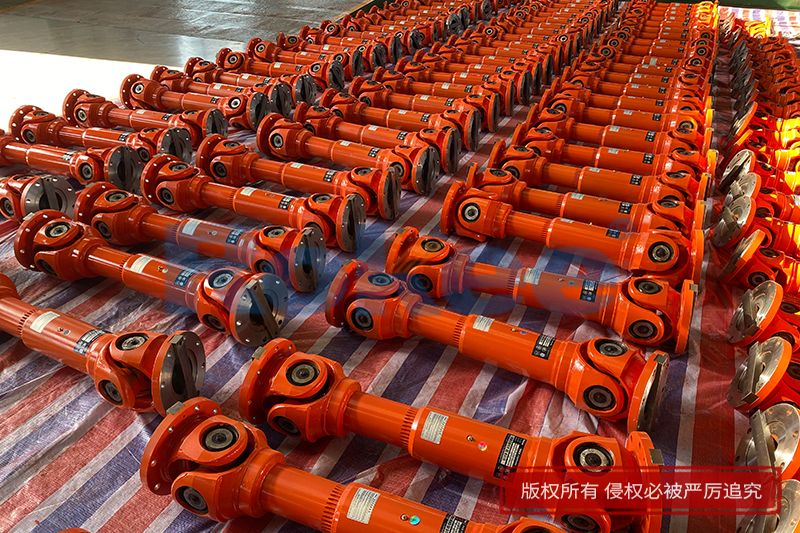
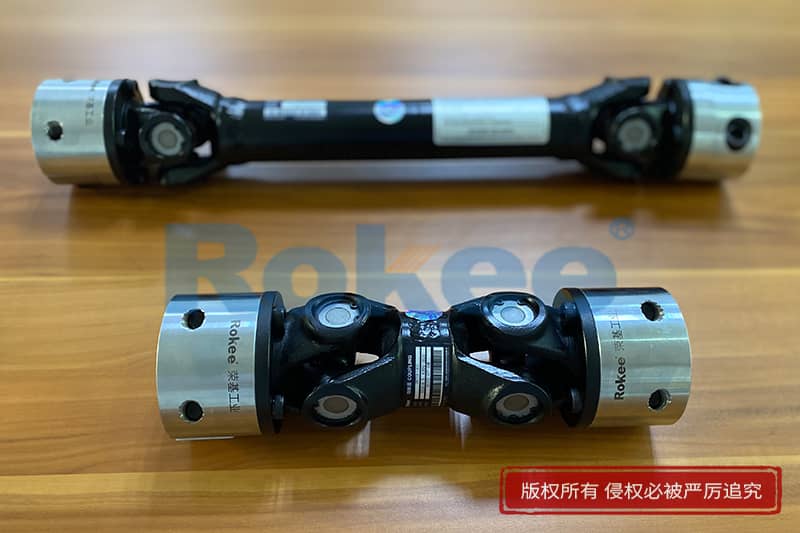
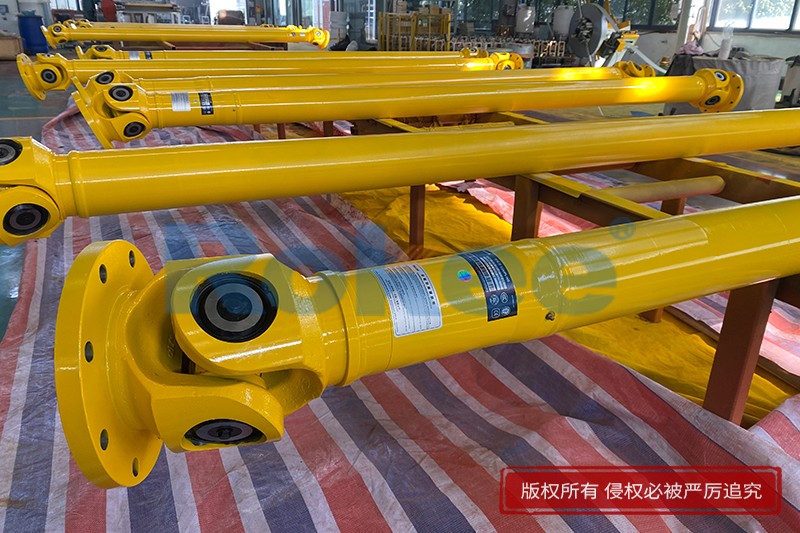
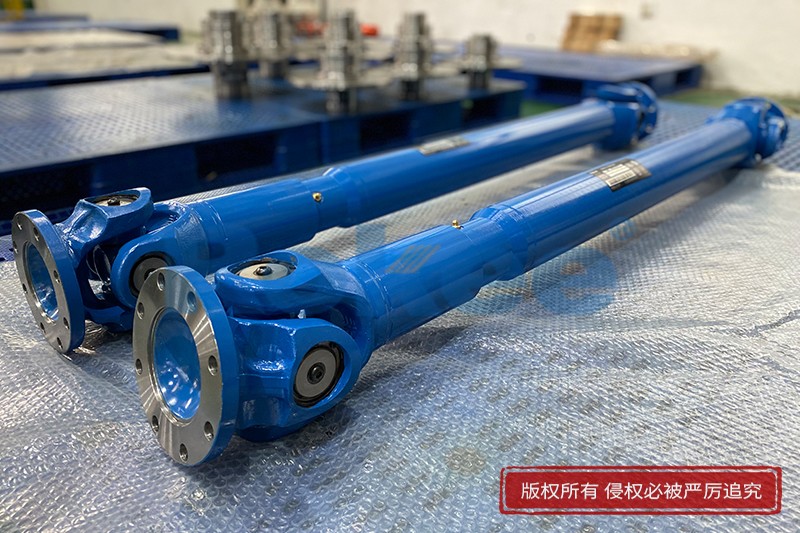
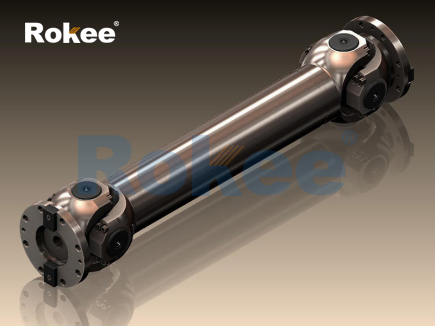
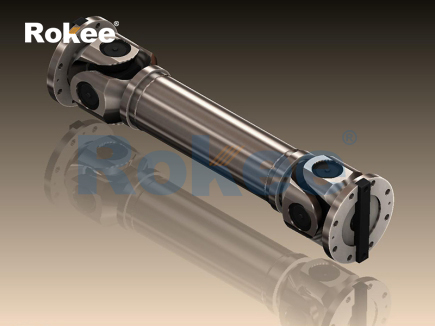
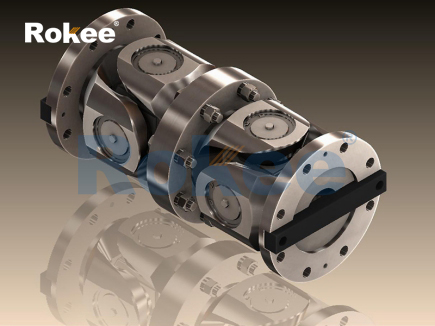
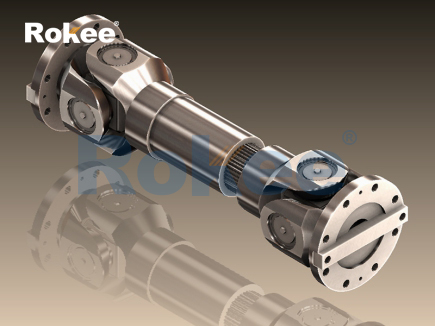
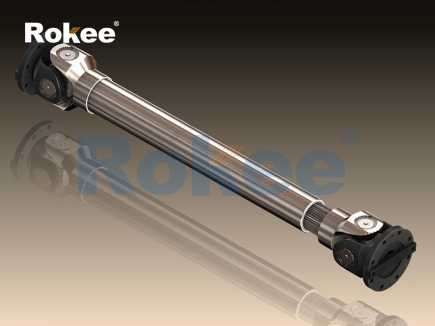
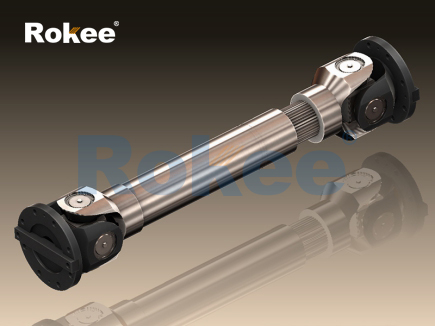
Cardan drive shafts stand as one of the most indispensable mechanical components in modern power transmission systems, serving as a vital connecting medium that ensures stable torque and rotational motion transfer between disjointed mechanical parts. Designed to accommodate angular deviations, axial displacements, and spatial misalignments between driving and driven shafts, these mechanical structures have laid a solid foundation for the reliable operation of diverse mechanical equipment across countless industrial and commercial sectors. Unlike rigid transmission shafts that can only work under strict coaxial conditions, cardan drive shafts feature flexible structural characteristics, enabling them to adapt to complex working postures and dynamic position changes during equipment operation. This unique adaptability makes them widely applicable in scenarios where fixed-axis transmission cannot meet operational requirements, gradually becoming an essential core component in the mechanical manufacturing industry.
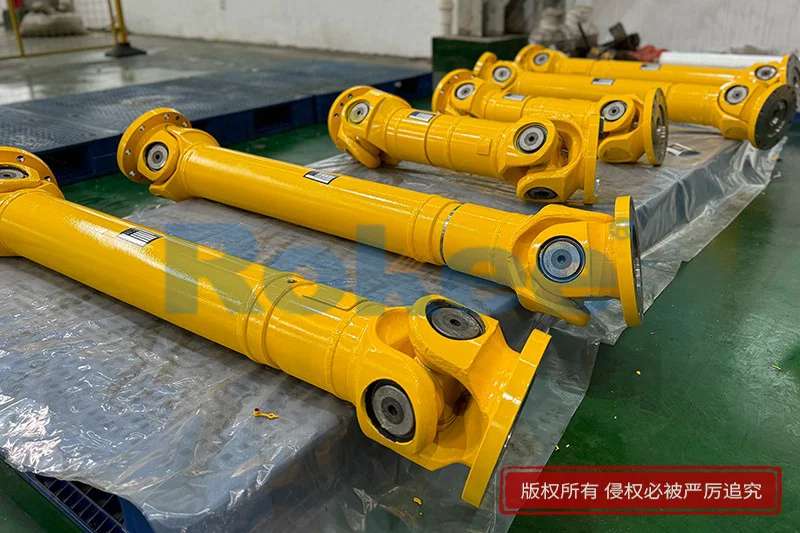
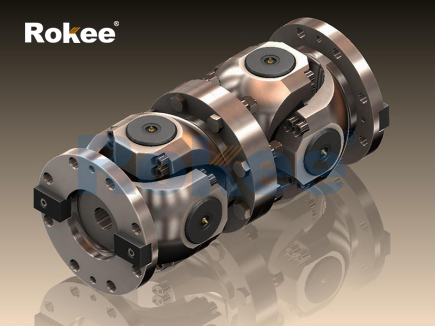
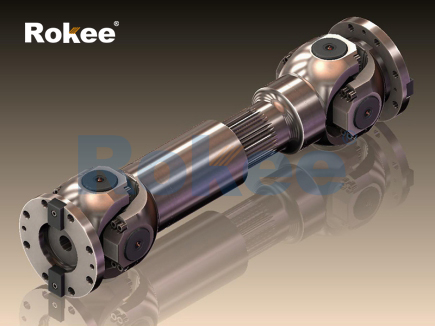
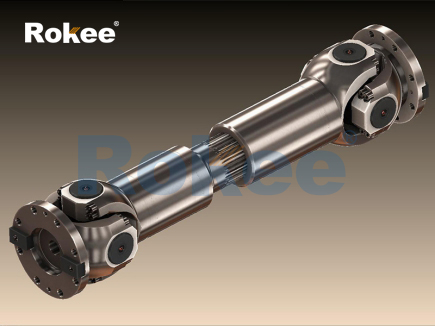
The basic structural composition of cardan drive shafts follows mature mechanical design logic, consisting mainly of universal joints, intermediate shaft bodies, connecting flanges, and movable fitting parts. Each component undertakes distinct functional responsibilities and cooperates closely to complete the power transmission process. Universal joints, as the core functional units of the entire structure, rely on cross shaft connection mechanisms to realize angle deflection. The internal movable clearance of the joints allows the connected shafts to form a certain included angle without interrupting power transmission. The intermediate shaft body, usually processed into a hollow cylindrical structure, balances mechanical strength and overall weight effectively. Hollow structural design not only reduces the self-weight of the drive shaft to lower equipment operation energy consumption but also maintains excellent torsional resistance to withstand instantaneous torque fluctuations during mechanical movement. Connecting flanges adopt integrated stamping and forging molding methods to ensure flat joint surfaces and stable assembly accuracy, which can disperse pressure during power transmission and avoid local stress concentration that causes component damage.
Material selection determines the service life, mechanical performance, and environmental adaptability of cardan drive shafts, and manufacturers always adhere to strict material screening standards in the production process. High-quality carbon alloy steel is the most commonly used raw material for shaft bodies and cross shaft components, featuring high tensile strength, good toughness, and outstanding fatigue resistance. This type of material can withstand long-term cyclic torsion and mechanical vibration without permanent deformation, suitable for heavy-load and high-frequency operation scenarios. For components requiring wear resistance such as joint bearing surfaces and movable contact points, surface hardening treatments are applied through thermal processing technologies. The heat treatment process optimizes the internal metal structure of materials, improving surface hardness while retaining the internal toughness of components, effectively reducing wear loss caused by continuous friction during operation. In addition, for equipment working in humid, dusty, or chemically corrosive environments, external surfaces of cardan drive shafts will be coated with anti-corrosion protective layers. These isolation layers can block the erosion of moisture, oxide impurities, and weak corrosive substances, slowing down metal aging and extending the overall service cycle of the drive shafts.
The working principle of cardan drive shafts is based on the mechanical motion characteristics of universal joints, achieving continuous power transmission under variable angle conditions. When mechanical equipment starts running, the driving end transmits rotational power to the universal joint, and the cross shaft structure inside the joint converts fixed-axis rotation into flexible angular rotation. Even if the driving shaft and driven shaft produce angle deviation due to equipment vibration, position movement, or mechanical deformation, the universal joint can adjust the transmission angle in real time to ensure uninterrupted torque output. In the transmission process, the intermediate shaft body buffers instantaneous torque impact through its own structural elasticity, avoiding sharp power fluctuations that affect the stable operation of mechanical equipment. For transmission systems with large spacing between shafts, multi-section combined cardan drive shafts are adopted, with additional intermediate supporting structures to reduce shaft body shaking and maintain rotational stability at high speeds. This flexible transmission mechanism enables cardan drive shafts to break through the spatial limitation of traditional rigid transmission, providing reliable power connection solutions for complex mechanical layouts.
Cardan drive shafts have extremely broad application coverage, penetrating almost all fields involving mechanical power transmission. In the transportation industry, they are applied to various engineering vehicles, commercial vehicles, and special transportation machinery. In vehicle chassis systems, cardan drive shafts connect gearboxes and rear axles, transmitting engine power to driving wheels. They adapt to the up and down jitter of vehicle bodies during driving and the angle changes of wheel positions, ensuring smooth power output on uneven road surfaces. In the field of industrial machinery, these drive shafts serve heavy-duty processing equipment such as metallurgical machinery, mining machinery, and cement production equipment. Mining machinery needs to operate in rugged terrain with large equipment vibration, and the flexible connection performance of cardan drive shafts can offset mechanical displacement caused by vibration to maintain continuous operation of production lines. Agricultural machinery is also a major application scenario; farming equipment such as tractors and harvesters often works in muddy and bumpy field environments, and cardan drive shafts can adapt to harsh working conditions to ensure stable power transmission for tillage, harvesting, and feeding components.
The production and processing of cardan drive shafts require sophisticated manufacturing processes and precise processing equipment to guarantee assembly accuracy and mechanical performance. The production flow starts with raw material cutting and rough machining, where raw steel materials are cut into blank parts that meet size specifications, and redundant structures are removed through lathe rough turning to form the preliminary outline of components. Subsequently, finish machining is carried out with high-precision numerical control machine tools to polish the shaft body surface, joint contact surfaces, and flange connection holes, controlling the dimensional tolerance within an extremely small range. Smooth and flat processing surfaces can reduce friction resistance during component movement and avoid abnormal wear caused by uneven contact. After mechanical processing, heat treatment and surface modification processes are conducted to optimize material performance. Finally, all components are assembled in a dust-free and constant-temperature processing workshop. Professional assembly tools are used to control assembly tightness, and movable gaps between parts are reasonably reserved to ensure flexible rotation of universal joints without excessive looseness leading to transmission deviation.
Performance optimization has always been the core research direction in the upgrading iteration of cardan drive shafts. With the continuous improvement of industrial production efficiency requirements, mechanical equipment is developing towards higher speed, heavier load, and more compact structure, which puts forward stricter performance standards for drive shaft components. Modern manufacturers optimize the internal structure of universal joints by adjusting the curvature of contact surfaces and improving the matching mode of cross shafts and bearing parts, effectively reducing friction coefficient and motion noise during transmission. Structural lightweight optimization is also an important improvement measure; under the premise of ensuring torsional strength, the wall thickness of hollow shaft bodies is reasonably adjusted, and partial hollowing treatment is carried out on flanges to reduce overall weight. Lightweight design can lower the rotational inertia of the drive shaft, reduce equipment energy consumption, and improve power transmission efficiency. In addition, sealing performance has been continuously upgraded. Multi-layer composite sealing structures are installed at the joints of movable parts to prevent external dust, moisture, and granular impurities from entering the interior, reducing the failure probability of internal components.
Daily maintenance and rational use are crucial to prolonging the service life of cardan drive shafts and maintaining stable working performance. In the daily operation of mechanical equipment, regular lubrication maintenance must be carried out on the movable joints of drive shafts. High-viscosity and wear-resistant lubricating grease can form a uniform protective film on the friction contact surface, reducing direct metal friction and lowering wear loss and operating noise. Operators need to regularly check the tightness of connecting fasteners to prevent bolt loosening caused by long-term mechanical vibration, which may lead to transmission deviation or component falling off. It is also necessary to observe the surface condition of the drive shaft regularly; if surface rust, coating peeling, or local deformation is found, targeted maintenance measures should be taken in a timely manner. For equipment that has been idle for a long time, idle rotation debugging should be performed before formal operation to ensure flexible movement of universal joints and avoid jamming failure caused by long-term static placement. Scientific maintenance management can effectively reduce component failure rates and cut down the long-term use cost of mechanical equipment.
In the context of the continuous development of the global mechanical manufacturing industry, the market demand for cardan drive shafts remains in a steady growth state. The continuous expansion of infrastructure construction, industrial production, and modern transportation industries has driven the upgrading and iteration of supporting transmission components. More manufacturers have begun to pay attention to the comprehensive performance of cardan drive shafts, including load-bearing capacity, environmental adaptability, operational stability, and maintenance convenience. In addition, with the popularization of intelligent mechanical equipment, the matching drive shaft products are gradually developing towards personalized customization. According to different equipment operating environments, power parameters, and installation spaces, manufacturers can adjust shaft body length, joint deflection angle, and structural strength to produce customized products that meet differentiated usage needs. This customized production mode further expands the application boundary of cardan drive shafts and enhances their market adaptability.
Looking ahead, the technological development of cardan drive shafts will be more inclined to high efficiency, durability, and environmental protection. With the continuous innovation of new metal materials and composite materials, more high-performance raw materials will be applied to drive shaft production, realizing the simultaneous improvement of strength, lightweight, and corrosion resistance. Intelligent detection technology will also be integrated into the production and use links; embedded sensing components can monitor the operating temperature, torque load, and wear degree of drive shafts in real time, providing data support for equipment maintenance and fault early warning. At the same time, the production process will develop towards energy conservation and environmental protection, optimizing processing procedures to reduce resource waste and industrial pollution emissions. As an essential basic mechanical component, cardan drive shafts will continue to exert irreplaceable value in various industrial fields, constantly adapting to the upgrading needs of modern machinery and promoting the stable development of the entire mechanical transmission industry.
- Tags:
- Cardan Drive Shafts ,
- sandwich panel line ,
- sandwich panel machine
- pu sandwich panel machine
« Cardan Drive Shafts Supplier » Latest Update Date: May 9, 2026
https://www.rokeecoupling.net/blog/cardan-drive-shafts-supplier.html