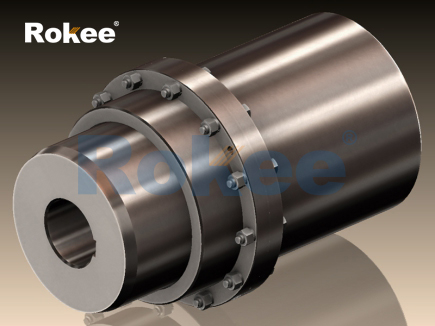
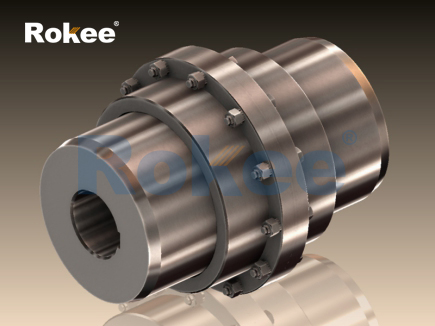
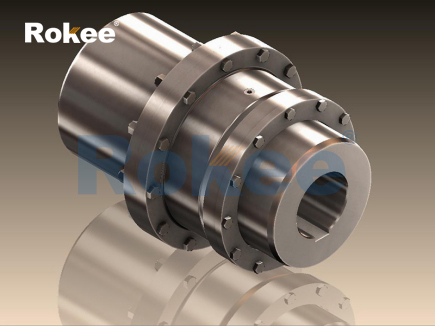
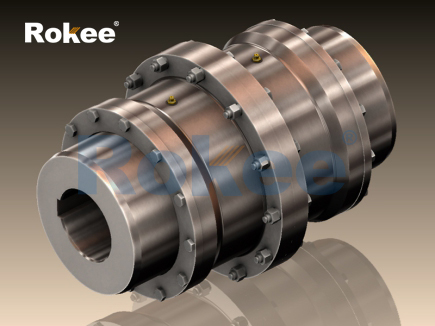
Curved tooth coupling, as a high-efficiency and high-reliability mechanical transmission component, is widely applied in various industrial mechanical transmission systems that require stable torque transmission and shaft misalignment compensation. Different from traditional straight tooth couplings with rigid contact and poor adaptability, this type of coupling adopts a unique curved tooth profile design, which fundamentally optimizes the meshing state of gear pairs during operation. It not only realizes continuous and stable torque and power transmission between rotating shafts but also effectively adapts to various minor installation deviations and operational deformations of equipment, making it suitable for heavy-load, high-speed and long-cycle working conditions. The overall working logic of curved tooth coupling is based on precision gear meshing, flexible contact adaptation and mechanical stress balance, and its internal operating mechanism can be systematically analyzed from structural composition, torque transmission process, misalignment compensation principle and dynamic operation characteristics.

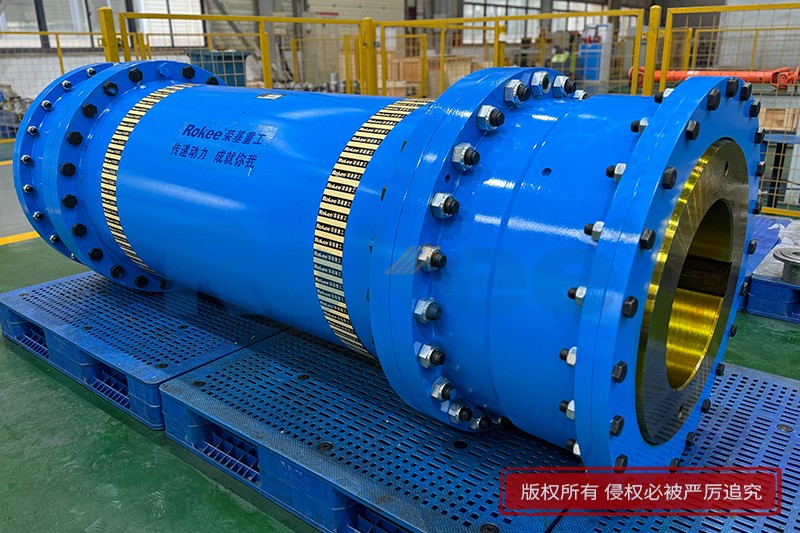
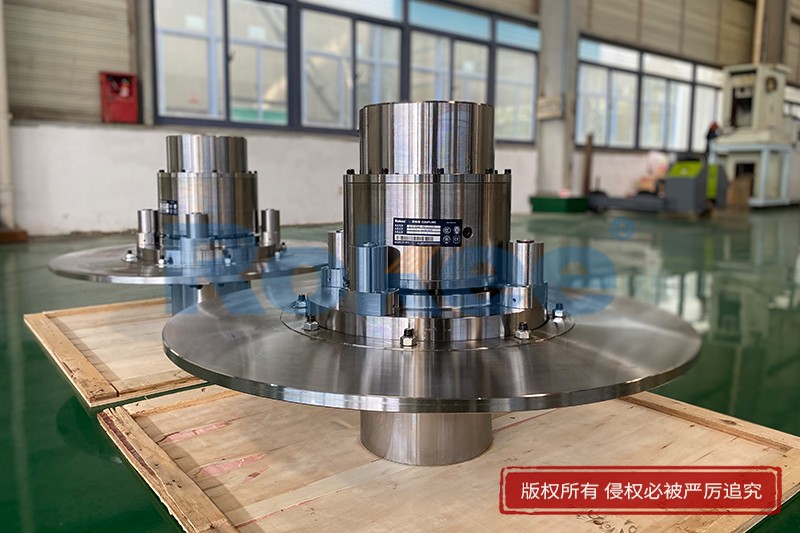
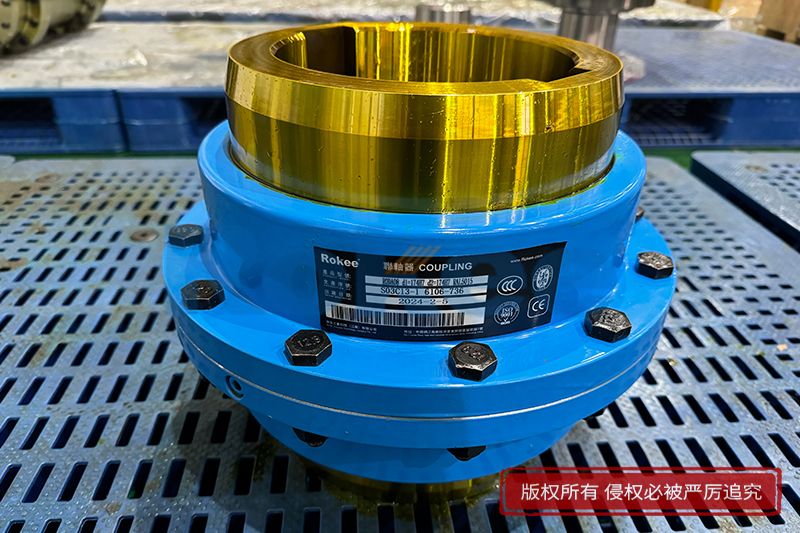
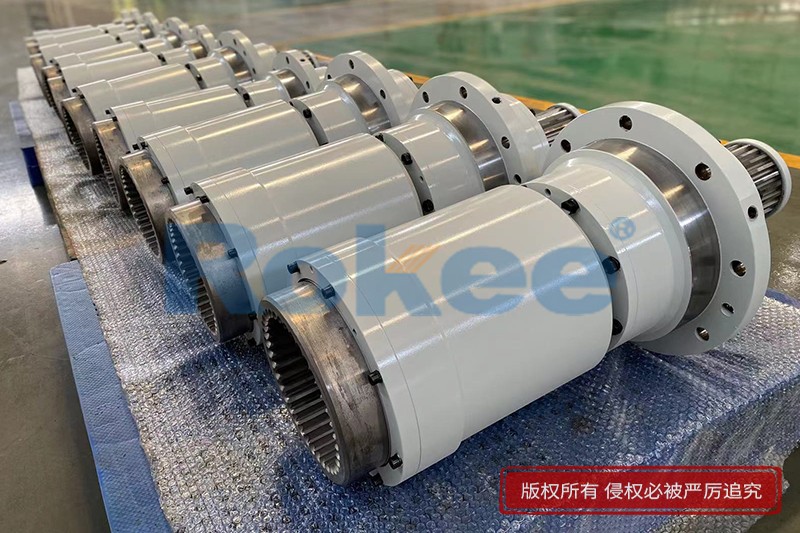
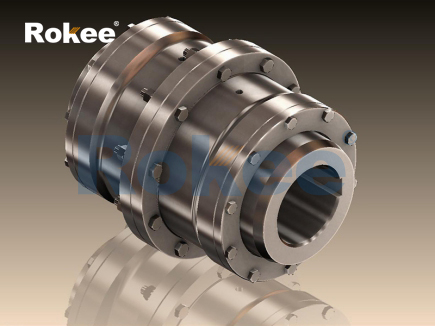
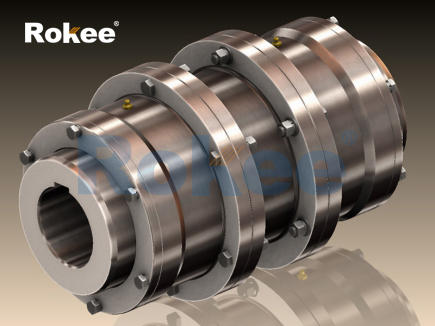
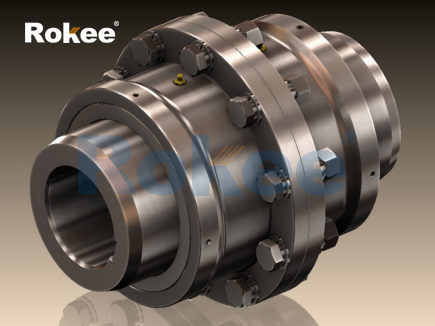
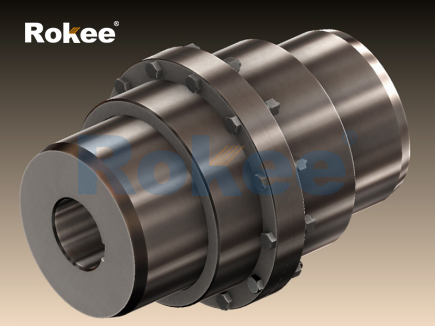
The basic structure of curved tooth coupling constitutes the physical foundation of its working principle, and the whole assembly consists of two core parts: external tooth hubs with curved tooth profiles and internal tooth sleeves with standard straight internal teeth. The external teeth processed on the surface of the two shaft hubs are designed with a spherical curved profile, with the spherical center of each curved tooth located on the central axis of the coupling. This structural feature is the key difference between curved tooth coupling and ordinary straight tooth coupling. The tooth thickness and tooth surface radian of the external curved teeth are uniformly optimized along the axial direction, and a reasonable tooth side gap is reserved between the external curved teeth and the internal straight teeth during assembly. The two external tooth hubs are respectively fixed on the driving shaft and the driven shaft of the mechanical equipment through key connection or interference fit, while the internal tooth sleeve is sleeved on the outer side of the two groups of external teeth, forming a closed meshing transmission structure. In practical manufacturing, the tooth surface of the external curved teeth usually undergoes surface hardening treatment to improve surface hardness, wear resistance and fatigue resistance, while the internal tooth sleeve adopts high-strength alloy materials to ensure overall structural rigidity, avoiding structural deformation under long-term load and affecting transmission accuracy.
The core working principle of curved tooth coupling is the flexible meshing transmission realized by the matching of curved external teeth and straight internal teeth. In the operation process of mechanical equipment, the driving shaft drives the connected external tooth hub to perform synchronous rotary motion. With the rotation of the driving hub, the curved external teeth continuously mesh with the internal teeth of the outer sleeve, and the contact force generated by the meshing tooth surfaces drives the internal tooth sleeve to rotate synchronously. Subsequently, the internal tooth sleeve transmits the rotary torque to the external tooth hub fixed on the driven shaft, thereby realizing the synchronous rotation and power transmission of the driving shaft and the driven shaft. Unlike the linear contact mode of straight tooth couplings, the curved tooth profile enables the tooth surfaces to form uniform surface contact during meshing. This contact mode disperses the concentrated stress generated by torque transmission on a single tooth edge to the entire tooth surface, effectively avoiding local stress concentration and edge wear that are common in traditional straight tooth transmission. In the whole torque transmission process, multiple groups of tooth pairs participate in meshing and bearing force at the same time, which averts the problem of excessive single-tooth load, significantly improves the overall torque bearing capacity of the coupling, and ensures the continuity and stability of power transmission under variable load and impact load conditions.
The most prominent functional advantage of curved tooth coupling lies in its excellent misalignment compensation capability, which is also an important part of its working principle. In the actual installation and operation of mechanical equipment, it is difficult to achieve absolute coaxiality between the driving shaft and the driven shaft due to installation errors, equipment foundation settlement, thermal deformation during operation and mechanical vibration. These inevitable deviations will lead to angular misalignment, radial misalignment and axial displacement between the two shafts, and rigid shaft connection structures will produce additional bending stress and friction resistance, resulting in equipment vibration, noise and accelerated wear. The curved tooth structure perfectly solves this problem through its flexible meshing characteristics. When angular misalignment occurs between the two shafts, the spherical radian of the external curved teeth allows the meshing tooth pairs to produce a small-angle adaptive deflection. The tooth surface can still maintain uniform and close contact without generating edge extrusion or meshing jamming, and the torque transmission path remains complete and smooth. For radial misalignment caused by the parallel offset of the two shafts, the reserved tooth side gap and the sliding space formed by the curved tooth profile allow relative radial sliding between the external teeth and the internal teeth during rotation, which offsets the radial offset deviation and eliminates the additional mechanical stress caused by misalignment.
In terms of axial displacement compensation, the structural design of curved tooth coupling also has unique adaptability. When the mechanical equipment operates for a long time, the rotating shaft will produce thermal expansion and contraction due to the change of operating temperature, and minor axial displacement will occur between the driving shaft and the driven shaft. The axial movable gap reserved between the external tooth hub and the internal tooth sleeve of the curved tooth coupling, combined with the axial sliding performance of the curved tooth surface, can freely adapt to the axial displacement of the shaft system. This adaptive adjustment will not cause additional axial pressure on the shaft and bearing system, effectively protecting the supporting structure of the equipment. It is worth noting that all misalignment compensation behaviors of the curved tooth coupling are completed synchronously in the rotating meshing process, without interrupting torque transmission or reducing transmission efficiency, realizing integrated operation of power transmission and deviation correction.
From the perspective of dynamic mechanical operation, the working principle of curved tooth coupling also includes efficient vibration damping and impact buffering mechanisms. In the process of equipment start-up, stop and load mutation, the transmission system will generate instantaneous impact torque and mechanical vibration. The uniform contact structure of the curved tooth surface has good stress buffering performance. When impact load acts on the coupling, the multiple meshing tooth pairs share the instantaneous impact force, and the micro elastic deformation of the tooth surface and the slight relative sliding between the meshing teeth can absorb and dissipate part of the impact energy. This mechanical buffering effect effectively reduces the rigid impact between the driving and driven shaft systems, weakens the vibration amplitude of the transmission system, and avoids fatigue damage of shaft parts, bearings and other key components caused by frequent impact loads. Compared with elastic couplings that rely on elastic components for damping, the curved tooth coupling realizes vibration buffering through the mechanical structure of tooth meshing, which has higher structural stability and fatigue resistance, and can maintain stable damping performance under long-term high-load operation without aging failure of vulnerable parts.
The lubrication matching mechanism is an indispensable auxiliary part of the working principle of curved tooth coupling and directly determines its operating stability and service life. A certain gap is reserved between the curved external teeth and internal teeth of the coupling, which forms a closed lubrication cavity after assembly. During the rotating operation of the coupling, the lubricating medium filled in the cavity can form a continuous oil film on the meshing tooth surface under the action of centrifugal force. The oil film can isolate the direct dry friction between metal tooth surfaces, reduce friction coefficient and wear loss during meshing. At the same time, the flowing lubricating medium can take away the friction heat generated by high-speed meshing and the tiny metal wear debris generated by long-term operation, realizing self-cooling and self-cleaning of the meshing area. The curved tooth profile is conducive to the uniform distribution of the lubricating oil film on the whole tooth surface, avoiding the local oil film rupture and dry friction caused by uneven contact pressure. Good lubrication conditions ensure that the coupling can maintain low wear and high transmission efficiency in long-term continuous operation, and effectively prevent tooth surface gluing, abrasion and other failure problems.
In terms of transmission efficiency and power stability, the working principle of curved tooth coupling shows excellent comprehensive performance. The surface contact meshing mode greatly improves the contact rigidity of the transmission pair, reduces the torsional deformation of the coupling during torque transmission, and ensures high-precision synchronous rotation of the driving and driven shafts. There is no obvious speed difference and torque loss in the transmission process, so the power transmission efficiency is maintained at a high level. Under high-speed operation conditions, the adaptive misalignment compensation function of the curved tooth coupling can correct the minor runout deviation of the shaft system in real time, suppress the resonance phenomenon of the transmission system, and keep the equipment running smoothly. For variable-load working conditions with frequent load changes, the multi-tooth shared force structure can adapt to the fluctuation of torque load, avoid instantaneous overload damage of single tooth, and ensure the continuity and reliability of power output.
The structural working characteristics of curved tooth coupling also determine its excellent fatigue resistance and long service life. The curved tooth profile eliminates the stress concentration phenomenon of straight tooth meshing, and the stress distribution on the tooth surface and tooth root is more uniform. During repeated rotating meshing, the unit stress borne by each tooth pair is stable and uniform, which avoids the tooth root fatigue fracture and tooth surface peeling failure caused by long-term alternating concentrated stress. The surface hardening treatment of the external tooth surface further improves the surface strength and wear resistance, enabling the coupling to adapt to harsh working environments such as high load, high speed and more dust. Different from flexible couplings that need frequent replacement of elastic components, the curved tooth coupling mainly relies on metal rigid structure transmission, with fewer vulnerable parts and stable structural performance, which can meet the long-term uninterrupted operation requirements of industrial equipment.
In summary, the working principle of curved tooth coupling is a comprehensive mechanical operation system integrating precision meshing transmission, adaptive misalignment compensation, dynamic vibration damping and lubrication protection. Through the innovative curved tooth profile design, it solves many inherent defects of traditional straight tooth couplings in transmission stability, deviation adaptability and load resistance. It realizes efficient and stable torque and power transmission while automatically adapting to various installation and operation deviations of the shaft system, reducing mechanical vibration, impact wear and equipment failure risks. Its unique structural mechanical mechanism makes it an indispensable core transmission component in heavy industry, mechanical manufacturing, energy power and other fields, providing reliable basic guarantee for the stable operation of various mechanical transmission systems.
- Tags:
- Curved Tooth Couplings ,
- sandwich panel line ,
- sandwich panel machine
- pu sandwich panel machine
« Working Principle of Curved Tooth Couplings » Latest Update Date: Jun 3, 2026
https://www.rokeecoupling.net/blog/working-principle-of-curved-tooth-couplings.html