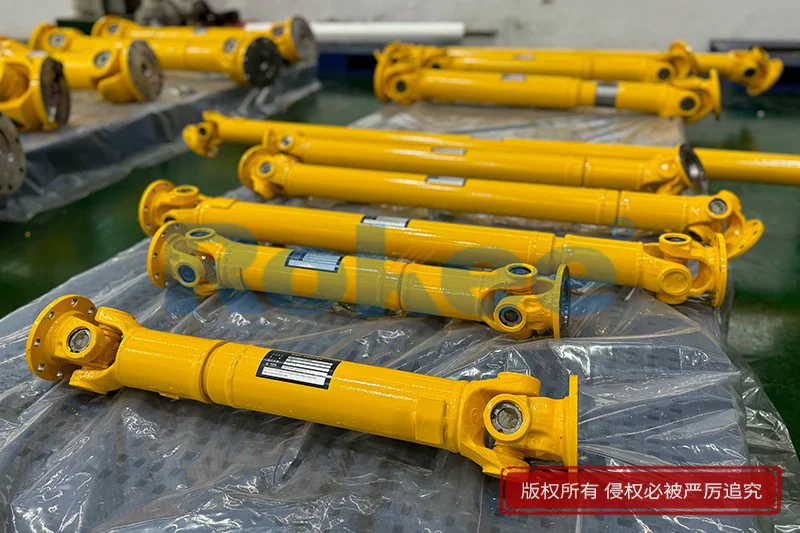
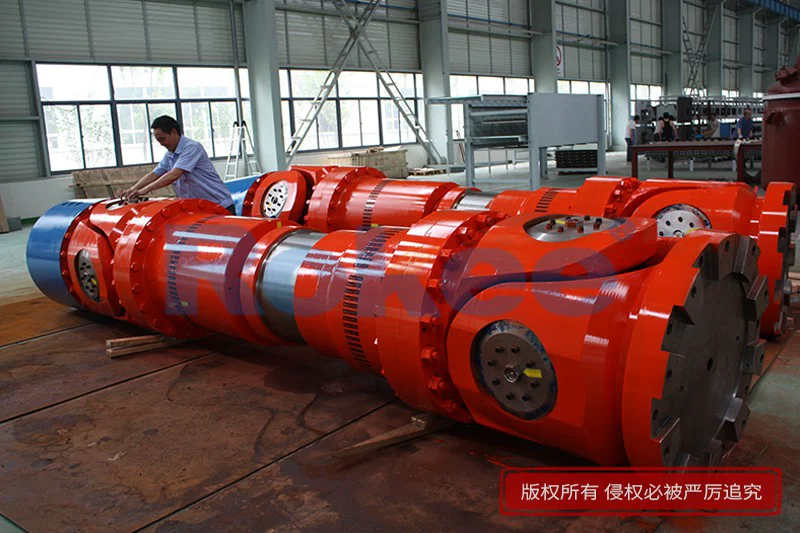
Hot-rolling H-beam Main Drive Cardan Shaft
Rokee is a well-known Hot-rolling H-beam Main Drive Cardan Shaft supplier from china, the page show cases of Hot-rolling H-beam Main Drive Cardan Shaft, provide customized services based on user's drawings, and supporting exports.
In the complex and high-intensity production system of hot-rolled H-beam, the main drive system serves as the core power transmission component that guarantees the continuous deformation and forming of steel billets. As an indispensable connecting part within this drive system, the cardan shaft undertakes the critical task of transmitting torque between the reduction gearbox and the rolling mill roll, adapting to the complex mechanical changes generated during the hot rolling process. The harsh operating environment of hot rolling production, characterized by high temperature, heavy load, frequent impact vibration and dust pollution, imposes extremely stringent requirements on the structural performance, material durability and operational stability of the main drive cardan shaft. Reasonable structural design, scientific material selection and standardized operation and maintenance are essential to reduce component wear, avoid transmission failure and maintain the long-term stable operation of the H-beam hot rolling production line. This paper comprehensively analyzes the structural characteristics, working mechanism, performance influencing factors, common failure forms and optimization improvement strategies of the main drive cardan shaft for hot-rolling H-beam, aiming to clarify the operational logic of the component in industrial production and provide practical references for its daily management and technical upgrading.
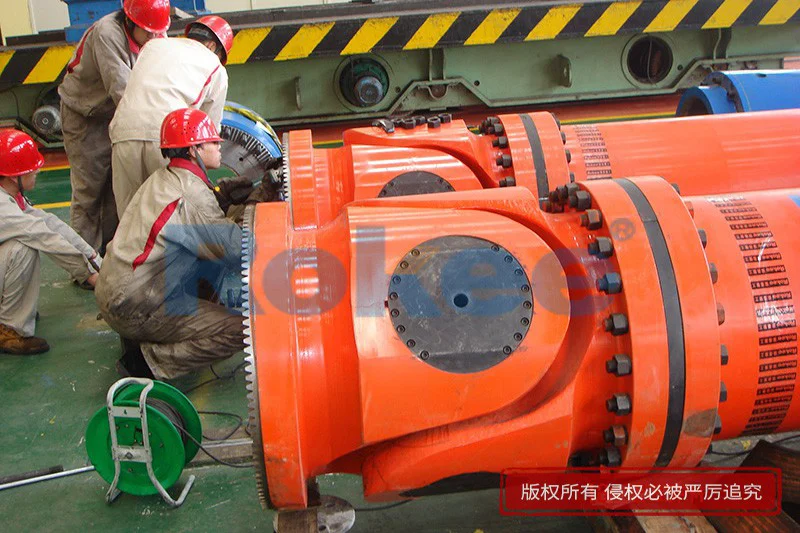
The hot rolling process of H-beam involves multiple continuous rolling procedures such as rough rolling and finish rolling. Steel billets are heated to a high temperature state and then squeezed, bent and stretched by rolls with specific profiles to achieve the standardized cross-sectional structure of H-beam. Throughout the production process, the rolls need to maintain stable rotational power output, and there is a certain spatial offset and angular deviation between the power output end of the gearbox and the roll input end due to assembly errors, mechanical deformation and equipment debugging requirements. The cardan shaft possesses unique angular compensation and displacement adaptation capabilities, which can effectively solve the power transmission problem between two shafts with non-coaxial spatial positions. Different from ordinary transmission shafts used in light-load mechanical equipment, the main drive cardan shaft for hot-rolling H-beam needs to bear ultra-high instantaneous torque and continuous alternating load. When the high-temperature steel billet bites into the rolls, the instantaneous impact force will be transmitted to the transmission system, causing instantaneous fluctuation of torque and vibration of the shaft body; during the rolling interval of steel billets, the load drops sharply, forming cyclic alternating stress inside the cardan shaft. Such special operating conditions determine that the structural design of the cardan shaft must focus on torsional resistance, impact resistance and fatigue resistance to adapt to the fluctuating load characteristics of the hot rolling production line.
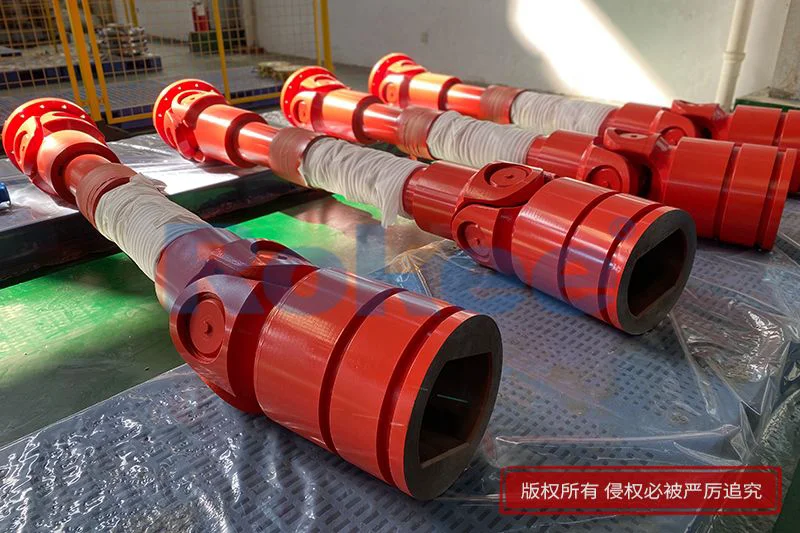
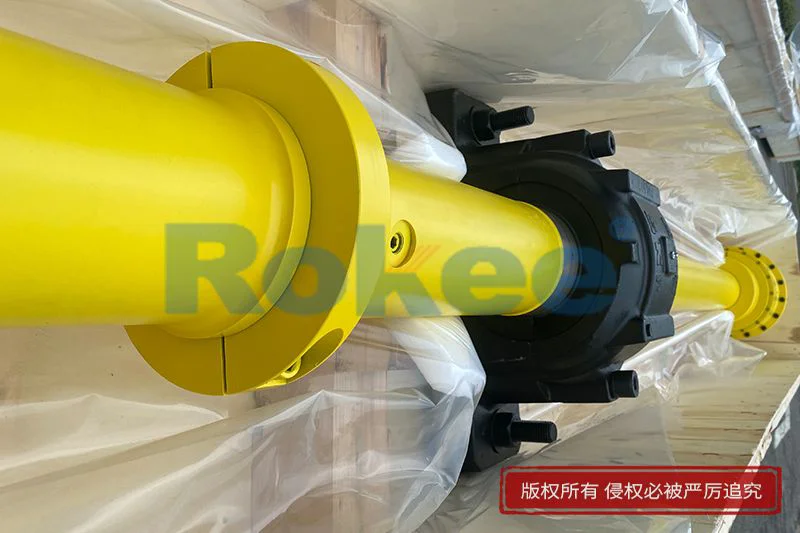
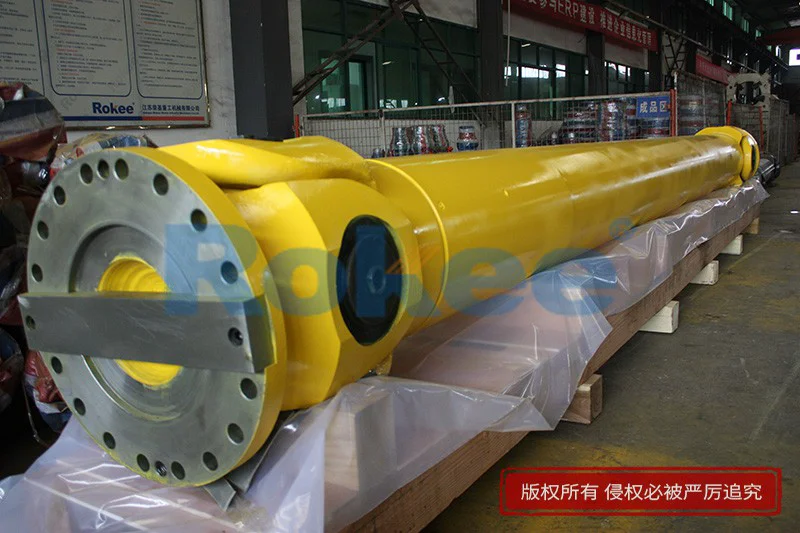
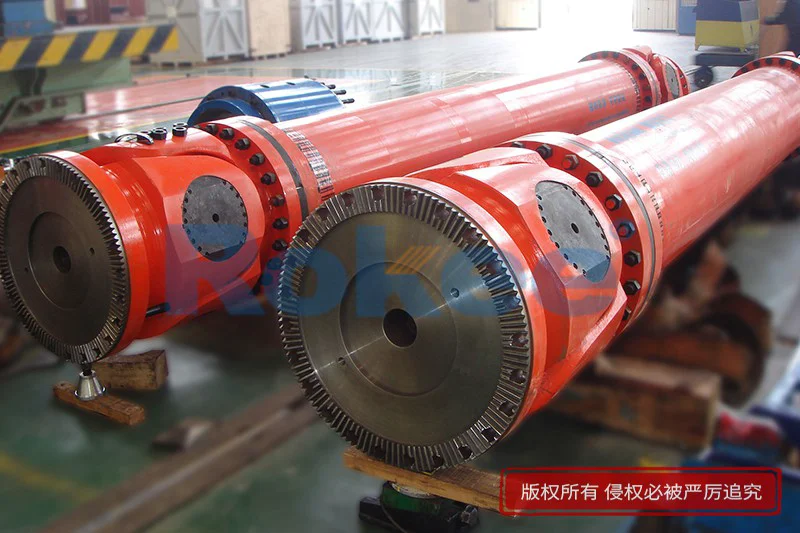
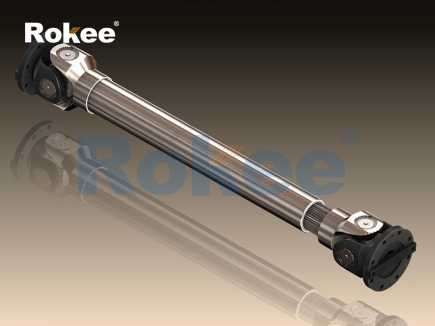
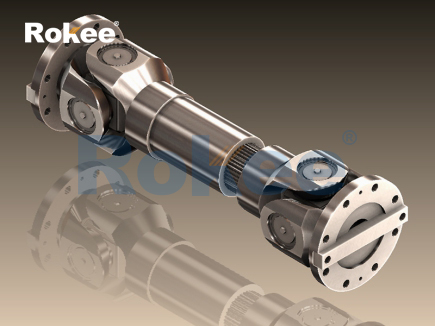
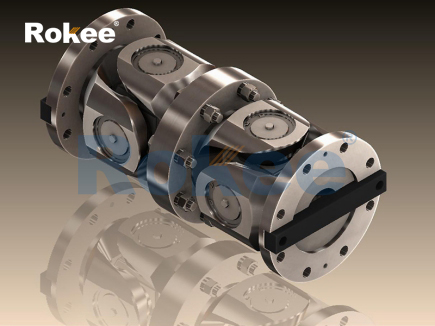
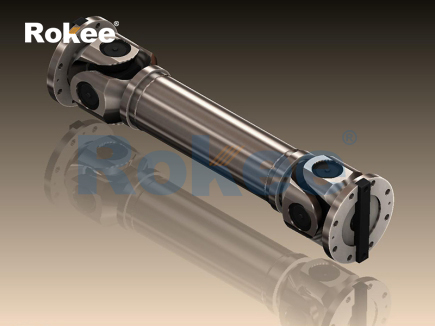
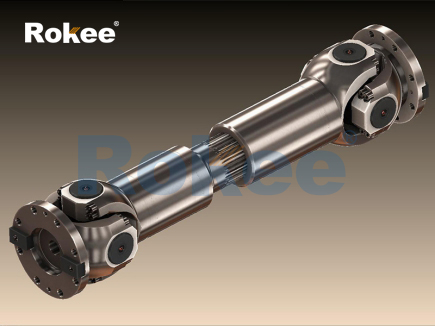
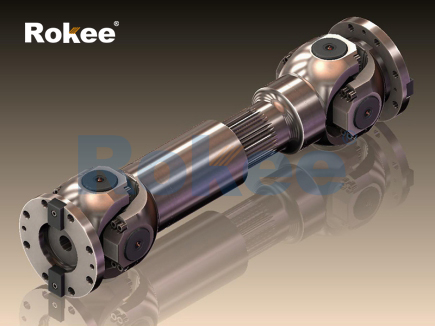
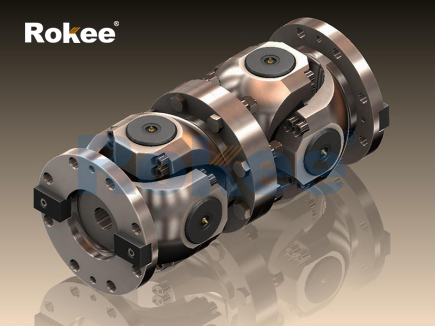
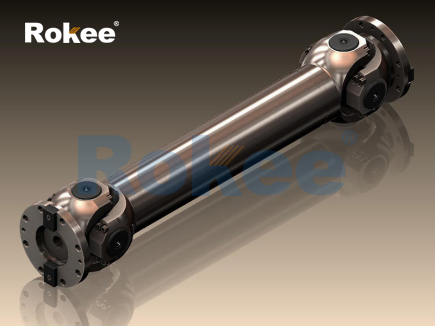
The internal structure of the main drive cardan shaft for hot-rolling H-beam is sophisticated and compact, mainly composed of universal joint assemblies, intermediate shaft body, connecting flanges, spline pairs and sealing protection components. Each part cooperates closely to complete efficient power transmission and spatial displacement compensation. The universal joint assembly is the core functional unit of the cardan shaft, usually adopting a cross shaft structure. The cross shaft connects the fork heads at both ends, realizing flexible rotation in multiple spatial directions. This structure can adapt to the angular deflection generated by the roll during operation and offset the position deviation caused by equipment thermal deformation. The intermediate shaft body is the main bearing component of torque. Most of the shaft bodies applied in heavy-duty hot rolling mills adopt hollow tubular structures. Compared with solid shafts, hollow shaft bodies can effectively reduce self-weight while ensuring torsional rigidity, lowering the additional vibration load generated by the shaft body during high-speed rotation and improving the dynamic balance performance of the transmission system. The connecting flanges are distributed at both ends of the cardan shaft, used for bolted connection with the gearbox output shaft and roll shaft respectively. The flange surface is processed with high-precision positioning grooves to ensure the alignment accuracy during assembly and avoid additional shear stress caused by assembly misalignment.
The spline pair consists of internal splines and external splines, which is responsible for realizing the axial telescopic function of the cardan shaft. In the hot rolling production process, the rolling mill will produce slight axial displacement due to thermal expansion and mechanical vibration, and the spline pair can automatically stretch and compensate for the axial displacement to prevent extrusion stress from accumulating inside the shaft body. The sealing protection components include dust covers, sealing gaskets and lubricating oil storage structures. Since the hot rolling workshop is filled with a large amount of oxide scale dust and humid water vapor, good sealing performance can effectively prevent external impurities from entering the friction pairs such as cross shafts and splines, reducing abrasive wear of precision matching surfaces. The internal lubricating structure can store lubricating grease for a long time to maintain the fluidity of friction surfaces and reduce friction resistance during component movement. The integrated structural design enables the cardan shaft to maintain stable transmission performance under the combined action of complex spatial displacement and heavy load.
Material performance is the fundamental guarantee for the service life and operational reliability of the hot-rolling H-beam main drive cardan shaft. In the high-load working environment of the hot rolling mill, the shaft body materials need to have high tensile strength, torsional yield strength and impact toughness, while the surface needs to possess excellent wear resistance and fatigue resistance. At present, high-quality alloy structural steels are widely used for processing such cardan shafts. After forging and integral heat treatment, the internal metal structure of the material is compact, with uniform grain distribution, which effectively eliminates the internal defects such as air holes and inclusions generated in the smelting process. The cross shaft and spline pair, as vulnerable friction parts, usually undergo surface strengthening treatment. The medium-frequency induction quenching technology is commonly applied to form a high-hardness martensite layer on the component surface, while the core part retains good toughness. This gradient structure with hard surface and tough core can resist surface abrasive wear and prevent brittle fracture under impact load. In addition, the surface of key components will be treated with anti-corrosion coating to slow down the oxidation and corrosion rate caused by high-temperature water vapor and acidic flue gas in the rolling workshop, further extending the stable service cycle of the components.
In the actual production process, the main drive cardan shaft of hot-rolling H-beam is prone to various failure problems under the long-term action of heavy load, high temperature and vibration. Wear failure is the most common failure form, mainly occurring on the cross shaft journal, spline meshing surface and flange connecting surface. The high-frequency relative friction between matching surfaces leads to continuous peeling of surface materials, increasing the assembly clearance of components. Excessive clearance will intensify the vibration amplitude of the transmission system, generate abnormal noise during equipment operation, and further aggravate wear, forming a vicious cycle. Fatigue failure is another key factor restricting the service life of the cardan shaft. The cyclic alternating torque makes the internal metal material bear repeated tensile and compressive stress, resulting in micro-cracks inside the shaft body. With the extension of operating time, the micro-cracks gradually expand under the action of stress concentration, eventually leading to fatigue fracture of the shaft body. This failure form has no obvious early warning in the initial stage, and once it occurs, it will cause sudden shutdown of the production line, resulting in greater production losses.
Loose connection and structural deformation are also frequent abnormal conditions of the cardan shaft. Long-term mechanical vibration will cause the connecting bolts of the flange to loosen, reducing the connection rigidity between the cardan shaft and the matching shaft parts. Insufficient connection rigidity will lead to dislocation of the joint surface, generating additional tangential force and accelerating the wear of the flange positioning structure. Under the action of extreme impact load, the shaft body may produce irreversible bending deformation. The deformed cardan shaft will lose dynamic balance, causing severe vibration of the entire transmission system during operation, and even damaging the bearings and gear structures of the matching equipment. Moreover, poor lubrication conditions will significantly accelerate the deterioration of component performance. The high-temperature environment of the hot rolling workshop will accelerate the aging and deterioration of lubricating grease. The deteriorated lubricant will lose its fluidity and adhesion, failing to form a complete lubricating oil film on the friction surface. Dry friction between components will sharply increase the friction temperature, causing local ablation of the matching surface and permanent damage to the precision structure.
To optimize the service performance and extend the service life of the main drive cardan shaft for hot-rolling H-beam, it is necessary to carry out targeted improvement from multiple dimensions such as structural design, processing technology and assembly technology. In terms of structural optimization, the transition fillet of the shaft body should be reasonably enlarged to reduce the stress concentration at the structural mutation position and avoid crack initiation at the fillet. The internal circulation lubrication structure can be added inside the universal joint to realize the circulating flow of lubricating oil, which not only ensures the continuous lubrication of friction pairs but also takes away the heat generated by friction to reduce the operating temperature of components. The dust-proof sealing structure can be upgraded by adopting multi-layer combined sealing gaskets to enhance the isolation ability of external dust and water vapor and reduce the probability of abrasive wear. In terms of processing technology, high-precision machining equipment is used to control the dimensional tolerance and surface roughness of key matching surfaces such as splines and cross shafts, improving the fitting accuracy between components and reducing the friction resistance caused by assembly gaps.
In the assembly process, scientific alignment calibration is essential. The spatial coaxiality and angular deviation between the cardan shaft and the matching shaft parts need to be strictly controlled to avoid additional load caused by assembly deviation. Before installation, the surface of each component should be thoroughly cleaned to remove processing impurities and rust spots. The connecting bolts should be tightened in a fixed sequence with constant torque to ensure uniform stress on the flange joint surface. For the cardan shaft used in the heavy-duty rolling mill, the structural strength can be appropriately increased by optimizing the shaft diameter and wall thickness parameters according to the actual rolling load, so as to improve the overload resistance of the component. In addition, the dynamic balance test should be carried out on the finished cardan shaft to eliminate the mass unbalance caused by processing errors, ensuring stable rotation of the shaft body at different speeds and reducing vibration excitation in the transmission process.
Standardized daily maintenance and scientific fault diagnosis are crucial to maintain the long-term stable operation of the main drive cardan shaft. In daily production, staff need to formulate a regular inspection system based on the operating intensity of the rolling mill. During the daily inspection, it is necessary to monitor the operating vibration, running noise and surface temperature of the cardan shaft. Abnormal vibration exceeding the standard amplitude indicates that there may be excessive wear or loose connection inside the component; harsh metal friction noise usually means poor lubrication or dry friction of matching parts; continuous high temperature of the shaft body reflects excessive internal friction torque or local stress concentration. Regularly check the tightness of flange bolts, and reinforce the loose bolts in time to avoid increased assembly clearance. The sealing protection device should be inspected regularly, and the aging and damaged sealing gaskets and dust covers should be replaced promptly to prevent impurities from invading the internal friction structure.
Lubrication management is the core link of cardan shaft maintenance. It is necessary to select lubricating grease matching the high-temperature and heavy-load working conditions, and formulate a reasonable oil injection and oil replacement cycle. In the high-temperature rolling environment, the lubricating grease will gradually deteriorate and oxidize, so the aged lubricant should be cleaned regularly and replaced with new grease to ensure the integrity of the surface lubricating oil film. For the spline pair and cross shaft assembly with severe friction, the amount of oil injection should be reasonably controlled to avoid component abrasion caused by insufficient lubrication or increased rotational resistance caused by excessive grease accumulation. Regularly clean the dust and oxide scale on the surface of the cardan shaft to prevent foreign matters from accumulating at the structural gap and affecting the flexible rotation of the universal joint. During the shutdown maintenance period, professional detection equipment can be used to conduct non-destructive inspection on the shaft body to find hidden micro-cracks inside the material in advance, so as to carry out maintenance and replacement before failure occurs.
With the continuous upgrading of H-beam hot rolling production towards high efficiency and large load, the performance requirements for the main drive cardan shaft are constantly improving. In the future, the optimization direction of the cardan shaft will focus on new material application, intelligent monitoring and lightweight design. The application of high-performance alloy materials and composite surface strengthening technology can further improve the high-temperature resistance, wear resistance and fatigue resistance of components, adapting to more extreme rolling working conditions. The built-in sensor monitoring module can be installed inside the cardan shaft to collect real-time data such as torque, vibration and temperature during operation. Through data analysis, the operating state of components can be judged intelligently, realizing early warning of potential faults and realizing predictive maintenance of equipment. On the premise of ensuring structural strength, the lightweight optimization of the shaft body structure can reduce the moment of inertia of the transmission system, improve the response speed of power transmission, and reduce the energy consumption of equipment operation.
As an important transmission component connecting the power source and the rolling execution part in the hot-rolling H-beam production line, the main drive cardan shaft undertakes the key task of stable torque transmission under complex working conditions. Its structural rationality, material performance and maintenance level directly affect the production efficiency and operational safety of the entire rolling mill. The harsh working environment of high temperature, heavy load and dust leads to various wear and fatigue failures of the cardan shaft. Through structural optimization upgrading, precise processing and assembly, standardized daily maintenance and intelligent monitoring management, the failure rate of the cardan shaft can be effectively reduced, the service life of components can be prolonged, and the stable and efficient operation of the H-beam hot rolling production line can be guaranteed. In the continuous development of the iron and steel industry, continuous technical exploration and optimization of the cardan shaft will provide more reliable basic component support for the high-quality and high-efficiency production of hot-rolled H-beam, and promote the continuous progress of heavy-duty rolling transmission technology.
With excellent quality, we have been continuously providing many coupling products of various categories and uses complying with multiple standards and a full range of services, from the product selection to final installation and operation, for the industry fields of ferrous metallurgy, nuclear power, gas turbine, wind power, ropeway construction, lifting transportation, general equipment, etc.
pu sandwich panel line,pu sandwich panel machine,sandwich panel machine
« Hot-rolling H-beam Main Drive Cardan Shaft » Latest Update Date: May 9, 2026
https://www.rokeecoupling.net/cases/hot-rolling-h-beam-main-drive-cardan-shaft.html
Products
![SWC-BH Cardan Shaft]() SWC-BH Cardan Shaft
SWC-BH Cardan Shaft![SWC-CH Cardan Shaft]() SWC-CH Cardan Shaft
SWC-CH Cardan Shaft![SWC-DH Cardan Shaft]() SWC-DH Cardan Shaft
SWC-DH Cardan Shaft![SWC-WD Cardan Shaft]() SWC-WD Cardan Shaft
SWC-WD Cardan Shaft![SWC-WH Cardan Shaft]() SWC-WH Cardan Shaft
SWC-WH Cardan Shaft![SWP-A Cardan Shaft]() SWP-A Cardan Shaft
SWP-A Cardan Shaft![SWP-B Cardan Shaft]() SWP-B Cardan Shaft
SWP-B Cardan Shaft![SWP-C Cardan Shaft]() SWP-C Cardan Shaft
SWP-C Cardan Shaft![SWP-D Cardan Shaft]() SWP-D Cardan Shaft
SWP-D Cardan Shaft
Other Cases
![Bearing Seat Type 650 Cardan Shaft]() Bearing Seat Type 650 Cardan Shaft
Bearing Seat Type 650 Cardan Shaft![SWC Cardan Shaft]() SWC Cardan Shaft
SWC Cardan Shaft![SWC Transmission Shaft]() SWC Transmission Shaft
SWC Transmission Shaft![Telescopic Universal Joint Drive Shaft]() Telescopic Universal Joint Drive Shaft
Telescopic Universal Joint Drive Shaft![Long Type Universal Drive Shaft]() Long Type Universal Drive Shaft
Long Type Universal Drive Shaft![Special Cardan Shaft For Poma Ropeway]() Special Cardan Shaft For Poma Ropeway
Special Cardan Shaft For Poma Ropeway![ROWH Heavy-duty Metallurgical Cardan Shaft]() ROWH Heavy-duty Metallurgical Cardan Shaft
ROWH Heavy-duty Metallurgical Cardan Shaft![Double Universal Joint Coupling]() Double Universal Joint Coupling
Double Universal Joint Coupling![Cardan Shaft of 4000mm Plate Main Mill]() Cardan Shaft of 4000mm Plate Main Mill
Cardan Shaft of 4000mm Plate Main Mill![Metallurgical Steel Rolling Cardan Shaft]() Metallurgical Steel Rolling Cardan Shaft
Metallurgical Steel Rolling Cardan Shaft