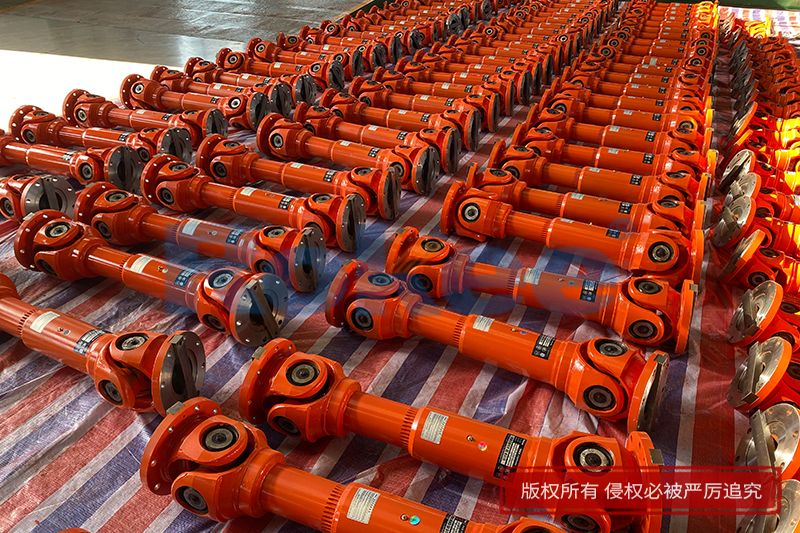
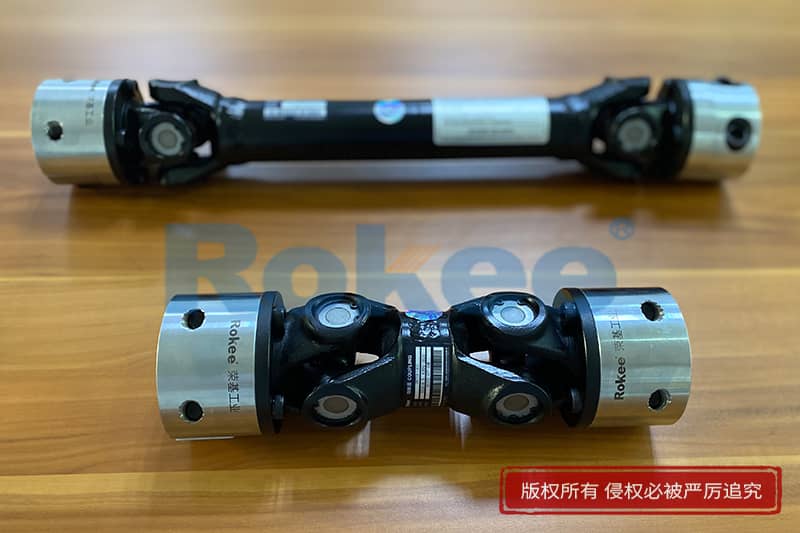
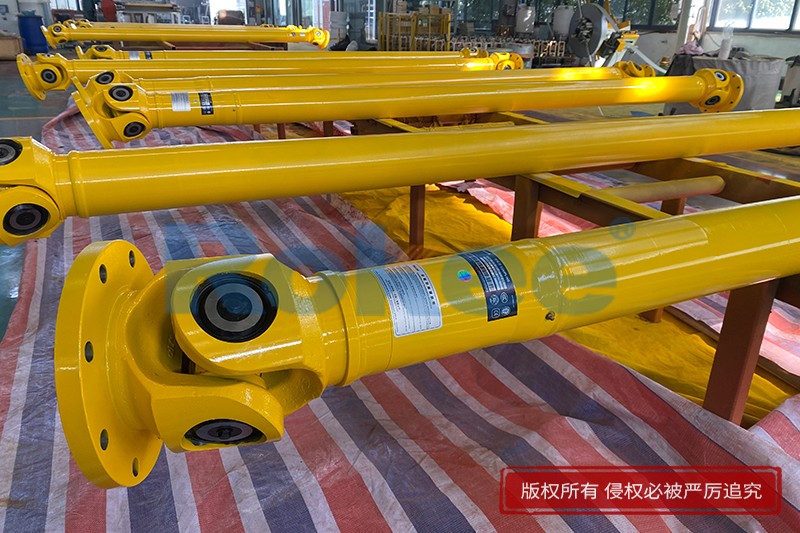
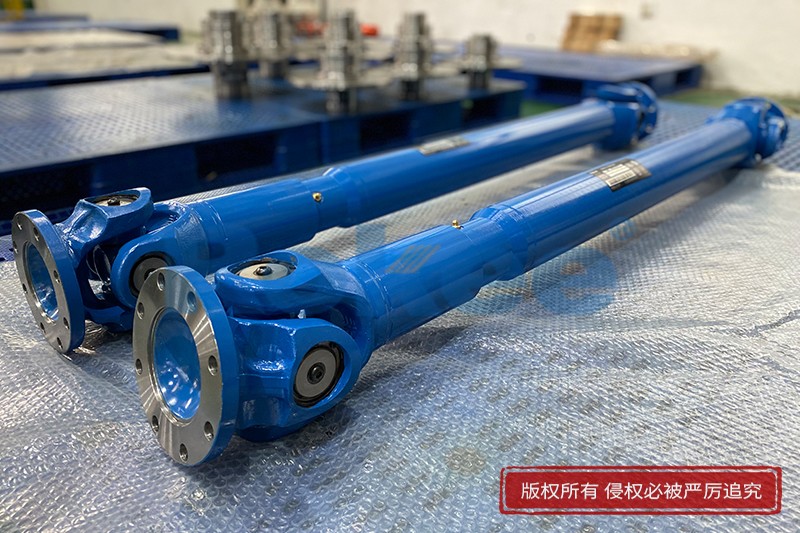
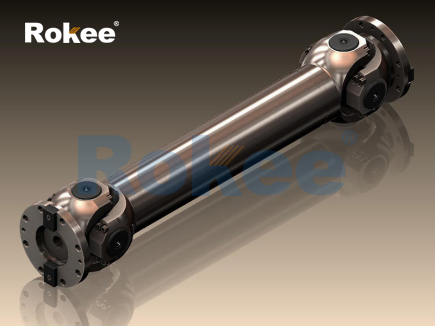
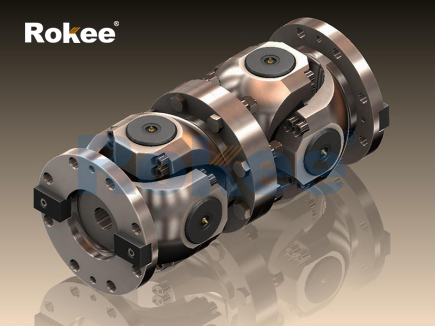
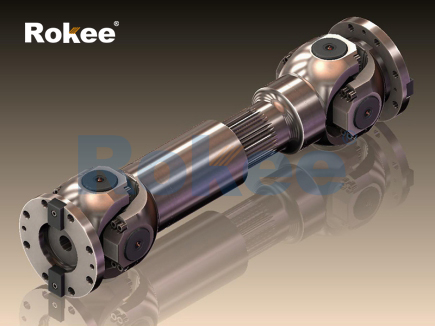
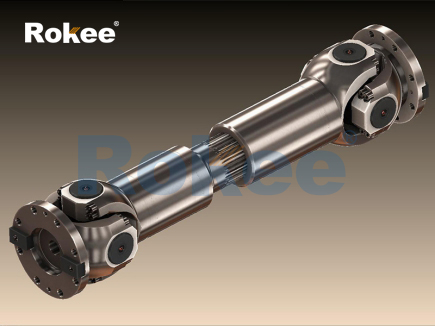
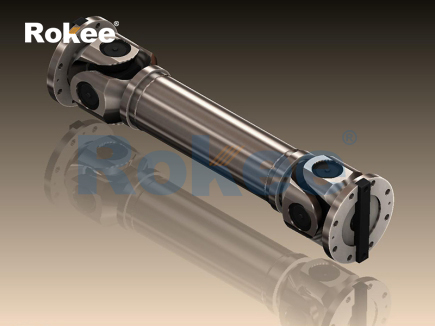
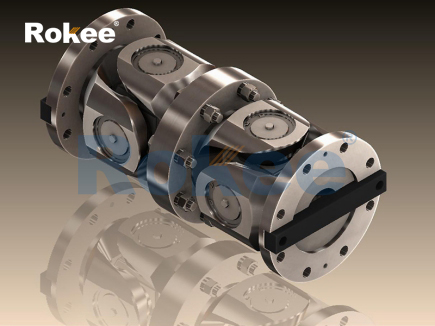
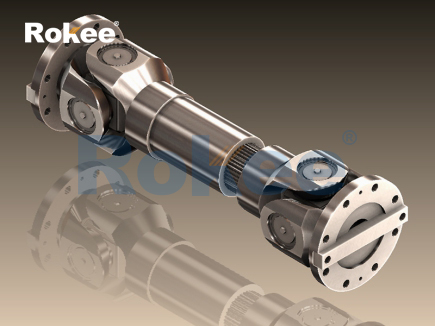
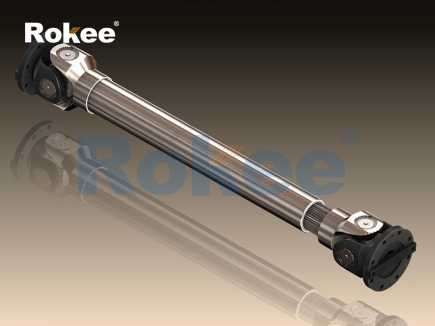
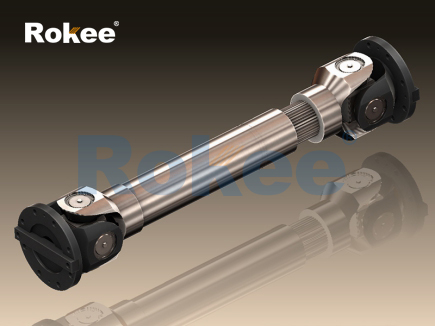
In the field of mechanical power transmission, the stability, flexibility, and reliability of connecting components directly determine the overall operating performance of mechanical systems. Among various transmission coupling structures, the cardan shaft coupling, also widely known as the universal shaft coupling, stands out as a highly practical and versatile transmission component favored in industrial manufacturing, transportation machinery, and heavy-duty mechanical equipment. Its unique mechanical structure derived from hinge transmission principles endows it with incomparable functional advantages over traditional rigid couplings and ordinary elastic couplings, making it an indispensable core part in complex and harsh transmission working conditions. Through long-term engineering practice and mechanical performance verification, the comprehensive superiority of cardan shaft couplings in shaft connection, torque transmission, and adaptive operation has been fully demonstrated, providing solid technical support for the stable and efficient operation of various mechanical power systems.
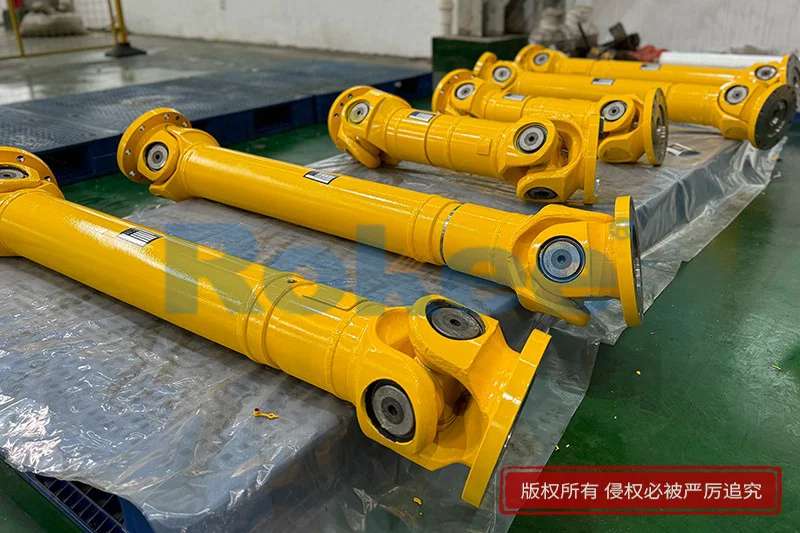
The most prominent advantage of cardan shaft coupling lies in its extraordinary multi-dimensional misalignment compensation capability, which solves the core pain point of shaft connection in mechanical installation and dynamic operation. Most traditional rigid couplings can only work stably under the condition of complete coaxiality of the driving shaft and driven shaft, and slight axis deviation will cause severe transmission resistance, mechanical vibration, and even component wear and damage. Ordinary elastic couplings have limited deformation tolerance and can only compensate for tiny angular and radial misalignments, which cannot adapt to large-scale axis offset scenarios. In contrast, the cardan shaft coupling adopts a cross shaft hinge structure, which allows a large included angle between the driving end and the driven end during operation. It can effectively compensate for angular misalignment, axial displacement, and radial offset generated during equipment installation and dynamic operation, maintaining continuous and stable torque transmission without power interruption or mechanical jitter. This powerful compensation ability enables mechanical equipment to still achieve efficient power transmission even with unavoidable installation errors, foundation settlement, or component thermal deformation during long-term operation, greatly reducing the failure rate of transmission systems caused by shaft misalignment.
In terms of transmission efficiency and power stability, cardan shaft couplings maintain excellent performance in long-term and high-load operation. Built with a pure mechanical hinge transmission structure, the coupling avoids the power loss and elastic fatigue problems common in elastic coupling products that rely on rubber or polymer buffer materials. Its internal transmission fit is precise and rigid in torque conduction, enabling it to transmit power with extremely low energy loss. In practical industrial applications, the transmission efficiency of cardan shaft couplings remains at an extremely high level even under high-power and high-speed operating conditions, achieving outstanding energy-saving effects for mechanical equipment. Moreover, the optimized double-joint structure of modern cardan shaft couplings effectively eliminates the periodic speed fluctuation problem of single universal joints during angular transmission. It ensures uniform and consistent rotational speed of the driven shaft, avoids intermittent jitter and unstable power output, and greatly improves the smoothness and uniformity of the entire power transmission process. This stable transmission characteristic is particularly critical for precision mechanical equipment and continuous production lines that require consistent power output, effectively ensuring the processing accuracy and operational stability of the equipment.
Cardan shaft couplings possess exceptional load-bearing capacity and mechanical durability, adapting to various harsh and complex working conditions. Manufactured with high-strength forged steel and alloy steel materials, the core stress-bearing components such as cross shafts and hinge joints have excellent mechanical properties including high hardness, strong tensile strength, and outstanding wear resistance. These structural features allow the coupling to withstand long-term continuous operation under heavy load, alternating load, and instantaneous impact load conditions, without plastic deformation or structural damage. Unlike many flexible couplings that are prone to aging, deformation, and failure under long-term alternating stress, the mechanical structure of cardan shaft couplings is rigid and durable, with strong fatigue resistance and structural stability. In heavy industrial scenarios such as metallurgical equipment, mining machinery, and engineering vehicles, mechanical systems often face frequent load changes and sudden impact forces, and cardan shaft couplings can always maintain stable working performance, effectively bearing complex load impacts and extending the service life of the entire transmission system. In addition, the structural design of the coupling can adapt to extreme environmental conditions, including high temperature, low temperature, dust, and humid working environments, without performance attenuation or structural failure caused by environmental changes, realizing reliable all-weather operation.
The compact and modular structural design of cardan shaft couplings brings unique advantages in installation, maintenance, and space adaptation. Different from large-scale transmission coupling structures that require complex auxiliary fixing devices and large installation space, the cardan shaft coupling integrates all functional transmission components into a compact assembly structure, with a simple and neat overall layout. It does not occupy excessive mechanical installation space and can be flexibly applied to equipment with compact internal structural space and complex shaft arrangement. Its standardized modular design enables quick assembly and disassembly during equipment installation and later maintenance, without the need for professional and complex construction processes. Operators can complete routine inspection, component maintenance, and partial part replacement in a short time, greatly reducing equipment maintenance difficulty and shortening equipment downtime. For industrial production and mechanical operation scenarios that pursue high continuity, the convenient maintenance performance of cardan shaft couplings effectively improves the overall operation efficiency of production equipment and reduces economic losses caused by equipment shutdown and maintenance. Meanwhile, the structural scalability of the coupling is strong, and its specifications and structural forms can be appropriately adjusted according to different transmission torque and installation angle requirements, meeting the diversified connection needs of various mechanical equipment.
In terms of vibration damping and mechanical protection, cardan shaft couplings also show remarkable comprehensive performance. Although dominated by rigid transmission, its hinge movable structure can appropriately buffer and absorb the tiny vibration and impact generated during mechanical operation. When the mechanical system produces instantaneous vibration due to load fluctuation or start-stop switching, the flexible hinge connection of the coupling can decompose and offset part of the vibration energy, reducing the vibration transmission between the driving shaft and the driven shaft. This vibration damping effect effectively reduces the resonance phenomenon of the mechanical transmission system, avoids excessive vibration wear of bearings, gears, and other matching components, and protects the precision parts of the equipment. In addition, when the equipment encounters extreme overload and sudden stuck failure, the structural characteristics of the cardan shaft coupling can buffer part of the instantaneous overload torque, avoiding instantaneous rigid torque impact that may cause fracture and damage of key mechanical components such as motor shafts and gearboxes. It plays a reliable buffer protection role for the power source and transmission components of the equipment, improving the overall safety and fault tolerance of the mechanical system during operation.
The wide application adaptability of cardan shaft couplings further highlights their comprehensive advantages in mechanical transmission. They are not only suitable for conventional horizontal and vertical shaft connection scenarios, but also can realize stable power transmission for spatially staggered and angularly offset shaft systems, which cannot be achieved by most traditional couplings. Whether it is low-speed and heavy-load industrial machinery or high-speed and precision transmission equipment, the coupling can adjust its working state according to different operating parameters to adapt to diverse transmission requirements. In transportation machinery, construction equipment, industrial production lines, and special mechanical equipment, cardan shaft couplings can always maintain stable working performance, with strong scene compatibility and application universality. Compared with special couplings that can only adapt to single working conditions, the multi-scene adaptation ability of cardan shaft couplings greatly reduces the type selection difficulty of mechanical design and improves the standardized level of mechanical component matching.
From the perspective of long-term economic use, cardan shaft couplings have outstanding cost-performance advantages. Thanks to their durable structural materials and stable mechanical properties, the couplings have a long service life and do not require frequent component replacement and routine maintenance compared with elastic couplings and other vulnerable parts. The low failure rate and long service cycle greatly reduce the later operation and maintenance costs of mechanical equipment. Meanwhile, its stable transmission performance avoids mechanical failure and equipment shutdown losses caused by coupling failure, reducing the invisible operating cost of industrial production. The simple installation and disassembly structure also saves a lot of labor and time costs in the equipment assembly and maintenance process. For long-term running mechanical systems, the comprehensive economic benefits brought by cardan shaft couplings are far more prominent than other types of coupling products, making them the preferred transmission component for most industrial mechanical design and transformation projects.
In conclusion, the cardan shaft coupling integrates the advantages of strong misalignment compensation ability, high transmission efficiency, excellent load-bearing performance, convenient maintenance, wide application adaptability, and good mechanical protection effect. Its unique mechanical structure makes up for various performance defects of traditional coupling products, and it can maintain stable, efficient, and safe operation in various complex working conditions and mechanical transmission scenarios. With the continuous development of mechanical manufacturing technology, the structural design and material technology of cardan shaft couplings are constantly optimized, and their comprehensive performance is further improved. As a mature and reliable mechanical transmission component, it will continue to play an irreplaceable role in industrial manufacturing, engineering machinery, transportation equipment, and other fields, providing stable core guarantee for the efficient operation of various mechanical power systems.
- Tags:
- Cardan Shaft Couplings ,
- sandwich panel line ,
- sandwich panel machine
- pu sandwich panel machine
« Advantages of Cardan Shaft Coupling » Latest Update Date: Jul 10, 2026
https://www.rokeecoupling.net/blog/advantages-of-cardan-shaft-coupling.html