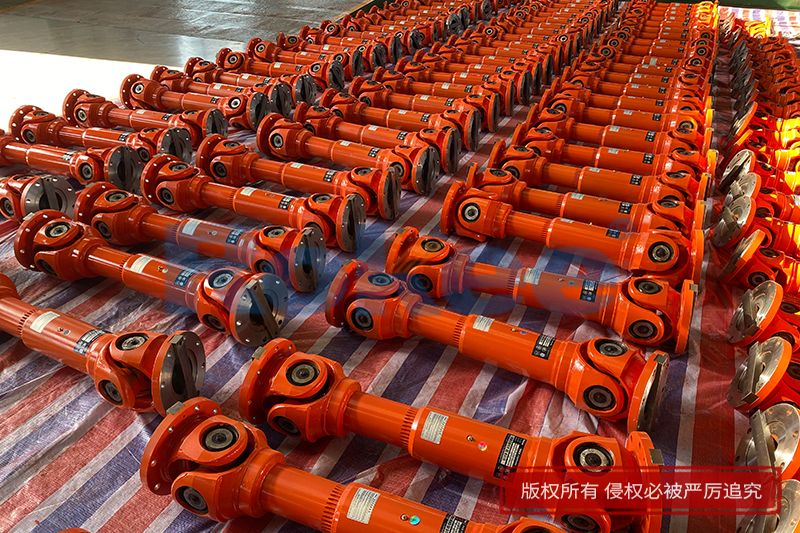
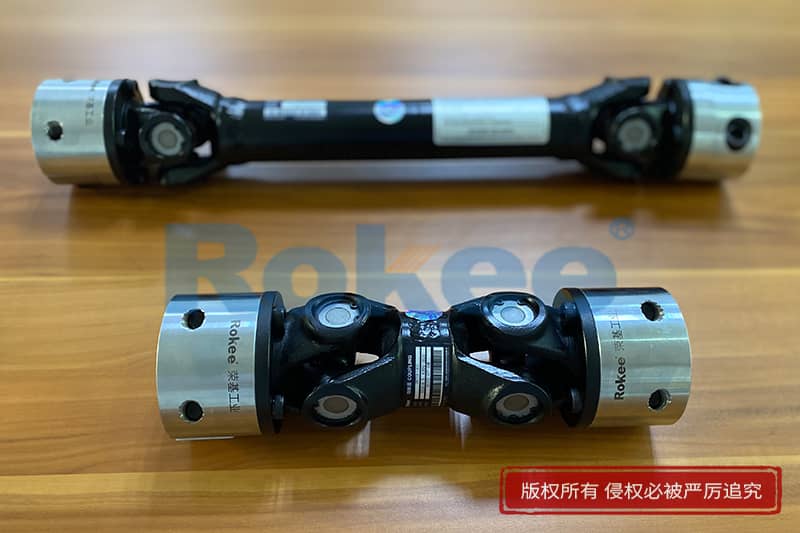
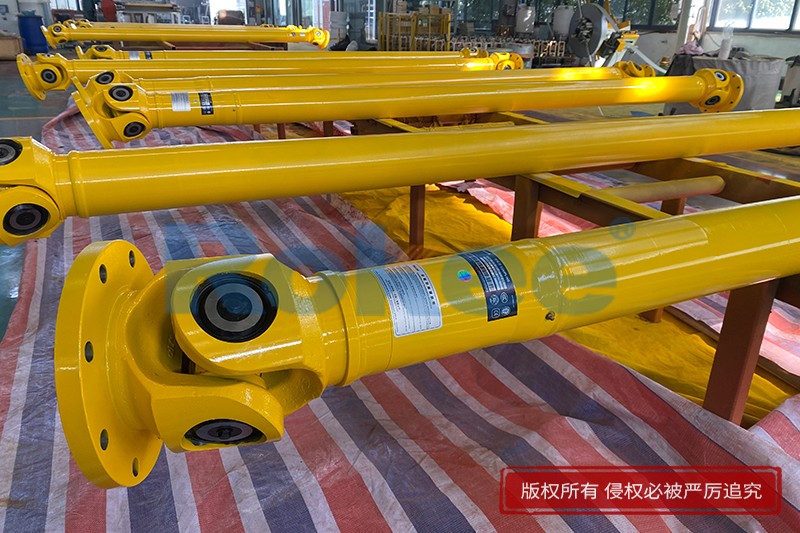
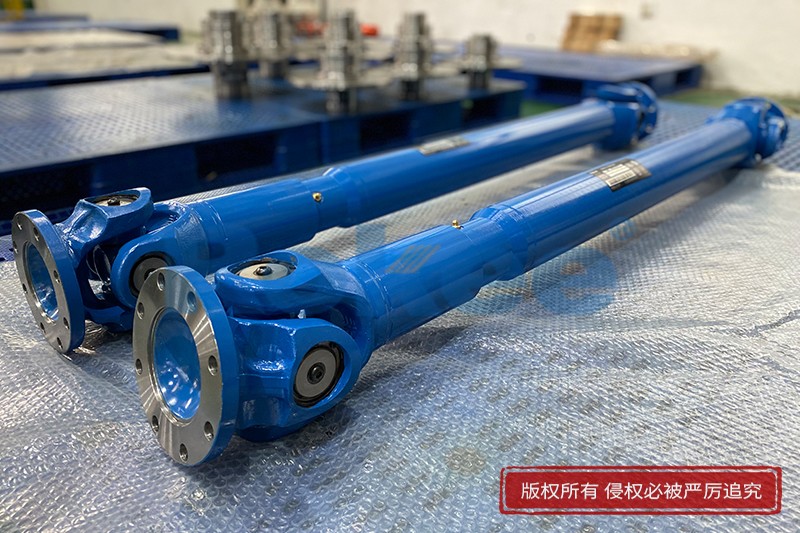
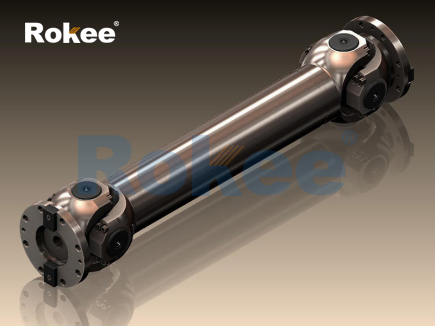
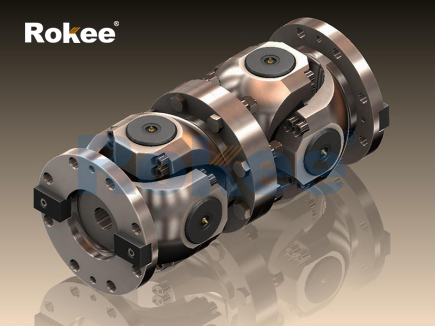
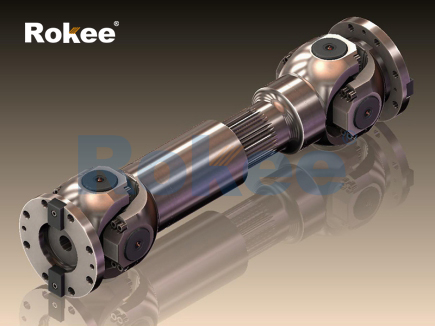
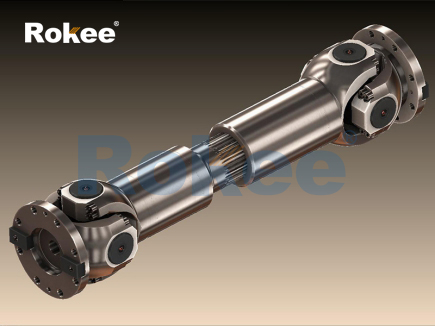
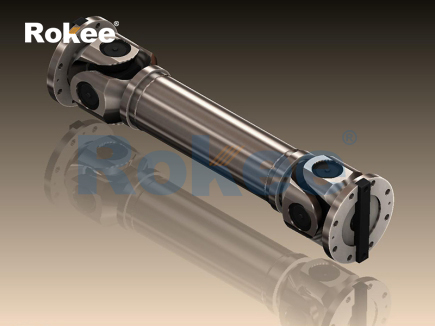
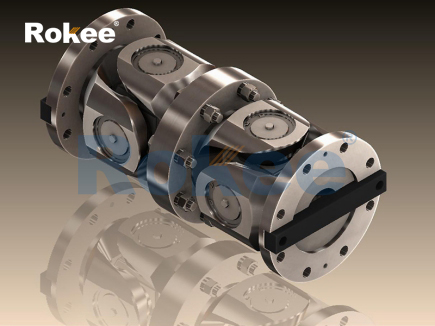
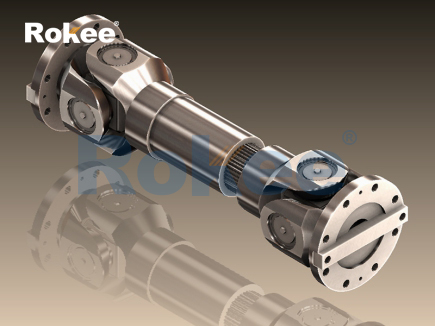
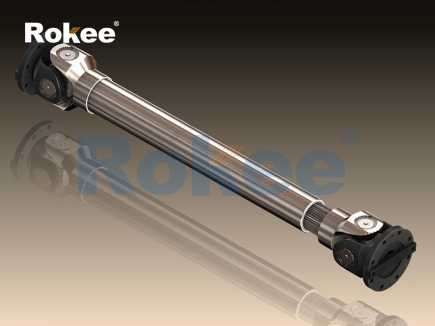
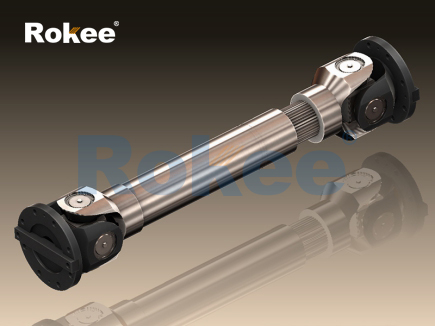
In the complex and interconnected system of modern industrial mechanical transmission, the industrial cardan shaft stands as a fundamental and irreplaceable mechanical component, serving as a critical bridge for torque and rotational motion transfer between disjointed mechanical structures. Unlike rigid transmission parts that rely on precise coaxial alignment, the industrial cardan shaft features a flexible hinge structure based on spatial linkage mechanism theory, which enables stable and continuous power transmission even when there are angular deviations, axial displacements and radial offsets between driving and driven shafts. This unique adaptive capability makes it widely deployed in heavy-duty machinery, continuous production lines and mobile industrial equipment, becoming a core guarantee for the stable operation of various industrial transmission systems. With the continuous upgrading of industrial manufacturing towards high load, high efficiency and high dynamic operation, the application value and scenario coverage of industrial cardan shafts have been further expanded, penetrating almost all fields involving mechanical power transmission.
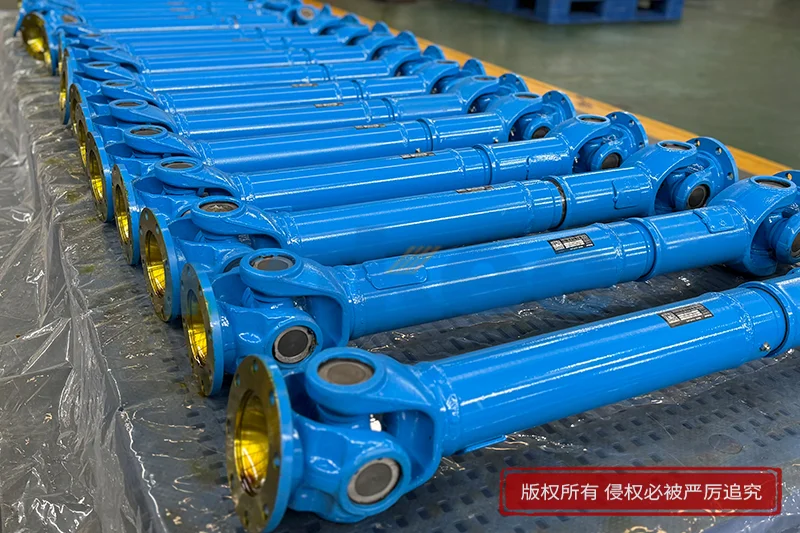
The basic working mechanism of industrial cardan shafts lays the foundation for their versatile industrial applications. The core structure of the cardan shaft consists of universal joint assemblies, intermediate shaft bodies and telescopic spline structures, and the collaborative operation of these parts realizes flexible power transmission under non-ideal alignment conditions. When the power source drives the input end of the cardan shaft to rotate, torque and rotational motion are first transmitted to the cross shaft structure inside the universal joint. The cross shaft hinge can freely adjust the deflection angle according to the relative position change of the connected equipment, converting the rotational motion of the driving shaft into stable rotational output of the driven shaft. Meanwhile, the telescopic spline structure effectively compensates for axial distance changes caused by equipment vibration, thermal expansion and mechanical displacement during operation, avoiding transmission jamming, shaft deformation or power interruption caused by axial position deviation. This structural design enables the cardan shaft to maintain consistent angular velocity and uniform torque transmission in dynamic working environments, overcoming the inherent limitations of rigid couplings that fail to adapt to misaligned transmission scenarios.
One of the most prominent advantages of industrial cardan shafts is their excellent adaptability to harsh industrial working conditions, which is the key reason for their large-scale application in heavy industrial fields. In actual industrial production, most mechanical equipment will inevitably produce vibration, position offset and angle deviation during long-term operation. Factors such as equipment installation errors, structural deformation under heavy load, thermal expansion and contraction of metal parts, and dynamic jitter during equipment operation will lead to non-coaxial state of transmission shafts. Ordinary rigid transmission components are prone to excessive bearing pressure, local stress concentration, accelerated wear of parts and even sudden fracture under such working conditions, which seriously affects the continuity of production and the safety of equipment operation. In contrast, industrial cardan shafts can buffer and offset these abnormal mechanical changes through their flexible hinge and telescopic structures, disperse transmission stress, reduce the impact of dynamic load on the transmission system, and greatly improve the stability and durability of the entire mechanical transmission chain. In addition, this type of shaft has outstanding heavy-load resistance, which can stably bear high torque output generated by large-scale industrial equipment, meeting the power transmission requirements of high-strength operating scenarios.
The metallurgical and steel industry is one of the most typical application scenarios for industrial cardan shafts, where high-load, high-frequency and continuous operation conditions put forward extremely high requirements for mechanical transmission components. Steel rolling production lines, smelting auxiliary equipment and metal processing machinery all need to transmit powerful power to complete rolling, stretching, conveying and forming of metal materials. During the operation of steel rolling equipment, the rolling mill shaft will produce continuous vibration and small-range position deviation due to the extrusion force of metal raw materials and the operation of high-speed rotating parts. Industrial cardan shafts installed in the rolling mill transmission system can adapt to the real-time angle and position changes of the rolling shaft, ensure stable torque transmission in the rolling process, avoid thickness deviation and processing defects of steel products caused by unstable power output, and effectively reduce the failure rate of rolling mill transmission parts. At the same time, the good dynamic balance performance of cardan shafts can minimize operation vibration, reduce the wear of matching bearings, gears and other transmission accessories, extend the overall service life of the rolling mill transmission system, and provide reliable support for the long-term continuous operation of metallurgical production lines.
In the field of engineering machinery and mining equipment, industrial cardan shafts play an indispensable role in ensuring the normal operation of mobile and heavy-duty operation equipment. Engineering machinery such as excavators, loaders, bulldozers and road rollers often works in complex and changeable working environments, with uneven ground and frequent equipment attitude changes. The power transmission parts of these equipment need to adapt to large-angle deflection and irregular displacement during walking and operation. Industrial cardan shafts connect the power output end of the engine, hydraulic pump and working device execution end, stably transmitting power under strong vibration and large-angle deviation conditions, ensuring the normal output of construction power and the coordination of walking and working actions. Mining equipment such as underground conveyors, mining crushers and mining drilling machinery also faces harsh working conditions including heavy dust, heavy load and frequent start-stop operation. The high structural strength and good impact resistance of industrial cardan shafts enable them to withstand complex dynamic loads in mining operation, maintain stable power transmission in long-distance and offset transmission scenarios, and avoid production interruption caused by transmission component failure in high-intensity mining operations.
Continuous processing and conveying industrial systems, including paper making, cement production, chemical industry and logistics conveying industries, also rely heavily on the stable performance of industrial cardan shafts. In paper making production lines, a large number of rotating equipment such as paper drying rollers, pressing rollers and conveying rollers need synchronous power transmission. The continuous rotating operation and minor thermal deformation of paper making equipment will lead to subtle position changes of transmission shafts. Cardan shafts can compensate for these tiny deviations, ensure the synchronous and stable operation of each roller component, avoid paper wrinkling, breaking and uneven thickness caused by asynchronous rotation, and improve the yield and processing quality of paper products. In cement and building materials production, large-scale fans, mixing equipment and conveyor systems operate for a long time with high load, and cardan shafts can adapt to the vibration and axial displacement of equipment operation, maintain the continuity of power transmission, and ensure the efficient operation of assembly line production. In chemical industrial production, many reaction and conveying equipment have strict requirements for transmission stability, and the sealed and stable transmission characteristics of cardan shafts can adapt to the complex working environment of chemical workshops, avoiding mechanical failure caused by unstable transmission and ensuring the safe and continuous operation of chemical production processes.
Power generation and shipbuilding industries are also important application fields of industrial cardan shafts, putting forward higher requirements for the precision and reliability of transmission components. In thermal power, wind power and other power generation equipment, cardan shafts are applied in the transmission systems of fans, water pumps, power generation units and auxiliary mechanical equipment. Power generation equipment needs long-term uninterrupted operation, and any transmission failure will affect the stability of power supply. The low wear and high stability characteristics of industrial cardan shafts can reduce equipment maintenance frequency, ensure the long-term stable operation of power generation auxiliary equipment, and improve the overall operation efficiency of power generation systems. In shipbuilding and marine engineering, ship power transmission systems need to adapt to the shaking and attitude changes of the hull during navigation, as well as the impact of seawater temperature change on equipment thermal deformation. Industrial cardan shafts connect ship engines, propellers and auxiliary power equipment, realizing flexible and stable power transmission under the conditions of hull jitter and shaft offset, ensuring the reliability of ship power output and navigation safety. At the same time, the structural durability of cardan shafts can adapt to the humid and corrosive marine working environment, reducing the aging and failure speed of transmission parts.
With the rapid development of modern industrial automation and intelligent manufacturing, the application scope and performance requirements of industrial cardan shafts are constantly upgrading. In automated production lines and intelligent processing equipment, the coordinated operation of multiple mechanical units puts forward higher requirements for the synchronization and precision of power transmission. Modern industrial cardan shafts are optimized in structural design and mechanical performance, with higher dynamic balance accuracy and smaller operation vibration, which can meet the high-precision transmission needs of intelligent equipment. In addition, with the popularization of energy-saving and efficient industrial production concepts, the optimized friction structure of cardan shafts reduces mechanical energy loss during transmission, improves the overall energy utilization efficiency of mechanical equipment, and conforms to the development trend of green industrial production. In the field of large-scale industrial complete equipment manufacturing, the modular design of cardan shafts also facilitates equipment assembly, disassembly and maintenance, reduces the downtime loss caused by equipment maintenance, and improves the overall operation efficiency of industrial production lines.
In practical industrial application, the service life and operation effect of industrial cardan shafts are closely related to matching application scenarios and operating conditions. Reasonable model selection according to equipment load, operation angle, transmission distance and working environment can give full play to the performance advantages of cardan shafts. In high-load and high-frequency operation scenarios, cardan shafts with enhanced structural strength are usually selected to ensure the ability to withstand long-term dynamic load impact; in high-precision automated equipment, products with high dynamic balance treatment are adopted to reduce transmission vibration and displacement error; in humid, dusty and corrosive working environments, optimized surface treatment and structural sealing designs are used to improve the environmental adaptability of the shaft body. Standardized application and matching use can not only ensure the stable operation of the mechanical transmission system, but also effectively extend the service cycle of the cardan shaft, reduce the comprehensive operation cost of industrial equipment, and create greater economic benefits for industrial production.
As an indispensable basic transmission component in modern industry, the industrial cardan shaft connects scattered mechanical units into an integrated operating system with its unique flexible transmission performance and strong environmental adaptability. Its application covers almost all heavy industry, light industry, energy and engineering fields involving mechanical power transmission, providing a core guarantee for the stable, efficient and continuous operation of industrial equipment. With the continuous progress of industrial manufacturing technology and the continuous upgrading of equipment performance, industrial cardan shafts will further develop towards high precision, high durability, energy saving and modularization, adapt to more complex and diversified industrial working conditions, and continuously expand their application value in the field of modern mechanical transmission. In the future industrial system, the industrial cardan shaft will still maintain an irreplaceable core position, providing solid basic support for the intelligent, efficient and green development of industrial manufacturing industry.
- Tags:
- Industrial Cardan Shafts ,
- sandwich panel line ,
- sandwich panel machine
- pu sandwich panel machine
« Application of Industrial Cardan Shafts » Latest Update Date: Jul 10, 2026
https://www.rokeecoupling.net/blog/application-of-industrial-cardan-shafts.html