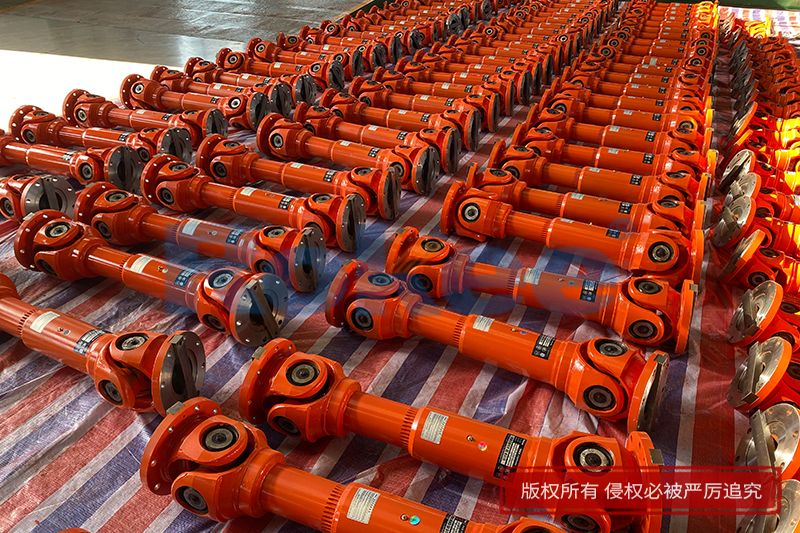
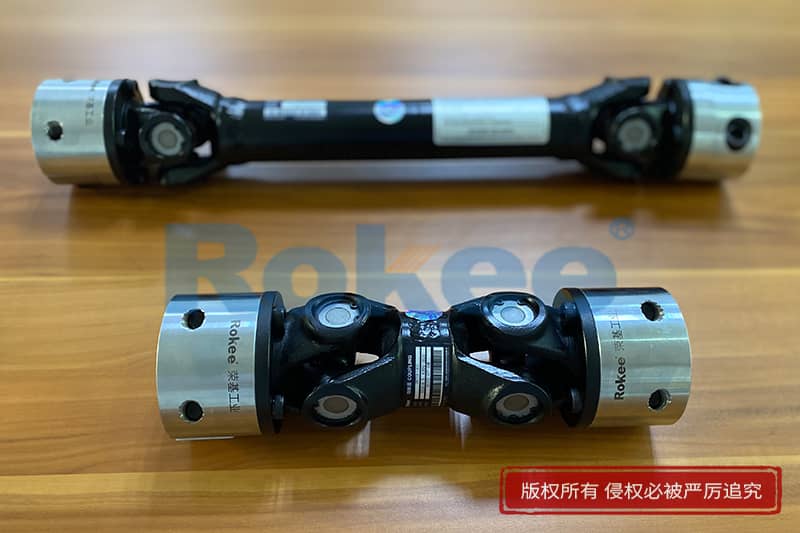
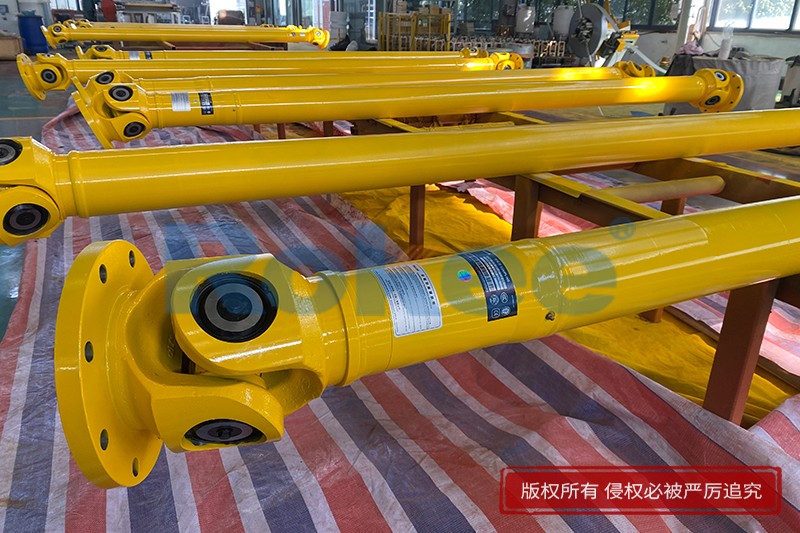
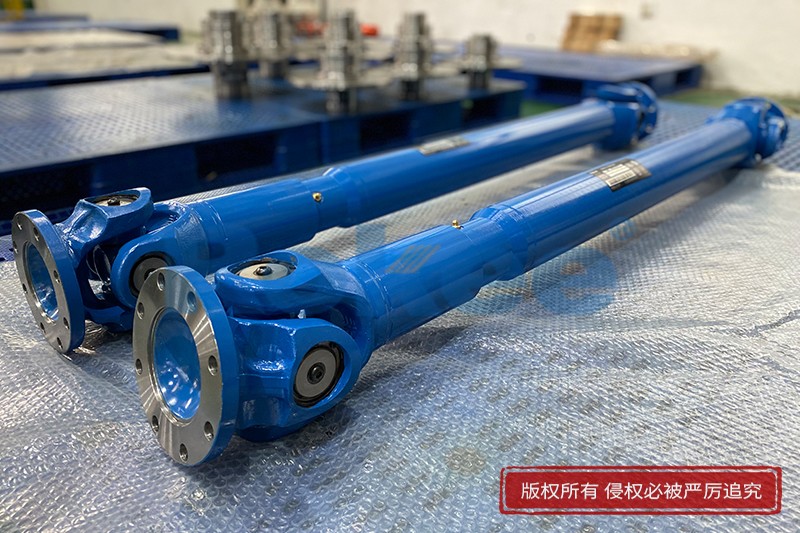
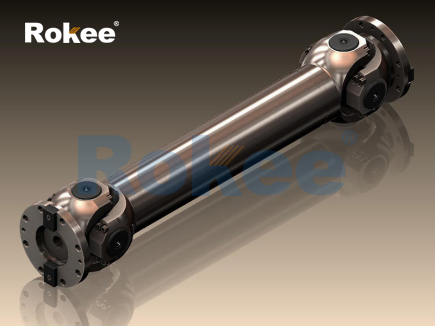
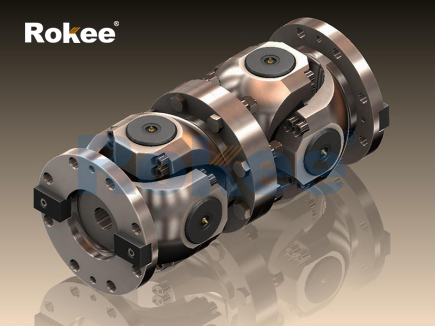
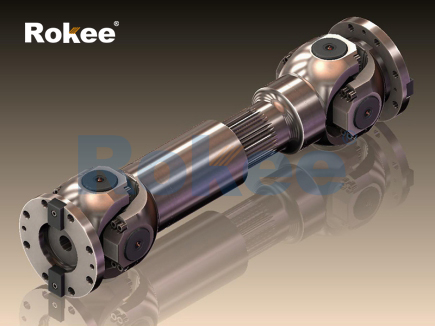
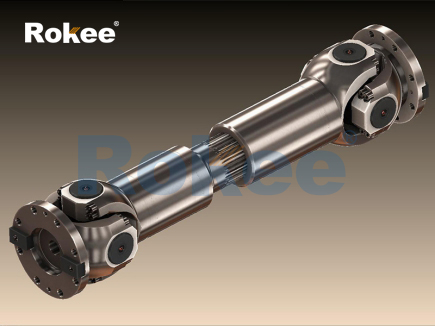
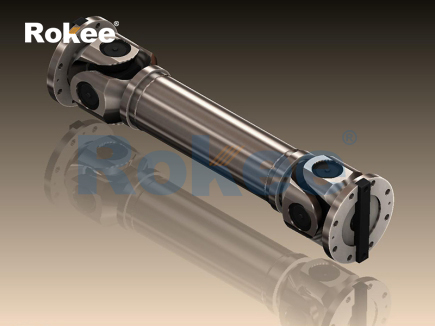
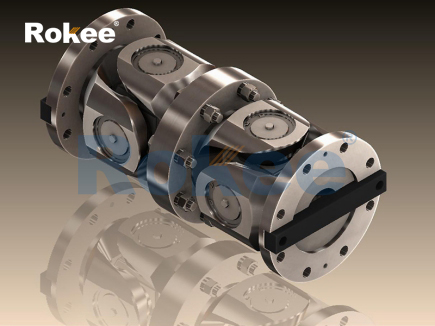
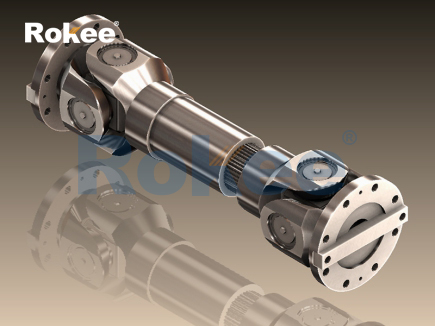
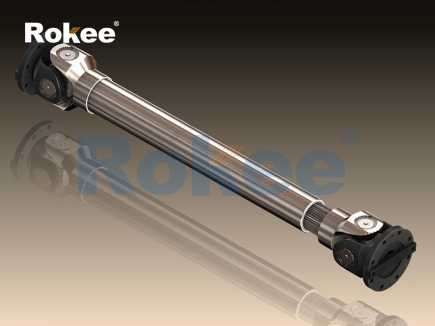
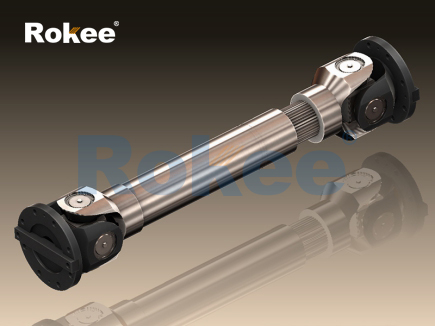
Cardan shafts stand as one of the most essential and versatile power transmission components in modern mechanical engineering, serving as a critical link in countless industrial and mobile equipment systems. Designed to transmit rotational torque and motion between two non-collinear shafts, these mechanical assemblies excel at compensating for angular misalignment, axial displacement, and positional deviations that inevitably occur during the operation of machinery and vehicles. Unlike rigid shaft connections that rely on perfect alignment for stable performance, cardan shafts integrate flexible joint structures that adapt to dynamic working conditions, ensuring continuous and efficient power transfer even when connected components shift, vibrate, or move relative to one another. This unique adaptability has made them indispensable across a vast spectrum of industries, from automotive and agricultural machinery to construction equipment, industrial manufacturing, marine systems, and aerospace auxiliary mechanisms.

At the core of every functional cardan shaft lies a sophisticated structural design built for durability and flexibility. The basic configuration consists of hollow or solid shaft tubes, universal joint assemblies, spline connection pairs, and end mounting flanges, all precisely assembled to work in synergy. Universal joints, the key functional units of the shaft, enable angular movement between connected shafts, effectively eliminating transmission stagnation caused by offset axes. The spline structure allows for free axial expansion and contraction, which offsets distance changes between power components during equipment operation, such as the suspension travel of off-road vehicles or the telescopic movement of engineering machinery booms. Shaft tubes are typically crafted from high-strength alloy materials, featuring optimized wall thickness and tubular structures that balance lightweight performance with exceptional torsional rigidity. This structural optimization effectively reduces overall equipment load while resisting torsional deformation and fatigue damage under long-term cyclic operation.
The working principle of cardan shafts is rooted in mechanical geometry and dynamic balance, delivering stable power transmission under variable operating states. When power drives one end of the shaft to rotate, the universal joint converts fixed-axis rotation into flexible angular rotation, synchronously transmitting torque to the connected driven shaft regardless of minor or moderate axis deviation. To address the slight rotational speed fluctuation inherent in single universal joint transmission, most practical cardan shaft designs adopt double-joint or multi-joint structures. This structural arrangement offsets the speed variation generated by a single joint through complementary motion, achieving constant-speed power transmission and avoiding vibration, noise, or mechanical impact that could compromise equipment stability. This balanced transmission characteristic ensures that power output remains smooth and consistent, whether operating at low speed with heavy torque or high speed with continuous rotation.
The application scope of cardan shafts spans nearly all fields requiring flexible power transmission, showcasing remarkable adaptability to diverse working environments. In the automotive industry, they serve as core transmission components for commercial vehicles, connecting transmission systems and drive axles to adapt to body jitter and suspension deformation during driving, ensuring stable power output on flat roads and rough terrain alike. In agricultural machinery, such as tractors, harvesters, and rotary tillers, cardan shafts endure complex working conditions involving mud, dust, and uneven ground displacement, reliably transmitting power to working components and supporting continuous field operations. Construction machinery, including excavators, cranes, and loaders, relies heavily on these shafts to handle frequent angle changes and heavy load impacts during boom rotation and walking operation, maintaining the coordination of multi-part power transmission.
Beyond mobile machinery, industrial manufacturing systems depend heavily on high-performance cardan shafts for stable production operations. Metallurgical equipment such as rolling mills uses cardan shafts to compensate for axis deviation during roll gap adjustment, ensuring consistent torque transmission in metal rolling processes and guaranteeing product processing accuracy. Conveyor systems in mining, logistics, and chemical industries adopt these shafts to connect distributed power units, adapting to installation position errors and equipment vibration during long-distance material transportation. Marine and offshore equipment also utilizes cardan shafts in auxiliary power transmission systems, where their corrosion resistance and structural stability enable reliable operation in humid, salt-laden marine environments. Even precision industrial equipment, including paper-making machinery, textile machines, and food processing equipment, leverages the low-vibration and high-precision transmission performance of cardan shafts to meet strict operational requirements.
The inherent performance advantages of cardan shafts lay a solid foundation for their widespread industrial adoption. Foremost is their outstanding misalignment compensation capability, which accommodates angular, axial, and radial deviations that rigid transmission components cannot tolerate, greatly reducing installation precision requirements and lowering equipment assembly and debugging costs. Their high torque transmission efficiency ensures minimal power loss during operation, converting engine or motor power into effective mechanical motion to improve overall equipment energy utilization. Additionally, well-designed cardan shafts exhibit excellent structural durability and fatigue resistance, capable of withstanding long-term cyclic loads, frequent start-stop operations, and intermittent heavy-load impacts. Compared with other flexible transmission components, they feature simpler overall structures, more stable operation, and lower failure rates, supporting long-duration continuous work in harsh industrial scenarios.
Material selection is a decisive factor in determining the service life and operational performance of cardan shafts, with premium materials ensuring superior mechanical properties and environmental adaptability. High-quality alloy steel is the primary material for shaft tubes and core joint components, undergoing precise forging, heat treatment, and finishing processes to enhance torsional strength, hardness, and wear resistance. For universal joint cross shafts and bearing parts, high-precision bearing steel is adopted to reduce friction coefficients, improve rotational flexibility, and resist wear and deformation under long-term operation. Spline surfaces and connection parts often receive surface strengthening treatments such as quenching and plating, which boost friction resistance and corrosion resistance, effectively extending component service life. For equipment operating in extreme environments including high humidity, strong corrosion, or low temperature, customized material formulas and surface protection processes are applied to ensure stable performance without aging, rusting, or structural failure.
Scientific selection of cardan shafts is crucial to match specific equipment operating conditions and maximize transmission performance. Users need to comprehensively evaluate key parameters including equipment operating torque, rotational speed, working angle, and transmission distance during the selection process. Heavy-duty industrial equipment with high torque impact requires cardan shafts with thicker tube walls and reinforced joint structures to bear instantaneous load peaks and avoid torsional fracture or component damage. High-speed operating equipment demands dynamically balanced shaft bodies to suppress operational vibration and noise, ensuring stable high-speed rotation and preventing resonance-induced equipment failure. Equipment with frequent angle changes and axial displacement requires flexible joint structures and precise spline matching to guarantee sensitive and accurate adaptive adjustment during operation. Reasonable parameter matching not only optimizes transmission efficiency but also effectively reduces later maintenance frequency and operating costs.
Standardized installation and regular maintenance are essential to maintain the long-term stable operation of cardan shafts and extend their service cycle. During installation, workers must ensure accurate component docking, standardize flange bolt fastening torque, and avoid excessive initial misalignment caused by improper installation, which could accelerate local wear. It is necessary to check the coaxiality and installation angle of the shaft body in accordance with mechanical operation standards to ensure the component operates within the designed flexible range. In daily operation, regular inspection of key parts is required, including checking for loose connection bolts, abnormal vibration during shaft rotation, and overheating of bearing parts. Lubrication maintenance of universal joints and spline pairs is particularly critical; timely replacement of high-quality lubricating grease reduces friction and wear between moving parts, avoids dry friction-induced component damage, and ensures flexible adaptive movement of the shaft.
Timely replacement of worn components is vital to prevent minor faults from evolving into major equipment failures. During routine inspections, once excessive wear on cross shaft necks, bearing raceways, or spline fitting surfaces is detected, corresponding damaged parts should be replaced promptly instead of continuing operation with compromised components. Long-term worn parts will increase transmission clearance, leading to intensified equipment vibration, reduced transmission accuracy, and even abnormal noise and power jitter during operation. For cardan shafts that have been used for a long time or operated under extreme working conditions, overall performance detection and dynamic balance calibration should be conducted regularly to eliminate potential safety hazards and ensure consistent and reliable power transmission performance.
In the industrial equipment trading and supporting market, high-quality cardan shafts have always been core supporting components favored by equipment manufacturers and maintenance enterprises. With the continuous upgrading of modern mechanical equipment towards high efficiency, high stability, and long service life, the performance requirements for cardan shafts are constantly improving. Advanced production and processing technologies enable modern cardan shafts to achieve more precise structural dimensions, better dynamic balance performance, and stronger environmental adaptability, fully meeting the diverse operating needs of different industries. Whether for new equipment assembly supporting or old equipment maintenance and replacement, standard and customized cardan shaft products can provide targeted power transmission solutions, effectively improving equipment operational efficiency and reducing overall operating and maintenance costs.
The value of a reliable cardan shaft lies in its stable performance throughout the entire equipment operation cycle. A high-quality cardan shaft can adapt to complex and changeable working conditions, maintain efficient and stable power transmission for a long time, reduce equipment downtime caused by transmission component failures, and create continuous operational value for industrial production and mechanical operation. For equipment users, choosing well-crafted cardan shafts with reasonable structural design, excellent material quality, and precise processing technology is an important guarantee to ensure the long-term stable operation of mechanical systems, improve production efficiency, and reduce comprehensive equipment usage costs. As a key basic component in the mechanical transmission field, cardan shafts will continue to play an irreplaceable role in promoting the stable operation and technological upgrading of various mechanical equipment systems.
- Tags:
- Cardan Shaft Couplings ,
- Industrial Cardan Shafts ,
- Cardan Shafts ,
- Cross Cardan Shafts ,
- sandwich panel line ,
- sandwich panel machine
- pu sandwich panel machine
« Cardan Shafts For Sale » Latest Update Date: Jun 3, 2026
https://www.rokeecoupling.net/blog/cardan-shafts-for-sale.html