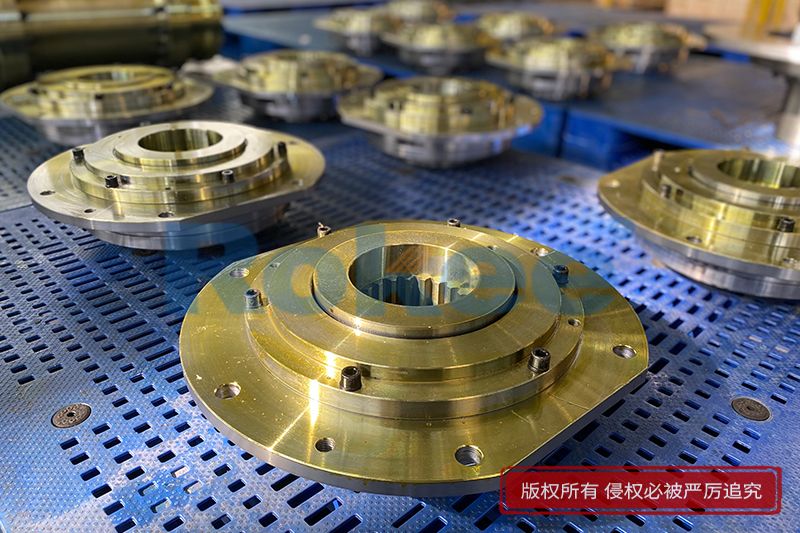
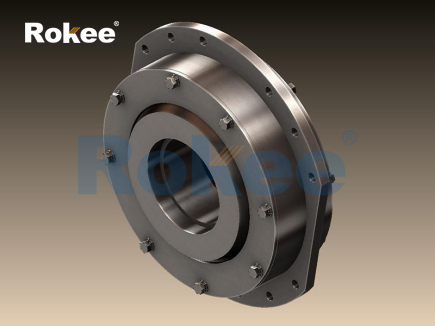
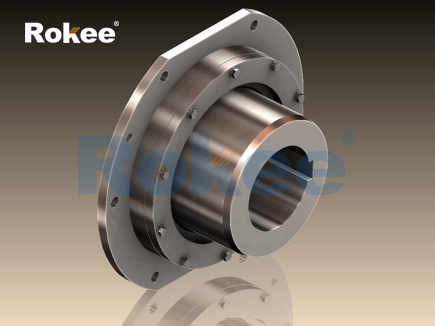
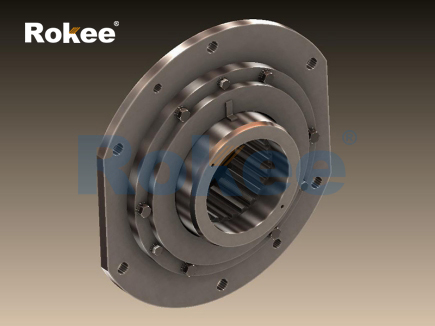
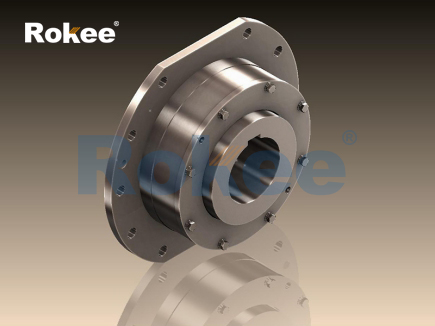
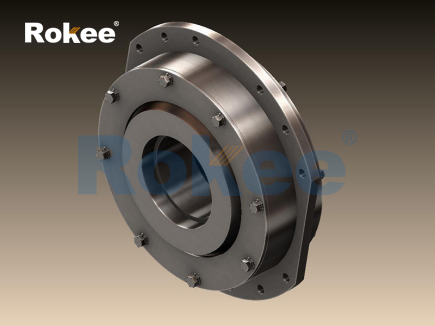
Barrel coupling models are essential mechanical components designed to connect two rotating shafts, facilitating the efficient transmission of torque while accommodating various forms of misalignment and absorbing operational stresses. These couplings play a critical role in numerous industrial applications, where reliable power transfer is paramount to the smooth functioning of machinery. Unlike other coupling types, barrel couplings are distinguished by their unique design, which incorporates cylindrical barrels or rollers as the primary torque-transmitting elements, ensuring robustness, durability, and adaptability to diverse operating conditions.

At the core of any barrel coupling is a simple yet effective structural design that enables it to perform its primary function of torque transmission while compensating for shaft misalignment. Typically, a barrel coupling consists of two main components: a sleeve with internal semicircular toothing and a hub with external semicircular toothing that matches the sleeve’s profile. Between these two components, a series of hardened steel cylindrical barrels or rollers are inserted into the spaces formed by the mating teeth. These barrels act as the key torque-transmitting elements, transferring rotational force from one shaft to another through direct contact with the toothed surfaces of the sleeve and hub. The semicircular toothing and cylindrical barrels work in tandem to allow a degree of angular and axial movement, which is crucial for accommodating the inevitable misalignments that occur in most mechanical systems due to installation errors, thermal expansion, or operational wear.
The design of the barrels and the toothing pattern is critical to the performance of the coupling. The barrels are typically made from high-strength, hardened steel to withstand the high contact stresses generated during torque transmission. Their cylindrical shape ensures that contact with the toothed surfaces is distributed evenly, reducing localized wear and extending the service life of the coupling. The semicircular toothing, on the other hand, is engineered to provide a smooth interface for the barrels, allowing them to roll rather than slide during operation. This rolling motion minimizes friction, reduces energy loss, and further contributes to the coupling’s durability. Additionally, many barrel coupling models feature a sealing system, including covers and lip seals, which prevents the ingress of foreign particles such as dust and debris and retains the necessary lubrication within the coupling. This sealing mechanism is essential for maintaining the performance of the coupling, especially in harsh industrial environments where contamination is a common concern.
There are several distinct models of barrel couplings, each designed to meet specific operational requirements and application demands. These models vary in their structural configurations, torque-carrying capacities, misalignment compensation capabilities, and design features, making them suitable for different industrial scenarios. One common type is the fixed gear barrel coupling, which is characterized by a rigid connection between the sleeve and hub when properly aligned, but still allows for a limited degree of angular and axial misalignment. This model is often used in applications where the shafts are relatively well-aligned but require some flexibility to accommodate minor variations, such as in small to medium-sized conveyor systems and light-duty machinery.
Another widely used model is the spherical roller barrel coupling, which incorporates spherical rollers instead of cylindrical barrels, enhancing its ability to compensate for angular misalignment. This model features a jacket with a connecting flange, spherical rollers, a semi-coupling, and inner and outer cover plates, along with a robust sealing system. The spherical shape of the rollers allows for greater angular displacement, typically up to 3 degrees in some designs, making this model ideal for applications where significant shaft misalignment is expected, such as in heavy-duty cranes, wind turbines, and large-scale industrial pumps. Some spherical roller barrel coupling models also utilize involute spline pair designs for the connection between the coupling and the reducer output shaft, further improving torque transmission efficiency and structural stability.
Internal spline barrel couplings represent another important model, featuring a spherical hinged design with a connecting flange that has an inner spherical surface and a spherical semi-coupling sleeve with an outer spherical surface. These couplings often incorporate a splined sleeve design and specially designed key bars for torque transmission, enabling them to withstand large torques and radial loads. They also typically include inner and outer limit covers to control axial movement and a life indicator to monitor wear, ensuring safe and reliable operation. This model is commonly used in applications that require high torque transmission and precise misalignment compensation, such as in nuclear power plants, gas turbines, and ropeway construction equipment.
Ball and drum gear barrel couplings are a more advanced model, featuring an outer sleeve with a spherical drum tooth design that reduces the requirement for high shafting installation accuracy. This design enhances the coupling’s overload capacity, allowing it to transmit large torques and withstand significant radial loads. Compared to other models, ball and drum gear barrel couplings offer a higher safety factor and improved compensation ability, with some designs providing a 30% increase in bearing capacity compared to standard fixed gear models. These couplings are particularly well-suited for heavy-duty applications where reliability and performance are critical, such as in ferrous metallurgy, lifting transportation, and general heavy equipment.
The operational principle of barrel coupling models revolves around the transfer of torque through the interaction between the barrels and the toothed surfaces of the sleeve and hub. When one shaft rotates, it drives the hub (or sleeve) connected to it, which in turn causes the barrels to roll within the semicircular tooth spaces. This rolling motion transfers the rotational force to the other component (sleeve or hub), which then drives the second shaft. The key advantage of this design is its ability to accommodate misalignment without compromising torque transmission efficiency. Angular misalignment is compensated for by the oscillation of the hub relative to the sleeve, made possible by the curved shape of the barrels and the semicircular toothing. Axial misalignment, on the other hand, is absorbed by the axial movement of the barrels within the tooth spaces, with the maximum axial displacement capacity varying depending on the coupling model and size, typically ranging from ±3 mm to ±8 mm.
Torque transmission in barrel couplings is also influenced by the contact stress between the barrels and the toothed surfaces. Contact stress analysis, often conducted using analytical methods such as the Hertzian method or finite element analysis software, is crucial for optimizing the design of barrel couplings. These analyses help determine the distribution of stress across the contact surfaces, ensuring that the coupling can withstand the operational torques without experiencing premature wear or failure. Frictional contact between the barrels and the toothing, along with the use of appropriate lubrication, plays a key role in reducing contact stress and extending the coupling’s service life. Proper lubrication ensures that the rolling motion of the barrels is smooth, minimizing friction and wear, and preventing the formation of metal-to-metal contact that can lead to damage.
The selection of materials for barrel coupling components is a critical factor that directly impacts their performance, durability, and suitability for specific applications. The sleeve, hub, and barrels are typically made from high-strength materials to withstand the high torques, radial loads, and contact stresses encountered during operation. Hardened steel is the most common material used for these components, as it offers excellent strength, wear resistance, and durability. The steel is often heat-treated to enhance its hardness and toughness, ensuring that it can withstand the harsh conditions of industrial environments. In some cases, alloy steels may be used to further improve the material’s properties, such as corrosion resistance or fatigue strength, making the coupling suitable for applications in corrosive environments or those with high cyclic loads.
The sealing system of barrel couplings is also an important consideration, with materials selected based on the operating environment. Lip seals or mechanical seals are commonly used to prevent contamination and retain lubrication, with materials such as nitrile rubber, silicone, or polyurethane chosen for their resistance to oil, temperature, and chemical exposure. In applications where high temperatures or aggressive chemicals are present, more advanced sealing materials may be required to ensure the integrity of the coupling.
Barrel coupling models find applications across a wide range of industrial sectors, where their ability to transmit high torques, accommodate misalignment, and withstand harsh conditions makes them indispensable. One of the most common applications is in material handling equipment, particularly in cranes and hoists, where barrel couplings are used to connect the rope drum to the gearbox output shaft. In these applications, the coupling must transmit large torques and withstand significant radial loads, while also compensating for the misalignment that occurs between the gearbox and the drum. The compact design of barrel couplings also makes them ideal for use in cranes, where space is often limited.
Another major application area for barrel couplings is in power generation, including wind turbines, nuclear power plants, and gas turbines. In wind turbines, barrel couplings are used to connect the rotor to the gearbox, transmitting the rotational energy generated by the wind to the generator. These couplings must be able to withstand variable loads and significant misalignments caused by wind turbulence and thermal expansion, while also ensuring reliable performance over long periods of time. In nuclear power plants and gas turbines, barrel couplings are used in various auxiliary systems, where their high torque capacity and durability are essential for safe and efficient operation.
Barrel couplings are also widely used in the manufacturing industry, particularly in conveyor systems, pumps, and compressors. Conveyor systems, which are used to transport materials across factories and warehouses, rely on barrel couplings to connect the drive motor to the conveyor belt, ensuring smooth and consistent movement. Pumps and compressors, which are used in a variety of industrial processes, require couplings that can transmit high torques and accommodate the misalignment between the motor and the pump/compressor shaft. Barrel couplings are well-suited for these applications, as they provide reliable torque transmission and excellent misalignment compensation.
Other application areas include ferrous metallurgy, where barrel couplings are used in rolling mills and other heavy-duty equipment; ropeway construction, where they are used to connect the drive system to the rope drum; and general equipment, where they are used in a variety of light to heavy-duty applications. In each of these applications, the selection of the appropriate barrel coupling model is critical to ensuring optimal performance, reliability, and longevity.
Proper maintenance is essential for ensuring the long-term performance and reliability of barrel coupling models. Regular maintenance practices help prevent premature wear, reduce the risk of failure, and extend the service life of the coupling. One of the most important maintenance tasks is lubrication, as proper lubrication minimizes friction between the barrels and the toothed surfaces, reducing wear and contact stress. The type of lubricant used should be selected based on the operating conditions, including temperature, load, and speed. It is important to follow the manufacturer’s recommendations for lubricant type and replacement intervals, as insufficient or improper lubrication can lead to significant damage to the coupling.
Another key maintenance task is inspection, which should be conducted regularly to check for signs of wear, damage, or misalignment. During inspection, the coupling should be checked for wear on the barrels, toothed surfaces, and seals. The wear indicator, present on many barrel coupling models, can be used to monitor the internal wear of the coupling without the need for disassembly. If excessive wear is detected, the coupling should be replaced to prevent failure. Additionally, the alignment of the shafts should be checked regularly, as misalignment beyond the coupling’s compensation capacity can lead to increased stress and premature wear.
Seal inspection and replacement are also important maintenance tasks. The seals should be checked for signs of leakage or damage, as a faulty seal can lead to lubricant loss and contamination of the coupling. If a seal is damaged or leaking, it should be replaced immediately to prevent further damage. In addition, the fasteners used to connect the coupling to the shafts should be checked regularly to ensure they are tight, as loose fasteners can cause misalignment and reduce the coupling’s performance.
When replacing a barrel coupling, it is important to select the appropriate model and size based on the application requirements, including torque capacity, misalignment compensation needs, and operating conditions. The replacement coupling should be compatible with the shaft diameters and mounting configurations of the existing system to ensure a proper fit. It is also important to follow the manufacturer’s installation instructions to ensure the coupling is installed correctly, as improper installation can lead to misalignment and premature failure.
The performance of barrel coupling models can also be optimized through proper design and selection. When selecting a barrel coupling, it is important to consider factors such as the maximum torque required, the level of misalignment expected, the operating speed, the environmental conditions, and the space constraints. By selecting the right model and size, it is possible to ensure that the coupling operates efficiently and reliably, minimizing downtime and maintenance costs. Additionally, advances in material technology and design have led to the development of more efficient and durable barrel coupling models, which offer improved performance and longer service life compared to older designs.
In conclusion, barrel coupling models are versatile and essential mechanical components that play a critical role in the efficient and reliable transmission of torque in a wide range of industrial applications. Their unique design, which incorporates cylindrical or spherical barrels as torque-transmitting elements, allows them to accommodate misalignment, absorb operational stresses, and withstand harsh operating conditions. With various models available, each tailored to specific application requirements, barrel couplings can be used in everything from light-duty machinery to heavy-duty industrial equipment. Proper material selection, installation, and maintenance are essential for ensuring the long-term performance and reliability of these couplings. As industrial technology continues to advance, barrel coupling models are likely to evolve further, incorporating new materials and designs to meet the growing demands of modern industrial systems. Whether in cranes, wind turbines, conveyor systems, or power plants, barrel couplings remain a vital component, enabling the smooth and efficient operation of machinery across numerous sectors.
- Tags:
- Barrel Couplings ,
- sandwich panel line ,
- sandwich panel machine
- pu sandwich panel machine
« Barrel Coupling Models » Latest Update Date: May 9, 2026
https://www.rokeecoupling.net/blog/barrel-coupling-models.html