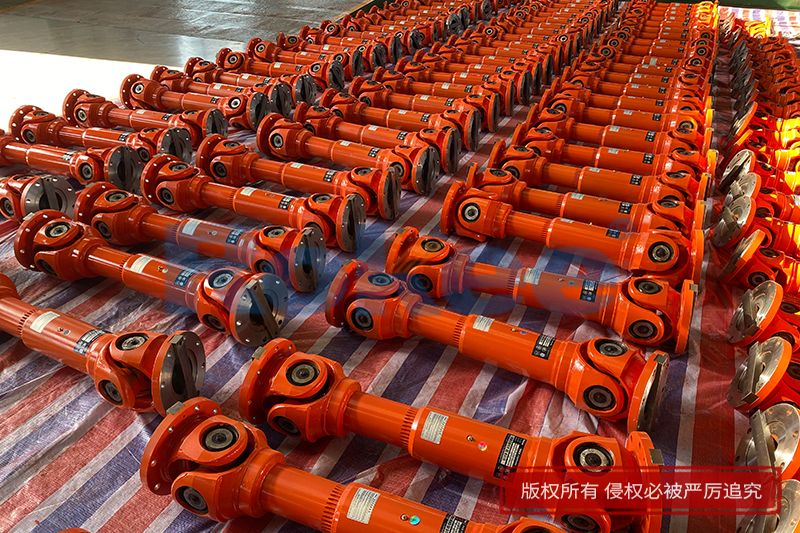
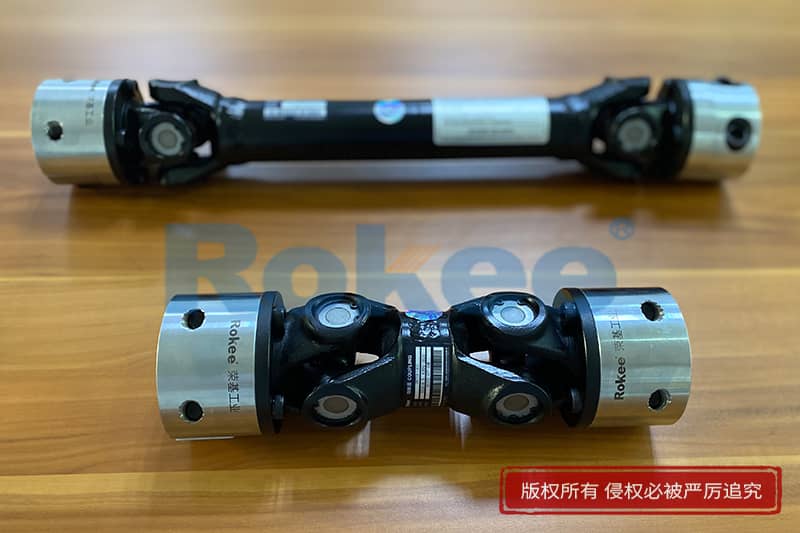
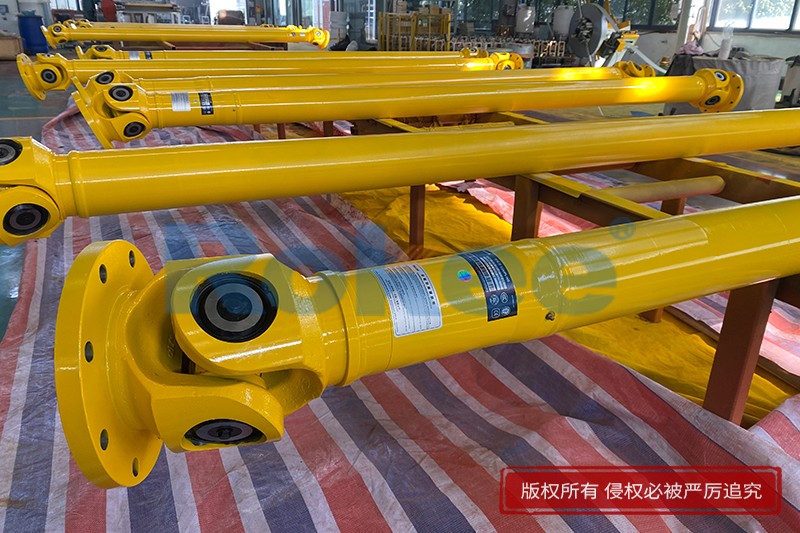
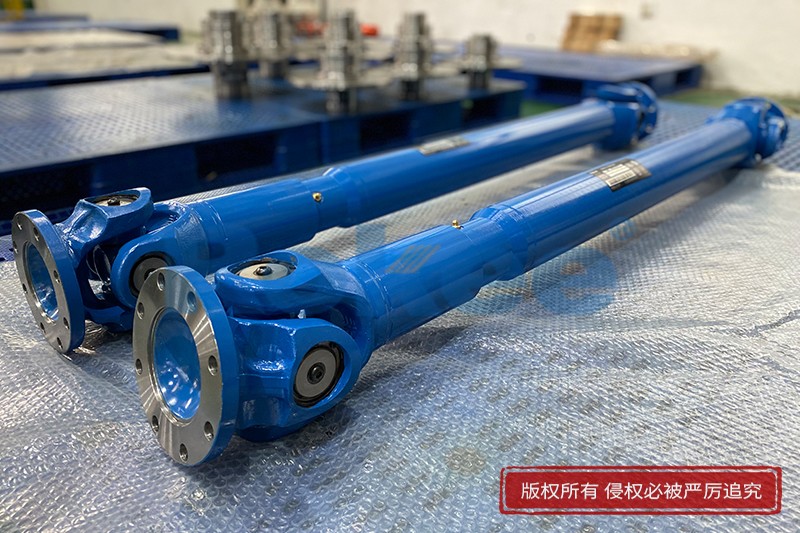
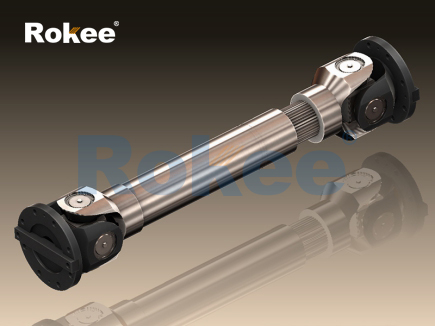
In the complex ecosystem of modern mechanical transmission systems, cardan shaft couplings stand out as indispensable mechanical components that ensure stable power transmission between disjointed and misaligned rotating shafts. As core connecting parts in industrial machinery, these coupling structures are widely adopted across diverse heavy-duty and mobile mechanical scenarios, relying on their unique structural flexibility and excellent torque transmission performance. Professional cardan shaft couplings suppliers play a pivotal role in the industrial supply chain, focusing on structural optimization, precision manufacturing, performance customization and stable product supply to meet the differentiated transmission demands of various industrial equipment. The inherent mechanical characteristics of cardan shaft couplings enable them to break the limitations of traditional rigid transmission parts, achieving continuous and reliable power output even when there are significant angular deviations between connected shafts, which makes them irreplaceable in heavy industry, mobile machinery and special transmission equipment.
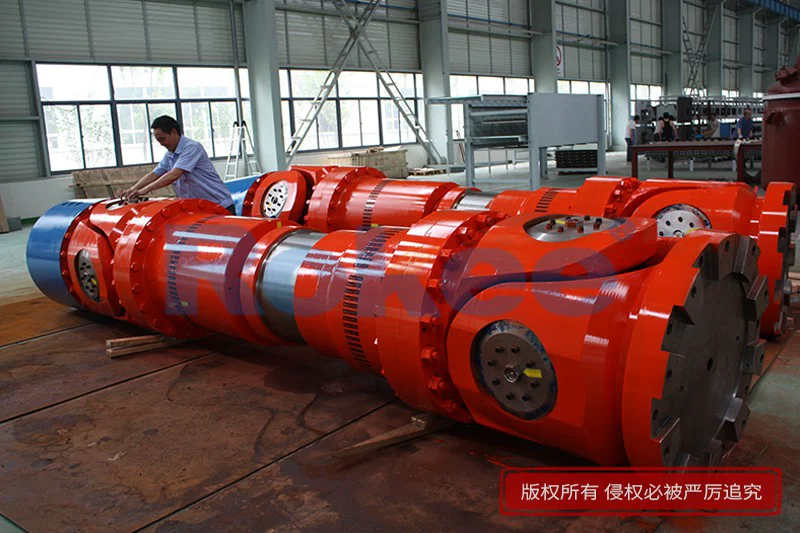
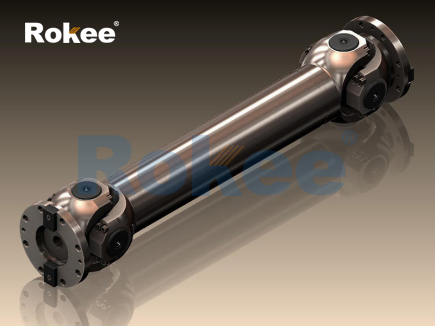
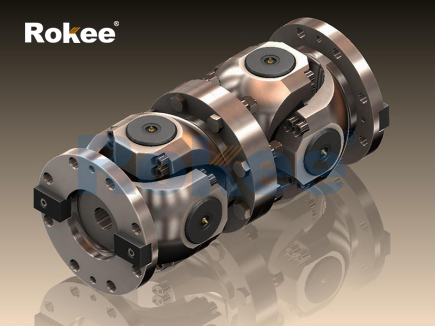
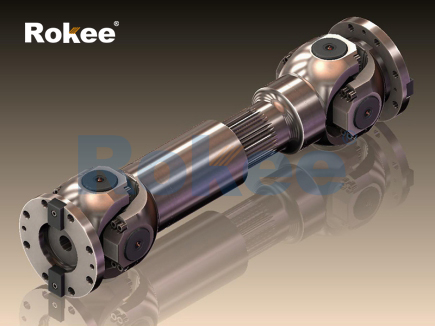
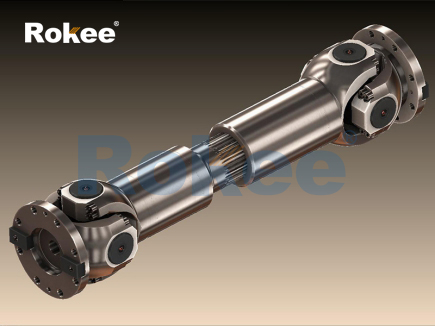
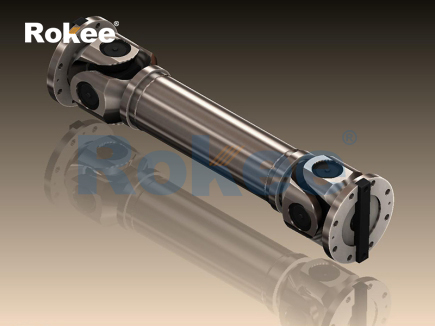
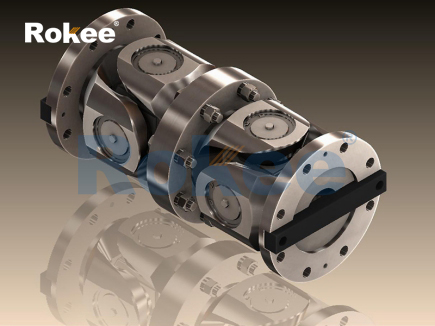
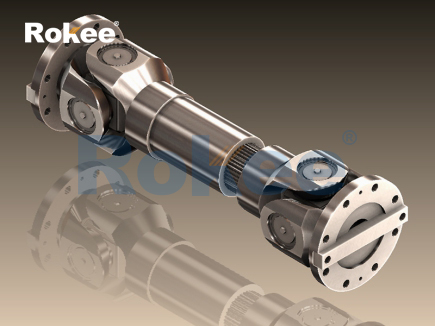
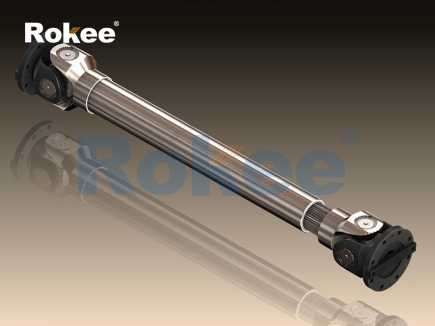
The basic structural composition of cardan shaft couplings forms the foundation of their functional realization, and mature manufacturing suppliers strictly control every structural component during the production process to ensure overall mechanical stability. The conventional structure of a cardan shaft coupling mainly includes universal joint yokes, cross shafts, rolling bearings and intermediate connecting shafts. The cross shaft acts as the central rotating connecting part, linking two groups of universal joint yokes to form a flexible rotating structure. The rolling bearings installed at the joints of the cross shaft and yokes effectively reduce friction resistance during high-frequency rotation, lowering mechanical wear and energy consumption in the power transmission process. The intermediate connecting shaft is customized in length and pipe diameter according to actual usage requirements, which can balance transmission distance and structural stability. Different from ordinary elastic couplings, cardan shaft couplings adopt an all-metal rigid flexible structure, without any elastic auxiliary parts, so they can withstand greater impact loads and maintain stable transmission efficiency under harsh working conditions. Suppliers optimize the thickness of the yoke body, the curvature of the shaft head and the assembly gap of bearings through repeated mechanical simulation, to ensure that each component can bear uniform force during operation and avoid local stress concentration that leads to component damage.
The unique working principle endows cardan shaft couplings with outstanding angular compensation capability, which is the core advantage that distinguishes them from other transmission coupling products. Relying on the rotational deflection of the cross shaft structure, the coupling can realize continuous rotary power transmission when there is an included angle between the driving shaft and the driven shaft. The adjustable angle range of common cardan shaft couplings varies with structural specifications, and the maximum deflection angle of conventional products can reach between five degrees and forty-five degrees. In practical mechanical operation, the axis deviation of equipment shafts is often caused by equipment installation errors, thermal expansion of metal materials, foundation settlement and mechanical vibration. Rigid couplings are extremely sensitive to such deviations, which are prone to shaft jamming, component fatigue fracture and sharp increase in transmission resistance. In contrast, cardan shaft couplings can automatically compensate for angular displacement and partial axial displacement during operation, reducing the precision requirements for equipment installation. Professional suppliers fully consider the dynamic displacement changes in complex working environments in the structural design stage, optimizing the matching angle of double universal joint structures to weaken the non-uniform speed problem of single-section universal joints, so as to achieve approximate constant-speed power transmission and further improve the smoothness of mechanical operation.
High load-bearing capacity and durable service life are key performance advantages of cardan shaft couplings, and also the core optimization direction of professional suppliers in production and research. These couplings are mostly made of high-strength alloy steel materials with excellent tensile strength and impact resistance. After forging, heat treatment and precision machining processes, the metal structure of the materials becomes denser, effectively resisting shear force and torsional force generated during long-term high-load operation. In heavy industrial scenarios such as metallurgical rolling equipment and mining machinery, the instantaneous impact load borne by transmission components is extremely large, and ordinary coupling products are easy to deform and damage. Cardan shaft couplings can maintain stable structural integrity under long-term heavy-load working conditions, with strong adaptability to fluctuating loads. Suppliers strictly control the material hardness and surface roughness of key components such as cross shafts and bearing sleeves, and adopt anti-rust and anti-corrosion surface treatment processes to enhance the environmental adaptability of products. In high-humidity, dusty and corrosive working environments, reasonably treated metal surfaces can effectively slow down oxidation and corrosion rates, extend the service cycle of components, and reduce the frequency of equipment shutdown maintenance caused by coupling failure.
The application scenarios of cardan shaft couplings cover multiple industrial fields, and suppliers need to continuously optimize product parameters to adapt to the differentiated operating conditions of various industries. In the automotive manufacturing industry, these couplings are applied to the transmission systems of commercial vehicles and engineering vehicles, connecting transmission boxes and drive axles to complete power transmission. The complex road conditions will cause the vehicle chassis to vibrate and displace, and the angular compensation performance of cardan shaft couplings can effectively adapt to the dynamic position changes of internal shafts, ensuring uninterrupted power output. In the field of construction machinery, equipment such as pavers, loaders and excavators often operates in uneven terrain, and the transmission system needs to bear frequent steering and vibration impacts. The high toughness and shock resistance of cardan shaft couplings can meet the long-term stable operation requirements of construction equipment. In the metallurgical industry, rolling mills need to maintain continuous rotation under high-temperature and heavy-load conditions, and high-specification cardan shaft couplings are used in the main transmission system of rolling mills to bear continuous torsional load and ensure the consistency of rolling processing accuracy. Agricultural machinery is also an important application market; farming equipment such as tractors and harvesters works in muddy and complex field environments, and the simple and durable structure of cardan shaft couplings can resist external mud pollution and mechanical impact, adapting to harsh field operating conditions.
As a professional cardan shaft couplings supplier, the production process control system determines the comprehensive quality of products, and standardized production procedures are adopted to realize refined processing of each component. The production flow starts with raw material screening, where high-quality alloy steel blanks are selected and inspected for internal metal texture to avoid raw materials with impurities and structural defects. The forging process shapes the rough blanks of universal joint yokes and cross shafts, improving the compactness of metal fibers through high-temperature forging to enhance mechanical strength. After forging, the components undergo quenching and tempering heat treatment to balance material hardness and toughness, preventing brittle fracture of metal parts under extreme load. The precision machining stage adopts numerical control processing equipment to polish the assembly contact surface, control the assembly tolerance within a tiny range, and ensure the smoothness of component rotation. After the completion of single-piece processing, all parts are assembled in a standardized manner, and dynamic balance tests are carried out on the assembled finished couplings. Unbalanced structural parts will produce violent vibration during high-speed rotation, which will affect the stability of the entire mechanical system. Suppliers eliminate unqualified products through dynamic balance detection to ensure that each delivered product meets industrial operation standards.
Product selection and customized service are important service modules of professional suppliers, which can provide targeted matching schemes for different industrial customers. When selecting cardan shaft couplings, multiple factors such as equipment operating speed, load type, working environment and shaft connection distance need to be comprehensively considered. For low-speed and heavy-load industrial equipment, suppliers recommend thickened structural couplings with large torque capacity to meet the requirements of long-term heavy pressure operation; for mobile machinery with frequent position changes, products with flexible deflection structures and strong vibration resistance are more suitable. For special industrial equipment with non-standard shaft diameter and installation space, suppliers provide personalized customized services, including adjusting shaft body length, optimizing yoke structure shape and changing connection flange specifications. In the communication process with customers, professional technical teams analyze the operating parameters of customer equipment, predict the stress and wear degree of couplings in actual operation, and eliminate potential matching risks in advance. This customized and targeted selection service can effectively improve the matching degree between products and equipment, reduce unnecessary mechanical loss, and create higher operational economic benefits for customers.
Supply chain management and after-sales service capabilities are important indicators to measure the comprehensive strength of cardan shaft couplings suppliers. In terms of inventory management, reputable suppliers maintain reasonable stock of conventional specification products to meet the urgent procurement needs of small and medium-sized industrial customers, realizing rapid packaging and delivery. For large-scale customized orders, suppliers formulate scientific production schedules, coordinate raw material reserves and production line arrangements, and ensure that the delivery cycle meets the customer's equipment construction plan. In the transportation link, suppliers adopt shockproof and rust-proof packaging measures to avoid structural deformation and surface oxidation of couplings during long-distance transportation. The after-sales service system includes installation guidance, fault consultation and maintenance suggestions. Professional technical personnel provide remote or on-site installation guidance to ensure standardized installation of couplings and avoid performance degradation caused by irregular assembly. During the equipment operation cycle, suppliers provide customers with daily maintenance guidelines, reminding users to regularly check bearing lubrication status and component wear degree, and formulate reasonable replacement cycles for vulnerable parts. Complete service links can reduce the use threshold of products and build long-term stable cooperative relationships with industrial customers.
With the continuous upgrading of modern industrial manufacturing technology, the development trend of cardan shaft couplings is gradually moving towards lightweight, high precision and intelligent optimization, which also puts forward higher technical requirements for suppliers. At present, many suppliers introduce finite element analysis technology to simulate the stress distribution and wear law of couplings under different working conditions, carry out lightweight structural optimization on the premise of ensuring load-bearing performance, reduce the self-weight of products, and save equipment energy consumption. In terms of material innovation, new wear-resistant alloy materials are gradually applied to the processing of key components, which further improve the high-temperature resistance and wear resistance of couplings. In addition, the modular design concept has become a mainstream optimization direction; standardized modular components can realize quick disassembly and replacement of vulnerable parts, simplify the later maintenance process of equipment, and reduce maintenance time costs. In the future, with the continuous expansion of intelligent manufacturing and heavy industrial equipment, the market demand for high-performance cardan shaft couplings will continue to grow, and suppliers need to keep up with technological changes, update production equipment, and improve independent research and development capabilities to adapt to the evolving industrial transmission market.
In conclusion, cardan shaft couplings, as essential flexible transmission components in modern industry, have irreplaceable application value relying on their excellent angular compensation performance, heavy-load bearing capacity and strong environmental adaptability. Professional cardan shaft couplings suppliers undertake the important task of product research and development, precision production and industrial supporting services. Through strict production process control, professional product selection schemes and comprehensive after-sales service systems, suppliers provide reliable transmission component solutions for various industrial fields. In the context of continuous industrial upgrading, suppliers should always focus on product performance optimization and technological innovation, continuously improve product quality and service level, adapt to the diversified development needs of the mechanical transmission industry, and provide stable and efficient basic component support for the healthy operation of global industrial machinery. While ensuring product practicability and durability, suppliers also need to pay attention to the optimization of production costs and environmental protection processing, realize the coordinated development of economic benefits and environmental benefits, and promote the long-term progress of the entire coupling manufacturing industry.
- Tags:
- Cardan Shaft Couplings ,
- sandwich panel line ,
- sandwich panel machine
- pu sandwich panel machine
« Cardan Shaft Couplings Supplier » Latest Update Date: May 21, 2026
https://www.rokeecoupling.net/blog/cardan-shaft-couplings-supplier.html