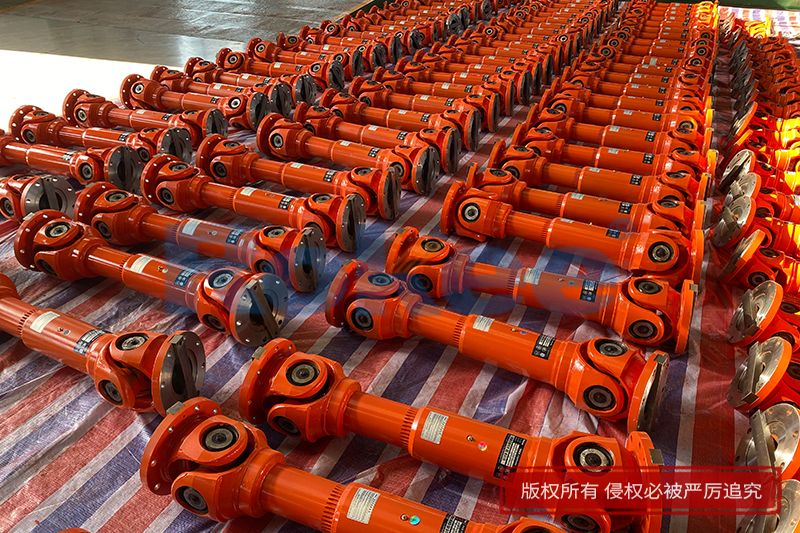
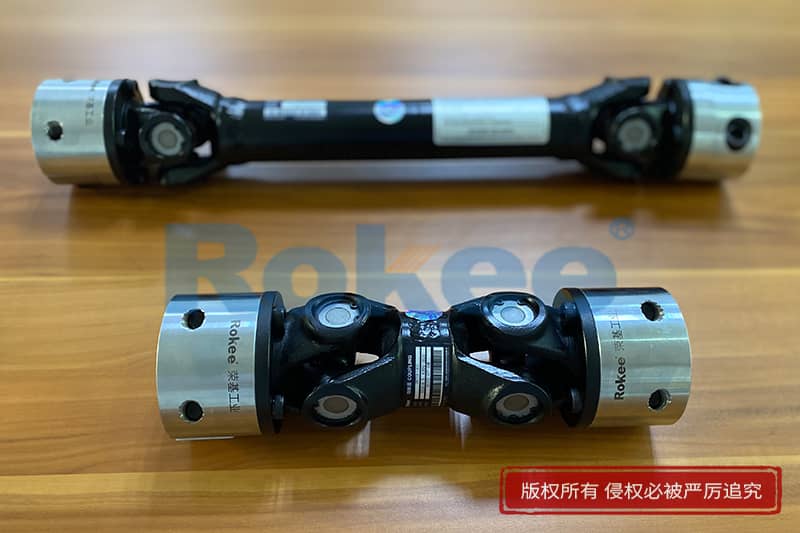
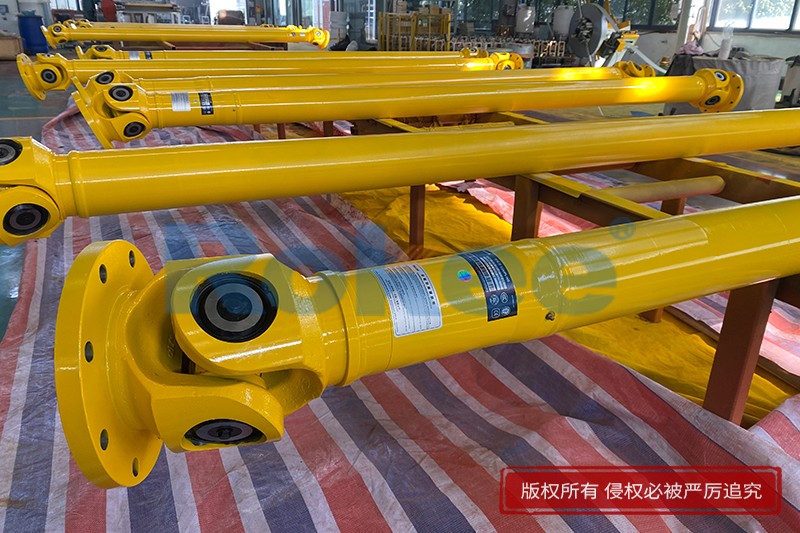
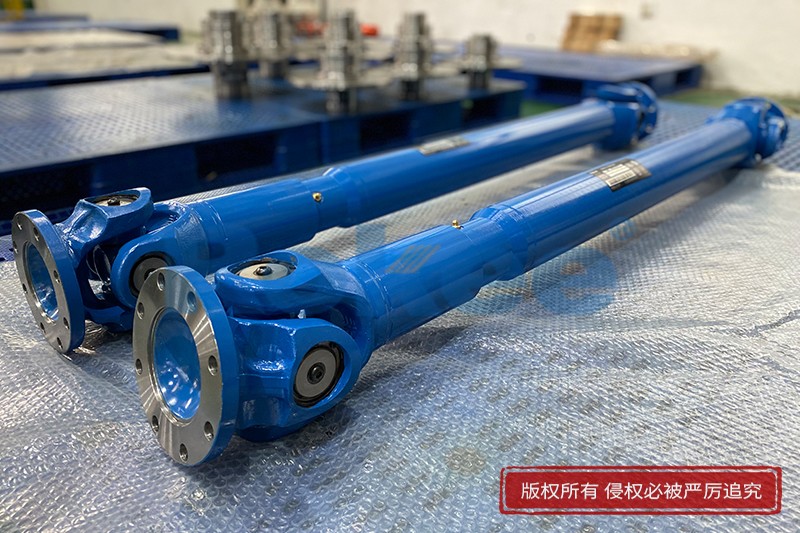
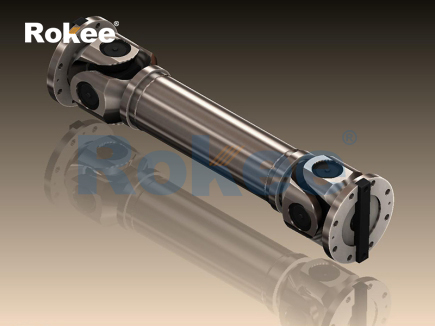
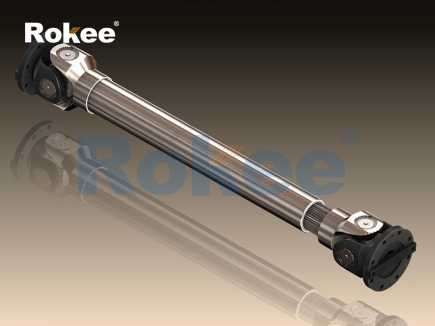
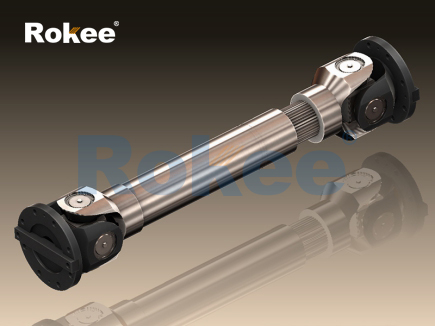
As a core component of mechanical power transmission systems, the telescoping driveshaft stands out for its unique adaptive structural design, serving as a critical connecting medium between power sources and execution mechanisms across diverse mechanical equipment. Unlike rigid fixed-length driveshafts that feature single structural functions and limited adaptive capabilities, the telescoping driveshaft integrates flexible axial displacement compensation and stable torque transmission performance, effectively addressing the dimensional variation and positional offset problems that inevitably occur during the operation of mechanical transmission systems. Its innovative structural design enables continuous and efficient power output even under dynamic working conditions, making it widely applicable in mobile machinery, transportation equipment, and industrial transmission systems that require frequent attitude adjustment and spatial position changes. The core value of the telescoping driveshaft lies in its perfect balance of structural rigidity and mechanical flexibility, ensuring the stability of torque transmission while adapting to complex and variable operating environments, which fundamentally compensates for the functional defects of traditional rigid transmission components in dynamic operation scenarios.
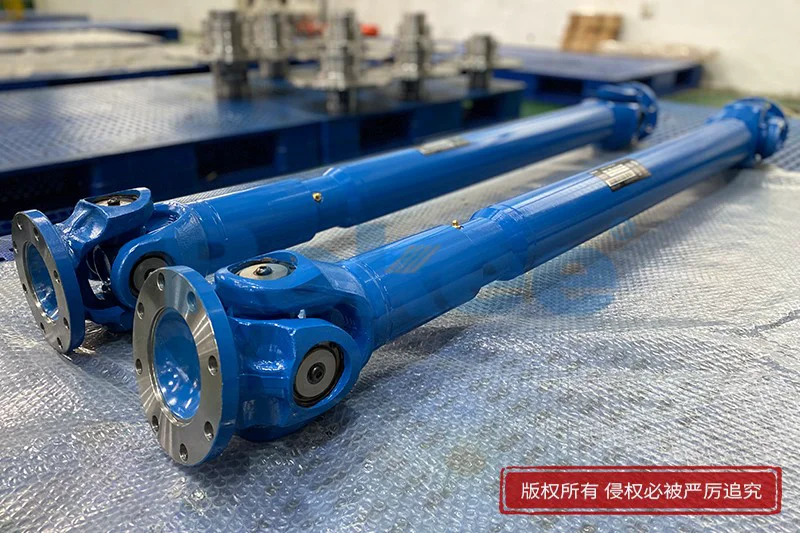
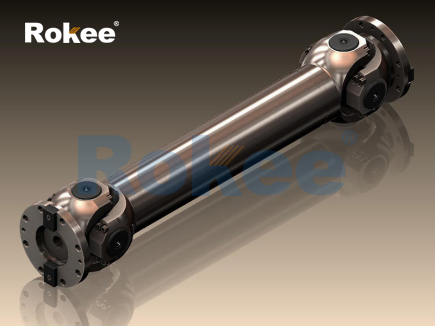
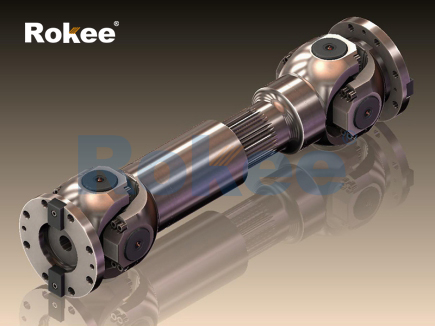
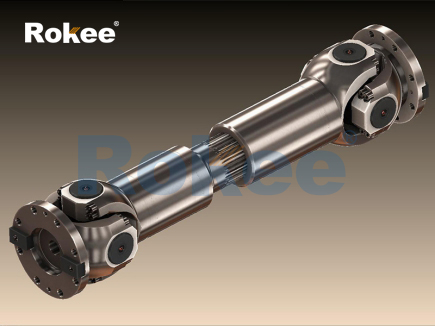
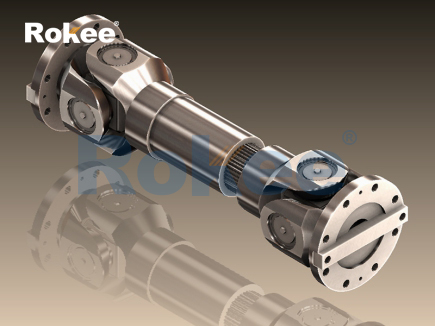
The basic working principle of the telescoping driveshaft is built on the dual mechanical compensation mechanisms of axial length adjustment and angular deviation adaptation, with the telescopic sliding pair serving as the core functional unit of the entire structure. The main body of the driveshaft is composed of nested inner and outer shaft components, which realize free axial sliding through precise matching structures, most commonly involute spline pairs and special-shaped tubular matching structures. When mechanical equipment operates, the relative distance between the power input end and the power output end often changes due to suspension vibration, equipment attitude adjustment, road surface undulation, and mechanical deformation under load. The nested structure of the telescoping driveshaft can automatically stretch and retract along the axial direction to compensate for such displacement changes, maintaining the effective connection of the transmission system at all times. Cooperating with the universal joint assembly equipped at both ends of the shaft body, the driveshaft can also adapt to small-angle deflection between the input and output shafts, solving the power transmission failure caused by angular offset in traditional transmission structures and ensuring continuous and uniform torque output throughout the equipment operation cycle.
The internal structural design of the telescoping driveshaft follows the principles of mechanical stability, wear resistance and efficient transmission, with each component undertaking independent and coordinated functional responsibilities. The telescopic matching pair, as the key functional part, adopts high-precision machining structures, including internal splines on the outer shaft sleeve and external splines on the inner shaft body. The dense and uniform spline tooth structure can evenly disperse torque on each matching tooth surface during operation, avoiding local stress concentration and ensuring strong and stable load-bearing capacity. Some optimized structural designs adopt round-hexagonal composite tubular structures, which utilize six flat force-bearing surfaces of the hexagonal structure for torque transmission, effectively eliminating the stress concentration phenomenon of traditional spline structures and further improving the overall structural strength and fatigue resistance. The outer circular surface of the outer tube matches with conventional bearing and sealing structures, ensuring the rotational stability of the shaft body, while the hollow structure inside the inner tube reserves space for lubrication channels and internal wiring, realizing the integration of structural function and practical performance.
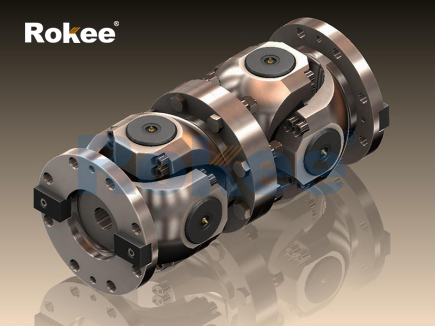
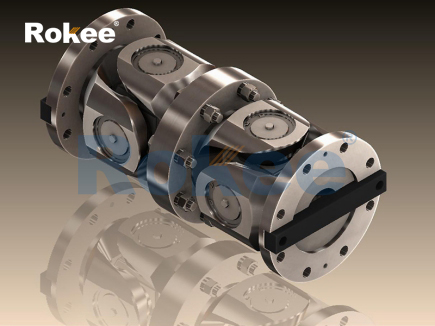
The universal joint assembly matched with the telescopic main body is an indispensable auxiliary structure for realizing multi-directional adaptive transmission. Composed of cross shafts, needle roller bearings and bearing seats, this assembly forms the angular compensation system of the driveshaft. During the power transmission process, the driving end transmits rotational power to the cross shaft through the universal joint yoke, and the cross shaft synchronously drives the driven end yoke to rotate, realizing non-intermittent power transmission under the condition of shaft deflection. The needle roller bearing structure inside the universal joint can reduce the friction resistance during angular rotation, lower mechanical wear and operation noise, and improve the flexibility of angle adaptation. The cooperative operation of the telescopic sliding pair and the universal joint assembly enables the entire driveshaft to have dual adaptive capabilities of axial displacement and angular deviation, enabling it to cope with complex working conditions where length and angle change simultaneously, which cannot be realized by ordinary rigid transmission shafts.
In terms of mechanical performance, the telescoping driveshaft exhibits excellent comprehensive working characteristics, covering load-bearing stability, dynamic adaptability and operational safety. In terms of torque transmission, the close matching of the spline or special-shaped tube structure ensures zero relative rotation between the inner and outer shafts, realizing efficient and lossless transmission of rotational torque. Even under high-load and high-speed operating conditions, the uniform force-bearing structure can avoid torque attenuation and vibration deviation, maintaining the synchronization of the input and output speeds. In terms of dynamic adaptation, the effective telescopic stroke reserved by the structure can cover the axial displacement range generated by conventional mechanical operation, including the suspension expansion and contraction of mobile equipment, the position deviation of mechanical components under dynamic load, and the position adjustment during equipment operation. This real-time adaptive length adjustment eliminates the mechanical tension and compression stress in the transmission system, avoiding component damage and power transmission instability caused by forced stretching or compression of rigid shafts.
In addition to basic transmission and adaptive functions, the telescoping driveshaft also has outstanding structural safety and environmental adaptability. The nested telescopic structure has inherent energy absorption and buffer performance. In case of accidental impact or extreme load mutation of equipment, the telescopic structure can shrink freely to release instantaneous impact force, reduce the rigid impact on the transmission system and connected components, and effectively improve the overall anti-damage ability of mechanical equipment. Meanwhile, the optimized structural design reduces the overall weight of the transmission system compared with multi-section rigid connecting structures, helping to reduce the operating inertia of equipment, improve mechanical response sensitivity, and reduce energy consumption during operation. For complex working environments such as dust, humidity and variable temperature, the closed matching structure of the telescopic pair can effectively block external impurities from entering the matching gap, reducing the risk of abrasive wear and corrosion, and ensuring long-term stable operation of the equipment.
The application scenarios of telescoping driveshafts cover multiple fields of mechanical transmission, with the most extensive application in mobile engineering machinery and transportation equipment. In road transportation equipment, the suspension system will continuously compress and rebound during driving due to road surface changes, causing real-time changes in the distance and angle between the transmission and the drive axle. The telescoping driveshaft can adapt to such dynamic changes in real time, maintaining the stability of the power transmission chain and ensuring smooth driving of the equipment. In agricultural machinery and field operation equipment, equipment such as tractors and harvesting machines need to frequently adjust the working height and operating attitude during operation, and work on uneven field ground. The telescopic and angle adaptive performance of the driveshaft can fully adapt to the complex operating posture changes of agricultural equipment, ensuring continuous power output for field operation components.
In industrial mechanical transmission systems, telescoping driveshafts are widely used in automated production equipment, material handling machinery and large-scale transmission devices. Many industrial equipment needs to adjust the working position and operating stroke according to production procedures, and the fixed-length rigid driveshaft cannot meet the requirements of position adjustment and power transmission. The telescoping driveshaft can realize flexible connection between power components and execution components, not only meeting the stroke change requirements of equipment operation, but also ensuring the accuracy and stability of power transmission, avoiding transmission errors caused by position changes, and improving the overall operating precision of automated production lines. In addition, in special working equipment such as engineering construction machinery and mining equipment, the severe working conditions and large equipment vibration put forward higher requirements for the anti-vibration and anti-deformation performance of transmission components, and the telescoping driveshaft can absorb vibration displacement through its flexible structure, reduce mechanical resonance, and improve the operational reliability of equipment under harsh conditions.
Long-term stable operation of telescoping driveshafts relies on standardized daily maintenance and structural protection, and its wear and failure rules are closely related to structural characteristics and operating conditions. The telescopic matching pair is the most vulnerable part to wear, as frequent axial sliding and torque transmission will cause slight friction loss on the matching tooth surface or tube wall. Insufficient lubrication will accelerate wear, resulting in increased matching clearance, torque transmission deviation, vibration and noise during operation. Therefore, regular lubrication maintenance is required for the telescopic sliding part to form a stable lubricating oil film on the matching surface, reduce friction coefficient, and delay component wear. At the same time, the sealing structure of the driveshaft needs regular inspection to prevent lubricant leakage and external dust, sediment and other impurities from entering the matching gap, avoiding abrasive wear and structural jamming caused by impurity accumulation.
The universal joint assembly also requires regular maintenance and inspection. The needle roller bearings inside the assembly will produce fatigue loss after long-term high-speed operation, and aging and wear of bearings will reduce the flexibility of angular adaptation, resulting in unsmooth power transmission and abnormal vibration. Regularly checking the operating state of the universal joint, replacing aging wearing parts in time, and ensuring the flexibility of rotational deflection can maintain the long-term working performance of the driveshaft. In addition, for the driveshafts working in high-load and high-frequency operation scenarios, regular detection of structural deformation and fatigue damage is needed to avoid metal fatigue and structural fracture caused by long-term alternating load, ensuring the safety and stability of mechanical operation.
With the continuous progress of mechanical manufacturing technology and the upgrading of industrial equipment performance, the structural design and manufacturing process of telescoping driveshafts are also constantly optimized and innovated. Modern manufacturing technologies improve the machining precision of spline pairs and special-shaped telescopic structures, making the matching gap more precise, the telescopic operation smoother, and the torque transmission more uniform. The application of high-strength and wear-resistant materials further enhances the load-bearing capacity, fatigue resistance and environmental adaptability of the driveshaft, enabling it to adapt to higher-load, higher-speed and more complex working scenarios. At the same time, the lightweight optimization design of the structure reduces the self-weight of the driveshaft while ensuring structural strength, which helps to improve the dynamic response speed of mechanical equipment and reduce energy consumption in the transmission process, meeting the energy-saving and high-efficiency development requirements of modern mechanical equipment.
In the entire mechanical power transmission system, the telescoping driveshaft plays an irreplaceable role in connecting power components and executing components, and its performance directly affects the overall operating efficiency, stability and safety of mechanical equipment. Compared with traditional rigid driveshafts and ordinary flexible transmission components, it has the dual advantages of structural rigidity and working flexibility, solving many pain points in dynamic power transmission, such as insufficient adaptive capacity, easy structural damage and unstable transmission. With the continuous development of intelligent machinery, automated equipment and special engineering machinery, the market demand for high-precision, high-stability and high-adaptability telescoping driveshafts is constantly increasing, and the technical upgrading of products will also further promote the optimization and improvement of the mechanical transmission system industry.
In conclusion, the telescoping driveshaft, as a key adaptive power transmission component, relies on its unique telescopic sliding structure and universal joint compensation mechanism to realize efficient and stable power transmission under dynamic variable working conditions. Its excellent structural performance, wide application adaptability and reliable operating safety make it an indispensable core component in modern mechanical transmission systems. In the future, with the continuous innovation of material technology and structural design, telescoping driveshafts will achieve greater breakthroughs in wear resistance, load-bearing performance and lightweight level, and will be more widely used in more sophisticated and complex mechanical equipment, providing more reliable basic support for the efficient operation of various mechanical systems.
- Tags:
- Telescoping Driveshafts ,
- sandwich panel line ,
- sandwich panel machine
- pu sandwich panel machine
« Catalogue of Telescoping Driveshafts » Latest Update Date: Jun 3, 2026
https://www.rokeecoupling.net/blog/catalogue-of-telescoping-driveshafts.html