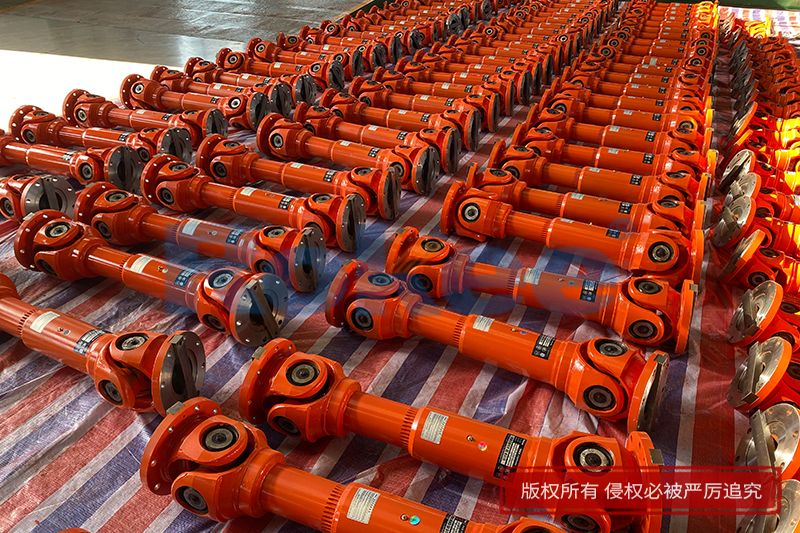
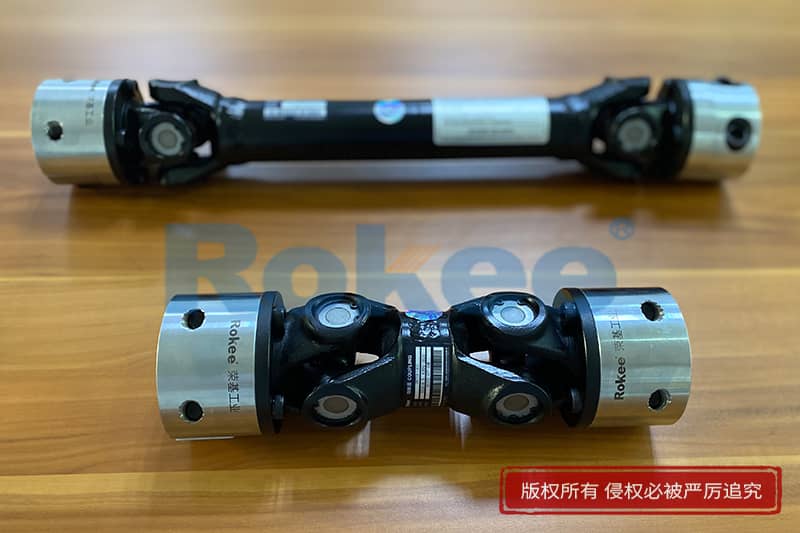
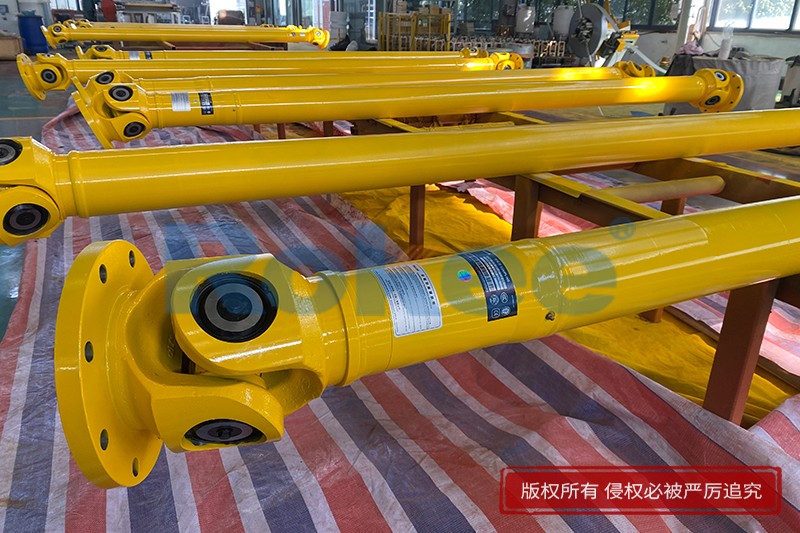
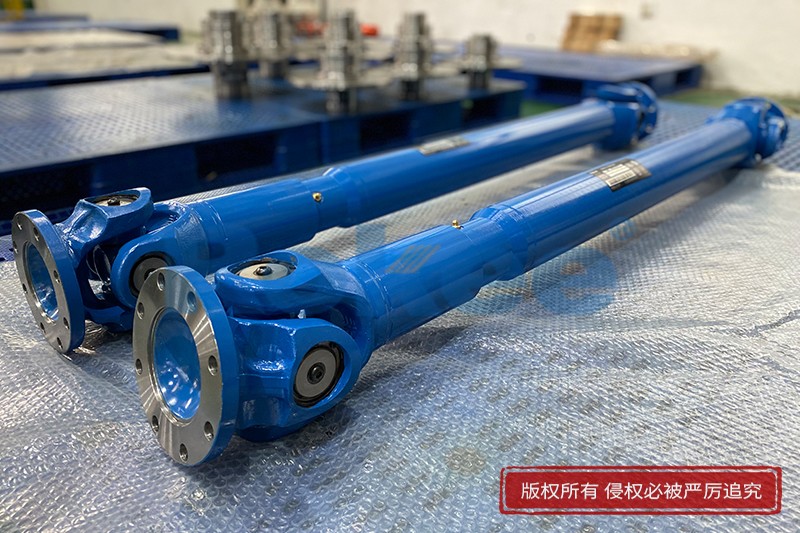
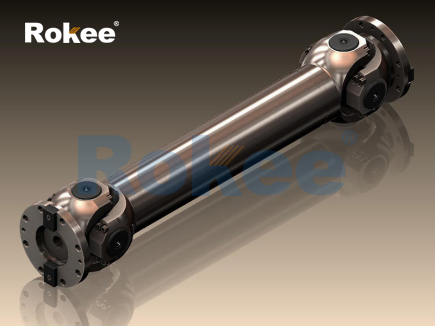
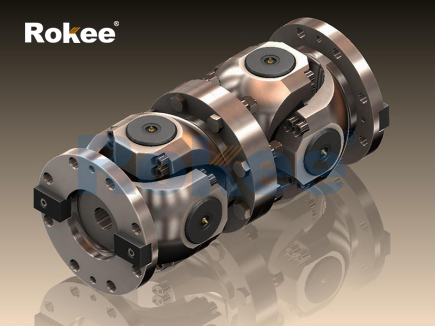
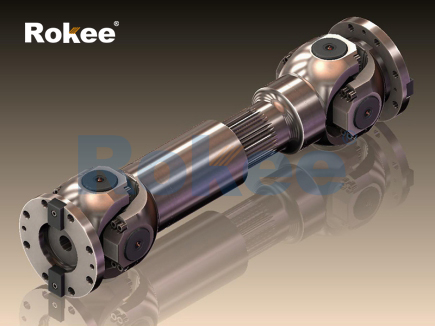
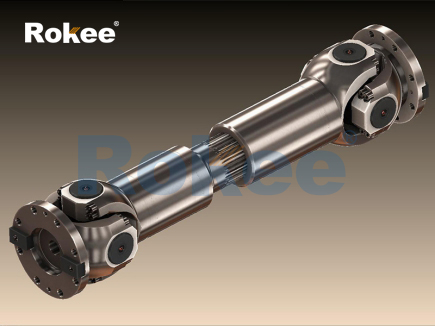
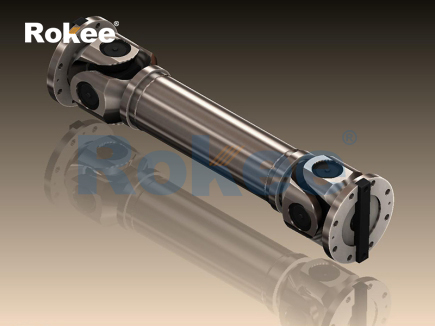
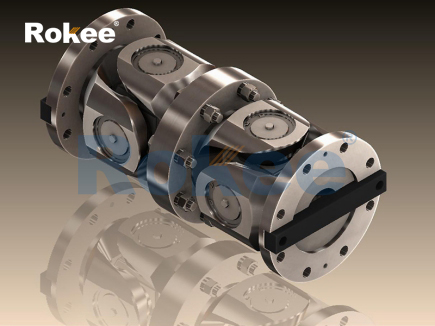
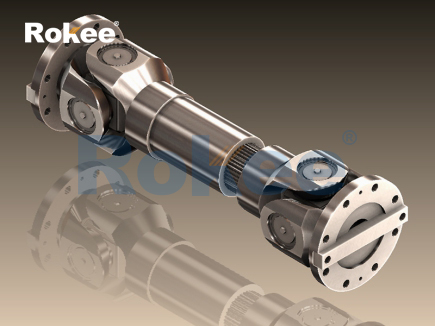
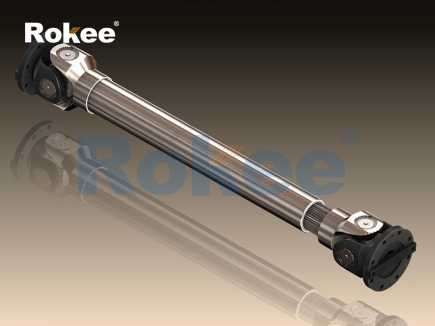
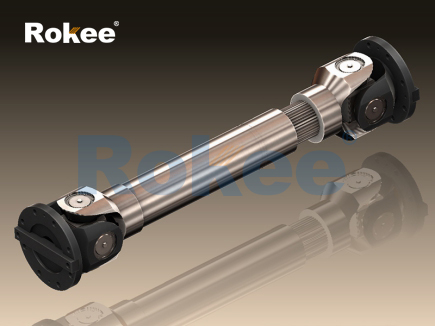
As an indispensable foundational mechanical component in modern mechanical transmission systems, universal coupling serves as a core connecting device for power transmission between spatially offset shafts. Also widely recognized as Cardan coupling in the mechanical field, it derives its core value from the unique ability to stably transmit rotational motion and torque between two shafts with intersecting or dynamically changing axes, breaking the limitation of rigid transmission structures that rely on precise shaft alignment. Unlike ordinary rigid couplings that require absolute coaxiality of connected shafts and elastic couplings that only adapt to tiny displacement deviations, universal coupling features outstanding angular compensation performance, enabling normal power transmission under variable working conditions with shaft axis deflection. This unique mechanical property makes it widely applicable in complex mechanical equipment where shaft positions change dynamically and installation space is limited, covering industrial manufacturing, agricultural machinery, transportation equipment, engineering machinery and numerous other fields, becoming a key guarantee for stable operation of various power transmission systems.
The basic working principle of universal coupling originates from spatial linkage mechanism theory, and the most widely applied cross-axis structure fully embodies its mechanical operation logic. A standard single universal coupling is mainly composed of two symmetrical fork-shaped yokes and an intermediate cross spider component, with precision bearings installed at the four end shafts of the cross spider to realize flexible rotational connection with the yokes. One yoke is fixed on the driving shaft and the other on the driven shaft, and the cross spider acts as a movable intermediate connecting part to bridge the two shafts. When the driving shaft rotates, it drives the cross spider to move circumferentially through the bearing fit, and the cross spider further transmits rotational torque to the driven yoke, thus realizing synchronous rotation of the two shafts. The core mechanical advantage of this structure lies in its freedom of spatial deflection. When there is an included angle between the driving shaft and the driven shaft, the cross spider can adaptively adjust its spatial posture through bearing rotation, ensuring continuous and unobstructed power transmission without mechanical jamming or motion interruption.
It is worth noting that a single universal coupling has inherent motion characteristics of non-uniform velocity transmission. When the two connected shafts form a fixed included angle, the rotational angular velocity of the driven shaft will fluctuate periodically within a single rotation cycle, with the fluctuation amplitude positively correlated with the deflection angle between the shafts. This periodic speed variation will produce alternating shear force and torsional vibration on the transmission system, which may cause equipment vibration, noise and accelerated component wear in high-speed and high-precision transmission scenarios. To eliminate this defect, the combined structural form of double universal couplings has become a mainstream optimized design. By connecting two single universal couplings in series and reasonably adjusting the installation angle and phase position of the two groups of yokes, the velocity fluctuation generated by the front coupling can be completely offset by the rear one, realizing constant-speed synchronous transmission between the driving and driven shafts. This double-section structural design not only retains the angular compensation capability of universal coupling, but also solves the problem of unstable transmission motion, greatly expanding its application range in high-speed precision mechanical systems.
In terms of structural classification, universal couplings can be divided into multiple types according to structural forms, motion characteristics and load-bearing capacities, each adapting to differentiated working conditions and transmission requirements. The cross-axis universal coupling is the most classic and widely used type, with a simple and compact overall structure, strong bearing capacity and high transmission efficiency. Its allowable deflection angle between shafts can reach a relatively large range, enabling it to cope with most conventional angular misalignment working conditions. Relying on mature structural design and stable mechanical performance, this type of coupling occupies a dominant position in medium and heavy-load transmission scenarios. Another common type is the ball-type universal coupling, which uses rolling ball structures instead of traditional cross shaft and bearing combinations. This structural form realizes smoother motion transmission, smaller friction resistance and lower motion noise, and can adapt to smaller deflection angles and higher rotational speed working environments, making it more suitable for light-load and high-precision transmission equipment.
In addition to the above two mainstream types, there are also special structural universal couplings optimized for extreme working conditions, such as ball-fork type and convex block type structures. These differentiated structural designs adjust the internal stress distribution and motion matching mode of the coupling according to specific mechanical transmission needs. Some enhance the structural rigidity to resist strong impact loads, some optimize the internal friction structure to reduce wear and extend service life, and some simplify the assembly structure to facilitate daily disassembly, maintenance and replacement. The diverse structural forms enable universal couplings to break through the limitations of single performance and form a complete product system covering light load, medium load, heavy load, high speed, low speed, fixed angle and variable angle working conditions.
The excellent comprehensive performance of universal couplings stems from their unique structural advantages and mechanical characteristics, which are irreplaceable by other coupling products in many scenarios. First of all, they have outstanding multi-dimensional displacement compensation capability. In addition to the core angular misalignment compensation, they can also adapt to a certain range of axial and radial displacement deviations between shafts caused by equipment operation vibration, thermal expansion and contraction, and installation errors. This multi-dimensional compensation ability effectively avoids additional bending stress and torsional stress generated by rigid connection of shafts, protects the shaft system, bearings and other core components of equipment, and reduces the failure rate of transmission systems. Secondly, the universal coupling has strong environmental adaptability. Its compact and closed structural design can resist the interference of external dust, debris, moisture and other harsh factors, and can maintain stable working performance in high-dust, high-humidity and variable-temperature working environments.
Moreover, the transmission efficiency of universal coupling is extremely high. The internal motion pair adopts rolling friction form, which has small friction loss and low energy consumption during power transmission, ensuring efficient output of mechanical power. In terms of load resistance, the high-strength structural design enables it to bear instantaneous impact load and alternating load, and will not produce structural deformation or power transmission interruption during frequent start-stop and load mutation processes of equipment. Meanwhile, the overall structural design is highly adaptable, with flexible size specifications and installation forms, which can be matched with various shaft diameters and installation spaces, bringing great convenience for mechanical equipment design and assembly.
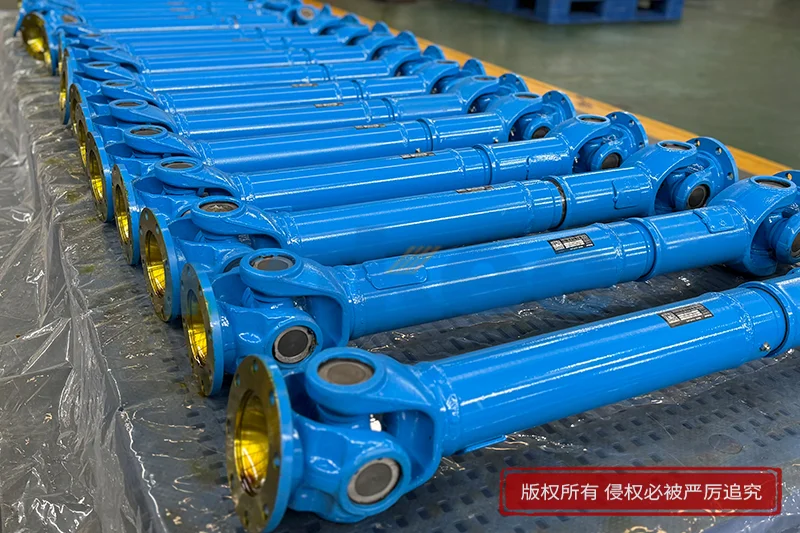
The application scenarios of universal couplings cover almost all mechanical fields involving shaft power transmission, showing extremely high industrial versatility. In agricultural machinery equipment, universal couplings are core transmission components of field operation machinery such as tractors, harvesters and tillers. Field operation equipment often works on uneven terrain, and the fuselage will produce continuous jitter and angle deviation during operation, resulting in real-time changes in the relative position and angle between the power output shaft and the working component shaft. The universal coupling can adapt to this dynamic angular change, stably transmitting engine power to various working implements, and its good dustproof and anti-shock performance can cope with harsh field working environments such as mud and gravel impact, ensuring the continuous and stable operation of agricultural machinery in long-term high-intensity operation.
In engineering machinery fields such as excavators, loaders and cranes, universal couplings undertake the power transmission task of walking systems and hydraulic power output systems. Engineering machinery often operates in complex working conditions with variable loads and frequent posture adjustment, and the transmission shaft system needs to withstand frequent angle changes and strong impact loads. The high load-bearing capacity and dynamic compensation performance of universal couplings can effectively adapt to these harsh working conditions, avoid transmission system failure caused by shaft displacement and angle deviation, and ensure the reliability of engineering machinery operation under complex working conditions. In addition, in the transmission systems of transportation equipment, universal couplings are widely used in the power connection of mobile equipment with variable shaft positions, realizing stable power transmission in the motion state of fuselage jitter and angle change.
In industrial manufacturing equipment, universal couplings are applied to various automated production equipment, transmission machinery and power auxiliary equipment. In the assembly line transmission system, mechanical vibration and equipment operation errors will cause tiny misalignment of transmission shafts, and the compensation performance of universal couplings can eliminate the additional stress generated by misalignment, protect the precision transmission structure of the equipment, and maintain the stability of production operation. In heavy industrial equipment such as metallurgy, mining and chemical industry, the high torque transmission capacity of universal couplings meets the power demand of heavy-load equipment, and its durable structural performance adapts to long-term continuous industrial production operation, reducing equipment downtime and maintenance costs.
In order to maintain the long-term stable performance of universal couplings and extend their service life, standardized daily maintenance and scientific operation management are essential. In the working process of the coupling, the internal rolling bearings and cross spider components are in frequent friction and rotational motion, so regular lubrication maintenance is the core link of daily maintenance. Good lubrication can reduce internal friction resistance, avoid dry wear of components, and reduce vibration and noise during operation. It is necessary to select suitable lubricating media according to different working temperatures and load conditions, and regularly check the lubrication state to ensure that the internal motion pair is always in a good lubrication environment.
At the same time, regular structural inspection is required. Long-term operation will cause tiny wear of internal components and slight loosening of connecting parts. Regular inspection can timely discover abnormal wear, structural deformation and connection loosening problems, and carry out maintenance and replacement in advance to avoid small defects evolving into equipment failures affecting the overall production operation. In addition, it is necessary to avoid long-term overload operation and excessive deflection angle operation of the coupling. Long-term overload will cause fatigue damage of structural components, and excessive shaft deflection angle will increase motion friction and velocity fluctuation amplitude, accelerate component aging, and reduce transmission stability and service life. Standardized use and maintenance can maximize the working performance of universal couplings and maintain the long-term reliability of mechanical transmission systems.
With the continuous upgrading of modern mechanical equipment towards high precision, high efficiency and high durability, the technical iteration of universal couplings is also advancing continuously. The current development direction of universal coupling products focuses on structural optimization, material upgrading and performance refinement. In terms of materials, high-strength and wear-resistant alloy materials are gradually applied to the production of core components, which effectively improve the structural rigidity, wear resistance and fatigue resistance of the coupling, and adapt to higher load and longer cycle operation requirements. In terms of structure, through finite element analysis and mechanical simulation optimization, the internal stress distribution of the coupling is more uniform, the structural weight is reduced on the premise of ensuring strength, the transmission flexibility is improved, and the energy-saving effect of power transmission is enhanced.
In terms of performance optimization, low-vibration and low-noise structural designs are increasingly applied to high-precision universal couplings, which suppress transmission vibration and noise generated by motion fluctuation, and meet the high-precision and low-noise operation requirements of modern precision mechanical equipment. At the same time, the modular design concept is gradually popularized. The standardized and modular component structure realizes rapid assembly and replacement of parts, reduces equipment maintenance difficulty and time cost, and improves the overall operation efficiency of mechanical systems. In the future, with the development of intelligent manufacturing and high-end mechanical equipment, universal couplings will further develop towards high precision, high durability, low energy consumption and easy maintenance, and continue to play an irreplaceable core role in the field of mechanical power transmission.
In conclusion, universal coupling, as a classic and efficient mechanical transmission component, relies on its unique angular compensation performance, multi-dimensional displacement adaptation capability, high-efficiency transmission characteristics and strong environmental adaptability to build a solid foundation for the stable operation of various mechanical equipment. From traditional agricultural machinery and engineering machinery to modern industrial precision equipment and mobile transportation devices, its application value runs through all links of mechanical power transmission. With the continuous progress of mechanical design technology and material technology, the performance of universal couplings will be continuously optimized and improved, and their application scenarios will be further expanded. As an indispensable basic component of the mechanical industry, universal couplings will always maintain strong industrial vitality and provide reliable basic support for the innovation and development of modern mechanical transmission technology.
- Tags:
- Universal Couplings ,
- sandwich panel line ,
- sandwich panel machine
- pu sandwich panel machine
« Catalogue of Universal Couplings » Latest Update Date: Jun 3, 2026
https://www.rokeecoupling.net/blog/catalogue-of-universal-couplings.html