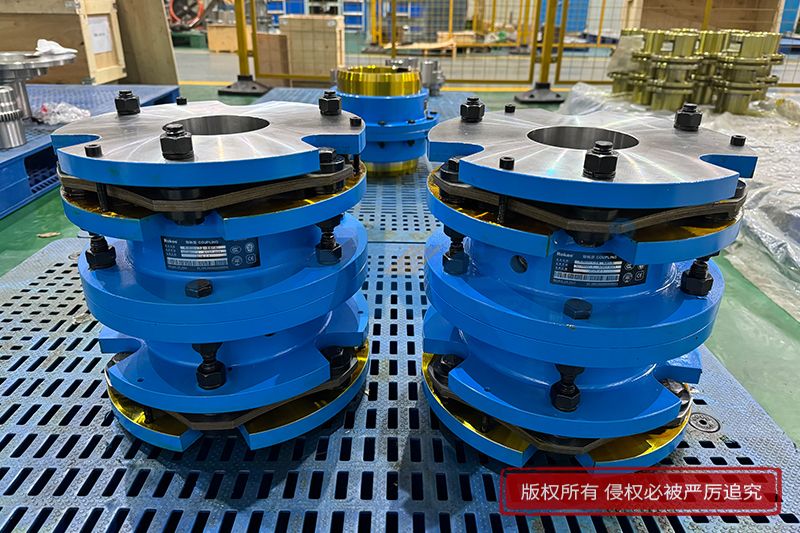
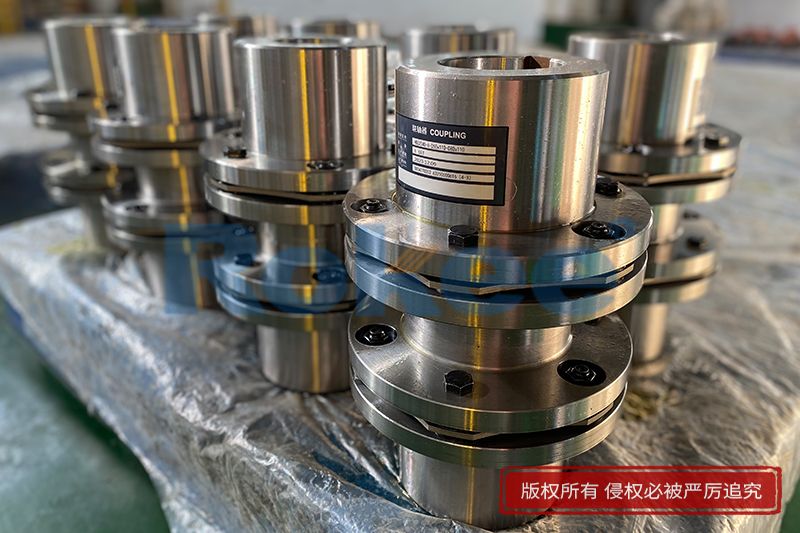
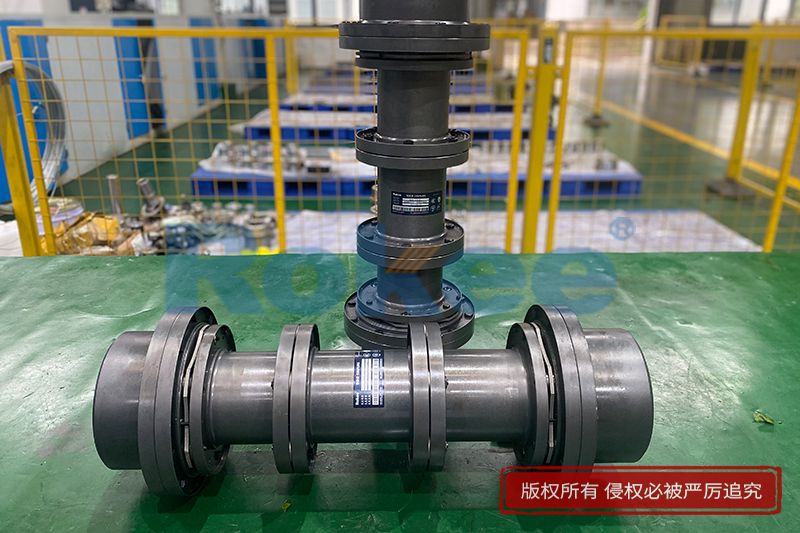
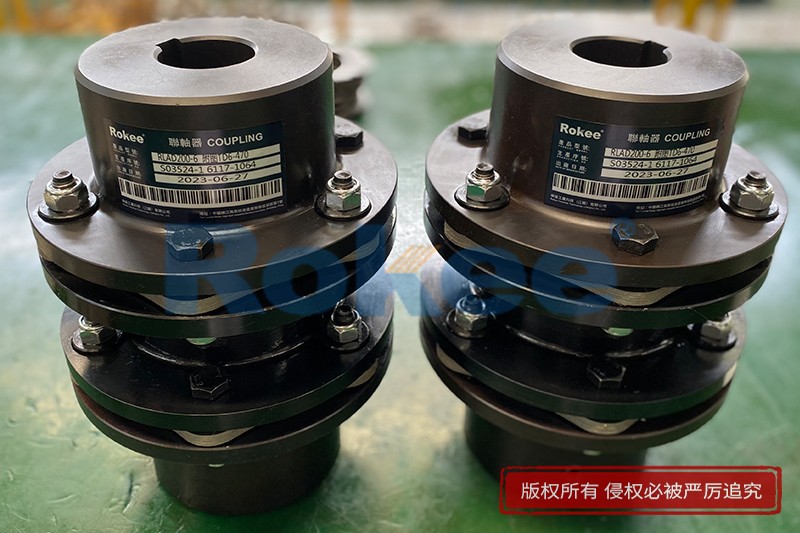
In the intricate ecosystem of industrial power transmission, flexible diaphragm couplings stand out as indispensable mechanical components that ensure stable torque transmission between rotating shafts. Specialized manufacturers of flexible diaphragm couplings focus on the research, development, production, and refinement of these metal elastic transmission parts, dedicating themselves to crafting components that adapt to complex operating conditions across diverse industrial sectors. Unlike conventional coupling structures that rely on rubber or polymer elastic media, flexible diaphragm couplings adopt all-metal diaphragm structures, which endow them with unique mechanical properties that cater to high-precision, high-speed, and high-stability industrial transmission demands. The core pursuit of every professional flexible diaphragm coupling manufacturer lies in balancing structural durability, transmission efficiency, and environmental adaptability, while continuously optimizing production processes to meet the evolving technical requirements of modern mechanical systems.

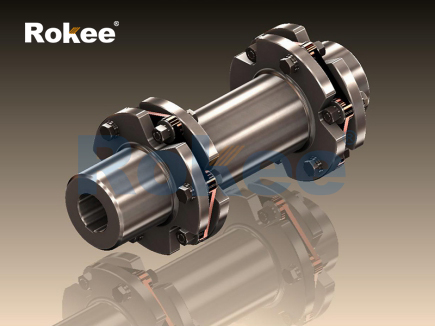
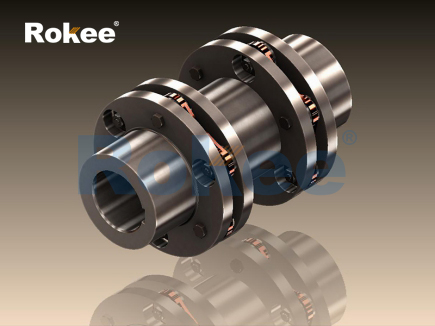
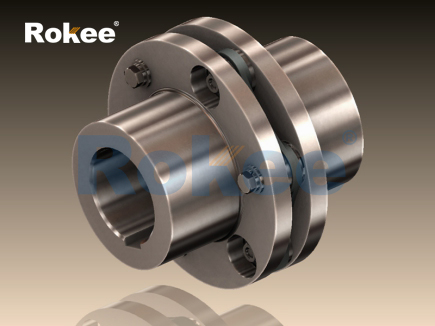
The structural design of flexible diaphragm couplings constitutes the fundamental foundation of manufacturing production. A complete flexible diaphragm coupling is generally composed of metal diaphragms, high-strength fasteners, shaft sleeves, and connecting flanges. Metal diaphragms, usually made of premium stainless steel materials, serve as the elastic core of the coupling. These thin laminated metal sheets undergo controlled elastic deformation during equipment operation, effectively compensating for axial, radial, and angular misalignments between connected shafts. Most manufacturers classify their products into single-diaphragm and double-diaphragm structures to accommodate different misalignment compensation needs. Single-diaphragm configurations feature compact outlines and simple assembly structures, making them suitable for installation-limited transmission spaces with minor shaft misalignments. Double-diaphragm designs incorporate intermediate spacer sleeves between two sets of diaphragm groups, boasting stronger comprehensive misalignment compensation capabilities and operating stability, which are widely applied in medium and large-scale industrial mechanical systems. Fasteners adopted in production are precision-made high-strength metal bolts, which maintain stable clamping force under long-term alternating loads to avoid transmission gaps caused by loose connections. Shaft sleeves are processed with smooth and precise inner holes to ensure tight fitting with transmission shafts, eliminating relative sliding during torque transmission.
Professional manufacturers strictly regulate raw material selection as the primary link in production quality control. The performance of flexible diaphragm couplings is highly dependent on the inherent characteristics of raw materials, so manufacturers implement rigorous screening standards for metal substrates. Stainless steel with excellent fatigue resistance and corrosion resistance is the preferred material for diaphragm production, as it can withstand millions of cyclic elastic deformations without permanent structural damage. For structural components such as flanges and shaft sleeves, high-quality carbon alloy steel is commonly utilized to guarantee integral structural rigidity and torque bearing capacity. Every batch of incoming raw materials undergoes physical and chemical composition inspections. Technicians detect material hardness, tensile strength, and corrosion resistance to eliminate unqualified raw materials from the production chain. In addition, manufacturers rationally match material types according to different application scenarios. For transmission systems operating in humid and corrosive atmospheric environments, higher-grade anti-corrosion metal materials are selected to extend service life; for high-speed rotating equipment, low-density and high-rigidity alloy materials are prioritized to reduce rotational inertia and operating vibration.
The production process of flexible diaphragm couplings involves multiple precision processing procedures, and each manufacturing step directly affects the final mechanical performance of products. The production flow starts with raw material cutting and blanking, where automated cutting equipment is used to cut metal materials into standard blanks that match product specifications. Subsequent turning and milling processes shape the basic outlines of flanges and shaft sleeves. Advanced numerical control machine tools are adopted in this stage to control machining tolerances within an extremely narrow range, ensuring the flatness of connecting surfaces and the dimensional accuracy of assembly holes. The processing of metal diaphragms is the most refined segment of the entire production process. Manufacturers use special stamping and forming equipment to create smooth and uniform diaphragm structures, followed by heat treatment processes to enhance the elasticity and fatigue resistance of metal sheets. Heat treatment parameters such as temperature holding time and cooling rate are precisely adjusted to eliminate internal stress generated during diaphragm processing, preventing structural deformation and fatigue fracture in long-term operation. After the independent processing of all components, manufacturers carry out assembly work in dust-free constant-temperature workshops. Workers assemble diaphragms, fasteners, and structural parts in a standardized sequence, with uniform bolt tightening force ensured by professional torque tools to maintain balanced stress distribution across the diaphragm group.
In-process testing and finished product inspection are essential links for manufacturers to control product quality. During component processing, sampling inspections are conducted on machining dimensions, surface smoothness, and structural hardness to promptly identify and revise processing deviations. After product assembly, a series of performance tests are implemented for finished flexible diaphragm couplings. Misalignment compensation tests simulate axial, radial, and angular displacement states in actual operation to verify the deformation coordination ability of diaphragms under different offset conditions. Torque transmission tests detect torsional rigidity and transmission efficiency, ensuring stable torque output without power loss within the rated load range. High-speed operation tests run couplings at varying rotational speeds to observe vibration amplitude and operating stability, screening out products with unbalanced structures. Fatigue life tests simulate long-term cyclic operation to evaluate structural durability under alternating loads. All test data is recorded and archived to form complete product quality files, providing traceability basis for subsequent product optimization and after-sales technical support. Products that fail any inspection item will be returned for reprocessing or scrapped to ensure that all delivered products meet consistent quality standards.
Well-managed flexible diaphragm coupling manufacturers pay great attention to production environment and process optimization to improve manufacturing efficiency and product consistency. Modern production workshops are equipped with automated production lines and intelligent monitoring equipment, which realize intelligent management of raw material transportation, component processing, and finished product storage. Automated production effectively reduces human errors in manual operation, stabilizes product dimensional accuracy, and shortens production cycles. Meanwhile, manufacturers optimize production layouts according to process logic, dividing functional areas such as raw material storage, precision processing, heat treatment, assembly, and testing to avoid cross-interference between different production links. In terms of environmental management, workshops are equipped with dust removal and constant-temperature humidity control equipment. A clean and stable processing environment prevents tiny impurities from adhering to component surfaces, avoiding abrasion and structural damage during subsequent equipment operation. Additionally, manufacturers regularly maintain and calibrate production and testing equipment to ensure the long-term stable operation of machinery and the accuracy of detection data.
The application coverage of flexible diaphragm couplings continues to expand, driving manufacturers to continuously enrich product specifications and customize differentiated solutions. In the machinery manufacturing industry, these couplings are applied to numerical control machine tools and automated production equipment, providing high-precision power transmission to ensure accurate positioning and stable operation of mechanical arms and processing components. In the energy industry, they serve wind power generation equipment and power generation units, adapting to high-load and continuous operating conditions to maintain the stable connection between power generation shafts and transmission structures. In the petrochemical sector, flexible diaphragm couplings are installed on fluid transportation pumps and compression equipment, resisting corrosion from chemical media and maintaining reliable transmission in harsh working environments. The metallurgy and textile industries also rely heavily on such couplings, which operate stably in high-temperature and dusty industrial environments to reduce equipment failure rates. Facing customized demands from different industries, manufacturers provide targeted structural optimization. For high-speed precision equipment, lightweight and low-vibration product designs are adopted; for heavy-load industrial equipment, the number of diaphragm layers is increased to enhance torque bearing capacity; for special corrosive environments, surface anti-corrosion treatments are added on the basis of high-grade raw materials.
Technical research and innovation constitute the core driving force for the sustainable development of flexible diaphragm coupling manufacturers. With the continuous upgrading of industrial manufacturing technology, the market puts forward higher requirements for coupling service life, transmission accuracy, and environmental adaptability. Professional manufacturers establish independent technical research teams to carry out structural optimization and material improvement research. Through mechanical simulation analysis software, technicians simulate the stress distribution and deformation trajectory of diaphragms under complex working conditions, optimizing diaphragm shapes and assembly structures to reduce local stress concentration. In terms of material research, manufacturers cooperate with material research institutions to develop new alloy composite materials, which have better fatigue resistance and lower density than traditional stainless steel materials. In addition, manufacturers innovate production processes, adopting advanced surface treatment technologies such as polishing and passivation to reduce component surface roughness and friction resistance. Some manufacturers also optimize the internal assembly structure of couplings to simplify installation and disassembly steps, lowering the maintenance difficulty of end-user equipment. Long-term technical accumulation enables manufacturers to continuously iterate product performance and maintain market competitiveness in the evolving industrial component industry.
Supply chain management and customer service systems are key components of the operational development of flexible diaphragm coupling manufacturers. In the upstream supply chain, manufacturers establish long-term cooperative relationships with high-quality raw material suppliers to ensure the stable supply of metal materials and auxiliary parts, while optimizing procurement cycles to control raw material costs reasonably. In the production and inventory link, manufacturers adopt scientific inventory management methods to reserve standard-specification products for conventional market demands, realizing rapid order delivery. For non-standard customized products, flexible production schedules are formulated to meet personalized production requirements of different customers. In terms of after-sales service, manufacturers build professional technical service teams to provide customers with installation guidance, operation debugging, and daily maintenance suggestions. Technicians summarize common problems in product application and compile standardized usage guidelines to help customers extend product service life. Meanwhile, manufacturers collect customer feedback on product use, sort out optimization suggestions for product structure and performance, and feed back the information to the R&D department to support subsequent product upgrading and iteration.
Looking at the overall industrial development trend, flexible diaphragm coupling manufacturers are moving toward intelligent production, green manufacturing, and high-performance customization. With the popularization of industrial intelligent manufacturing technology, more manufacturers will introduce digital monitoring systems to realize real-time data monitoring of the production process, further improving product precision and production efficiency. In response to the global green production concept, manufacturers optimize production processes to reduce energy consumption and waste discharge in processing, realizing low-carbon and environmentally friendly production. In terms of product development, the trend of high-performance customization will become more prominent. Manufacturers will launch more refined products targeting extreme working conditions such as ultra-high speed, strong corrosion, and heavy load to meet the diversified needs of emerging industrial fields. As an important basic component in the industrial transmission chain, flexible diaphragm couplings will keep pace with the development of modern machinery manufacturing, and professional manufacturers will continue to underpin the stable operation of various industrial equipment with reliable product quality and continuous technological innovation.
- Tags:
- Flexible Diaphragm Couplings ,
- sandwich panel line ,
- sandwich panel machine
- pu sandwich panel machine
« Flexible Diaphragm Couplings Manufacturer » Latest Update Date: May 9, 2026
https://www.rokeecoupling.net/blog/flexible-diaphragm-couplings-manufacturer.html