In the intricate ecosystem of modern industrial transmission systems, mechanical components that ensure stable torque transmission and precise axis connection play an irreplaceable foundational role, and flexible diaphragm couplings stand out among numerous transmission parts for their unique mechanical properties and adaptive structural design. As critical intermediary components for connecting driving and driven shafts in mechanical equipment, these couplings rely on the elastic deformation of metal diaphragm structures to complete torque transmission while effectively mitigating various axis misalignment issues generated during equipment operation. Professional flexible diaphragm couplings suppliers act as vital bridges connecting manufacturing resources and terminal industrial applications, continuously optimizing product design, production processes and service systems to meet the increasingly stringent operational requirements of diverse industrial scenarios. The development level of suppliers directly determines the operating stability, service life and comprehensive application value of diaphragm couplings in complex mechanical systems, making in-depth exploration of supplier operation logic, product advantages and industry development significance essential for understanding the industrial transmission component sector.

The core working principle of flexible diaphragm couplings lays a solid theoretical foundation for their wide industrial adoption, and professional suppliers always take mechanical mechanism optimization as the core of product iteration. Different from traditional flexible couplings that rely on non-metallic elastic materials for deformation and shock absorption, flexible diaphragm couplings mainly adopt stacked metal diaphragm groups as the elastic deformation core. During the equipment operation process, when relative displacement occurs between the driving shaft and the driven shaft due to installation errors, mechanical vibration or thermal expansion and contraction, the thin metal diaphragms undergo controllable elastic deformation. This subtle structural deformation can simultaneously compensate for angular deviation, radial deviation and axial deviation between the two shafts, avoiding additional mechanical stress caused by shaft misalignment on bearings, shafts and other key components of the equipment. Suppliers focus on refining this deformation mechanism in the production process, reasonably controlling the thickness, quantity and arrangement density of diaphragms to balance torsional rigidity and displacement compensation capability. High torsional rigidity ensures that the coupling does not produce obvious torsion angle deviation during high-precision torque transmission, while moderate flexible deformation retains excellent misalignment adaptation performance, realizing the organic integration of precision transmission and fault tolerance.
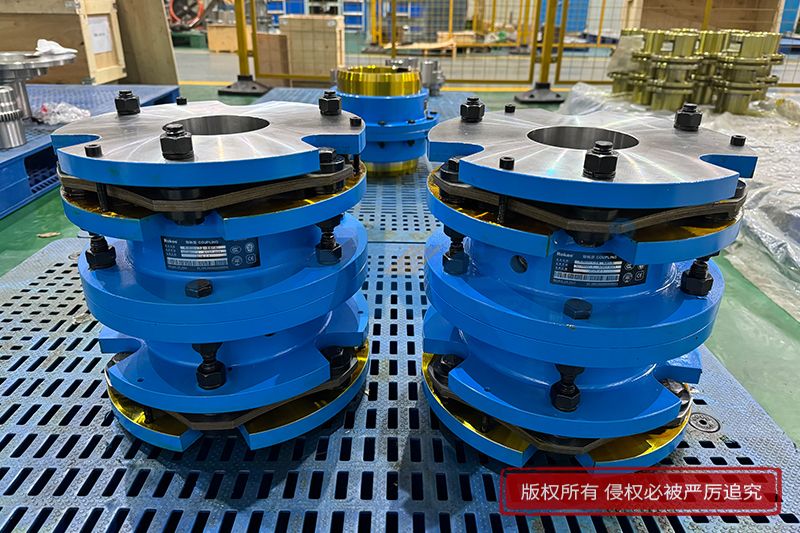
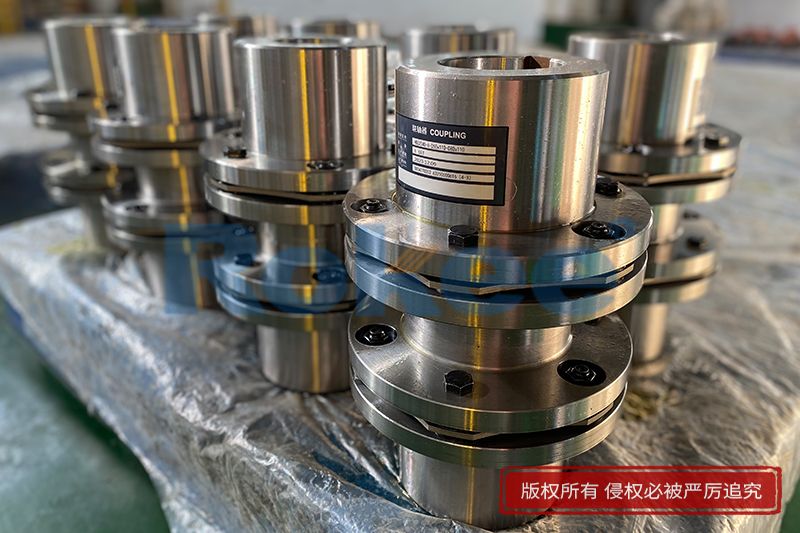
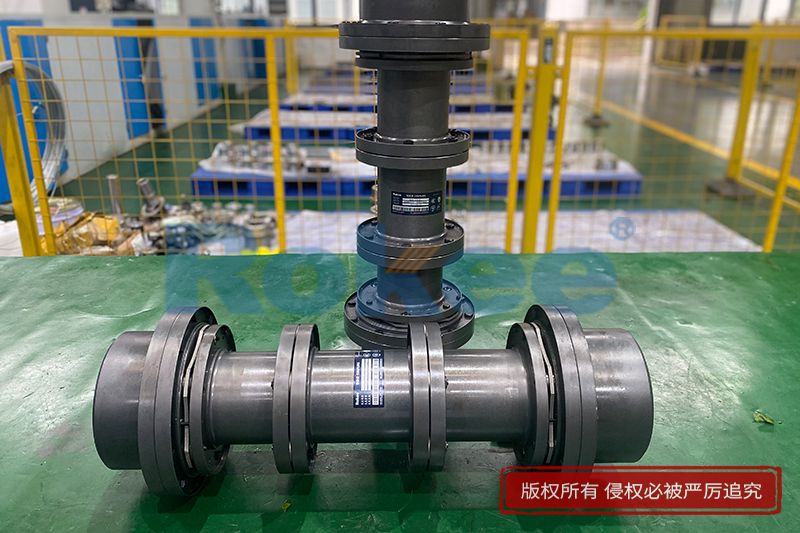
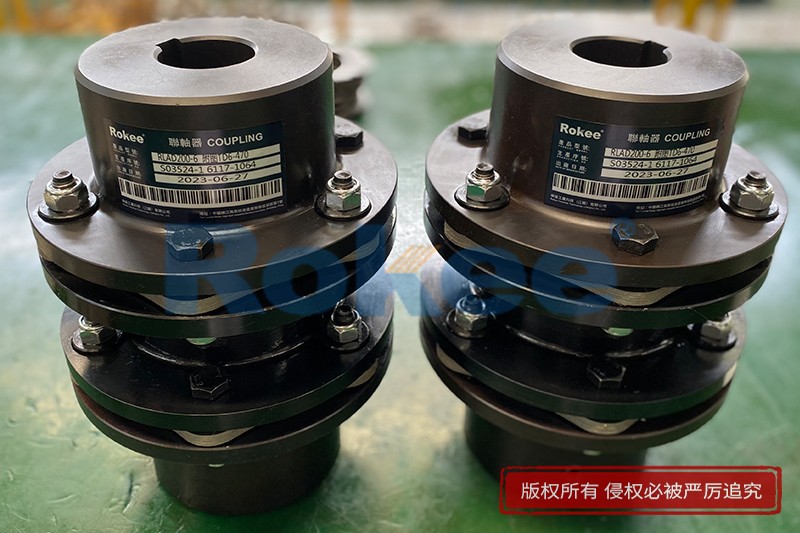
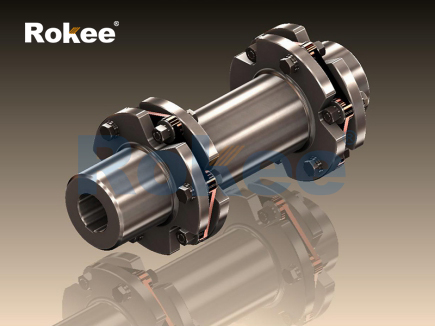
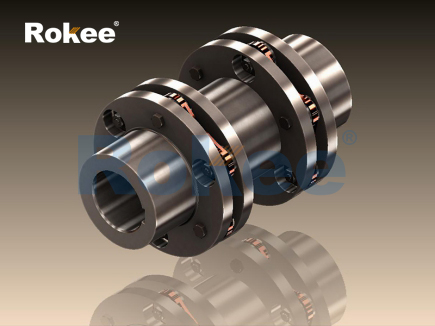
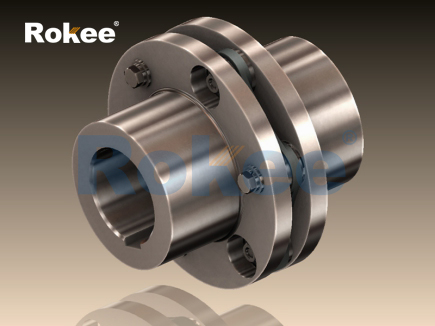
The structural composition of flexible diaphragm couplings is concise and scientific, and mature suppliers have formed standardized and refined production systems for each component. The basic structure of the coupling includes metal shaft sleeves, fastening connecting parts and diaphragm groups. The shaft sleeves are responsible for closely fitting the rotating shafts of power equipment, adopting smooth and precise inner hole processing to ensure seamless assembly with the shaft body and avoid rotational shaking during high-speed operation. Fastening parts usually adopt high-strength hardware accessories, which can maintain stable locking performance under long-term high-speed rotation and alternating load conditions, preventing component loosening caused by mechanical vibration. The diaphragm group, as the most critical functional component, is mostly made of high-quality stainless steel materials with uniform texture and excellent fatigue resistance. Multiple thin diaphragms are stacked and combined, and the number of diaphragms is adjusted according to different load demands to change the overall flexibility and bearing capacity of the coupling. Some optimized structural designs add intermediate spacer sleeves between double diaphragm groups, further improving the radial displacement compensation ability of the product and making it suitable for more complex shaft connection environments. Suppliers continuously optimize the structural matching relationship of each component through mechanical simulation tests, eliminating structural defects such as stress concentration and uneven force bearing, so that each finished coupling can maintain stable mechanical performance under extreme working conditions.
Material selection is a key link that determines the service performance and durability of flexible diaphragm couplings, and professional suppliers have strict material screening and inspection standards. For the core diaphragm components, suppliers prefer metal materials with high tensile strength, good elastic recovery performance and strong corrosion resistance. These metal materials can withstand repeated elastic deformation for a long time without permanent structural damage, and maintain stable physical properties in variable temperature environments. In high-temperature industrial scenarios such as chemical production and power generation, special heat-resistant metal materials will be selected to avoid material aging and performance degradation caused by continuous high-temperature radiation. For shaft sleeves and connecting shells, high-density alloy materials are commonly used to ensure structural rigidity and wear resistance, reducing surface wear and deformation caused by frequent friction during assembly and operation. All raw materials purchased by regular suppliers will undergo physical performance testing and component analysis to exclude raw materials with uneven texture, impurity defects and unqualified hardness. Strict material control procedures fundamentally reduce the failure probability of couplings in service, extend the overall service cycle of products, and lower the long-term operation and maintenance costs of industrial equipment for end users.
Compared with other types of flexible transmission couplings, flexible diaphragm couplings have prominent comprehensive performance advantages, which also constitute the core competitiveness of professional suppliers in the market. This type of coupling adopts an all-metal structural design, eliminating the aging, deformation and wear problems of non-metallic elastic materials such as rubber and polyurethane. It does not need additional lubricants during operation, realizing maintenance-free operation in the whole service cycle and greatly simplifying the daily maintenance work of mechanical equipment. The internal assembly gap of the product is extremely small, achieving zero-backlash torque transmission, which can accurately transmit rotational speed and torque without hysteresis deviation, fully meeting the high-precision operation requirements of sophisticated mechanical equipment. In terms of environmental adaptability, all-metal structures can resist the erosion of humid air, chemical corrosives and fine dust, and can operate stably in harsh working environments such as high temperature, low temperature and high dust concentration. In addition, the product has excellent electrical insulation performance, which can isolate the current between the connected shafts, effectively prevent electrochemical corrosion of bearings and shaft parts caused by current conduction, and further protect the safety and stability of the transmission system. Suppliers fully leverage these performance advantages to classify product models according to torque bearing range, rotational speed limit and displacement compensation capacity, forming a diversified product matrix to cover the needs of different industrial fields.
Flexible diaphragm couplings have extensive application coverage in modern industrial systems, and reliable suppliers continuously expand application scenarios through product customization and performance optimization. In the field of precision manufacturing equipment, the couplings are applied to numerical control machine tools, automated processing machinery and semiconductor production equipment. The high-precision transmission characteristic ensures the accurate positioning and stable operation of mechanical arms and processing components, reducing processing errors caused by transmission vibration. In the energy industry, the products serve wind power generation equipment, power generation units and oil and gas exploitation machinery. They can withstand alternating loads and high-speed rotation for a long time, adapting to the continuous operation mode of energy equipment. In the transportation and shipping industry, diaphragm couplings are used in ship propulsion systems and rail transit power transmission structures, relying on strong vibration resistance and environmental adaptability to cope with bumpy and humid working conditions. In addition, the products also play an important role in chemical production, metallurgical processing, papermaking and textile industries, matching with various pump bodies, compressors and transmission machinery to ensure the smooth progress of industrial production. Suppliers conduct in-depth research on the operating characteristics of different industries, adjust product hardness, structural size and deformation tolerance in a targeted manner, and provide targeted transmission component solutions for industrial users.
The production and processing technology level is an important symbol to measure the comprehensive strength of flexible diaphragm couplings suppliers. Excellent suppliers adopt advanced precision processing equipment and standardized production processes to complete the manufacturing of each component. In the initial processing stage of raw materials, high-precision cutting equipment is used to cut metal diaphragms into standardized sheet structures with uniform thickness and smooth edges, avoiding burrs and stress defects on the surface of diaphragms. The surface of shaft sleeves and connecting parts is processed by fine turning and grinding technology to improve surface smoothness and assembly accuracy. After the completion of component processing, the finished products are assembled in a dust-free constant-temperature workshop to prevent tiny impurities from affecting the assembly tightness. In the post-processing stage, suppliers carry out surface treatment such as anti-rust coating and oxidation resistance polishing on the products to enhance the environmental corrosion resistance of the shell structure. Meanwhile, multiple performance tests are arranged before product delivery, including torsional fatigue test, high-speed rotation stability test and displacement compensation limit test. Unqualified products with insufficient deformation resistance and unstable operation will be eliminated strictly to ensure that every delivered product meets industrial use standards. The continuous upgrading of production technology enables suppliers to maintain product quality consistency while improving production efficiency and shortening the production cycle of customized products.
In addition to high-quality products, comprehensive service capabilities have become an important part of the core competitiveness of flexible diaphragm couplings suppliers. In the pre-sale stage, professional technical teams provide users with professional selection consulting services. According to the user's equipment operating parameters, installation space, working environment and load characteristics, the most suitable coupling model and structural scheme are reasonably recommended to avoid performance mismatch and resource waste. For industrial users with special structural requirements, suppliers support personalized customized production, adjusting parameters such as product outer diameter, length and diaphragm combination mode to meet the assembly demands of special mechanical equipment. In the sale stage, suppliers optimize the packaging and transportation system, adopting shockproof and moisture-proof packaging materials to protect precision components from collision deformation and moisture oxidation during long-distance transportation. In the after-sale stage, complete technical guidance services are provided, including installation specification guidance, daily operation precautions and simple fault diagnosis methods. For abnormal problems encountered by users in the process of equipment use, the technical team can provide timely remote guidance and on-site maintenance suggestions to minimize the downtime loss caused by coupling failure. The one-stop service system from consultation, production to after-sales maintenance builds a stable cooperative relationship between suppliers and industrial users.
With the continuous progress of industrial manufacturing technology and the upgrading of industrial automation level, the market demand for flexible diaphragm couplings is showing a steady growth trend, which also brings new development opportunities and challenges for suppliers. At present, the industrial sector has put forward higher requirements for the miniaturization, high precision and long-life performance of transmission components. Suppliers need to increase investment in material research and development, actively explore new alloy composite materials with higher fatigue resistance and lighter weight to realize the lightweight design of couplings while ensuring bearing capacity. In terms of structural optimization, suppliers need to combine digital simulation technology to carry out refined structural design, further reduce the stress loss during product deformation and improve transmission efficiency. In addition, the trend of intelligent industrial equipment puts forward new requirements for the adaptive performance of couplings. Future product research and development will focus on improving the vibration monitoring and stress sensing auxiliary functions of couplings, so as to realize real-time perception of equipment operating status. Facing the increasingly fierce market competition, excellent suppliers will also strengthen production management optimization, reduce unnecessary production consumption, and maintain the cost performance advantage of products on the premise of ensuring quality.
In the global industrial supply chain system, flexible diaphragm couplings suppliers undertake the important task of supporting the stable operation of mechanical transmission systems. From raw material screening and precision processing to performance testing and terminal service, every link reflects the professional manufacturing strength and industry responsibility of suppliers. Flexible diaphragm couplings, as high-performance transmission components, rely on their unique structural advantages to continuously empower the stable operation of various industrial equipment, reducing equipment failure rates and extending the service life of mechanical systems. In the future, with the continuous innovation of manufacturing technology and the gradual improvement of industrial supporting systems, suppliers will continue to focus on product performance optimization and service system upgrading, constantly adapt to the changing market demand, and provide more reliable and efficient transmission component solutions for all sectors of the industrial industry. The long-term development of flexible diaphragm couplings suppliers will also further promote the standardized and high-quality development of the entire mechanical transmission parts industry, injecting continuous power into the upgrading of global industrial manufacturing.
- Tags:
- Flexible Diaphragm Couplings ,
- sandwich panel line ,
- sandwich panel machine
- pu sandwich panel machine
« Flexible Diaphragm Couplings Supplier » Latest Update Date: May 9, 2026
https://www.rokeecoupling.net/blog/flexible-diaphragm-couplings-supplier.html