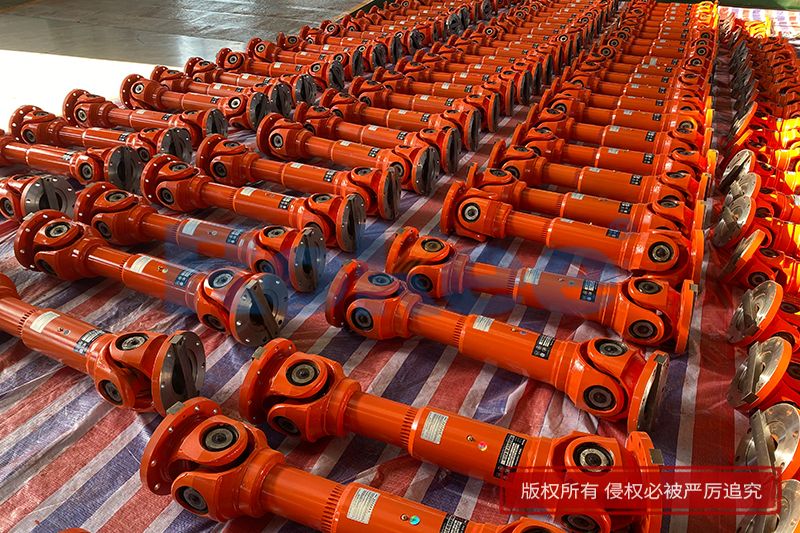
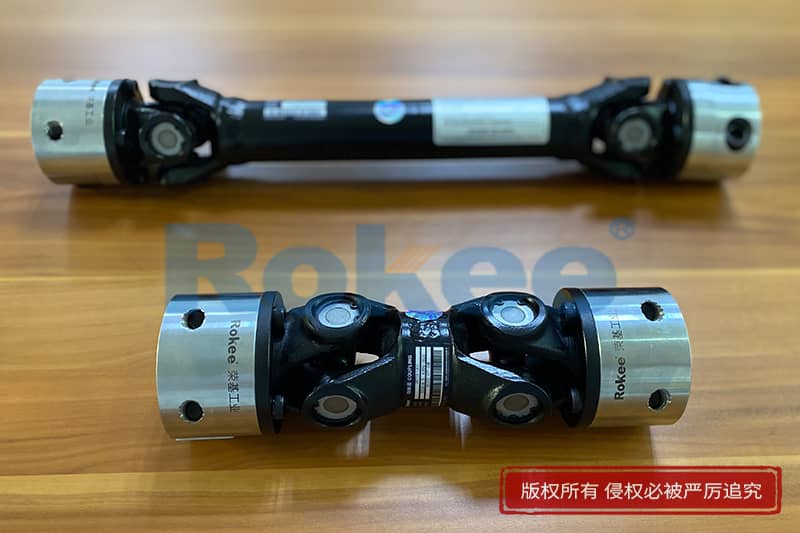
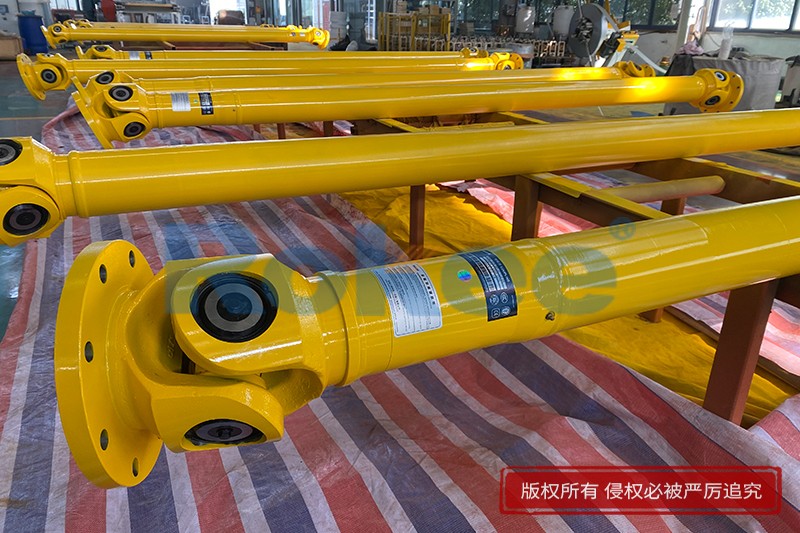
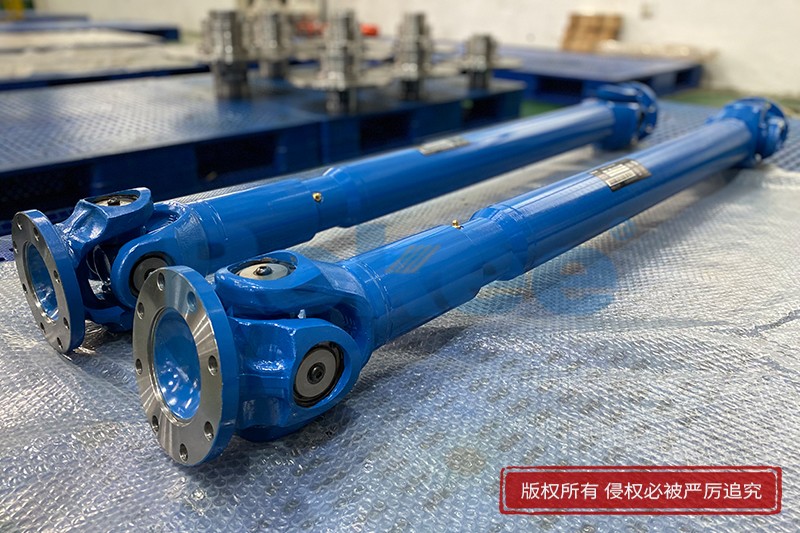
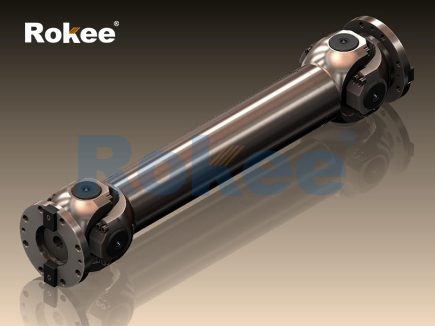
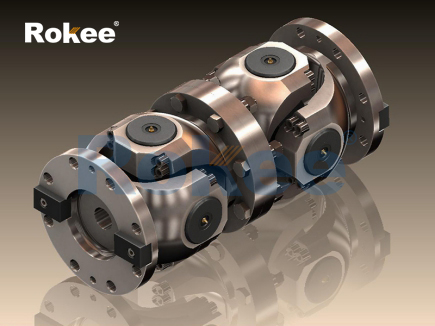
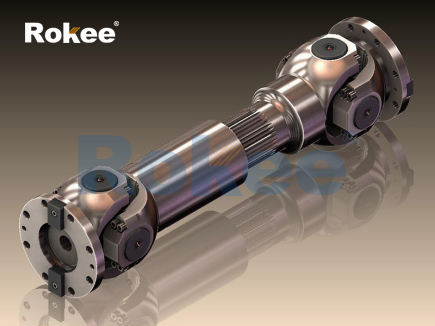
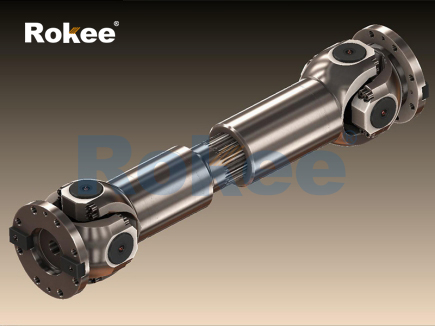
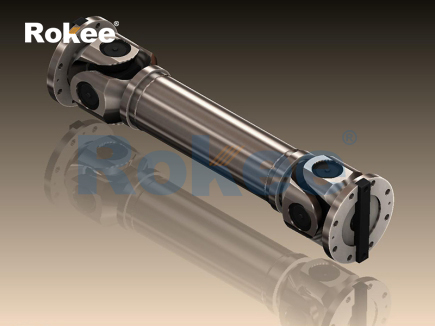
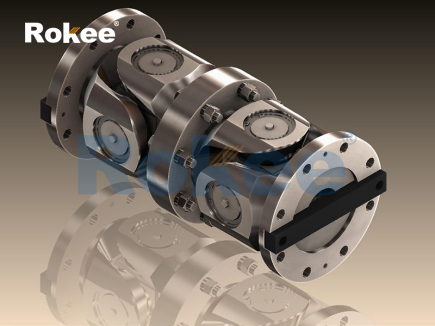
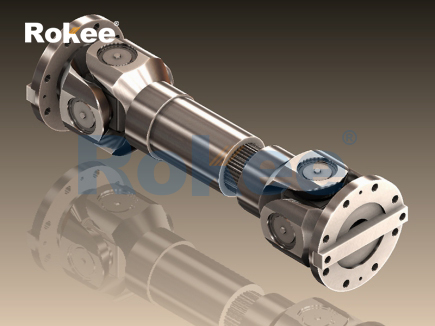
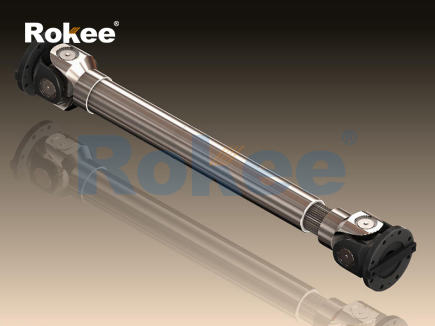
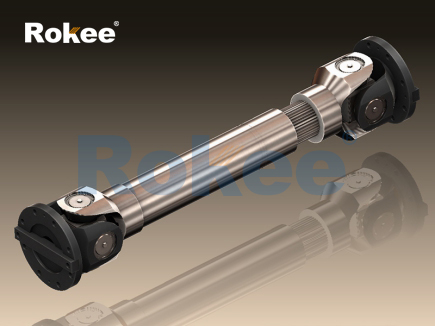
The universal coupling, also widely known as universal joint, serves as a mechanical connection component that transmits rotational power between two shafts whose axes are not aligned on a single straight line. Its core working logic depends on a set of hinged structures that allow angular displacement while maintaining continuous torque transfer during operation. Inside the basic assembly, two yoke-shaped parts are connected through a cross-shaped intermediate member, with each arm of the cross linked to the bearing position on one yoke. When the driving shaft rotates, it pushes the cross piece to swing, and the cross piece then drives the driven yoke and the matching driven shaft to follow the rotation. A key characteristic of this simple single universal coupling is its variable angular velocity output. If the driving shaft spins at a constant speed, the driven shaft will experience periodic speed fluctuations within each full rotation cycle, and the magnitude of this fluctuation rises as the angle between the two connected shafts increases. This speed variation generates vibration and alternating stress on all contact components, which limits the use of a single universal coupling in many power transmission systems. Even with this inherent limitation, the basic hinged design still delivers valuable flexibility, enabling power transfer when connected shafts shift their relative positions slightly under load or thermal expansion, a feature that rigid shaft couplings cannot provide. Engineers need to fully understand this speed fluctuation trait to decide whether a single joint configuration is suitable for a given mechanical setup, and recognize the conditions under which additional structural adjustments become necessary to stabilize motion output.

To overcome the non-uniform rotation drawback of a single universal coupling, mechanical systems often adopt paired universal couplings arranged in sequence. This layout requires careful alignment of the two joints to offset the speed variation produced by the first joint. The arrangement rule demands that the angular offset between the first pair of shafts equals the angular offset between the second pair, and the yoke planes of the two cross members must be positioned in a matching orientation. Under this proper setup, the speed fluctuation created by the first universal joint gets counteracted by the second one, and the final driven shaft can maintain nearly constant rotational speed matching the input shaft. This paired configuration expands the application range of universal couplings greatly, allowing reliable torque transmission for shafts with a permanent angular deviation. The intermediate shaft between the two universal joints absorbs and transfers the rotary motion between the two hinge points. During equipment operation, small shifts in shaft positions caused by component deformation, assembly tolerance, or external force can still be accommodated without interrupting power transmission. The paired universal coupling structure does not eliminate all mechanical stress entirely. Minor misalignment in installation can bring back speed oscillation, noise and cyclic load, so precise assembly work remains essential to preserve the expected performance. Maintenance work also needs to check the relative angle and yoke orientation regularly, because any change in geometric relationship will break the balance of motion compensation and reduce the service life of the whole transmission assembly.
Material selection directly affects the working performance and durability of universal couplings under continuous torque transmission. Components including cross pieces, yokes and bearing sleeves are normally made from materials with high tensile strength, good wear resistance and sufficient impact toughness. These parts endure repeated rolling friction and alternating shear stress while rotating, so surface hardening processes are commonly applied to the contact surfaces to slow down abrasion. The cross piece bears load from multiple directions at the same time. Its four journal ends constantly rotate against the inner surface of bearings, which creates heat from friction during high-speed operation. Without proper lubrication, metal contact surfaces will suffer rapid wear, leading to increased clearance, vibration and eventual failure of the hinge mechanism. Lubricant forms a thin separating film between the journal and bearing, reducing metal-to-metal contact and carrying away part of the friction heat. Sealing structures are fitted around the bearing positions to retain lubricant inside and block dust, moisture and fine debris from entering the friction zone. If sealing parts degrade over time, contamination will accelerate wear and corrosion of moving parts. Material fatigue also emerges after long-term cyclic loading. Even if the load stays below the static strength limit, repeated stress cycles can create tiny cracks on component surfaces, which gradually expand and may cause fracture of critical parts. For this reason, material property matching and surface treatment are core considerations in the design of universal couplings.
The allowable operating angle of universal couplings defines the boundary of their working capacity and directly influences dynamic behavior. The hinge structure can only accommodate a limited angle between connected shafts. As the operating angle grows, the magnitude of speed fluctuation, dynamic load and friction loss all rise significantly. At small angular offsets, the universal coupling operates smoothly, with low vibration and relatively stable power transfer efficiency. When the angle approaches the maximum allowable value, the cross piece undergoes large swinging motion in each rotation cycle. This large swing creates heavy centrifugal force and sharp impact loads on bearings and yokes. The friction between moving parts also increases, leading to higher energy loss and more heat accumulation. Exceeding the designed maximum angle will drastically shorten component life and may lead to sudden failure during running. The operating angle is not a fixed static parameter in some equipment. In mobile machinery, relative shaft positions can change dynamically while working, and the universal coupling must adjust to continuously varying angles without losing torque transmission ability. Designers calculate the peak angular displacement that may appear during operation and select coupling structures with adequate angle capacity. They also evaluate how changing angles affect bearing load and fatigue life across the whole working cycle. Regular inspection of operating angle is helpful to identify abnormal installation deformation or component displacement before permanent damage occurs to the transmission assembly.
Torque transmission capacity of universal couplings is determined by multiple structural factors and working conditions. The cross piece and yokes transmit torque through contact pressure on bearing surfaces. Under low torque conditions, components operate within a safe stress range, and the hinge moves freely with low friction resistance. As transmitted torque increases, contact pressure on bearing journals rises. Excessive torque creates plastic deformation on contact surfaces, crushing lubricating films and worsening wear. Repeated torque shocks impose greater harm than steady torque, because instantaneous peak load can far exceed the average working load and produce impact stress on the cross and bearing assemblies. The size of the cross piece, the diameter of bearing journals and the thickness of yoke arms all set the upper limit of torque that the coupling can handle. Rotational speed interacts with torque capacity as well. At high rotating speeds, centrifugal force on moving parts adds extra load to bearings, and heat generation becomes more obvious. Even if the nominal torque stays unchanged, high-speed operation reduces the safe load margin of the coupling. The surface condition of friction pairs also changes torque transmission performance. Worn bearings create loose clearances, which generate knocking sounds under fluctuating torque and amplify dynamic load. Engineers match universal coupling specifications according to the maximum continuous torque and peak shock torque in the transmission system, and reserve a proper safety margin to cope with unpredictable load changes during equipment operation.
Dynamic load and vibration are unavoidable phenomena in universal coupling operation, and understanding their origin helps control equipment running state. In a single universal joint, periodic speed variation of the driven shaft generates cyclic inertia force, which acts on the connected shafts and supporting structures. This cyclic force excites mechanical vibration, and the vibration frequency correlates with the rotating speed of the shaft. Paired universal couplings can eliminate the primary speed fluctuation, but secondary dynamic loads still exist from friction, mass imbalance and tiny assembly misalignment. When vibration frequency matches the natural vibration frequency of shafts or supporting frames, resonance will happen, producing large-amplitude oscillation that damages bearings and other transmission parts. Wear inside the coupling enlarges internal clearances over time, making vibration more serious. Loose connection fasteners can worsen vibration response and cause displacement of yoke positions. Dynamic load also transfers to adjacent bearings and supports of the equipment, shortening the service life of those related components. Monitoring vibration signals is an effective way to assess the working state of universal couplings. Abnormal vibration amplitude or noise often indicates excessive wear, poor lubrication or changed shaft alignment. Controlling vibration requires reasonable structural design, precise assembly, regular lubrication maintenance and avoidance of operating speed ranges that trigger resonance in the whole mechanical system.
Lubrication and sealing systems maintain stable operation and extend the service life of universal couplings. The contact zones between cross journals and bearing sleeves rely on lubricant to minimize friction. Grease is widely adopted in most universal coupling structures because it stays in place under centrifugal force and provides long-lasting lubrication for intermittent or continuous rotation. Lubricant not only reduces friction loss but also prevents direct metal contact that causes scoring and pitting on contact surfaces. Heat generated by friction is partially dissipated through lubricant, preventing local overheating that softens metal materials. Sealing elements surround the bearing cavity to keep lubricant trapped inside and isolate external pollutants. Hard particles entering the bearing space will scratch the polished surface of cross journals, increasing wear rate and internal clearance. Moisture can trigger rust and corrosion on steel components, weakening material strength and accelerating fatigue crack growth. Seals will gradually age and lose elasticity after long-time rotation and temperature cycling. Once seals deteriorate, lubricant leakage occurs, and contamination penetrates the bearing assembly. Maintenance procedures include periodic replenishment of lubricant and inspection of seal integrity. Overfilling lubricant can create excessive internal pressure, which may damage sealing parts, while insufficient lubrication leads to dry friction and rapid component failure. Correct lubrication management is a simple but vital measure to keep universal couplings working at their designed performance level.
Universal couplings have found broad applications across different mechanical systems due to their unique ability to transmit torque between non-collinear shafts. They are commonly applied in equipment where the relative position of driving and driven shafts changes during operation. In mobile mechanical equipment, power needs to transfer between components that move relative to each other, and universal couplings accommodate angular movement while maintaining power connection. In fixed industrial machinery, assembly deviation, thermal expansion and structural deformation create permanent shaft misalignment, and universal couplings compensate for such offset without introducing heavy additional stress into the whole transmission system. Compared with other flexible coupling types, universal couplings can accept larger angular displacement and transmit high torque reliably, though they require more attention to dynamic motion characteristics. Different structural variants of universal couplings are developed to fit different working environments, with adjustments in bearing design, sealing form and component size to adapt to high torque, high speed or dusty working surroundings. Although universal couplings bring flexibility to power transmission, they cannot compensate for large axial or radial displacement. Excessive axial movement must be handled by other structural designs in the system. Proper selection, installation and maintenance ensure universal couplings deliver stable power transfer over long operation periods. As mechanical design continues to evolve, the fundamental hinged working principle of universal couplings remains unchanged, and designers keep optimizing details to reduce dynamic load, lower friction loss and improve reliability for diverse power transmission scenarios.
- Tags:
- Universal Couplings ,
- sandwich panel line ,
- sandwich panel machine
- pu sandwich panel machine
« Working Principle of Universal Couplings » Latest Update Date: Oct 20, 2026
https://www.rokeecoupling.net/blog/working-principle-of-universal-couplings.html