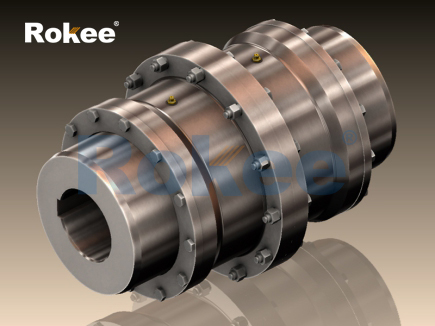
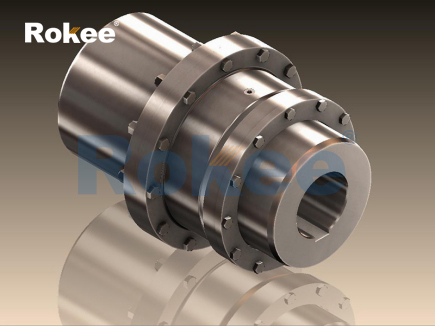
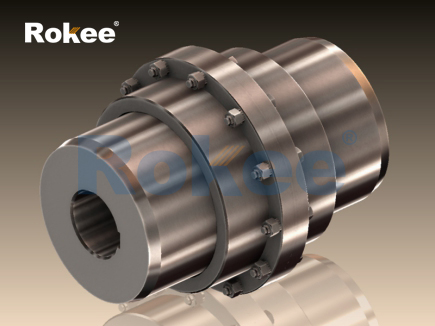
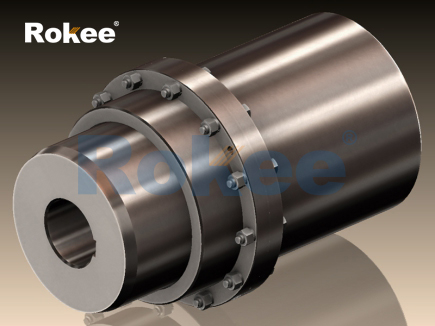
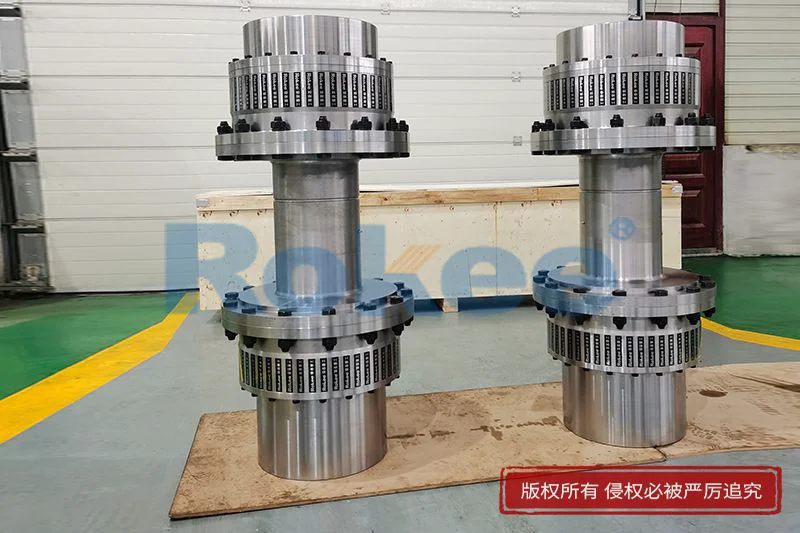
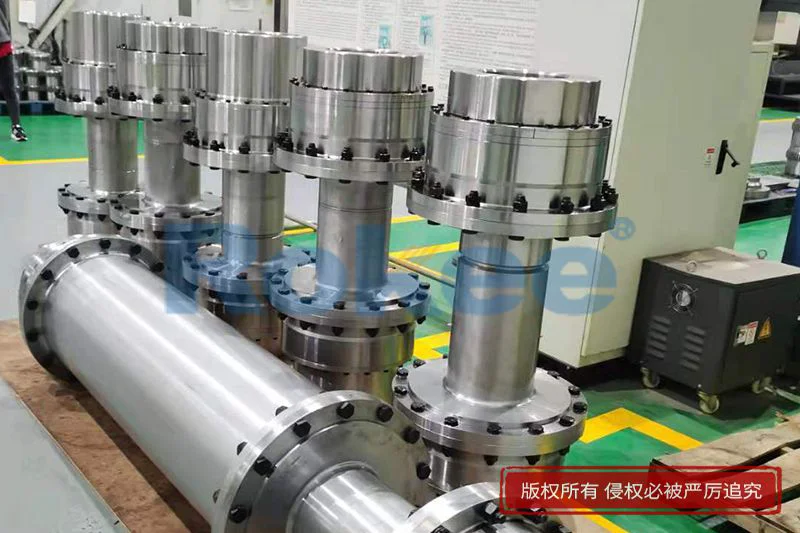
High Speed Drum Gear Coupling Exported To Europe
Rokee is a well-known High Speed Drum Gear Coupling supplier from china, the page show cases of High Speed Drum Gear Coupling Exported To Europe, provide customized services based on user's drawings, and supporting exports.
In the intricate and interconnected operating system of modern mechanical transmission equipment, high speed drum gear coupling stands as one of the most indispensable core components for high-power and high-speed shaft connection systems. It serves as a vital mechanical junction that bridges adjacent rotating shafts, realizing continuous and stable torque transmission between driving and driven equipment while accommodating various subtle displacements generated during equipment operation. Unlike ordinary low-speed coupling components, this type of coupling is specially optimized for high-speed operating environments, integrating unique drum-shaped tooth profile design, high-strength structural configuration and refined manufacturing technology to adapt to the stringent mechanical performance requirements of high-speed rotating machinery. With the rapid iteration of industrial manufacturing technology, high-speed rotating equipment has been widely applied in numerous industrial scenarios, which puts forward higher standards for the stability, wear resistance and deformation resistance of coupling parts. Under such industry background, high speed drum gear coupling has gradually become the preferred transmission connecting part for high-speed mechanical systems by virtue of its excellent comprehensive mechanical properties, reliable operating stability and outstanding displacement compensation capability.
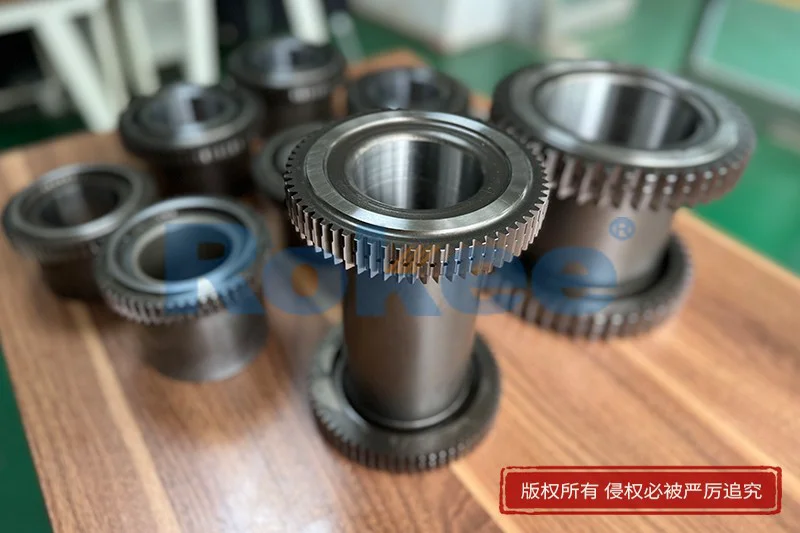
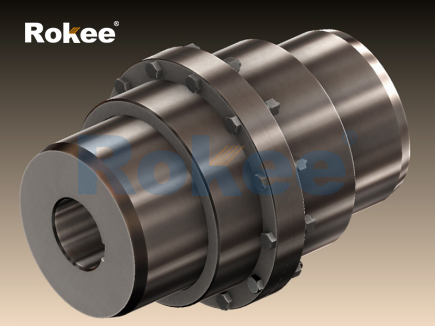
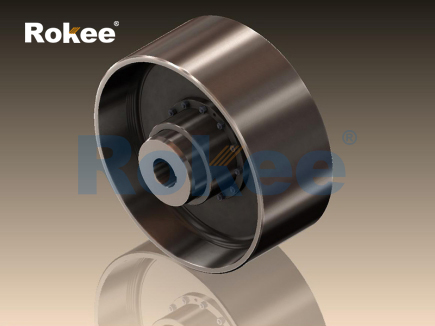
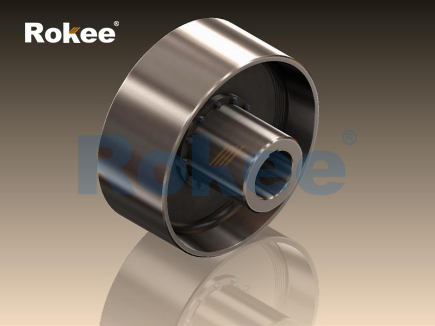
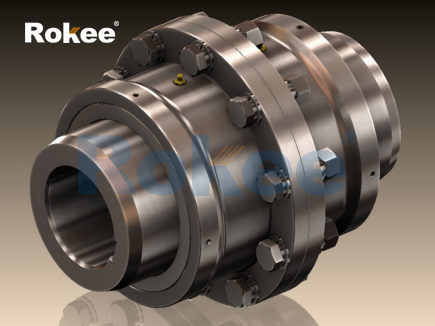
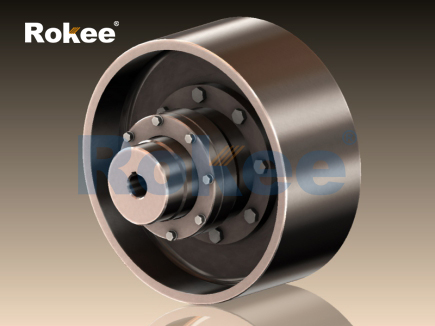
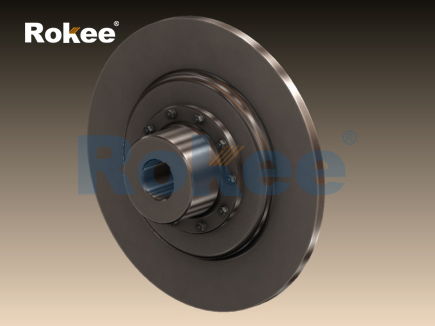
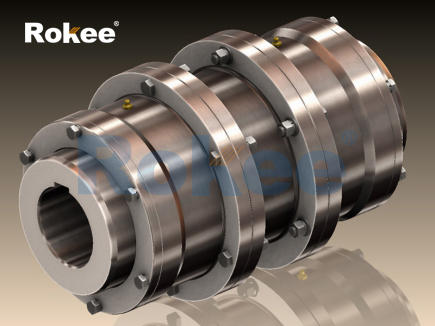
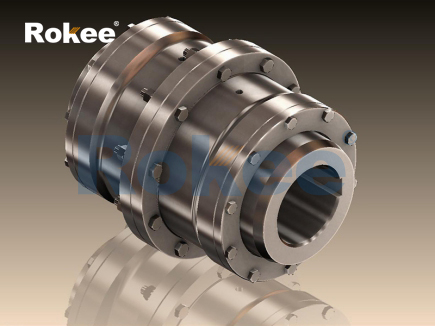
The basic structural composition of high speed drum gear coupling follows a mature and optimized mechanical design logic, mainly consisting of two half-couplings with external teeth, an intermediate inner gear sleeve and high-strength fastening assemblies. The external teeth distributed on the outer circumference of the half-couplings adopt a unique spherical drum-shaped tooth profile, which is the core structural feature distinguishing it from traditional straight gear couplings. The curvature design of the drum-shaped tooth surface undergoes repeated mechanical simulation and structural optimization, enabling each tooth to form a smooth curved contact surface during meshing. The intermediate inner gear sleeve is equipped with precisely machined internal teeth, which form a meshing pair with the external teeth of the half-couplings. The reasonable tooth side clearance is reserved between the meshing tooth surfaces, creating a flexible meshing state that can adapt to multi-dimensional axis deviation. All fastening components are made of high-toughness metal materials to ensure the tight connection of each structural part and avoid component loosening caused by high-speed centrifugal force during long-term operation. The overall structure abandons redundant accessory designs, maintaining a compact and symmetrical layout, which effectively reduces the moment of inertia of the coupling itself and lowers the energy consumption generated during high-speed rotation.
Material selection and processing technology determine the fundamental service performance and service life of high speed drum gear coupling. Most of the key stress-bearing parts such as gear teeth and half-couplings are forged from high-quality alloy steel with stable metallurgical structure and excellent mechanical properties. This type of alloy material has high tensile strength, good hardenability and outstanding fatigue resistance, which can withstand alternating loads and instantaneous impact loads generated in high-speed operating conditions. After rough forging, the blanks need to undergo multiple heat treatment processes including carburizing, quenching and tempering. The standardized heat treatment process can significantly improve the surface hardness of gear teeth while maintaining appropriate toughness of the core material, effectively balancing wear resistance and impact resistance. The tooth surface is processed by precision grinding technology after heat treatment to eliminate tiny burrs and surface defects generated in the forging and heat treatment stages. The smooth and flat tooth surface not only reduces meshing friction resistance, but also avoids local stress concentration during high-speed meshing. In addition, the surface of non-meshing parts is treated with anti-corrosion and wear-resistant coatings to enhance the environmental adaptability of the coupling and slow down the oxidation and aging rate of metal materials.
The working principle of high speed drum gear coupling is based on the precise meshing transmission between internal and external gear teeth. When the power equipment starts to operate, the driving half-coupling rotates synchronously with the driving shaft, and the torque is transmitted to the inner gear sleeve through the meshing contact between external drum-shaped teeth and internal teeth. Subsequently, the inner gear sleeve drives the driven half-coupling to rotate, realizing the synchronous operation of the two connected shafts. In the high-speed rotating state, the drum-shaped tooth profile shows unique mechanical advantages. Compared with straight teeth, the curved tooth surface can make the contact stress evenly distributed on the entire meshing area, avoiding the sharp increase of local stress at the edge of the tooth surface. Even if there are minor axis deviations caused by installation errors, equipment vibration or thermal expansion, the flexible meshing gap and curved tooth surface can automatically adapt to angular displacement, radial displacement and axial displacement between shafts. This displacement compensation function effectively reduces the additional mechanical stress on the shaft system, bearings and other accessories, and weakens the vibration and friction loss generated during high-speed operation. The transmission process maintains continuous and stable tooth surface contact, ensuring high-efficiency and consistent torque output without obvious power fluctuation.
High speed drum gear coupling possesses multiple prominent performance advantages that make it highly adaptable to harsh high-speed operating conditions. First of all, it has excellent load-bearing capacity. The optimized drum-shaped tooth structure increases the actual contact area between gear teeth, enabling the coupling to bear larger torque under the same volume condition. The uniformly distributed contact stress also reduces the fatigue wear rate of tooth surfaces, laying a foundation for long-term stable operation. Secondly, its comprehensive displacement compensation performance is far superior to that of ordinary couplings. The specially designed tooth side gap and curved tooth surface can cope with multi-dimensional axis misalignment within a reasonable range, eliminating the adverse effects of installation errors and equipment operation deformation on the transmission system. In terms of transmission efficiency, the smooth precision-machined tooth surface minimizes sliding friction during meshing, and the overall transmission efficiency remains at an extremely high level even under continuous high-speed rotation, effectively reducing energy consumption in mechanical operation. In addition, the symmetrical compact structure effectively suppresses the amplitude of high-speed vibration, and the vibration damping effect can reduce the noise generated by mechanical friction, realizing low-noise and stable operation of the equipment.
This type of coupling has a wide range of application scenarios, covering many high-speed and high-precision industrial mechanical fields. In the energy power industry, it is applied to the connection of high-speed rotating parts of power generation equipment, maintaining the synchronous and stable operation of power transmission shafts under high-speed and continuous working conditions to ensure the continuity of power production. In the petrochemical industry, various high-speed pumping equipment and compression equipment need such couplings to complete power transmission. The good sealing performance and corrosion resistance enable the couplings to adapt to complex working environments with chemical medium erosion. In the metallurgical processing industry, high-speed rolling equipment frequently starts and operates continuously, and the coupling can resist instantaneous impact loads to keep the production line running stably. In addition, it also plays an important role in industrial fan equipment, high-speed stirring machinery and large-scale transportation machinery. Whether it is a high-speed continuous operation scenario or an industrial environment with frequent load changes, high speed drum gear coupling can maintain stable working performance and provide reliable connection guarantee for mechanical equipment.
Although high speed drum gear coupling has mature structural design and stable performance, its operating state is still affected by external working conditions and daily maintenance measures. Lubrication management is one of the key links to maintain its high-performance operation. High-speed meshing of gear teeth will generate frictional heat, and high-quality lubricating grease can form a uniform oil film on the tooth surface to reduce dry friction between metal contact surfaces. The oil film can also absorb part of the friction heat to avoid excessive local temperature rise that leads to material softening and tooth surface wear. Meanwhile, reasonable sealing structure design is essential for the coupling. Excellent sealing performance can prevent external dust, metal debris and humid gas from entering the meshing gap, avoiding abrasive wear and electrochemical corrosion of gear teeth. In daily operation, excessive overload and long-term over-speed operation should be avoided. Long-term overload will accelerate fatigue damage of gear teeth, while over-speed operation will increase centrifugal force and vibration amplitude, which may cause structural deformation of components in severe cases.
In terms of installation and debugging, high speed drum gear coupling has standardized and reasonable operation procedures to ensure the best operating state after assembly. Before installation, the surface roughness and dimensional accuracy of each component need to be inspected to eliminate parts with processing defects. During the installation process, the coaxiality of the two connected shafts should be strictly calibrated to minimize the initial axis deviation, so as to reduce the compensation pressure of the coupling in subsequent operation. The fastening bolts need to be tightened evenly in a fixed sequence to ensure uniform stress on the connecting parts and avoid local stress concentration. After the installation is completed, low-speed trial rotation is required to observe whether there is abnormal vibration and noise. After confirming that the operating state is normal, the equipment can be gradually adjusted to the rated operating speed. Scientific installation and debugging can effectively extend the service life of the coupling and reduce the failure probability in the operating cycle.
Common failure forms of high speed drum gear coupling in service mainly include tooth surface wear, tooth root fatigue crack, fastening part loosening and lubrication failure. Most of the tooth surface wear is caused by insufficient lubrication, excessive impurity accumulation or long-term friction under deviation conditions. Fatigue cracks at the tooth root usually occur after long-term alternating load operation, and tiny cracks will gradually expand with the increase of service time, eventually leading to tooth breakage. The loosening of fastening parts is mostly related to incomplete installation fastening and long-term high-frequency vibration. Lubrication failure is manifested as lubricant deterioration and leakage, which will directly lose the protective effect on the meshing tooth surface. For these common faults, regular daily inspection is an effective preventive measure. It is necessary to regularly check the tightness of fasteners, the state of internal lubricant and the surface wear of gear teeth, and replace deteriorated lubricants and severely worn components in a timely manner to ensure the long-term reliable operation of the coupling.
With the continuous progress of industrial manufacturing technology, the optimization and upgrading of high speed drum gear coupling are still in progress. In terms of material research and development, new alloy composite materials are being continuously explored to further improve high-temperature resistance, corrosion resistance and fatigue strength, so that the coupling can adapt to more extreme industrial working environments. In terms of structural design, through finite element mechanical simulation, the tooth profile curve and tooth gap parameters are continuously optimized to achieve more uniform stress distribution and lower friction coefficient. In terms of processing technology, intelligent precision processing equipment is used to improve the dimensional tolerance accuracy of components, reduce assembly gaps, and further enhance the stability of high-speed operation. At the same time, combined with intelligent monitoring technology, some optimized coupling structures can cooperate with sensing components to monitor operating parameters such as vibration amplitude and temperature in real time, providing data support for equipment maintenance and fault early warning.
In the modern industrial system that pursues high efficiency, stability and low energy consumption, high speed drum gear coupling undertakes the important task of connecting high-speed mechanical transmission components. Its unique drum-shaped tooth structure, high-strength material configuration and scientific processing technology endow it with irreplaceable application advantages in the field of high-speed transmission. From material forging and precision processing to installation, commissioning and daily maintenance, every link is closely related to its operating performance and service life. In the future, with the continuous upgrading of industrial machinery towards high speed, high precision and large load, the market demand for high speed drum gear coupling will continue to grow, and its technical performance will also be continuously optimized and improved. As a basic mechanical component, it will always provide solid and reliable connection guarantee for the stable operation of various high-speed industrial equipment, and make continuous contributions to the efficient and safe development of the modern mechanical transmission industry.
With excellent quality, we have been continuously providing many coupling products of various categories and uses complying with multiple standards and a full range of services, from the product selection to final installation and operation, for the industry fields of ferrous metallurgy, nuclear power, gas turbine, wind power, ropeway construction, lifting transportation, general equipment, etc.
pu sandwich panel line,pu sandwich panel machine,sandwich panel machine
« High Speed Drum Gear Coupling Exported To Europe » Latest Update Date: May 9, 2026
https://www.rokeecoupling.net/cases/high-speed-drum-gear-coupling-exported-to-europe.html
Products
![GICL Crown Gear Coupling]() GICL Crown Gear Coupling
GICL Crown Gear Coupling![GICLZ Crown Gear Coupling]() GICLZ Crown Gear Coupling
GICLZ Crown Gear Coupling![GIICL Crown Gear Coupling]() GIICL Crown Gear Coupling
GIICL Crown Gear Coupling![GIICLZ Crown Gear Coupling]() GIICLZ Crown Gear Coupling
GIICLZ Crown Gear Coupling![GCLD Crown Gear Coupling]() GCLD Crown Gear Coupling
GCLD Crown Gear Coupling![NGCL Crown Gear Coupling]() NGCL Crown Gear Coupling
NGCL Crown Gear Coupling![NGCLZ Crown Gear Coupling]() NGCLZ Crown Gear Coupling
NGCLZ Crown Gear Coupling![WG Crown Gear Coupling]() WG Crown Gear Coupling
WG Crown Gear Coupling![WGZ Crown Gear Coupling]() WGZ Crown Gear Coupling
WGZ Crown Gear Coupling![WGP Crown Gear Coupling]() WGP Crown Gear Coupling
WGP Crown Gear Coupling![WGT Crown Gear Coupling]() WGT Crown Gear Coupling
WGT Crown Gear Coupling![WGC Crown Gear Coupling]() WGC Crown Gear Coupling
WGC Crown Gear Coupling![WGJ Crown Gear Coupling]() WGJ Crown Gear Coupling
WGJ Crown Gear Coupling