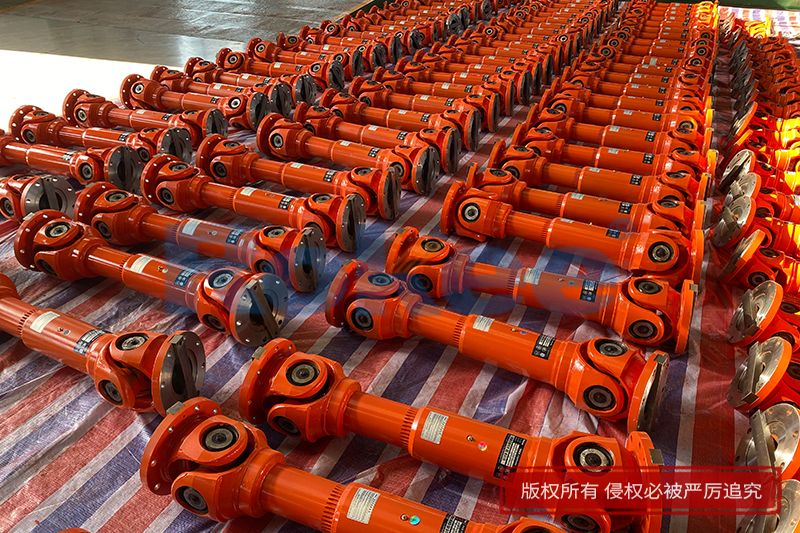
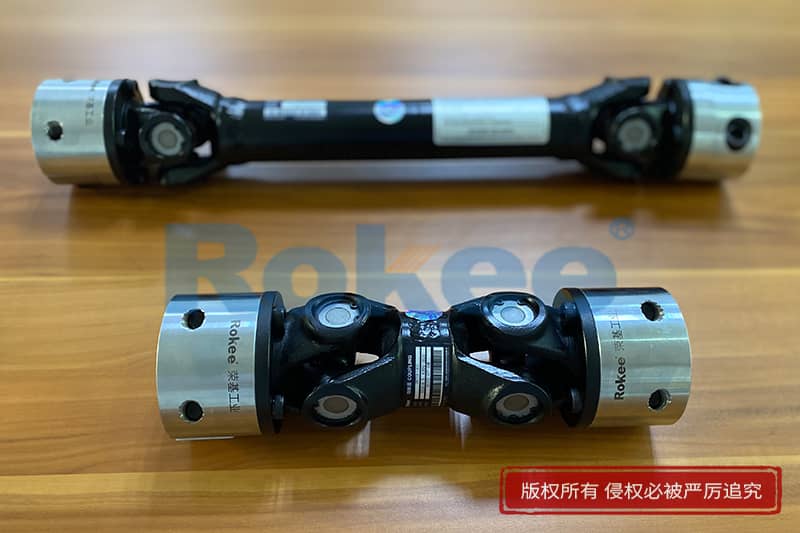
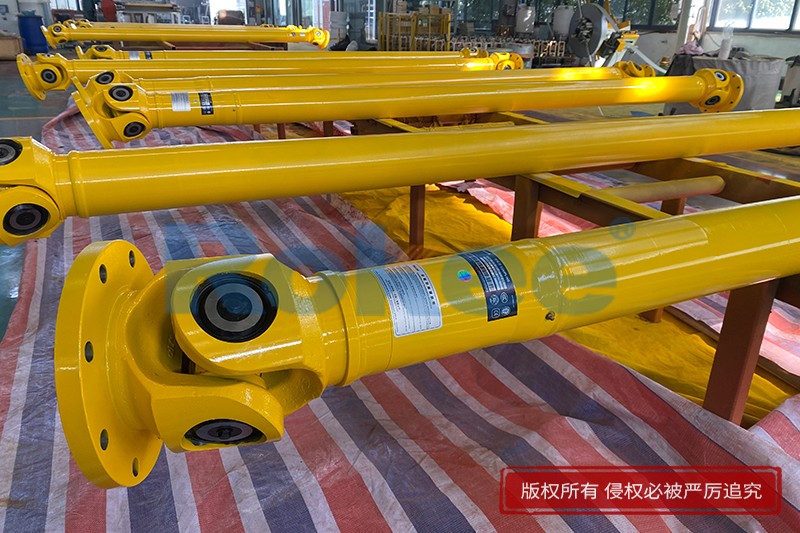
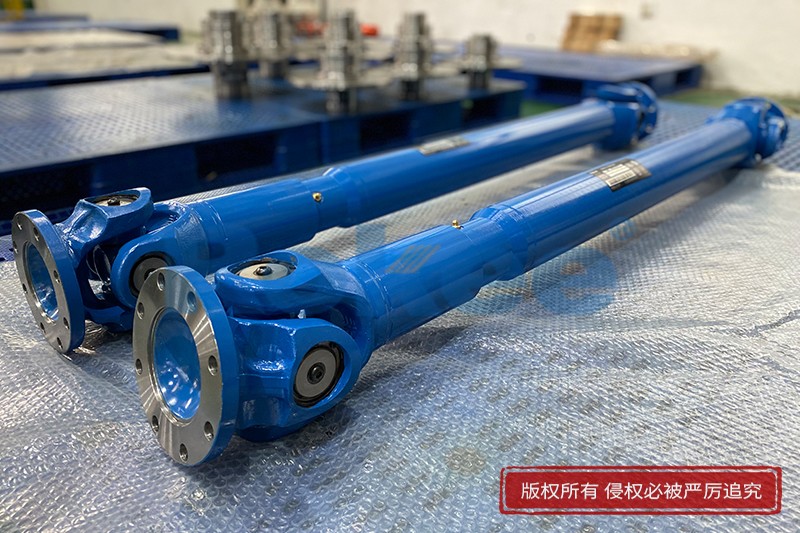
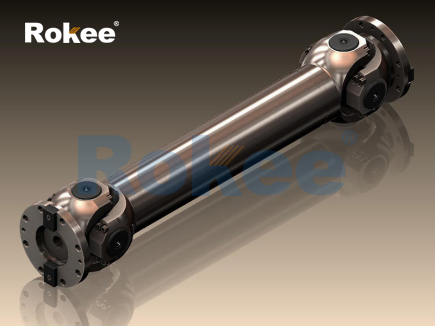
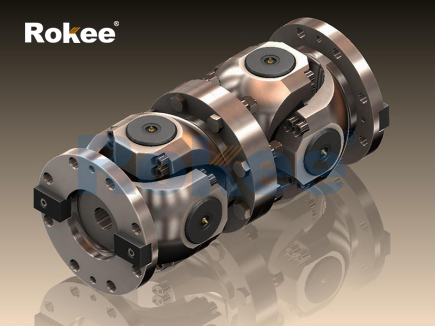
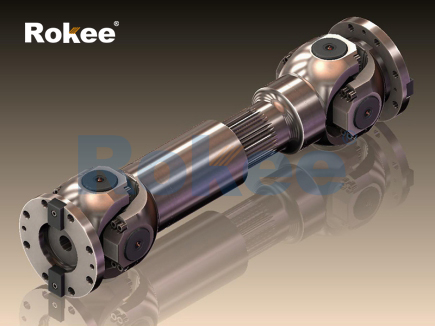
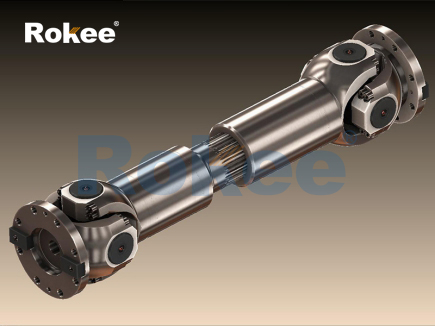
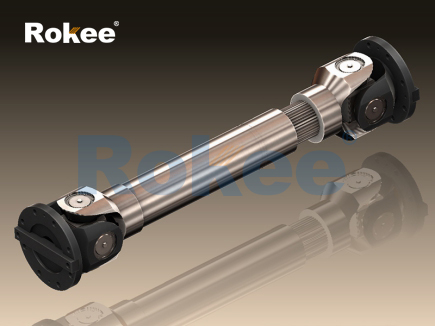
As an indispensable core transmission component in modern mechanical systems, the cardan drive shaft serves as a critical connecting medium for torque and rotational motion transmission between misaligned mechanical components. Widely applied in mobile machinery, industrial transmission equipment and various power transmission systems, this mechanical structure solves the core technical problem of stable power output under angular offset and spatial position deviation, providing reliable operational guarantees for diversified mechanical power transmission scenarios. Its unique structural design and flexible transmission characteristics make it irreplaceable in many working environments where fixed-axis transmission structures cannot adapt, laying a solid foundation for the stable operation of complex mechanical equipment.

The basic working logic of the cardan drive shaft originates from the structural flexibility of universal joint mechanisms, which enables continuous and efficient transmission of rotational torque even when there is a certain angular deviation and spatial dislocation between the driving end and the driven end. Different from rigid transmission shafts that rely on fixed-axis alignment for power transmission, the cardan drive shaft adopts a flexible connection structure, which can adapt to dynamic changes in the relative position of connected components during equipment operation. In actual operation, when the power source drives the driving end to rotate, the cross-shaped intermediate structure and movable yoke components inside the universal joint can produce adaptive deflection and rotation, converting the rotational motion of the offset driving shaft into stable rotational output of the driven shaft. This special mechanical operation mode allows the equipment to maintain uninterrupted power transmission within a specific angular variation range, effectively avoiding power transmission interruption or mechanical jitter caused by shaft body misalignment, and greatly improving the adaptability of mechanical transmission systems.
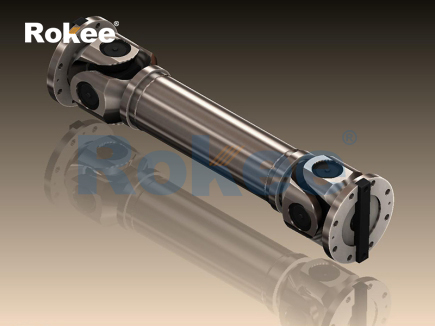
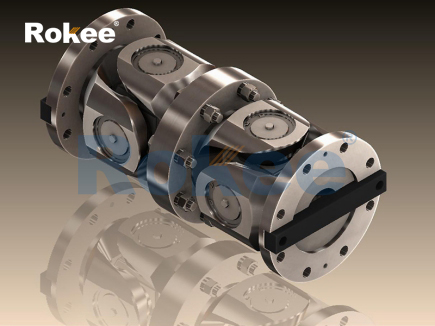
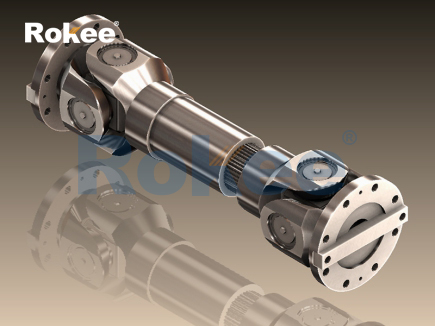
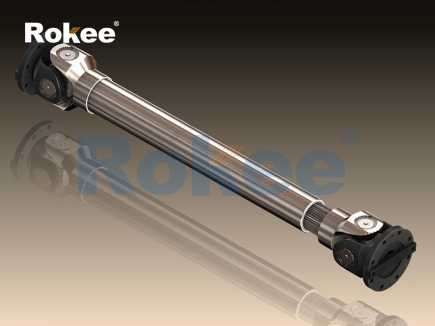
The overall structure of the cardan drive shaft is composed of multiple core functional components with coordinated functions, forming a complete and efficient transmission system. The main body is dominated by a central shaft tube with sufficient structural strength and rigidity, which bears the main torque load during power transmission and ensures the overall stability of the shaft body at high-speed operation. Universal joint assemblies are installed at both ends of the central shaft tube, which are the core functional units to realize angular compensation and flexible transmission. Each universal joint is composed of symmetrically distributed shaft yokes and a cross spider structure connected in the middle. The precision matching movable bearings installed at the contact positions of the cross spider and shaft yokes can reduce friction resistance during relative rotation, ensuring flexible and smooth deflection of the joint part. In addition, the sliding spline structure matched with the shaft body can realize free telescopic adjustment of the overall length of the drive shaft. This structural design can effectively compensate for the linear distance change between the driving end and the driven end caused by equipment vibration, component displacement and terrain changes during operation, avoiding structural tension or compression damage of the shaft body and ensuring the long-term stable operation of the transmission structure.
In terms of structural classification, cardan drive shafts can be divided into single-section and multi-section structures according to different application scenarios and transmission distance requirements. Single-section cardan drive shafts feature a compact overall structure and small space occupation, suitable for short-distance power transmission scenarios with relatively small angular deviation and load changes. Multi-section structures are composed of multiple shaft tubes and intermediate connecting joints, which can adapt to long-distance power transmission needs. The intermediate connecting structure of multi-section drive shafts is equipped with auxiliary supporting and positioning components, which can effectively reduce the vibration and swing of the long shaft body during high-speed operation and maintain the stability of the transmission process. According to the difference of internal joint structures, it can also be divided into cross-shaft type and ball-cage type. The cross-shaft type structure is simple and durable, with strong bearing capacity for conventional torque, suitable for most industrial and engineering machinery transmission scenarios. The ball-cage type structure has higher motion precision and smoother transmission performance, can adapt to larger angular deflection and higher-speed operation conditions, and is more suitable for precision mechanical transmission systems with high requirements for transmission stability.
One of the most prominent performance advantages of the cardan drive shaft is its excellent angular compensation capability. Conventional rigid transmission systems have extremely high requirements for the coaxiality of the driving and driven shafts, and slight misalignment will cause increased equipment operation vibration, accelerated component wear, and even mechanical failure in severe cases. In contrast, the flexible joint structure of the cardan drive shaft can adapt to angular deviation within a wide range, and can still maintain efficient power transmission when the axis angle of the two connected shafts changes dynamically. This characteristic makes it perform excellently in equipment with frequent relative position changes of components, such as walking machinery with suspension structures and movable industrial mechanical arms. While realizing angular compensation, the cardan drive shaft also maintains high transmission efficiency. The optimized structural design and precision machining process reduce mechanical friction and energy loss during operation, ensuring that most of the torque output by the power source can be stably transmitted to the executing end, meeting the high-efficiency operation requirements of modern mechanical equipment.
In terms of material application, modern cardan drive shafts adopt high-strength alloy materials as the main raw materials, which undergo multiple precision processing and heat treatment processes to optimize structural performance. The central shaft tube is made of high-toughness and high-strength alloy materials, which can bear large torque load and resist bending and deformation during long-term high-load operation. The core moving components such as cross spiders and bearing parts are made of wear-resistant and high-temperature resistant alloy materials, which effectively reduce wear loss during frequent friction and deflection movement and extend the service life of components. The surface of key components is treated with anti-corrosion and anti-rust processes, which can adapt to complex working environments such as humidity, dust and slight chemical corrosion, avoiding component aging and performance degradation caused by environmental factors. The scientific material matching and processing technology enable the cardan drive shaft to maintain stable mechanical performance in long-term continuous operation and harsh working conditions, reducing the frequency of equipment failure and maintenance costs.
The application scope of cardan drive shafts covers almost all fields that require flexible power transmission, showing extremely high engineering versatility. In the field of engineering and construction machinery, it is applied to core transmission parts of equipment such as loaders, excavators and road rollers. These devices often produce violent vibration and component displacement during operation, and the cardan drive shaft can adapt to dynamic position changes to ensure continuous power output of walking and working mechanisms. In agricultural machinery equipment, it serves as a power transmission component for tractors, harvesters and irrigation equipment. The complex farmland working environment and uneven terrain lead to frequent position changes of mechanical components, and the flexible compensation performance of the cardan drive shaft can perfectly adapt to such working conditions and ensure the stable operation of agricultural machinery. In the field of general industrial machinery, it is widely used in conveyor equipment, rotating machinery and automated production lines, providing stable power transmission support for various automated production processes.
In addition to conventional mechanical equipment applications, cardan drive shafts also play an important role in special industrial scenarios. In metallurgical and mining equipment, large-scale mechanical equipment needs to operate continuously under high-load and high-vibration conditions, and the high-strength and anti-vibration performance of cardan drive shafts can meet the harsh operation requirements of such equipment. In port and logistics handling machinery, the frequent start-stop and position switching of equipment put forward high requirements for the flexibility and stability of transmission components, and the cardan drive shaft can effectively cope with frequent load changes and motion conversion. In the field of special vehicle manufacturing, it undertakes the power transmission task between the engine and the walking mechanism, ensuring that the vehicle can maintain stable power output during driving, steering and bumpy road driving, and improving the overall driving stability and passability of the vehicle.
In terms of operational performance, the cardan drive shaft has outstanding stability and anti-fatigue performance. Through the optimized structural design of symmetrically distributed joints and balanced shaft body, the vibration and noise generated during high-speed rotation are effectively reduced, making the equipment operate more smoothly. The reasonable stress distribution structure enables each component to bear load evenly during operation, avoiding local stress concentration and component damage caused by long-term unbalanced load. For mechanical equipment that needs long-term continuous operation, this anti-fatigue performance can effectively delay the aging speed of components, maintain stable transmission accuracy and power output efficiency, and ensure the long-term reliable operation of the equipment. At the same time, the structural design of the cardan drive shaft is convenient for daily inspection and maintenance. The external assembly structure enables staff to quickly check the wear degree of moving components and the connection tightness of the shaft body, and complete component replacement and maintenance work in a short time, reducing equipment downtime.
With the continuous progress of mechanical manufacturing technology, the design and performance of cardan drive shafts are also constantly optimized and upgraded. Modern manufacturing technologies such as precision numerical control processing and integrated forging make the structural matching degree of each component higher and the transmission accuracy further improved. The application of new high-strength and lightweight materials realizes the lightweight upgrade of the drive shaft on the premise of ensuring load-bearing performance, reduces the overall self-weight of mechanical equipment, and improves the energy-saving effect and operation flexibility of the equipment. In terms of structural optimization, the improved universal joint structure and buffer vibration reduction design further enhance the adaptability of the drive shaft to extreme working conditions, reduce impact wear during equipment start-stop and load switching, and greatly improve the service life and operation stability of the product.
In the whole mechanical transmission system, the cardan drive shaft undertakes the key task of connecting power output and execution components, and its operational state directly determines the overall working efficiency and stability of the equipment. Compared with other flexible transmission components, it has the advantages of large torque transmission range, strong environmental adaptability, simple structure and convenient maintenance, which cannot be replaced by other transmission structures in many scenarios. Whether it is conventional low-speed and high-load mechanical transmission or high-speed and precision power transmission, the cardan drive shaft can complete stable power transmission tasks through adaptive structural adjustment. Its unique mechanical performance and wide application adaptability make it a basic and core component in the field of modern mechanical transmission, providing strong technical support for the efficient and stable operation of various mechanical equipment and promoting the continuous development of mechanical transmission technology.
- Tags:
- Cardan Drive Shafts ,
- sandwich panel line ,
- sandwich panel machine
- pu sandwich panel machine
« Catalogue of Cardan Drive Shafts » Latest Update Date: Jun 3, 2026
https://www.rokeecoupling.net/blog/catalogue-of-cardan-drive-shafts.html