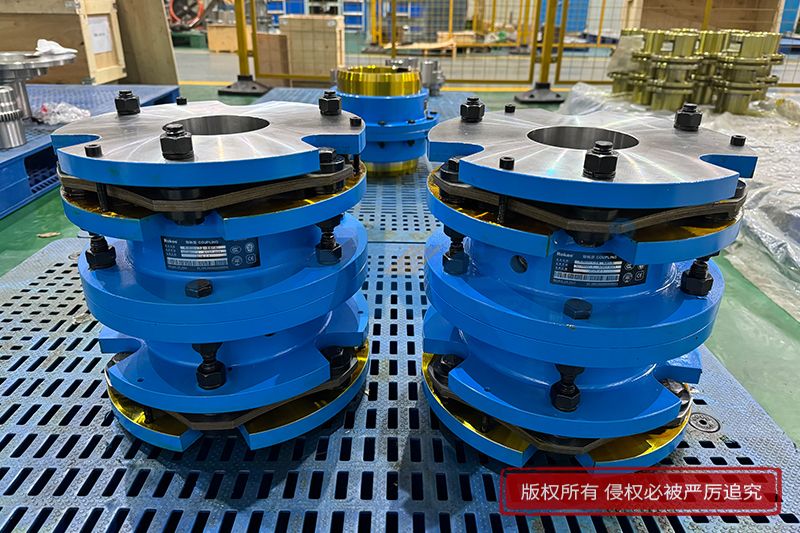
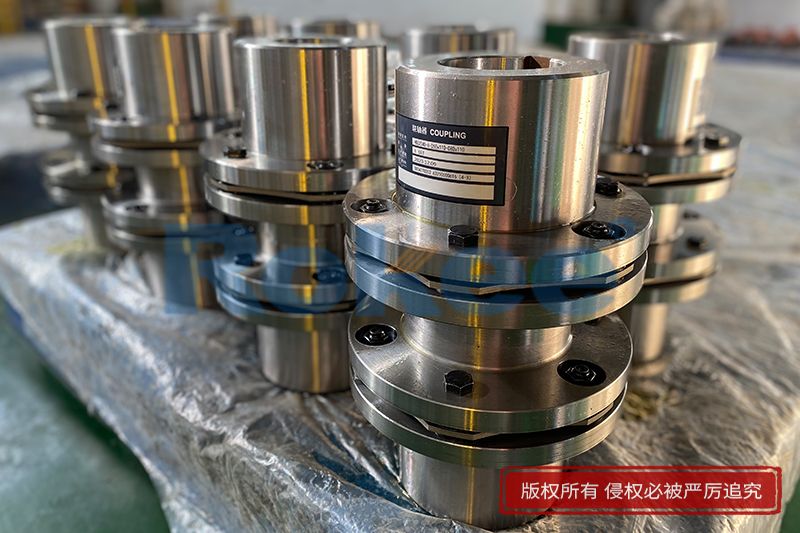
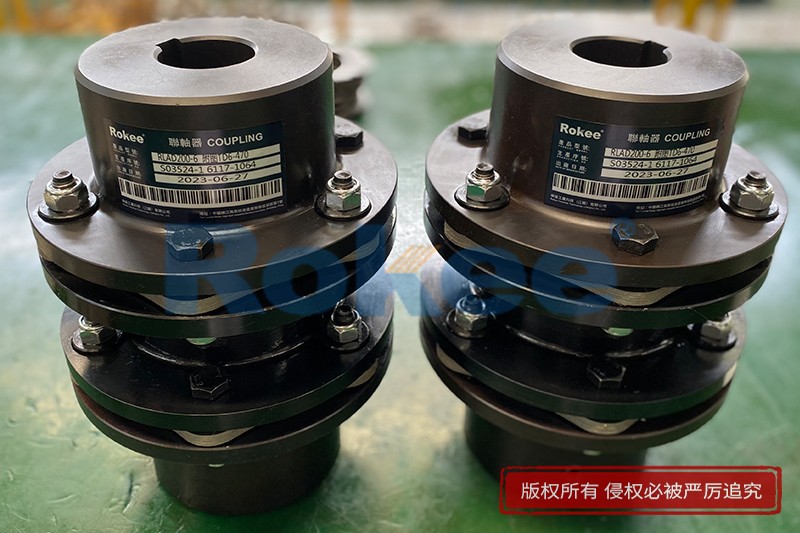
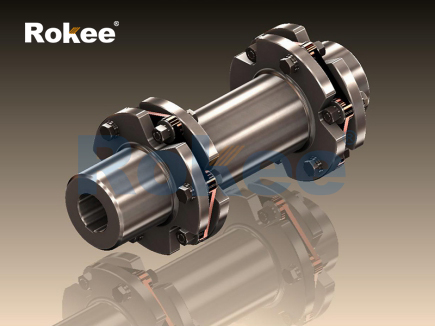
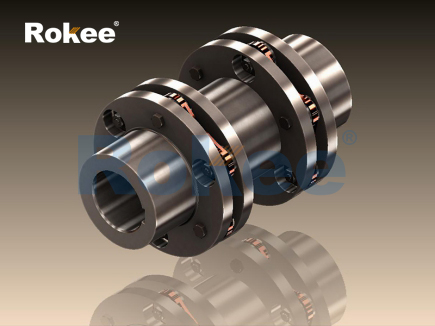
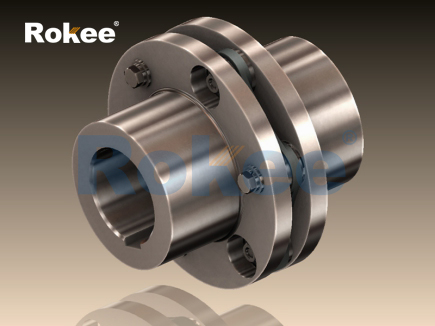
Flexible diaphragm couplings are essential mechanical transmission components widely applied in high-speed, high-precision, and stable mechanical transmission systems, serving as critical connecting parts between driving and driven shafts in various industrial equipment. Unlike rigid couplings that rely on rigid structural locking for torque transmission and elastic couplings that use non-metallic flexible materials for deformation buffering, flexible diaphragm couplings adopt all-metal elastic deformation structures, integrating efficient torque transmission, multi-dimensional displacement compensation, and stable vibration absorption performance. Its unique working mechanism enables it to solve the common misalignment problems of shaft systems in mechanical operation, while maintaining continuous and stable power transmission, which makes it irreplaceable in precision transmission scenarios. The overall operational logic of flexible diaphragm couplings is based on the elastic deformation theory of metal thin plates, completing torque and power transmission through the orderly elastic deflection of diaphragm components, and absorbing and compensating various shaft displacement deviations generated during equipment operation through controllable structural deformation.
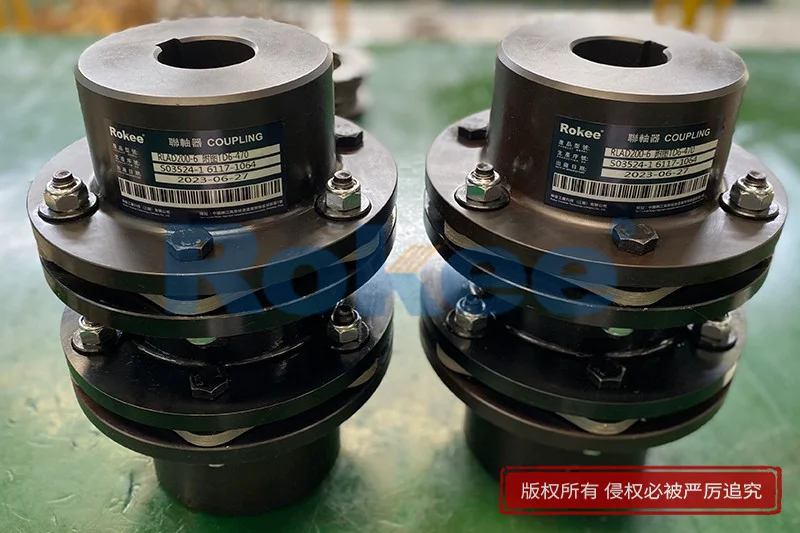
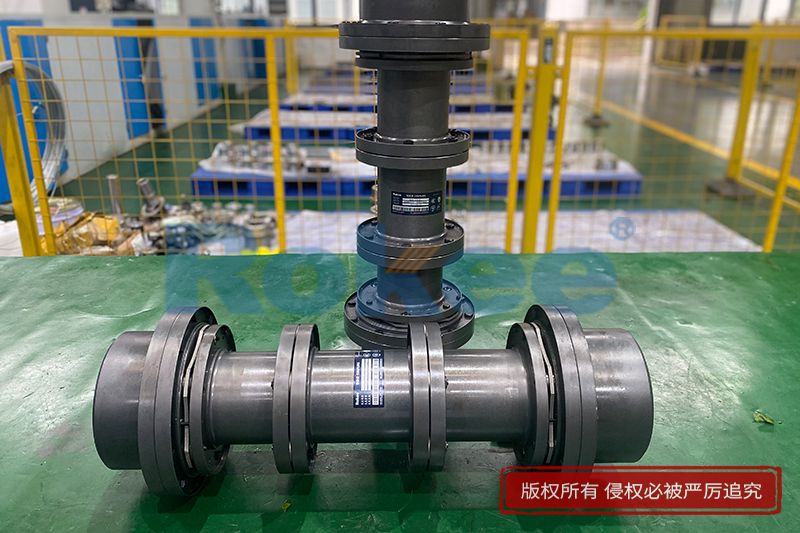
The basic composition of flexible diaphragm couplings lays a structural foundation for its working principle, and each core component undertakes independent and coordinated functional tasks in the transmission process. The main structural parts include left and right shaft hubs, metal diaphragm groups, high-strength connecting bolts, and intermediate sleeves for double-diaphragm structures. The shaft hubs are rigid structural parts used for fixed connection with driving and driven shafts, with high structural rigidity and torsional resistance, which can ensure the stable input and output of torque without structural deformation under normal working loads. The metal diaphragm group is the core flexible functional component of the coupling, usually composed of multiple stacked ultra-thin alloy steel sheets with uniform thickness and smooth surface. These diaphragm sheets have excellent elastic performance and fatigue resistance, capable of generating reversible elastic deformation within a safe stress range without permanent structural damage. Connecting bolts are evenly distributed along the circumferential direction of the shaft hub and diaphragm, playing a role in fastening connection and torque conduction, ensuring that power can be evenly transmitted between the shaft hub and the diaphragm group without local stress concentration. The intermediate sleeve is only configured in double-diaphragm coupling structures, which separates the two sets of diaphragm groups at a certain distance, effectively improving the multi-dimensional displacement compensation capability of the coupling and optimizing the overall force distribution of the structure.
The core working process of flexible diaphragm couplings is the continuous and stable transmission of torque, and the entire transmission process follows the mechanical law of elastic force conduction and structural linkage. When the mechanical equipment starts to operate, the driving shaft generates rotational torque and transmits it to the fixedly connected driving shaft hub. The driving shaft hub, through the circumferentially arranged connecting bolts, evenly transfers the torque to the outer edge of the metal diaphragm group. Affected by the torque load, the metal diaphragm group generates regular elastic deflection and torsional deformation. Different from the rigid deformation of solid structural parts, the deformation of the diaphragm is uniform and orderly, and the elastic force generated by the deformation will drive the inner edge of the diaphragm to rotate synchronously. For single-diaphragm couplings, the inner edge of the diaphragm is directly connected to the driven shaft hub through bolts, realizing synchronous rotation of the driven shaft and completing torque transmission. For double-diaphragm couplings, the front diaphragm group transmits torque to the intermediate sleeve through elastic deformation, the intermediate sleeve rotates synchronously and transfers the torque to the rear diaphragm group, and finally the rear diaphragm group drives the driven shaft hub and the driven shaft to operate, forming a complete closed-loop torque transmission path. In the whole transmission process, all deformation of the diaphragm is reversible elastic deformation. When the torque load is stable, the deformation state of the diaphragm remains balanced; when the load fluctuates slightly, the diaphragm can adjust its deformation amplitude in real time to adapt to the load change, ensuring the continuity and stability of power transmission.
In actual mechanical operation, due to manufacturing errors, assembly deviations, equipment vibration, thermal expansion and contraction of components, and foundation settlement, the driving shaft and driven shaft cannot maintain absolute coaxial alignment, and various misalignment displacements will inevitably be generated. These displacements are divided into three basic types: axial displacement, radial displacement, and angular displacement, which are the main interference factors affecting the stability of shaft system operation. The key working advantage of flexible diaphragm couplings is that they can rely on the elastic deformation of the diaphragm group to accurately compensate for these three types of displacements, eliminating the additional mechanical stress caused by shaft misalignment. Axial displacement refers to the relative linear displacement along the axial direction between the two shafts. When this displacement occurs, the metal diaphragm will produce mild tensile or compressive elastic deformation along the axial direction. The thin-plate structure of the diaphragm has low axial stiffness and good telescopic performance, which can freely adapt to the axial distance change between the two shafts without generating additional axial pressure on the shaft system and bearings.
Radial displacement is the radial offset deviation of the center lines of the two shafts, which will cause staggered torsion in the transmission process of common rigid transmission structures. Flexible diaphragm couplings adapt to radial offset through the comprehensive shear and bending deformation of the diaphragm group. The stacked thin-plate structure of the diaphragm can produce uniform radial deflection, offsetting the radial dislocation between the driving and driven shafts, and avoiding the problems of increased transmission resistance and local stress concentration caused by radial misalignment. Angular displacement means that there is a certain included angle between the center lines of the two shafts, which is the most common and influential misalignment state in shaft system operation. Facing angular displacement, the diaphragm group will produce differential bending deformation. The deformation degree of each position of the diaphragm along the circumferential direction changes regularly with the rotation angle, which can perfectly adapt to the angle deviation between the two shafts, eliminate the additional bending moment generated by angular misalignment, and ensure that the torque transmission direction is always consistent with the rotation direction of the shaft system.
The structural difference between single-diaphragm and double-diaphragm couplings leads to different working performances and application scopes, although their basic torque transmission principles remain consistent. Single-diaphragm couplings adopt a single set of diaphragm structure with a compact overall volume and simple transmission path. Their deformation is mainly concentrated on a single diaphragm group, which can meet the displacement compensation requirements of low-misalignment and low-load transmission scenarios. However, due to the limited deformation range of a single diaphragm, its compensation capability for angular and radial displacement is relatively weak, and it is mostly suitable for small and medium-power transmission equipment with high assembly precision and stable operation. Double-diaphragm couplings add an intermediate sleeve and a second set of diaphragm groups on the basis of the single-diaphragm structure. The two sets of diaphragms deform synergistically during operation, and the displacement compensation range is significantly expanded. The complementary deformation of the front and rear diaphragms can offset most of the comprehensive misalignment errors of the shaft system, and the overall stress of the structure is more uniform, avoiding the problem of excessive local deformation of a single diaphragm. This structural form enables double-diaphragm couplings to adapt to complex working conditions with large shaft misalignment, high-speed operation, and variable loads, and has higher operation stability and service life.
In addition to torque transmission and displacement compensation, the working process of flexible diaphragm couplings also has excellent vibration damping and impact buffering characteristics, which is derived from the inherent elastic mechanical properties of metal diaphragms. During the operation of mechanical equipment, sudden load changes, rotational speed fluctuations, and external vibration interference will generate impact force and vibration energy in the shaft system. When these unstable loads act on the coupling, the metal diaphragm group will absorb part of the vibration energy through micro elastic deformation, and convert the instantaneous impact force into stable elastic stress, which is slowly released in the continuous rotation process. This energy conversion process effectively weakens the vibration amplitude of the shaft system, suppresses the resonance phenomenon of the transmission structure, and reduces the impact load on bearings, gears and other matching components. Compared with rubber and plastic flexible couplings, metal diaphragms will not produce aging, deformation failure or elastic attenuation due to temperature changes and long-term friction, so they can maintain stable vibration damping performance in high-temperature, low-temperature and corrosive working environments.
The long-term stable operation of flexible diaphragm couplings is closely related to its stress balance mechanism in the working process. In the state of ideal shaft alignment, the diaphragm group only bears uniform torsional stress, and the stress distribution of each diaphragm sheet is consistent without additional bending and shear stress. When misalignment displacement occurs, the diaphragm produces multi-dimensional composite deformation, and the internal stress will be dynamically adjusted with the rotation of the shaft system. The circumferential uniform distribution of bolts ensures that the torque is evenly transmitted to all positions of the diaphragm, avoiding the problem of unilateral overload stress. The stacked design of multiple thin diaphragms disperses the overall deformation stress on each single diaphragm sheet, reducing the maximum stress of a single component and improving the fatigue resistance of the coupling. In the cyclic rotation process, the elastic deformation of the diaphragm is always within the fatigue limit of the alloy material, which can realize long-term non-failure operation without frequent maintenance and replacement.
The working principle of flexible diaphragm couplings also determines its unique operational advantages compared with other traditional couplings. Rigid couplings cannot compensate for any shaft misalignment, and long-term operation under misalignment conditions will cause severe wear of shaft system components, increased equipment noise, and even structural fatigue damage. Non-metallic elastic couplings have good vibration damping performance, but their temperature resistance, corrosion resistance and load resistance are limited, and they are prone to aging and failure after long-term operation. Flexible diaphragm couplings combine the advantages of rigid transmission stability and flexible deformation compensation. Relying on all-metal elastic structure, they realize maintenance-free operation, adapt to high-speed, high-load and harsh environmental working conditions, and ensure high-precision and high-efficiency transmission while compensating for shaft system errors. In the actual working process, the coupling will not produce sliding friction and wear, nor need lubrication media, which avoids the performance attenuation and equipment pollution problems caused by lubricant failure and leakage.
To sum up, the working principle of flexible diaphragm couplings is a comprehensive mechanical operation process integrating elastic deformation torque transmission, multi-dimensional displacement error compensation, vibration energy absorption and dynamic stress balance. Taking the metal diaphragm group as the core functional carrier, it realizes the efficient and stable transmission of mechanical power through orderly reversible elastic deformation, and solves various unstable factors in the operation of mechanical shaft systems caused by assembly errors, environmental changes and load fluctuations. The perfect coordination of its structural design and mechanical properties enables flexible diaphragm couplings to maintain excellent working performance in complex and changeable industrial scenarios, providing reliable basic guarantee for the stable operation of various precision mechanical transmission systems. With the continuous improvement of industrial manufacturing precision and equipment operation requirements, the unique working mechanism of flexible diaphragm couplings will continue to play an irreplaceable role in modern mechanical transmission technology.
- Tags:
- Flexible Diaphragm Couplings ,
- sandwich panel line ,
- sandwich panel machine
- pu sandwich panel machine
« Working Principle of Flexible Diaphragm Couplings » Latest Update Date: Jun 3, 2026
https://www.rokeecoupling.net/blog/working-principle-of-flexible-diaphragm-couplings.html