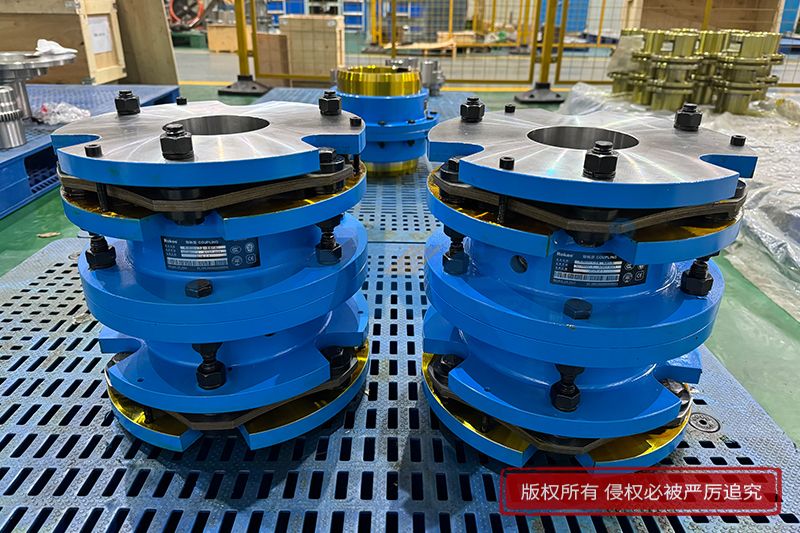
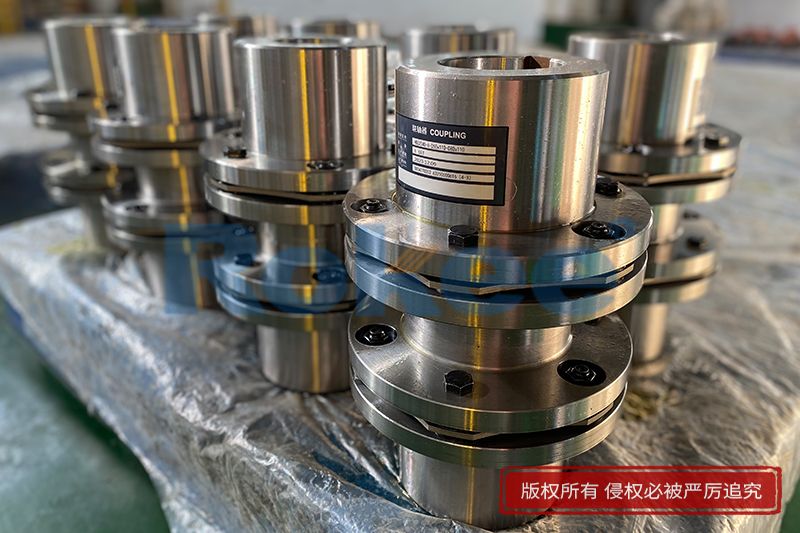
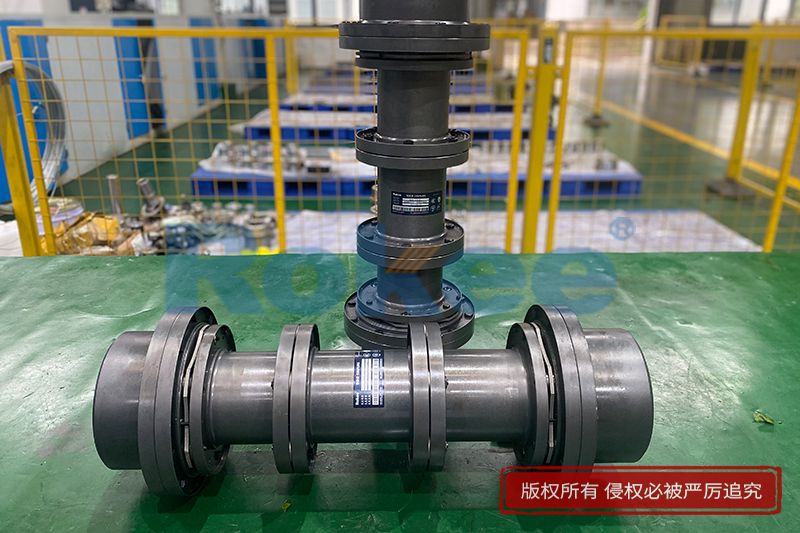
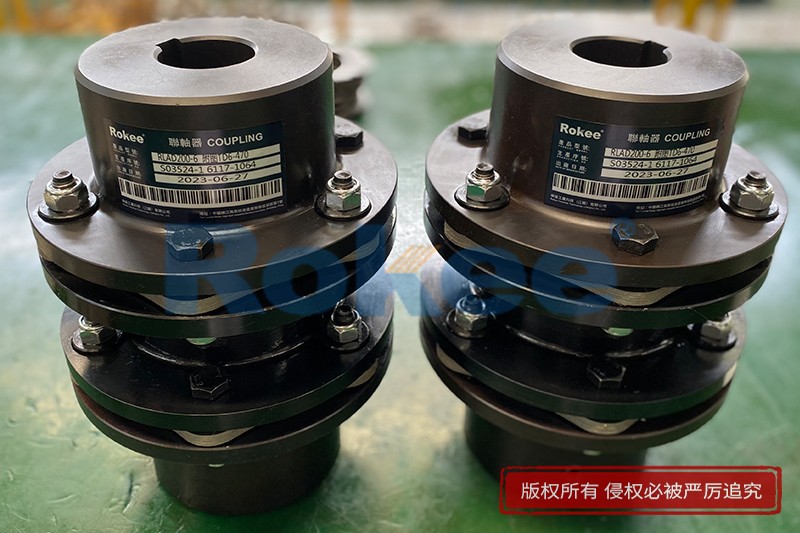
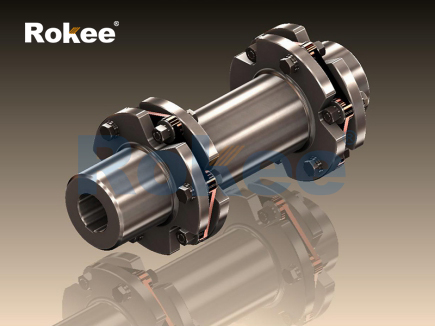
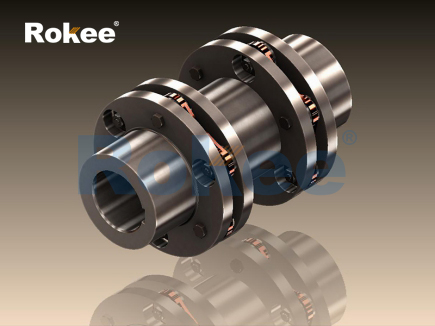
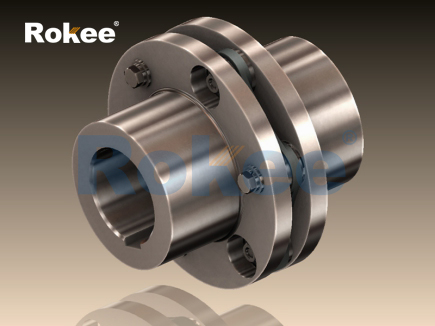
Diaphragm couplings stand as a pivotal category of metal flexible transmission components widely applied in modern mechanical power transmission systems, serving as a core connecting unit between driving and driven shafts to achieve stable torque transmission while accommodating various shaft misalignments generated during equipment operation. Unlike traditional rigid couplings that lack deformation adaptability and elastomeric flexible couplings that rely on non-metallic buffer materials, diaphragm couplings adopt all-metal elastic structural design, which perfectly balances high transmission rigidity and flexible deformation performance, making them indispensable foundational components in high-precision, high-speed, and long-cycle mechanical operation scenarios. The overall structural composition of diaphragm couplings is concise and scientific, mainly composed of metal diaphragm groups, shaft hubs, connecting bolt sets and auxiliary positioning components, with no redundant transmission structures or easily worn movable parts, laying a solid foundation for their stable and durable operation in complex industrial environments.
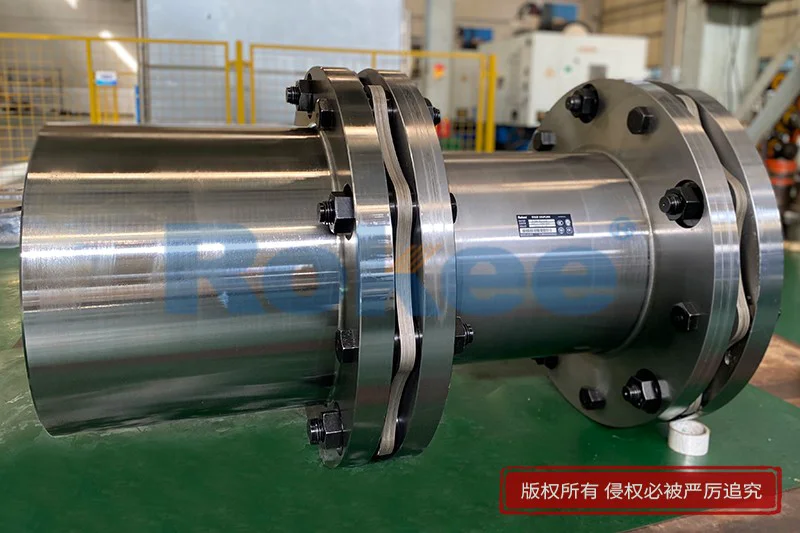
The core functional component of a diaphragm coupling is the metal elastic diaphragm, which is generally fabricated from high-quality stainless steel sheets with uniform thickness and excellent elastic fatigue resistance. Multiple diaphragms are stacked and combined to form a diaphragm group, and the staggered connection mode of bolts is adopted to fix the diaphragm group with the two side shaft hubs respectively. This structural layout enables the coupling to form an integrated torque transmission system. In the working state, the driving shaft drives the active shaft hub to rotate, and torque is uniformly transmitted to the diaphragm group through the circumferentially arranged bolt sets. The rigid area of the diaphragm bears and transfers torque efficiently, while the flexible area produces tiny elastic deformation to cope with the relative displacement between the two connected shafts, finally realizing synchronous rotation and stable power output of the driven shaft. This working mechanism based on metal elastic deformation fundamentally avoids the friction, sliding and wear problems existing in traditional mechanical transmission structures.
In actual mechanical operation, the coaxiality deviation between the driving shaft and the driven shaft is an unavoidable technical problem, which is caused by many factors including equipment installation errors, mechanical operation vibration, component thermal expansion and contraction, and foundation slight settlement. These deviations are specifically manifested as three forms of misalignment: axial displacement, radial displacement and angular displacement. Axial displacement refers to the longitudinal spacing change between the two shafts during operation, radial displacement is the offset of the shaft center in the horizontal and vertical planes, and angular displacement represents the tiny deflection angle between the axis lines of the two shafts. If these misalignments cannot be effectively compensated, they will generate additional alternating load on the transmission shaft system, leading to shaft body vibration, component abrasion, increased operating noise, and even accelerated fatigue damage of key mechanical parts in severe cases, which greatly shortens the overall service life of the equipment.
Diaphragm couplings solve the above industrial pain points relying on the excellent elastic deformation performance of metal diaphragms. The specially designed wave-shaped or special-shaped structural form of the diaphragm enables it to produce reversible micro-deformation within a safe stress range when facing various shaft misalignments. This elastic deformation can fully absorb and compensate the three-dimensional displacement deviations between the shafts, eliminate the additional mechanical stress generated by misalignment, and ensure that the torque transmission process maintains high stability and accuracy. Different from rubber and other non-metallic elastic elements, metal diaphragms will not produce aging, hardening, softening or permanent deformation due to long-term operation, and can maintain stable elastic performance in a wide temperature range and complex medium environment, which greatly improves the environmental adaptability of the coupling.
One of the most prominent performance characteristics of diaphragm couplings is zero backlash transmission. The all-metal integrated connection structure makes there be no gap or hysteresis in the torque transmission link. When the equipment performs forward and reverse rotation or variable speed operation, the coupling can respond synchronously without transmission delay or impact vibration. This feature is particularly critical for high-precision mechanical equipment that requires strict control of motion accuracy and position accuracy, as it effectively guarantees the consistency and repeatability of mechanical motion. Meanwhile, the coupling has high torsional rigidity, which can resist torsional deformation during high-load torque transmission, ensure the uniformity of power output, and avoid power loss and motion distortion caused by torsional deflection.
In terms of operation and maintenance advantages, diaphragm couplings have outstanding superiority compared with other types of flexible couplings. Since the power transmission depends entirely on the elastic deformation of metal diaphragms, there is no relative sliding or friction between internal components during the whole working process, so there is no need for regular lubrication and oil supplement maintenance. This maintenance-free operating feature not only reduces the daily operation cost and manual maintenance workload of mechanical equipment, but also avoids equipment downtime caused by lubricant failure, oil leakage and other faults, effectively improving the continuous operation rate of production equipment. In addition, the all-metal structure has strong resistance to oil pollution, corrosion, high temperature and low temperature, and can work stably in harsh working conditions such as dusty, humid and weakly corrosive industrial environments, with extremely low failure rate.
Diaphragm couplings can be divided into different structural types according to the number of diaphragm groups and structural forms, mainly including single-diaphragm type and multi-diaphragm combined type. The single-diaphragm coupling has a compact overall structure, small axial size and light weight, and is suitable for small and medium torque transmission scenarios with limited installation space and small shaft misalignment. The multi-diaphragm combined coupling is composed of multiple groups of stacked diaphragms matched with spacing structures, which has stronger deformation compensation ability and higher torque bearing capacity, and can adapt to large misalignment displacement and heavy-load transmission working conditions. At the same time, the diaphragm structure can be optimized into integral type and linkage type according to actual demand. The integral diaphragm has higher overall rigidity and better stability, while the linkage diaphragm has more flexible deformation and stronger misalignment compensation performance, meeting the differentiated needs of different transmission systems.
The application scenarios of diaphragm couplings cover almost all fields of precision mechanical transmission and industrial power equipment. In the field of automated production equipment, they are widely used in servo transmission systems, precision transmission platforms and automated assembly lines, providing high-precision and stable power guarantee for high-speed and high-frequency mechanical movement. In the energy power industry, diaphragm couplings are applied to the connection of power transmission shafts of fans, pumps, compressors and other rotating equipment, effectively buffering the vibration and displacement deviation generated by high-speed operation of equipment and ensuring the long-term stable operation of power equipment. In the field of precision machine tools and processing machinery, the zero-backlash and high-rigidity transmission characteristics of diaphragm couplings ensure the processing accuracy and motion stability of machine tools, avoiding processing errors caused by transmission hysteresis and vibration.
In addition, diaphragm couplings also play an important role in metallurgical equipment, chemical machinery, transportation equipment and general industrial transmission fields. In heavy-duty metallurgical transmission systems, they can bear impact load and variable load operation, and compensate the shaft displacement caused by equipment thermal deformation; in chemical production environments with complex media, their corrosion-resistant metal structure avoids performance degradation caused by medium erosion; in high-speed transportation and logistics transmission equipment, their stable dynamic balance performance reduces operating vibration and noise, improving the overall operating comfort and safety of equipment. With the continuous upgrading of industrial manufacturing towards high precision, high efficiency and high reliability, the application scope of diaphragm couplings is still expanding, and they gradually replace traditional couplings in more high-end transmission scenarios.
The selection of diaphragm couplings needs to comprehensively consider multiple key parameters of the transmission system to ensure the matching between the coupling performance and the actual working conditions. First of all, the rated torque and maximum instantaneous torque of the equipment operation should be accurately matched to ensure that the coupling can bear the long-term rated load and short-term impact load without excessive deformation or fatigue damage. Secondly, the operating speed range of the equipment should be matched. Different structural specifications of diaphragm couplings have different critical speeds and dynamic balance performances, and it is necessary to select a suitable model according to the actual operating speed to avoid resonance vibration of the shaft system. In addition, the installation space, shaft diameter specification, allowable misalignment and working environment temperature of the equipment are all important selection bases, which need to be comprehensively optimized to achieve the best transmission effect and service life.
In terms of installation and use, diaphragm couplings have good assembly adaptability and simple and efficient installation process. The standardized structural design enables the coupling to be quickly matched with conventional shaft diameter specifications, and the bolt fastening positioning mode ensures high installation accuracy and structural stability. During the installation process, only basic coaxiality calibration is needed to meet the operating requirements, and the elastic deformation margin of the diaphragm can absorb the tiny installation errors, reducing the dependence on ultra-high installation precision. In the daily use process, the coupling does not need special maintenance and monitoring, and the overall structure is not easy to loose and damage, which greatly reduces the technical threshold and operation cost of equipment maintenance.
The failure forms of diaphragm couplings in long-term operation are relatively single, mainly manifested as diaphragm fatigue damage caused by long-term alternating deformation and bolt loosening caused by extreme vibration. Since the metal diaphragm works in the state of repeated elastic deformation for a long time, continuous alternating stress will accumulate fatigue loss on the diaphragm material. When the operation time exceeds the fatigue life of the diaphragm, tiny cracks will appear on the surface of the diaphragm, which will gradually expand and lead to structural failure. This kind of failure is mostly related to long-term overload operation, excessive shaft misalignment and long-term high-frequency vibration of the equipment. Regular visual inspection of the diaphragm surface and bolt fastening state can effectively avoid sudden equipment failure and ensure the safe and stable operation of the transmission system.
Compared with gear couplings, sleeve couplings and elastic pin couplings, diaphragm couplings have comprehensive performance advantages in precision transmission and long-term stable operation. Gear couplings have large bearing capacity but obvious transmission backlash and poor precision stability, and require regular lubrication maintenance; elastic pin couplings rely on non-metallic pins for buffer deformation, which are easy to age and wear, with short service life and poor high-temperature resistance; rigid couplings have high rigidity but no misalignment compensation ability, which is easy to cause additional load damage to the shaft system. Diaphragm couplings integrate the advantages of high rigidity, zero backlash, long service life, maintenance-free and strong environmental adaptability, making them the optimal choice for medium and high-end precision transmission systems.
With the continuous progress of material technology and mechanical design technology, the comprehensive performance of diaphragm couplings is also constantly optimized and upgraded. The application of new high-strength fatigue-resistant metal materials further improves the torque bearing capacity and service life of diaphragms; the optimized diaphragm profile design enhances the misalignment compensation ability while maintaining high torsional rigidity, realizing the balance of flexibility and rigidity; the refined processing technology improves the overall dimensional accuracy and dynamic balance performance of the coupling, making it more suitable for ultra-high speed and ultra-precision transmission scenarios. As a key basic component of mechanical transmission, diaphragm couplings will continue to play an irreplaceable role in the development of modern industrial equipment towards high efficiency, precision and intelligence.
- Tags:
- Single Diaphragm Couplings ,
- Double Diaphragm Couplings ,
- Metal Diaphragm Couplings ,
- Diaphragm Couplings ,
- Flexible Diaphragm Couplings ,
- sandwich panel line ,
- sandwich panel machine
- pu sandwich panel machine
« Catalogue of Diaphragm Couplings » Latest Update Date: Jun 3, 2026
https://www.rokeecoupling.net/blog/catalogue-of-diaphragm-couplings.html