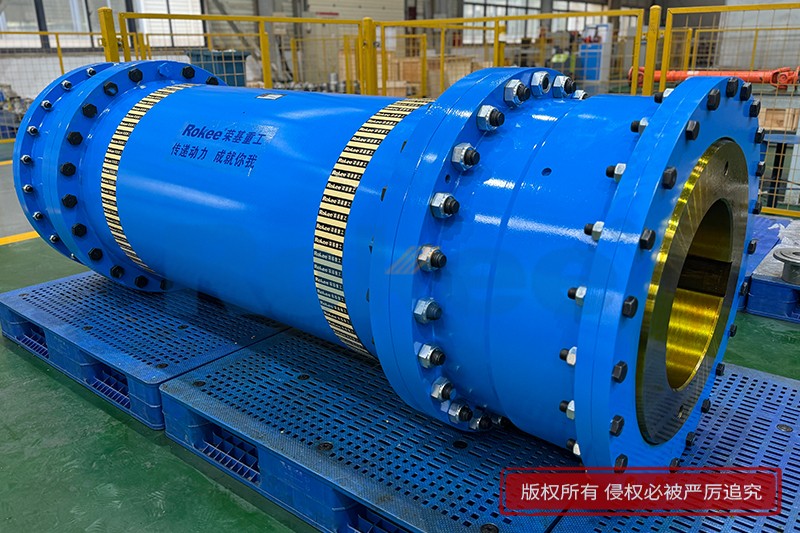
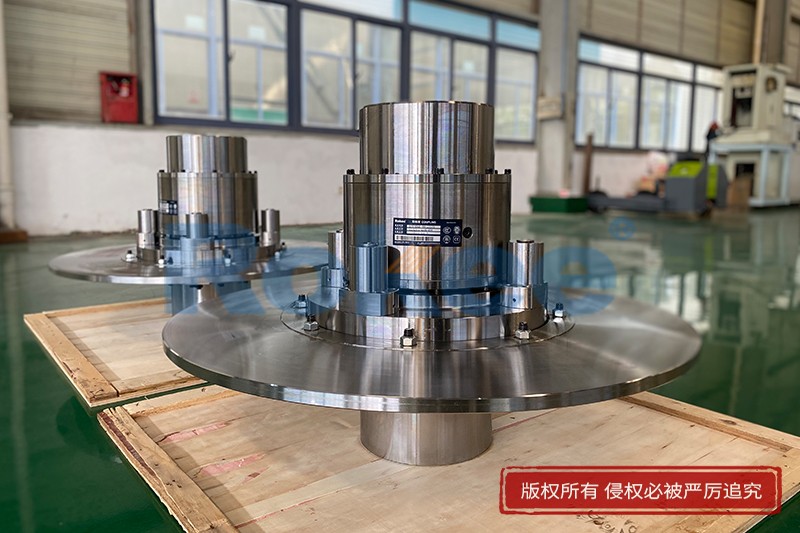
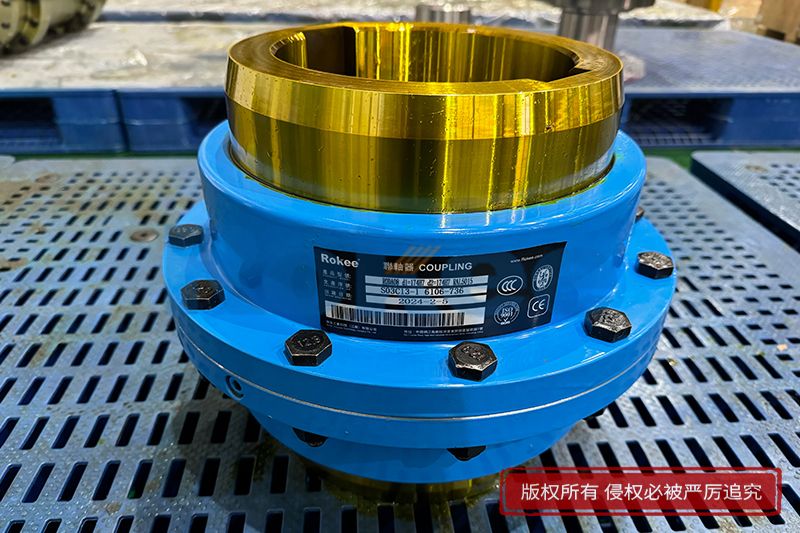
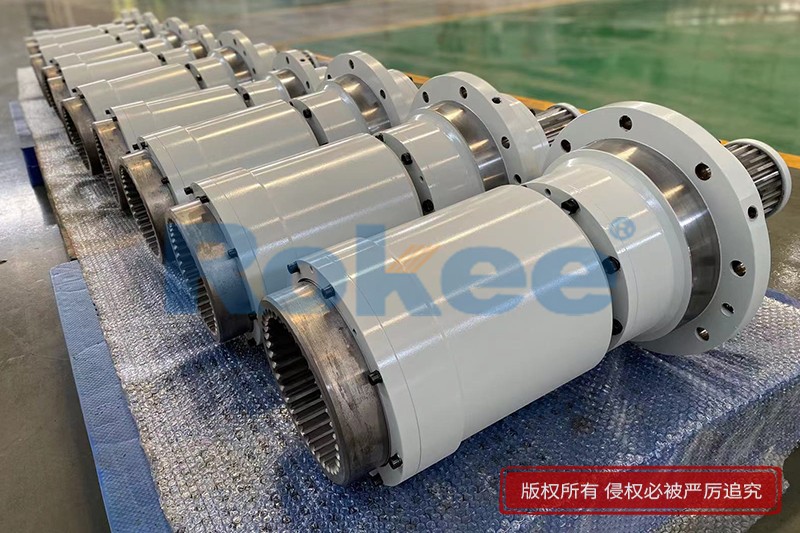
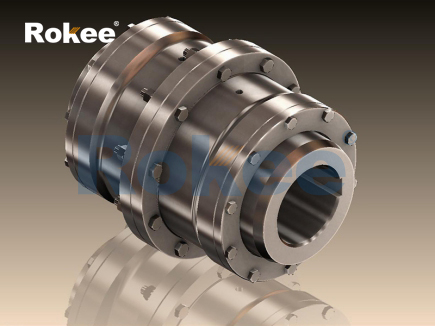
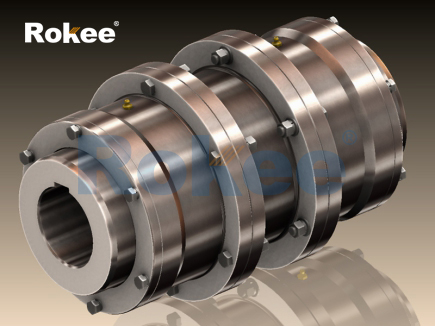
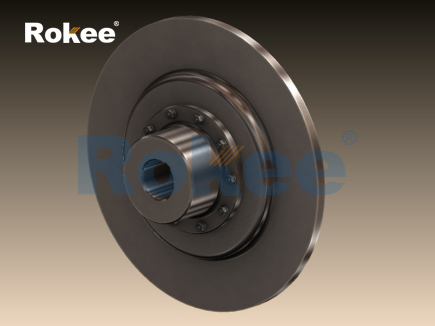
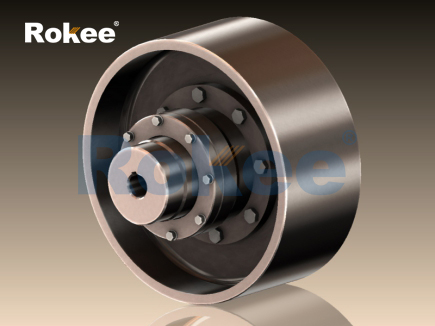
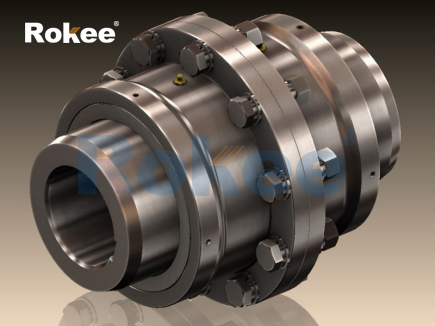
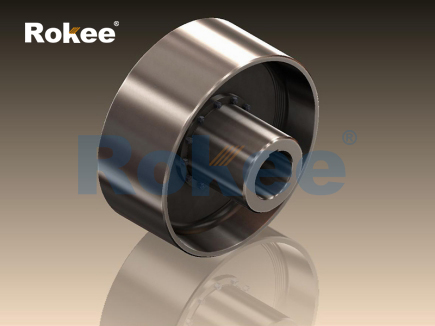
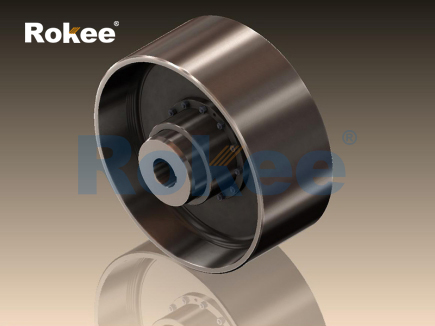
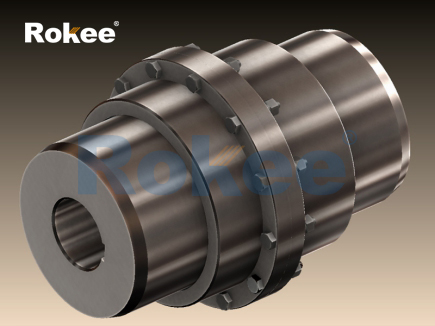
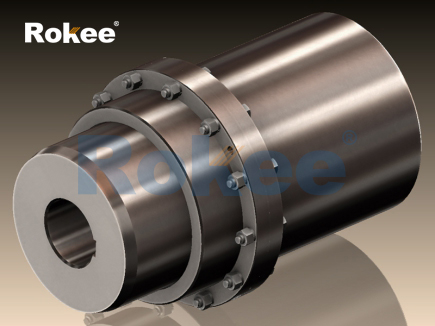
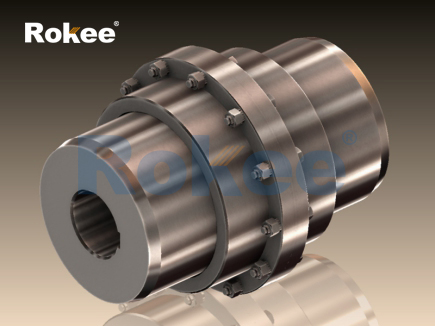
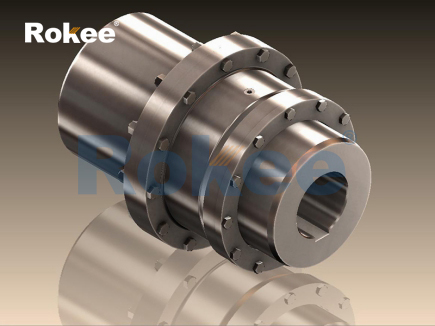
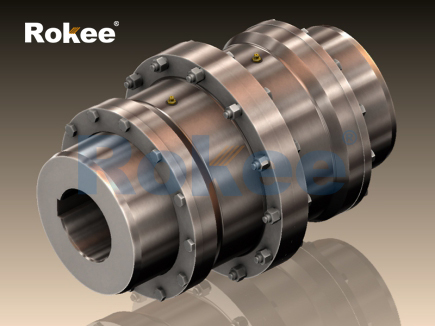
The tooth gear coupling serves as a mechanical connection component designed to transmit torque between two rotating shafts while accommodating several types of misalignment that inevitably arise during equipment operation. At its core, this coupling consists of two hub parts fitted with external gear teeth and one or two sleeve members equipped with internal gear teeth. The external teeth on each hub mesh with the internal teeth of the sleeve, forming a flexible engagement structure that transfers rotational force from the driving shaft to the driven shaft. Unlike rigid coupling designs that require near-perfect alignment of connected shafts, the curved profile of the gear teeth creates controlled clearance between meshing surfaces. This clearance allows for limited angular, radial, and axial displacement between the coupled shafts without imposing excessive bending stress on the shafts or supporting bearings. When the driving shaft rotates, torque passes through the hub, across the engaged tooth surfaces, and into the sleeve before moving onward to the second hub and the driven shaft. Each tooth surface slides slightly against its mating counterpart as misalignment exists, which is a key feature that differentiates this coupling from fixed connection types. Proper lubrication is essential for this sliding contact, as dry friction would quickly wear down tooth profiles, generate excess heat, and reduce the usable service life of the whole assembly. The basic mechanical interaction between interlocking gear teeth establishes the foundation of its working principle, balancing reliable torque transmission with a degree of flexibility to absorb minor positional deviations in rotating machinery systems.

The geometric design of the gear teeth directly determines the performance characteristics of tooth gear couplings under operational loads. The external gear teeth on the hubs are typically machined with a crowned profile, meaning the tooth surface curves gently along its length rather than remaining straight and flat. This crowned shape enables the teeth to maintain stable contact even when the two connected shafts form a small angular offset. Without this curved modification, edge loading would occur at the ends of the teeth, concentrating pressure on tiny areas and leading to premature pitting or chipping of tooth material. The internal teeth inside the sleeve usually retain a straight profile to match the crowned external teeth during meshing. The tooth engagement area changes continuously with shaft rotation when misalignment is present, distributing contact pressure across a larger portion of the tooth surface instead of focusing stress on one single point. The number of teeth and the tooth modulus influence the maximum torque capacity; larger tooth dimensions provide greater load-bearing area, while more teeth allow load sharing across multiple contact pairs. However, increasing tooth quantity also raises machining requirements and may introduce additional vibration risks if manufacturing precision cannot be maintained. The careful matching of internal and external tooth geometry ensures that the coupling can maintain steady rotation and torque transfer, even when shaft positions deviate from ideal parallel or collinear alignment conditions.
Misalignment compensation stands out as one of the most valuable functional properties enabled by the meshing gear structure of the coupling. Three primary forms of shaft misalignment can be absorbed within the designed operating range. Angular misalignment occurs when the centerlines of the driving and driven shafts intersect at a small angle instead of lying on the same straight line. Radial misalignment refers to parallel offset, where shaft centerlines remain parallel but are separated by a distance. Axial misalignment describes the longitudinal movement of shafts along their rotational axis, which commonly comes from thermal expansion of rotating components during operation. The sliding motion between crowned external teeth and straight internal teeth accommodates these deviations. As the shafts rotate, each pair of meshing teeth continuously slides a tiny distance relative to each other, adjusting the contact position to follow the shifted shaft centerlines. It is important to recognize that this flexibility has clear limits. Excessive misalignment will drastically amplify sliding friction and contact stress, causing rapid wear, elevated operating temperature, and increased vibration. Operators must keep misalignment values within the allowable working range to avoid damaging the coupling and adjacent machine parts. The coupling does not eliminate misalignment entirely; instead, it isolates the shafts from harmful reaction forces that rigid connections would transfer directly to bearings and machine frames.
Torque transmission behavior under variable load conditions reveals how tooth gear couplings perform in dynamic working environments. When torque remains stable, the meshing teeth maintain consistent contact pressure, and rotation transfers smoothly from the input side to the output side. During startup, shutdown, or sudden load fluctuations, transient torque spikes pass through the coupling. The multiple pairs of engaged gear teeth share these sudden loads, preventing concentrated impact on a single tooth. Unlike elastomeric flexible couplings that rely on elastic material deformation, tooth gear couplings transmit power through metal-to-metal contact, giving them the ability to handle heavy torque loads and high rotational speeds. However, metal contact also creates a different response to shock loads. While the robust gear structure resists deformation under heavy steady torque, repeated severe impact loads can gradually damage tooth surfaces, creating fatigue cracks over long operating periods. The sliding action between teeth during load changes also generates frictional heat. At high rotation speeds, heat accumulation becomes more significant, which reinforces the need for effective lubrication management. The coupling’s torsional stiffness remains relatively high compared with rubber or polymer flexible couplings, so it does not provide strong damping for torsional vibration. This feature makes it suitable for systems requiring precise rotational synchronization, but it may not be the first option for machinery with strong torsional oscillation.
Lubrication plays an indispensable role in sustaining normal operation and extending the service life of tooth gear couplings, due to the sliding contact between mating gear teeth. Lubricant fills the small gaps between internal and external tooth surfaces, forming a thin protective film that separates metal surfaces from direct contact. This oil film reduces sliding friction during tooth movement caused by shaft misalignment, lowering heat generation and wear rate. Without adequate lubrication, metal surfaces rub directly against each other, resulting in abrasive wear, surface scoring, and rapid degradation of the precision-machined tooth profile. Different operating conditions influence lubricant selection and replenishment cycles. Higher rotational speeds and heavier torque loads accelerate lubricant aging and degradation, shortening the interval between maintenance work. The coupling assembly is usually sealed to contain lubricant inside the sleeve and prevent contamination from dust, moisture, and other foreign particles in the surrounding environment. Damaged seals allow lubricant leakage and debris ingress, which can scratch tooth surfaces and compromise the integrity of the lubrication layer. Operators must inspect seal condition and lubricant quality periodically. Degraded lubricant loses its film-forming ability and may contain metal wear particles that further accelerate component damage. Proper lubrication management preserves the tooth geometry and keeps the coupling’s misalignment compensation capability intact throughout its service cycle.
Vibration and noise characteristics of tooth gear couplings are closely tied to tooth meshing, alignment quality, and lubrication status. When the coupling is installed with minimal misalignment and sufficient clean lubricant, operation remains relatively smooth. Meshing of precision-manufactured gear teeth produces moderate, stable noise levels during rotation. Once misalignment approaches the upper limit of the design range, the sliding motion between teeth increases significantly. This raises friction forces and creates periodic impact between tooth surfaces, which amplifies vibration and noise. Manufacturing imperfections, such as uneven tooth thickness or profile errors, also introduce periodic vibration during each full rotation. Vibration generated at the coupling can travel along the connected shafts to bearings and supporting structures, potentially accelerating wear on other machine components. Compared with flexible couplings using elastic materials, gear couplings tend to produce higher noise levels because of metal contact. On the other hand, their rigid torsional characteristic avoids large amplitude torsional deflection under heavy loads. Regular vibration monitoring can act as an early warning method. Rising vibration amplitude often signals issues such as insufficient lubrication, excessive misalignment, tooth surface wear, or seal failure. Timely inspection and correction can prevent minor faults from progressing into catastrophic component failure during continuous equipment operation.
Failure modes of tooth gear couplings reflect the physical limits of their gear meshing working principle and help guide proper use and maintenance. The most common failure mode is tooth surface wear, caused by long-term sliding friction between mating teeth, accelerated by poor lubrication or excessive misalignment. Progressive wear changes the original crowned tooth profile, reducing the ability to compensate for shaft offset and increasing vibration. Surface pitting develops when repeated contact stress creates small fatigue cracks on tooth surfaces. These cracks expand gradually, causing pieces of the metal surface to flake away. In more serious cases, tooth fracture can occur under extreme overload, where the bending stress at the tooth root exceeds the material strength. Seal failure represents another typical fault, which leads to lubricant loss and contamination. Axial movement overload may also damage the coupling structure when thermal expansion of shafts exceeds the designed axial compensation capacity. Many failures do not happen instantly; they develop slowly over thousands of operating hours. Regular inspection allows maintenance teams to detect signs of degradation before complete breakdown. Understanding these failure patterns highlights that most damage arises from operating beyond the designed misalignment limits or neglecting lubrication maintenance, rather than inherent defects in the basic gear meshing working principle.
Tooth gear couplings occupy a distinct position among mechanical shaft connection options because they combine high torque capacity, high speed tolerance, and controlled flexibility through gear meshing mechanics. Their working principle depends on the engagement between crowned external gear teeth on hubs and straight internal gear teeth within sleeves, transmitting rotational power while permitting limited shaft displacement. The sliding contact between mating teeth delivers misalignment accommodation, yet this same sliding action creates reliance on effective lubrication to control friction and wear. Compared with rigid couplings, they avoid transferring harmful reaction forces to bearings when minor shaft misalignment exists. Compared with elastomeric flexible couplings, they withstand far higher torque and rotational speed, though they offer limited vibration damping and require more attention to lubrication and sealing. This set of functional traits makes them fit for heavy-duty rotating machinery where reliable power transmission and compact assembly size are required. The performance of a tooth gear coupling depends heavily on correct installation alignment, suitable lubrication, and adherence to operational load limits. When applied within its working range, this gear-based connecting component maintains stable power transfer over long periods, demonstrating the practical value of its meshing tooth working principle in industrial rotating equipment systems.
- Tags:
- Tooth Gear Couplings ,
- Curved Tooth Gear Couplings ,
- sandwich panel line ,
- sandwich panel machine
- pu sandwich panel machine
« Working Principle of Tooth Gear Couplings » Latest Update Date: Oct 20, 2026
https://www.rokeecoupling.net/blog/working-principle-of-tooth-gear-couplings.html