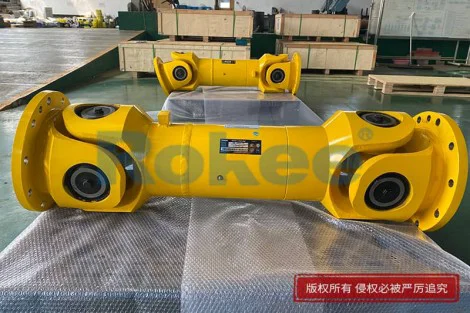
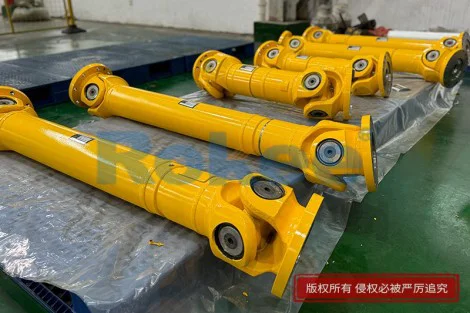
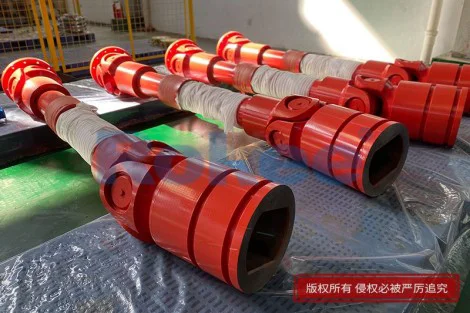
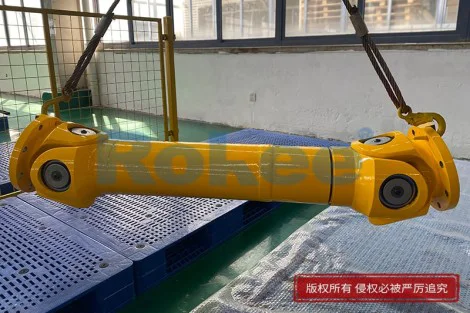
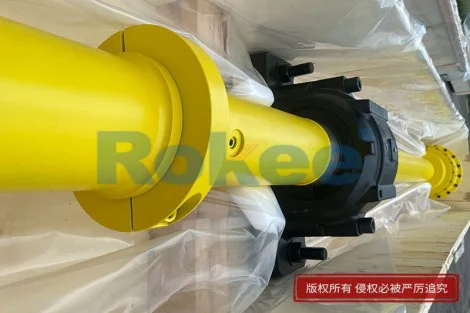
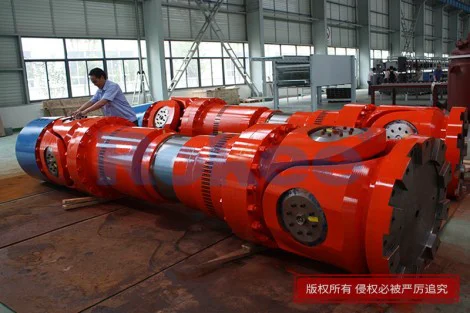
SWZ Large Cardan Shaft
Rokee is a well-known SWZ Large Cardan Shaft supplier from china, the page show cases of SWZ Large Cardan Shaft, provide customized services based on user's drawings, and supporting exports.
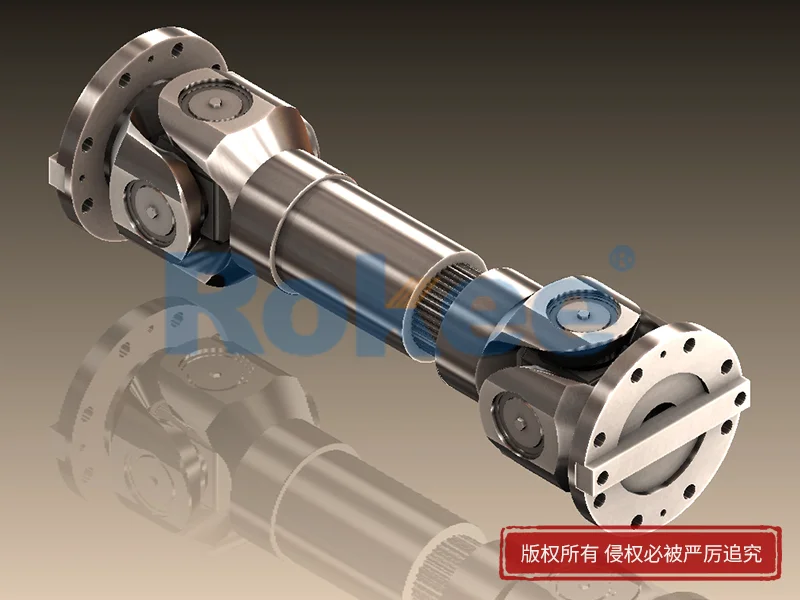
As a core power transmission component in heavy industrial mechanical systems, large cardan shafts occupy an irreplaceable position in modern equipment operation by virtue of their unique flexible transmission characteristics and strong load-bearing capacity. Unlike rigid transmission shafts that require strict coaxial alignment of connected components, this type of shaft structure can stably transmit rotational torque and mechanical power while adapting to various misalignment states between driving and driven parts, making it widely applicable in heavy-duty machinery, metallurgical equipment, mining systems, and large transportation facilities. The inherent structural flexibility and mechanical stability enable it to cope with complex and changeable working conditions, effectively solving the transmission bottlenecks that traditional rigid connecting parts cannot break through in high-load and dynamic operation scenarios.

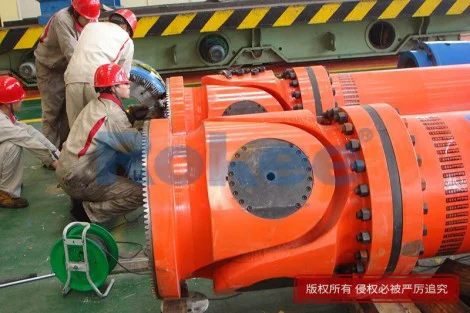
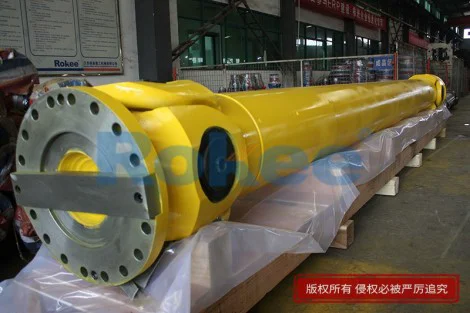
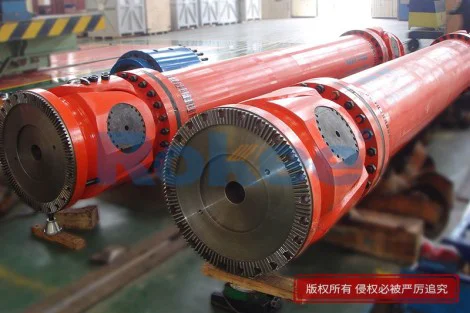
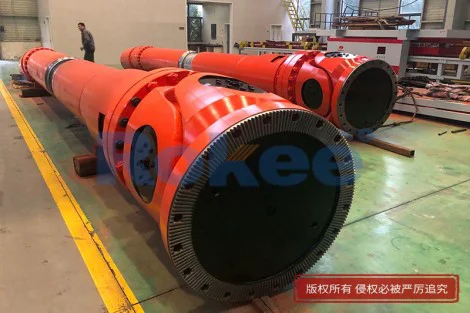
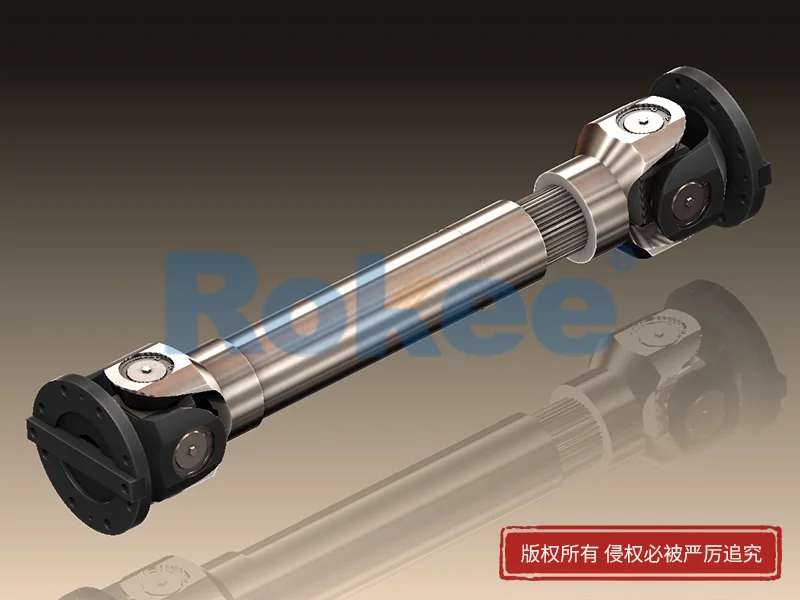
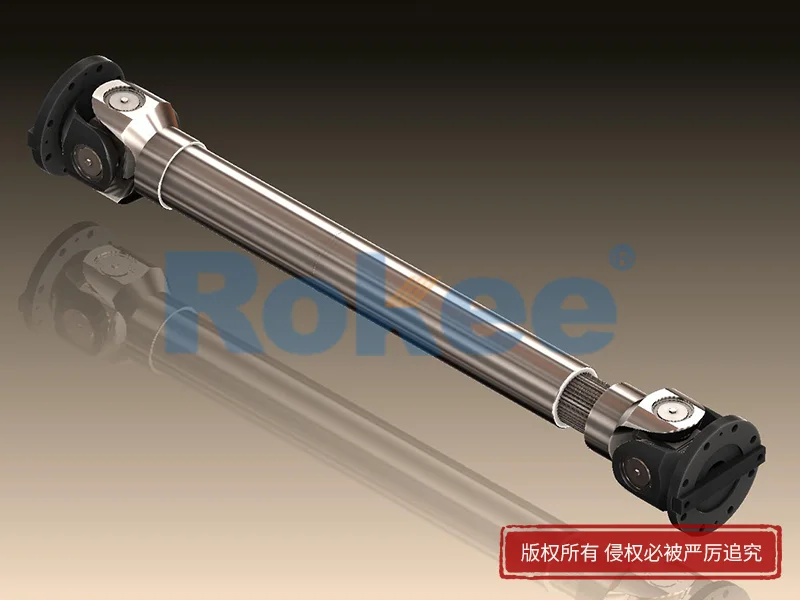
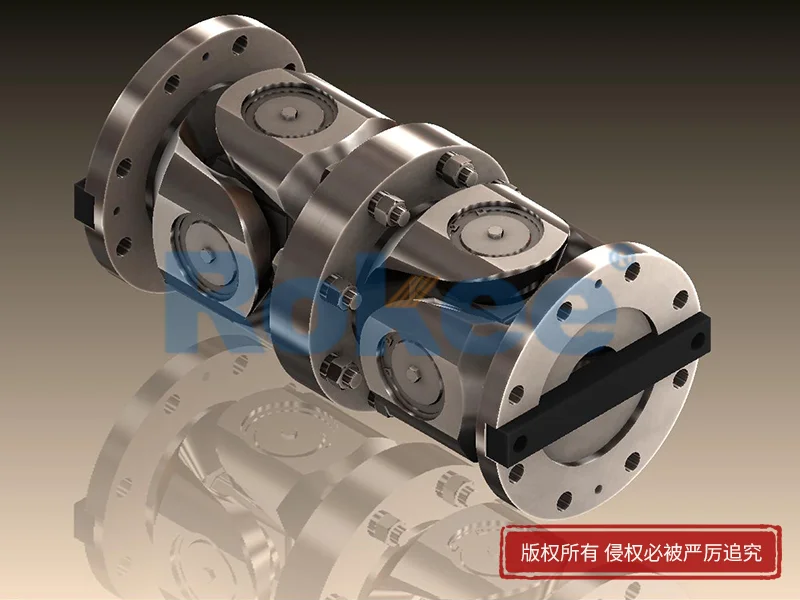
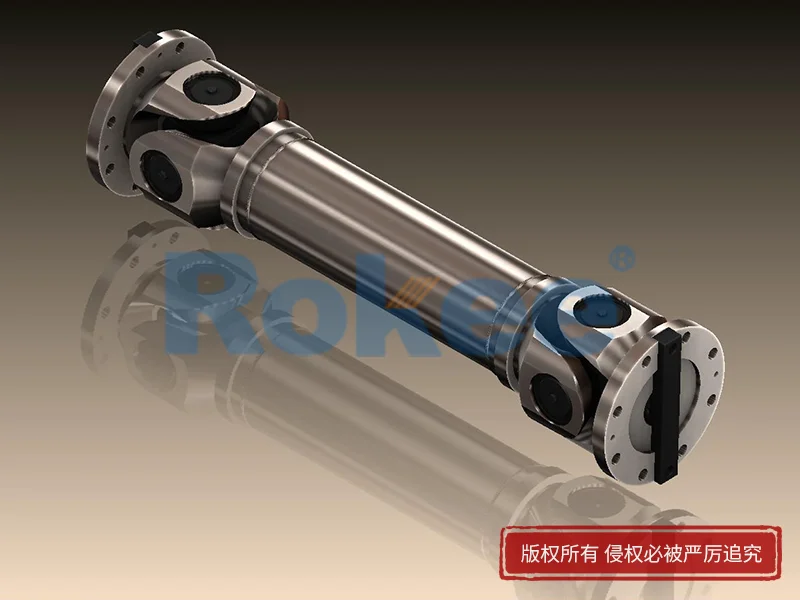
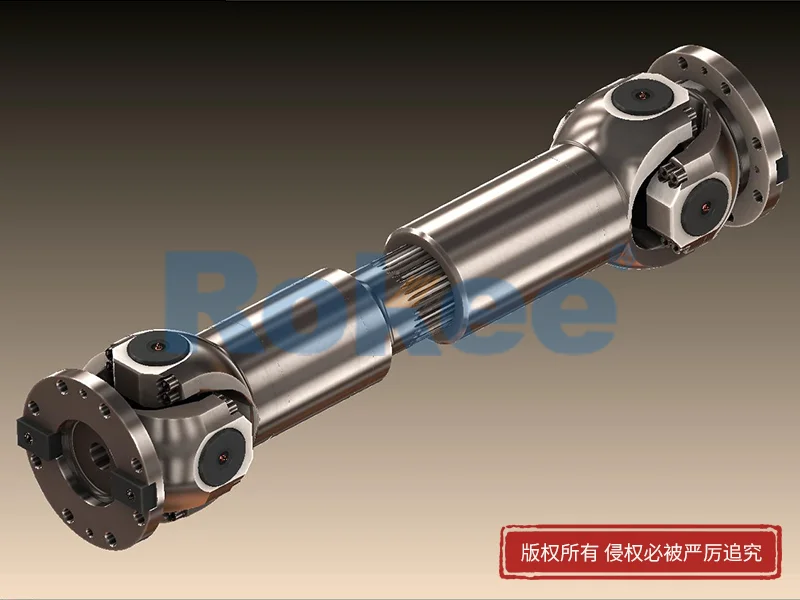
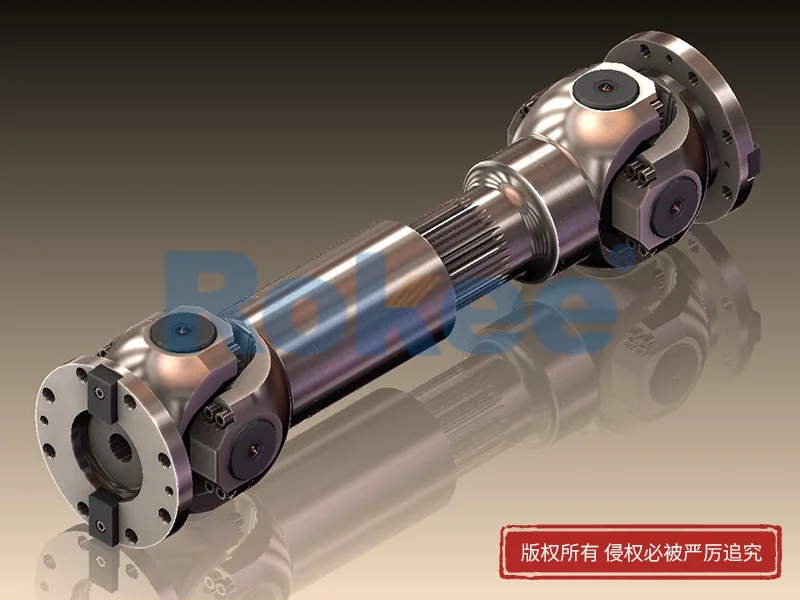
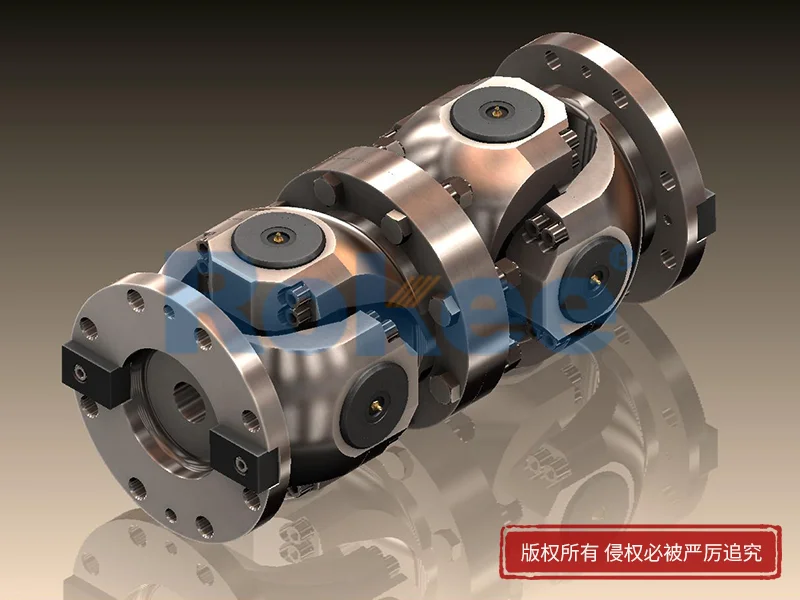
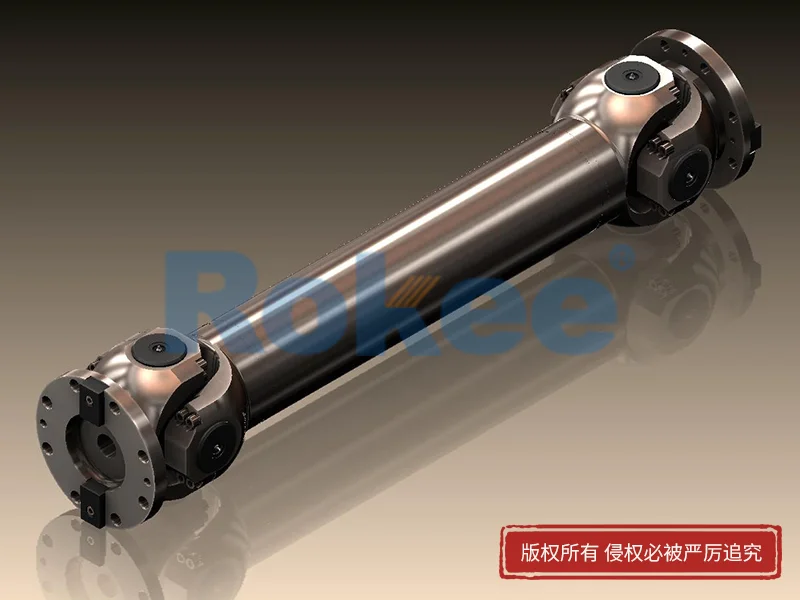
The basic structural composition of large cardan shafts follows mature mechanical kinematics principles, with every component precisely designed to coordinate power transmission and displacement compensation. The overall structure is mainly composed of high-strength shaft tubes, universal joint assemblies, precision bearing components, and telescopic connecting structures. The universal joint, as the core functional unit, consists of symmetric fork-shaped end fittings and a central cross-shaped spider structure. The two sets of fork bodies are respectively fixed on the driving end and driven end of the transmission system, and are flexibly connected with the cross spider through high-precision needle roller bearings. This structural design allows the cross spider to achieve multi-directional rotational deflection, laying a mechanical foundation for angular displacement compensation during equipment operation. The middle shaft tube adopts an integrated thickened structure or segmented welded reinforced structure, which greatly improves the overall rigidity and torsional resistance of the shaft body, ensuring that it will not produce excessive deformation or torque loss under long-term heavy torque impact. The built-in telescopic spline structure can adapt to axial displacement changes caused by equipment vibration, thermal expansion and contraction, and installation errors, further optimizing the environmental adaptability of the entire transmission system.
The working mechanism of large cardan shafts is based on the coordinated operation of flexible connection and rigid force transmission, realizing continuous and stable power output under non-ideal coaxial conditions. In the actual operation process, the driving mechanical component outputs rotational power and torque, which is first transmitted to the fork body at the driving end of the cardan shaft. Driven by the driving fork, the central cross spider rotates synchronously and drives the fork body at the driven end to operate, thereby completing the transfer of rotational motion and torque. When relative angular deviation, radial offset or axial gap changes occur between the driving shaft and the driven shaft due to equipment assembly errors, operational vibration, load fluctuation or structural deformation, the universal joint assembly can automatically adjust the deflection angle through the flexible rotation of the cross spider and bearings. This real-time dynamic compensation effectively avoids the problems of transmission jitter, torque attenuation and mechanical stuck caused by misalignment of the transmission axis. Different from small-sized cardan shafts used in light-duty equipment, large cardan shafts optimize the motion coordination of double universal joints in structural design, which can effectively offset the periodic speed fluctuation of single-joint transmission, ensure the uniformity of rotational speed and torque output, and maintain the stability of the entire transmission system under long-cycle and high-intensity operation.
The outstanding performance advantages of large cardan shafts are fully reflected in load-bearing capacity, environmental adaptability and operational stability, which are the key reasons for their wide application in heavy industry. In terms of load performance, the overall structure is made of high-strength alloy materials with optimized forging and heat treatment processes, which endows the shaft body with excellent torsional strength, fatigue resistance and impact resistance. It can withstand continuous high torque impact and alternating load operation, and maintain stable mechanical performance without fatigue failure in long-term working cycles. For spatial displacement adaptation, the integrated multi-dimensional compensation function can simultaneously cope with angular deflection, axial displacement and radial misalignment, solving the common transmission failure problems of rigid shafts in complex installation and dynamic working conditions. Many heavy mechanical equipment will produce structural deformation and position offset under long-term heavy load operation, and the flexible adjustment capability of large cardan shafts can well adapt to these dynamic changes, avoiding additional mechanical stress concentration and component wear caused by forced coaxial transmission.
In terms of operational stability and durability, the structural optimization design of large cardan shafts effectively reduces mechanical vibration and friction loss during transmission. The precisely matched bearing components and smooth contact surfaces minimize internal friction resistance during relative motion, improving transmission efficiency while reducing component wear. The external protective structure can isolate external dust, moisture and corrosive media, prevent internal lubricant leakage and impurity invasion, and maintain the long-term stable operation of internal moving parts. In high-temperature, dusty, humid and other harsh industrial environments, this reliable protective performance can greatly extend the service life of the equipment, reduce the frequency of component replacement and equipment downtime. In addition, the overall dynamic balance design of the shaft body ensures that no obvious resonance or vibration deviation occurs during high-speed rotation, effectively guaranteeing the operational accuracy of the transmission system and the overall stability of the equipment.
Large cardan shafts have extremely high application value in heavy industrial production scenarios, covering multiple core fields that rely on high-power stable transmission. In the metallurgical industry, various rolling equipment, smelting auxiliary machinery and metal processing equipment need to maintain continuous and stable power output under high-load and high-temperature working conditions. The large cardan shaft used in rolling mills can adapt to the position deviation and vibration generated by the rolling roller during high-speed operation, stably transmit high torque power, and ensure the continuity and uniformity of metal rolling processing, avoiding product quality problems caused by unstable transmission. In the mining industry, large mining machinery, crushing equipment and conveyor systems often operate in harsh environments with complex terrain and severe equipment vibration. The strong impact resistance and displacement compensation capability of large cardan shafts can adapt to the violent vibration and structural offset of mining equipment during operation, ensuring the normal transmission of power in complex working environments and improving the continuous operation capacity of mining equipment.
In the field of heavy machinery and engineering equipment, large-scale engineering vehicles, hoisting machinery and port handling equipment put forward extremely strict requirements on the reliability of power transmission components. These devices often face uneven load distribution and frequent load switching during operation, and the excellent load adaptation performance of large cardan shafts can buffer instantaneous load impact and avoid transmission system damage caused by sudden load changes. In large industrial production lines such as chemical industry, building materials and electric power, many rotating equipment need long-term uninterrupted operation, and the high durability and low failure rate of large cardan shafts can effectively reduce equipment maintenance costs and improve the overall operational efficiency of the production line. Whether it is high-load static transmission or dynamic transmission with frequent vibration and displacement changes, large cardan shafts can maintain efficient and stable working state, meeting the diversified power transmission needs of modern heavy industry.
The structural design and performance optimization of large cardan shafts always focus on practical industrial application demands, with strong targeted adaptability. For long-span transmission scenarios, the shaft body adopts a reinforced lightweight optimized structure, which not only ensures the overall rigidity of the long-distance transmission shaft body and avoids bending deformation during operation, but also controls the self-weight of the component to reduce additional operational load. For low-speed and high-torque working conditions, the universal joint and bearing structure are optimized for load-bearing amplification, improving the contact area and stress uniformity of force-bearing parts, and enhancing the ability to resist heavy torque impact. For high-frequency vibration working environments, the internal friction matching and structural shock absorption design are upgraded to reduce vibration conduction and mechanical loss, ensuring the stability of power transmission under long-term vibration conditions. This diversified adaptive design makes large cardan shafts break through the limitations of traditional transmission components and adapt to increasingly complex industrial working conditions.
In the actual operation and application process, the scientific matching and standardized use of large cardan shafts directly affect the operational effect and service life of the equipment. The matching of the shaft body specification needs to comprehensively consider the equipment transmission power, operating speed, load characteristics and displacement variation range, to ensure that the torque bearing capacity and compensation range of the cardan shaft can fully meet the actual operating needs of the equipment. During equipment installation, the alignment state of the connecting end face and the reserved displacement space need to be strictly controlled, to avoid excessive deflection or limited telescopic stroke affecting transmission efficiency and component safety. Daily maintenance focuses on the lubrication state of internal bearings and universal joint moving parts, as well as the sealing performance of the protective structure. Good lubrication can reduce friction wear of moving parts, and intact sealing performance can prevent external impurities from invading internal components, which is the key to maintaining the long-term stable performance of large cardan shafts.
With the continuous upgrading of modern industrial equipment towards large-scale, high-power and high-efficiency development, the technical requirements for large cardan shafts are also constantly improving. Modern industrial production puts forward higher standards for the transmission efficiency, operational stability, service life and environmental adaptability of transmission components. The design and manufacturing technology of large cardan shafts is also constantly innovating, optimizing material formulas and structural parameters to further improve torsional rigidity, fatigue resistance and dynamic balance performance. At the same time, through the optimization of internal structural coordination and surface processing technology, the transmission loss is further reduced, and the overall mechanical efficiency of the component is improved. As an indispensable key component in heavy industrial transmission systems, large cardan shafts will continue to rely on their excellent comprehensive performance to support the stable operation of various heavy equipment, providing reliable basic guarantees for the efficient development of modern industrial production.
With excellent quality, we have been continuously providing many coupling products of various categories and uses complying with multiple standards and a full range of services, from the product selection to final installation and operation, for the industry fields of ferrous metallurgy, nuclear power, gas turbine, wind power, ropeway construction, lifting transportation, general equipment, etc.
pu sandwich panel line,pu sandwich panel machine,sandwich panel machine
« SWZ Large Cardan Shaft » Latest Update Date: Jun 18, 2026
https://www.rokeecoupling.net/cases/swz-large-cardan-shaft.html
Products
![SWC-BH Cardan Shaft]() SWC-BH Cardan Shaft
SWC-BH Cardan Shaft![SWC-CH Cardan Shaft]() SWC-CH Cardan Shaft
SWC-CH Cardan Shaft![SWC-DH Cardan Shaft]() SWC-DH Cardan Shaft
SWC-DH Cardan Shaft![SWC-WD Cardan Shaft]() SWC-WD Cardan Shaft
SWC-WD Cardan Shaft![SWC-WH Cardan Shaft]() SWC-WH Cardan Shaft
SWC-WH Cardan Shaft![SWP-A Cardan Shaft]() SWP-A Cardan Shaft
SWP-A Cardan Shaft![SWP-B Cardan Shaft]() SWP-B Cardan Shaft
SWP-B Cardan Shaft![SWP-C Cardan Shaft]() SWP-C Cardan Shaft
SWP-C Cardan Shaft![SWP-D Cardan Shaft]() SWP-D Cardan Shaft
SWP-D Cardan Shaft
Other Cases
![Hot-rolling H-beam Main Drive Cardan Shaft]() Hot-rolling H-beam Main Drive Cardan Shaft
Hot-rolling H-beam Main Drive Cardan Shaft![Special Cardan Shaft For Poma Ropeway]() Special Cardan Shaft For Poma Ropeway
Special Cardan Shaft For Poma Ropeway![ROWH Heavy-duty Metallurgical Cardan Shaft]() ROWH Heavy-duty Metallurgical Cardan Shaft
ROWH Heavy-duty Metallurgical Cardan Shaft![Cardan Shaft of 4000mm Plate Main Mill]() Cardan Shaft of 4000mm Plate Main Mill
Cardan Shaft of 4000mm Plate Main Mill![SWC Cardan Shaft Coupling]() SWC Cardan Shaft Coupling
SWC Cardan Shaft Coupling![SWC Drive Shafts]() SWC Drive Shafts
SWC Drive Shafts![Telescopic Universal Joint Drive Shaft]() Telescopic Universal Joint Drive Shaft
Telescopic Universal Joint Drive Shaft![SWC Transmission Shaft]() SWC Transmission Shaft
SWC Transmission Shaft![Long Type Universal Drive Shaft]() Long Type Universal Drive Shaft
Long Type Universal Drive Shaft![Metallurgical Steel Rolling Cardan Shaft]() Metallurgical Steel Rolling Cardan Shaft
Metallurgical Steel Rolling Cardan Shaft