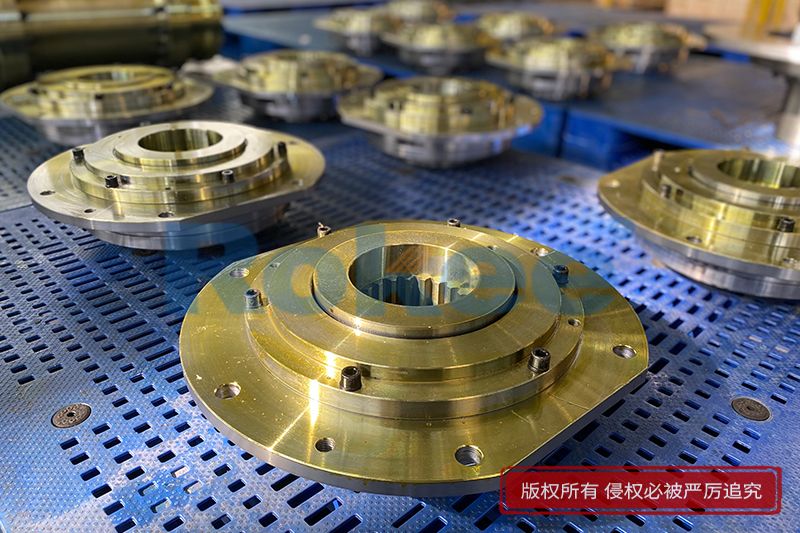
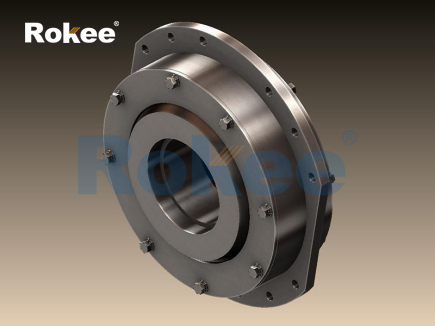
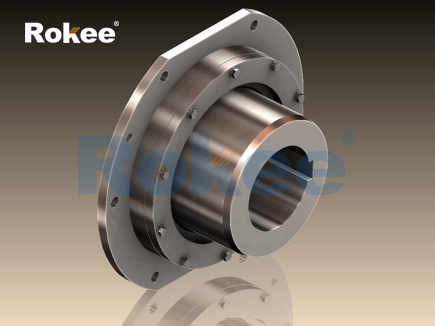
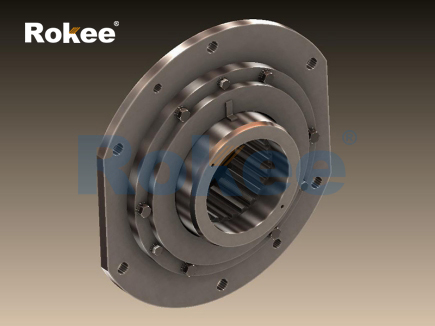
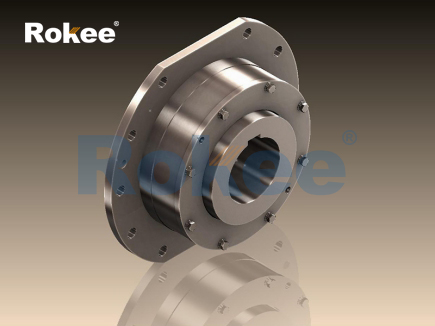
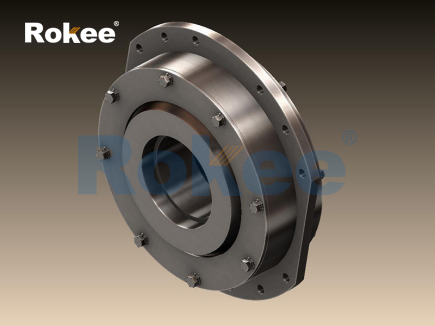
The angular compensation capability stands as one of the most essential and distinctive functional characteristics of drum couplings, fundamentally distinguishing this type of mechanical transmission component from conventional straight-tooth gear couplings and flexible coupling structures. In all mechanical transmission systems that rely on shaft connection and torque transmission, the perfect coaxial alignment between the driving shaft and the driven shaft is merely an ideal theoretical state. In actual equipment assembly, long-term operation, and complex industrial working environments, various unavoidable factors will cause angular deflection between interconnected shaft bodies, which poses continuous challenges to the stability, safety, and service life of the entire transmission system. The unique structural design of drum couplings enables them to effectively adapt to such angular displacement, absorb deviation stress, and maintain efficient and stable power transmission, making them indispensable core components in heavy-duty, high-load, and high-stability industrial transmission scenarios.
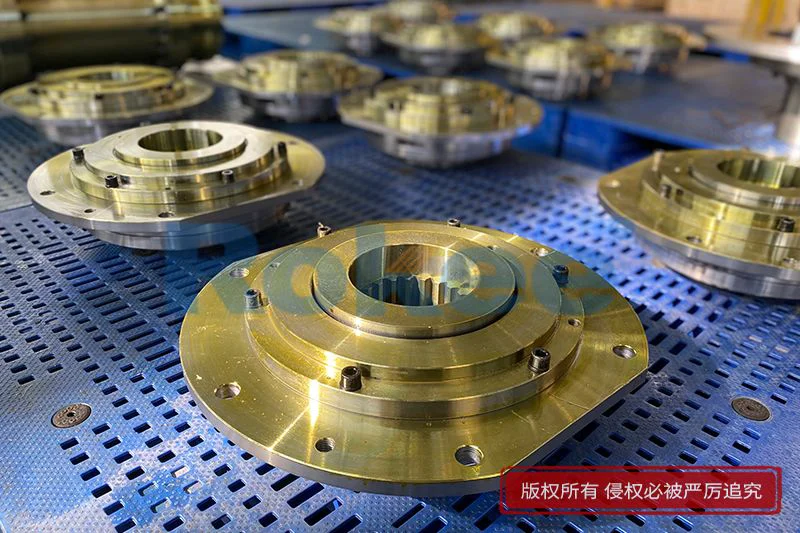
To fully understand the working mechanism and application value of drum coupling angular adaptation, it is necessary to start with its basic structural composition and meshing principle. A standard drum coupling mainly consists of outer gear sleeves with drum-shaped tooth profiles and inner gear rings with straight tooth profiles, forming a precise meshing pair for torque transmission. Different from the flat tooth flank of traditional straight-tooth couplings, the tooth surface of the outer gear of a drum coupling is processed into a smooth arc drum shape with a curved profile in the tooth width direction. This subtle but crucial structural improvement creates sufficient flexible adjustment space for the meshing state of the gear pair when angular deviation occurs between two shafts. In the ideal coaxial state, the tooth surfaces of the inner and outer gears maintain full and uniform contact, and torque is transmitted evenly through the meshing tooth surfaces without additional stress or friction loss. Once angular deflection appears between the driving and driven shafts, the arc-shaped drum tooth surface can automatically adjust the contact position and contact angle of meshing teeth, realizing smooth sliding and adaptive offset within a certain deflection range.
The angular displacement allowed by drum couplings is a key performance indicator that determines their environmental adaptability. Compared with traditional straight-tooth gear couplings, which can only tolerate extremely small angular deviations and are prone to edge contact and stress concentration under slight shaft deflection, drum couplings can stably adapt to angular deflections ranging from one degree to three degrees under normal operating conditions. This significant compensation advantage stems from the uniform stress distribution characteristic of the drum-shaped tooth profile. When angular misalignment occurs, the contact point between the inner and outer gear teeth will not be limited to the sharp edge of the tooth end, but will always shift on the smooth curved tooth flank, maintaining a centralized and uniform contact state. This effectively eliminates the local overload, tooth edge wear, and tooth surface fatigue damage that are common in straight-tooth transmission structures under angular deviation, greatly improving the operational reliability of the shaft system.
The generation of angular deviation in mechanical shaft systems stems from multiple practical factors in industrial production, and the adaptive angular adjustment capability of drum couplings can precisely solve the transmission problems caused by these factors. First, assembly errors are an inevitable source of angular deflection during equipment installation. Even with precise measuring tools and standardized assembly processes, it is difficult to achieve absolute coaxiality between two connected shafts, and tiny angular deviations will be formed during fixed installation. For rigid transmission structures, such small deviations will be continuously amplified during high-speed rotation or heavy-load operation, resulting in severe bearing wear, shaft body vibration, and accelerated aging of transmission parts. Drum couplings can fully absorb these assembly-generated angular deviations through their flexible meshing adjustment, avoiding the generation of additional assembly stress and reducing the precision requirements for equipment installation, which greatly improves the convenience and efficiency of on-site assembly and debugging.
Second, thermal deformation of equipment during long-term operation is a major cause of dynamic angular deviation. Most industrial mechanical equipment will generate continuous heat energy during high-load operation, and the shaft body, frame, and connecting parts will produce different degrees of thermal expansion and contraction due to temperature changes. Since the structural parts of the equipment have inconsistent thermal expansion coefficients and uneven heat dissipation conditions, the relative position and angle of the connected shafts will change dynamically with the operating temperature. This real-time variable angular displacement poses a severe test to the stability of the transmission system. The flexible adjustment performance of drum coupling angles can adapt to this dynamic deviation change, always maintaining stable meshing transmission between gear pairs, preventing shaft jitter and torque fluctuation caused by thermal deformation, and ensuring that the equipment can maintain consistent operating efficiency under long-term continuous working conditions.
In addition, mechanical vibration and load impact in complex working conditions will also induce periodic angular deflection of the shaft system. In industries such as mining, metallurgy, port handling, and heavy machinery manufacturing, equipment often operates under variable load, impact load, and alternating load conditions. Sudden load changes and continuous mechanical vibration will cause tiny periodic angular swings between the driving and driven shafts. Ordinary coupling structures cannot adapt to this high-frequency dynamic angular deviation, which will lead to frequent impact friction between tooth surfaces, rapid wear of transmission parts, and even fatigue fracture of shafts and gears in severe cases. The drum-shaped tooth structure of drum couplings has excellent buffering and adaptive capabilities. When facing high-frequency small-angle deflection, it can rely on the sliding fit of arc tooth surfaces to buffer impact force, disperse vibration energy, and avoid rigid collision and friction between transmission components, thus protecting the entire shaft system and transmission equipment.
The angular compensation performance of drum couplings also works in coordination with their axial and radial deviation compensation capabilities, forming a multi-dimensional comprehensive deviation adaptation system. In actual industrial operation, shaft system errors are often composite deviations that include angular deflection, axial displacement, and radial offset simultaneously, rather than a single type of deviation. The structural design of drum couplings perfectly adapts to this composite error state. While adjusting the meshing angle to adapt to angular deviation, the arc tooth surface can also adaptively slide to compensate for axial floating and radial offset of the shaft body. The coordination of the three compensation functions ensures that the coupling can still maintain efficient and stable torque transmission under complex composite misalignment conditions, which is the core reason why drum couplings are widely used in heavy-duty industrial transmission fields.
The rational application of drum coupling angular adaptation performance can effectively reduce the operating failure rate of mechanical equipment and extend the service life of transmission systems. When the shaft system produces angular deviation, if the coupling cannot effectively compensate, additional bending stress and shear stress will be generated on the shaft body, bearings, and gear components. Long-term accumulation of such stress will cause fatigue damage to metal parts, resulting in problems such as bearing noise, shaft body deformation, gear tooth peeling, and transmission jamming. By eliminating the adverse effects of angular deviation, drum couplings avoid the generation of additional stress in the transmission system, make the stress distribution of each component more uniform, and significantly reduce the wear and fatigue loss of key parts. Statistical analysis of industrial operation data shows that mechanical equipment equipped with drum couplings has a significantly lower failure rate of transmission components under the same working conditions, and the overall service life of the shaft system can be effectively prolonged.
In terms of operating stability and energy efficiency, the angular adaptation advantage of drum couplings also brings obvious optimization effects. When traditional couplings face angular misalignment, uneven contact between tooth surfaces will cause increased friction resistance, unstable torque transmission, and obvious vibration and noise during equipment operation. This unstable operating state will not only reduce transmission efficiency and increase energy consumption, but also cause continuous vibration interference to the entire equipment structure, affecting the operating accuracy and stability of mechanical parts. The smooth meshing adjustment of drum couplings under angular deviation can maintain uniform tooth surface contact and stable torque output, reduce friction loss and vibration noise in the transmission process, improve the overall energy utilization efficiency of the equipment, and create a more stable and low-loss operating state for mechanical transmission systems.
The design optimization of drum coupling angular compensation performance has always been an important direction in the field of mechanical transmission component research and manufacturing. With the continuous upgrading of industrial equipment towards high power, high speed, and heavy load, the operating conditions of transmission systems are becoming more complex, and the requirements for the angular deviation adaptation capability of couplings are constantly improving. Modern drum coupling manufacturing processes optimize the tooth profile arc curvature, tooth width size, and surface precision of drum-shaped teeth through finite element simulation analysis and precision machining technology. The optimized tooth profile structure can not only increase the allowable angular deflection range, but also make the tooth surface contact stress distribution more uniform, further improving the stability and load resistance of angular adaptation. At the same time, the surface strengthening treatment of gear teeth improves the wear resistance and fatigue resistance of the tooth surface, ensuring that the coupling can maintain stable angular compensation performance during long-term high-load operation.
It is worth noting that the angular compensation capability of drum couplings has a reasonable application range, and standardized installation and operation management are still important prerequisites for giving full play to its performance. Although drum couplings can adapt to a certain degree of angular deviation, excessive angular deflection beyond the design range will still cause abnormal wear of tooth surfaces, reduced transmission efficiency, and shortened service life. In actual equipment installation and maintenance, it is necessary to control the coaxiality error of the shaft system within the allowable angular deviation range of the coupling through standard debugging. Regular inspection of the operating state of the coupling, cleaning of dust and wear debris on the tooth surface, and maintenance of good lubrication conditions can ensure that the angular adjustment mechanism of the drum coupling operates flexibly and stably for a long time.
In the entire industrial transmission system, the angular adaptation performance of drum couplings plays a vital role in connecting equipment power output and execution components. It solves the core pain point of unstable transmission caused by shaft misalignment in traditional coupling structures, provides reliable flexible connection support for various heavy-duty and complex working condition equipment, and promotes the stable operation and efficient production of industrial mechanical equipment. With the continuous development of industrial manufacturing technology, the structural design and performance parameters of drum couplings will continue to be optimized, and their excellent angular compensation and comprehensive deviation adaptation capabilities will make them more widely applied in high-end equipment manufacturing, intelligent industrial production, and large-scale engineering construction fields, becoming an indispensable basic guarantee for the stable operation of modern mechanical transmission systems.
- Tags:
- Brake Drum Couplings ,
- Drum Couplings ,
- sandwich panel line ,
- sandwich panel machine
- pu sandwich panel machine
« Angle of Drum Coupling » Latest Update Date: Jul 10, 2026
https://www.rokeecoupling.net/blog/angle-of-drum-coupling.html