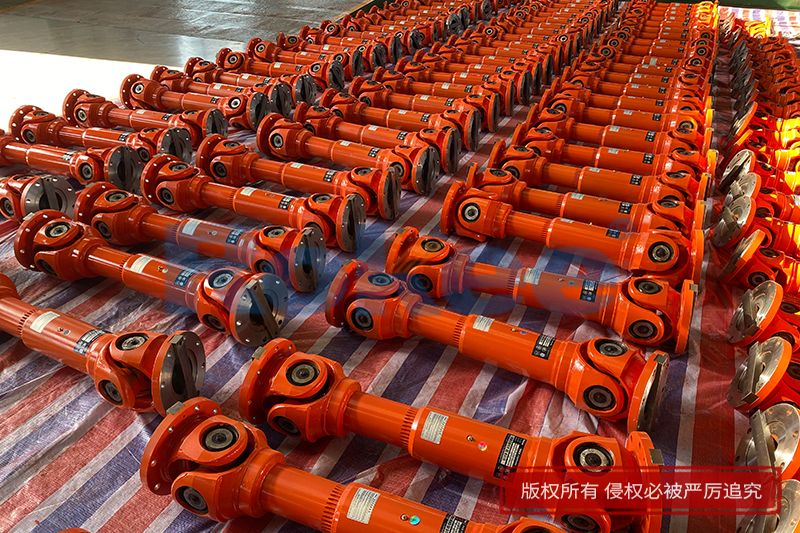
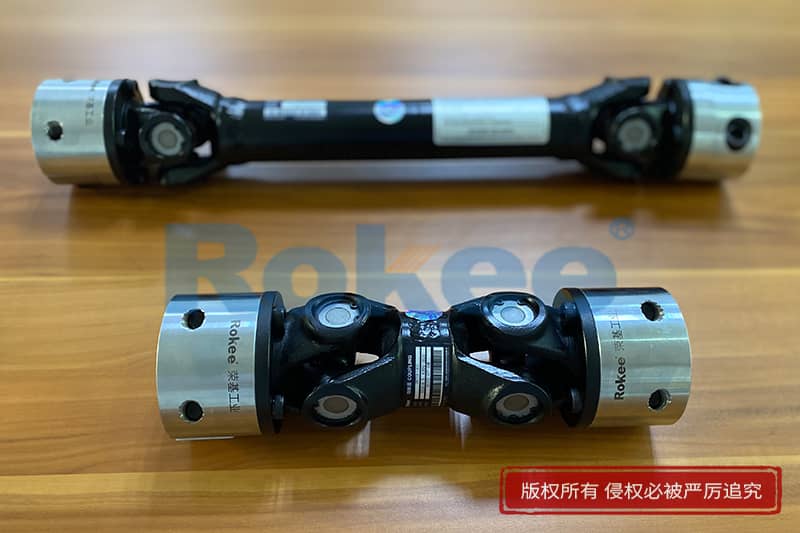
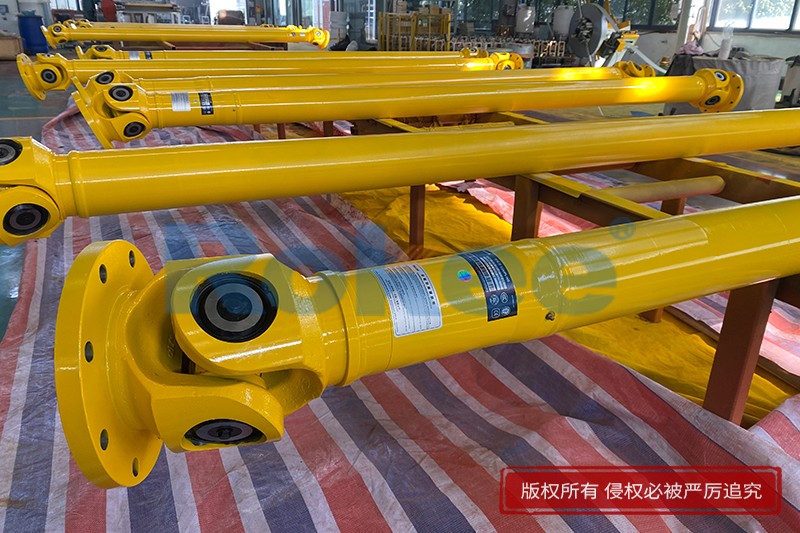
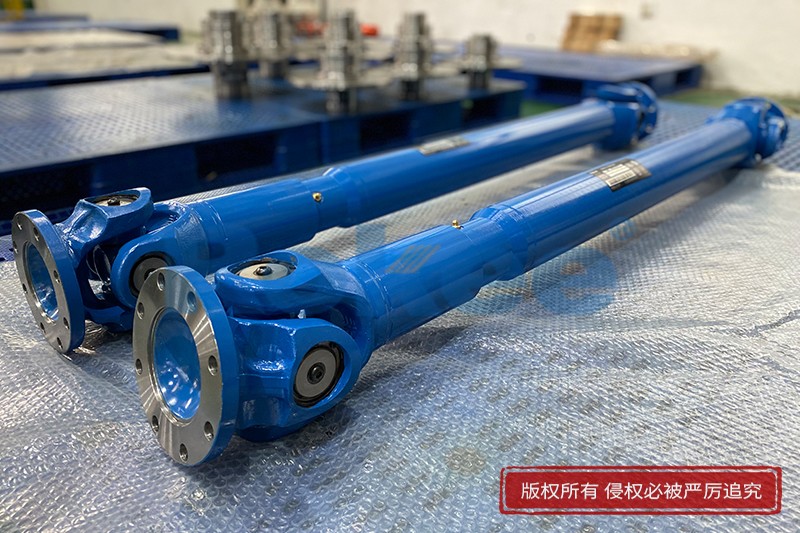
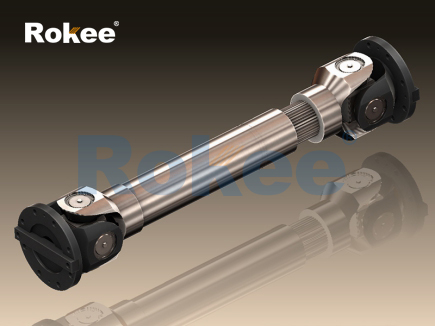
Cardan drive shafts, also widely known as universal drive shafts, serve as indispensable power transmission components in mechanical and automotive transmission systems, designed to transfer rotational torque between two shafts with non-coaxial, angularly offset, or dynamically changing positional relationships. Unlike rigid transmission shafts that only work under strictly aligned axis conditions, cardan drive shafts rely on flexible articulated structures to compensate for angular, axial, and radial deviations generated during equipment operation or installation, ensuring continuous and stable power output in complex motion states. The diverse structural designs and functional classifications of cardan drive shafts stem from varying operating conditions, load intensities, angular deflection requirements, and transmission stability standards, making different types of drive shafts applicable to distinct mechanical scenarios. A comprehensive understanding of the classification, structural characteristics, working principles, and application boundaries of various cardan drive shaft types is essential for optimizing mechanical transmission design and improving equipment operational reliability.
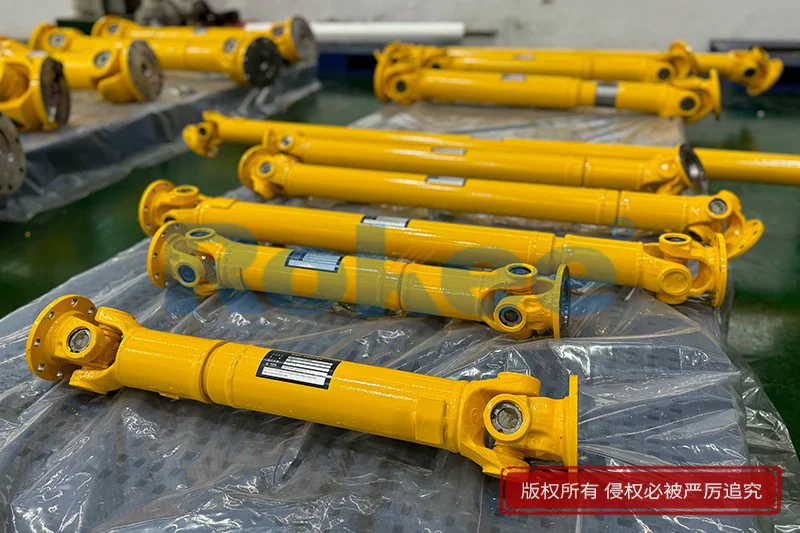
The most fundamental classification of cardan drive shafts is based on the number and structural form of universal joints equipped on the shaft body, a core criterion that directly determines the shaft’s transmission uniformity, angular adaptability, and load-bearing capacity. Single-joint cardan drive shafts represent the simplest structural form in the entire cardan transmission system, consisting of a single cross-shaped universal joint and a integrated rigid shaft body with no segmented structures or auxiliary connecting components. The core structure of this drive shaft includes two symmetric yokes and a central cross spider fitted with needle roller bearings, where the driving yoke connects to the power input end and the driven yoke links to the load output end. This basic structure enables the shaft to adapt to small-angle deflection between the input and output shafts, realizing basic torque transmission under misaligned axis conditions. However, the inherent mechanical characteristic of single-joint cardan structures is non-uniform velocity transmission. When the driving shaft rotates at a constant angular velocity, the driven shaft produces periodic angular velocity fluctuations within a single rotation cycle, and the amplitude of this fluctuation increases significantly as the shaft deflection angle expands. This periodic speed variation generates alternating torsional vibration and additional mechanical stress on the transmission system, which may accelerate component wear and cause transmission instability. Due to this structural limitation, single-joint cardan drive shafts are rarely used alone in high-speed, high-load, and continuous operating equipment, and are mostly applied in low-speed, intermittent working mechanical structures with small deflection angles and low transmission stability requirements, such as small auxiliary mechanical transmission mechanisms and low-power manual transmission components.
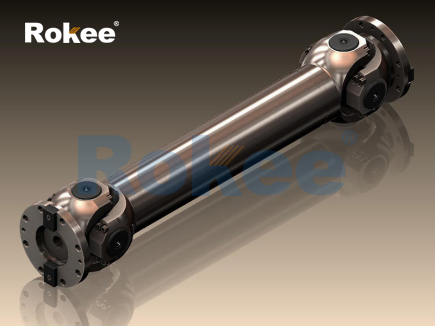
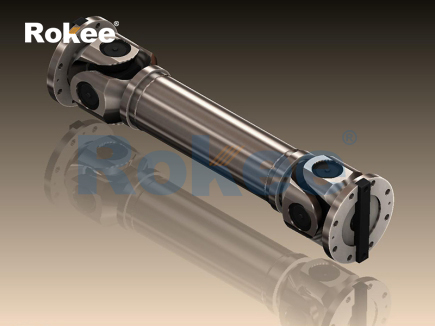
Double-joint cardan drive shafts are the most widely used mainstream type in industrial and automotive fields, effectively solving the non-uniform velocity defect of single-joint structures through symmetric structural layout and complementary motion principles. This type of drive shaft is composed of two identical cross-type universal joints and a middle connecting shaft body, with the two universal joints installed in a centrosymmetric arrangement. The core working principle lies in the phase compensation of the two joints: the angular velocity fluctuation generated by the first universal joint during transmission is completely offset by the reverse fluctuation of the second universal joint, enabling the final output shaft to maintain nearly constant angular velocity consistent with the input shaft. Beyond optimizing transmission uniformity, the double-joint structure greatly improves the overall angular deflection adaptability of the drive shaft, allowing stable power transmission under a maximum shaft included angle far exceeding that of single-joint products. In addition, the segmented design with double joints disperses the torsional load and impact force generated during operation, effectively reducing local stress concentration of components and improving the overall structural durability and fatigue resistance of the drive shaft. Double-joint cardan drive shafts have strong environmental adaptability and can operate stably under variable load and variable deflection working conditions, covering most conventional application scenarios from passenger vehicle transmission systems to medium and large industrial mechanical equipment. In rear-wheel drive and four-wheel drive vehicle transmission structures, they bridge the engine transmission assembly and the rear axle differential, adapting to the positional offset and angle changes caused by vehicle chassis vibration and suspension jitter during driving; in engineering machinery such as loaders and excavators, they undertake power transmission between power units and walking or working mechanisms, coping with complex and variable operating posture changes.
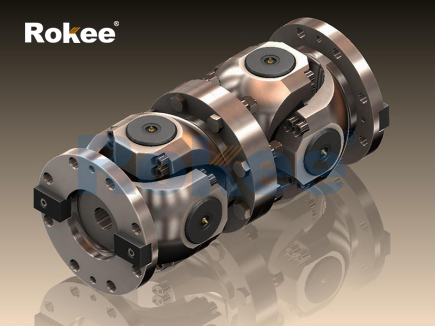
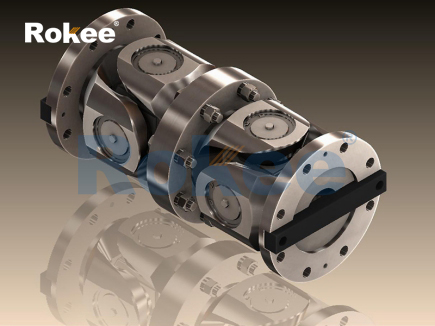
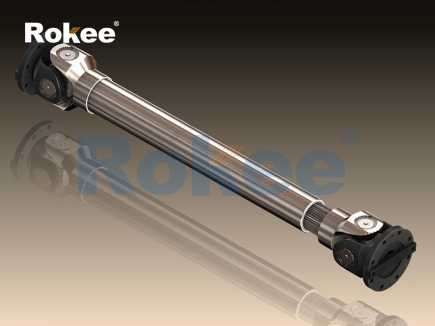
Multi-joint cardan drive shafts are extended structures based on double-joint designs, equipped with three or more universal joints and multi-segment shaft bodies, usually matched with intermediate support structures to adapt to ultra-long transmission distances and complex multi-angle deflection working conditions. In mechanical equipment where the distance between the power input end and the load output end is extremely large, a single double-joint drive shaft cannot meet the structural strength and stability requirements, as an overly long single shaft body is prone to bending deformation, resonant vibration, and severe torsional oscillation during high-speed operation. Multi-joint drive shafts divide the ultra-long transmission path into multiple independent short shaft segments through additional universal joints, with each segment undertaking a small range of angle compensation and torque transmission tasks. The intermediate support bearings fixed on the equipment frame support the connecting parts of the segmented shaft bodies, effectively suppressing shaft body shaking and bending deformation, and improving the overall rigidity and operational stability of the transmission system. This type of drive shaft is mainly used in large engineering machinery, heavy industrial transmission lines, and special vehicle equipment with ultra-long transmission spans. Its obvious advantages lie in flexible angle compensation and stable long-distance power transmission, while the disadvantage is the relatively complex overall structure, which puts forward higher requirements for installation accuracy and daily maintenance. The matching of each joint phase and the lubrication state of bearings will directly affect the transmission efficiency and service life of the entire device.
According to transmission velocity characteristics and structural optimization forms, cardan drive shafts can be divided into unequal velocity, quasi-constant velocity, and constant velocity types, which are key classification bases for distinguishing high-precision and ordinary transmission scenarios. Traditional single cross-joint cardan drive shafts belong to typical unequal velocity transmission structures, whose periodic velocity fluctuation characteristics are unavoidable under angular deflection conditions, making them only suitable for low-precision transmission fields where velocity uniformity is not strictly required. Quasi-constant velocity cardan drive shafts are optimized and improved on the basis of traditional unequal velocity structures, realizing approximate constant velocity transmission through special yoke structure design, joint angle matching, and shaft body parameter optimization. This type of drive shaft retains the simple and reliable structural advantages of traditional cross joints, while effectively reducing the amplitude of angular velocity fluctuation, balancing transmission stability and manufacturing cost, and is widely used in commercial vehicles, ordinary engineering machinery, and general industrial equipment that require moderate transmission precision.
Constant velocity cardan drive shafts are high-precision transmission components developed for high-speed and high-stability working conditions, completely eliminating periodic velocity fluctuation through special joint structural design. Different from traditional cross-type universal joints, constant velocity drive shafts adopt curved groove ball joint structures or symmetrical double spherical hinge structures, enabling the input shaft and output shaft to maintain synchronous constant angular velocity rotation regardless of the deflection angle within the allowable range. This transmission characteristic completely avoids alternating vibration and additional dynamic load caused by velocity changes, significantly improving the smoothness and efficiency of power transmission. Constant velocity cardan drive shafts can adapt to larger working deflection angles, with a maximum adaptable angle much higher than that of traditional cross-joint drive shafts, and perform excellently in dynamic working conditions with frequent angle changes and high-speed rotation. They are mostly used in high-end passenger vehicle transmission systems, precision industrial transmission equipment, and aerospace auxiliary transmission mechanisms that have strict requirements on transmission stability, vibration noise, and power output accuracy.
In terms of structural rigidity and vibration damping characteristics, cardan drive shafts can be classified into rigid cardan drive shafts and elastic cardan drive shafts, which differ greatly in load resistance and vibration adaptation performance. Rigid cardan drive shafts are the most conventional type, with all core transmission components including shaft bodies, universal joints, and connecting yokes made of high-strength rigid metal materials. The overall structure has high torsional rigidity and structural stability, can bear large instantaneous impact load and continuous torsional load, and has high transmission efficiency with almost no elastic deformation during power transmission. The cross-type rigid cardan drive shaft is the most representative product of this type, featuring simple structure, low manufacturing cost, strong durability, and stable mechanical performance, making it the most widely used type in heavy-load industrial transmission and commercial transportation equipment. However, the disadvantage of rigid drive shafts is poor vibration damping performance. The vibration and impact generated by the load end during operation will be directly transmitted back to the power end, which may cause vibration resonance of the equipment in severe cases and affect the stability of the entire mechanical system.
Elastic cardan drive shafts add elastic damping components such as rubber elastic bodies and flexible gaskets between the universal joint connecting structures or at the shaft body connection ends, forming a flexible transmission structure on the basis of retaining cardan angle compensation capability. The elastic components can effectively absorb instantaneous impact load and mechanical vibration generated during transmission, buffer the torsional shock between the driving shaft and the driven shaft, and isolate the transmission of vibration and noise between equipment components. This structural design greatly improves the operational comfort and stability of the equipment, and can also reduce the abrasion fatigue of rigid components caused by frequent impact, extending the service life of the transmission system. Elastic cardan drive shafts are mainly used in light-load and medium-load equipment that requires low vibration and low noise operation, such as household mechanical equipment, light commercial vehicles, and precision instrument transmission mechanisms. It is worth noting that the addition of elastic components slightly reduces the overall torsional rigidity and high-load resistance of the drive shaft, so this type of drive shaft is not suitable for extreme heavy-load and high-temperature working environments that may cause aging and deformation of elastic materials.
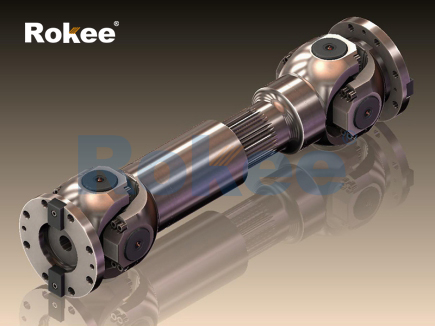
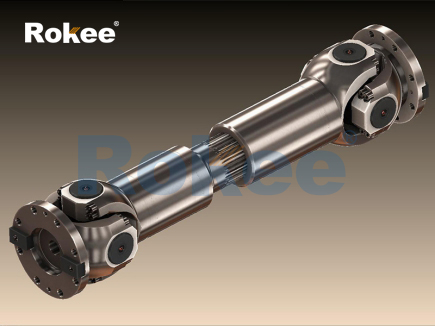
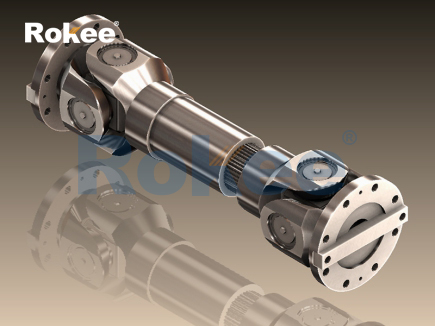
The classification of cardan drive shafts also includes segmented and integral types based on shaft body structural form, a key factor affecting installation adaptability and maintenance convenience. Integral cardan drive shafts have an integrated shaft body structure with no segmented splicing parts, matched with fixed universal joints at both ends. The overall structure is compact with high structural rigidity and good dynamic balance performance, avoiding transmission errors and vibration problems caused by splicing gaps. Integral drive shafts are suitable for short-distance transmission scenarios with fixed installation positions and small structural space, featuring high transmission precision and stable high-speed operation. Segmented cardan drive shafts adopt multi-segment shaft body splicing structures, with telescopic sliding structures arranged at the connecting parts of adjacent shaft segments. This design enables the drive shaft to adapt to axial distance changes between the power end and the load end during equipment operation, compensating for axial displacement caused by chassis jitter, mechanical deformation, or installation position deviation. The telescopic adjustment function greatly improves the environmental adaptability of the drive shaft, making it suitable for mechanical equipment with dynamic changes in transmission distance. In addition, segmented drive shafts are more convenient for transportation, installation, and later maintenance, as damaged single segments can be replaced independently without overall disassembly, reducing equipment maintenance costs and downtime.
In practical engineering applications, the selection of cardan drive shaft types needs to comprehensively consider multiple factors such as transmission distance, working deflection angle, load magnitude, operating speed, and vibration requirement. For low-speed, small-angle, and low-stability auxiliary transmission mechanisms, single-joint rigid drive shafts can meet the usage demands with cost advantages; for most conventional vehicle and industrial mechanical transmission scenarios, double-joint quasi-constant velocity rigid drive shafts are the most cost-effective choice, balancing performance, reliability, and economy; for high-speed, high-precision, and large-deflection working conditions, constant velocity cardan drive shafts must be selected to ensure transmission smoothness; for long-distance transmission scenarios, multi-joint segmented drive shafts with intermediate support structures are required to guarantee structural stability; for equipment with strict vibration and noise control requirements, elastic cardan drive shafts with damping structures are more suitable.
With the continuous upgrading of mechanical manufacturing technology and the gradual improvement of equipment performance requirements, the structural design of cardan drive shafts is also constantly optimized and iterated. Modern cardan drive shaft products are developing towards lightweight, high precision, low vibration, and long service life. Through the optimization of joint structure parameters, the application of high-strength and wear-resistant new materials, and the improvement of dynamic balance processing technology, various types of cardan drive shafts are continuously improving their transmission efficiency and operational reliability, while expanding their adaptable working condition ranges. Different types of cardan drive shafts have their unique structural advantages and application boundaries, and reasonable type selection and structural matching are the core prerequisites to ensure the efficient and stable operation of mechanical transmission systems. In future mechanical design and equipment transformation, in-depth research on the performance characteristics of various cardan drive shaft types will continue to provide important technical support for the optimization and upgrading of various transmission systems.
- Tags:
- Cardan Drive Shafts ,
- sandwich panel line ,
- sandwich panel machine
- pu sandwich panel machine
« Cardan Drive Shaft Types » Latest Update Date: Jun 18, 2026
https://www.rokeecoupling.net/blog/cardan-drive-shaft-types.html