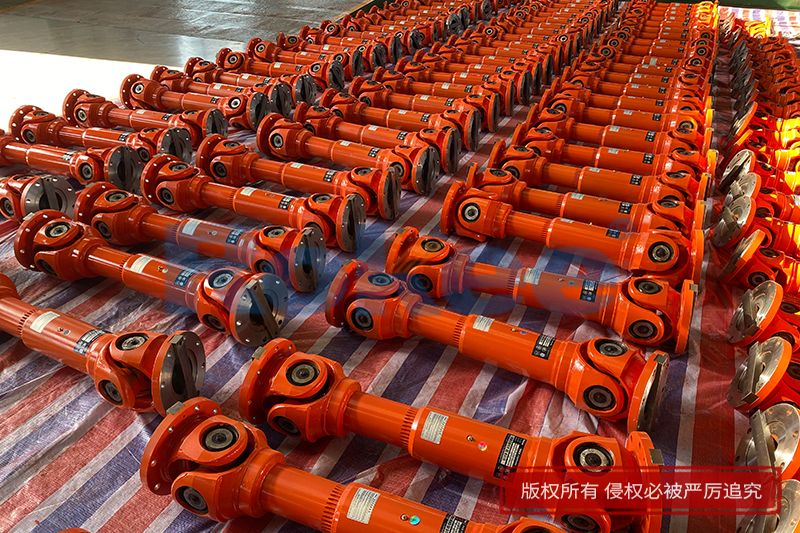
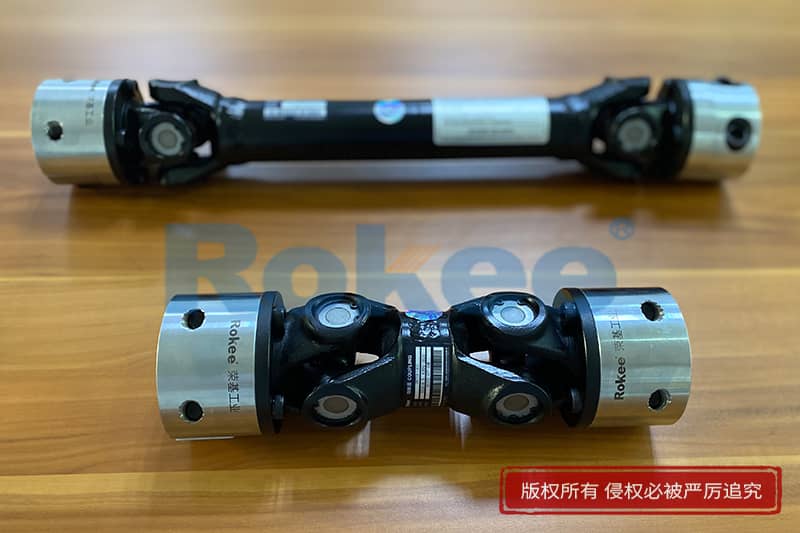
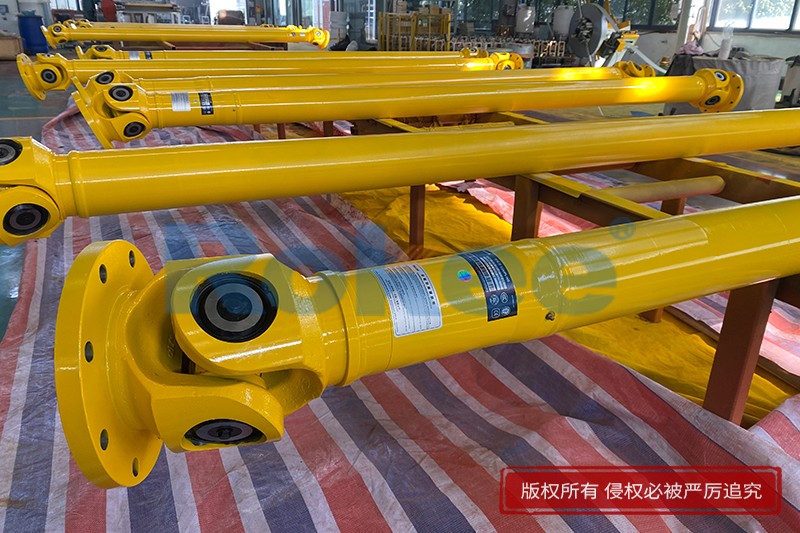
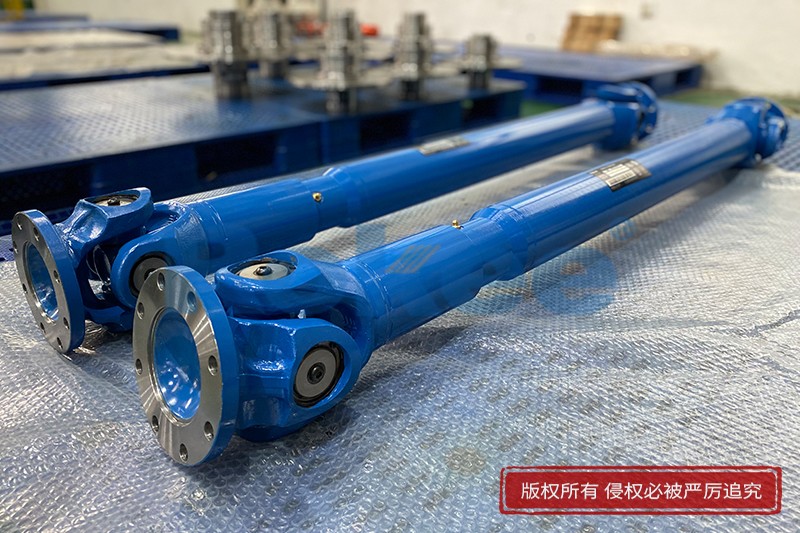
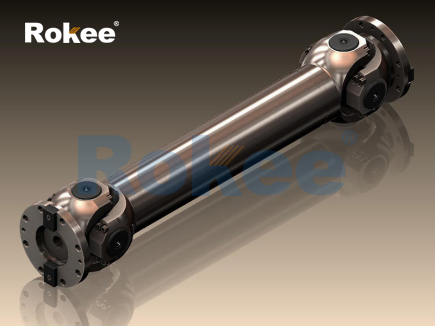
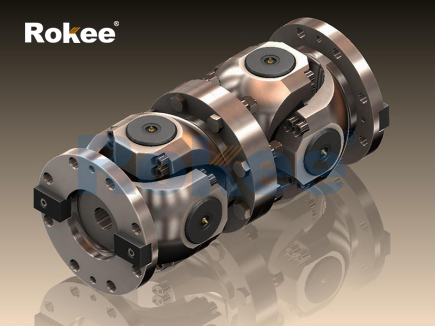
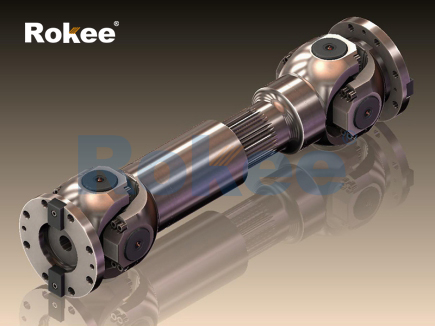
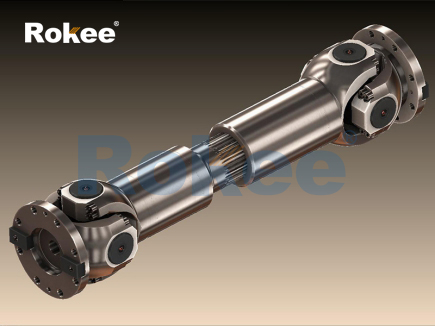
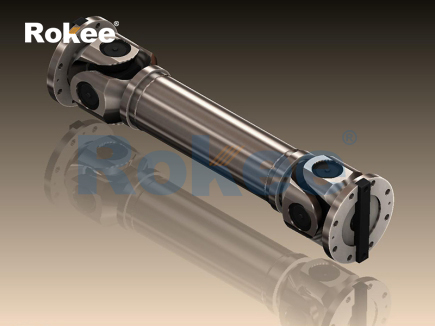
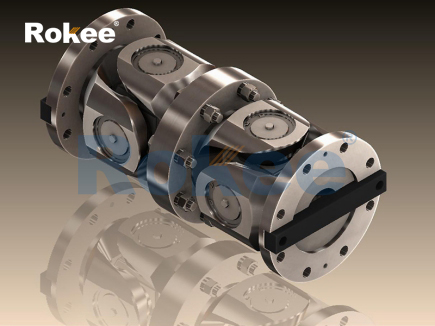
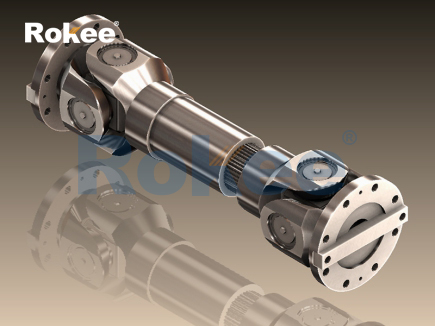
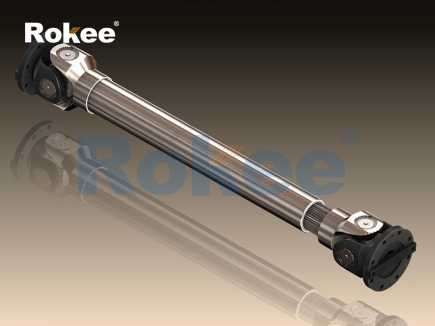
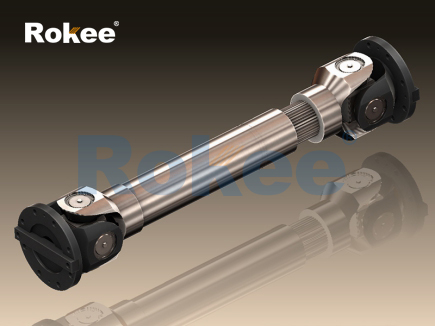
Behind the stable and continuous operation of almost all heavy-duty mechanical equipment across construction, mining, agriculture, railway and general industrial manufacturing fields lies a subtle yet irreplaceable mechanical component: the cardan shaft. As a professional production base focusing on the research, manufacturing and iterative upgrading of universal transmission components, a professional cardan shafts factory undertakes the core mission of bridging power output terminals and execution terminals of mechanical systems. In actual industrial operating environments, it is almost impossible to keep two sets of rotating mechanical parts in absolute fixed alignment all the time. Mechanical vibration during long-term operation, slight chassis deformation caused by alternating heavy loads, thermal expansion and cold contraction of metal parts after long-time high-speed operation, and position offset generated by equipment walking actions will all lead to parallel, angular and axial misalignment between driving shafts and driven shafts. Ordinary rigid transmission shafts cannot adapt to such complex displacement changes, which will cause concentrated mechanical stress, accelerated component wear, increased equipment operating noise, and even sudden fracture of transmission parts and forced shutdown of the whole machine in severe working conditions. Cardan shafts, equipped with matched universal joint structures, perfectly solve this industry pain point by transmitting stable torque and rotating power efficiently under multi-dimensional misalignment states, becoming an indispensable core link in modern mechanical power transmission systems. A standardized and mature cardan shafts factory focuses not only on finished component production, but also on integrating mechanical structure optimization, precise metal processing, material performance improvement, whole-process performance testing and user working condition matching, to produce transmission parts that can adapt to extreme working environments and long-cycle continuous operation.
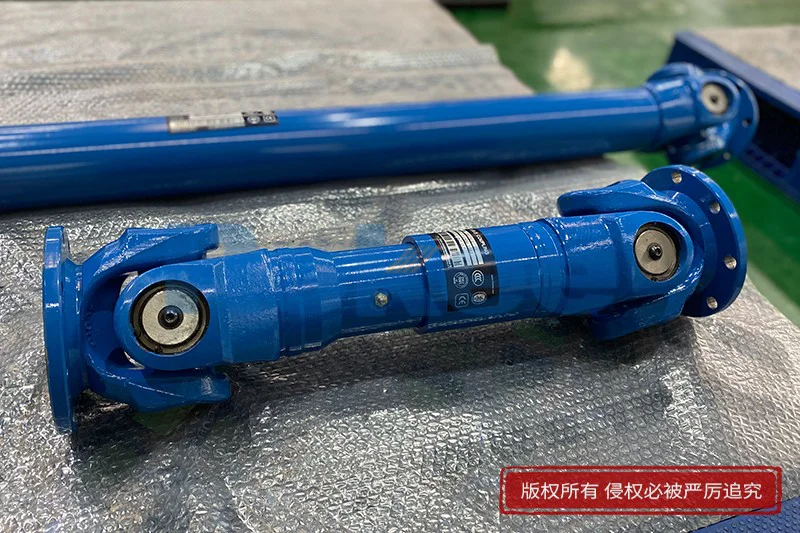
The core competitiveness of a professional cardan shafts factory originates from scientific and targeted raw material selection, which lays a solid foundation for the fatigue resistance, impact resistance and service life of finished products. Unlike ordinary mechanical parts that work under stable static loads, cardan shafts bear alternating torsion, instantaneous impact load and continuous vibration friction throughout the whole service cycle. Especially for products applied in mining underground working faces, open-pit construction sites and field agricultural operation scenarios, components also need to cope with humid and dusty air environments, occasional mud erosion and drastic changes in ambient temperature. Therefore, the factory’s material procurement team cooperates with professional metal material laboratories to screen high-strength alloy steel as the base raw material for shaft bodies and universal joint forks, instead of using ordinary carbon steel with low comprehensive mechanical properties. Before raw materials enter the formal production workshop, all steel blanks will undergo unified physical and chemical performance inspection. Professional staff detect internal metal density uniformity, impurity content, tensile strength and torsion resistance of raw steel bars, eliminating raw materials with hidden internal cracks and uneven metal texture fundamentally. Every batch of qualified raw materials is classified and stored according to different application scenarios of finished products. Raw materials with higher toughness and impact resistance are specially reserved for heavy-duty cardan shafts used in mining and engineering machinery, while materials with balanced precision and wear resistance are applied to supporting shafts for automated production lines and light industrial mechanical equipment. This differentiated material matching mode avoids performance redundancy of products for light-load scenarios and prevents insufficient structural strength of products facing harsh working conditions, realizing reasonable balance between component service performance and structural durability from the source of production.
The entire production workflow inside the cardan shafts factory follows a closed-loop precise processing system from blank cutting, near-net-shape forging, numerical control fine machining, integral heat treatment, surface reinforcement treatment, modular assembly to dynamic balance calibration, and each processing procedure is equipped with independent process monitoring links to control machining errors within extremely narrow tolerance ranges. After qualified steel raw materials are sent to the cutting workshop, intelligent numerical control cutting equipment automatically completes fixed-length cutting according to digital drawings generated by simulation design software. Compared with traditional manual cutting equipment, automated cutting effectively avoids uneven blank end faces and size deviation caused by human operation errors, ensuring consistent basic specifications of all semi-finished products entering the next process. Subsequently, steel blanks are sent to the forging workshop for hot forging forming. The integrated forging process changes the original loose internal metal fiber structure of steel materials, making the internal metal fibers of shaft bodies and universal joint parts distribute continuously along the stress bearing direction. This processing method greatly improves the overall torsion resistance and fatigue resistance of components, effectively preventing metal fatigue fracture caused by long-term alternating torsion work, a common failure mode of ordinary machined cardan shafts without forging treatment.
After forging and preliminary deburring treatment, semi-finished components enter the core precision numerical control machining workshop, which is the key procedure to determine the assembly accuracy and operation smoothness of cardan shafts. All machining equipment runs according to unified digital programming parameters, completing high-precision turning, milling, drilling and groove processing for shaft tube bodies, joint forks, cross universal joints and telescopic sliding sleeves respectively. In this process, the factory strictly controls the matching clearance between cross shaft cores and joint fork bearing holes, as well as the straightness of long shaft tubes. Excessively large matching clearance will lead to obvious vibration and impact noise during high-speed rotation of cardan shafts, while excessively small clearance will increase rotation friction, reduce power transmission efficiency and accelerate wear of internal rotating friction pairs. After finishing all size machining, all semi-finished parts will be transported to the heat treatment workshop for integral quenching and tempering treatment. Reasonable heat treatment parameters improve the surface hardness of key friction parts to enhance wear resistance, while maintaining moderate toughness of the overall shaft structure to avoid brittle fracture when encountering instantaneous impact loads. Different from single surface hardening treatment, integral heat treatment ensures uniform performance of the whole component, so that each stress-bearing position of the cardan shaft can cope with complex load changes synchronously in actual working conditions.
Subsequent surface anti-corrosion and lubrication pretreatment further optimize the environmental adaptability of finished cardan shafts produced by the factory. After mechanical polishing to remove tiny surface machining burrs, all components undergo uniform surface oxidation and spraying treatment. This compact protective isolation layer can block moisture, dust and weak corrosive media in the air from contacting internal metal substrates, reducing surface rust and electrochemical corrosion for long-term outdoor operated mechanical equipment. Before finished assembly, key moving friction parts are filled with high-temperature and wear-resistant grease suitable for long-cycle operation. The reserved sealed grease storage structure inside the universal joint can lock lubricating grease stably, avoiding grease loss caused by high-speed centrifugal force during equipment operation. This design extends the regular maintenance cycle of matching mechanical equipment, reducing daily manual maintenance workload for end users effectively. All independent parts are assembled in a dust-free constant-temperature assembly workshop, because temperature changes will cause tiny thermal expansion and contraction of metal parts, affecting final assembly accuracy. Professional assembly workers complete modular splicing of shaft tubes, universal joints, telescopic structures and sealing accessories following standardized assembly sequences, avoiding assembly dislocation and internal stress residue caused by irregular operation.
The final dynamic balance detection and correction procedure is the last critical quality control step before finished cardan shafts leave the factory, and also the core process to eliminate operation vibration and noise. Due to inevitable tiny errors in raw material density distribution, forging deformation and machining size deviation, assembled cardan shafts have uneven mass distribution on both sides of the rotating center. If such unqualified products are directly installed on mechanical equipment, high-speed rotation will produce periodic eccentric vibration, which will be transmitted to the whole mechanical system, accelerating aging of other matching parts and damaging equipment operation stability. The factory configures full-automatic dynamic balance testing equipment to simulate the actual rotating speed and operating state of cardan shafts in real mechanical scenarios. The system accurately captures unbalanced mass positions and deviation values of rotating components through high-precision vibration sensors, and staff carry out micro removal correction on corresponding positions of shaft bodies according to test data until the overall unbalanced amount of each finished product meets internal production standards. Every tested cardan shaft will be marked with independent processing and testing records, realizing full traceability of the whole production process from raw material input to finished product delivery.
Products manufactured by the cardan shafts factory serve diversified downstream industrial scenarios, and targeted structural optimization is carried out for different working condition characteristics to meet differentiated power transmission demands. In the field of engineering and mining machinery, large excavators, underground mining loaders, crushing equipment and bulk material conveyor equipment often face severe working conditions including heavy impact load, large-angle displacement and severe dust pollution. Cardan shafts supplied for this field adopt thickened shaft tube structures and reinforced universal joint forks, with optimized internal bearing structures to bear greater instantaneous torsion load and adapt to frequent angle changes during equipment walking and working actions. In agricultural machinery working in field environments, tractors need to connect with different supporting operating tools such as soil tillage devices, forage balers and grain harvesters. The bumpy field road surface and floating height changes of agricultural tools during operation bring frequent axial displacement and angular deviation to transmission systems. The factory designs telescopic adjustable cardan shaft structures specially for agricultural equipment, which can automatically adapt to real-time axial distance changes between power ends without affecting continuous power transmission efficiency.
In automated industrial production lines including steel rolling production equipment, packaging machinery, textile production equipment and large industrial fans, mechanical equipment runs at fixed high speed for 24 hours uninterruptedly, putting forward higher requirements for vibration control and long-term operation stability of cardan shafts. Products used in such scenarios focus on dynamic balance optimization and rotating smoothness during production, reducing overall operation vibration and mechanical noise to ensure stable and consistent operating accuracy of automated production lines. In railway auxiliary transmission systems and marine deck mechanical transmission equipment, cardan shafts need to cope with persistent vibration impact brought by vehicle traveling and hull fluctuation, as well as humid salt spray corrosive environment at sea. The factory enhances surface anti-corrosion grades of such products and optimizes overall structural rigidity to adapt to long-term unstable working environments of transportation and marine equipment. Covering light-load precise transmission, medium-load conventional industrial transmission and heavy-load impact-resistant transmission, the full product matrix developed by the factory can match almost all mechanical power transmission scenarios requiring misalignment compensation, realizing wide coverage of downstream industrial demands.
Apart from standardized mass production of conventional cardan shaft products, the factory also launches customized research and development and production services for special non-standard transmission components to solve personalized transmission difficulties encountered by downstream mechanical equipment manufacturers. Some special intelligent mechanical equipment and large customized industrial complete machines have unique installation space limitations, special rotation speed requirements or non-conventional angle deviation demands, making standard cardan shafts unable to meet supporting installation and operation needs. The factory’s internal mechanical research and development team communicates deeply with customers to collect on-site equipment operating parameters, installation space sizes, maximum bearing torque and working environment indicators. Engineers build three-dimensional simulation models of customized cardan shafts through professional mechanical simulation software, predict structural stress distribution, rotating operation state and component wear cycle in advance, and adjust structural parameters such as shaft body diameter, universal joint deflection angle range and telescopic stroke repeatedly. After completing simulation verification and small-batch sample trial production, prototype samples will undergo continuous fatigue operation tests in the factory’s internal simulation working condition laboratory to verify the stability of customized products under long-term special working loads before formal batch production. This combination of standardized mass production and non-standard customized production enables the factory to adapt to both large-scale centralized procurement demands of mainstream machinery manufacturers and personalized supporting demands of special mechanical equipment enterprises.
In terms of internal factory operation and production management, the whole production workshop implements lean production management mode to optimize production efficiency, control production energy consumption and reduce unnecessary production waste. The factory arranges production equipment according to the sequence of production processes, realizing streamlined circulation of semi-finished products between workshops, shortening material handling time between processes and avoiding cross-circulation confusion of semi-finished products. Meanwhile, the factory introduces digital production management systems to monitor real-time operating state of all processing equipment, daily production output, processing qualification rate and equipment operation energy consumption data uniformly. Operation and maintenance staff can grasp potential equipment failure risks in advance through background data analysis, arranging regular equipment maintenance during non-production peak hours to avoid sudden equipment shutdown affecting overall production schedule. In addition, the factory builds a complete staff skill training system for front-line processing workers, assembly personnel and testing personnel. Regular theoretical training of mechanical transmission principles and on-site practical operation assessment are carried out every month, ensuring all staff can master updated processing technologies and standardized operation specifications, maintaining consistent product processing accuracy and production quality in long-term batch production.
With the continuous upgrading of global intelligent manufacturing and green industrial development trends, the cardan shafts factory is also promoting dual iterative upgrades of production manufacturing technology and product structural design to adapt to future industrial development demands. On the production technology side, the factory gradually replaces partial traditional manual auxiliary processes with intelligent robotic arms to complete repeated high-precision work such as component handling, automatic polishing and grease filling. Intelligent processing equipment not only further unifies product processing accuracy and reduces human-caused quality fluctuation, but also improves overall production efficiency and optimizes on-site working environment by reducing manual work in high-noise and high-temperature workshops. On product research and development side, combined with lightweight development trends of modern mechanical equipment, the research team explores optimized composite structural design under the premise of ensuring overall mechanical strength of cardan shafts, reducing dead weight of transmission components without reducing load-bearing performance. Lightweight cardan shafts can effectively reduce invalid power consumption of mechanical equipment during operation, helping downstream machinery users reduce overall energy consumption of equipment operation.
Moreover, aiming at the wear failure problem of traditional cardan shafts in long-term high-frequency operation, the factory trials new surface strengthening processes to improve wear resistance and service life of key friction parts, extending the whole life cycle of finished products and reducing component replacement frequency for end users. In terms of green manufacturing, the factory optimizes production heat treatment and spraying processes to reduce waste gas and industrial sewage emission in the production process, realizes classified recycling of scrap steel generated by cutting and forging processes, and improves comprehensive utilization rate of raw materials. While ensuring product performance and production capacity, the factory continuously reduces negative environmental impacts brought by manufacturing activities, keeping pace with the global industrial green transformation rhythm.
From invisible power transmission accessories affecting mechanical operation stability to important basic components supporting the normal operation of the entire industrial machinery system, cardan shafts are never eye-catching in complete mechanical equipment, but their reliability determines the operation efficiency, failure rate and overall service life of host mechanical equipment. A professional cardan shafts factory relies on rigorous material screening, full-process precise processing, strict multi-link performance testing, scenario-oriented product optimization and continuous technological innovation to provide stable, durable and high-adaptability transmission components for all walks of machinery manufacturing industry. As global industrial machinery continues to develop towards higher intelligence, heavier load and longer continuous operation cycle, the performance requirements for power transmission components represented by cardan shafts will keep rising. Adhering to the core manufacturing concept focused on mechanical performance and long-term operational reliability, the cardan shafts factory will continue to deepen process upgrading and structural research, keep matching evolving industrial working condition demands, and provide solid and reliable underlying support for the steady operation of global modern mechanical transmission systems.
- Tags:
- Cardan Shaft Couplings ,
- Industrial Cardan Shafts ,
- Cardan Shafts ,
- Cross Cardan Shafts ,
- sandwich panel line ,
- sandwich panel machine
- pu sandwich panel machine
« Cardan Shafts Factory » Latest Update Date: Jun 12, 2026
https://www.rokeecoupling.net/blog/cardan-shafts-factory.html