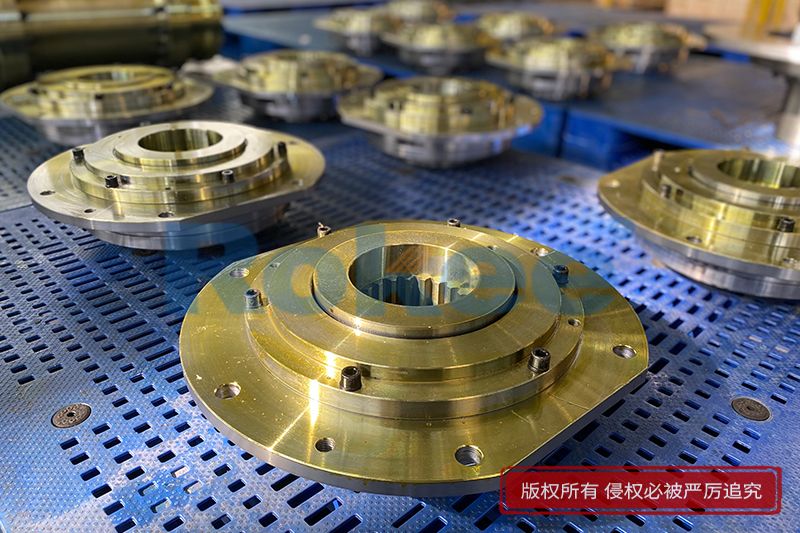
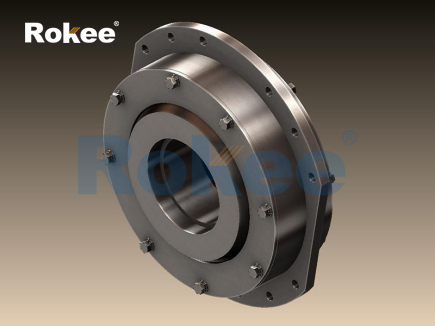
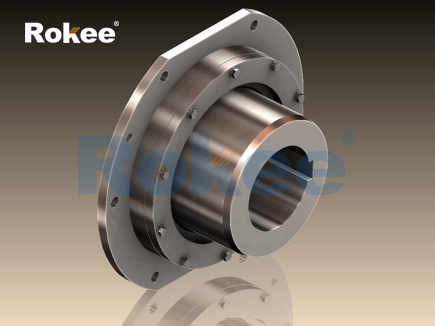
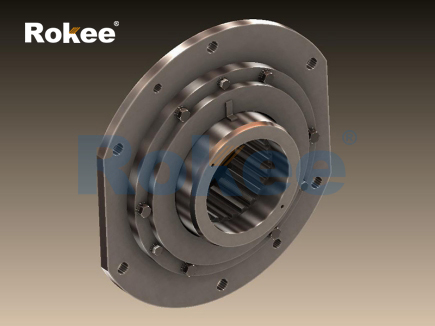
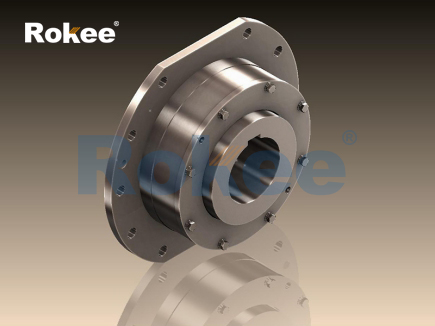
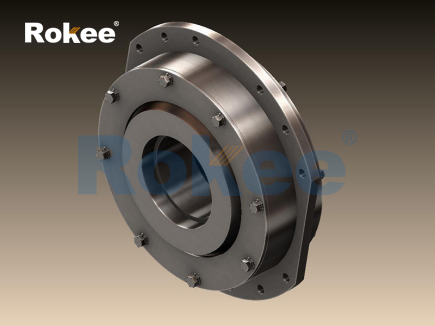
Barrel couplings are essential components in mechanical systems, designed to connect two shafts together to transmit torque and rotational motion while accommodating minor misalignments, vibrations, and axial movements. Their functionality relies heavily on precise sizing, as the correct standard size ensures compatibility with the shafts they connect, optimal performance, and long-term reliability. Without standardized sizes, the interchangeability of barrel couplings would be compromised, leading to inefficiencies in manufacturing, maintenance, and system operation.
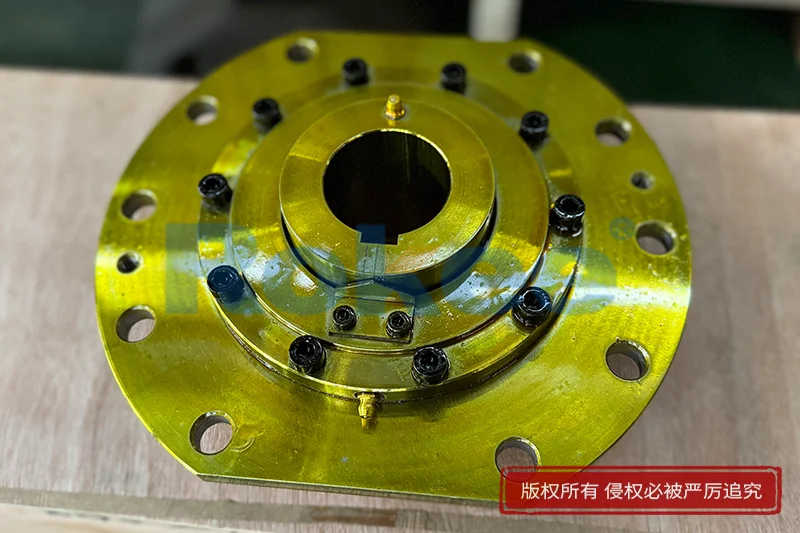
The standardization of barrel coupling sizes is driven by the need for consistency and compatibility across different mechanical systems and manufacturers. While there is no single universal standard that governs all barrel couplings, several widely recognized sizing conventions have emerged based on industry needs, shaft dimensions, and application requirements. These standards typically define key dimensions such as inner diameter (bore size), outer diameter, length, keyway size, and thread specifications, all of which are critical to ensuring the coupling fits securely on the shafts and functions as intended. The most common standard sizes are categorized based on bore diameter, as this is the primary dimension that determines compatibility with the shafts being connected.
Bore size is the most fundamental dimension of a barrel coupling, as it directly corresponds to the diameter of the shafts it will connect. Standard bore sizes for barrel couplings range from very small diameters, suitable for precision instruments and small motors, to large diameters designed for heavy-duty industrial applications. Smaller bore sizes typically start at around 3 millimeters and go up to 20 millimeters, catering to light-duty applications such as small electric motors, pumps, and precision machinery. These smaller couplings are often used in applications where space is limited and torque requirements are moderate. Medium bore sizes, ranging from 20 millimeters to 50 millimeters, are more versatile and are commonly found in a wide range of industrial equipment, including conveyors, mixers, and gearboxes. Larger bore sizes, exceeding 50 millimeters, are designed for heavy-duty applications such as large industrial pumps, turbines, and mining equipment, where high torque transmission and durability are essential.
In addition to bore size, the outer diameter of a barrel coupling is another key standard dimension that influences its performance and application. The outer diameter is typically proportional to the bore size, with larger bore sizes requiring larger outer diameters to maintain structural integrity and torque-carrying capacity. Smaller barrel couplings with bore sizes between 3 millimeters and 20 millimeters often have outer diameters ranging from 10 millimeters to 35 millimeters, while medium-sized couplings with bore sizes between 20 millimeters and 50 millimeters have outer diameters between 35 millimeters and 80 millimeters. Larger couplings with bore sizes above 50 millimeters can have outer diameters exceeding 100 millimeters, depending on the specific application requirements. The outer diameter also affects the coupling’s moment of inertia, which can impact the overall efficiency of the mechanical system, particularly in high-speed applications.
The length of a barrel coupling is another important standard dimension that varies based on application needs. The length of the coupling determines the amount of misalignment it can accommodate, as well as the overall space it occupies in the mechanical system. Shorter couplings are typically used in applications where space is limited and misalignment is minimal, such as in compact machinery and precision instruments. These shorter couplings often have lengths ranging from 15 millimeters to 50 millimeters, depending on the bore size. Longer couplings, on the other hand, are designed to accommodate greater angular, parallel, or axial misalignment between the shafts. These couplings can have lengths ranging from 50 millimeters to 200 millimeters or more, making them suitable for applications such as large industrial machinery, where shafts may be misaligned due to installation errors or operational vibrations. The length of the coupling also influences its torsional stiffness, with longer couplings generally having lower torsional stiffness, which can help dampen vibrations and reduce stress on the shafts.
Keyway dimensions are another critical aspect of barrel coupling standard sizes, as they ensure a secure connection between the coupling and the shafts. A keyway is a slot cut into the bore of the coupling and the end of the shaft, into which a key is inserted to prevent relative rotation between the coupling and the shaft. Standard keyway sizes are defined based on the bore diameter of the coupling, with larger bore sizes requiring larger keyways to transmit higher torques. Common keyway standards include square keyways and rectangular keyways, with dimensions such as width and depth specified to ensure compatibility with standard keys. For example, a barrel coupling with a bore size of 10 millimeters might have a square keyway with a width of 3 millimeters and a depth of 3 millimeters, while a coupling with a bore size of 50 millimeters might have a rectangular keyway with a width of 14 millimeters and a depth of 9 millimeters. The keyway dimensions must be precise to ensure a tight fit between the key, coupling, and shaft, as any play or misalignment in the keyway can lead to reduced torque transmission efficiency and premature wear.
Thread specifications are also part of the standard sizing for barrel couplings, particularly for couplings that use set screws or bolts to secure the coupling to the shafts. The thread size and pitch must be standardized to ensure that the fasteners used are compatible with the coupling. Common thread standards include metric threads and imperial threads, with metric threads being more widely used in industrial applications globally. For example, small barrel couplings might use M3 or M4 set screws, while larger couplings might use M8 or M10 set screws. The pitch of the threads is also specified, as this affects the holding force of the set screws. Fine-pitch threads provide greater holding force and are often used in applications where vibration is a concern, while coarse-pitch threads are easier to install and remove.
The standard sizes of barrel couplings are also influenced by the material used in their construction. Different materials have different strength and durability characteristics, which can affect the maximum torque capacity and overall size of the coupling. For example, couplings made from aluminum are lighter and have a lower torque capacity compared to couplings made from steel, so an aluminum coupling designed to transmit the same torque as a steel coupling would need to be larger in size. Similarly, couplings made from stainless steel are corrosion-resistant and are often used in harsh environments, but their size may be slightly larger than carbon steel couplings of the same torque capacity due to differences in material properties. The material also affects the thermal expansion characteristics of the coupling, which can influence the fit between the coupling and the shafts at different operating temperatures.
Another factor that influences barrel coupling standard sizes is the type of misalignment the coupling is designed to accommodate. Barrel couplings are available in different types, including rigid barrel couplings and flexible barrel couplings, each with different size requirements based on their design. Rigid barrel couplings are designed to connect two shafts with minimal misalignment and are typically smaller in length and outer diameter compared to flexible couplings. They are ideal for applications where precise alignment is maintained, such as in precision machinery and optical equipment. Flexible barrel couplings, on the other hand, are designed to accommodate angular, parallel, or axial misalignment and are often longer and have a larger outer diameter to provide the necessary flexibility. The size of flexible barrel couplings also varies based on the degree of misalignment they can handle, with larger couplings capable of accommodating greater misalignment.
The application environment also plays a role in determining the standard size of a barrel coupling. Industrial applications that operate in high-temperature, high-pressure, or corrosive environments may require larger couplings made from more durable materials to ensure long-term reliability. For example, in the oil and gas industry, barrel couplings used in pipeline systems must be large enough to handle high torque and pressure, while also being corrosion-resistant to withstand the harsh chemicals present in the pipeline. Similarly, in the automotive industry, barrel couplings used in powertrain systems must be compact enough to fit within the limited space available, while still being strong enough to transmit high torque from the engine to the transmission.
Adhering to standard sizes for barrel couplings offers several practical benefits for manufacturers, maintenance personnel, and end-users. One of the primary benefits is interchangeability, which allows couplings from different manufacturers to be used interchangeably as long as they meet the same standard size. This reduces the need for custom-made couplings, which are more expensive and time-consuming to produce. Interchangeability also simplifies maintenance and repair, as replacement couplings can be easily sourced from multiple suppliers, reducing downtime in the event of a coupling failure. Standard sizes also ensure that the coupling is compatible with the shafts and other components in the mechanical system, reducing the risk of installation errors and ensuring optimal performance.
Another benefit of standard sizes is improved quality control. Manufacturers that adhere to standard sizes must follow strict dimensional tolerances, ensuring that each coupling meets the required specifications. This results in more consistent performance and reliability across different batches of couplings. Standard sizes also make it easier to test and validate the performance of barrel couplings, as testing procedures can be standardized based on the size and type of coupling. This helps to ensure that the coupling meets the required torque capacity, misalignment tolerance, and durability standards for its intended application.
Despite the benefits of standard sizes, there are instances where custom sizes may be required. Custom barrel couplings are designed to meet specific application requirements that cannot be fulfilled by standard sizes. For example, in specialized machinery or unique industrial applications, the shafts may have non-standard diameters, or the application may require a coupling with unusual dimensions to fit within a limited space. Custom couplings are also used in high-performance applications where the standard sizes do not provide the required torque capacity or misalignment tolerance. However, custom couplings are more expensive and have longer lead times compared to standard couplings, so they are only used when absolutely necessary.
When selecting a barrel coupling based on standard sizes, it is important to consider several factors to ensure the correct size is chosen. The first factor is the diameter of the shafts being connected, as this determines the bore size of the coupling. It is essential to measure the shaft diameter accurately, as even a small discrepancy can lead to a loose fit or excessive stress on the coupling and shafts. The second factor is the torque requirements of the application, as the size of the coupling must be sufficient to transmit the required torque without failure. The torque capacity of a barrel coupling is directly related to its size, material, and design, so it is important to select a coupling that can handle the maximum torque generated by the system. The third factor is the amount of misalignment between the shafts, as this determines the length and type of coupling needed. Flexible couplings are required for applications with significant misalignment, while rigid couplings are suitable for applications with minimal misalignment.
The operating speed of the system is another important factor to consider when selecting a barrel coupling size. High-speed applications require couplings with smaller outer diameters and lower moment of inertia to reduce centrifugal forces and vibrations. Larger couplings may generate excessive centrifugal forces at high speeds, leading to premature wear and failure. The operating temperature of the system also affects the size and material selection of the coupling, as high temperatures can cause thermal expansion, which may affect the fit between the coupling and the shafts. Couplings used in high-temperature applications may need to be larger to accommodate thermal expansion and prevent binding.
In conclusion, the standard sizes of barrel couplings are critical to their functionality, compatibility, and reliability in mechanical systems. These standard sizes are defined by key dimensions such as bore size, outer diameter, length, keyway size, and thread specifications, which are influenced by factors such as shaft diameter, torque requirements, misalignment, material, and application environment. Adhering to standard sizes ensures interchangeability, simplifies maintenance, and improves quality control, while custom sizes are used only when specific application requirements cannot be met by standard sizes. Selecting the correct standard size requires careful consideration of the application’s shaft dimensions, torque requirements, misalignment, operating speed, and temperature, to ensure the coupling performs optimally and has a long service life. As mechanical systems continue to evolve, the standard sizes of barrel couplings will also adapt to meet the changing needs of various industries, ensuring that these essential components remain compatible and effective in transmitting torque and motion.
- Tags:
- Barrel Couplings ,
- sandwich panel line ,
- sandwich panel machine
- pu sandwich panel machine
« Barrel Coupling Standard Sizes » Latest Update Date: May 9, 2026
https://www.rokeecoupling.net/blog/barrel-coupling-standard-sizes.html